Play Ideas with Water Guns
If you buy a water gun, it usually starts with shooting each other and ends there. But once you take one outside, the play goes further than you'd expect.
This page was translated by Yeparksam, a preschool teacher in Korea. Some words may sound a little unusual — thank you for your understanding.
Printables to use
See more ›
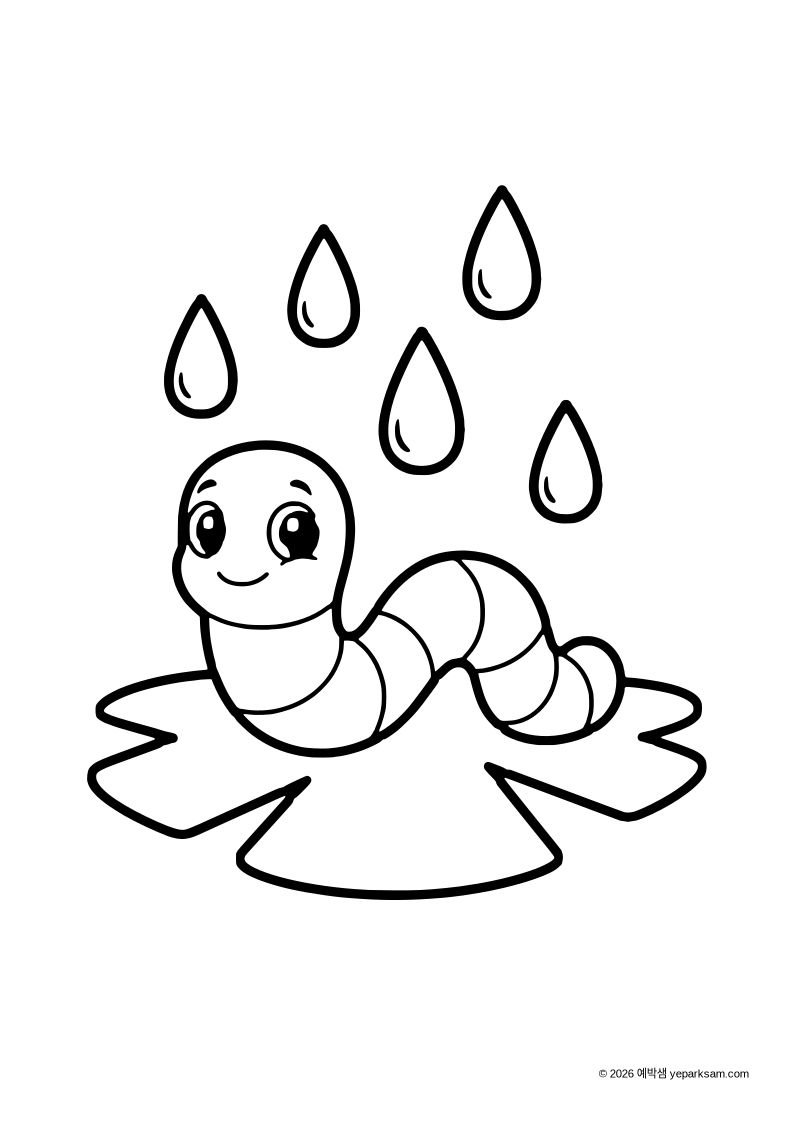
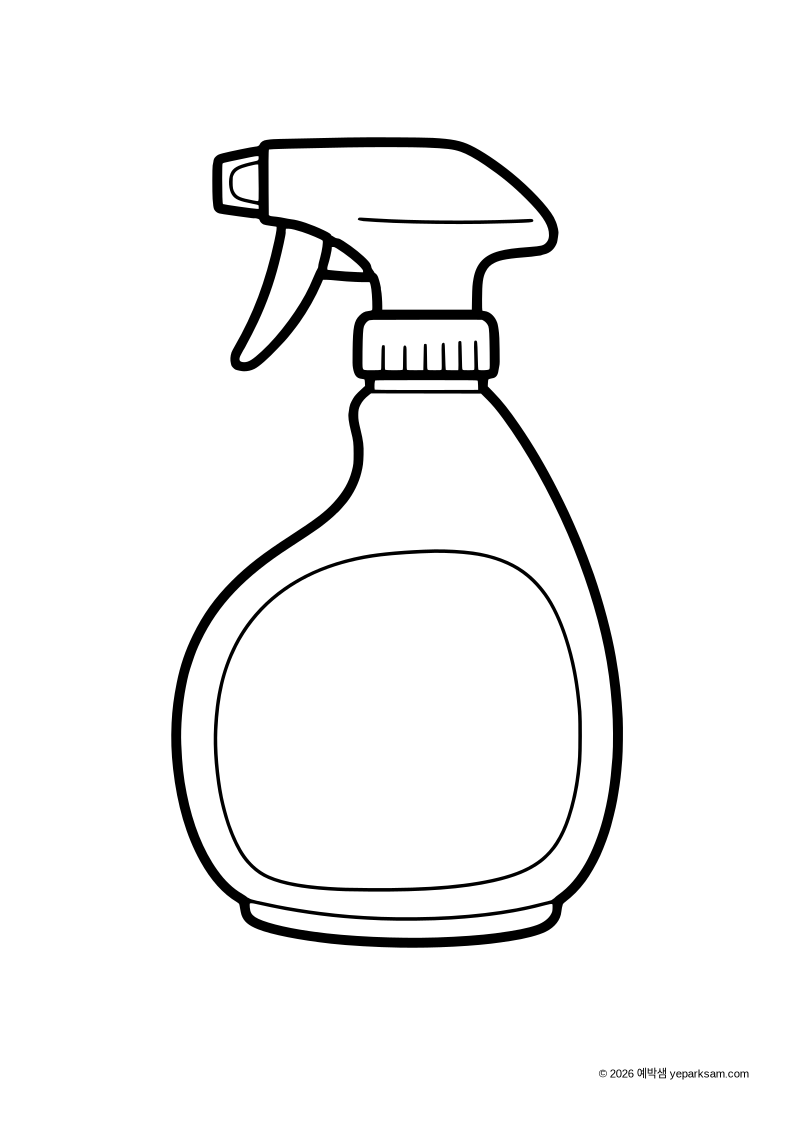
Shooting Each Other
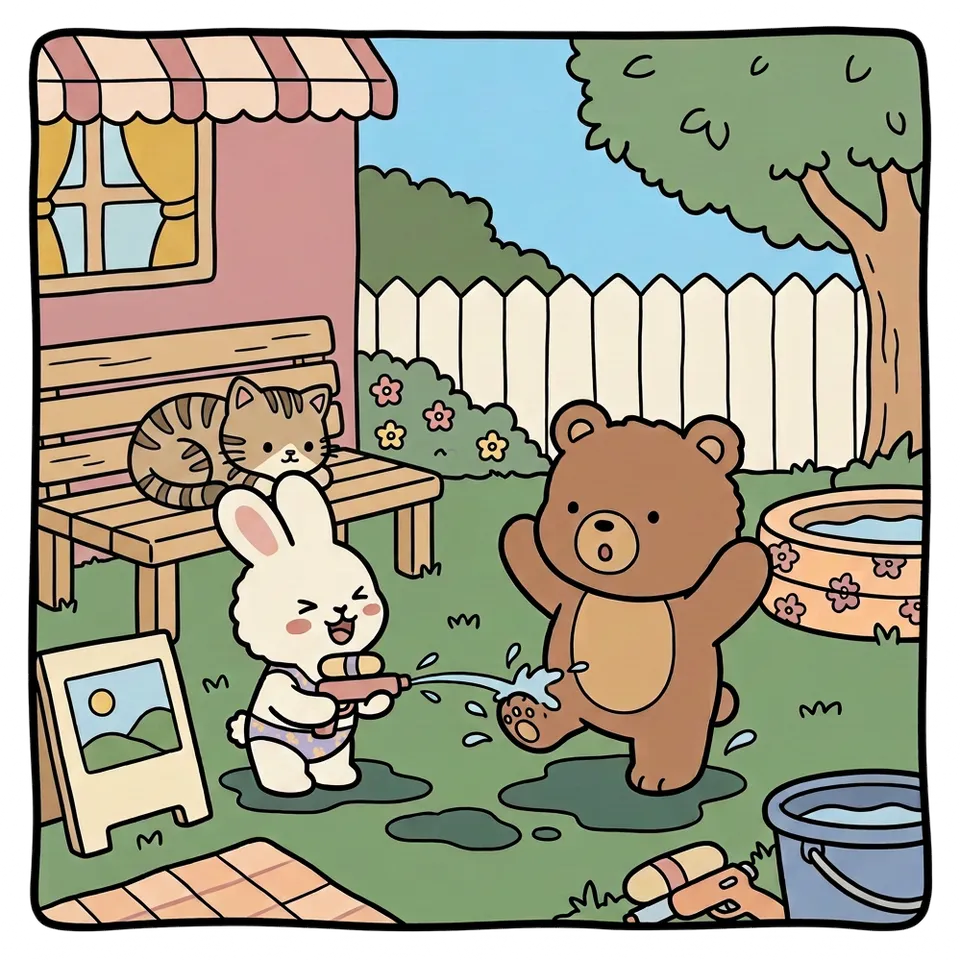
Each person holds a water gun and shoots water at each other. Everyone starts with this.
Why it's good
If you set just one rule, no shooting at faces, the children make up the rest of the rules themselves. Words like “If you spray water on someone's head suddenly it surprises them, so you have to start with the feet!” and “If a friend says no, we don't do it.” come out that way.
How to play
Everyone starts with this, and that's just right. For a child holding a water gun for the first time, even filling it with water isn't easy. But a child who has already tried always teaches them. “You put it in the water, pull, and push like this.” The only thing I set before we start is no shooting at faces, just that one.
Some children are afraid of water guns. They burst into tears at water spraying in every direction, and once water splashes on their face they become careful. In that case, I give them a separate job in a spot where water doesn't splash. One child I asked to water a tree away from where the others were shooting played that way for a long while, then went over to the friends on their own.
Good to know
- If a child has no water gun, share or use a spray bottle or a container. Since they can't play together without one, the child who has one can lend it, or a spray bottle and a plastic container can stand in, so everyone can play together.
What you'll need
Water guns
Shooting at the Sky to Get Rained On
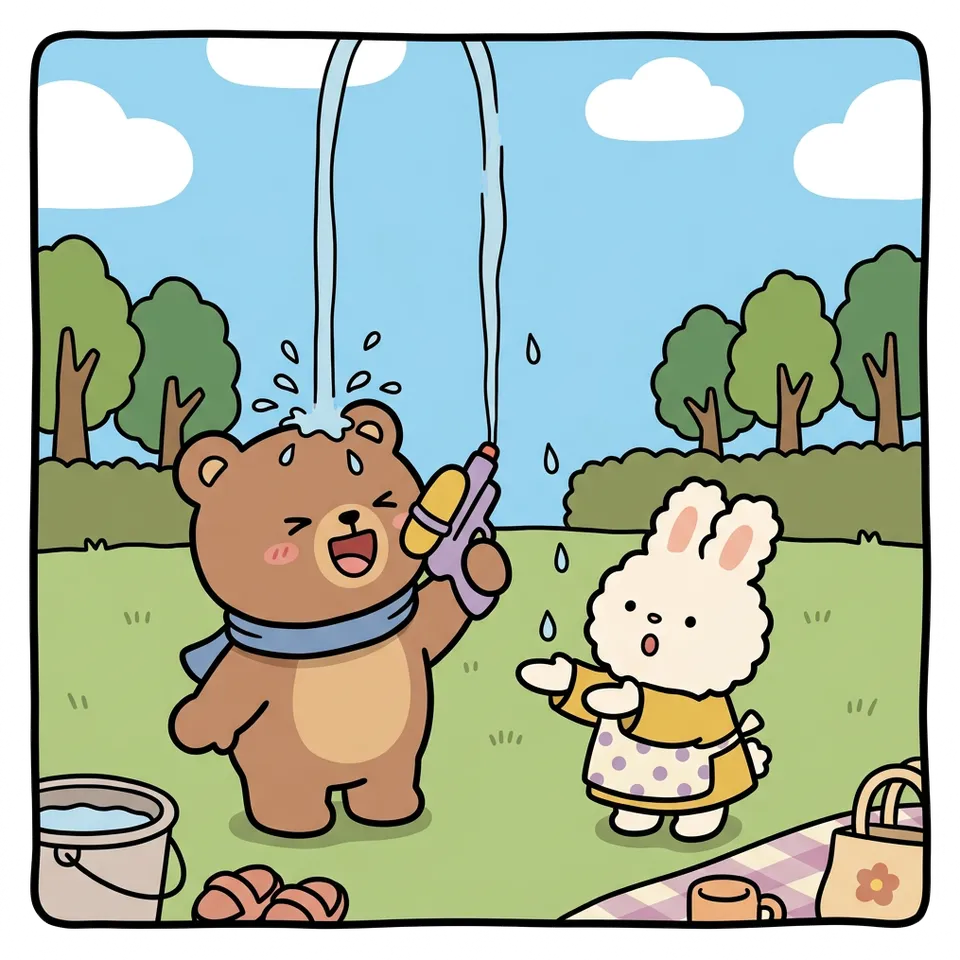
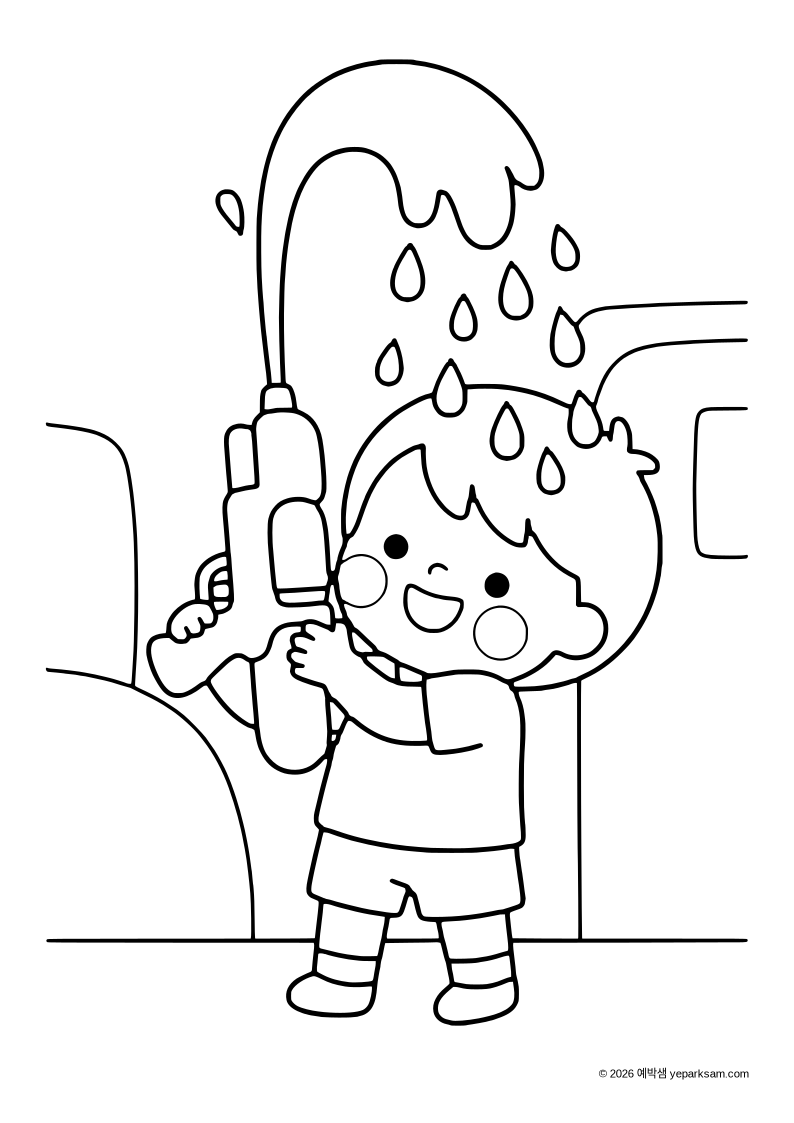
Shoot a water gun straight up into the sky and let the water fall right back down on yourself.
Why it's good
A play where children who always thought of a water gun as something you aim at a target shoot up at nothing and turn that idea upside down.
How to play
If I tell them to try shooting upward, the child startles. The water goes much higher than they expected. And then that water falls right on them. After going through it once, they play making rain for each other from then on.
Good to know
- Shooting upward doesn't occur to adults first. Show them once, and from then on the child shoots up on their own.
What you'll need
Water guns
Giving Water to Earthworms
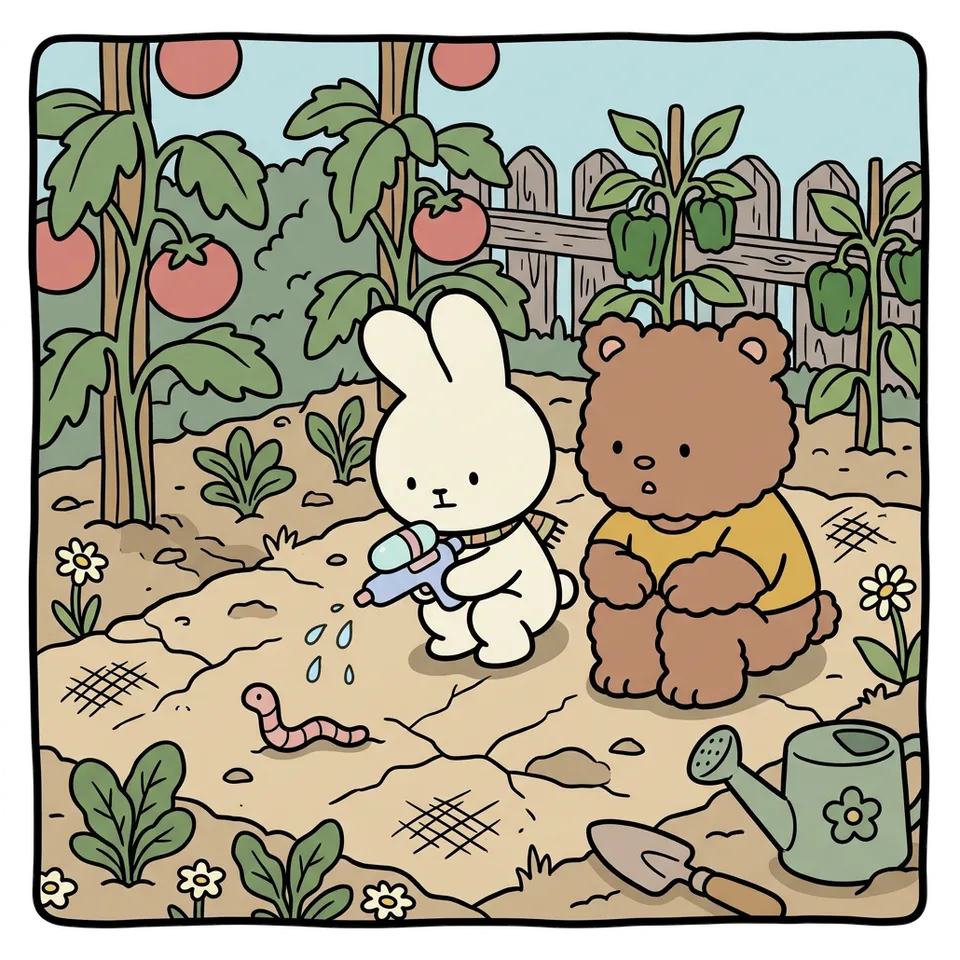
Take a water gun outside and find, all on your own, things that look like they need water, like the vegetable garden, dry ground, or an earthworm, and water them.
Why it's good
A play where the strength of a water gun that used to shoot hard is used differently depending on the target. In front of an earthworm, the child's hand softens by itself. The water gun that was a toy for shooting becomes a tool for caring.
How to play
When we go outside with water guns, the child finds places to water on their own. They spray the tomatoes and peppers in the vegetable patch and the sun-dried ground, then say “The ground got cool.” One day they found an earthworm that was drying out. “Don't be sick,” and “I'll give you water gently,” they said, spraying carefully.
What you'll need
Water guns
Drawing on Dry Ground
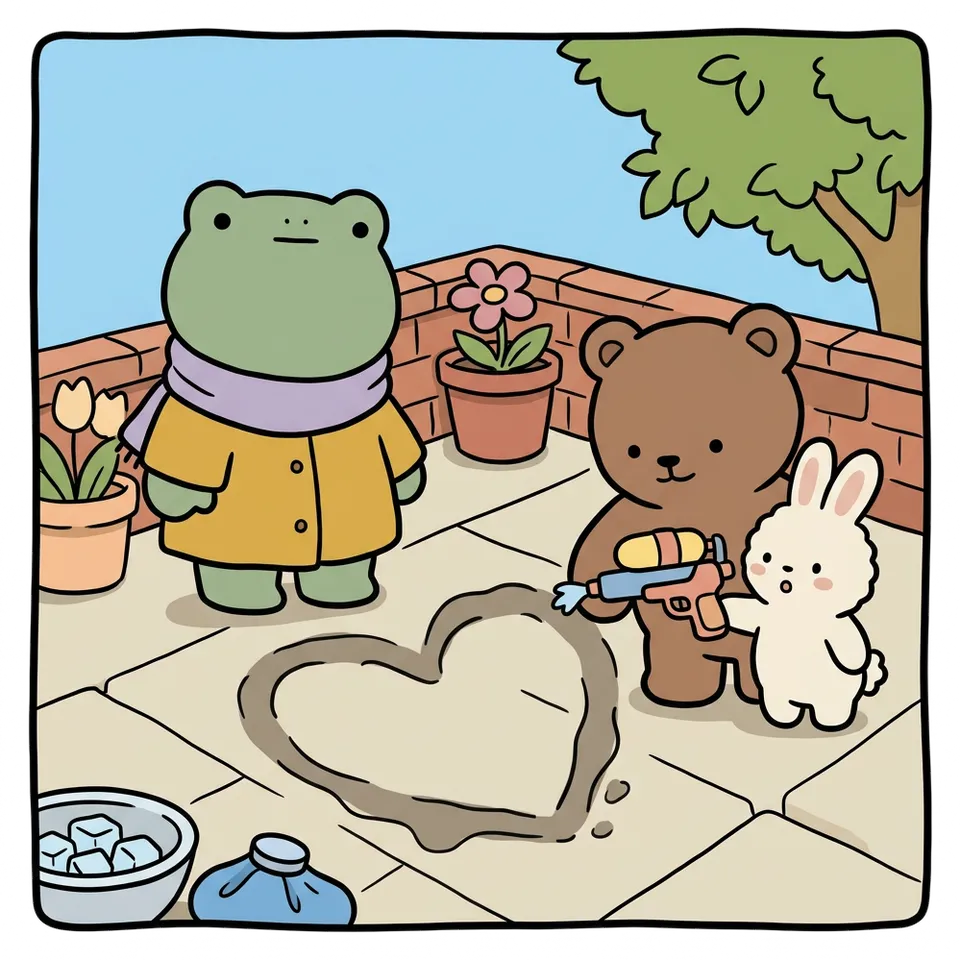
Draw pictures with a water gun on sun-dried ground or sand.
Why it's good
Watching the drawing dry and disappear is as much a part of the play as drawing. They watch what they drew vanish before their eyes, again and again.
How to play
They draw hearts or lines, or draw the shape first and then fill the inside. But the shape they have in mind doesn't come out well. “I'm going to draw a heart too,” they say, and when it doesn't work they ask for help. If I hold their hand and draw once together, they do it by themselves from then on.
Good to know
- Drawing on the ground only works on sunny days, so children get hot quickly. If you keep ice or ice packs nearby, they play much longer.
What you'll need
Water guns · Ice or ice packs
Washing Windows
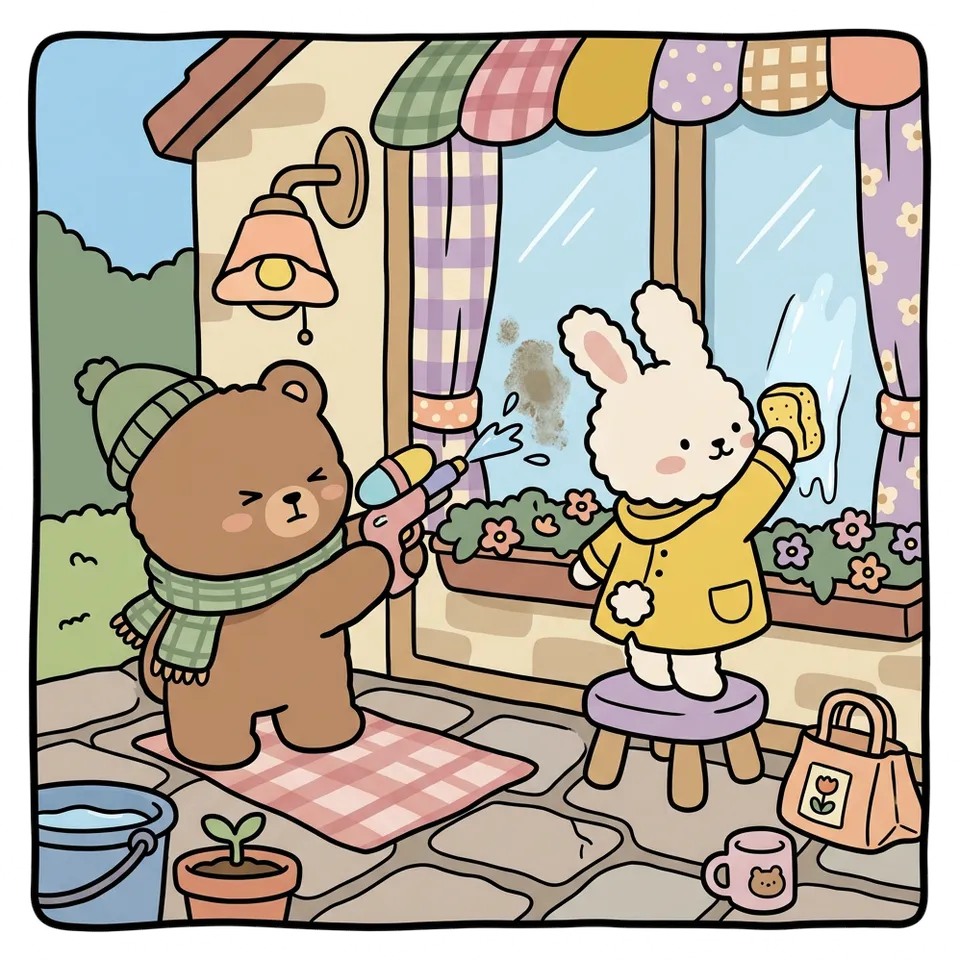
If you pick a dirty spot, the water gun becomes a cleaning tool.
Why it's good
If you pick out one dirty spot, cleaning becomes play just like that. The proof is that the places they shot and the places they didn't look visibly different.
How to play
One day the child was the first to spot bird droppings on the window. “The window got dirty,” they said, and they wanted to clean it themselves. They filled a bucket with water and washed the window, the wall, and the screen door by shooting them, and the visible difference between the places they shot and the places they didn't became the play itself. “Yeah, I'll clean it up nice,” they said, and even brought a sponge along.
While cleaning, the direction sometimes shifts by itself. A child who was washing the window went to check on the acorn sprout we planted last week, and from there moved on to the flowerpots and the tree, saying “Tree, I'll give you water.”
Good to know
- There are other dirty places besides windows. Slides, stairs, and trees can all be cleaned with water guns too.
What you'll need
Water guns · Bucket · Sponge
Putting Out the Fire on the Big Tree
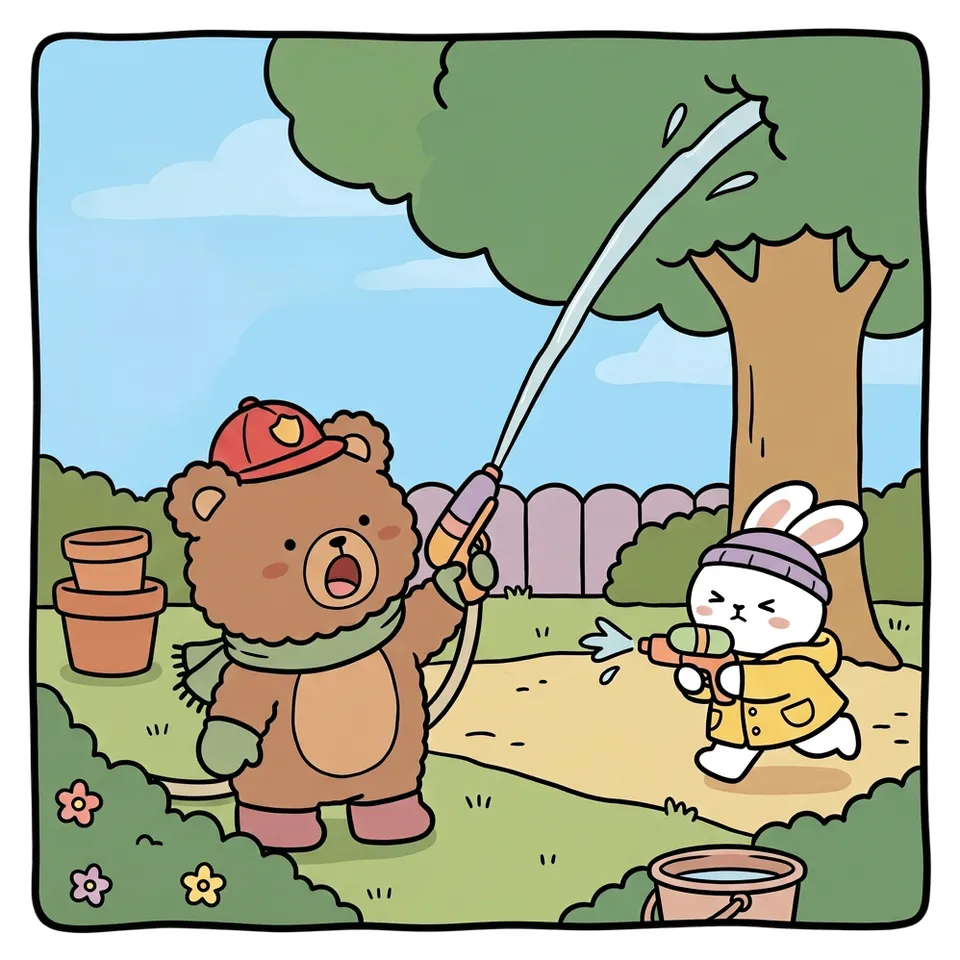
When one child shouts that there is a fire, go with a brother, sister, or friend who came to play and use water guns as fire hoses to put it out.
Why it's good
If you name a big tree that one child can't soak alone as the fire, children who were playing apart gather in front of it. The proof is how they all rush toward one shared goal.
How to play
When one child says “There's a fire!” the firefighter play begins. The water gun isn't a water gun anymore, it becomes a fire hose. They come running, saying “Let's go put out the fire together,” and all shoot at the tall tree together.
Good to know
- It doesn't have to be a tree. Anything big enough that one child can't soak it alone, like a slide, will do.
What you'll need
Water guns
Filling a Bucket with Water
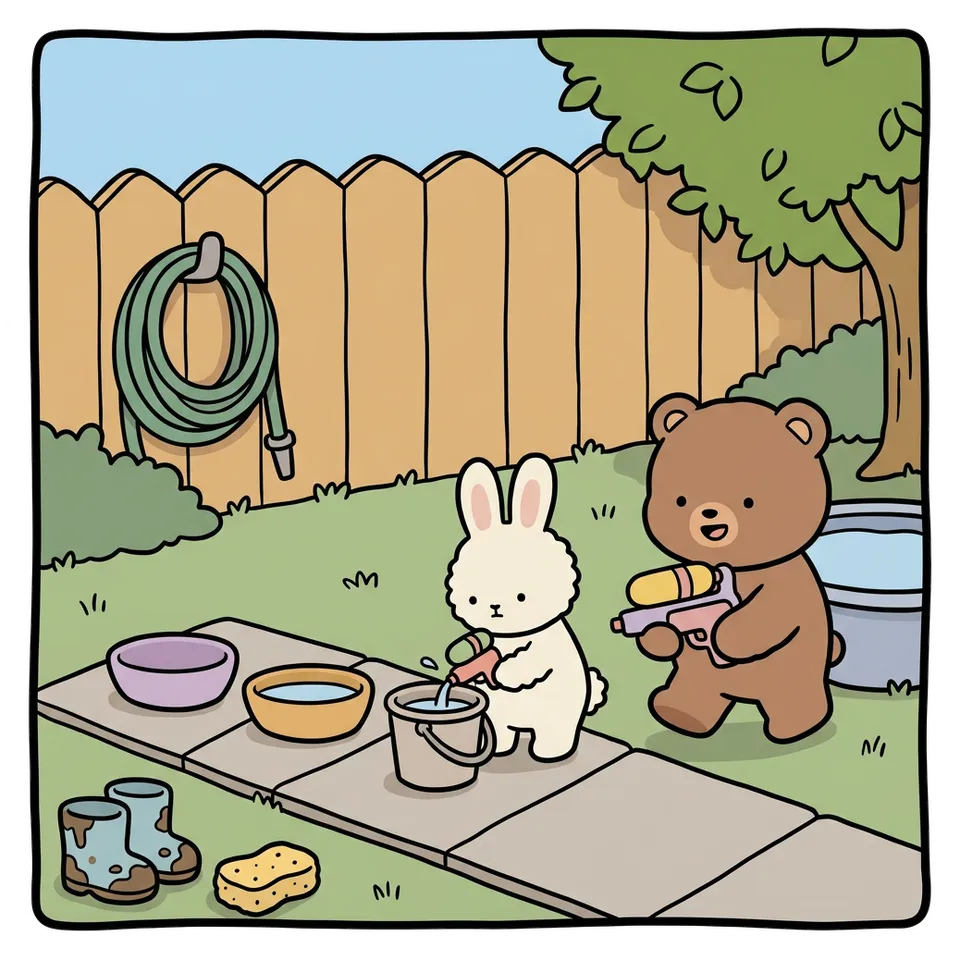
Use a water gun to move water into an empty bowl and fill it.
Why it's good
An experience where filling with water is itself the play. Only a little fits each time, so they have to go back and forth many times, and the child doesn't get bored of that back and forth.
How to play
There was a day when the hose was broken just as we were about to play with water. When I asked how we could fill it, the child said “Carry it with the water gun!” and “Put it in a bucket and bring it!” That day, filling the water was itself the play. You can just set out a few empty containers and let them fill them with water guns.
Good to know
- It's also used for washing muddy shoes. Filling a bucket with water sometimes flows naturally into another job.
What you'll need
Water guns · Empty containers
Pushing Ball Pit Balls
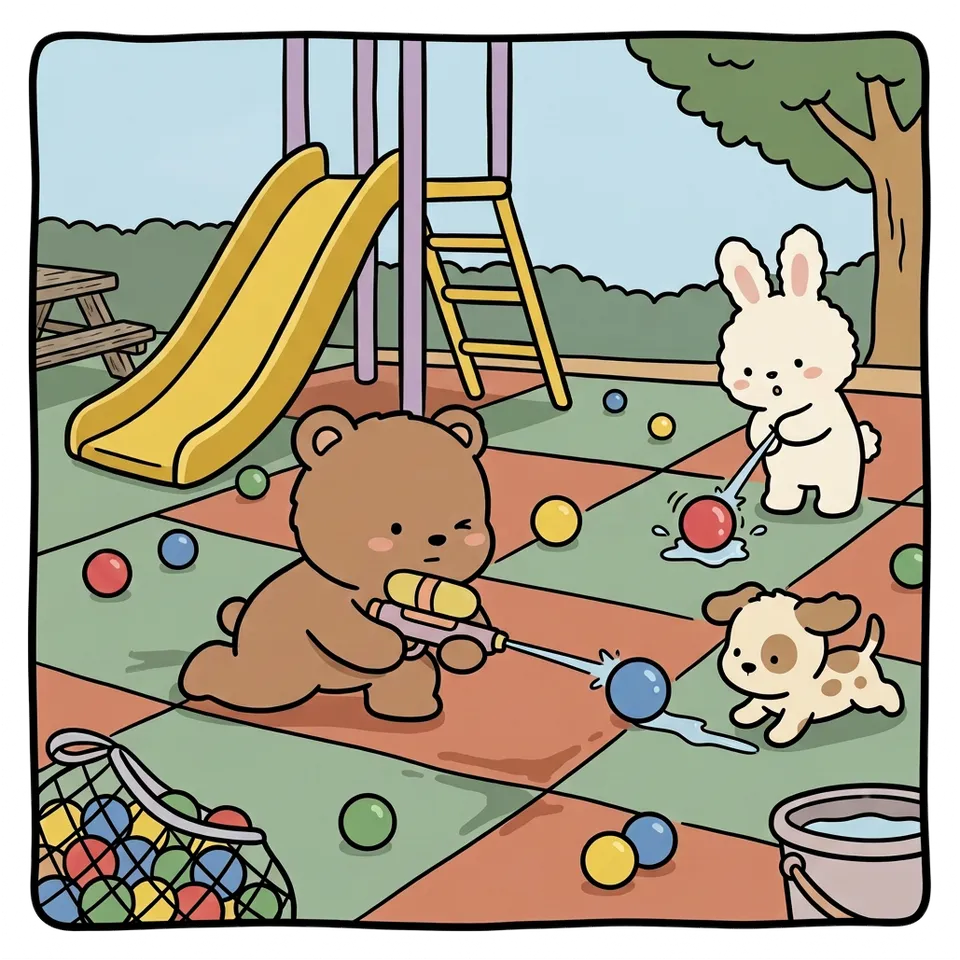
Spread ball pit balls on the floor and shoot them with a water gun to push them.
Why it's good
A play where the child notices on their own what the force that pushes the ball depends on. Without anyone teaching them, after shooting again and again they find the difference.
How to play
Spread ball pit balls on the floor and let them try pushing them with a water gun. At first the balls don't go where they want. So they refill the water and try many times, and in the process they notice that the ball moves differently depending on how much water is in it, how hard they pressed, and where they stood when they shot.
What you'll need
Water guns · Ball pit balls
Erasing Chalk Drawings
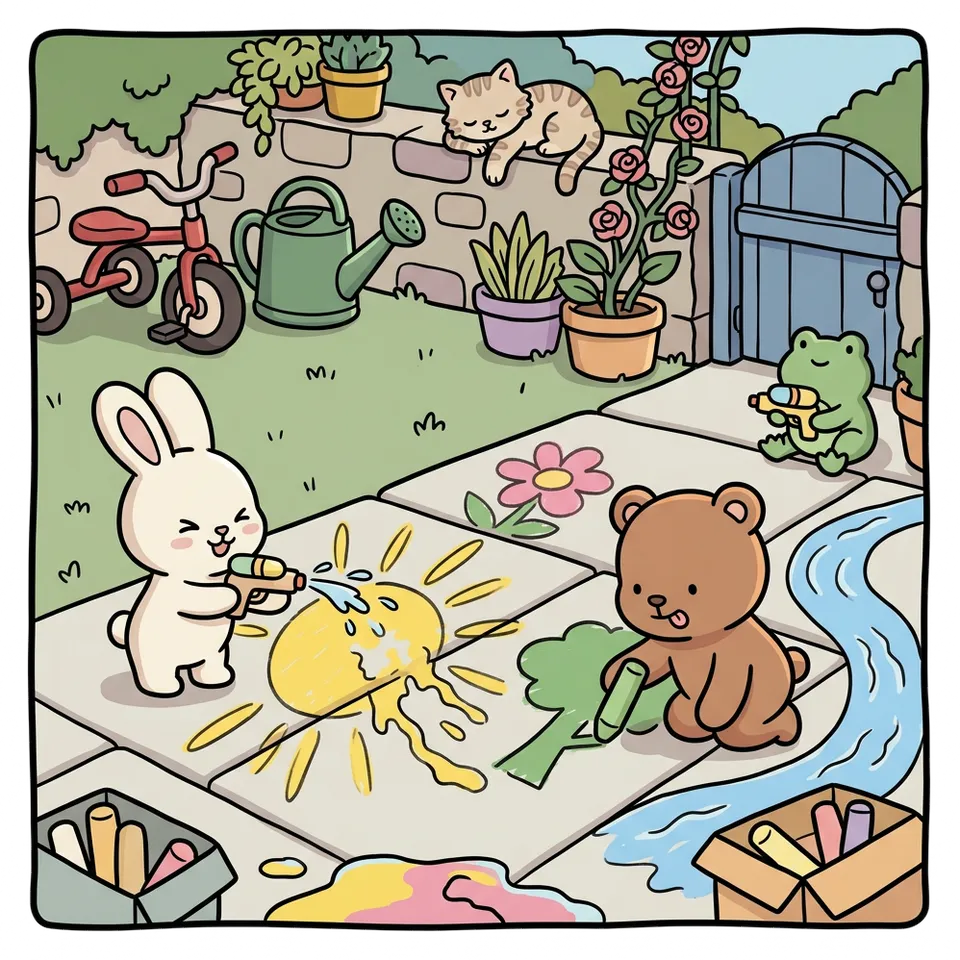
Draw pictures on the ground with chalk, then wipe them away with a water gun.
Why it's good
A play where drawing and erasing join into one. Because there's color, the expression is much more varied than when drawing with just water from the water gun.
How to play
Let them draw freely with chalk, and when they're done, suggest erasing it with the water guns. The child works hard on the erasing side too.
What you'll need
Water guns · Chalk
Hitting Milk Carton Targets
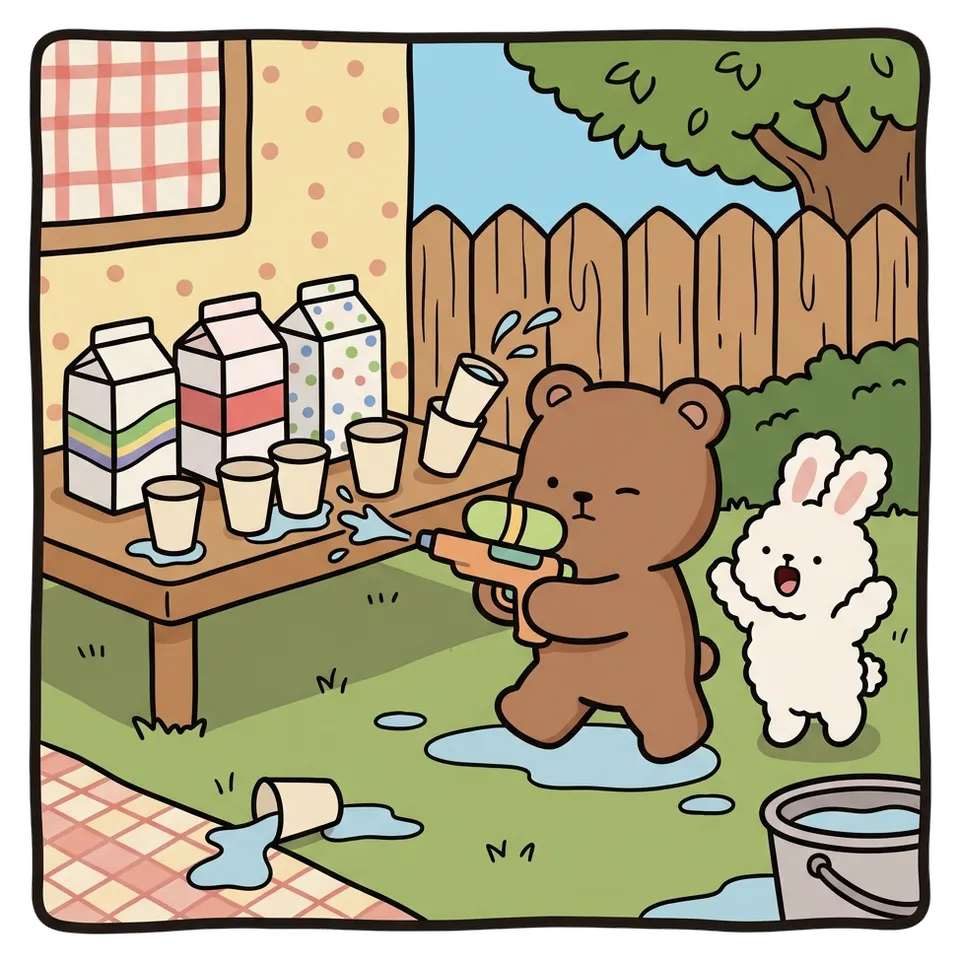
Make a target out of a milk carton or a paper cup and hit it with a water gun.
Why it's good
A play that shows how play gets longer once there's a goal. Because they made the target themselves, they try much harder, and when they miss, they adjust the distance on their own and shoot again and again.
How to play
We tried making targets from milk cartons, and the child wrote the scores from 1 to 5 themselves. If you leave them on the floor, they don't tip over even when hit, so I stand them up on a table.
You can also stand up paper cups, but these don't tip over easily, so the child puzzles over it for a long time. “Why isn't it falling?” and “Do I need to get closer?” they say, trying again and again while changing the height and spacing of the cups, then make their own rule, “If I do it like this, it hits well!” Don't give the answer, just let them move the cups however they like.
They also set the distance by themselves. When they miss, they inch forward, and when they start hitting, they step back again.
Good to know
- A weak water gun can't reach the target, and the child gets upset. “No, why can't I hit it.” If you swap for a stronger water gun for a bit, they hit again. It isn't the child's fault, it's the water gun.
- If you draw the target on paper and stick it up, it gets wet and tears quickly. The child notices right away. “The target board gets wet and tears, I need paper that doesn't get wet.” If you use laminating sheets or waterproof stickers, it won't tear.
What you'll need
Water guns · Milk cartons or paper cups · Laminating sheets or waterproof stickers
Making Tissue Paper Colors Run Down
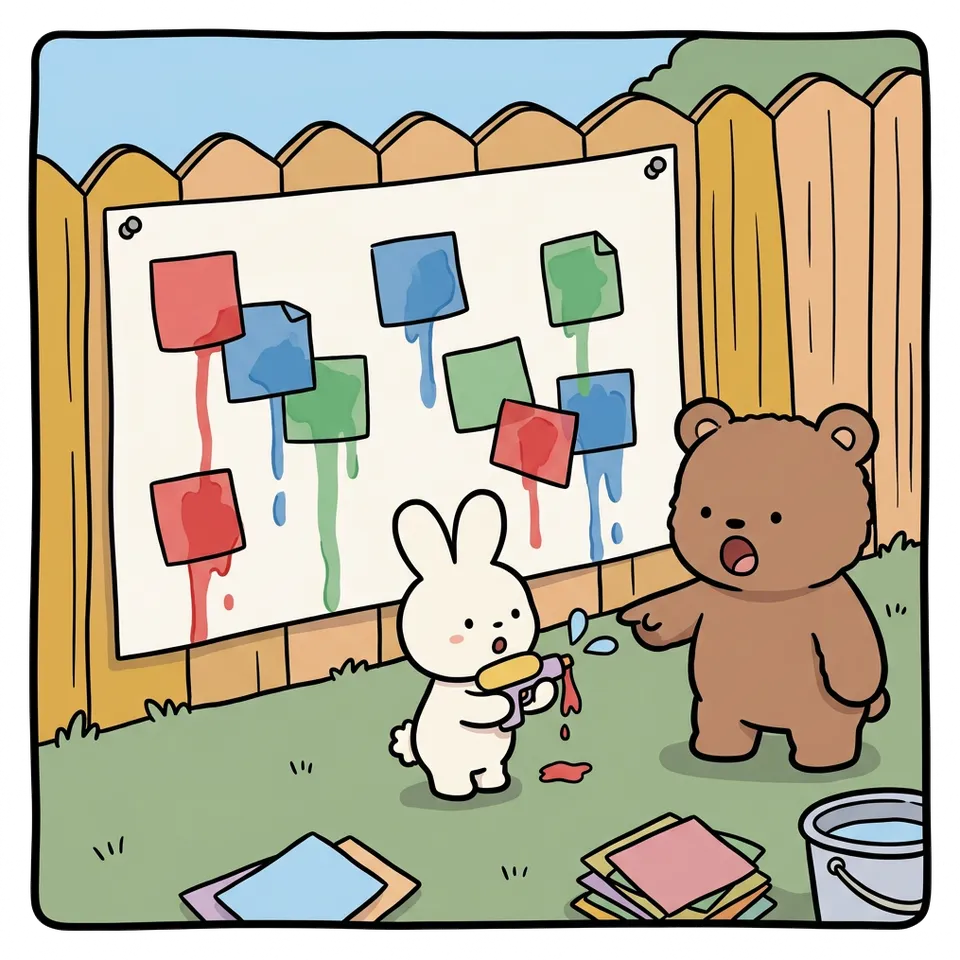
Stick tissue paper onto paper and stand it up, then shoot it with a water gun and watch the colored water run down.
Why it's good
A play where you see with your own eyes that the spreading shapes and the flowing water paths are different every time depending on the amount of water, the shooting distance, and the strength. So they don't stop after seeing it once, they keep shooting again.
How to play
The moment water touches it, the tissue paper gets wet, and instead of clear water, red, blue, and green water streams down, and the child points at it with a finger and shouts “Red, blue.” “Oh, I sprayed water and red rain is pouring down.”
Good to know
- Hand towels or rice paper work instead of tissue paper. Any material where color spreads when it meets water will do.
What you'll need
Water guns · Paper · Tissue paper
Making a Water Gun from a Plastic Bottle
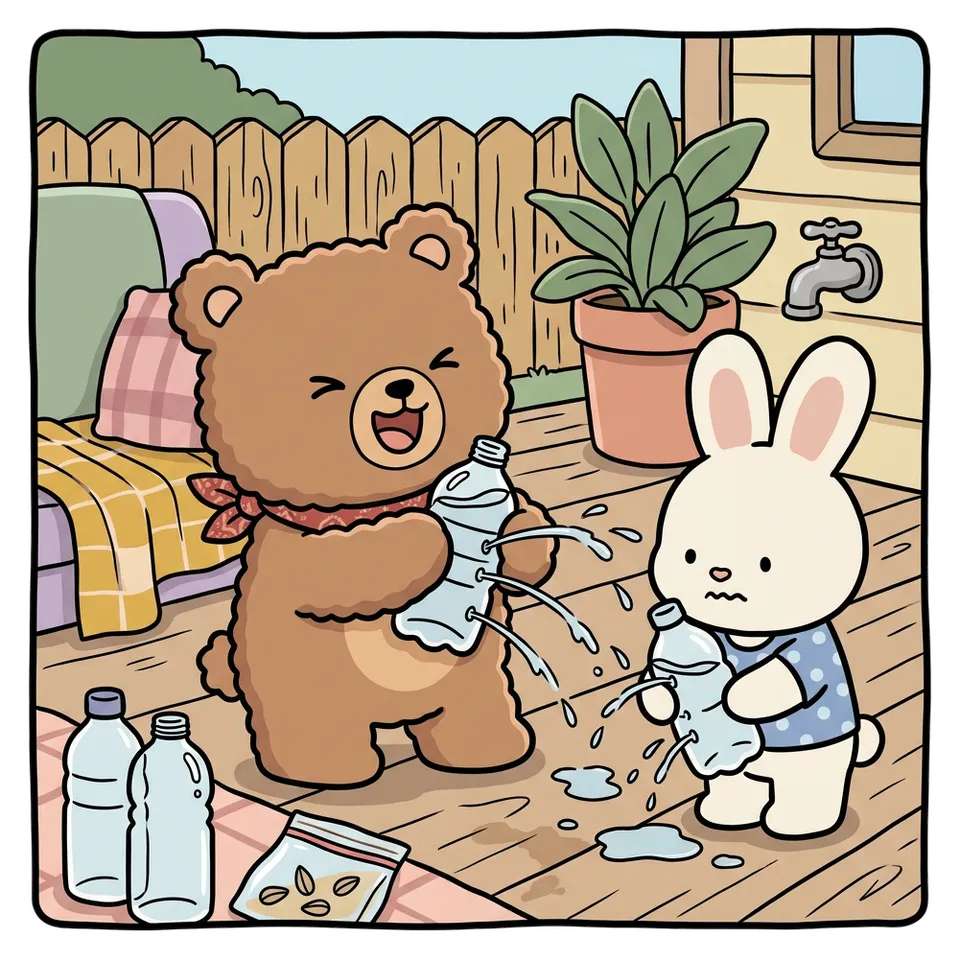
Poke holes in the side of a plastic bottle to make your own water gun.
Why it's good
A play where the child decides themselves how many holes to poke and feels in their body what result that choice brings.
How to play
The child decides how many holes to poke. Many children poke about ten, wanting a stronger water gun. When they actually shoot, they're happy at first, “Wow! Ten streams of water come out!” and soon disappointed, “But the water isn't strong, so it's not like a water gun.” That's when they learn that more holes split the water.
It's fine to leave them disappointed. Some children find a way on their own, “Look! If I press with two hands, the water really comes out!” One child even made one by attaching a plastic bottle mouth to a zipper bag. Instead of one strong stream, they said “The water leaks to the side, so it runs out fast.”
If the water gun they made won't shoot well at all, the play sometimes moves somewhere else entirely. The child moved on to the water from the faucet and played for a long time. That's fine too.
Good to know
- If you let them draw first what kind of water gun they want before making it, a lot of stories come out. Things like “I want the water pouch to be long” and “I'm going to make a water gun you wear as a hat.”
What you'll need
Plastic bottle · Zipper bag