Play Ideas with Ttakji
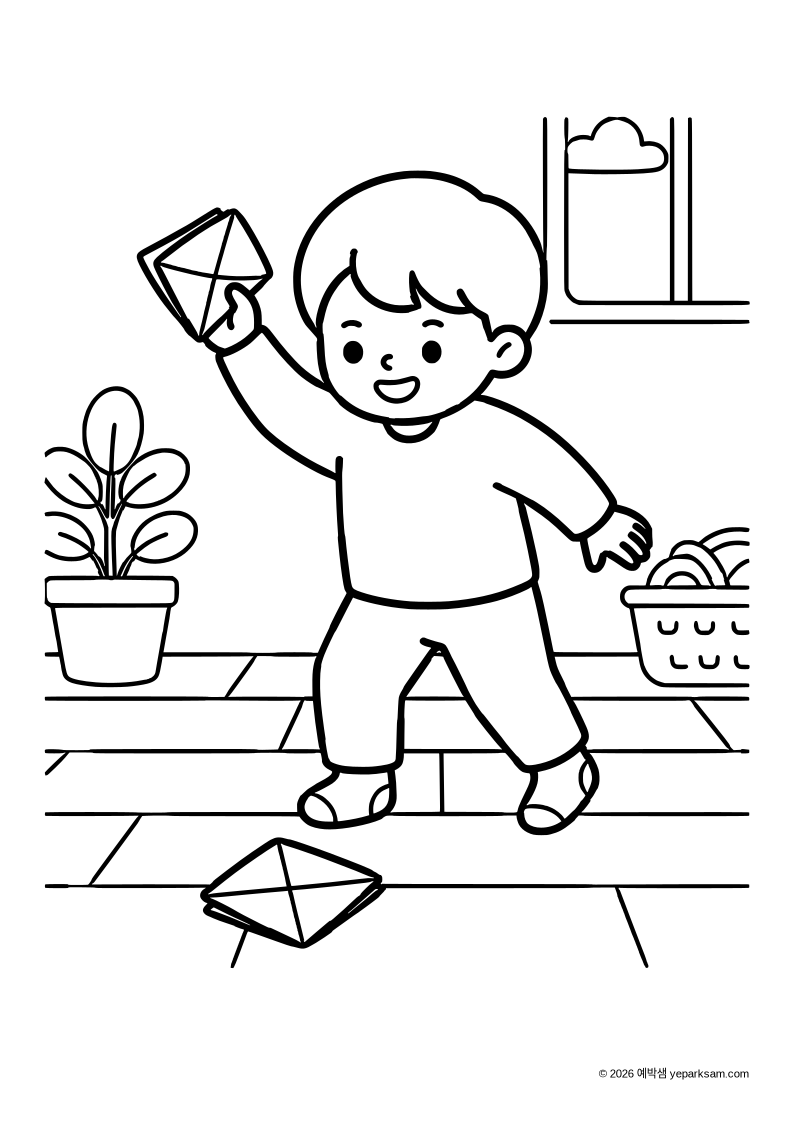
Ttakji (folded paper tiles) is the one where the person who made it steps into the match themselves. Other things you make and keep or use, but ttakji you make and go up against someone with. A child took the ttakji I had folded from the colored paper they chose, and the moment they had it, went to their younger sibling and challenged first, “Let's fight!”
So ttakji play gets longer after losing. If it flips you win, if it doesn't you lose, but the child who lost doesn't quit on the spot. They layer on one more sheet of colored paper and refold, or set new rules and go one more round. With other materials, it's over once you've made it, but with ttakji, the real start comes after making it.
This page was translated by Yeparksam, a preschool teacher in Korea. Some words may sound a little unusual — thank you for your understanding.
Printables to use
See more ›
Folding to Make My Own
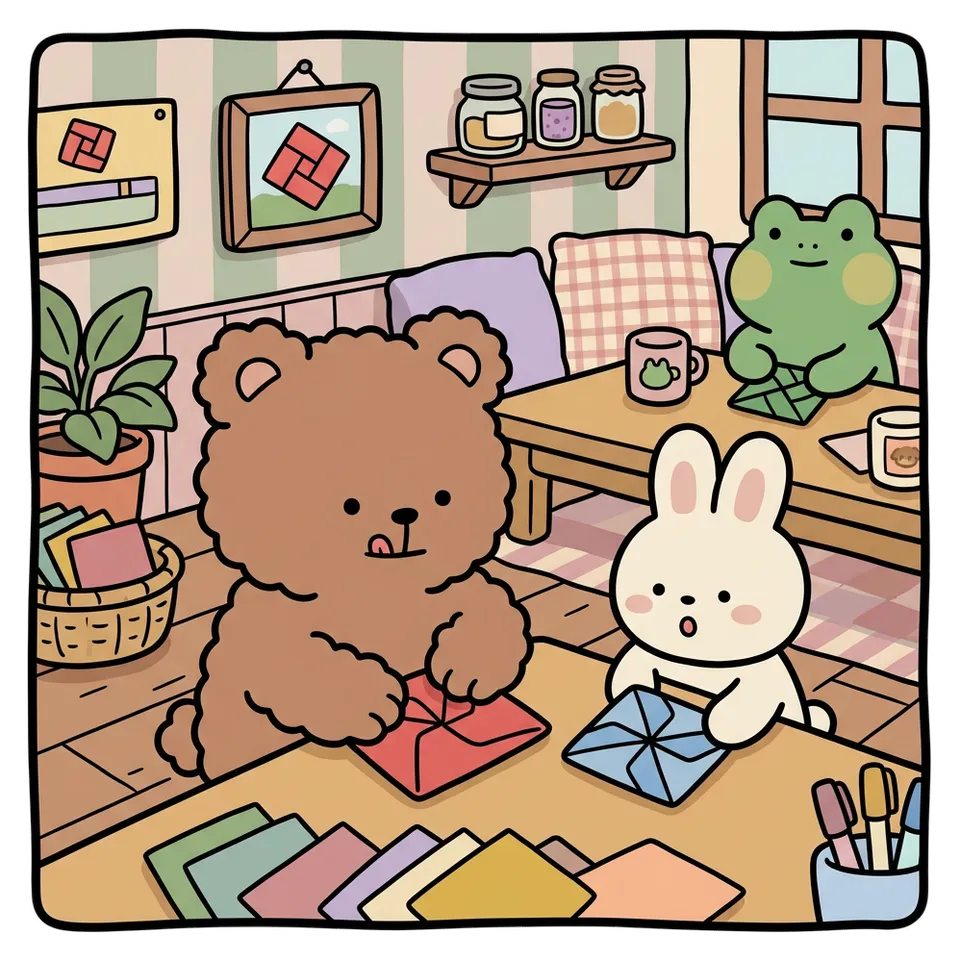
Choose paper in a favorite color, fold a ttakji (folded paper tile), and write a name or draw a picture to make your own ttakji.
Why it's good
The color they picked becomes their own ttakji just like that. Each child makes theirs differently, from glittery colored paper, big or small, so whose ttakji it is gets settled before it's ever put down to play.
How to play
Spread out the colored paper and they choose first, “I'm red ttakji!” and “I like blue!” While I fold, “Wow, it's turning into a square!” they can't take their eyes off it, then “I want to fold like this too,” and they bring another sheet.
When they fold it themselves, they get stuck at the tucking-in part at the end. Just help there. Some children unfold the finished one and fold it again from the start, and others make several big and small ones and draw on them and stick on stickers. Some days they like folding more than hitting.
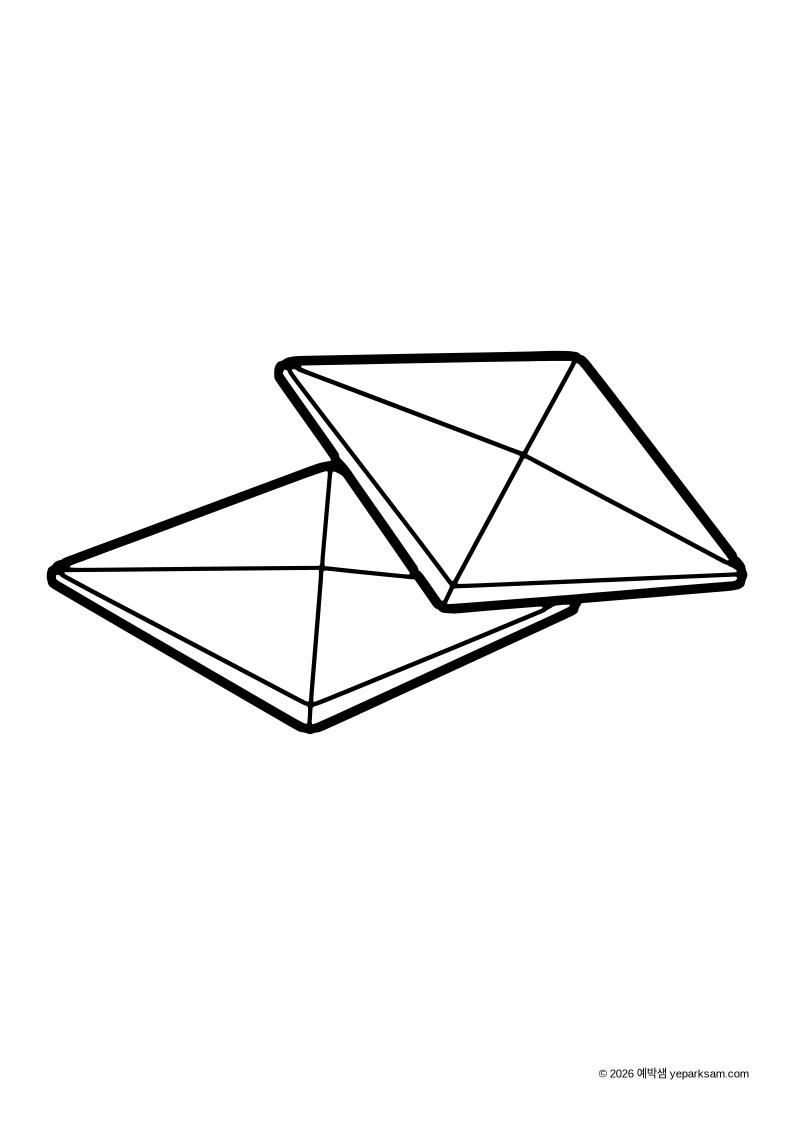
When they're all done, they overlap them with the ttakji folded earlier to compare sizes, set one beside a younger sibling's and boast that theirs is stronger.
Good to know
- Fold ttakji from big, sturdy paper to make hitting satisfying. Ttakji folded from colored paper are small and light and don't flip easily. Fold them big from drawing paper or scrap paper, and children compare sizes and happily hit again.
What you'll need
Colored paper · Drawing paper or scrap paper · Markers · Stickers
Ttakji Hitting (Ttakji-chigi)
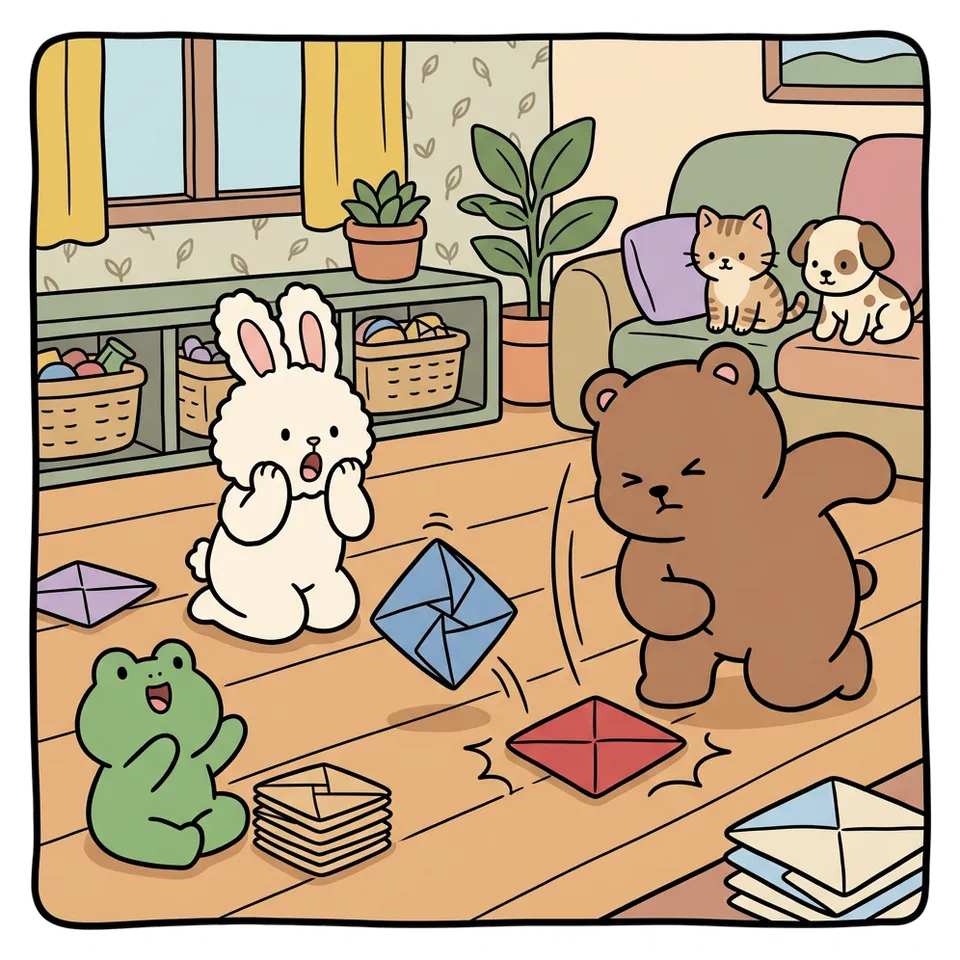
Slam your ttakji down hard on a ttakji lying on the floor, and if it flips over, you win. You decide the order and each take one turn.
Why it's good
The force of your own hand is the result. Flip it and win, don't flip it and lose, and you see it right before your eyes, so the moment one round ends they hit the next.
How to play
Each puts a ttakji down on the floor and decides who hits first. At “Ready, go!” they slam down with the wrist. “My ttakji's flying out!” they say, then when it flips, “Flap~ it flipped!” and “My ttakji won!” with a clap.
The one who lost soon says “Let's do it again!” and “I'll hit well this time,” setting the ttakji back down. One child's hitting ttakji bounced up and landed on top of the other's, and the child said “My ttakji won!” They had made up their own rule that landing on top counts as a win even if it doesn't flip.
A younger sibling likes throwing more than hitting. They throw the ttakji far and measure whose went farther, bragging that theirs went farther.
What you'll need
Ttakji
Changing the Rules and the Ttakji
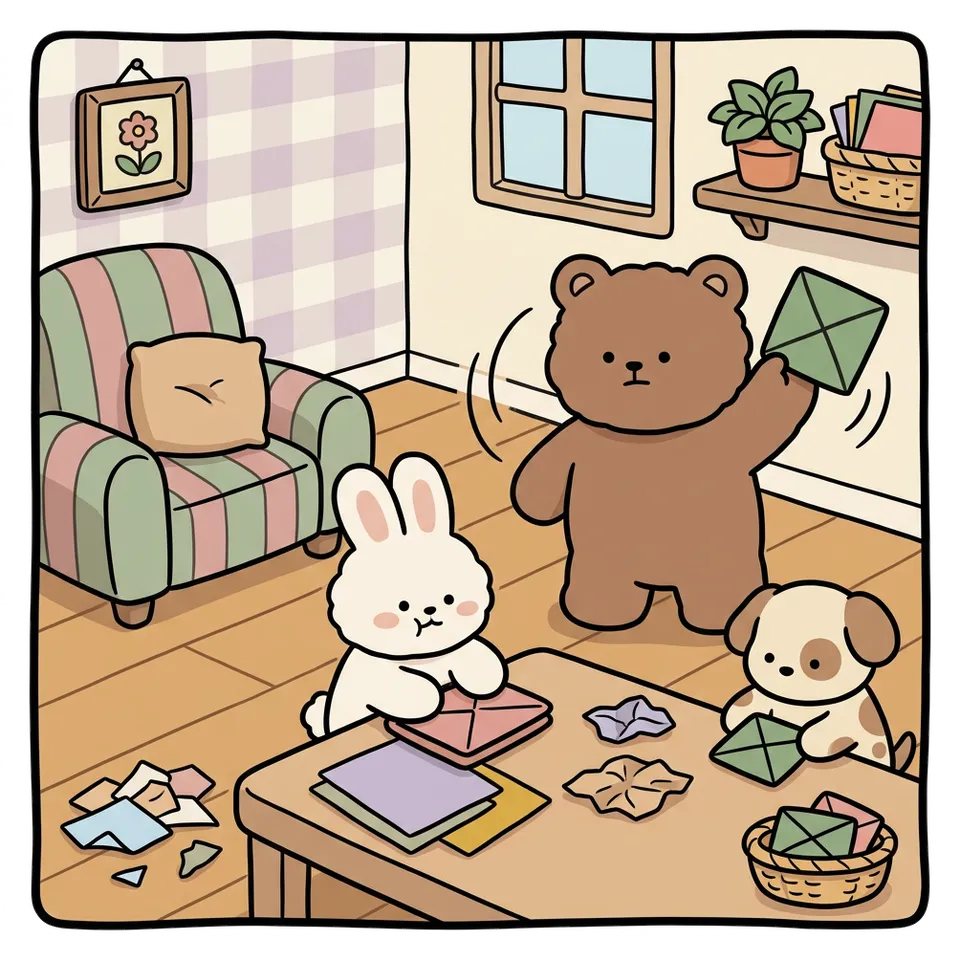
Don't leave a ttakji that lost as it is. Make it thicker again, or change your stance and the rules, and go up against each other once more.
Why it's good
After losing, a ttakji gives you work to do. They remake it thicker, change their stance, and set new rules. The time after a loss becomes time to get ready for the next round.
How to play
“My ttakji is strong so it'll never flip!” — when a ttakji that boasted this gets flipped, the scheming begins. “If we make the ttakji stronger, we can win more,” a child said, then “Then let's stick two colored papers together!” and folded a new one. Some children glue two already-folded ttakji into one.
If it won't flip, they change their stance. “Maybe we don't have enough strength?” and “Should we do it harder?” then “Let's swing our arm around,” “To swing the arm we have to stand up,” “Let's stand up and do it,” and they sprang up and hit.
They make new rules too. “How about if you flip it and then flip again in a row, you get 2 points?” a child suggested, so we tried it that way, and it was hard to flip in a row so everyone was disappointed, but they kept hitting. If older kids are playing ttakji-chigi at the playground, they go over, ask the rules, and join in.
Good to know
- Don't throw away a losing ttakji. Layer another sheet and refold it. Once it's thicker, it doesn't flip easily.
What you'll need
Colored paper · Glue