Play Ideas with Microphones
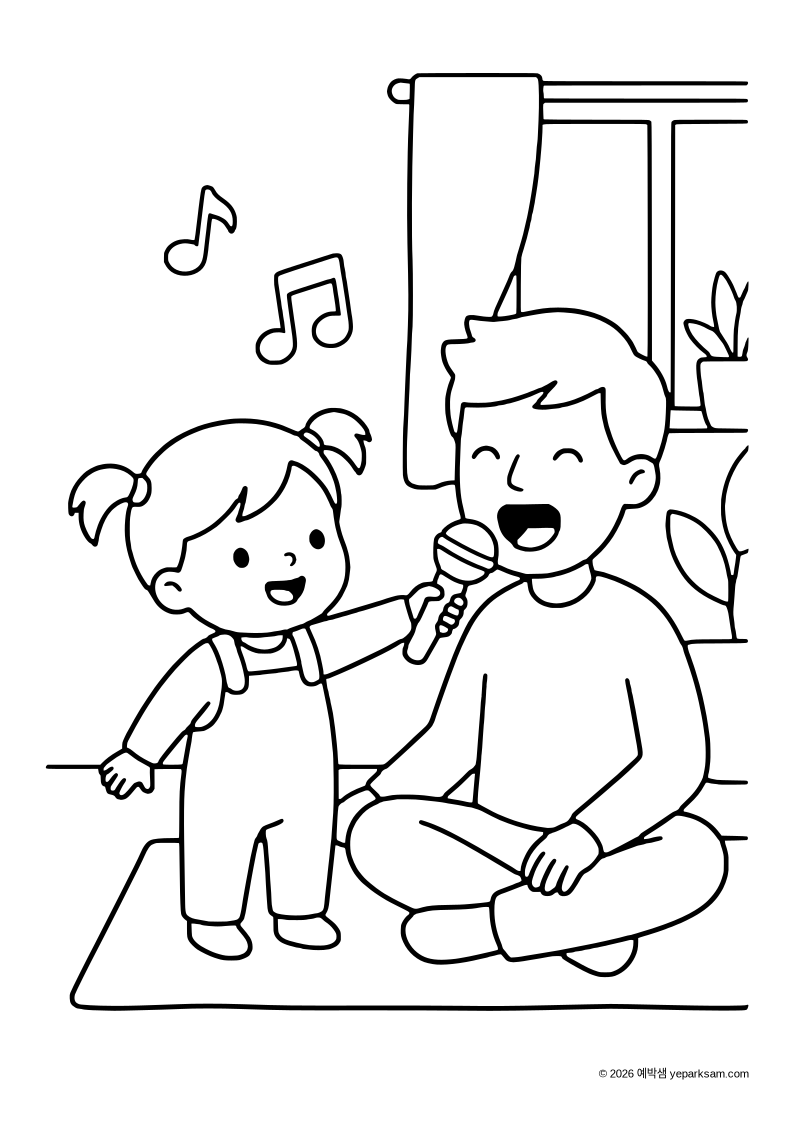
Ask what they did today and a child clams up. But the moment they hold a microphone, they start with “Hello, everyone.” It happens even when the microphone makes no sound. The instant a straw or a block is held in front of the mouth, the child calls it a microphone.
This page was translated by Yeparksam, a preschool teacher in Korea. Some words may sound a little unusual — thank you for your understanding.
Printables to use
See more ›

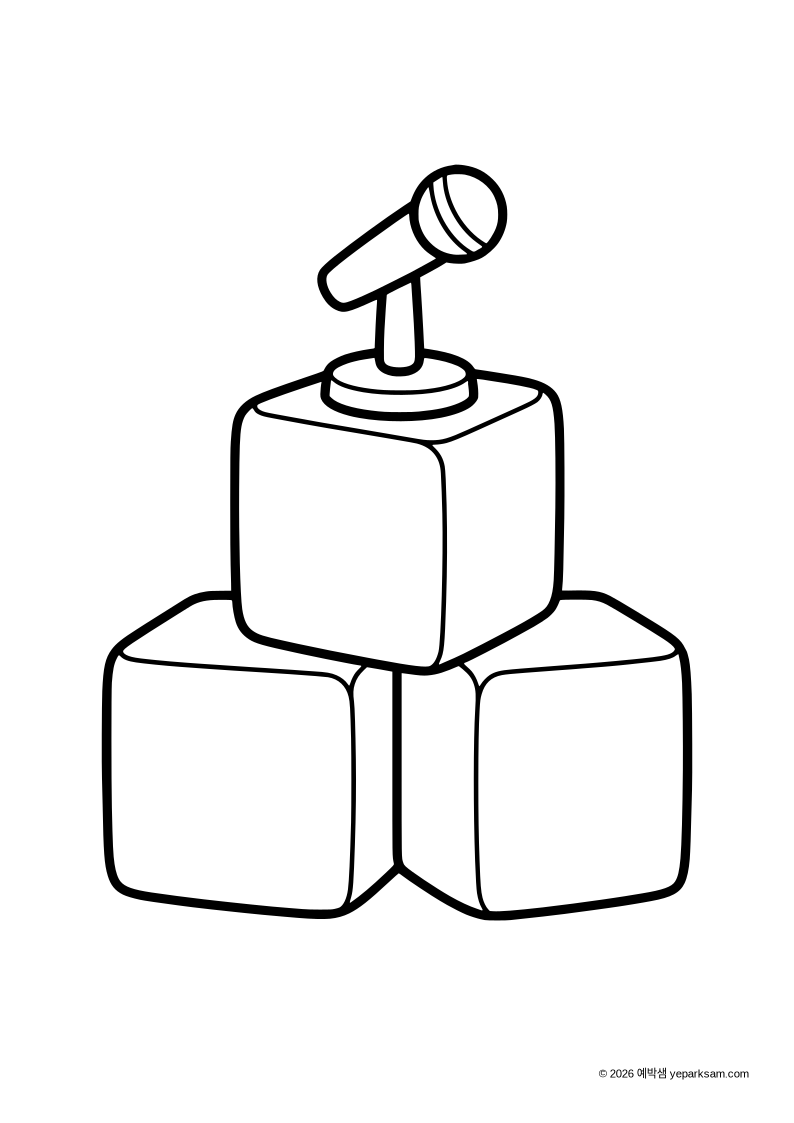
Anything Can Be a Microphone
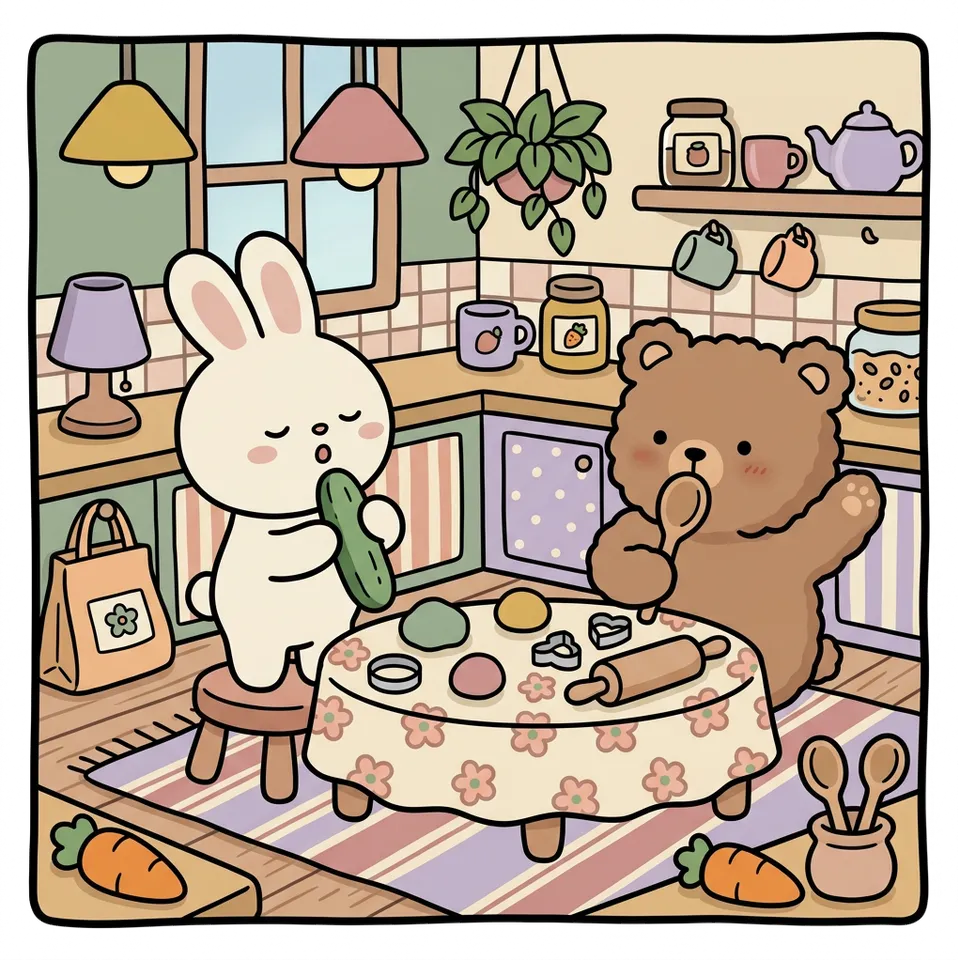
Hold anything within reach, a straw or a block, up to your face, call it a microphone, and sing. You do not need a real microphone.
Why it's good
Hold a cucumber or a block in front of the mouth and it becomes a microphone. Whether it makes a sound or not doesn't matter. It is play that turns the thing in front of you into something else.
How to play
Some days a child holds a leftover snack straw up to their face and says “This is a microphone.” When I ask where they saw that, they say “I saw it on TV.” Seeing this, another child comes over asking for one too, and the two sit side by side and sing "Don't Cry."
Sometimes a child sticks foam sticks together and says “My microphone is this one,” and sometimes they make a long one, a round one and a square one out of magnet blocks and insist they are all microphones. They lean against the wall and sing, and when the song ends they stamp their feet, “Again, again~”
Shape doesn't matter. If it's in front of the mouth, it's a microphone. A child who was shaping a cucumber out of clay once stopped their hands and said “Wait, this isn't a cucumber. This is a microphone,” and held it to their mouth and sang. Another child used a carrot that way, and another held a flower made of blocks to their mouth and went “La la la.”
It's similar on the days I make one from a paper tube. While they wrap colored paper and stick on stickers, it's just crafting, but the moment a round piece is attached on top and there's a place to hold, they say “It has a handle now,” “Now I can sing,” and start singing right then.
Good to know
- When you make one for them, it only becomes a microphone once a handle is attached. Stick a foam ball wrapped in foil onto a paper tube. The attaching is the grown-up's job, and a glue gun holds best.
- It works better on days after they've seen something. They imitate what they saw and their own words attach to it. The child who used a straw as a microphone, saying “I saw it on TV,” was on such a day.
- The decorating time is play too. If you leave stickers, felt and pipe cleaners out together, the child likes that time as well.
What you'll need
Straws or foam sticks · Paper tubes · Colored paper, stickers, felt, pipe cleaners · Foil and a foam ball · A glue gun
Holding It to the Grown-up's Mouth
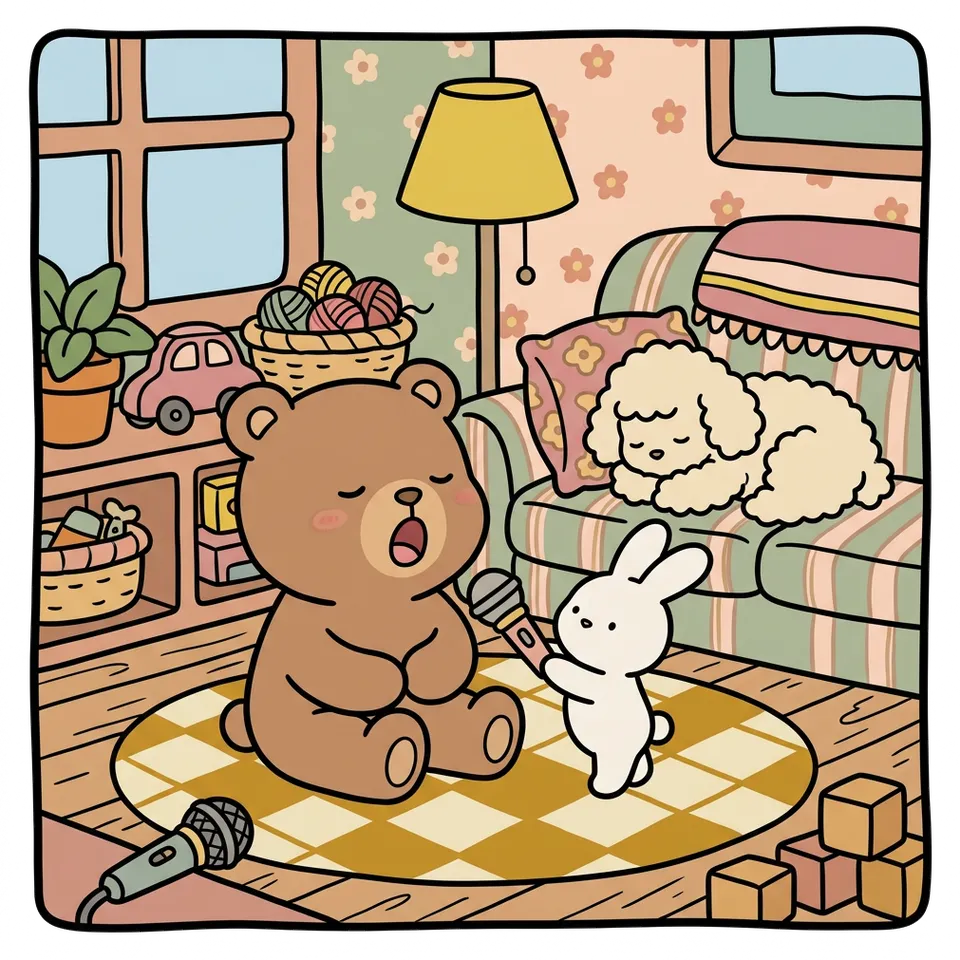
Instead of singing, the child takes the microphone they were holding back to the adult's mouth and makes the adult sing.
Why it's good
The child decides when play starts and ends. The grown-up sings, but whether to hold the microphone up or take it away is all in the child's hands. Even while telling the grown-up what to do, the child learns through this gesture that they are the one running the play.
How to play
A toddler came toddling over with a microphone and handed it to me. When I asked what to do, the child took it right back and held it up to my mouth. When I asked if I should sing "Three Bears," the child just moved their mouth a little and stood still. Only when I started to sing did another child playing nearby turn their head.
When the song ends, they hold it up again. That means do it again. They do this over and over.
Here it gets taken away. While I'm singing, another child sometimes scurries over and tries to take the microphone. When I said I'd give it when the song was over, the child tapped their own chest with a hand instead of saying anything. It means me, give it to me. But when I finished and handed it over, they looked at it for a moment and just left. What they wanted wasn't the microphone, but the one who was singing right now.
A bit older, it flips. A child singing with the microphone asks a friend beside them, “Wanna sing together?” If the friend nods, they sing together shoulder to shoulder, and from then on they pass it to each other saying “Now it's your turn.”
Good to know
- Keep two microphones. What they want is different: one child plays by holding it to the grown-up's mouth, and another sings by themselves with their own microphone.
What you'll need
Two microphones
Pretend Not to Hear
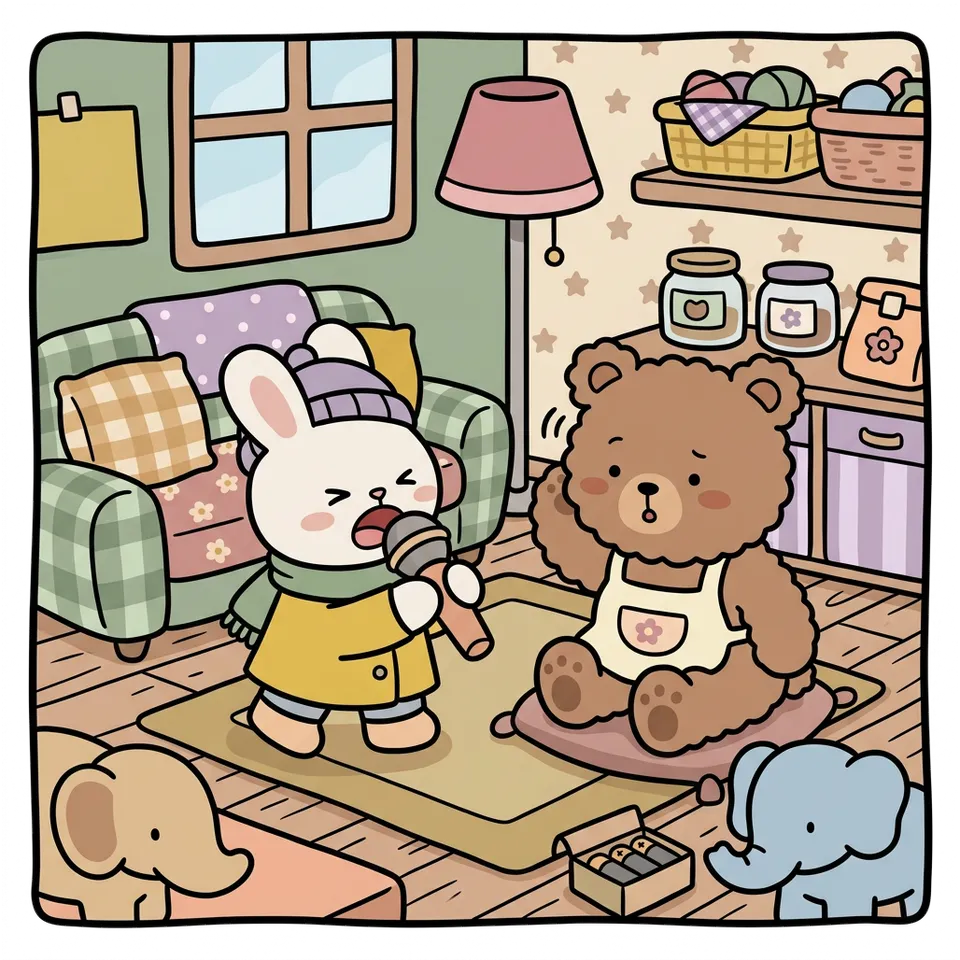
When a child who is not talking yet makes sounds into the microphone, cup a hand to your ear and pretend not to hear, asking again on purpose so the child makes their voice louder.
Why it's good
This is when children find out they can make their own voice louder or softer as they like. Praise works once and that's it, but if you ask back, pretending not to have heard, the child makes their voice bigger on their own.
Books to read together


How to play
Even a child who isn't talking yet uses a microphone. They put it right up to their mouth and say “Ah~” or babble. When I put a hand to my ear and ask “What did you say?” the child makes their voice bigger. A child who had only been babbling once suddenly put strength into their belly and said “Mama, Dada” clearly.
Then it turns into a loudness game. If I open my eyes wide, saying it was so loud I was startled, they giggle, and if I suggest a tiny whisper, they hunch their shoulders and whisper. If I say I didn't hear again, they go big again.
Animal sounds come out here too. I played an elephant sound and the child said “Pwooo!” into the microphone. Many children imitate sounds before they use words.
They copy the sound that grown-ups make when they pick up a microphone, too. One child said “Ah ah ah ah” into it, and another beside them laughed, “What is that?” Then a different child said “Then do it like this with me,” and held up their own microphone high. The teasing turned right into doing it together.
Give them a microphone that makes sound and they look for the switch before singing. A child who pressed the power button by accident turned it off and on over and over. Click, click. The singing comes after.
Good to know
- If you use a microphone that makes sound, check the power first. A child's hand often presses the button and turns it off while playing, and it's easy to assume the batteries have run out.
- Pick one with adjustable volume. If a child nearby covers their ears with both hands, that play is over right there.
- Before age three, sit nearby. They suck on microphones or try to push the whole thing in, so choose one whose head doesn't pop off and is too big to fit in the mouth.
What you'll need
A microphone that makes sound
Announcing with the Microphone
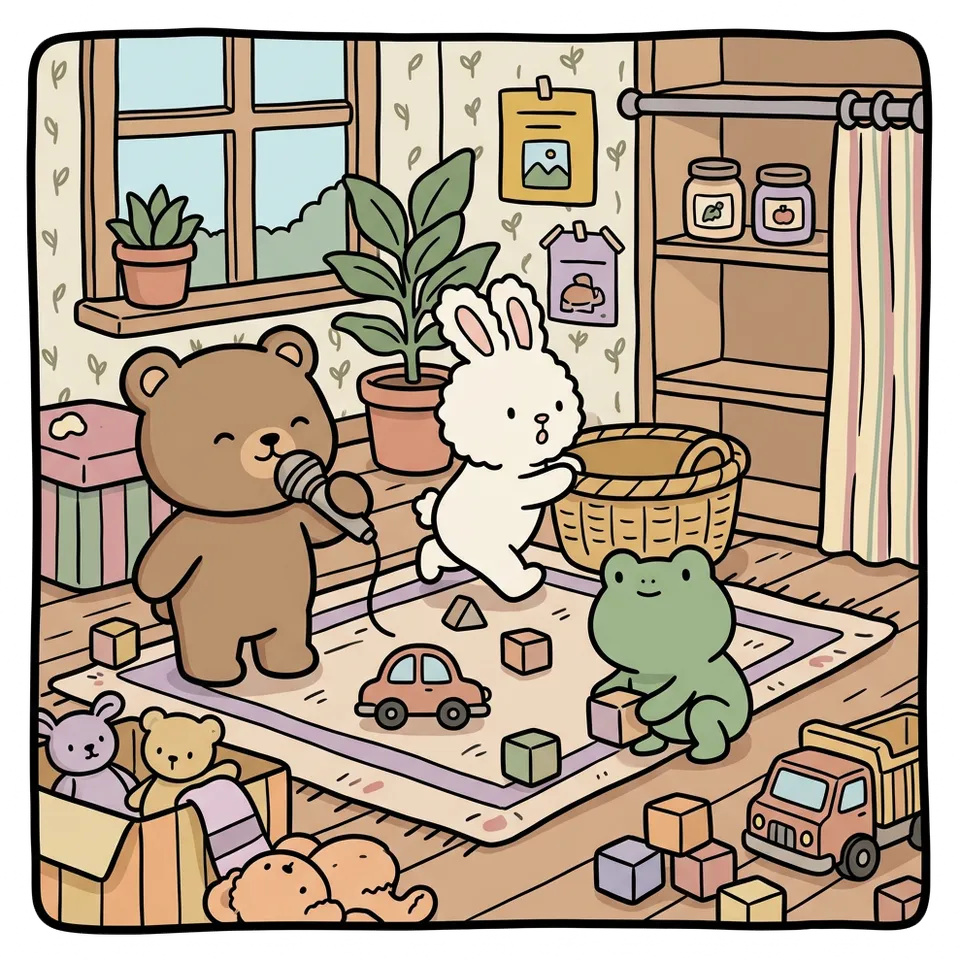
Words said into a microphone sound like an announcement, so saying "let's tidy up" or "let's put on shoes" through the microphone lands differently than saying it normally.
Why it's good
Words that weren't heard face to face get through once they pass through a microphone. Then the child asks for the microphone too, and says there what they couldn't say to me.
How to play
One day when it was time to clean up, I picked up the microphone and sang "Everyone Back in Place." The child who hadn't budged when I just said it jumped up and went to get a basket. The same person said the same words. To the child's ears, this must sound like an announcement. An announcement has nobody to argue with.
Calling them to eat, putting on shoes, taking a bath, all of these can be done this way. It works even better with a tune. Then the child holds out a hand and asks for the microphone. They have something to announce too. When I told them to try saying what they wanted to tell a friend, they said “Hi, friend,” and then came “Let's play together” and “I love you.”
But it doesn't last. I got into it too and used it for several days in a row, and then saw a child not even glance at the microphone sound. Used every time, it goes back to being just nagging.
Good to know
- Use it once a day, for only the one thing that goes worst. Used every time, it goes back to being just nagging that the child doesn't even look at.
What you'll need
A microphone
Call a Name and Answer
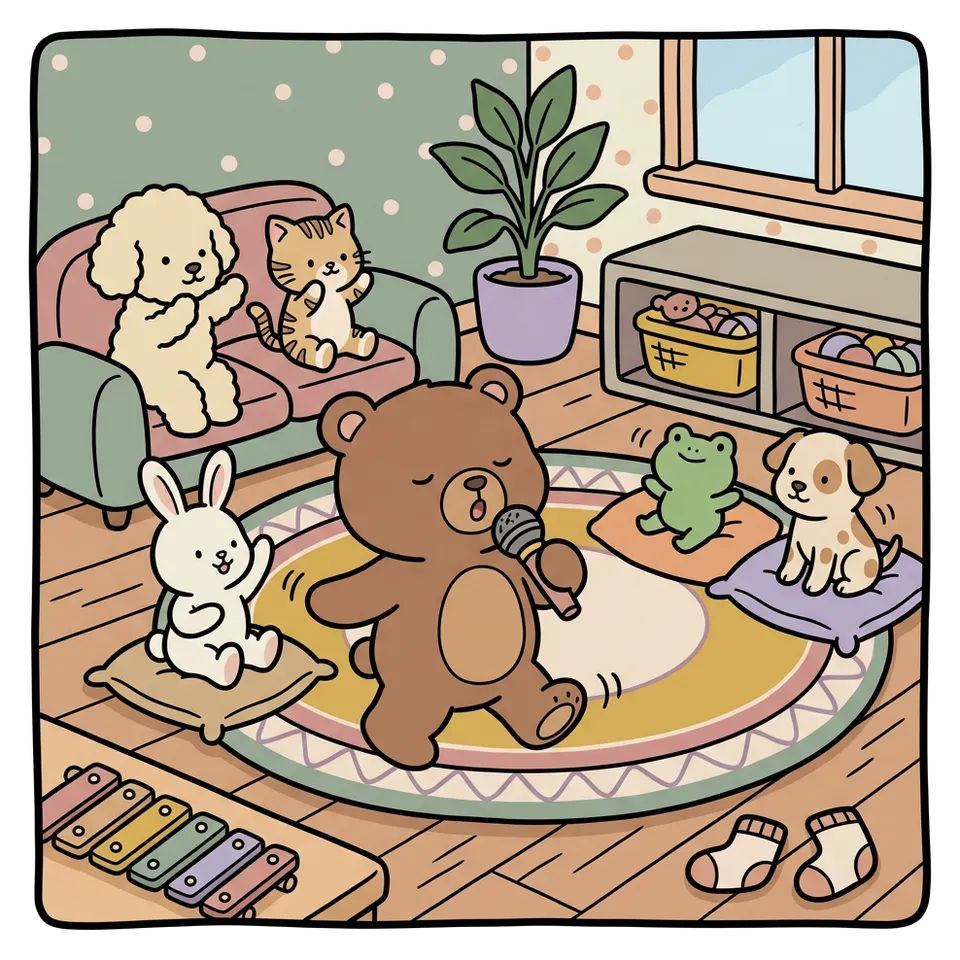
The child holds the microphone and goes around among brothers, sisters, or friends who came to play, asking their names in a song, and the child who is called raises a hand and answers.
Why it's good
Friends who don't know each other's names learn them all in a day. To call someone you have to know the name, so you go around asking first, and to answer you have to notice your own name being called. Both the caller and the answerer want a turn, so the microphone keeps moving from hand to hand.
How to play
The child with the microphone walks around the room asking in a song, “Where is Bori?” and the child whose name is called throws up a hand and answers “Here~” It means I'm here.
But some children can't answer even when called. They shut their mouths tight and look at their toes. One time a friend nearby did something. The child who had passed the microphone answered “Here~” for them. Then went on to call the next name as if nothing had happened.
It weighs on you when your own child just stands there without speaking. I was about to ask once more, but the children filled it in before I stepped in. A few days later, one day the child takes the microphone and says “Here~” themselves.
Good to know
- Don't push if they can't answer. If another child answers for them and you move on, a few days later the child takes the microphone on their own.
What you'll need
A microphone
Raise It a Hand's Width
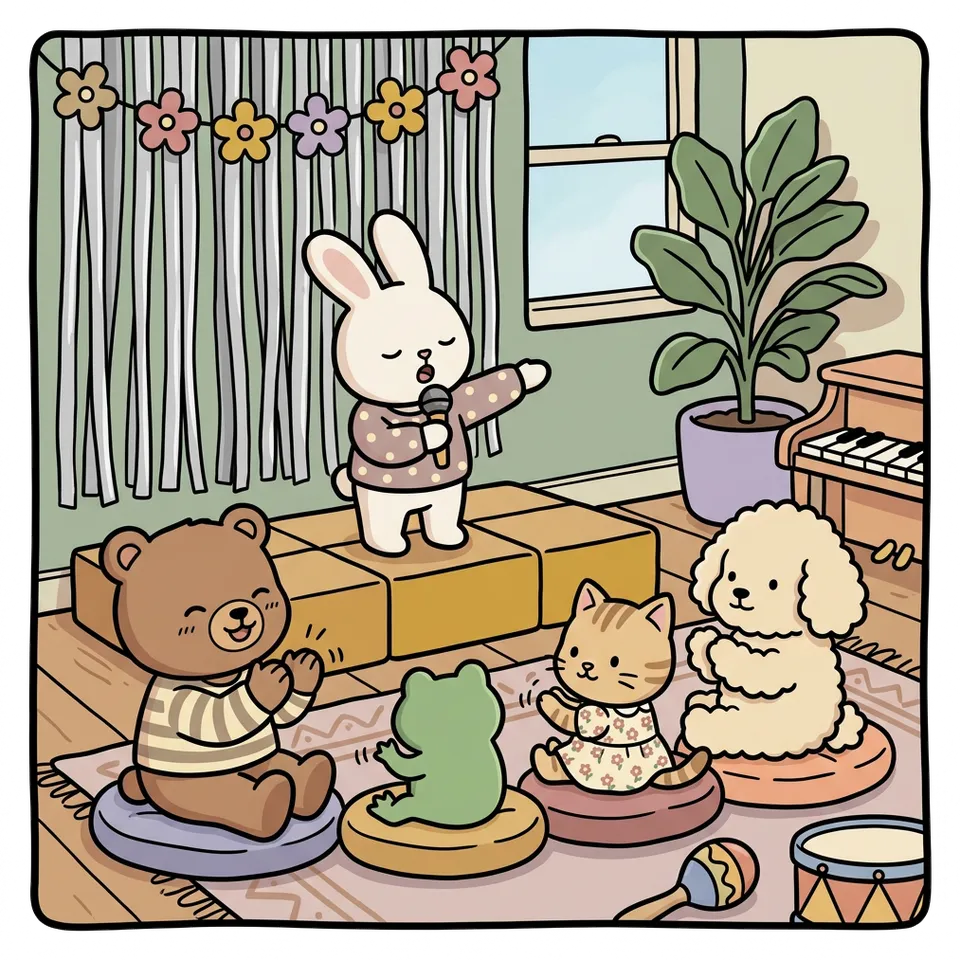
Make a slightly higher spot out of blocks or a mat, and you have to climb up on it to become the one who sings.
Why it's good
Once there is a place to stand, an audience appears. Not every child wants to sing, and some like sitting and clapping better. When the stage and the seats are separated, roles appear naturally: waiting for a turn, watching and commenting.
How to play
Singing on the floor and singing one hand's width higher are different plays. Lay down a few blocks to raise the spot a little and it becomes a stage. One child stacked magnet blocks for a singing friend, saying “Climb up here,” and said you only become a singer once you climb up. One mat or a couple of cushions works too. Stick a line of something shiny on the wall and the spot in front of it becomes a stage. Even just taping up long strips of foil sends a child who wakes up in the morning running straight to it.
There is always a child who likes sitting and clapping better, and that child tells the turn order, “Next is my friend's turn.” When a song ends, they even comment, “You sang well,” “Let's do this song next.”
Good to know
- All you need is to set a place to stand on. It doesn't have to be a grand stage. A little higher is enough.
What you'll need
Blocks · A mat or cushions · Foil
Try an Interview
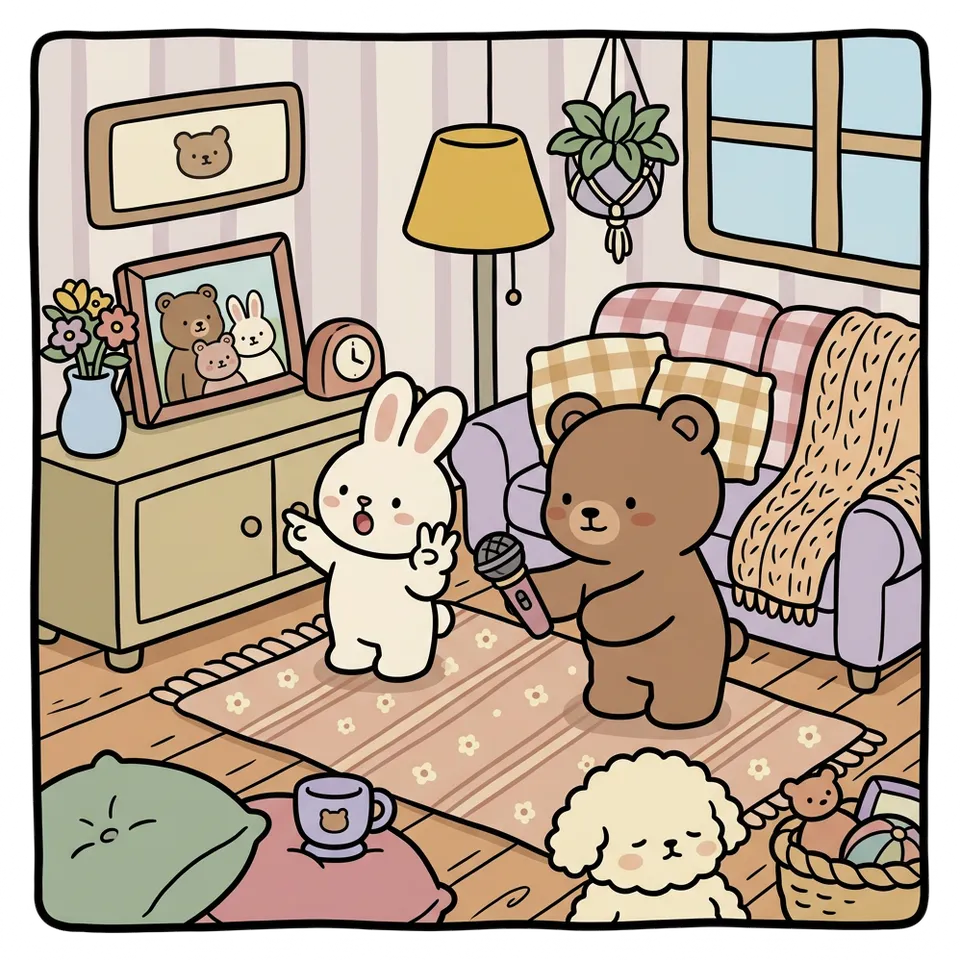
An interview play where you ask a child holding a microphone their name or what they like, and the child answers.
Why it's good
After answering a few easy questions, the child starts bringing up things you never asked about.
How to play
Just give a child a microphone and they freeze. They need to be asked before words come out. What's your name, how old are you, what's your favorite color. These three get it started. The answers are fixed, so the child doesn't get stuck. After that they go on by themselves. “I like Teenieping,” “I like Joker and Batman,” “I like Mommy, Daddy and my sister,” they say, adding things nobody asked about, one after another.
Sometimes a child holds the microphone and still can't open their mouth, just standing there holding it. In that case, say “Tell me next time” and move on.
For such a child, try giving them the asking part. It's much easier than answering. A child took the microphone and asked me, “What's your name?” When I said my name, they nodded and said “Ah, I see,” copying grown-up talk exactly.
Put a family photo beside them and there is more to say. “My daddy likes pizza!” “My family is 4 people!” they brag, and the listening child asks back, “How many people are in your family?” The microphone moves over to that child.
Good to know
- If they can't get words out, move on. Just say “Tell me next time” and go on. If you push there, next time they won't pick up the microphone at all.
- A family photo beside them gives them more to say. It goes all the way to boasting and asking each other back.
What you'll need
A microphone · A family photo
Film It and Watch Again
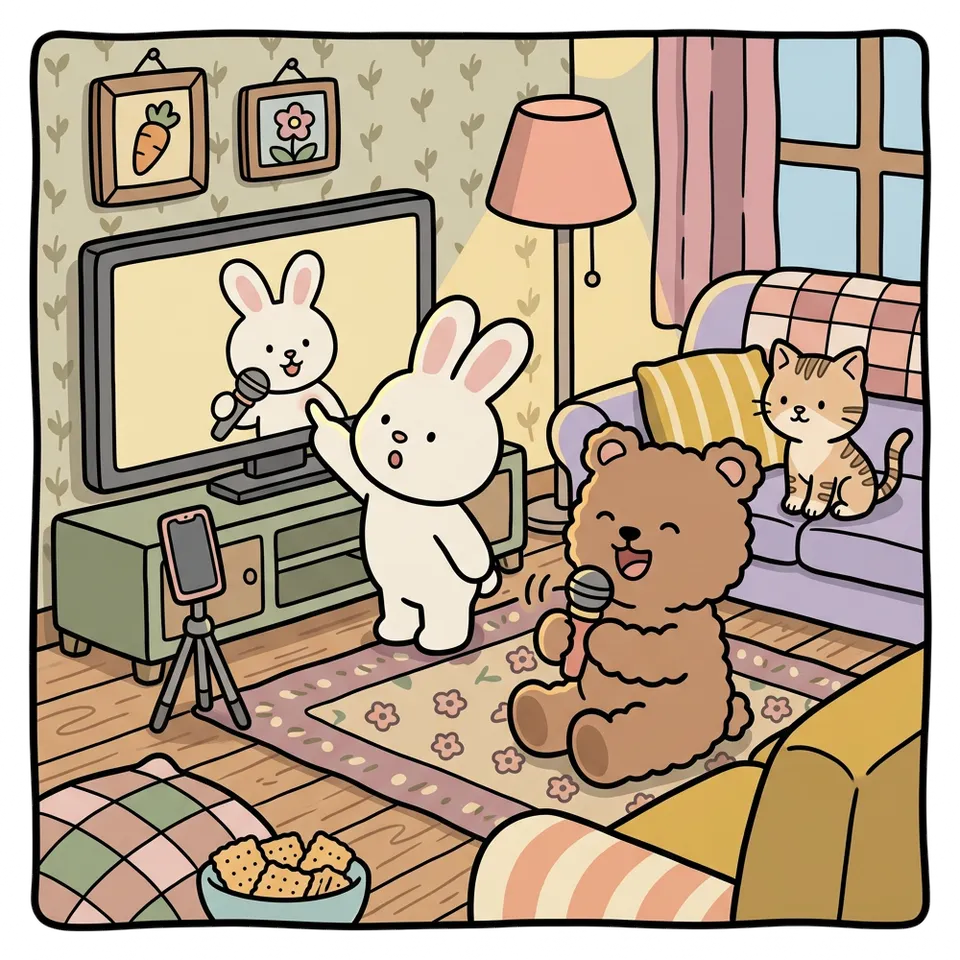
Film the microphone play with a phone and play it back later on a big screen.
Why it's good
Hardly any child has heard their own voice from the outside. After seeing it once, how they talk changes from then on: clearer, and the voice gets bigger. It is also the play where they first notice that the voice they hear when they speak and the recorded voice sound different.
How to play
On the day we filmed with the phone on a tripod, a child saw themselves on the screen, came right up close to look and said “I want to do it again.” Another child pointed at the screen with a finger and said “I hear my voice.”
When you speak, the sound reaches you through the air and also through the bones of the skull, so it sounds thick, but in a recording only the sound that came through the air is left. That's why your own voice sounds like someone else's. It's why even adults feel awkward the first time they hear it.
Good to know
- Set aside a separate time to watch the recording together. Children clap when a friend appears and wait for their own turn. They play longer watching than filming.
What you'll need
A phone · A tripod
Calling Customers to the Shop
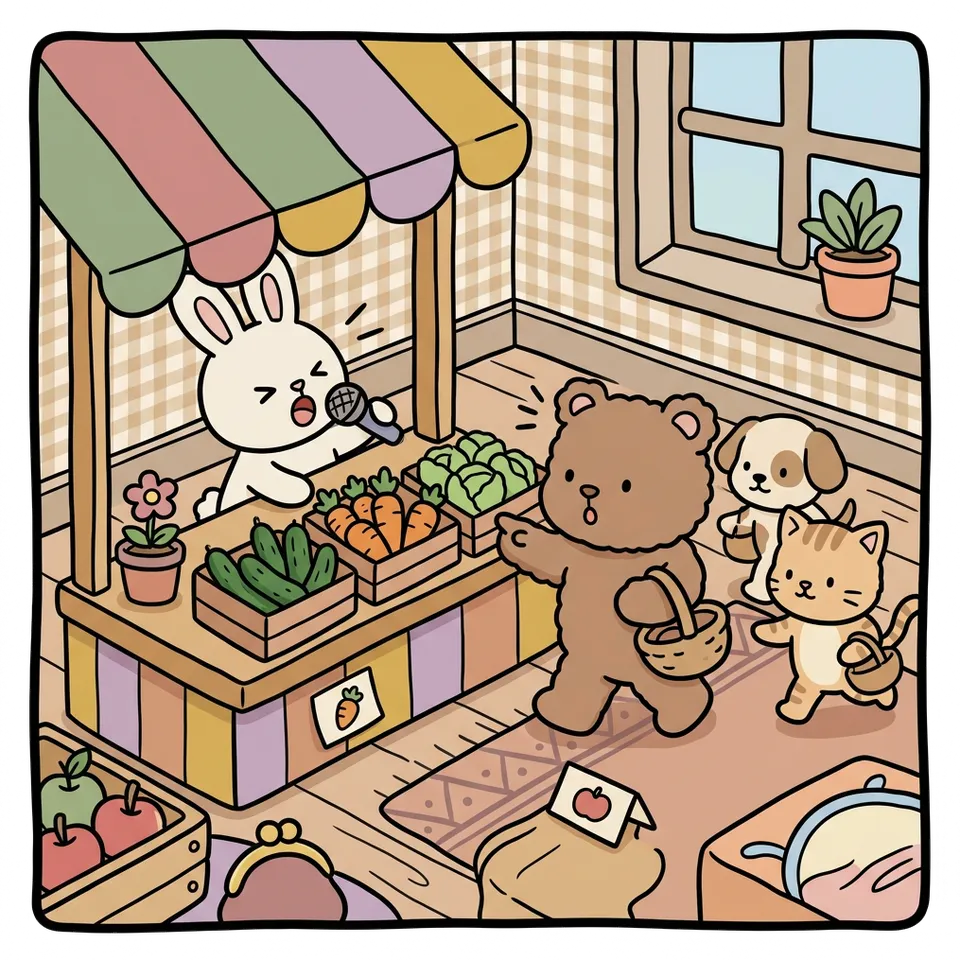
In a shop play, bring a microphone to the shop that has no customers. The child shouts into the microphone what they are selling to call customers.
Why it's good
Through experience, the child learns that a loud voice alone doesn't bring customers, you have to say what you are selling. This play teaches that you need both volume and information to get through.
How to play
When shop play starts, customers crowd to one side. There's a bustle in front of the fruit shop and nobody goes to the vegetable shop. The child running the vegetable shop came out front and shouted at the top of their voice, “Vegetables for sale here! Buy vegetables!” but nothing changed.
That child looked around, then fetched a microphone. “Ahh! There are vegetables here~ Buy vegetables~ Really cheap!” They must have seen somewhere that grown-ups say "ahh" first when they switch on a microphone. Then friends come. “How much is it?” “Carrots, please.” “Do you have cucumbers too?” The child took customers: “Carrots are 100 won.” “I'll give you one more cucumber.”
But sometimes it doesn't work even with the microphone. The child running the train station ticket booth put their mouth right up to the microphone and called “Welcome~” much louder than usual, and nobody came. They looked around and said “Why isn't anybody coming? I said welcome~” The sound was loud enough. They hadn't said what they were selling. When I said that if they told friends why they were being called, the friends would be curious and come, they picked up the microphone again and shouted “I'm selling tickets~ Buy tickets~”
Once one shop gets going, the neighboring shops all look for microphones too. “We have fruit too!” “Buy tasty watermelon!” they shout from all around.
Good to know
- If customers don't come, you can ask “What kind of shop is it?” yourself. After answering once, from then on they shout what they sell first. When the sound doesn't get through, tell them what you are selling, not how loud to be.
- When shop play is fading, try putting out just one microphone. Selling play goes one more round into calling play.
What you'll need
A microphone