Play Ideas with Cars
Somehow toy cars pile up into a whole bin, until I wonder if I bought every single one. But when I watch how they actually get played with, a child flicks one with a fingertip, watches it roll along once, and tosses it back into the toy bin. That's about it.
Maybe it's because they come already finished. They have wheels, windows, and all their colors painted on, so there seems to be nothing left to do. But there's one thing a car is really missing. A driver.
The moment a child fills that spot, the lump of plastic on the floor becomes a car on its way somewhere. Where it goes and what happens to it is up to the child from then on.
This page was translated by Yeparksam, a preschool teacher in Korea. Some words may sound a little unusual — thank you for your understanding.
Picture books to go with this play


Printables to use
See more ›
Give Them Just a Steering Wheel
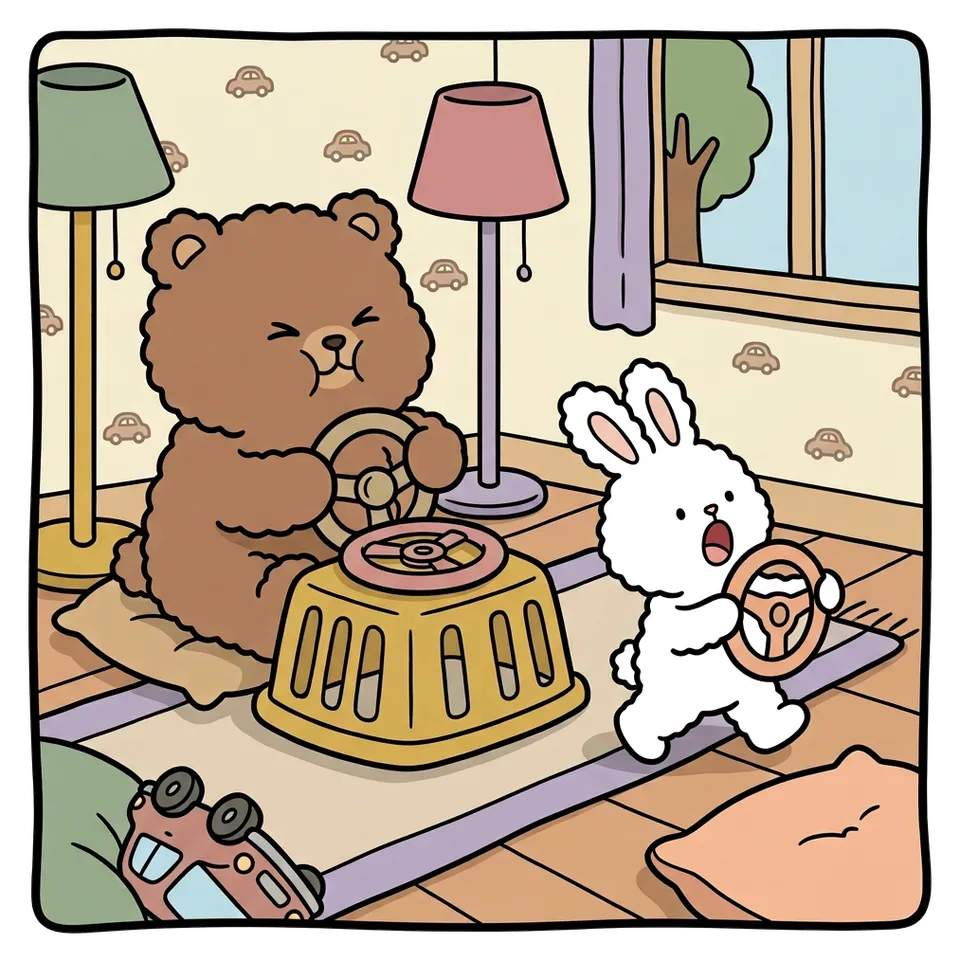
Just hold a steering wheel and you are a driver even without a car. Hold it in your hands, turn it, and press buttons to make sounds.
Why it's good
With just a steering wheel in hand, the child leaves the spot where they were sitting and becomes a driver using their whole body. "Vroom vroom" and "beep beep" come out as sounds they make themselves, "where are we going" as a destination they decide themselves, and splitting into Mom's car and Dad's car as a role they take on themselves.
How to play
Hand over just the steering wheel, and at first they sit where they are, hold it with both hands, and turn it this way and that. They notice that pressing the button makes a sound, their eyes get big, and they press it again and again.
Children fix the wrong sounds themselves. Sometimes they don't like the button's sound. One child, unhappy with the beep-beep-beep, shouted “No beep beep~” When I asked what sound a real car makes, they told me “Honk honk!” From then on they made the honking sound with their own mouth instead of the button.
From here on they don't stay seated. Holding the wheel, they get up and walk around the room, going vroom vroom and honk honk. When I ask where they're going, only then do they get a place to go. Some children, as soon as they grab the wheel, call out “Daddy~ Daddy”, “Mommy~ Mommy” and split into Mom's car and Dad's car.
Good to know
- This is driving while carrying it around, not riding while seated, so you don't need to set aside much space.
- If two children play, a wide place like a yard or playground is better. They're so absorbed in the wheel that they don't look ahead, and in a tight space they bump into each other.
- If you don't have a steering wheel, you can rest it on an upside-down basket. When I put a wheel on top of one, a child loved it and said “Zoom zoom, I'm going fast~” Without making a single car, they're already riding in one.
What you'll need
A toy steering wheel
Making a Ramp and Rolling Cars
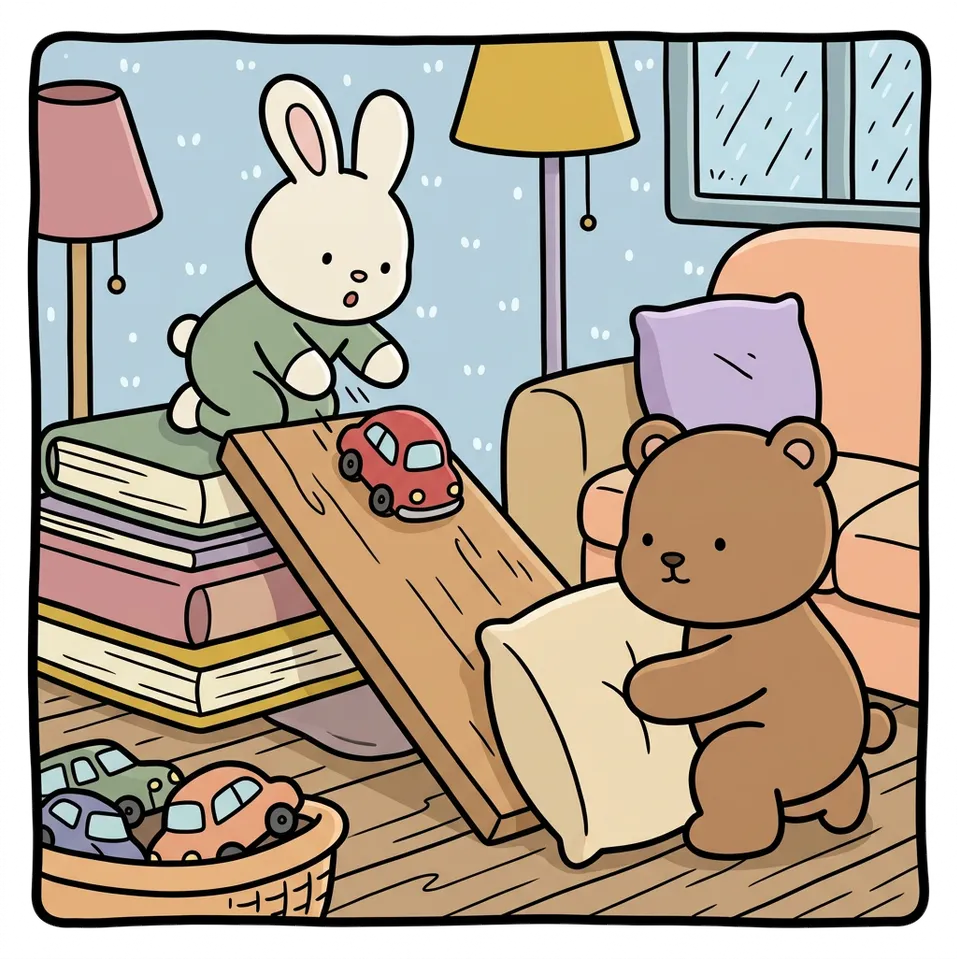
Lean a board across a few thick books to make a slope, and let go of a car at the top so it slides down.
Why it's good
It's play where the child checks again and again that the car slides down on its own the moment they let go. In doing so they learn that it goes down because they let go.
How to play
Set a car at the top of the ramp, let go, and it slides down by itself. For a child, that short moment is the whole play.
They keep asking me to put the car back up. Swapping in another car or suggesting something else beside them makes no difference. They want that one moment of letting go again, so before I knew it I'd become the person who picks up the car and sets it back. One day I put it back twenty times.
When a car that was merrily going down bangs into the wall, the child is the first to be startled. “The car broke!”, “It's too loud!” they say, and stop the play themselves. When I asked what we could do, they dragged over a sofa cushion, said “What if we put this over there?” and stood it against the wall. When they rolled it again, they said happily “No noise!!”, “The car didn't break~” After that, without being told, they block the wall with a cushion first and start the play, saying “You have to do it like this so the car doesn't get wrecked.”
Good to know
- Pick a car that rolls well on your palm. A car that won't roll in your hand won't go down the ramp either.
- Use a broad board and set it so it doesn't slide. If the board is narrow, the car veers off the side on the way down.
- The wheels have to touch the board to roll. Some children put the car down on its side and ask why its body drags and won't go down. Stand it up on its wheels and only then does it shoot down.
- On days you can't go outside, this one play gets you through. When they need to move their bodies and have nowhere to go, resting just one board on a few books keeps them in front of it for a long time. They push it up, push it again, and even if it's not like running around, their knees bend and straighten many times in the meantime.
What you'll need
A few thick books · A cutting board or a flattened box for the board
Dipping Wheels in Paint to Print
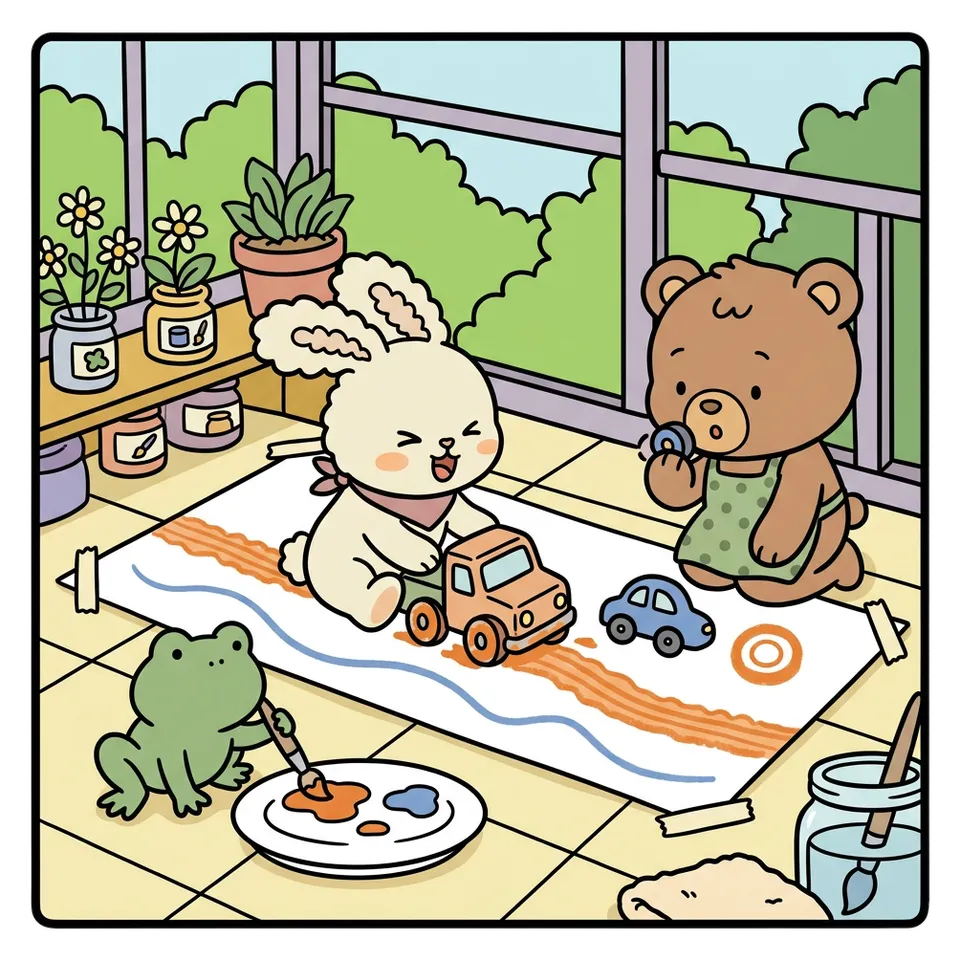
Put paint on car wheels and roll them across paper to print wheel tracks.
Why it's good
It's art play where a child who only knew wheels as things that roll finds another use for them by drawing with them. The force they put into their hand shows up as the length of the track, and the size of the wheel as its width.
How to play
The wheels that usually roll round and round are going to draw today. When I ask “Car wheels go round and round, right?” the child answers “They go round and round.” The moment they give that usual answer, I put paint on those wheels for them.
The child rolls the wheel through the paint and carries it onto the paper. The moment they see the paint stick, they say “It got on the wheel!” They choose a color themselves, saying they'll make orange wheel tracks, and when the pattern shows up they shout “Mommy! It showed up!”
A child who held wheels up to compare, saying “This one is small”, also notices on the spot that the track from the small wheel is thinner.
When I draw a circle next to a track with a paint-covered brush, the child recognizes it right away. “That's a wheel, a wheel,” they say. It's the moment the hand that was stamping where the car passed becomes a hand that draws, so one sheet of paper holds both the track and the drawing.
Good to know
- Spread the paint thin with a brush and the tracks come out clear. If it pools thick, the wheel just slips and leaves no track.
- Tape the paper to the floor and the child will climb right onto it to play.
- At an age when hands go to mouths, use paint labeled non-toxic.
- Wash the wheels before the paint dries. Once it hardens, what's stuck in the wheel grooves hardly comes out.
What you'll need
Paint · A plate · A big sheet of paper · A brush
Putting Cars to Sleep
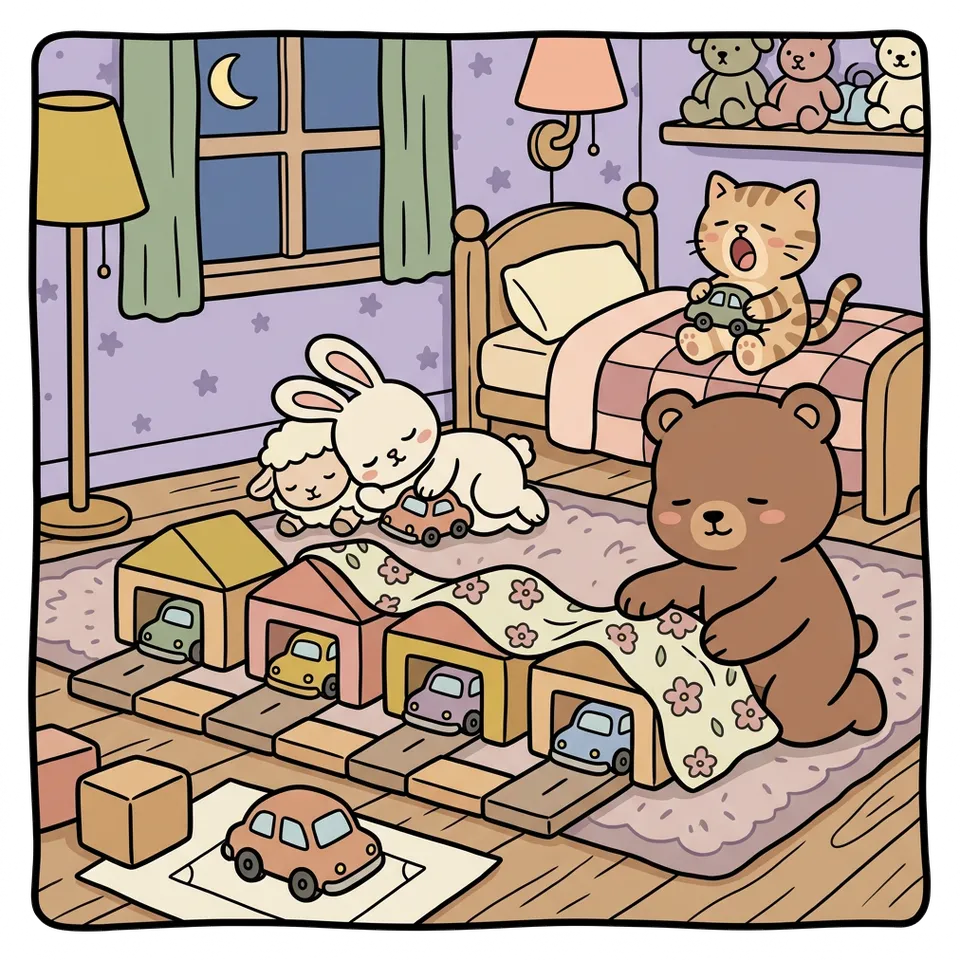
Pick several spots on the floor and make them the places where the cars sleep.
Why it's good
It's play where a child learns what parking is through the familiar word "sleeping" instead of the difficult word "parking." It starts with laying a car down in a resting spot and calling it with words they know, like "Zzz, it's sleeping."
How to play
They don't know the word parking, but they know the word sleeping. When I told them this was where cars rest, the child pushed a car in and said “The car is sleeping, zzz.” When I added one more thing, that Mom's and Dad's cars also sleep in the parking lot when they're not driving, from then on they brought every car they played with and laid it down.
When there aren't enough sleeping spots, the child adds more on their own. When I built a garage out of blocks, they stopped putting a car in to tell me the door wouldn't close. When I said maybe it's because the car is big, they asked back “The car is big?” and rebuilt it much wider than the first time. One wasn't enough, so they built another beside it, and when they finish they count how many, pointing with a finger. Connect the spaces between with a road, and the row of garages becomes a train just like that.
The child who was putting a car into each garage said “Now everybody's done sleeping,” and no sooner had the words ended than they used a doll as a pillow, lay down beside it, and closed their eyes. I thought it was only the cars being put to sleep, but the one who closed their eyes was the child.
If you cover them with a cloth to put them to sleep, the fun gets one layer deeper. A child who covered a sleeping car and spread both hands saying “It's gone” covered a doll too and again said “It's gone.” When I look around with them wondering where it went, they happily whip the cloth off and laugh, “Here it is!”
After they've slept their fill, it's time to wake them. With just one “It's morning”, they take out the sleeping cars one by one and drive them around again, going “Vroom vroom.”
Good to know
- The spots can be squares drawn on paper, or just pointed to with your hand. Children understand it all.
- Covering them with a cloth to sleep adds one more layer to the play.
- This play is handy at cleanup time. If you say let's clean up, they won't, but if you say let's put them to sleep, they put every one away.
What you'll need
A cloth · A doll · Blocks
Setting Up a Car Wash
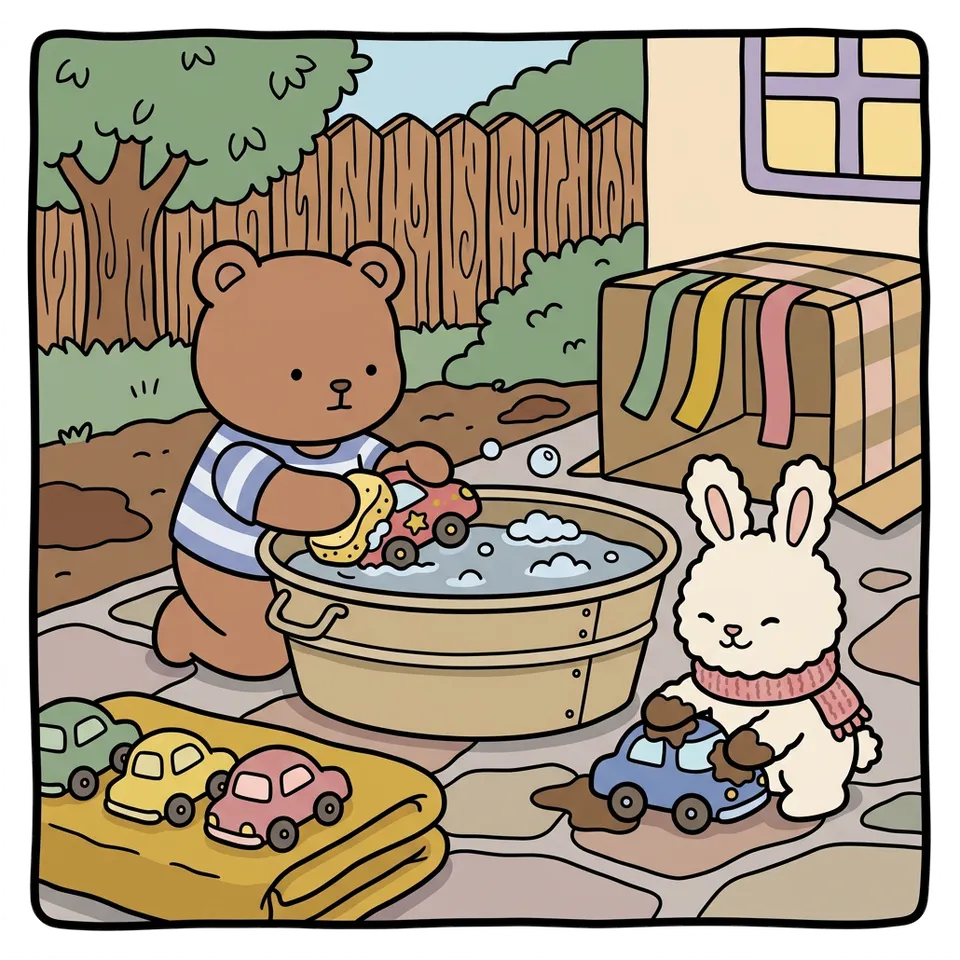
A role play of filling a basin with water and washing a car.
Why it's good
It's sensory play they do because they love the motion itself, not the result. If there's nothing to wash, the child makes something themselves just to wash again.
How to play
They keep making them dirty again. After scrubbing every corner until it shines, they bring dirt on their hand and rub it back on. “It got dirty!” they say, and start washing from the beginning again. I almost told them to stop, but it turned out that was the heart of this play.
When there are several cars, siblings or friends who've come over line them up on their own. “My car first!”, “Your car is next!” they say, taking turns, and when it's their turn they scrub happily.
Good to know
- A single drop of dish soap makes them play longer. They love bubbles, and that one thing stretches out the play time.
- Adding a tunnel adds one more way to wash. Cut both ends of a big box and lay it down, then hang several strands of colored tape or ribbon at the entrance, and they brush past the car body like a real car wash brush. Have one car get a hand wash, scrubbed hard by hand, and another get an automatic wash, brushing through the ribbons.
- Don't leave metal cars soaking in water for long. If the axles rust, the wheels get stiff. After washing, wipe off the water with a towel and set them out to dry.
What you'll need
A basin · A towel or sponge · Dish soap · A big box · Colored tape or ribbon
Attaching Wheels to Build
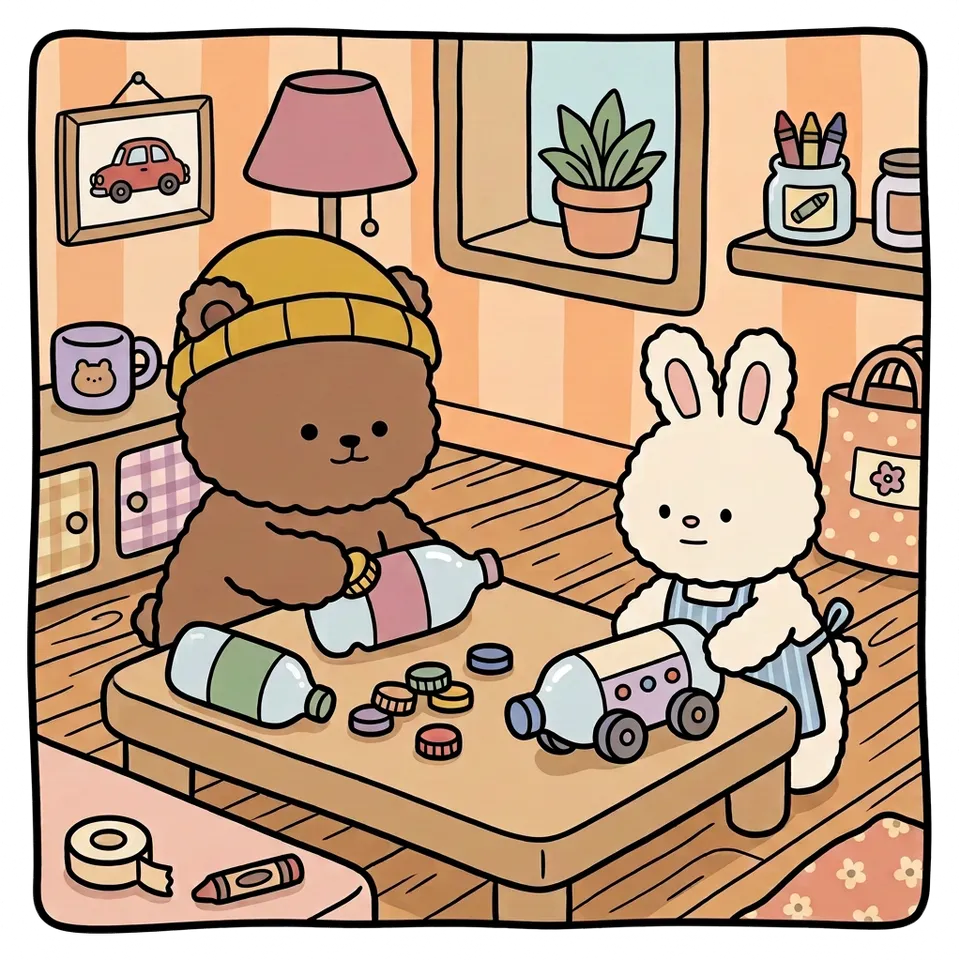
Stick four bottle caps onto a water bottle to make a car with wheels.
Why it's good
It's hands-on building play where the child only finds out whether it really rolls by sticking the caps on with their own hands. If it won't stick, stick it again; if it won't roll, fix it again, and that trial and error is itself the learning. They find out for themselves that it goes well only with four wheels.
How to play
When I ask how it would be to use the caps as wheels, the child immediately asks the next question. “But how do we stick this on the bottle?” This is where the real play begins. The child fetched glue first. They put it on, and it won't stick. A friend watching said flatly “It's not paper, so will glue work?” and brought tape. The tape also falls off as soon as it's stuck. “It won't stick. Help me, please.” That's when I cut double-sided tape and put it on the backs of the caps. Only then do they stick firmly.
The order for sticking on the caps is also up to the child. Some stick them on one at a time and match the number themselves, saying “You need four wheels to go well,” and if it doesn't roll well after pushing it, they find the crooked one, pull it off, and stick it back on.
Once they've colored it too, it becomes their own car. When a friend asks “Is this a wheel?” they answer proudly “Yeah, I made it out of caps. I made it good, right?” They push their cars to show each other and brag “My car is the fastest!”
Good to know
- A box or milk carton can stand in for the body.
- Stick the caps on with double-sided tape. Neither glue nor regular tape works on plastic.
What you'll need
A plastic water bottle · Several bottle caps · Double-sided tape
A Gas Station Set Up Mid-Drive
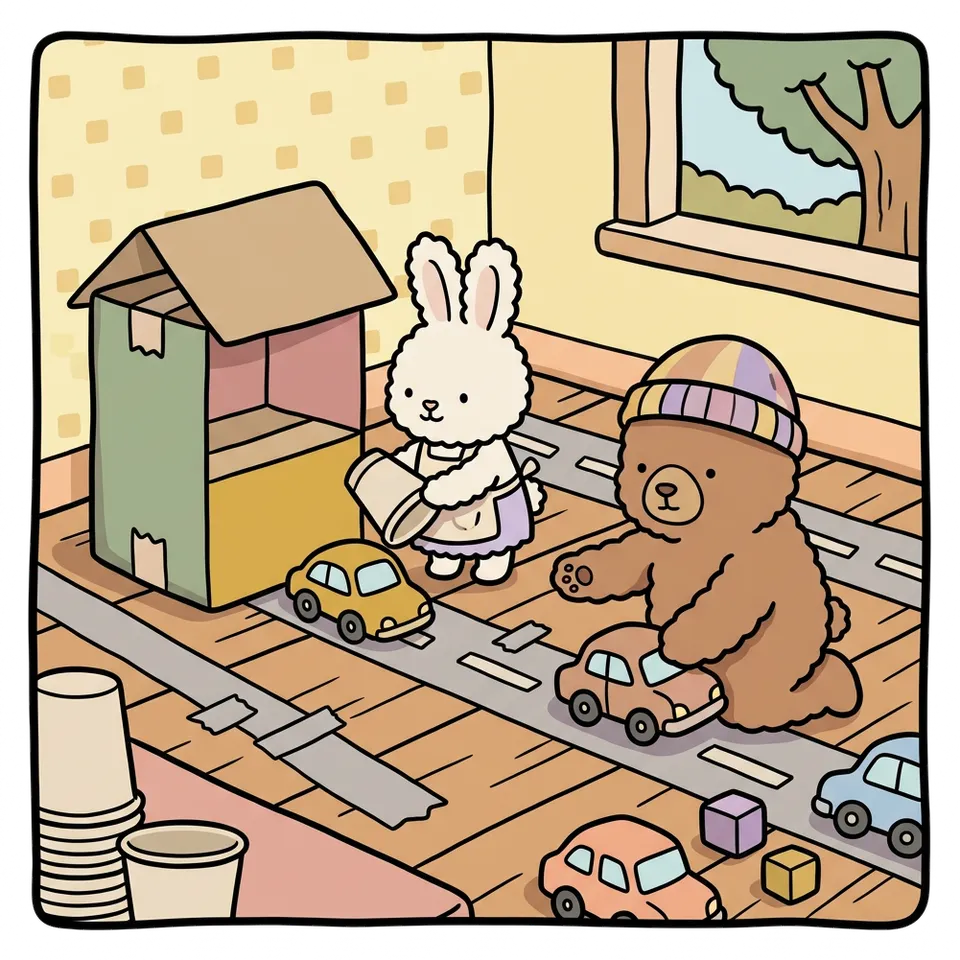
A role play where you set up a gas station beside a road on the floor and split into the worker who fills the tank and the customer who comes to fill up.
Why it's good
It's role-play where children copy exactly what adults do. While they switch between attendant and customer, copying even the greetings and steps, they make adult-world manners their own.
How to play
A shop that wasn't there appeared beside the road on the floor. A child stood holding a paper cup saying “I'll fill it up for you,” and I wondered what was going on, and other cars were lining up in front of it. When the child playing the attendant says “Gasoline?”, “The tank is full!”, the customer answers “How much is it?”, “Thank you.” I don't know where they learned those greetings, but the lines are more polite than at a real gas station.
The perfectly good cars just stop by to fill up, so customers and attendants keep switching. I only made the road, and the children filled in everything beside it on their own.
Good to know
- Make just one road and the child fills in the rest.
What you'll need
A paper cup
Loading and Hauling Loads
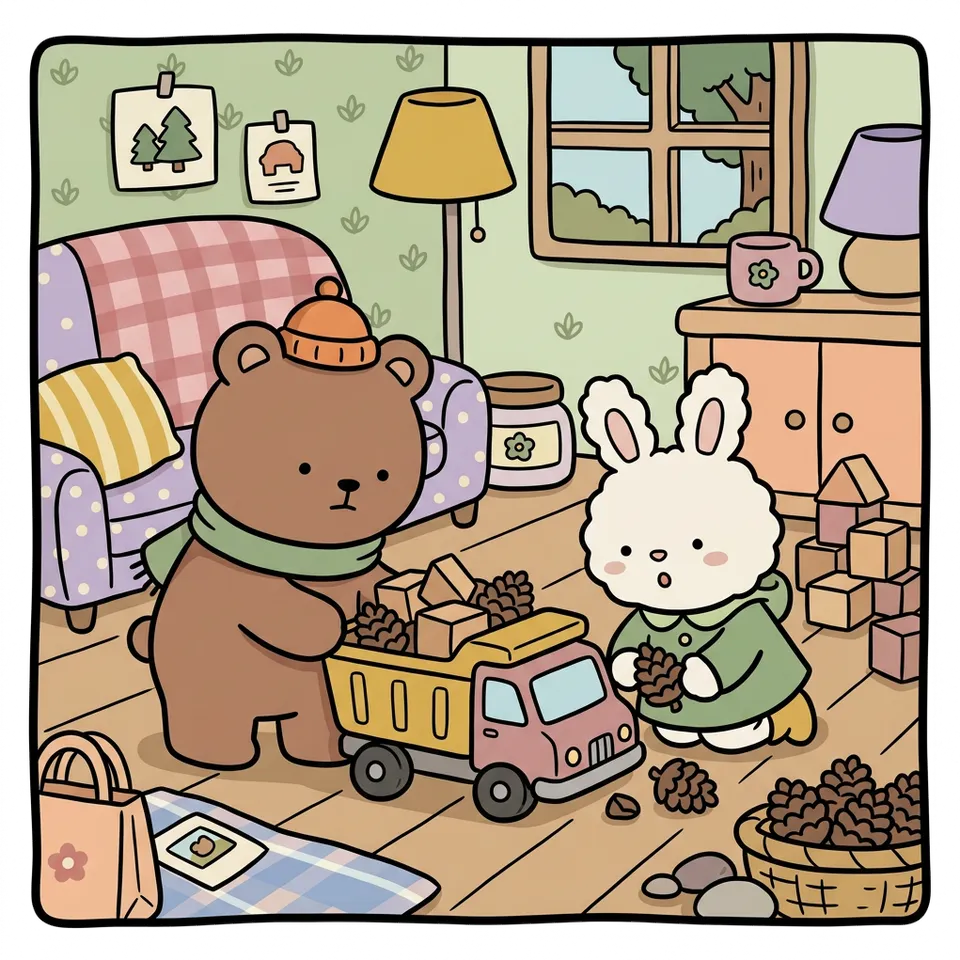
Load whatever you can grab into a car with a cargo bed or a container and carry it around.
Why it's good
It's play where a child gauges for themselves, through their body, how much to load so it won't spill. Only after failing a few times do they learn to control their own strength and speed. It's also role-play in which they do everything with their own hands, from deciding where to go to unloading.
How to play
At first they get greedy. Instead of loading a moderate amount, they pack it down to the very end. Even I can see it won't make it halfway, but the child pushes it confidently. Then sure enough, it spills sideways before getting halfway. The child hesitates a moment, then picks it all up again. Push, spill, load again. Only after doing that a few times do they slow down first. They mutter to themselves, “Slowly, slowly.” Some children take loads off altogether. Only after taking half back out does it arrive without spilling.
Loading blocks, they call it “a heavy load” and even decide where to go: “Let's go to the construction site.” They push the truck along, and on arrival unload one piece at a time and stack them right there again. Unloading is itself the start of the next play, so the gravel and blocks the truck brought become a new construction site just like that.
When the stack collapses, siblings or friends who've come over work out a new way again, and that truck goes off to load once more. Haul, stack, collapse, haul again, and after one round like that, a single truck goes back and forth along the same road all day.
Good to know
- If you load it moderately for them in advance, this play disappears completely.
What you'll need
A car with a cargo bed or an open-top bin · Things to load, like blocks, pinecones, or pebbles
Fixing a Broken Car
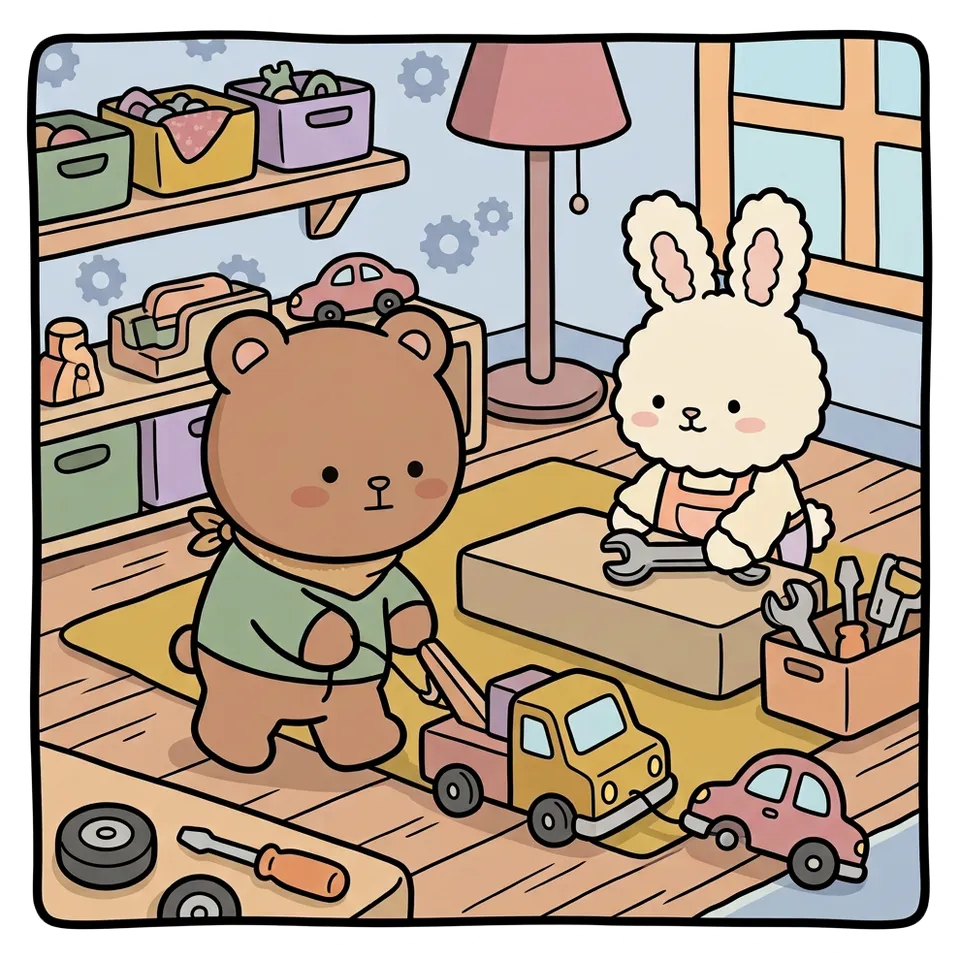
A role play where you become a mechanic fixing a broken car.
Why it's good
It's play where a child decides for themselves what to do first. They figure out on their own that bringing the car to be fixed comes before the fixing.
How to play
When I held out one broken car, the child built a tow truck before touching it. They made it from blocks and said “The car broke so I'm taking it.” A broken car can't go by itself, so another car has to go get it, they meant. The trip to bring it was actually longer than the time spent fixing.
When an adult plays the mechanic, customers start lining up from then on. When the child says “Customer, please wait a moment and I'll fix it right away,” they hold the car in their arms and truly wait. Once one is fixed and handed back, the next customer is already there.
This time the child became the mechanic themselves, and that's how the hospital got its name. When I asked where you go when a car breaks, the child said “Come this way” and “It's a place that fixes cars.” When I told them such a place is called a car center, they said “Ah~” and then right away took customers, saying “Hurt cars, come to Car Hospital Car~.” Since the word "car center" wouldn't stick in one go, they just attached the single syllable "car" after a word they already knew. For a while it stayed "Car Hospital Car."
What you'll need
Cars · Blocks