Play Ideas with Spinning Tops
When you bring home a spinning top, spinning it often ends up being the grown-up's job. Put it in a child's hand and it quickly tips over sideways, so in the end the grown-up spins it again and again while the child just watches.
This page was translated by Yeparksam, a preschool teacher in Korea. Some words may sound a little unusual — thank you for your understanding.
Printables to use
See more ›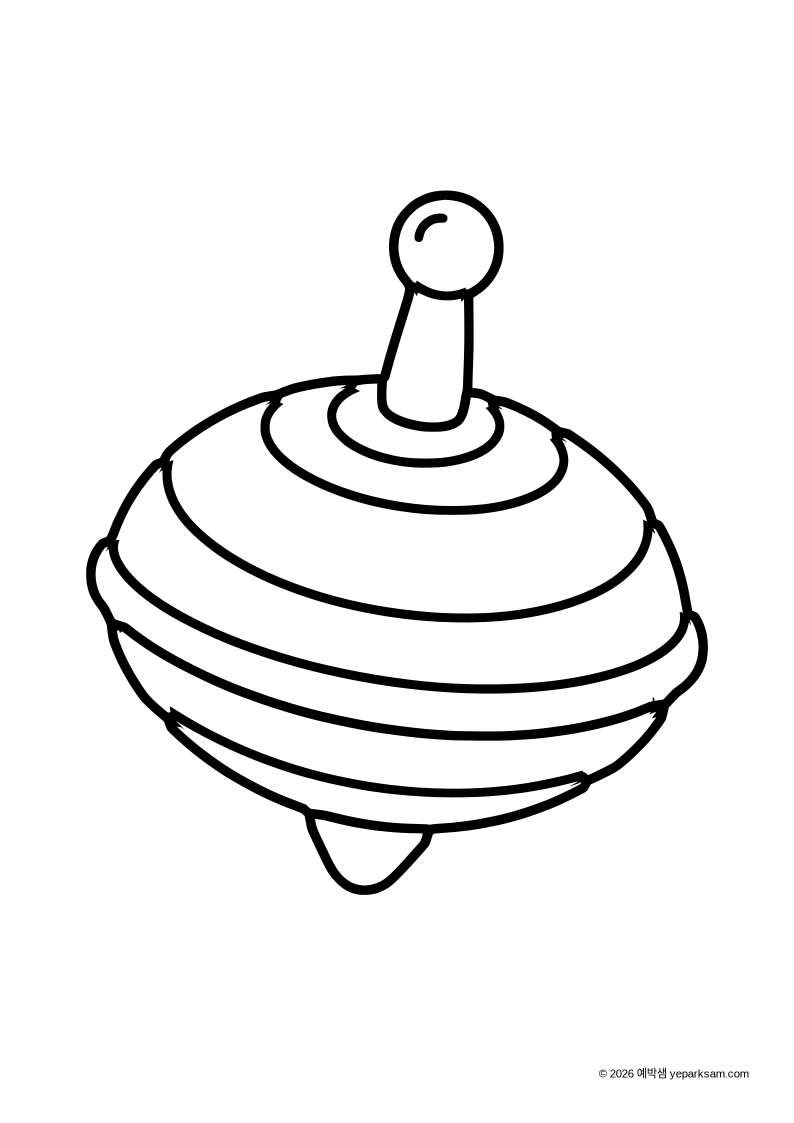
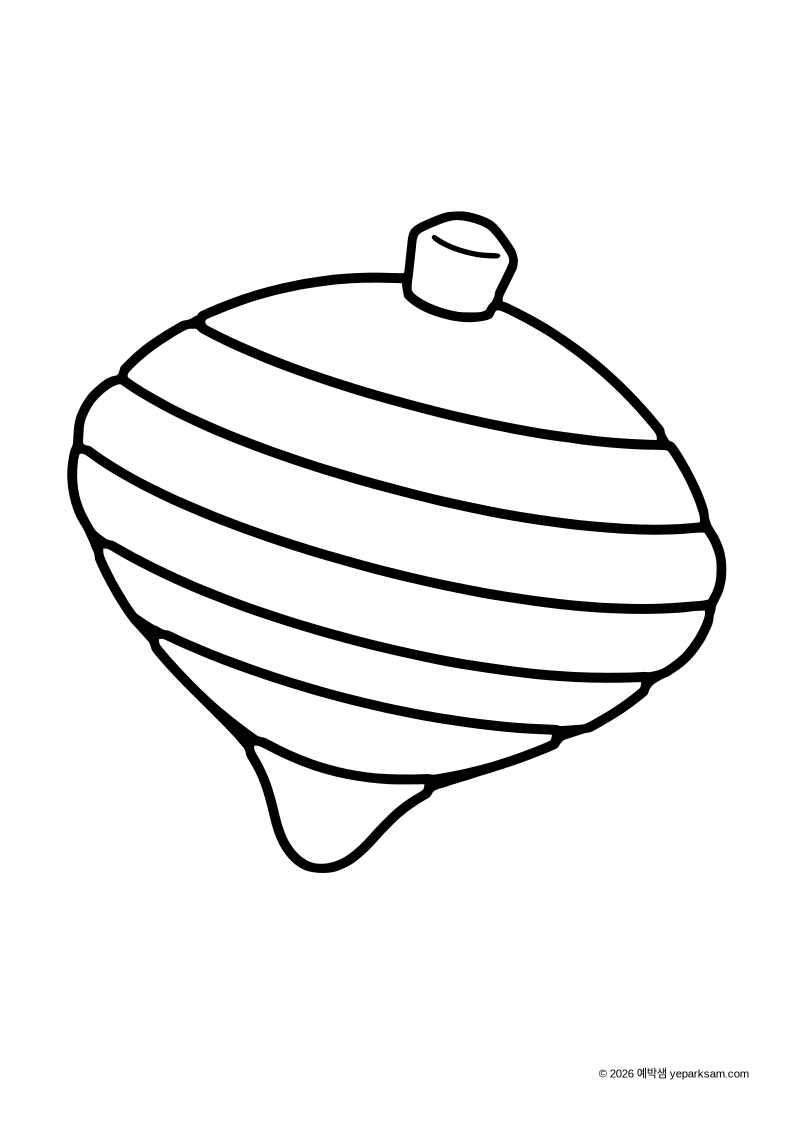
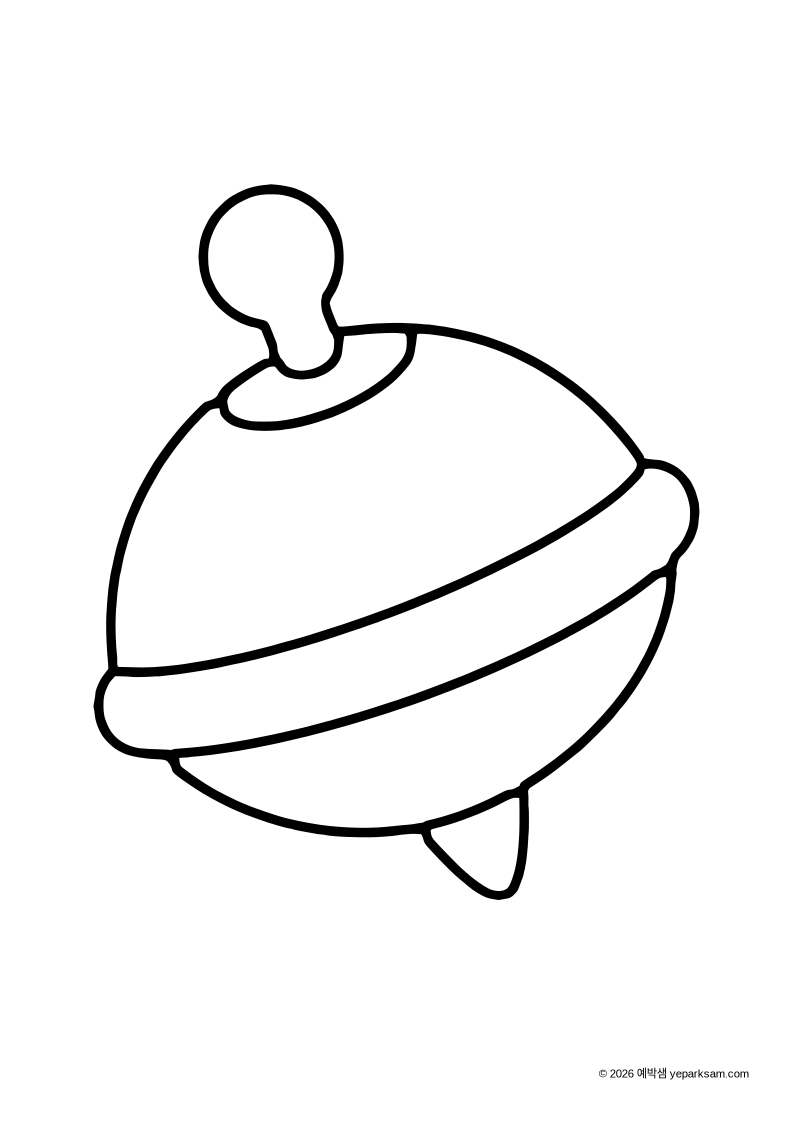
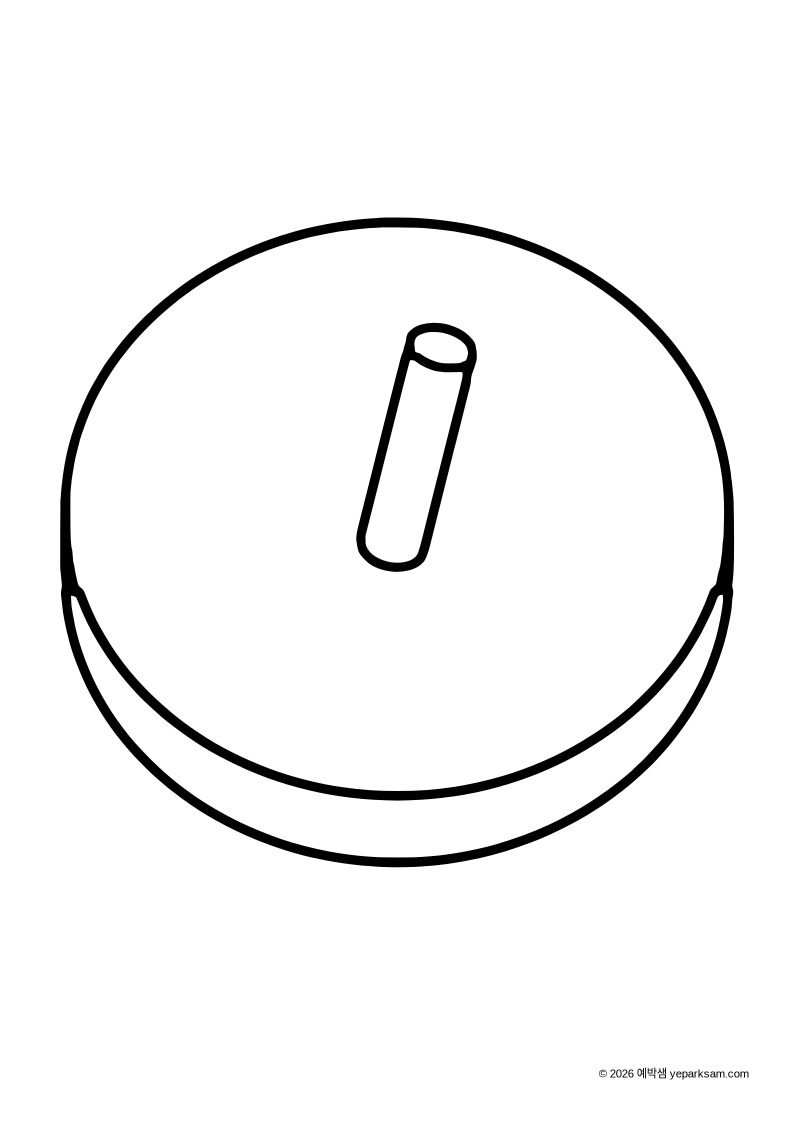
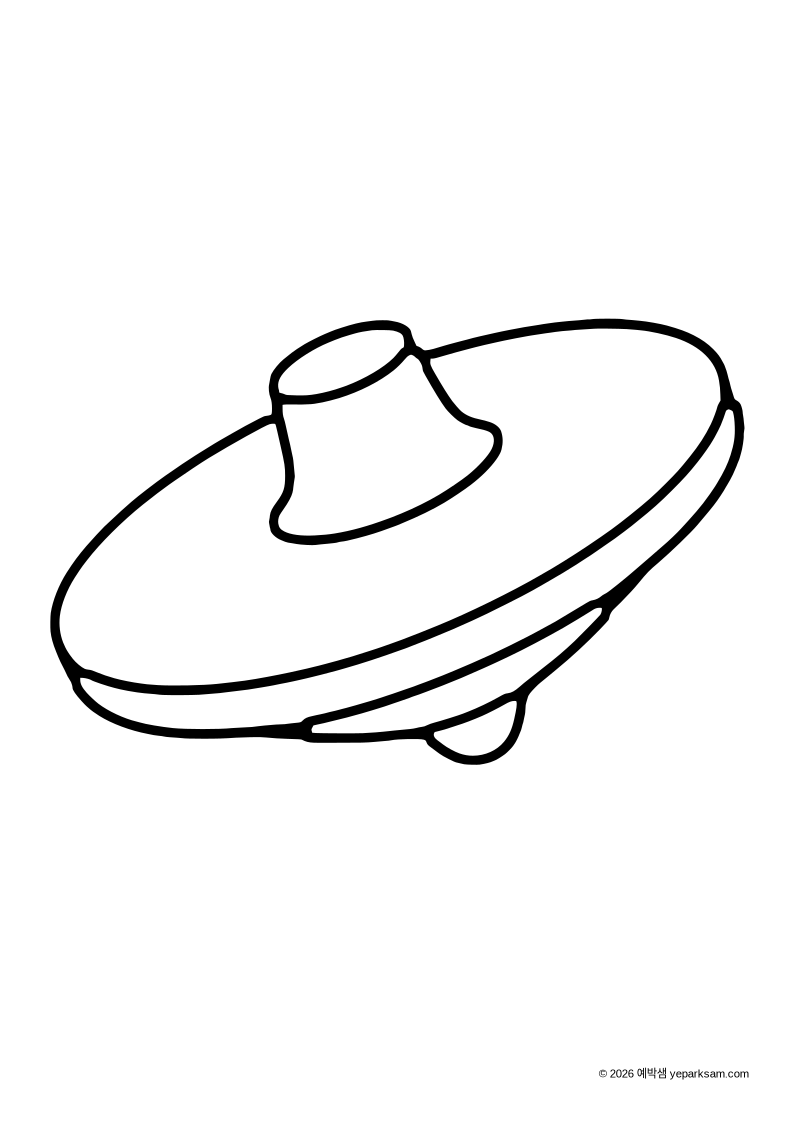
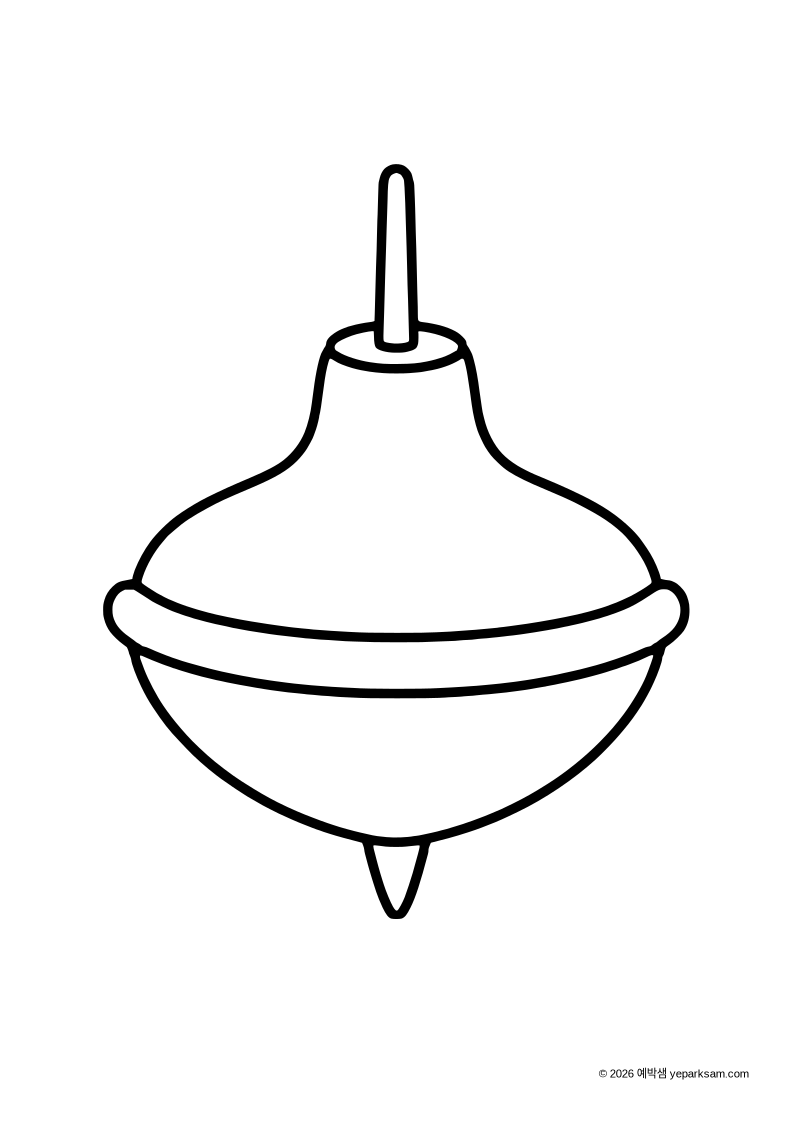
Try Again Because It Doesn't Work
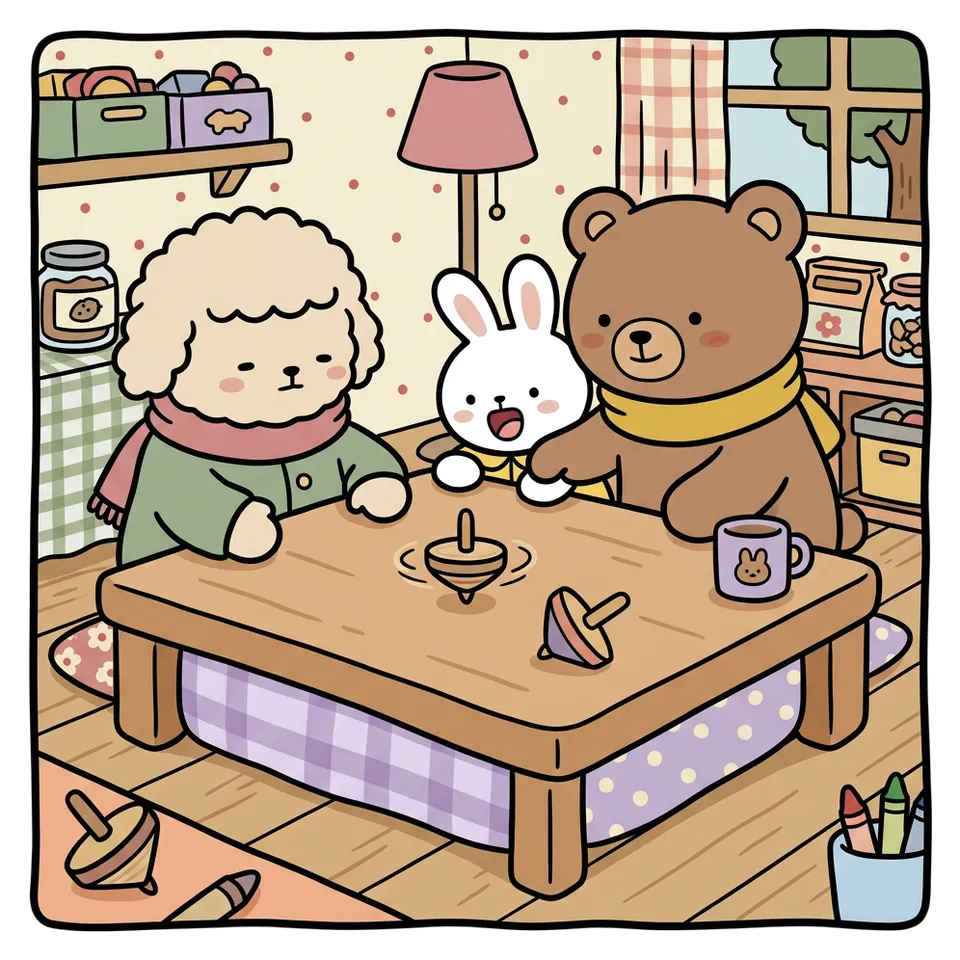
Put a small top in front of the child, one they can hold and spin with their fingers, and spin it again and again until it works.
Why it's good
It builds the strength not to let go quickly when something doesn't work. A top doesn't spin well at first, so the child has to pick it up again and again, and when it finally starts spinning, they notice they did it by themselves.
How to play
The child picks up the top and tries to spin it with their fingers. At first it often just tips over sideways. Since it doesn't work, the child holds the top out and says “Help me with this,” and if it still doesn't work, hands it over saying “You do it.” Here I don't take the top and spin it for them. I hold the child's hand and we rub it with the fingers together. Then the child says “Like this?” and takes it back and starts spinning it against the floor. After a few more tries it really starts to spin, and the child says “Wow, it spun!” and hands it over again, saying “Do it again.”
Good to know
- Telling them the method in words doesn't work well. If I just explain “You rub it with your fingers like this,” the child can't do it alone. But once we hold hands and spin it together, they try by themselves from then on.
What you'll need
A small top that spins with the fingers
This Can Be a Top Too
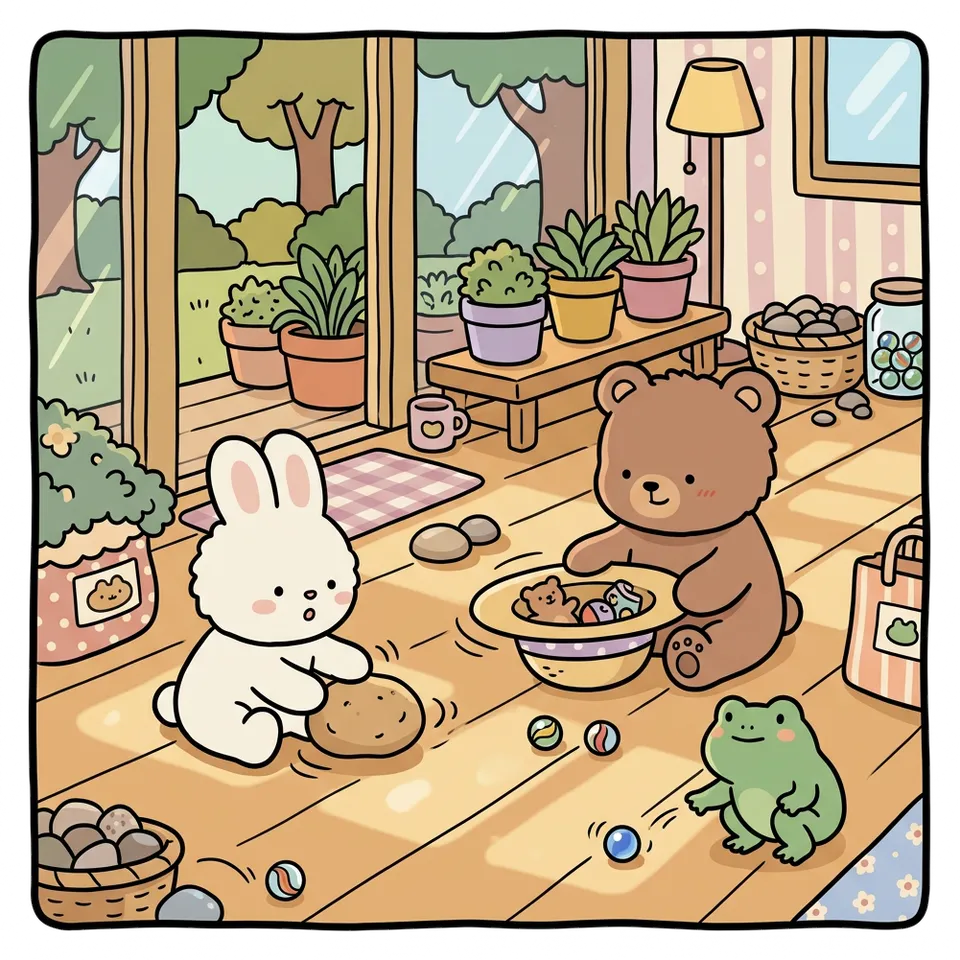
Spin something that is not a top by hand, and when you see it spinning, name it a top.
Why it's good
There is no special thing you have to spin. Anything that turns becomes a top. It is play that turns the thing in front of you into something else, so a pebble or a marble gets the name top the moment it spins.
How to play
Fiddling with pebbles on the table, the child picks up a roundish stone shaped like a potato and spins it with a fingertip. Seeing it roll around, the child says “This is like a top,” and the younger sibling watching picks one up and spins it too. When one stone is about to fall off the table's edge, the child says “It'll hurt if it falls,” and after that they move down to the floor and keep spinning.
It's the same when the child takes a marble that was rolling around in a bin, puts it on the table and spins it. Watching it twirl a few times, the child says happily “It turned into a top!” When a child drops small toys into an upside-down hat and then grabs the whole hat and spins it round, that becomes top play too.
Good to know
- For hard things, the floor is better. The child even moved to a new spot by themselves, saying “It'll hurt if it falls.”
What you'll need
Pebbles · Marbles · Something round, like a hat
Spin It and the Colors Mix
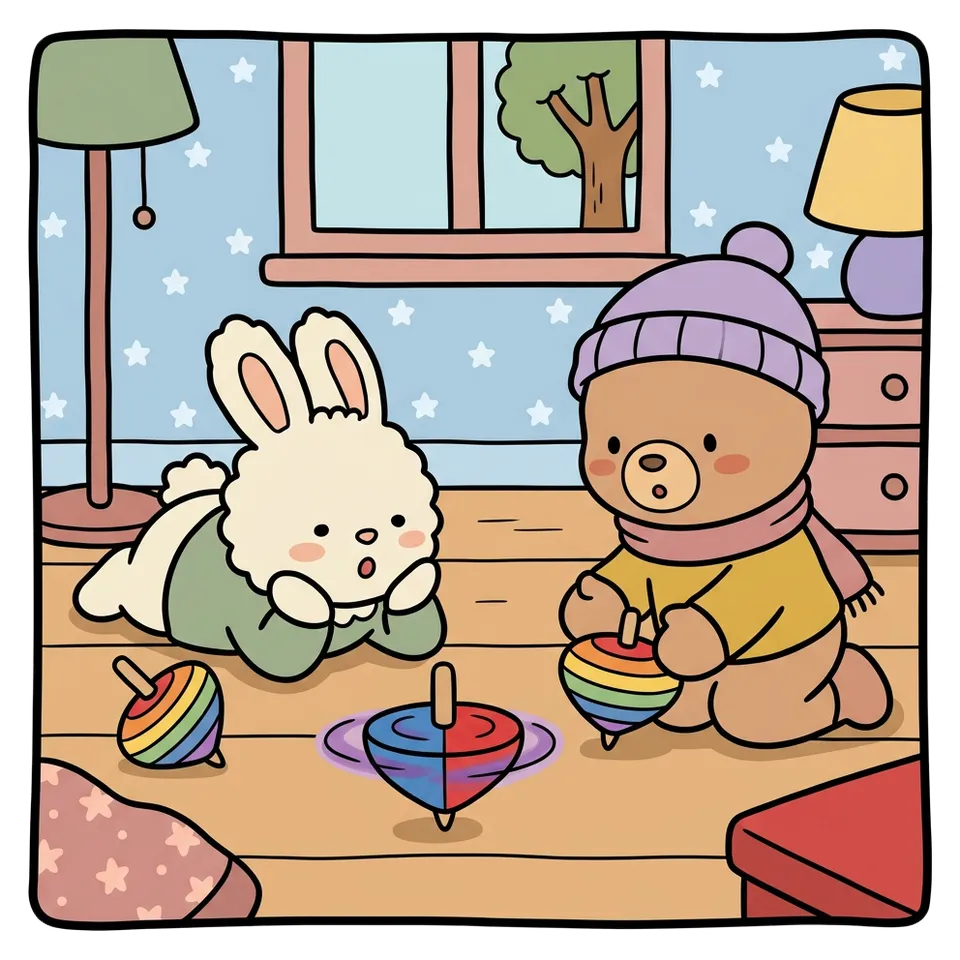
Spin a top painted with many colors and watch how the colors look while it spins.
Why it's good
The child spins a top painted red and blue and finds, all on their own, the moment the colors seem to overlap. Nobody teaches them. They notice it themselves and put exactly what they found into words.
How to play
I hand over tops painted in several colors, one at a time. When the child spins one, they are thrilled, “It's spinning!” then look closely at the spinning top and notice, “I see red and blue together!” When the top slowly slows down and stops, the child laughs, “It stopped!” They spin again and look at the colors again, as many times as they like.
Good to know
- It needs several colors to look mixed. With one color, it ends up as just watching it spin.
- Some children think that more colors make it spin faster. They might ask, “If we do rainbow colors, won't it spin faster?”
What you'll need
A top painted with several colors
Figuring It Out Without Knowing
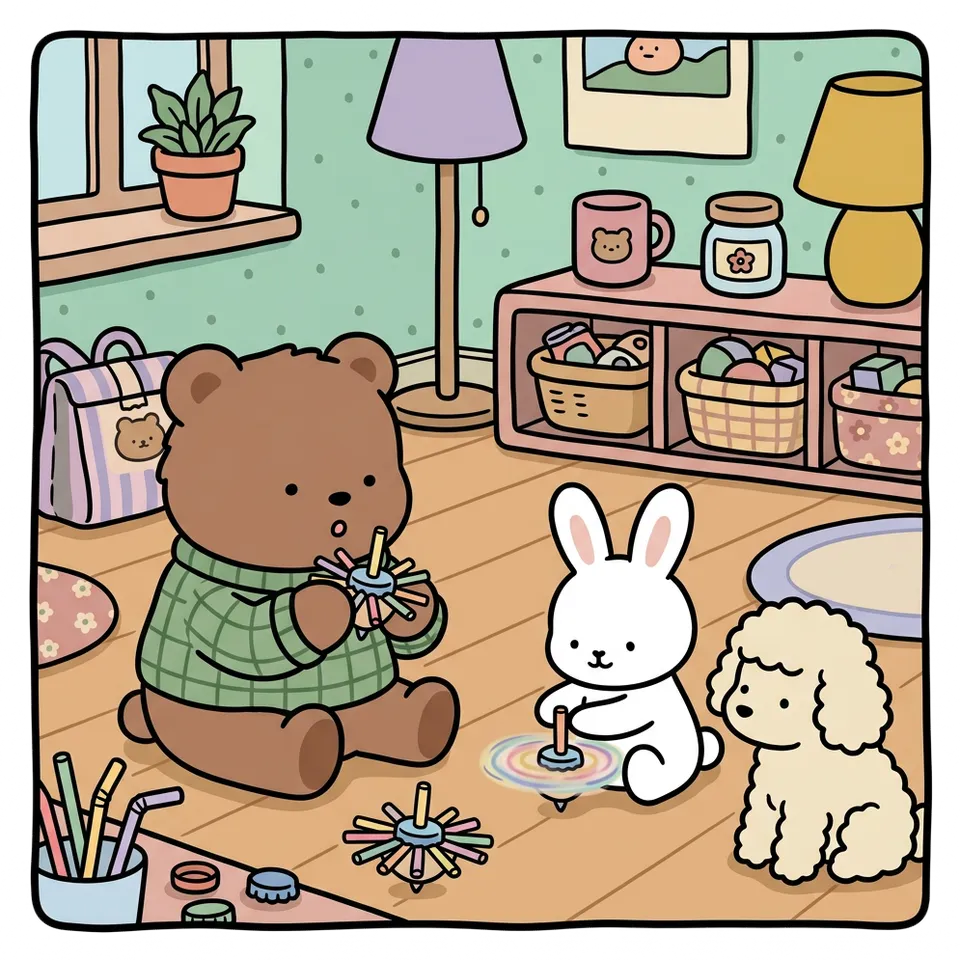
Put a straw top in front of the child without telling them what it is for. The child figures out on their own what it is and how to play with it.
Why it's good
A child who gets a top they've never seen first asks what it's for. If you ask back instead of answering right away, the child shakes it and puts it on the floor and finds how to play on their own. This is how the strength to work things out without being told grows.
How to play
I casually leave a straw top in front of the child. The child picks it up and shakes it, and when they ask “What is this?” I don't answer right away. I ask back, “How do you think we can play with it?” The child says “It's a straw. Why is it here?” and puts it on the floor and moves it around.
The younger sibling nearby comes over and says “Isn't it like this?” and stands it up, and the two spin it together, see it twirl around, and keep playing each in their own way, mixing it with other toys.
Good to know
- You don't have to tell them how. Whatever the child does, it is enough to say what they are doing, like “It's spinning round and round.”
What you'll need
A straw top
Teach Me, and Make Rules First
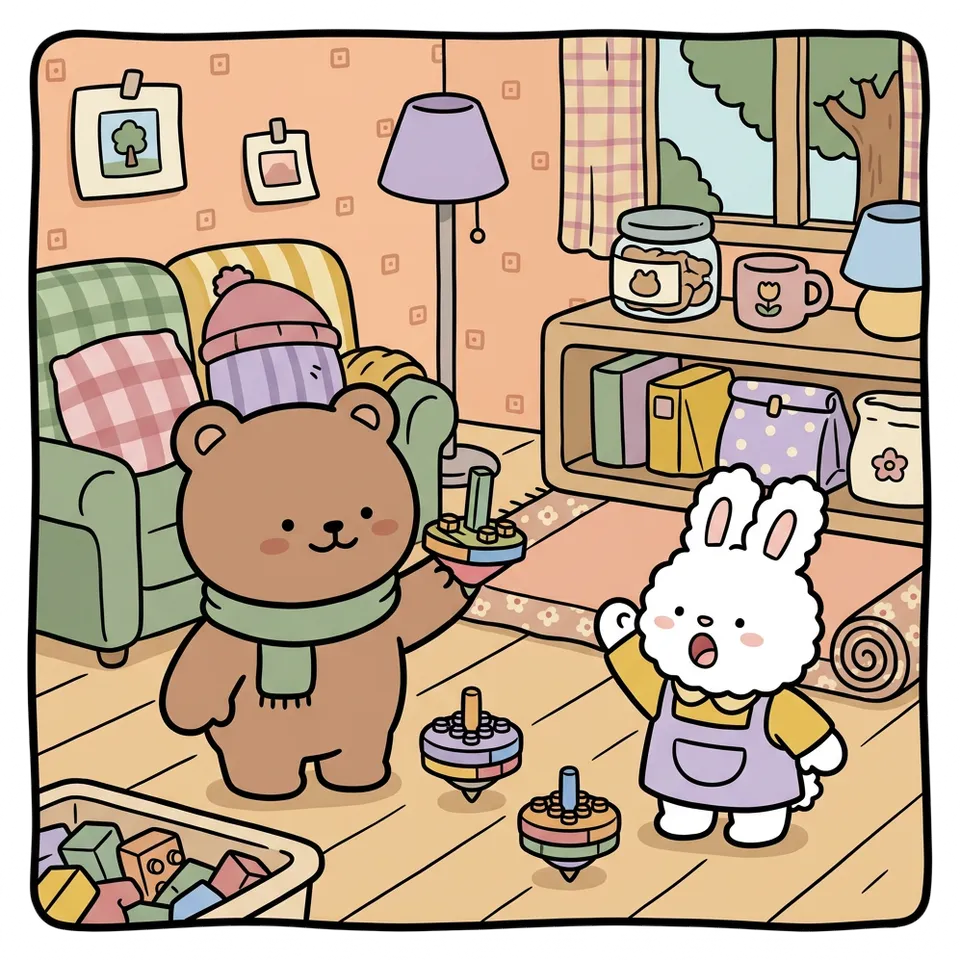
Build a top out of blocks, but the child, not the adult, tells how to make it.
Why it's good
The child explains what they know to someone else, and also realizes on their own that playing together needs rules. They teach the grown-up how to make it, and once it's done, they set the rules first.
How to play
The child puts blocks together, sets it on the floor, spins it and shows me, “This is a top.” When I ask how they made it, they tell me, “You have to put this into here so it spins round and round.” The younger sibling nearby says “Let me play too” and joins in to make one together.
When the tops are done, the child says “Let's have a spinning contest,” and the sibling shouts “Promise time!” and sets a rule, “Spin it all at once!” The child adds one more, “Then bumping is okay!” and everyone starts the contest by those rules.
Good to know
- They don't spin well on a mat. On a rug or mat they spin poorly, so move to a slippery bare floor.
- They can break when they bump. If you leave plenty of space between the tops, there's no worry about them breaking, and each child can focus on how long their own top spins.
What you'll need
Blocks
Mine Spins Better
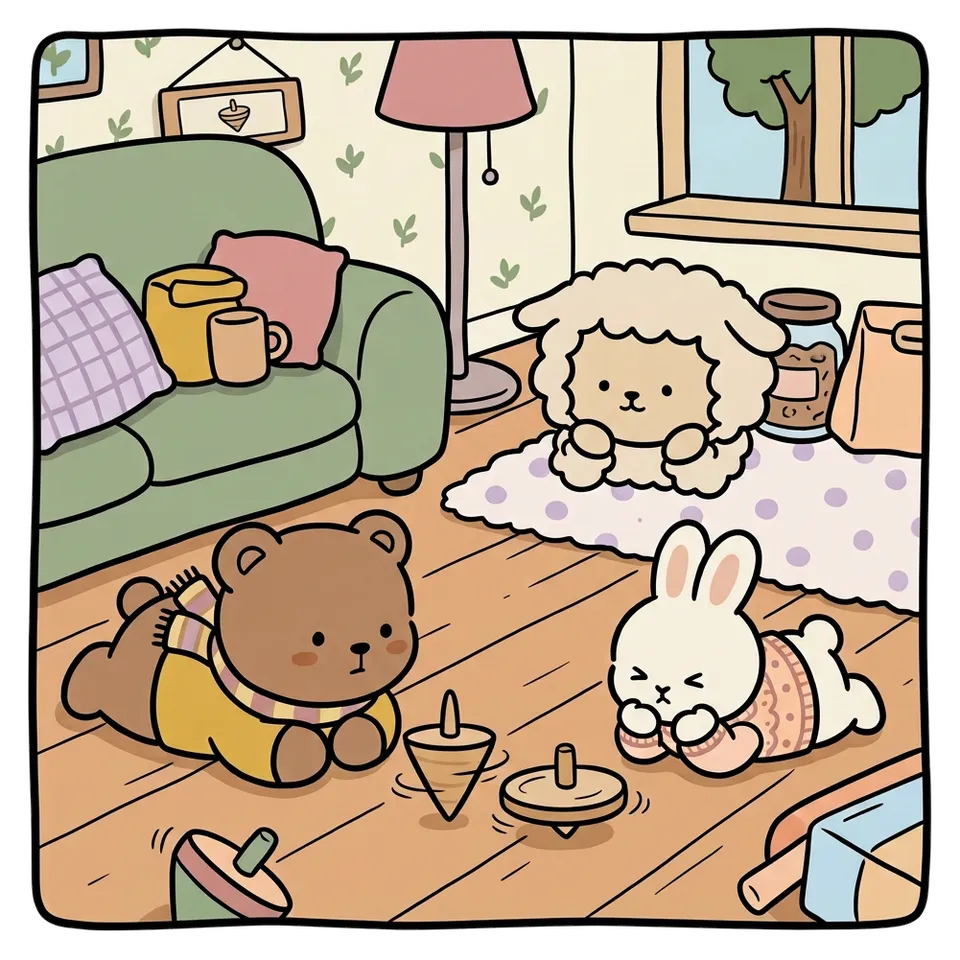
Spin several tops of different shapes and compare which top spins better.
Why it's good
By comparing for themselves that speed and spinning time differ with the shape, children look into which is better and think about it on their own.
How to play
I lay out several tops of different shapes. The child spins them one by one and notices they spin differently by shape, “This top spins fast,” “I think this one spins for a long time.” If a younger sibling or a friend has come over, each picks one and it turns into a contest. The two sit close together and watch to the end to see whose spins longer without falling over.
Good to know
- They spin differently on different floors too. A top that spins well on a smooth floor stops quickly on a rug or mat. Moving from spot to spot, the child sometimes finds the best place to spin by themselves, saying “It spins better here” or “Slippery places are good.”
What you'll need
Several tops of different shapes