Play Ideas with Socks
There are always a few unmatched socks at home. They are the materials for this play. Roll one up and it becomes a ball, put a hand in and it becomes a puppet, put something inside and it becomes a riddle to guess by touch.
This page was translated by Yeparksam, a preschool teacher in Korea. Some words may sound a little unusual — thank you for your understanding.
Printables to use
See more ›
Throwing a Sock Ball
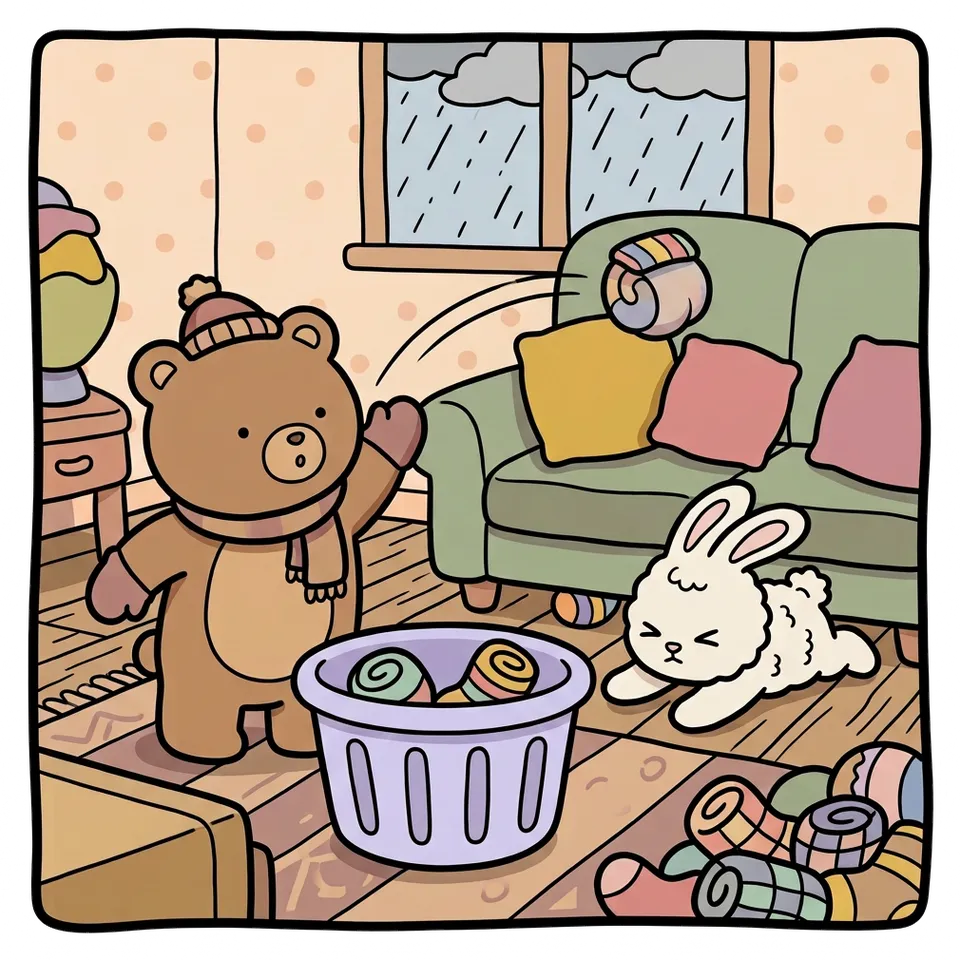
Roll up a pair of socks and fold one opening over the other to make a soft ball. The child throws, rolls, and chases this sock ball to catch it.
Why it's good
It is a ball that doesn't hurt when thrown and doesn't break anything, so children can use their arms and legs freely inside the house. Even a child who can't walk yet crawls after the rolling ball and brings it back, moving the body in a big way, and the strength and direction of throwing improve naturally too.
How to play
For a child who can't walk yet, I roll the sock ball to them. They crawl after the ball rolling along, catch it, bring it back and hand it to me, and then ask me to roll it again.
For a child who walks, we start with throwing, and when I set down a laundry basket, from then on there is a goal of putting in, taking out, and putting in again. Once they enjoy throwing, I lay numbers or pictures on the floor. They choose and throw, trying to hit the number of their own age. Sometimes a thrown sock disappears under the sofa, and looking for it together, “Where could it be hiding?”, becomes play too.
Good to know
- It is good to bring out on days you can't go outside. It is almost the only ball you can throw inside the house.
- Pull the opening over so it doesn't come undone. If you just bunch it up, it comes apart quickly while being thrown.
What you'll need
A pair of socks · Laundry basket
Guessing What Is Inside a Sock
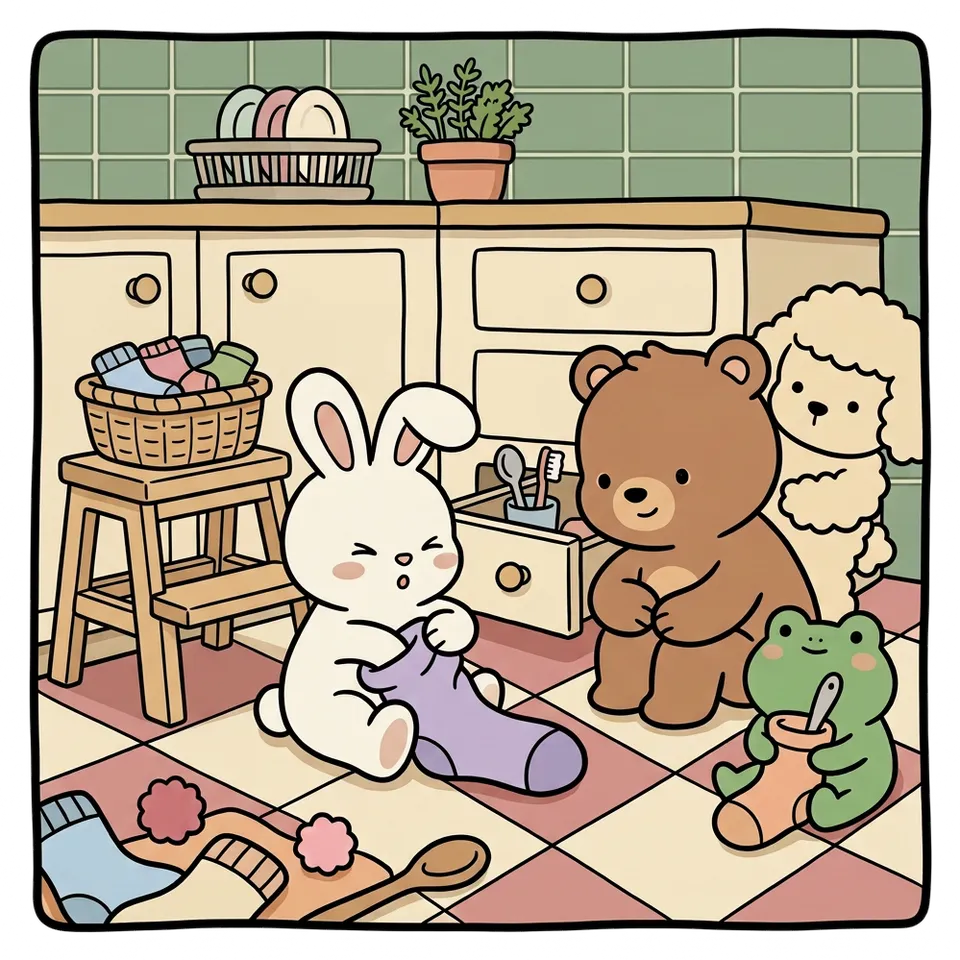
Put an object in a sock and guess what it is by touching it. You find out with only your fingertips, without being shown.
Why it's good
This is a play of recognizing objects by fingertip sense alone, without looking. The more familiar the object, the bigger the reaction, which means fingertip sense is connected to memory.
How to play
I choose one object, put it inside a sock, and hand it over to be felt. At first I put in toys, but when I put in things they know, like a spoon or a toothbrush, the reaction was much bigger. After guessing, they laugh out loud and call a friend over to show. Once they have done it, the child says they want to put things in themselves. From then on the child hides and I guess. The opening is narrow so big things don't go in well, and a child who was putting in a pom-pom held out a hand and said “Help me.” When I open the opening wide, they do the rest alone.
Good to know
- Things they use every day at home work best. Familiar things like a spoon or toothbrush get a much bigger reaction than unfamiliar toys.
- The opening is narrow, so big objects don't go in well. Start with small, soft things like pom-poms.
What you'll need
One sock · Things that fit in a hand, like a spoon or toothbrush
Wearing a Sock on the Hand to Make a Puppet
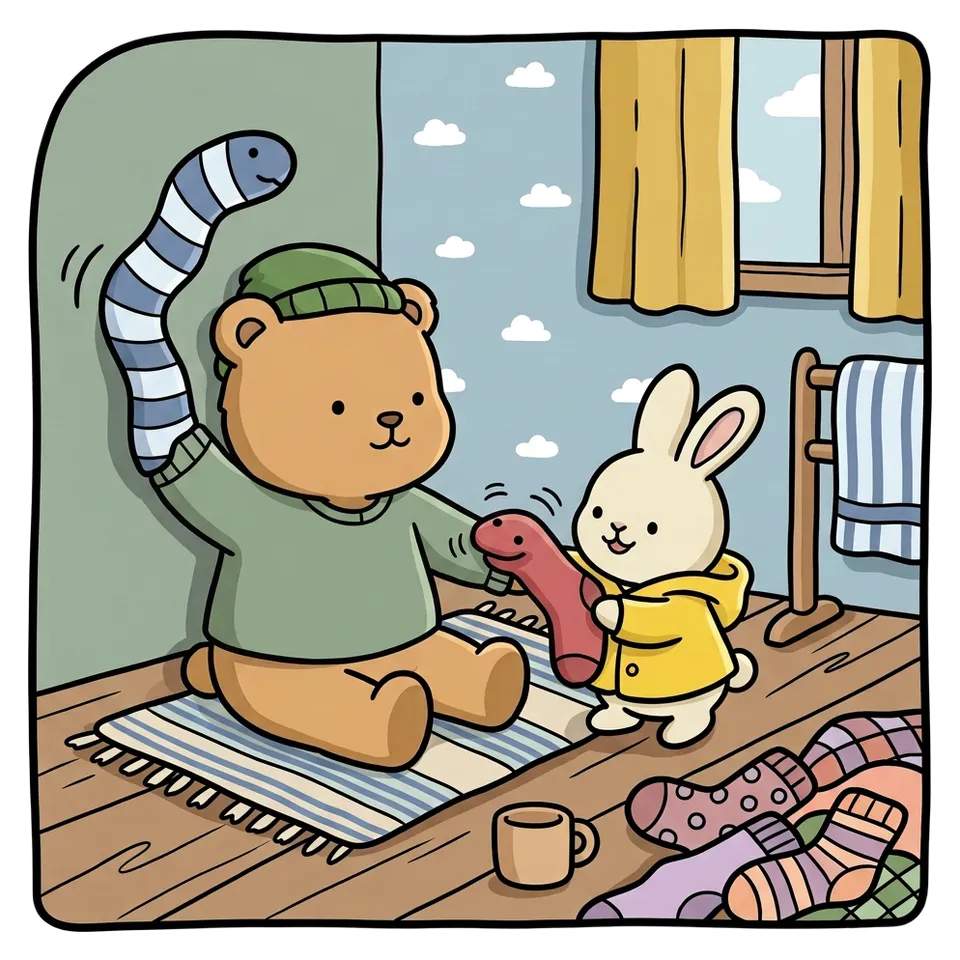
Put a sock on your hand and it becomes a puppet right away. The child talks to the sock puppet and keeps playing other games with that hand.
Why it's good
This is a play where the child checks for themselves that a sock becomes a puppet just by being put on the hand, even without drawing eyes or a mouth. That is how the imagination of pretending to be another being with one hand begins, and one puppet opens the door to the next play.
How to play
It starts just by putting it on the hand. Once they put it on, they don't take it off easily. They keep going with other play while wearing it. When I speak to it, an answer comes. The sock talks, saying “Hello” and “Haha.”
They also rub my arm or leg with the sock-covered hand, saying “I'll wash you.” Then it moves on to bath play or hospital play. A long sock goes all the way over the arm, and when you wave the arm, it becomes a snake.
Good to know
- A long sock pulled all the way over the arm becomes a snake. It makes a different puppet from the short sock on the hand.
What you'll need
One sock · Long sock
Sliding on the Wooden Floor
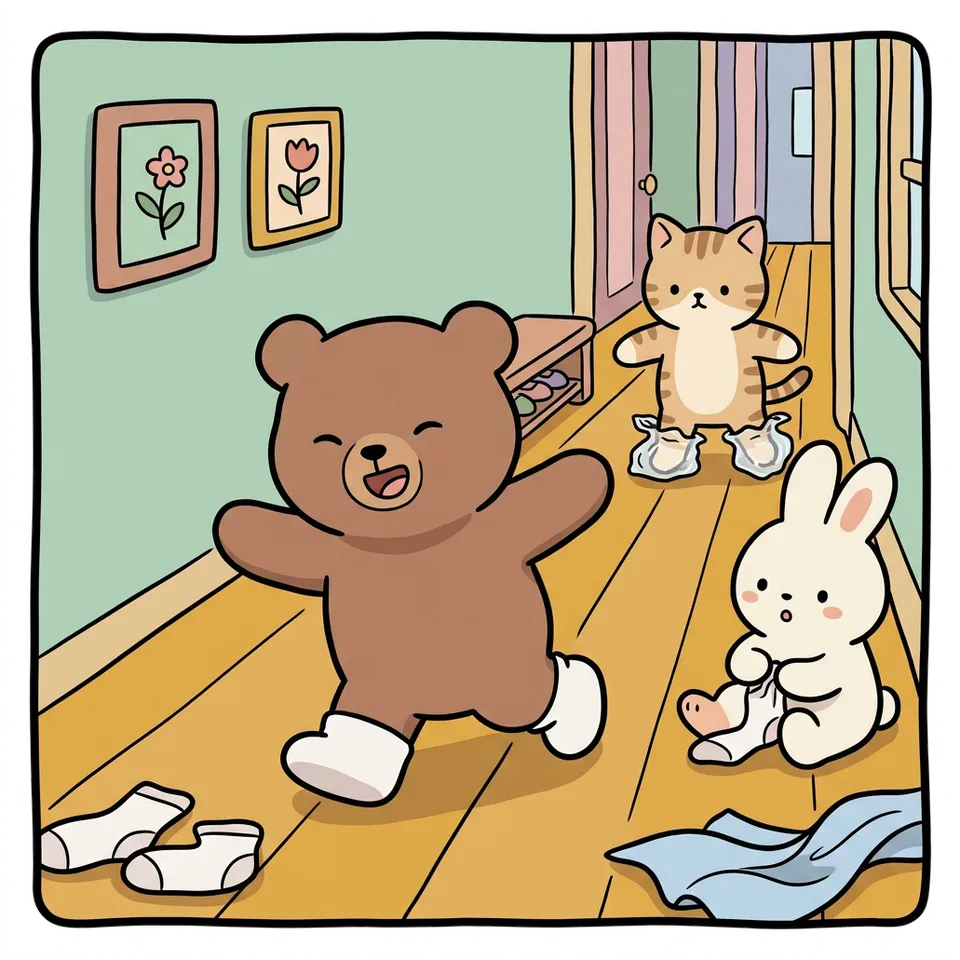
Slide across a wooden floor in only socks. The child calls this skating.
Why it's good
This is a play where children find out with their bodies that different socks slide differently. By alternating between wearing socks and taking them off, they compare for themselves which slides better, and put that answer into words on their own. Balancing and using the whole body in a big way come along with it.
How to play
When I say try pushing off on the wooden floor in just your socks, the child spreads their arms and starts to slide. While balancing, they sometimes fall on purpose. This is where the child starts testing on their own. “I think I'll slide better if I take my socks off,” they said and tried it, and after trying said, “My feet are sweaty so I don't slide well.” Alternating between wearing and not wearing socks is the heart of this play.
They look for things that slide even better too. When I held out a scarf, one child said “I think a plastic bag slides better than a scarf!” and put plastic bags on their feet.
Good to know
- On days they wear non-slip socks, they don't slide well. Those socks have little bumps on the bottom. On those days, just change them into different socks.
- You don't need a big space. One patch of wooden floor is enough.
- Clear away anything they could bump into first. Just keeping the table corners and door thresholds clear is enough.
What you'll need
Socks (not non-slip) · Scarf or plastic bag
Matching Socks While Folding Laundry
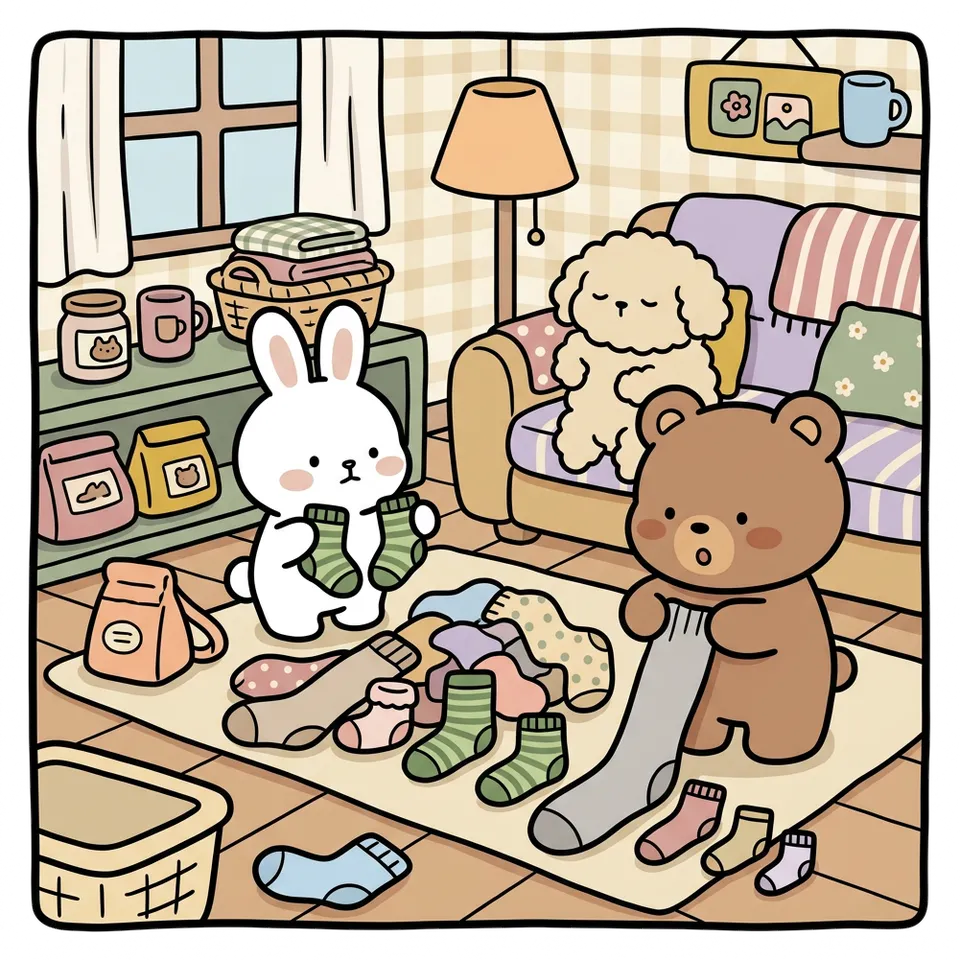
When folding laundry, pour out just the socks and let the child find the pairs. The adult does the folding and the child takes only the pair-finding.
Why it's good
This is a play that builds an eye for finding the same things by size and pattern. They start by noticing size differences, then match pairs by lining up ones with similar colors and patterns side by side. While they think about whose each sock is, it naturally spreads into talk about family.
How to play
When folding laundry, I pour out just the socks separately. I do the folding and leave only the pair-finding to the child. They notice size first. Saying “Daddy's socks are big” and “Baby's socks are small,” they sometimes line them up starting from the biggest.
While matching pairs, family stories come out. Holding up a long sock, they say, “Daddy wears this long sock when he goes to work,” and holding up a green-striped one, “These are the same green socks that Mommy and I like.” Seeing a small one, they say, “This is mine and my little sibling's.” If you mix in ones with similar patterns, they look at them for a long time. They put side by side two that are the same color but have different stripe widths and compare them for a long while.
Good to know
- Socks of different sizes need to be mixed in for pair matching to become play. If they are all about the same size, it ends up as just folding. Mixing in a few adult socks gives them something to compare.
What you'll need
Several unmatched socks (in various sizes)
Hanging Socks on a Line and Pulling
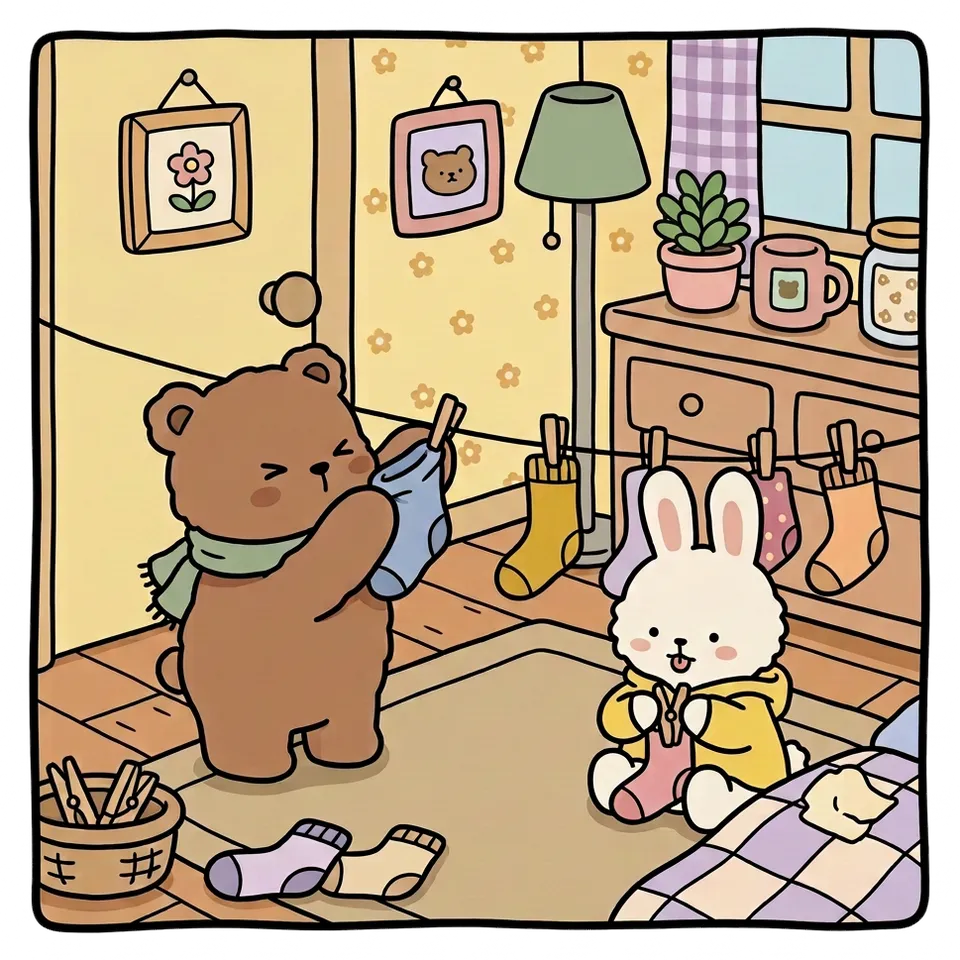
Tie a string at a height the child can reach and hang socks from it with clothespins. The child reaches out to grab and pull them, and sometimes hangs them up too.
Why it's good
This is a play of using the strength of the hands and arms by repeating the motion of reaching, grabbing, and pulling. Balancing the whole body, and the focus of gripping while opening and closing a clothespin with finger strength, improve along with it.
How to play
Tie a line at a height the child can reach and hang socks on it with clothespins. You can connect it from a door handle to a furniture handle. Just hanging them is enough for the child to reach out. They grab and pull, and when they fall, they ask for them to be hung again. Standing on tiptoe to grab is play in itself. When you put a clothespin in their hand, they say they want to hang them themselves. Opening the clothespin doesn't go well so it takes a long time, but they don't get bored in that time.
Good to know
- Opening the clothespin is hard, but just leave plenty of time. It takes a long time because it doesn't go well, and the child doesn't get bored during that time.
What you'll need
Line · Clothespins · Several socks
Washing Socks in a Basin
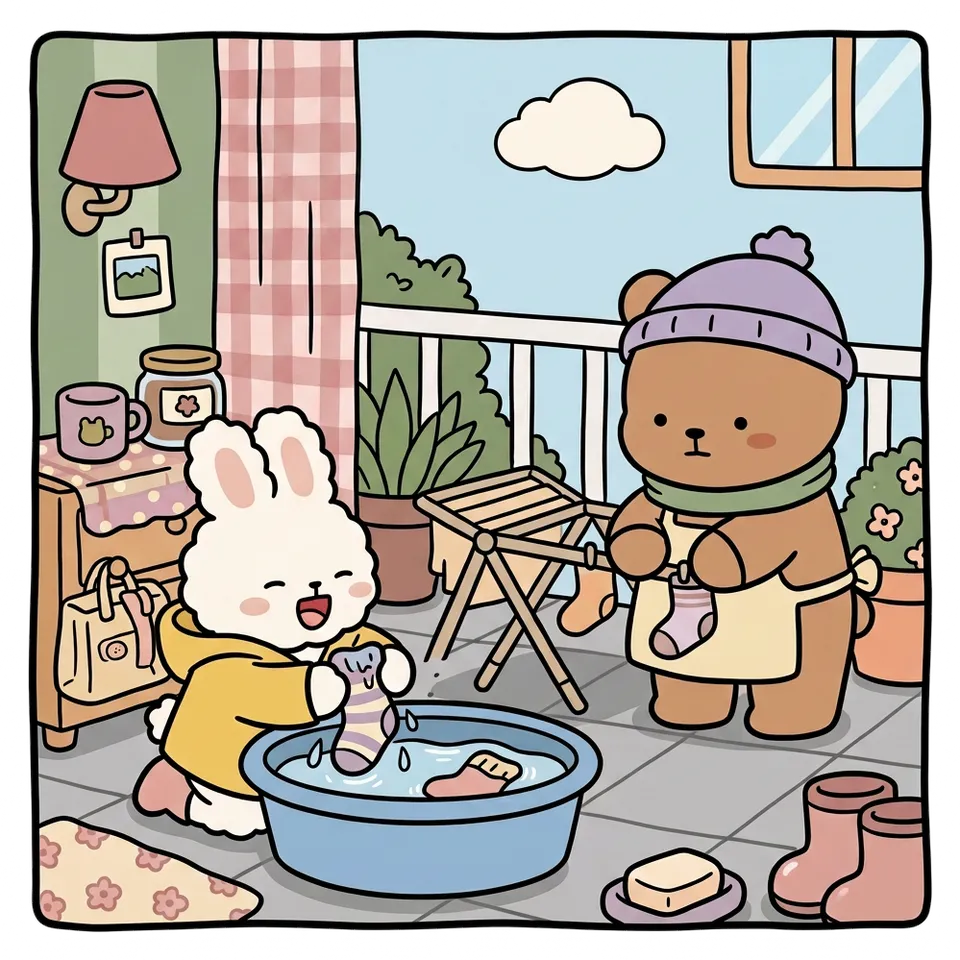
Pour a little water in a basin and put socks in to pretend to do laundry. The child squeezes and opens the wet socks, and when they are all washed, hangs them up to finish.
Why it's good
This is a play that carries housework straight into play. Laundry becomes not someone else's job but taking care of their own things, so they work harder, and they get absorbed repeating the squeezing and releasing hand motion for a long time.
How to play
Pour a little water into a basin and put the socks in. They just squeeze and release the wet socks for a long while. When they know it is their own sock, they work even harder, and one child took their own socks out of the clothes they had worn and said, “I'm going to wash my socks.” A sibling came over and asked for theirs to be done too. When I asked, “Will you do mine too?” they said “Okay”, took it, and we washed together. After washing, hanging them up is what finishes it. If you clear the bottom rung of the drying rack, the child does that part too.
Good to know
- If you clear the bottom rung of the drying rack, the child does the hanging too. Laundry is a play that only ends when it is hung up, so making a spot within reach carries it through to the end.
What you'll need
Basin · Water · Socks · Drying rack
Stuffing a Sock to Make a Doll
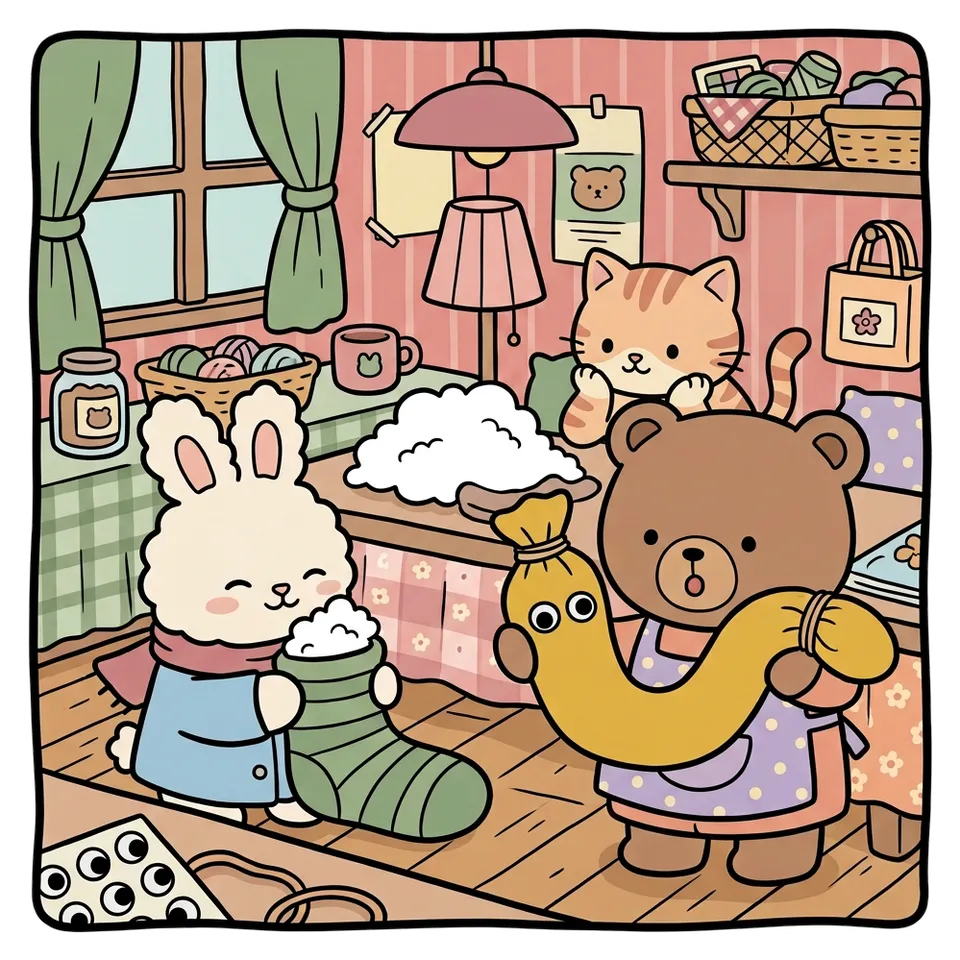
Stuff a long sock with cotton and tie the end with a rubber band to make a doll. Stick on googly-eye stickers and you are done.
Why it's good
This is a play where children enjoy the feel of filling with cotton using their fingertips and attach a story to the doll they made through its color and pattern. While they introduce the finished doll to a friend or an adult and imagine and describe its features, their power of putting things into words grows.
How to play
Fill a long sock with cotton and tie the end with a rubber band. Stick on googly-eye stickers and it is done. Just touching the cotton already takes a long while. They say “It feels good” and “It's like a cloud.”
A long, thin sock usually becomes a snake, and when they show the finished one, they imagine and say, “My snake is poisonous and fierce” and “This snake doesn't attack.” Sometimes it leads into a game where they put a small toy inside to make the belly bulge, and guess what it swallowed from the bumpy shape.
They also enjoy looking at each other's sock patterns. A child who picked a sock with footprint patterns says “My sock looks like pink spots,” and says to the child next to them, “We both have yellow ones.”
Good to know
- Socks that have gotten too small to wear are best. You will use them as a stuffed doll, so you won't feel bad about it.
What you'll need
Long sock · Cotton · Rubber band · Googly-eye stickers