Play Ideas with Sand
When we sit down in the sandbox, a child holds out the back of their hand first. I cover it up while singing the toad-house song, and when they slide the hand out, the sand usually caves in right there. They ask for it again, and it collapses again.
But with the very same sand, some days it doesn't collapse and just stays there. Is the sand dry or wet? Knowing that one difference opens up so much more to do on the playground.
This page was translated by Yeparksam, a preschool teacher in Korea. Some words may sound a little unusual — thank you for your understanding.
Printables to use
See more ›
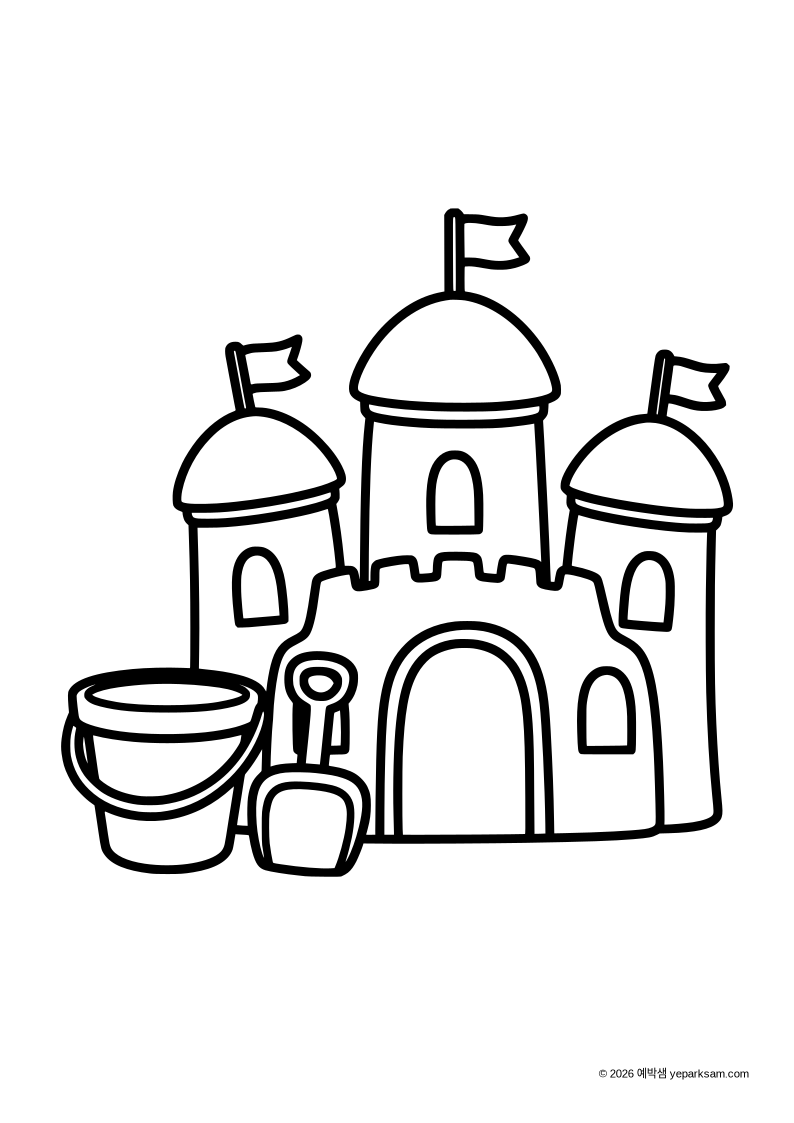
Building a Toad House
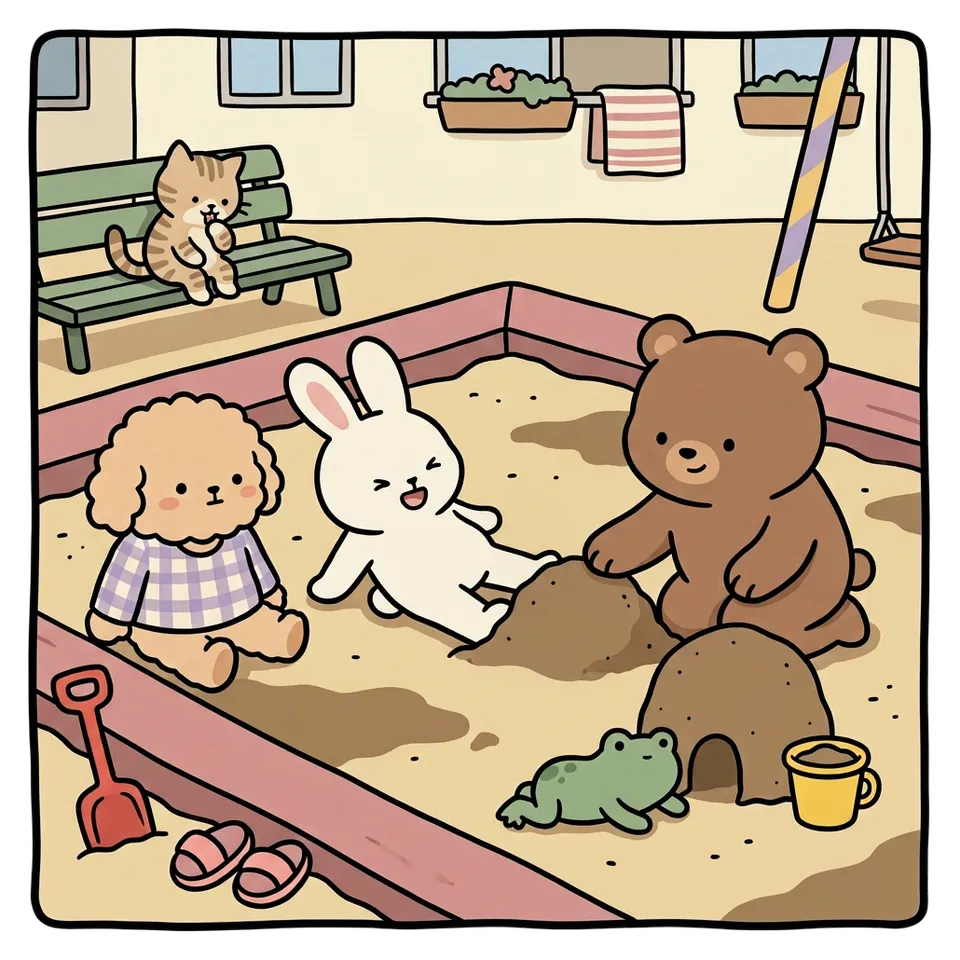
Bury the back of a hand in sand, cover it, and pat it. When you pull the hand out, the sand stays like a ceiling and makes a little tunnel.
Why it's good
Children learn with their bodies that the result depends on how the hand comes out. A ceiling made with great care can collapse or stay, all depending on how the hand is pulled out.
How to play
When the adult starts singing the toad-house song, “Toad, toad,” the child holds out a hand first and waits. When sand is piled on the back of the hand and patted down, the moment it is finished and a hole is left, the child laughs out loud.
For children too young to do it alone, put the child's hand on top of the adult's and cover them together. As the sand touches the back of the hand, they wriggle and say “Ooh, it tickles!”, and that tickle is half of this play. If you do it on the top of a foot instead of a hand, one round ends when the child has been covered, then kicks the foot up high to shake the sand off.
Some children knock the toad house down the moment it is finished. Knocking it down is just as much fun as building it, so in that case just let them.
Good to know
- If you pull the hand out quickly, it collapses. If you slide it out bit by bit, starting from the fingertips, it stays. Show them once, and after that the child will pull the hand out carefully on their own.
- Dry sand doesn't work well. The crumbly sand on the surface never forms a ceiling, no matter how much you pat it. You need wet sand, and it is the dark-colored sand you find by sweeping a few times with your hand under the dry sand on top.
- For a child who doesn't like getting sand on their hands, let them hold a shovel or a cup first. Getting friendly with the sand through a tool leads them to touch it with their hands later.
What you'll need
Wet sand · Shovel or cup (optional)
Brushing Off the Top to Find the Sand Underneath
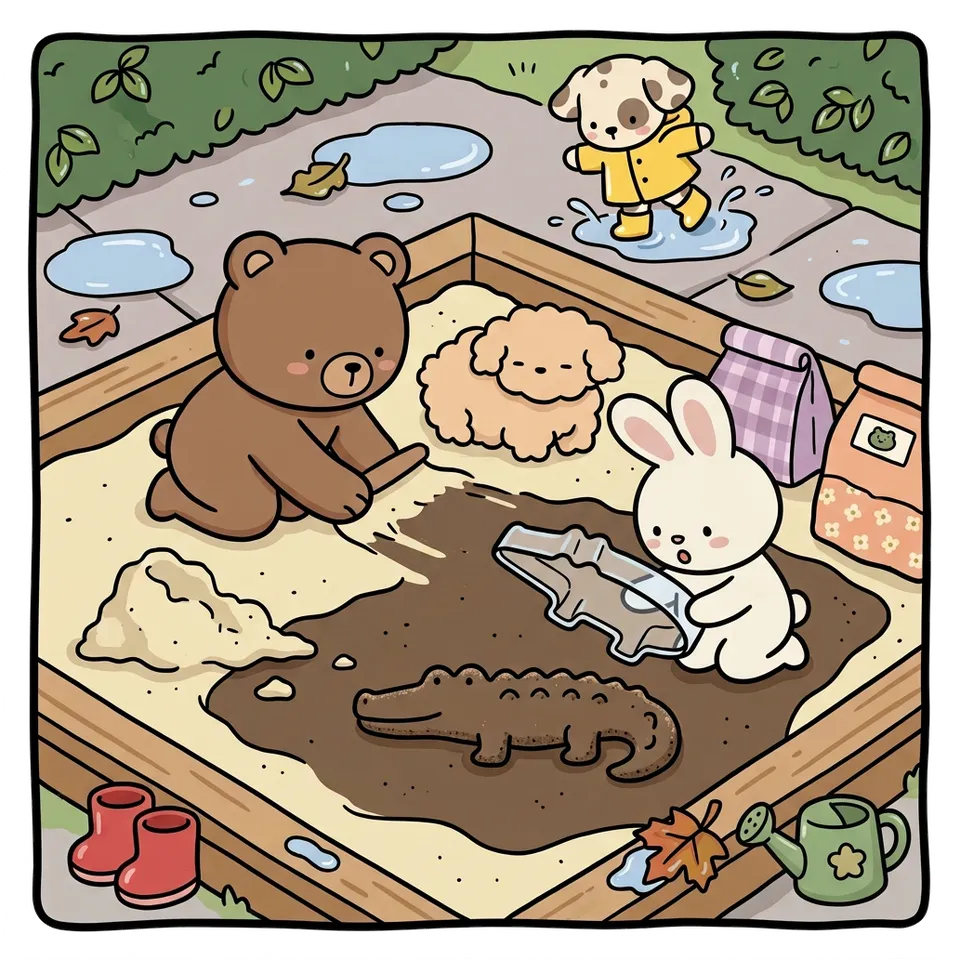
A science play. Fill a mold with sand and flip it over, then scrape off the outer sand and stamp again with the sand from inside. It is the same sandbox, but the outside and inside are clearly different.
Why it's good
The sand that looks full when you scoop it but spills out when you flip it is the top sand, and the dark sand that appears after a few sweeps of the hand is the sand underneath. When a shape that wouldn't come out finally comes out with the underneath sand, children learn that even in the same sandbox, the top sand and the sand underneath are different.
How to play
When you fill a mold with sand and flip it, usually nothing comes out. It was clearly full when you scooped it, but the moment you flip it, it all runs out. The child tries a few more times anyway. They press it in harder, and flip it more slowly.
Then the child says it first. A child who had been stamping with a crocodile mold for a long while said, “I need wet sand.” When I asked why, they said, “Because it won't come out.”
That's when I show how to brush off the top. When you sweep the surface of the sandbox with your palm a few times, a darker spot appears. If it hasn't been many days since it rained, the sand underneath is still wet. Pointing at that sand, the child said, “It's wet sand!” and scooped it and flipped it themselves. This time the crocodile came out whole, and they said “It's a crocodile!” and looked at it for a long time.
Good to know
- Prepare a see-through container. If the child can see inside when flipping, they enjoy it even more.
- The day after rain is a good time. Unlike on a sunny day, you don't need to bring water, because there is already plenty of wet sand underneath.
What you'll need
Molds · See-through container · Water
Rolling Cars to Make Tire Tracks
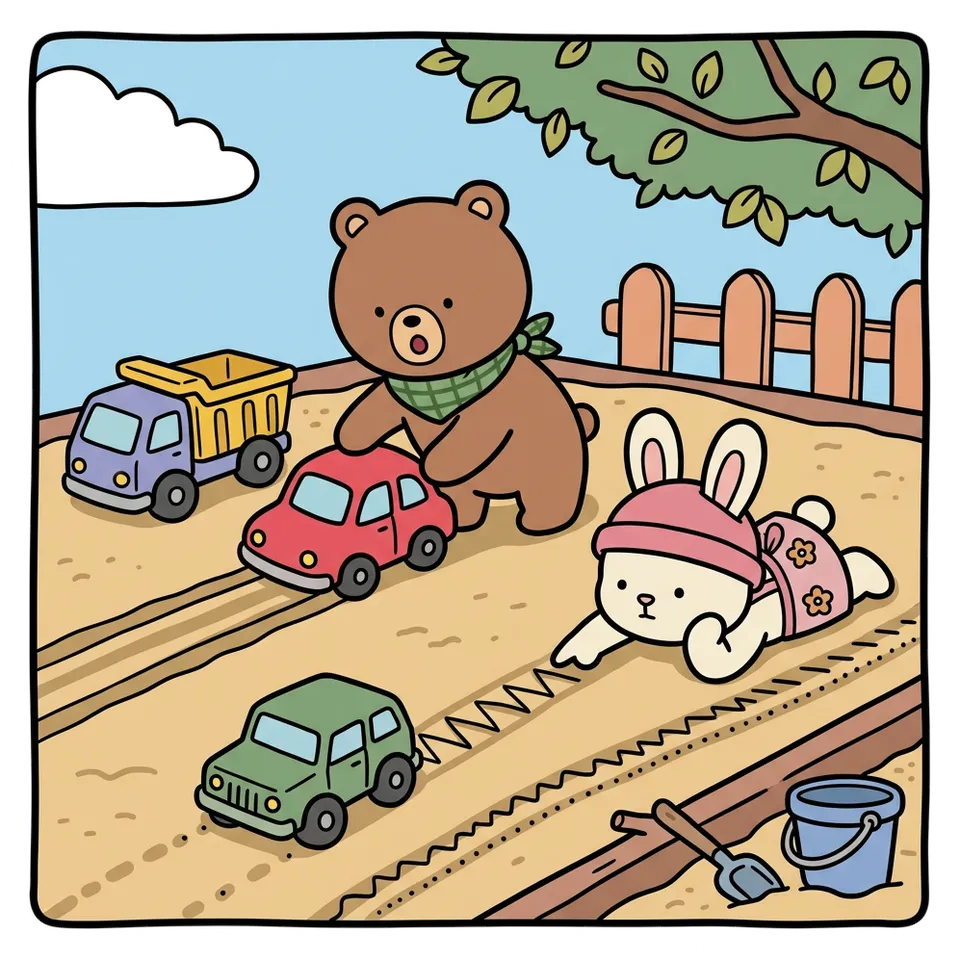
Smooth wet sand flat and roll toy cars across it to leave wheel tracks.
Why it's good
Tracks that never appeared on a hard floor, no matter how hard the child pressed, show up right away in wet sand. When you line the cars up side by side, children also learn that each car leaves a different pattern.
How to play
When you smooth wet sand flat with your palm and roll a car over it, the tire tracks stay just as they are. Any toy car will do.
The child finds out first that it doesn't work on a hard surface. They pressed a car down on a block and pushed hard for a long time to make a track, and when nothing appeared, they looked at me. I brought a tray of damp sand, and after rolling the car once, they shouted “Wheels, wheels!”
When I set out two or three cars, they put the tracks side by side and compare them. They put the one with thick lines and the one with fine patterns apart, and roll only the cars that leave the pattern they like. Once you hand them a stick, it turns into drawing from then on.
Good to know
- It helps to prepare several cars with different tire patterns. With a variety of tracks, there is fun in comparing them side by side and fun in choosing.
What you'll need
Wet sand · Toy cars · Sticks
Leaving a Mark That You Were Here
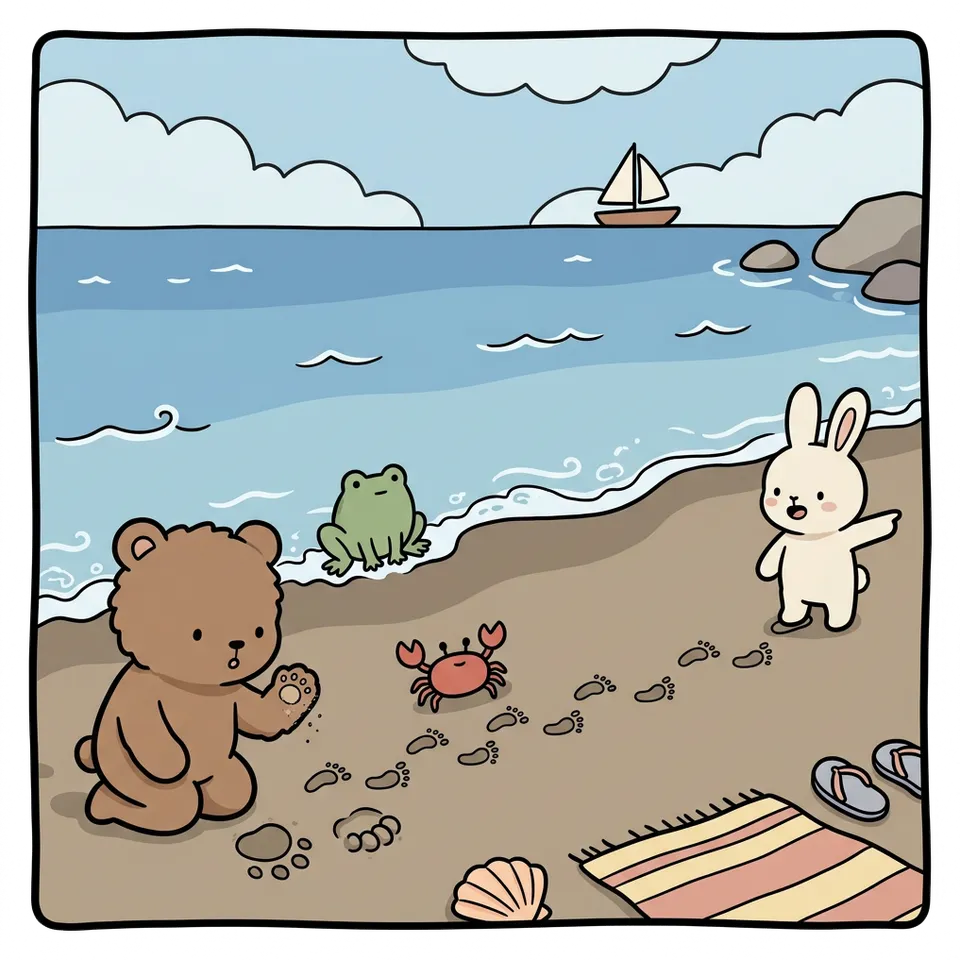
An art play. Press a hand or foot into wet sand to leave a mark where it was.
Why it's good
By pressing a palm, a fist, and a foot, and later even writing their own name, children learn that the mark stays just as it is. It is a play where they leave a sign with their own hands that says "I was here."
How to play
A child who touched the sand and said “Ouch, it's hot!” said “Then the sand must feel cool” when I sprinkled water on it. Once it has been sprinkled, it is comfortable to touch, and the play begins from there.
Wet sand keeps whatever is pressed into it. When a child called “Oh, I can see my handprint!”, the child next to them pressed their own and compared. After the palm comes the fist, and after that the foot.
When one child wrote their three-letter name neatly on the wet sand, a child who saw it wrote “Was here” next to it. They want to leave a sign that they were here.
Footprints become a road. After pressing a line of them, a child said “This is the road to Mom,” and pressing another line in the opposite direction, said “This is the road back home.”
Good to know
- When you come back next time, it will all be wiped away. If that feels like a pity, take a photo on the spot, and the story goes on once more at home.
What you'll need
Sandbox · Water
Sticking Found Things Into the Sand
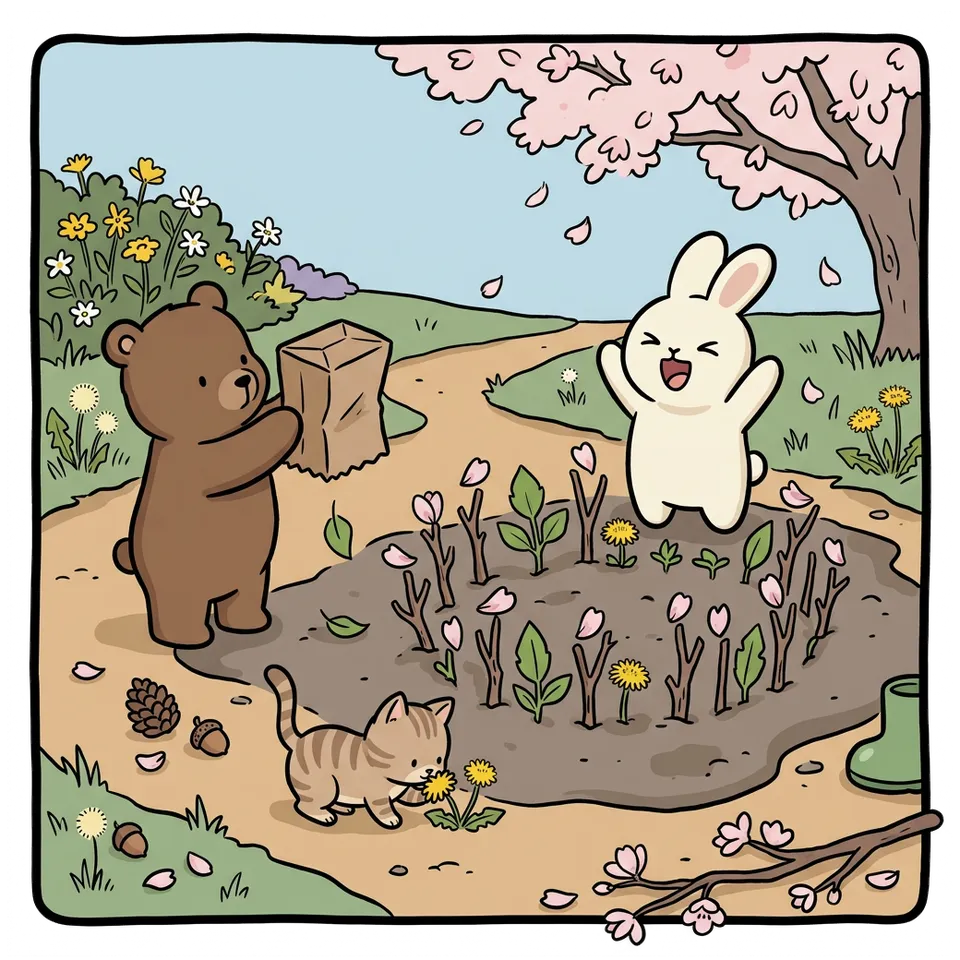
Stick leaves, petals, and twigs picked up on a walk into wet sand so they stand up.
Why it's good
Things picked up from the road would just be thrown away, but once stuck in the sand, they become flowers right there. Children learn that something that was nothing can become something else in their own hands.
How to play
If you bring a bag of things picked up on a walk, they all become materials. Whether leaves, petals, or twigs, when stuck into wet sand they stand right where they are. As they stick them in one by one, they say “It's a flower!” and “I'll put one here too,” and when they're done, “The flower garden is finished!”
The pity is that they run out fast. After sticking them in with great excitement, before long a child holds out their hand and says “I have no more flowers.”
Good to know
- If an adult runs around picking things up for them, the child ends up waiting empty-handed. It is better to go looking together, because the picking itself is part of this play.
What you'll need
Leaves, petals, twigs · Bag
Making a Name Appear With Sand
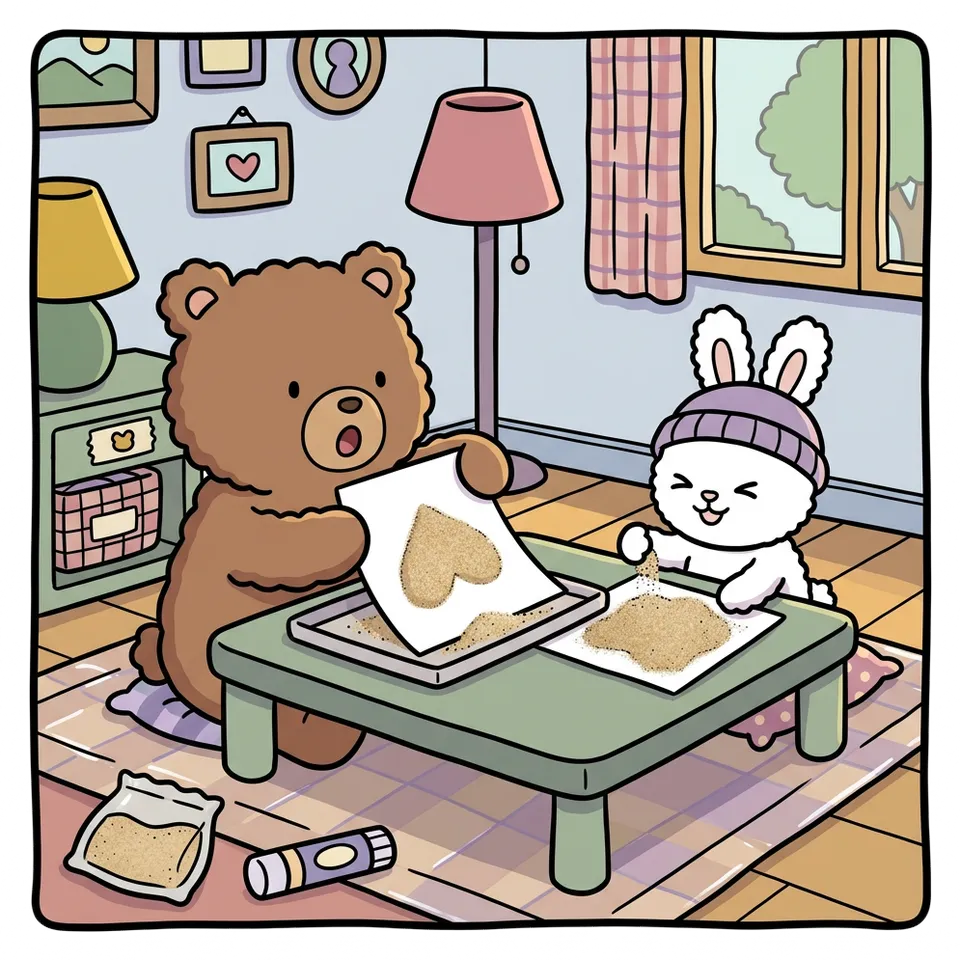
An art play. Write a name with glue on white paper and sprinkle dry sand over it, then shake it off, and sand stays only where the glue is so the name shows.
Why it's good
When the sand that covered the whole paper is shaken off, it stays only where the glue is, and the letters appear. That's how children learn that even on the same paper, there are places where sand sticks and places where it doesn't.
How to play
Write the child's name big in glue on white paper, then sprinkle dry sand over it. A child traced the glue letters with a finger and said “It's sticky,” then grabbed a handful of sand and sprinkled it. When it is all sprinkled, the paper is covered and nothing can be seen.
When you shake it off, only the name is left. If you tilt the paper and shake it gently, only the sand stuck to the glue stays. A child who said “It really hid!” after sprinkling shouted “I found my name!” when their letters appeared as they shook it off.
Good to know
- Sprinkle right after writing with the glue. Once the glue dries, the sand won't stick. Instead of a name, a simple drawing like a circle or a heart works well too.
- Only fine, completely dry sand will stick. Even a little moisture keeps it from sticking well. Use the fine sand sold in bags.
What you'll need
White paper · Glue · Fine sand