Play Ideas with Puzzles
A puzzle is best on the day you buy it, and there is no day after that. After a few rounds, it goes into the box and never comes out. But when you watch children, it is the exact opposite.
The first thing a child who has finished does is push it with their hand and scatter it. They look at the finished board for a long while, brag, “Look, I did it all”, and start over from the beginning right there. An adult wants to take a photo of the finished puzzle, but to a child, finishing is not the end, it is a signal.
And the biggest puzzle in the house is not in a box. It is the mat laid out on the living room floor.
This page was translated by Yeparksam, a preschool teacher in Korea. Some words may sound a little unusual — thank you for your understanding.
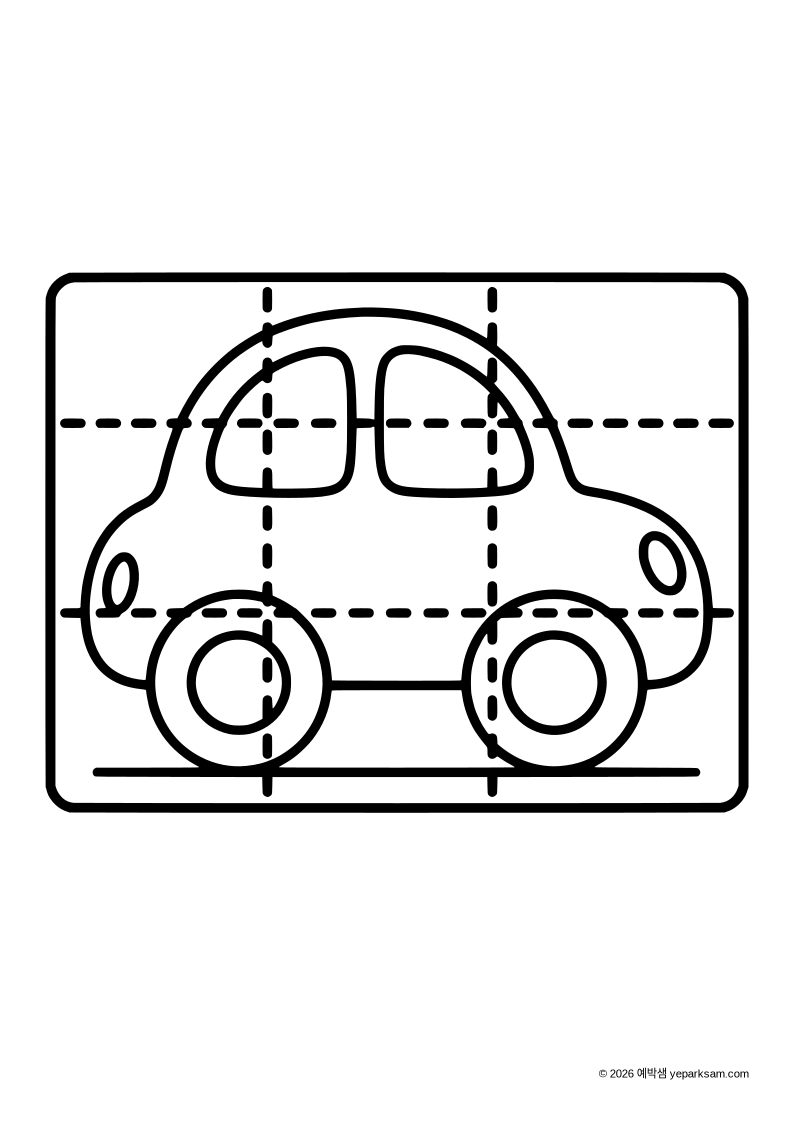
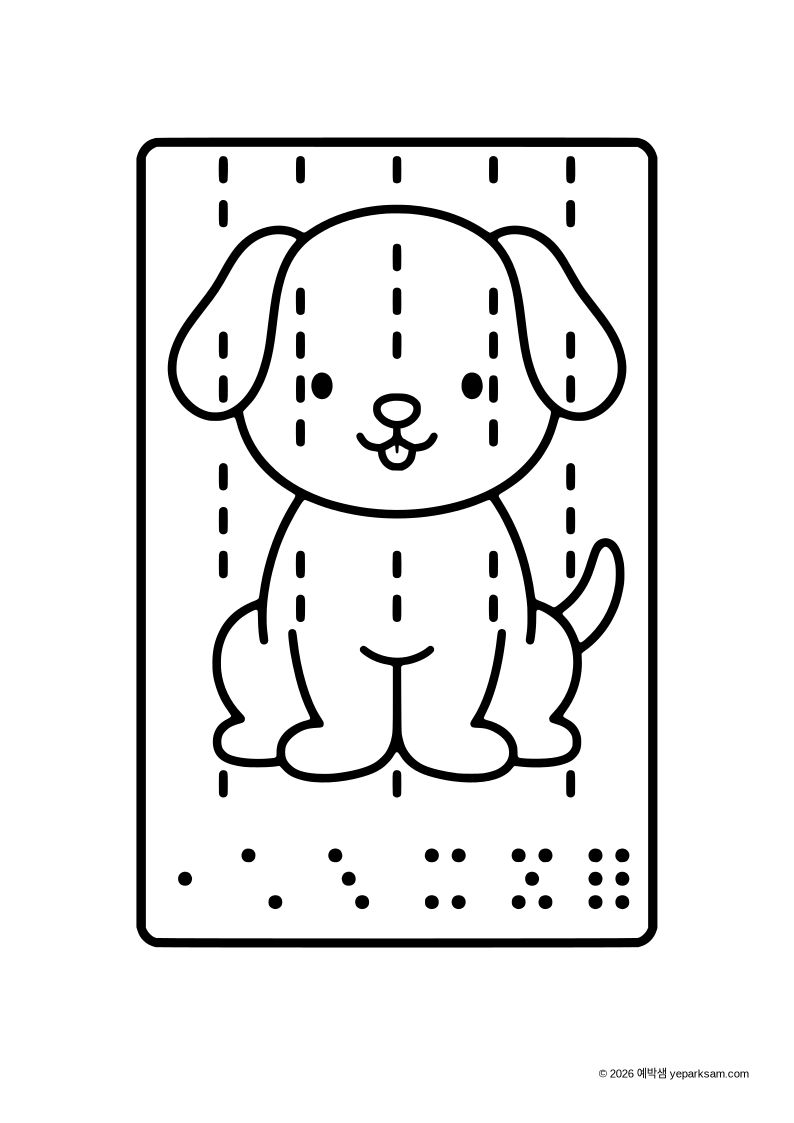
Printables to use
See more ›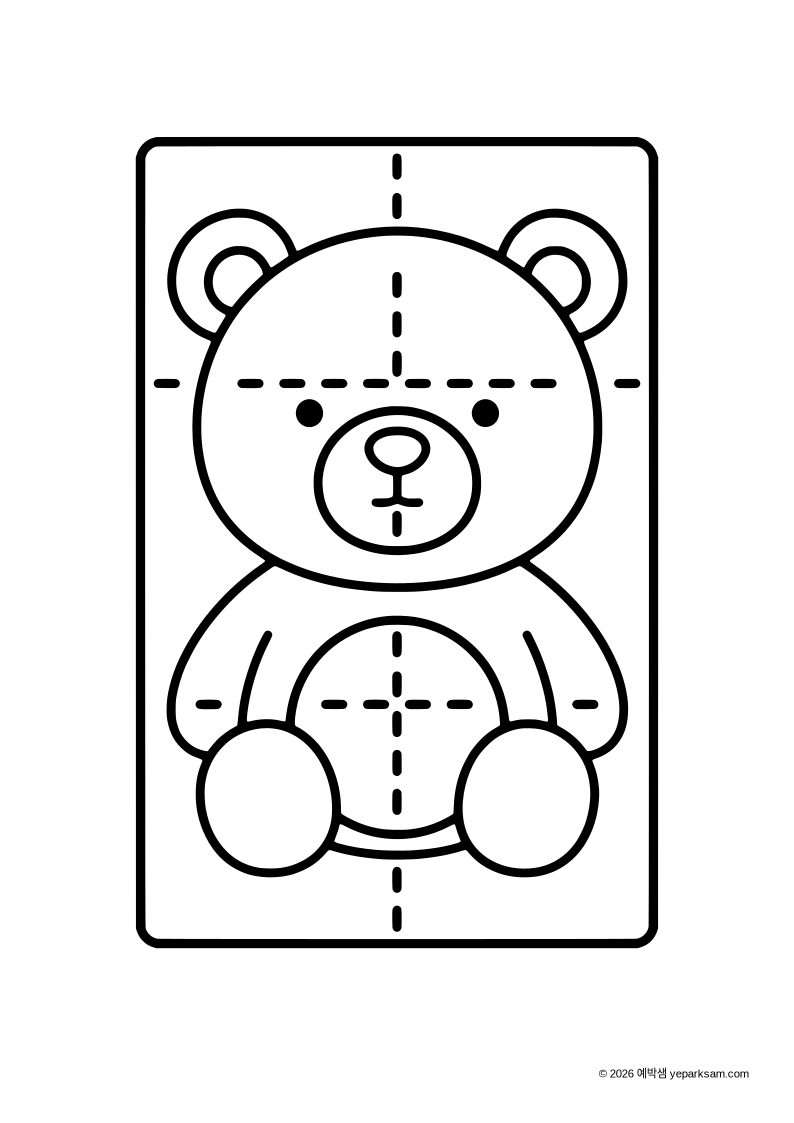
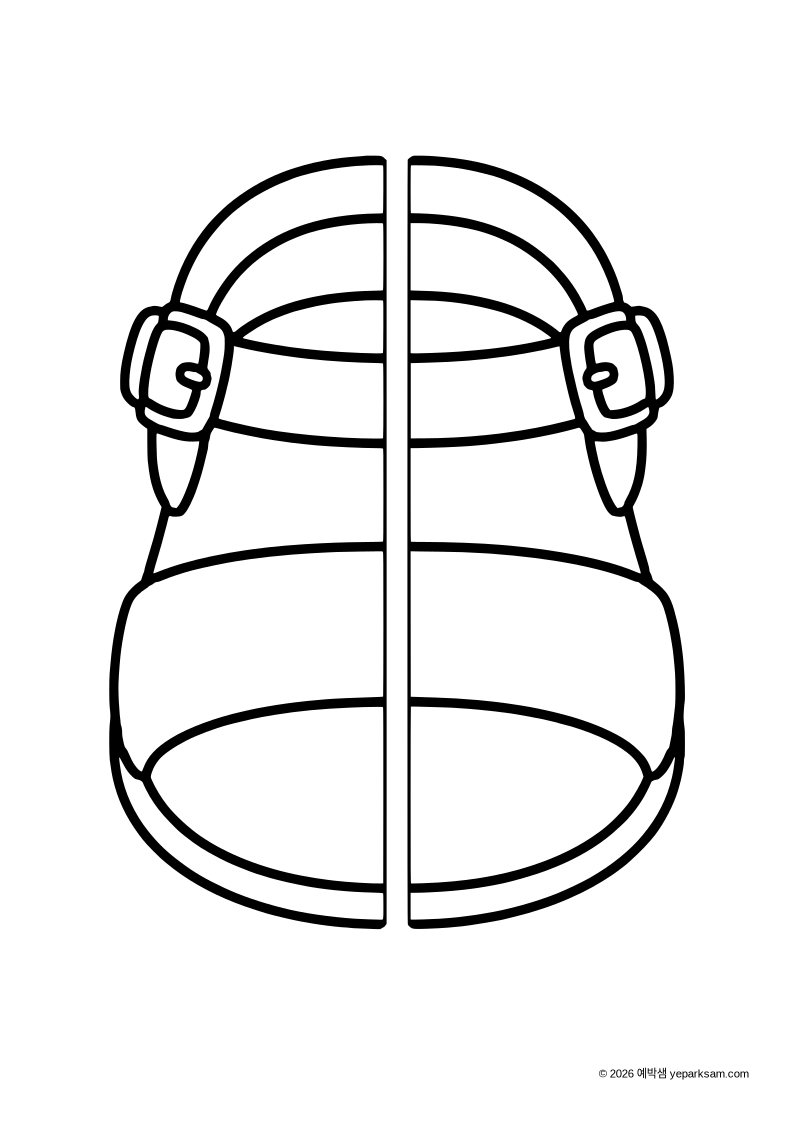
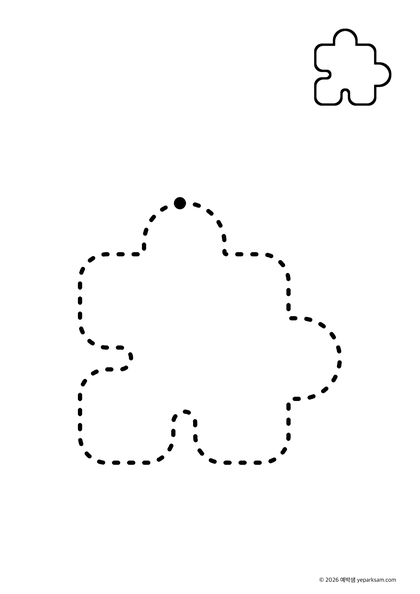
Popping Shapes Out of the Mat
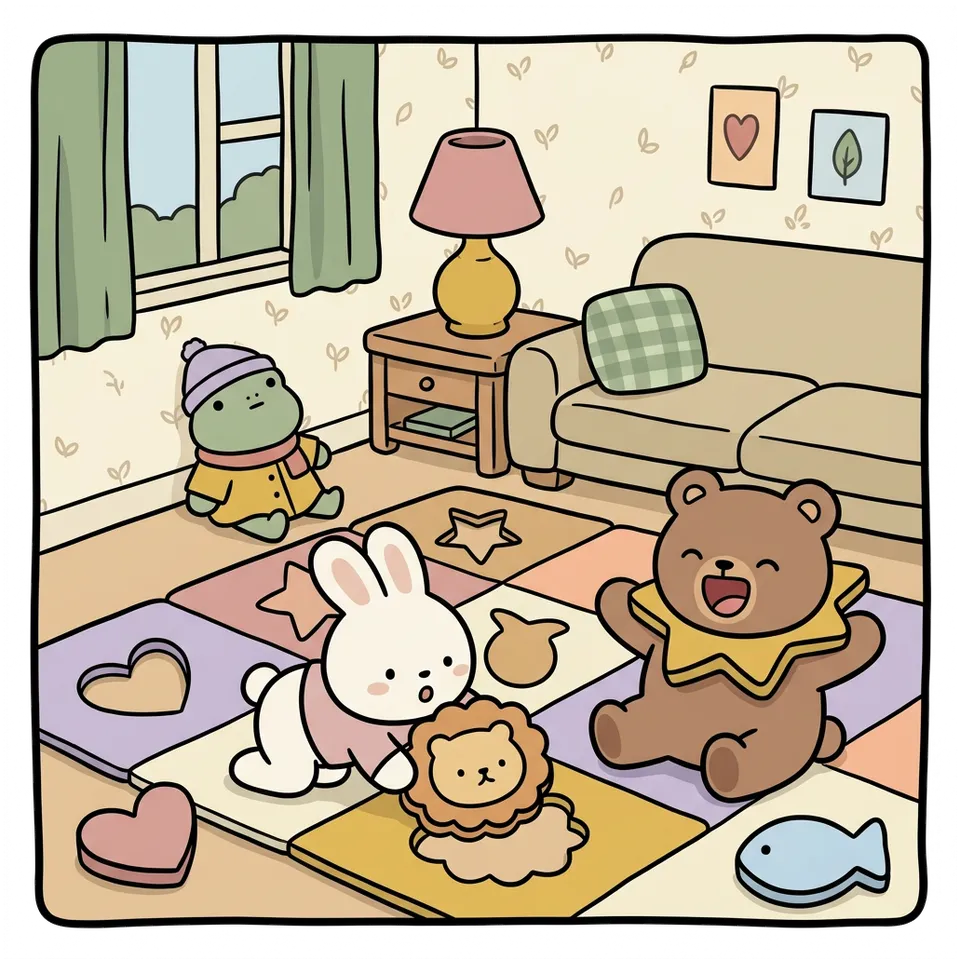
Pull pieces out of a mat with shapes that pop out, then fit them back in. The child sometimes holds up a piece to tell what animal it is, and sometimes looks for the empty spot to fit it back.
Why it's good
It is good for noticing on their own that the pieces come out. Without anyone telling them, they figure it out, and then they set off to find where that piece came from. Holding up a piece and saying the animal's name, and fitting a shape snugly into its empty spot, are both that checking.
How to play
When I lay the mat out, the child presses on it with their hands and pulls at it first, and notices that the shape in the middle comes out. They held up one piece and told me it was a lion with “Awa”, so I suggested we look together for where the lion's spot is, and they looked over the floor and placed it right on top of the lion pattern. One child hung the pieces they had popped out around their neck and loved it. They tried to take them all off at once, but they would not come off, and the child looked ready to cry; when I lent a hand and told them to take them off one at a time, they finally smiled. An adult cannot teach the idea of hanging them around the neck.
Once I took out a few pieces without the child knowing and put them around the room. In the morning I asked what we should do, since the puzzle had pieces missing today, and finding them and putting them back became a whole day's play. The whole floor is the board, so for a crawling child it becomes a puzzle played with the whole body.
Good to know
- It has to be a mat where shapes pop out for this play to start. A mat where they do not come out still lets you pull off one piece at a time, but if you are buying a new one, the price is similar, so one where a heart or animal shape pops out of the middle is better.
What you'll need
Floor mat with shapes that pop out
Finding My Shoe Photo
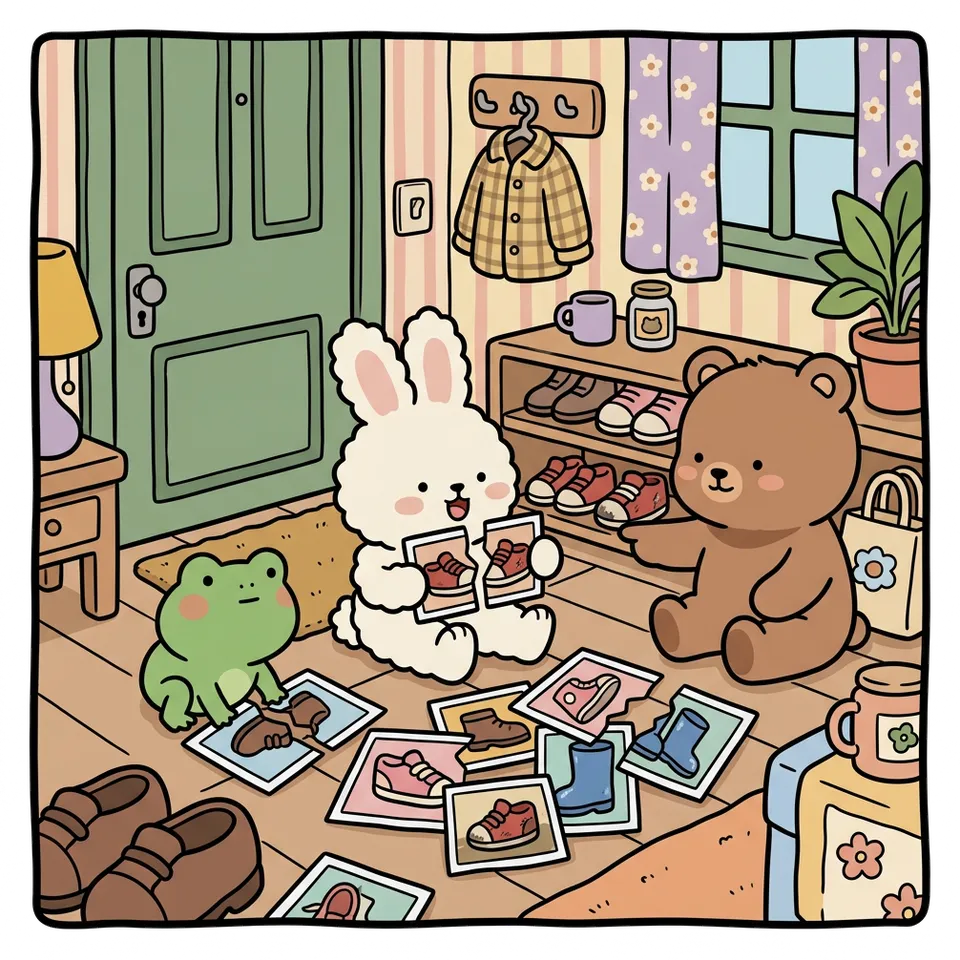
Photograph the shoes at the front door, cut the photos in half and mix them up, then find your own shoe photo in the pile of pieces.
Why it's good
It is good for recognizing what is theirs even at an age when speech is still clumsy. In the pile of pieces, they pass over all the other shoes and find only their own shoe photo as if by magic.
How to play
I take a photo of the shoes lined up at the entrance, print it, cut it in half, and mix up the pieces. The child's shoes are small, but they find their own right away. Some children put the photo they found on the floor and place their feet on top of it, as if it were a real shoe even though it is a photo. When that happens, I bring the real shoe, and even though they cannot put it on by themselves yet, they struggle to push their toes in first.
I thought a photo of the new shoes in the shoe cabinet would be more welcome, but the child first looked for their own worn-out shoe with the toe all scuffed.
Good to know
- If you photograph everyone's shoes together, it lasts longer. They look for Mom's, Dad's, and big sister's one by one and learn whose is whose by name.
What you'll need
Printed shoe photos
Finishing and Feeding
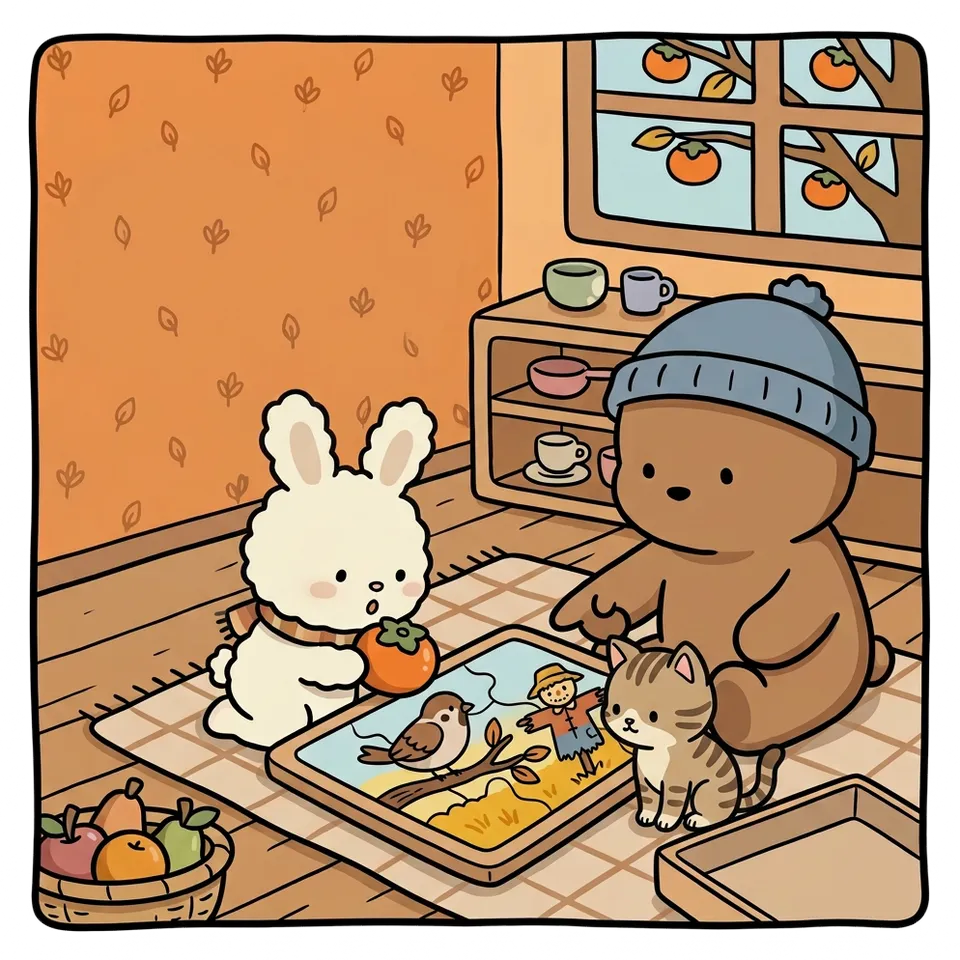
After finishing a puzzle, set the board down with toy food and dolls, and carry on into role play, feeding and caring for the things in the picture.
Why it's good
It is good for making finishing a beginning instead of an end. Even after the board is done, the play does not end, and it moves on to a story of feeding and caring for the animals or birds in the picture.
How to play
I do not flip over the finished board right away. I leave it as it is and put one or two play food items or dolls beside it. Adults think it is over once it is all put together, but for the child, that is where it starts. A child who finished a sparrow puzzle held up the board and said “Look at this!! I did it~”, then suddenly said “Does the sparrow eat fruit?”, got up, took a persimmon from the fruit basket, held it to the sparrow's mouth in the picture, and said “Eat well!”
A child who finished an autumn puzzle pointed to a bird in the picture and asked “What bird is this?”, so I told them it was a sparrow and that a scarecrow had been stood beside it to keep it from eating the grain. They nodded and said “Sparrows are scared of scarecrows.”
Good to know
- Pictures of animals or vehicles lead this way well. With a board that has only patterns or shapes, it really is over once it is done.
- Asking about what is in the picture adds another layer to the story. If you ask what they eat or what animal it is, the child answers with what they know and the play continues.
What you'll need
Play food or dolls
Drawing on Sticks to Make a Puzzle
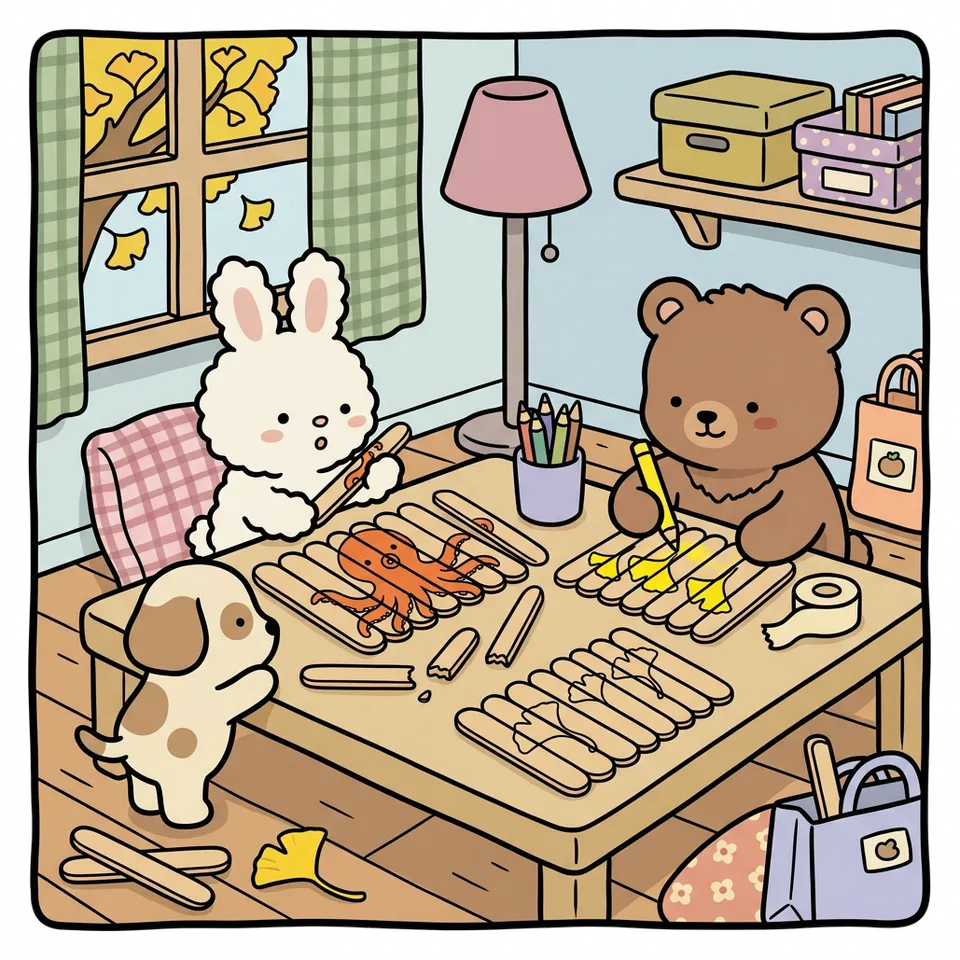
Line up ice cream sticks side by side and draw a picture across them, then pull them apart to make a puzzle. Find the scattered sticks one by one and put them together again.
Why it's good
It builds the ability to compare colors and lines with the eyes. Finding the ones that connect among the scattered pieces is the proof. Having them color first gives the same result: after coloring it all in, the child counts that as having completed it.
How to play
I stick five or six ice cream sticks side by side, fix them with paper tape on the back, and draw a picture on top. I drew an octopus, and the child picked up the scattered sticks one by one, compared colors and lines, and found the ones that connect. When they got stuck, instead of telling them where to put a stick, I asked what was where.
You can also draw only the lines and let the child do the coloring. After coloring it all in, they called me over, “I finished coloring, I finished this!” It was not finished as a puzzle but colored in, yet to a child it is the same thing. A child coloring a ginkgo leaf yellow said “There's a fart in the ginkgo tree so it smells when you step on it,” and the child beside them said “There's no fart in it.” Then “Yes there is, that's why it smells,” the first insisted, and the two of them giggled.
Good to know
- You only need to lay them side by side, so even young children can do it. Cutting and sticking is the adult's part, and the child just draws.
- Before age three, stay seated beside them. It is an age when they bring sticks to their mouth.
What you'll need
Ice cream sticks · Paper tape · Colored pencils or markers
Making a Road from Puzzles
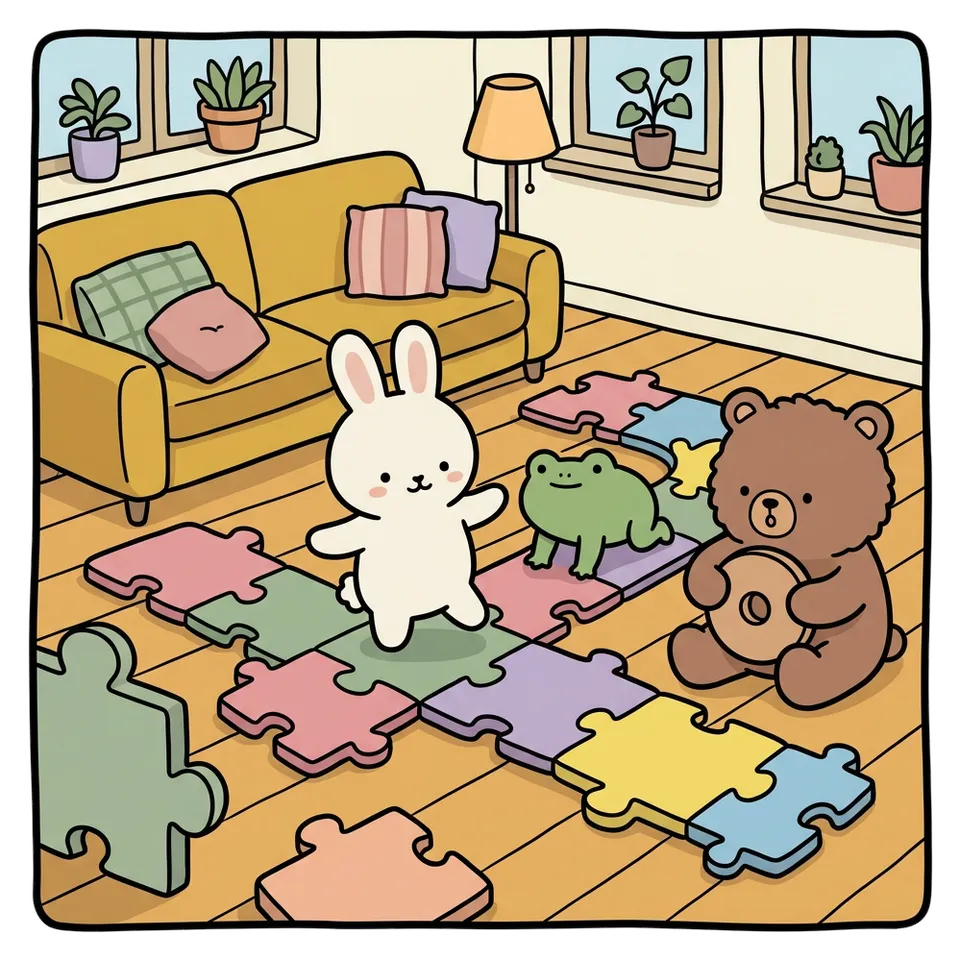
Play with big floor puzzle pieces using the whole body. One piece becomes a steering wheel, and the finished board becomes a path to walk or crawl across.
Why it's good
The value of this play is that it lasts longer as body play than as sitting and fitting pieces. Each piece becomes a different object, and the finished board becomes a road to walk across.
Books to read together


How to play
Pull out the round piece in the middle, put it in their hand, and from that day it is a steering wheel. They drive around the whole house going vroom vroom, and when they stand the biggest piece up and roll it sideways, the play moves on to rolling a hoop. After playing and scattering for a long while, the child gathers the pieces and fits them back together. I thought it ended once it was fitted together, but the child called the finished board a bridge and stepped on it to cross over.
If you join several puzzles to make a longer road, siblings and visiting friends step up one after another. They walk in the same direction as if they had agreed to, and when one starts crawling on their belly, the rest follow and crawl too.
Good to know
- If you have several puzzles, you can join them side by side into a long road. One board is over in a few steps.
What you'll need
Big floor puzzle
Making My Own Puzzle
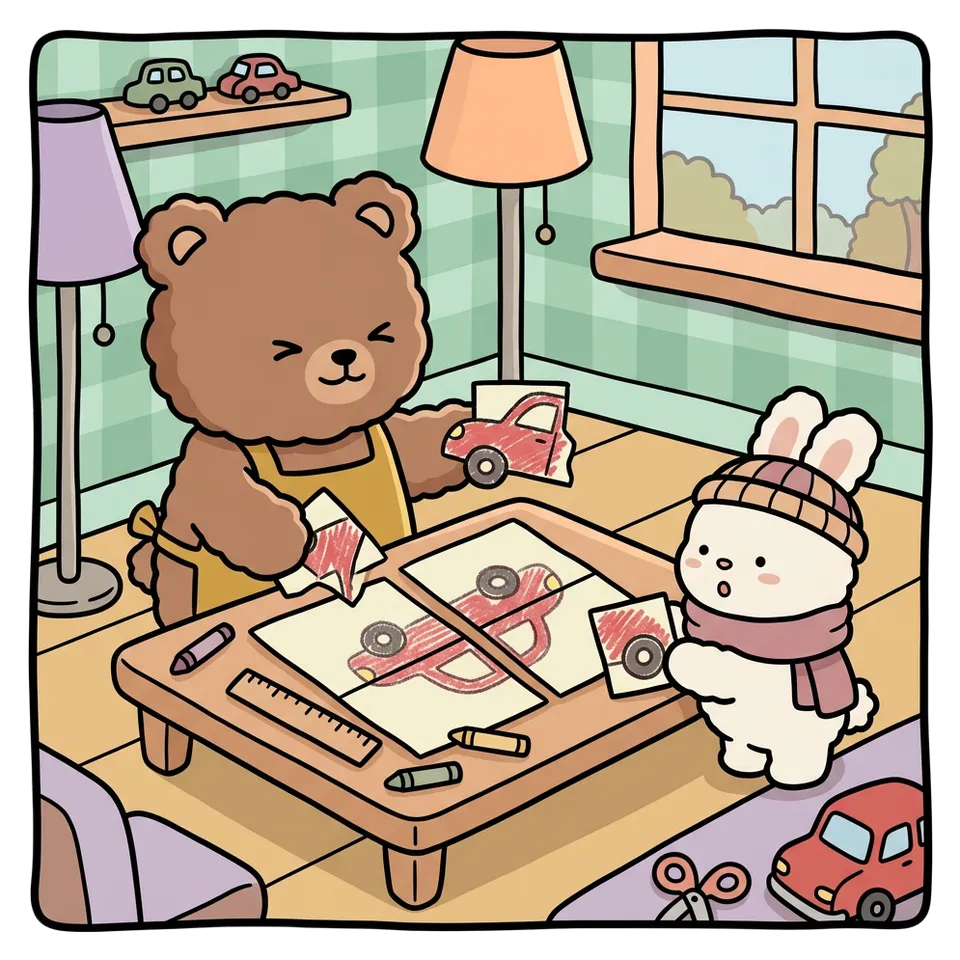
Make a puzzle of your own by drawing a favorite picture or choosing a photo and cutting it up.
Why it's good
It is good for the time when fitting the same picture has gotten dull. When a six-piece puzzle can be done with eyes closed, it is time to move from fitting to making. They can even draw a picture that store-bought puzzles do not have and turn it into their own puzzle.
How to play
Draw a favorite picture or pick one photo, draw a few lines with a ruler, and cut with scissors, and that is already one puzzle. After cutting it all up, the real fun is taking it to a friend and holding it out for them to try.
Once a child was disappointed that their favorite car was not in any puzzle set, so they drew that car on a blank sheet, cut it out, and made their own puzzle. I thought the child would like it better if I drew it neatly for them, but the child was actually prouder of the one they drew roughly themselves.
Good to know
- If two children sit side by side and each make one, the pieces easily get mixed. If you write a name on the back, you can tell right away whose is whose.
- An adult first shows one straight cut with the scissors and helps only with the hard parts. The first puzzle a child makes does not fit well, but the one who drew it knows best which part was where.
What you'll need
Drawing paper · Colored pencils or markers · Scissors
Finding Myself in a Photo
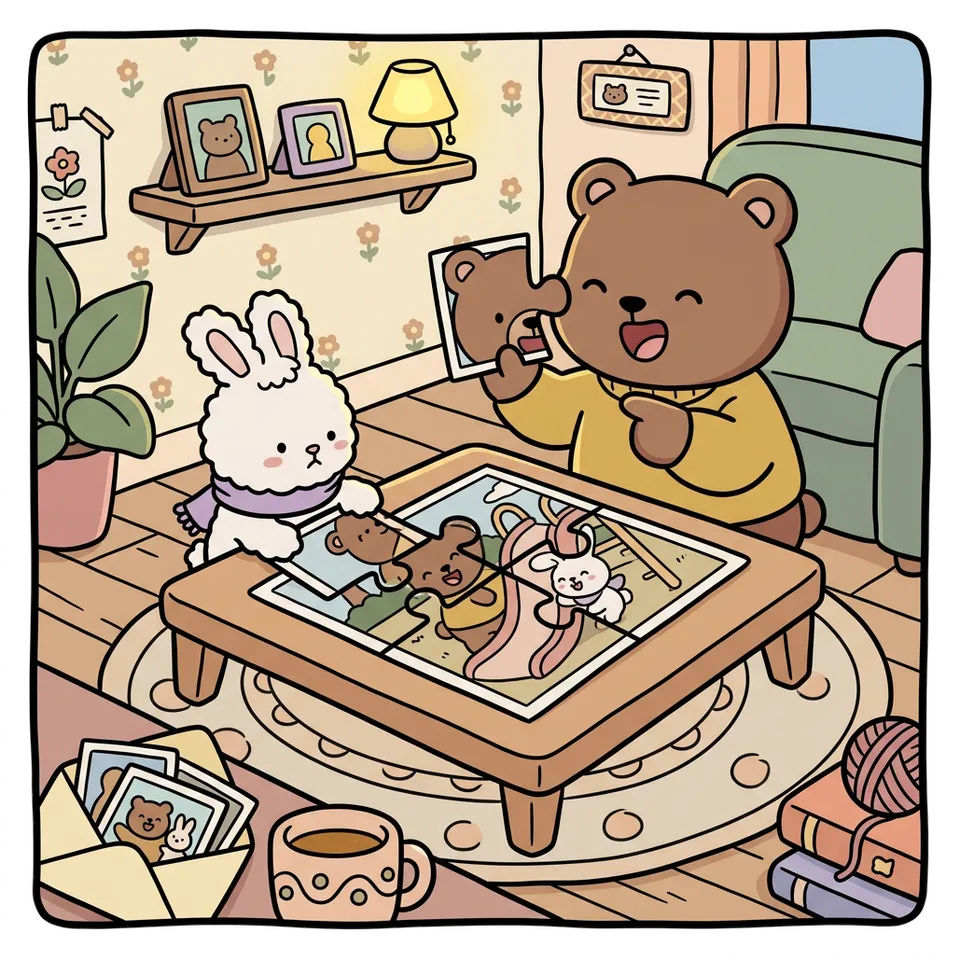
Cut a family photo or a playground photo into pieces, mix them up, and put them back together.
Why it's good
It is good for recognizing familiar faces and familiar scenes. With a photo they know, they even find the direction by themselves. On a board made from a water play photo, they point without even trying the piece, saying “This looks like the top” and “The water is on the side so it goes here.” They know what happened that day, so the picture is already in their head.
How to play
When I print one family photo or one taken at the playground, cut it into a few pieces, mix them up, and set them in front of the child, they guess who it is from just half a face before it is even finished. After finishing, I asked “Who is not here?”, and out came stories of the friend who was sick and could not come that day and the younger sibling who went to Grandma's house.
After doing it many times, they take out older photos too. Some children piece one together saying “Wow, our faces have changed”, and some compare it to now: “Bori's hair is shorter than at that time, why?” Some are happy to see their own face in a photo, “That's me!”, and some flip over just the piece with an expression they do not like.
Good to know
- Leave the flipped pieces as they are. They can finish the rest even if you do not make them turn it right side up.
What you'll need
Printed photos
Finishing Together with a Friend
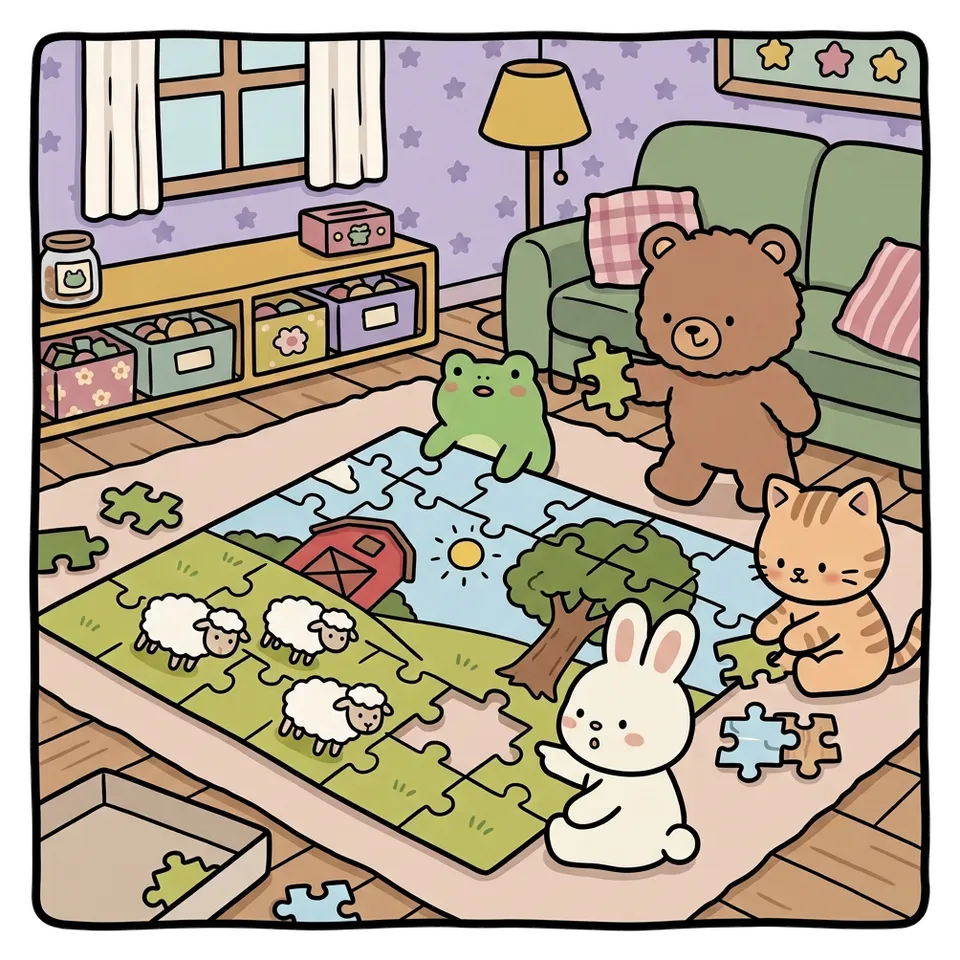
Share a many-piece puzzle with a brother, sister, or a friend who comes to play, and put it together as a team. Split up the amount that would be too much alone, or help each other when you get stuck.
Why it's good
It is good for getting done together what is too much alone. They split the pieces by whatever lands in their hands without even looking at the picture, and strangely they still find all of their own share.
How to play
When there are more pieces, it is too much for one child. Some children divide it up: “You do this much. I'll do this much.” Some insist on doing it alone. They push away the helping hand, “I'll do it by myself.” In that case, it is better to wait beside them. When they get stuck, they end up calling the sibling or friend next to them first.
When one piece goes missing, the play stops right there. They are upset, “There's one missing,” and only start again when a sibling or friend who was playing elsewhere finds the piece and brings it. Because it was a lost piece, it is even more welcome.
Good to know
- Only a puzzle with many pieces gives them something to share. With few pieces, it is not too much alone, so there is no need to share.
What you'll need
Puzzle with many pieces