Play Ideas with Tents
When I set up a tent, the child touches the zipper before going inside. They open and close it a few times, and only then climb in. Inside becomes a place where a face disappears and reappears with just a door in between, and when the lights go off, it is night right away.
This page was translated by Yeparksam, a preschool teacher in Korea. Some words may sound a little unusual — thank you for your understanding.
Printables to use
See more ›
Peekaboo
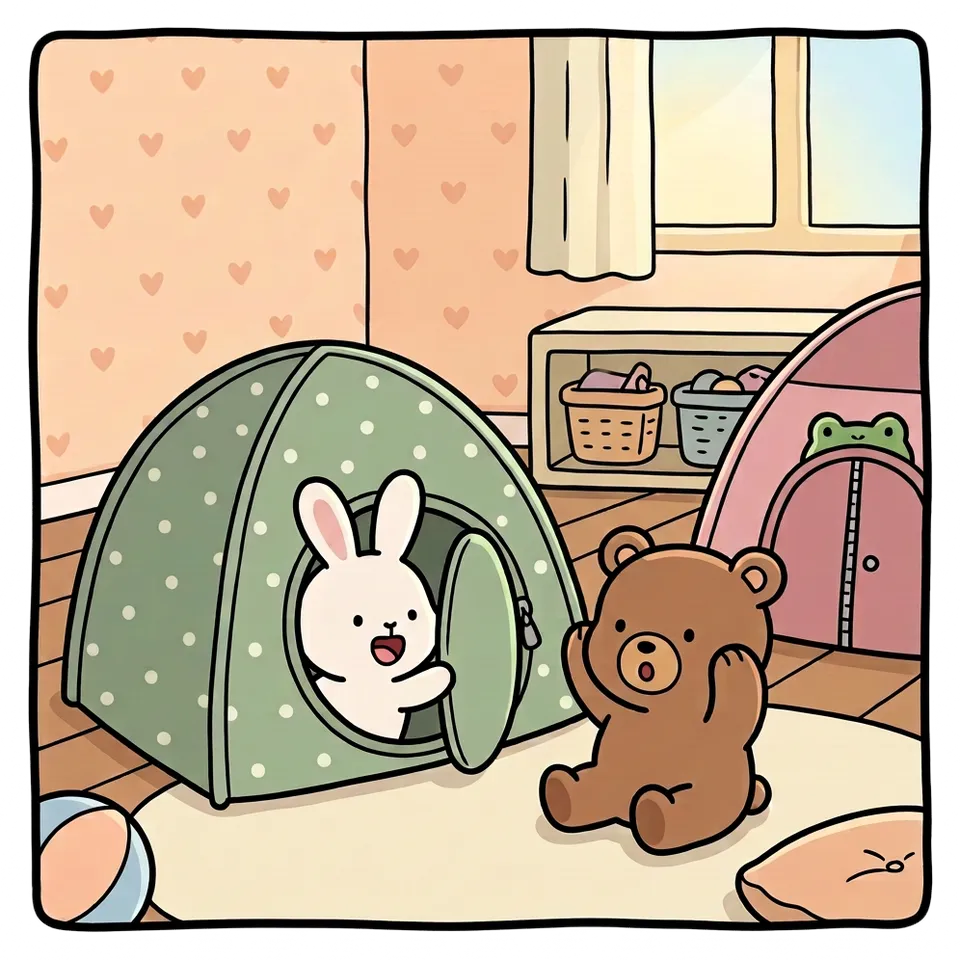
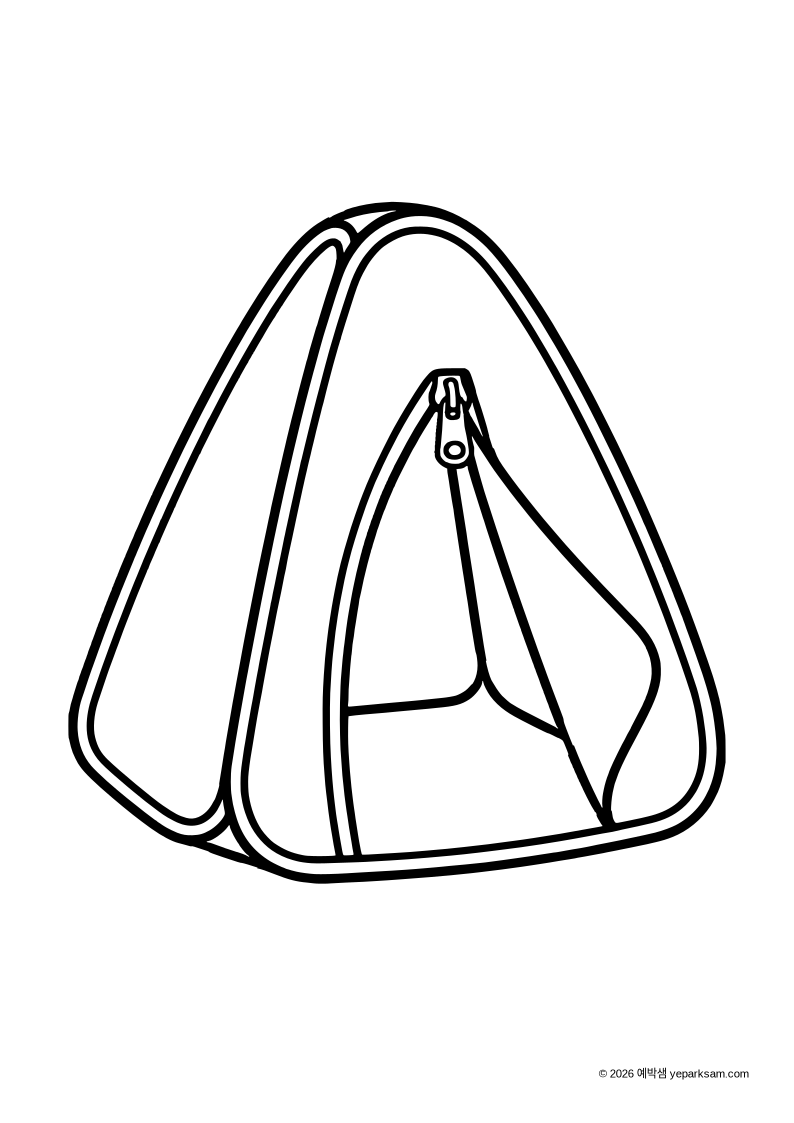
A tent door becomes a flap that opens and closes, and the child takes over the hand that holds the flap in a game of peekaboo. The child goes inside, pokes only their face out, and hides and appears all on their own.
Why it's good
In peekaboo, it is the adult who covers their face with their hands and takes them away. In this play, the lead passes to the child. The child decides entirely when to hide and when to appear, so every time they check that both hiding and showing are in their own hands.
How to play
The one who pops in, sticks out just a face, and shouts “Peekaboo~” first is the child. I become the audience who responds, “Oh! You were there!” If I look around pretending I can't find them, they can't help poking their head out first.
If there is a friend or sibling, I set out a second tent. From then on there are two people holding a flap: when one hides, the other goes looking, and when they get caught, they switch places. There is nothing left for me to join in on. The two of them become the hider and the finder for each other.
When an adult plays peekaboo with their hands, I get tired first after a few rounds. With the tent, it is the child who holds the flap, so even when I am tired, the play keeps going. That is why this play does not end when I let go.
Good to know
- Covering just the face is already completely hidden to a child. Even if the whole body shows, they think they have not been found as long as the tent flap covers their face. How much needs to be covered to count as hidden is up to the child.
- If there is a friend or sibling, you need one more tent. If the colors are different, the child picks their own tent.
What you'll need
A tent with a door that opens and closes
Setting Up a Camp
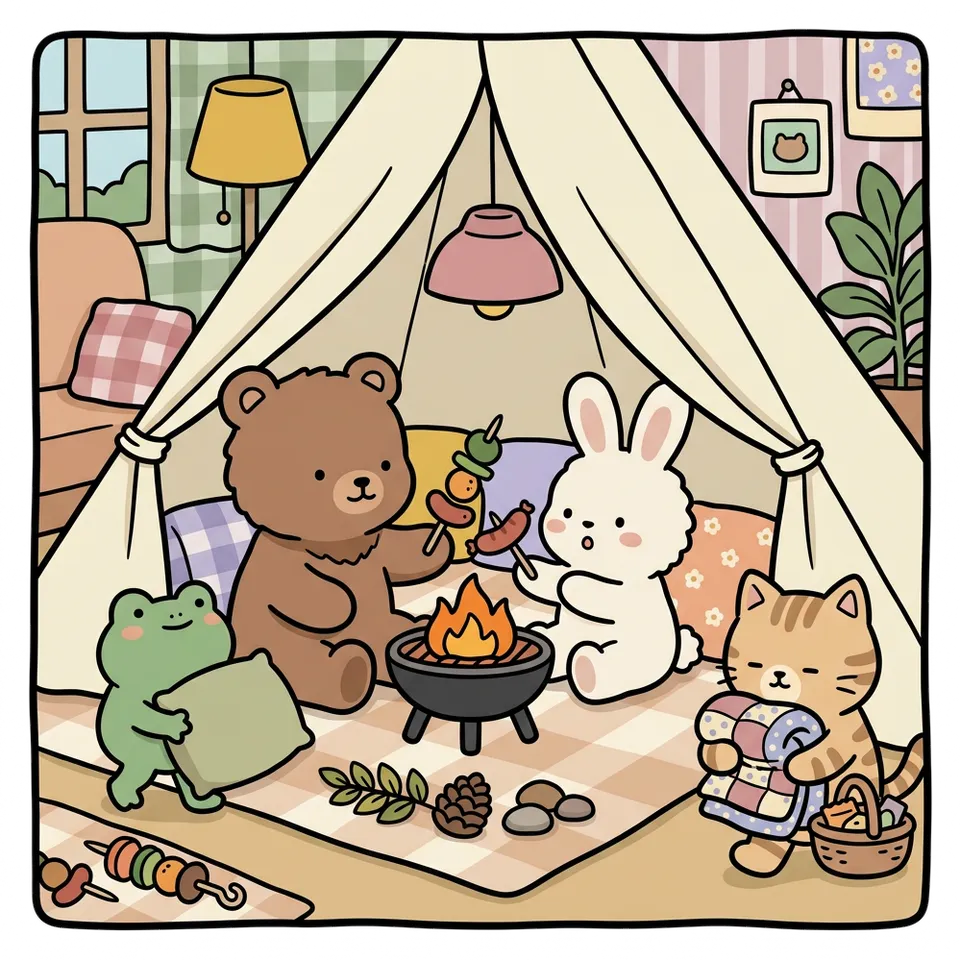
Set up a campsite in the tent with a blanket and a mini fire pit, then cook in front of the fire pit and share the food in this role play.
Why it's good
In this play, the child fills in what camping needs one thing at a time, on their own. The adult does not have to bring everything. A single hint is enough for the child to think of the next item.
How to play
With just one blanket and one mini fire pit, you have a campsite. The moment a skewer goes on the fire pit, the child becomes someone setting up a kitchen. They shout “It's cooked!”, hand it to a friend with “It's hot, be careful.”, and share a bite saying “Let's eat together.”
For the camp to grow, I have to drop just one remark beside the fire pit. When I say, as if to myself, “What else do you need when you go camping?”, the child does not miss it and answers one after another: “Blanket!”, “Pillow!”, “Snacks~” If I do not drop it, the play stops right there at the fire pit and the skewer.
At first I wondered whether I should buy more play food, but one remark I dropped tripled the camp more than anything I bought. Once everything is set up, they spread out the blanket and lie down, or go outside, pick up leaves or stones, and line them up beside the fire pit. That is camp gear too.
Good to know
- Drop the hint, do not say it outright.
- If you have no mini fire pit, turn a paper cup upside down. A twig works as the skewer.
What you'll need
Blanket · Mini fire pit · Toy skewer
Turning Off the Lights to Make Night
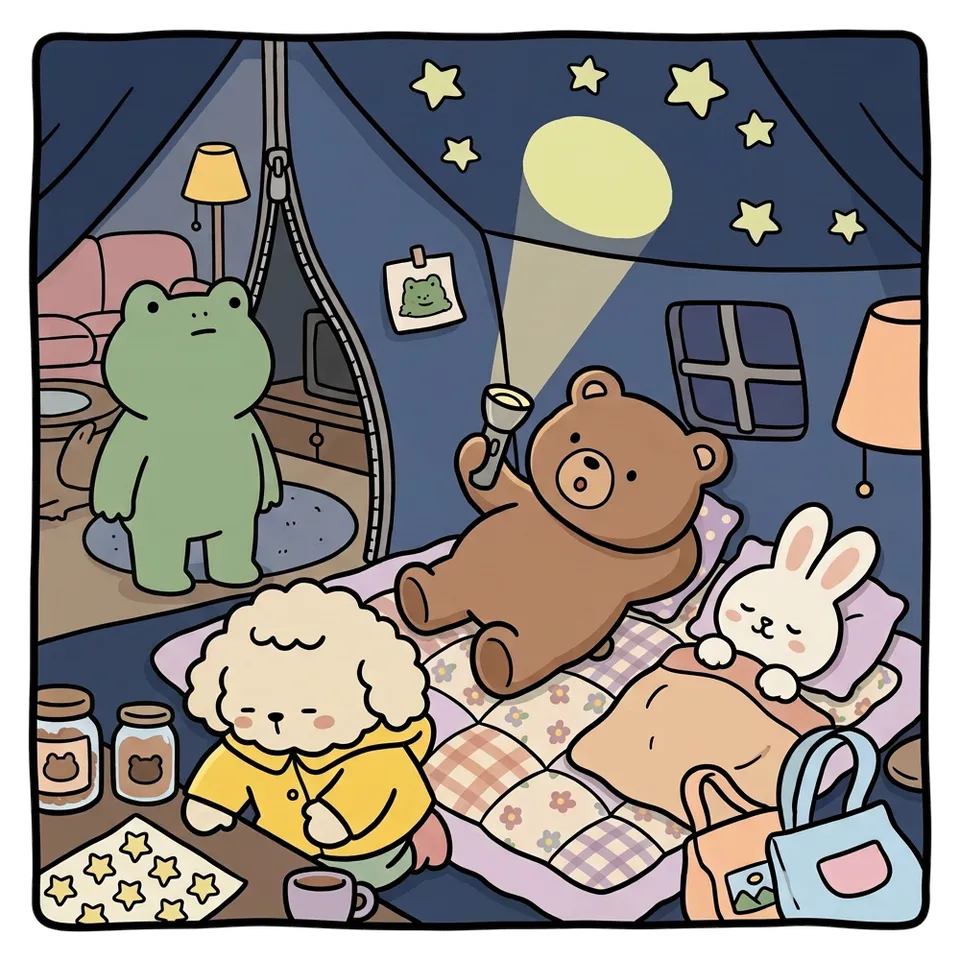
Turn off the light in the tent to change day into night, and light it up with a flashlight and glow-in-the-dark stars.
Why it's good
This play only works if you insist that day is night. It is a sensory play where the child holds a flashlight and handles darkness and light with their own hands, and it is also a play where they say good night over and over.
How to play
I turn the lights only halfway off and put a flashlight and glow-in-the-dark star stickers inside the tent. It was the child who first said they wanted it dark. Once they hold the flashlight, the child makes the night with their own hands. They shine it on the wall, on the floor, turning it on and off, saying “Wow, it's really night!” and “The stars are sparkling.”
When it is night, it is time to sleep. Since it is not real bedtime, the child lies down first and says good night first. “Good night.” They say it to a sibling or a friend lying beside them. Words that hardly ever come out at real bedtime come out again and again here.
Good to know
- You do not have to turn off all the lights. Even halfway is plenty of night for a child.
- Glow-in-the-dark stars keep a little light for a while after the flashlight goes off. They glow only after taking in light, so when the stars fade, shine the flashlight on them once and they come back to life.
- It has to be a thick-fabric tent. With thin fabric, light seeps in even when the lights are off, and the night does not work well. The flashlight comes alive only when the inside gets dark.
What you'll need
Thick-fabric tent · Flashlight · Glow-in-the-dark star stickers
Becoming a Car and Driving
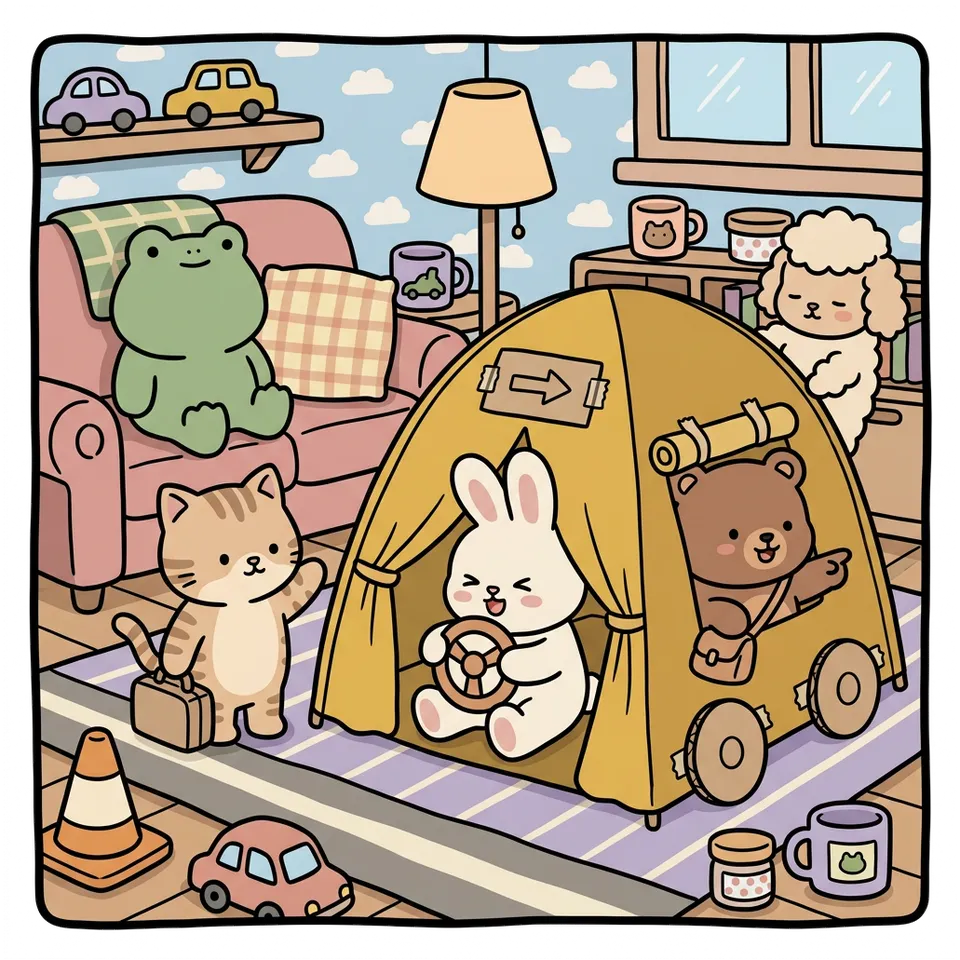
Decide the tent is a car or a bus. Whoever sits in front becomes the driver, chooses the destination, and drives off.
Why it's good
When the child becomes the passenger, they decide for the first time that day where they themselves want to go.
Books to read together


How to play
Just decide that the tent is a car or a bus. It does not have to look like a car; whoever sits in the front seat becomes the driver, and that is all it takes. The child wanted to be the driver first. They sat down in the tent, told me to ride in the back, and I became the passenger.
“Where are you going?” the child asked, and the one who got stuck for words was me. Usually it is the child who tells me where to go, and I had never been asked to decide. The child did not rush me and waited, and after a long while I said “The bathhouse.” The child spun the steering wheel happily and let me off, saying “We're at the bathhouse.”
We switched, and this time I became the driver. When I asked, “Where are you going?”, the child answered right away: “The playground.”
Good to know
- When you are stuck you cannot go anywhere, and with one answer you can go anywhere. When the driver asks where you are going, you have to answer with one destination right then for the play to roll.
- It does not have to look like a car. If there is a seat and a door, you can split into driver and passenger.
What you'll need
Tent
Crawling Through Mommy's Tummy
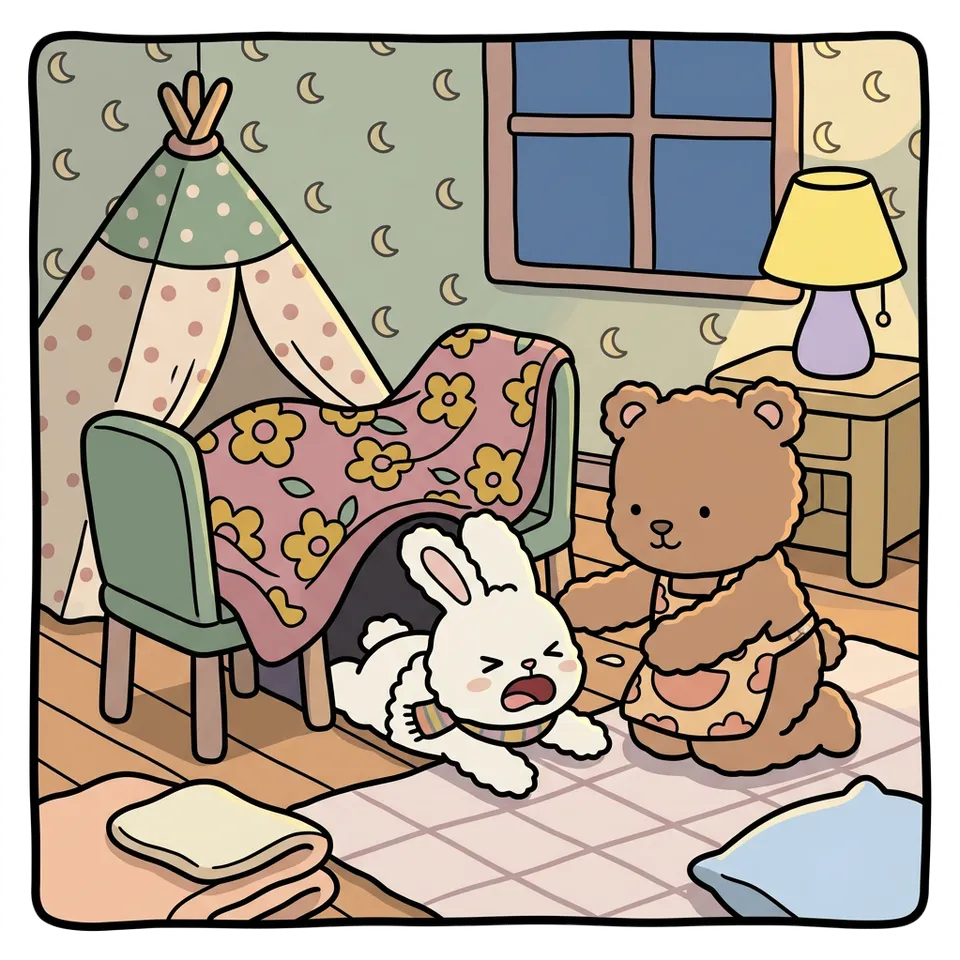
Set two chairs facing each other and cover them with a blanket to make a narrow tunnel, then crawl through the tunnel and back and forth to “Mommy's tummy” in the tent.
Why it's good
In this play, the child experiences with their body the moment of being born from Mommy's tummy. Passing through the narrow, dark tunnel and then being hugged by an adult when they come out is one set, so the child checks the moment of being born and the moment of being hugged again and again with their own body.
How to play
Out of nowhere the child said, “I think it was dark inside Mommy's tummy.” I did not let that go. I put up a small tent in the living room, set two chairs facing each other in front of the tent entrance, and draped a big blanket over them to connect a narrow tunnel. The child was the one who named that tunnel “the way to Mommy's tummy”, and the inside of the tent became “Mommy's tummy”.
They crawl through the narrow tunnel under the chairs and into the tent, and it goes quiet inside for a while. Then suddenly they come back out through the tunnel, shouting “The baby is born!” and “Waaah waaah~” They told me, “Mommy has to hug me.” From that day on, I became the person who sits in front of the tent and hugs the child every time they come out.
After going back and forth a few times, without my asking, they said on their own, “It's warm.” and “It's cozy.”
Good to know
- Going in, the body has to get really low to get through.
- Coming out, an adult has to take the role of catching. If there is a sibling, the one waiting sometimes takes that role.
- Some children repeat this play a lot when it overlaps with news of a new sibling. If you notice them going in and out of the tent through the narrow tunnel, you can tell whether it coincides with that time.
- If you have no tent, you can wall it in with sofa cushions and cover it with a blanket. It just needs to be narrow and dark enough for a body to fit.
What you'll need
Tent · 2 chairs · Big blanket
My Own Hideout
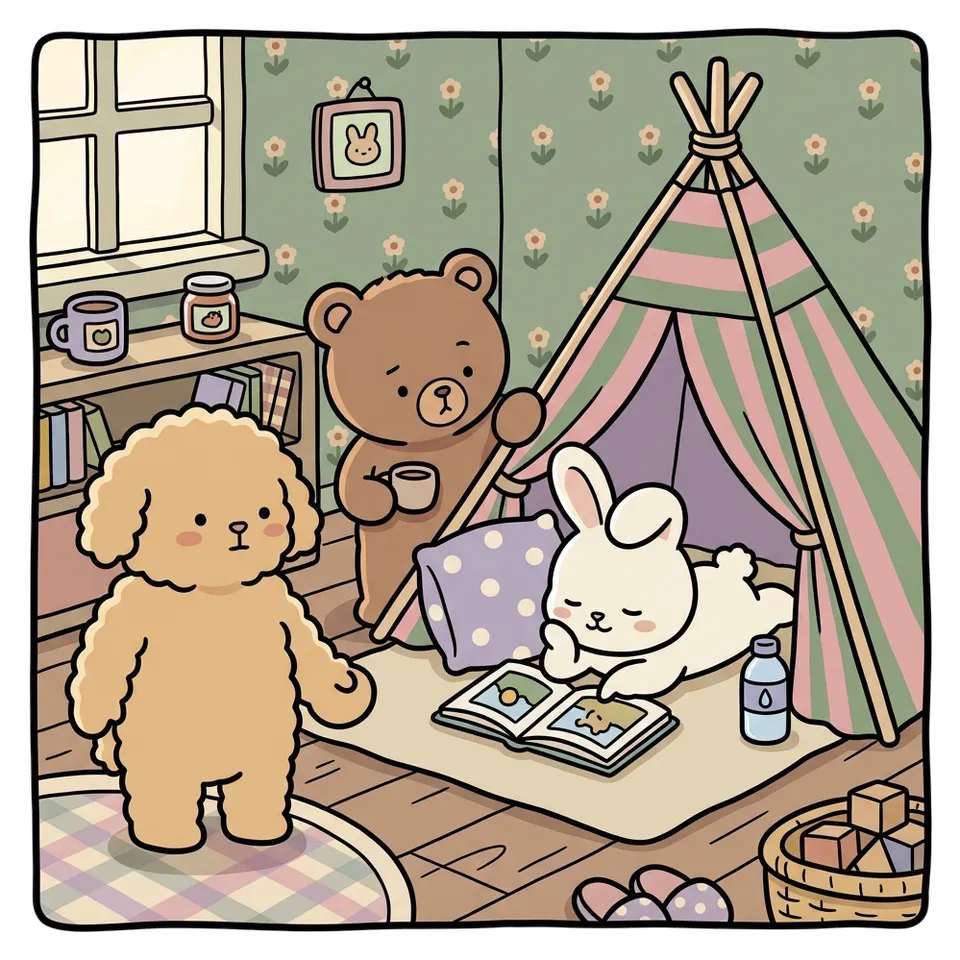
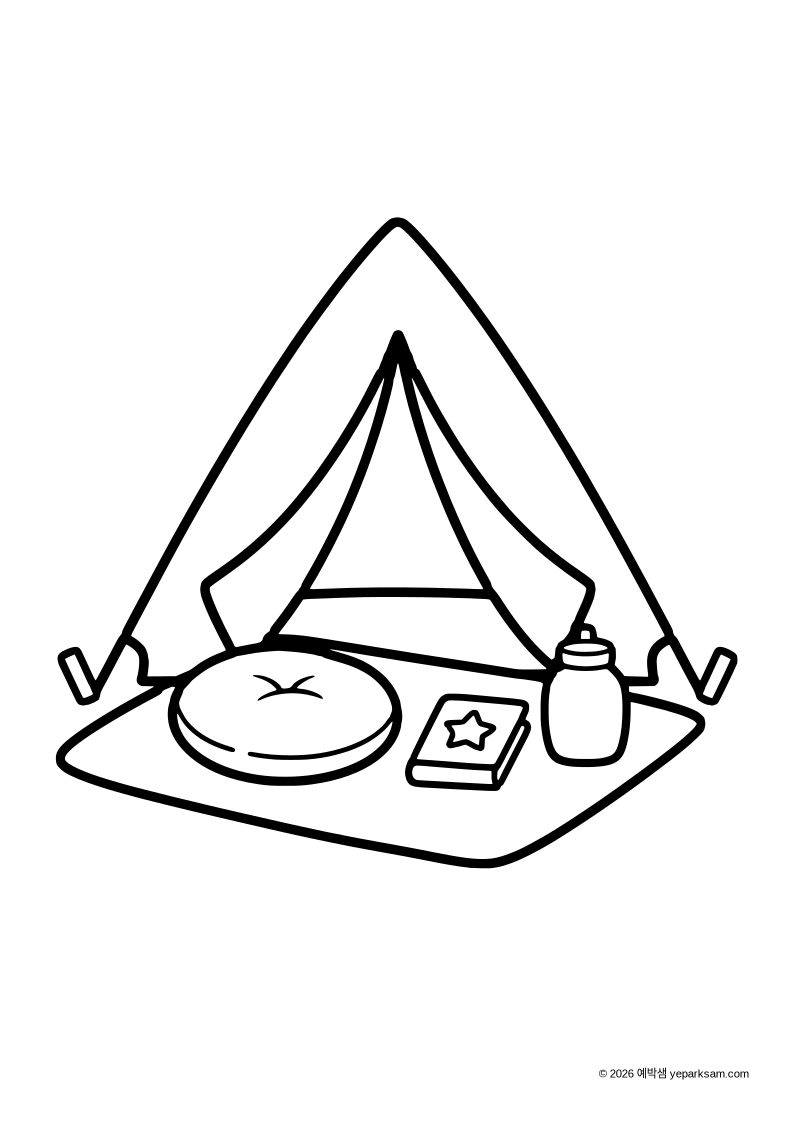
Set up a tent and put in just one mat, one cushion, and one book. How to use the space inside is entirely the child's to decide.
Why it's good
What this play provides is not a toy but a space of their own that the child can decide for themselves. How to use it, who to let in, and when to be alone are all up to the child.
How to play
All you have to do is set up a tent at home. You do not need to fill it with anything. With one mat, one cushion, and one book, the child drags things in on their own. What the adult put up is a tent, and from that moment on it is the child who makes the place.
The first thing they do when they go in is not lie down but divide the space. “This is the place to lie down and rest.” “You can read books here.” In a home with no separate room, where the whole family shares one living room, the child gets, for the first time, a place used the way they decided. Seeing that, I realized that a child also needs a space of their own to use as they please.
After that, coming and going is in the child's hands. They keep a water bottle beside them, and when a friend comes, they let them in saying “Sit here.”, and on days they do not call anyone, they lie down alone. I was the same: some days it is fine for someone to peek in and come in, and some days it is not.
After that, even days later, the child goes to that tent first with a friend. Even passing by, they call each other, “Let's rest in our hideout.” Once they have claimed a place as their own, they keep using it that way.
Good to know
- Coming and going has to be in the child's hands. Only if you do not take that decision away does this place become the child's.
- The less you fill it, the better. One mat, one book, and a bit of room for the child to decide is enough. The more you fill it, the less space is left for the child to decide.
What you'll need
Tent · Mat · Cushion · One book · Water bottle