Play Ideas with Play Kitchen
The bowl holds cold plastic, but the child says it's hot. They put a toy cookie in the bowl, clapped the lid on, and said “Hot!” When I asked how we could eat it if it's hot, they flatly said “Not eating.” They had made up a heat that wasn't there, and now couldn't eat because of it.
So play kitchen isn't a play that needs lots of things. With just a few bowls, the child already has everything set. The hard part isn't the things, it's where the adult sits. You get served, you eat, you get served again. After about twenty rounds your eyes start drifting elsewhere, right? Mine did too.
This page was translated by Yeparksam, a preschool teacher in Korea. Some words may sound a little unusual — thank you for your understanding.
Printables to use
See more ›
Putting Food in Bowls and Dumping It Out
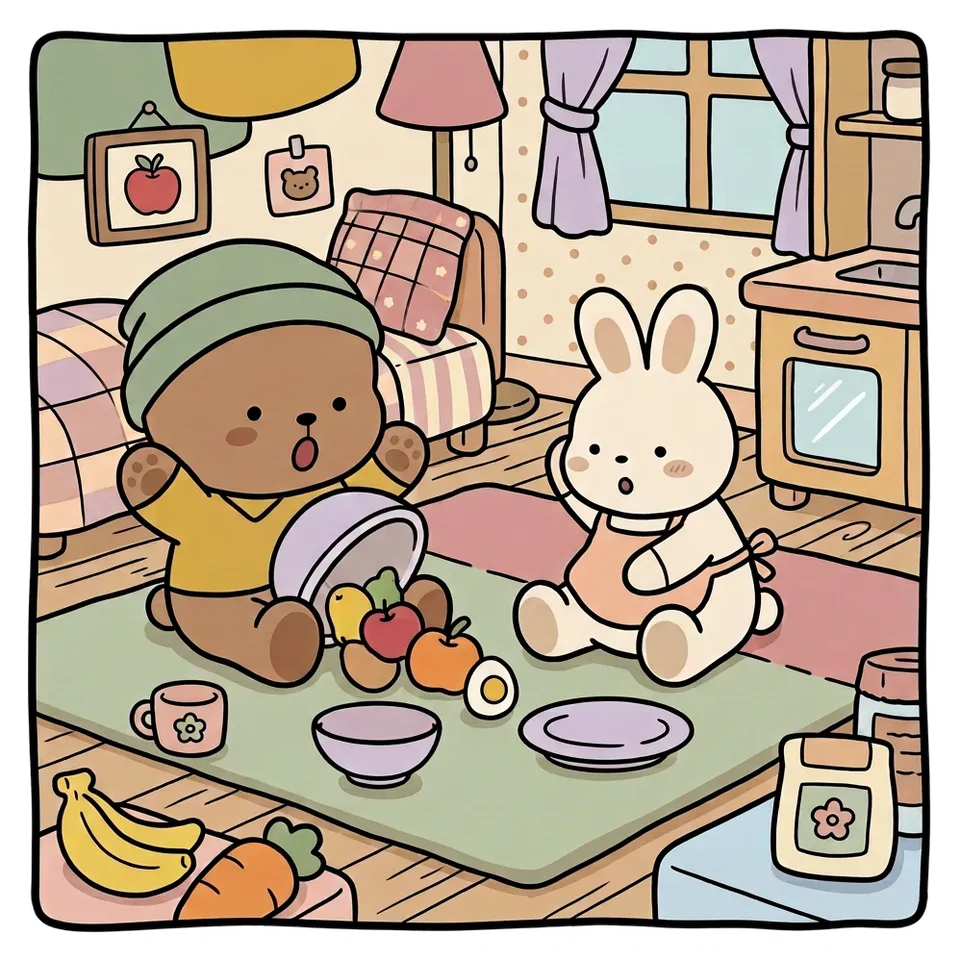
Put toy food into a plate or bowl one piece at a time, dump it all out with a crash, and pick it up again. No cooking yet. Filling and dumping is the play itself.
Why it's good
Picking something up with the fingers and putting it in a set place is quite a big job for a child under three. Please don't be disappointed that you bought a play kitchen and this is all they do. Filling, dumping, and picking up again, over and over, is the sign that they are deeply absorbed.
How to play
I was surprised along with them every time one piece went in. When the toy food slipped neatly onto the plate and I said “Wow!”, the child laughed out loud and reached for the next piece. A child who isn't talking yet only answers “Uuu~”, but when I asked about the shape of the bowl, they said “Ah~ ba-ba” and rubbed it with a flat palm.
When I set out a play cupboard with a door, the child grabbed the handle, struggled for a long time, and finally got it open. Then they put a toy inside and shut the door with a bang. They pressed their face up to the clear window to look in, and after taking everything out, looked in again.
Good to know
- A door or a lid makes it last much longer. The child is checking through that window how things look different when put in and taken out, so a cupboard with a door or a container with a lid lasts longer than a plate.
- You don't need a play cupboard. A food container with a lid or one drawer will do. It just has to open and close.
What you'll need
Bowl or plate · Toy food · Play cupboard with a door, or a container with a lid (food container, one drawer)
Handing Back the Empty Bowl
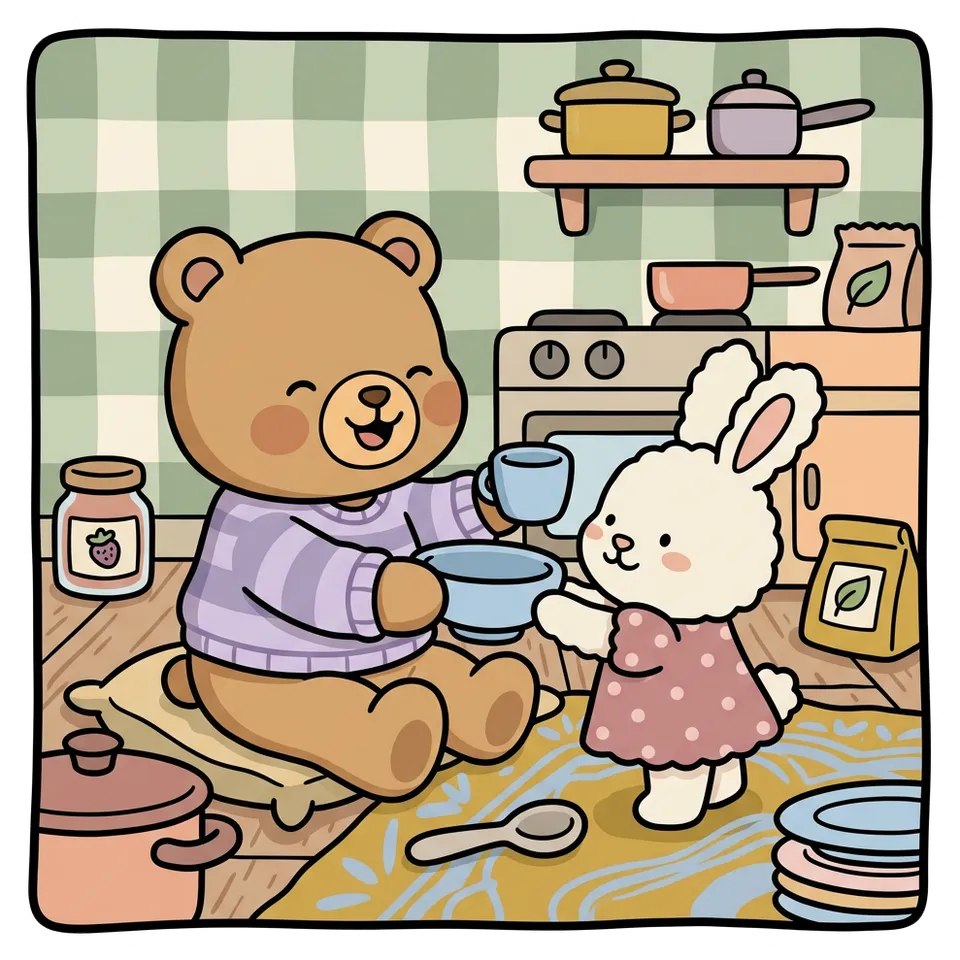
The child carries cups and bowls over and serves you. You pretend to eat and hand the bowl back. When you hand over an empty bowl, the child runs back to the kitchen and fills it again.
Why it's good
The child keeps the give-and-take going on their own: you get served and eat, you hand the empty bowl back, and they fill it again. There's no need to order a new dish. Making twenty round trips with one empty bowl is the proof.
How to play
The child comes carrying a cup and a bowl in both hands. They love it when I slurp and pretend to eat, but what comes next is the problem. If I say “Yummy” and just keep holding the bowl, the child stands there blankly. When I said I had finished it all, emptied the cup and bowl, and held them out again, they grabbed them right away and went straight to the kitchen.
The bigger my eating act, the more food comes. When I even made slurping sounds, the child came closer and sat down, and piled the bowl higher and higher. It's not that I'm a great actor. It's that my reaction is fun.
Good to know
- The next round only continues if you hand the empty bowl back. It's a play that goes around only when there's a filling side and an emptying side, so if one side stops, it stops.
- When you eat, make it big, with sounds too. The bigger your reaction, the more excited the child gets and the more bowls they fill.
What you'll need
Cup · Bowl
Waiting Until It's Done
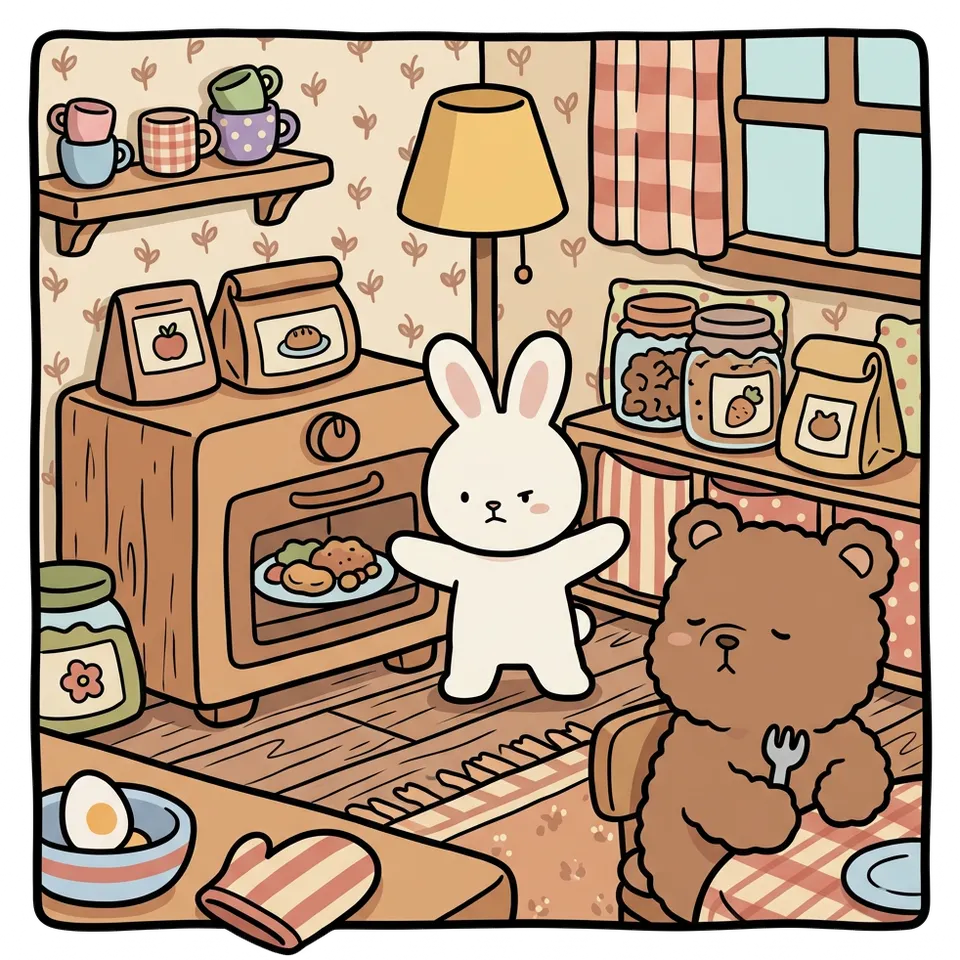
The child puts food on a plate and pretends to cook it in the oven, while the adult waits and keeps hands off until it is done.
Why it's good
If you grab the food that's been set out, from the child's side you've taken something they were still making. Waiting through the order the child decides on, until it's done, becomes the play itself.
How to play
The child was putting food on a plate and pretending to cook it in the oven, so I said I was hungry, and they said “Not done yet”. Still, when I sat in front of the food and tried to pick some up, they blocked me with their body and said “No, not yet, not yet, not yet”. I sat beside them waiting to see what would come out, and only ate once they said it was done.
While you wait, there's something to say. You ask what they're making, ask how much longer, and sniff the air. Then they add one more ingredient.
Good to know
- When the word "not yet" comes out, the play is going well. It means they're still making it. On days they hand it over right away without saying it, the play ends quickly.
What you'll need
Bowl · Toy food · Toy oven (or a pot)
Blowing on It Because It's Hot
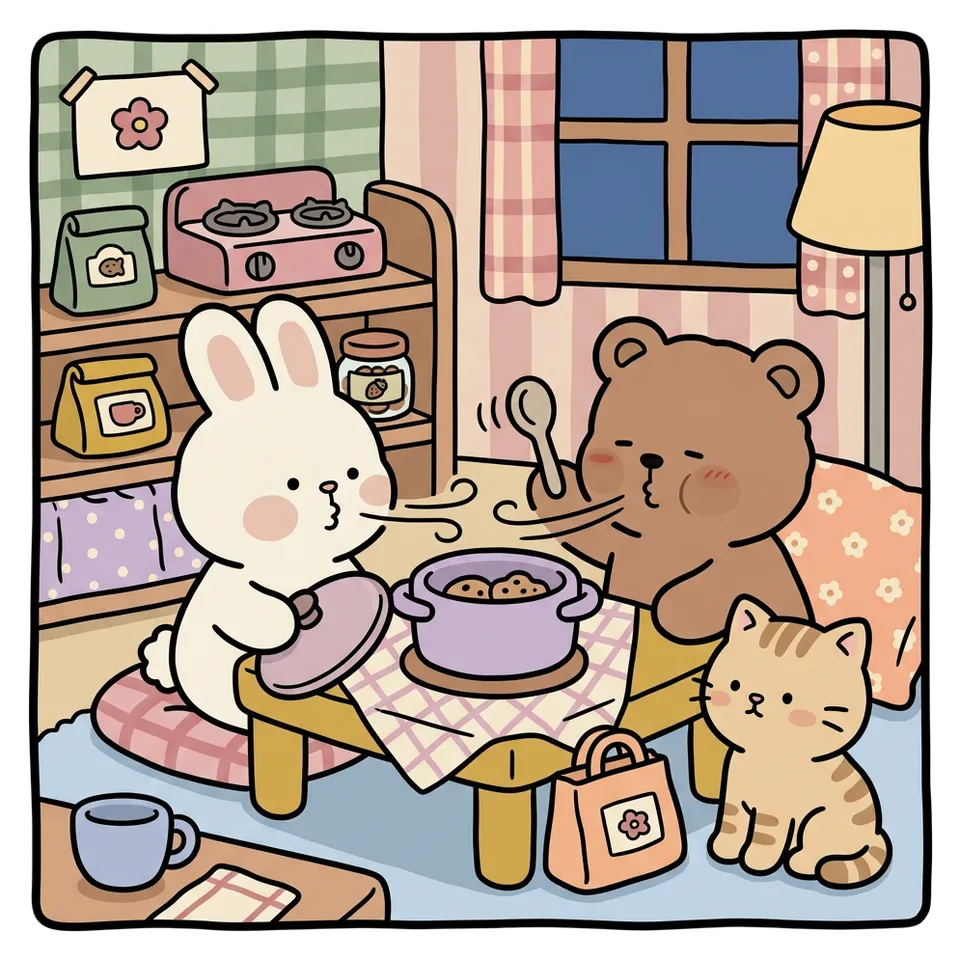
When a child puts a covered bowl in front of them and says it is hot, act really hot too and blow on it together to cool it down.
Why it's good
When a child says it's too hot to eat, the adult isn't the one who finds the answer. The child comes up with the answer themself, then tells the child next to them, and the play spreads.
How to play
One child set a covered bowl in front of them and said it was hot. I asked how we could eat it, then just waited. The child next to them was the first to tell us, “If it's hot, you blow on it, whoo whoo”. When I lifted the lid and blew, everyone gathered and blew together.
If it's hot, be hot together; if you cool it, blow together. That's all I have to do.
Good to know
- Telling them it isn't really hot ends the play. The moment you say “This is a toy, so it's not hot”, that's what happens.
- After the first blow, everything is hot from then on. Water, fruit, whatever you hand over, they blow on it first. They do it because blowing is fun, so there's no need to correct what's hot.
- It comes in handy while waiting for real hot soup to cool. If you blow together, the whole wait becomes play.
What you'll need
Bowl with a lid · Toy food
Welcoming Customers
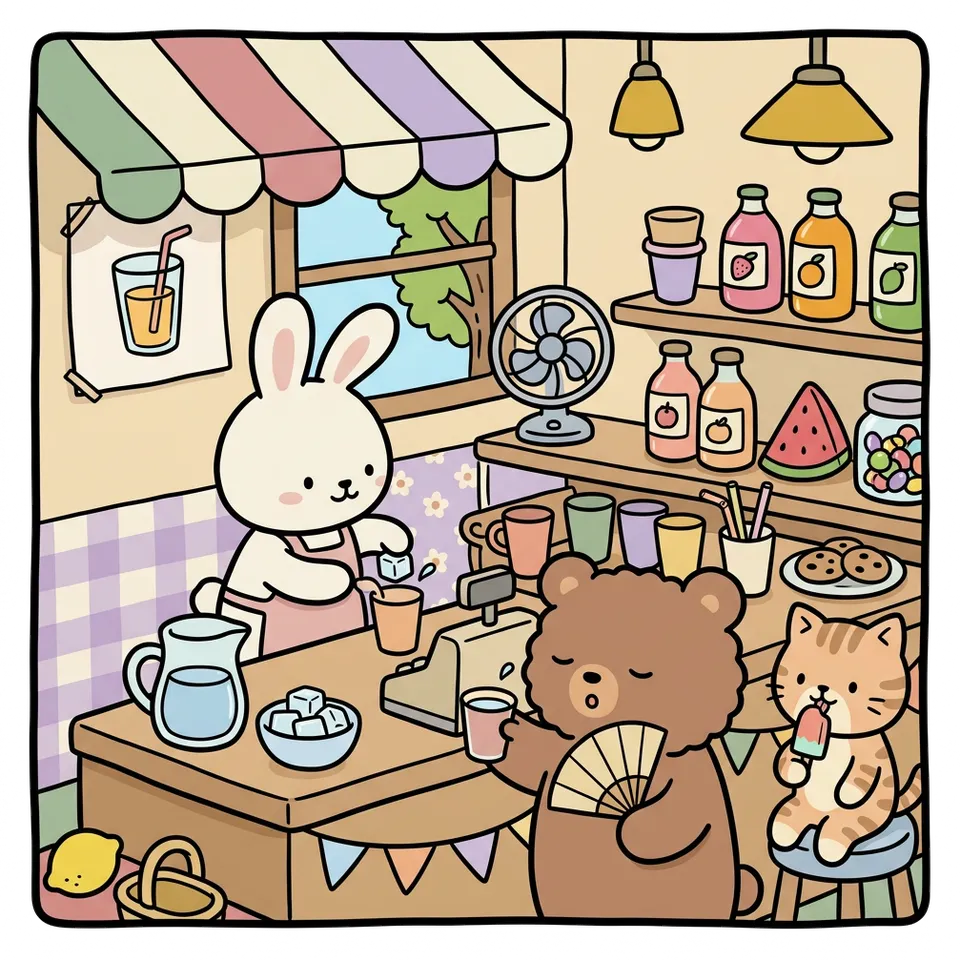
The child becomes the shopkeeper and begins by greeting, “Welcome~ What can I get you?” The adult walks in as a customer and takes the order.
Why it's good
When a shop opens, the greeting comes before the food. If the customer says specifically what they want to drink, the child doesn't just hand it over, but asks back or adds ingredients to fill it out. When asked the price, naming any number is the child's own kind of answer.
How to play
A child who was taking toys out of the basket and putting them in bowls suddenly said “Welcome~ what can I get you?” I wondered where they'd learned it, and after that, every time I walked in, those words came first. I said I was thirsty and hoped there was some cold water. The child brought a cup and asked, “Um, this is just water. Want ice water?” The child next to them dropped a small block into the cup with a plop, saying “I put ice in, it's cold.”
If you ask the price, they say any number. “A thousand won” comes up most. Ask again next time and a different price comes out, and nobody argues about it.
Good to know
- The shop's name comes from what they ate that day. There's no need to decide what to sell. Just ask what they ate that day: on a hotteok day it's a hotteok (sweet filled pancake) shop, and on a bungeoppang (fish-shaped pastry) day it's a bungeoppang shop.
What you'll need
Cup · Bowl · Small blocks (to stand in for ice)
Going on Deliveries
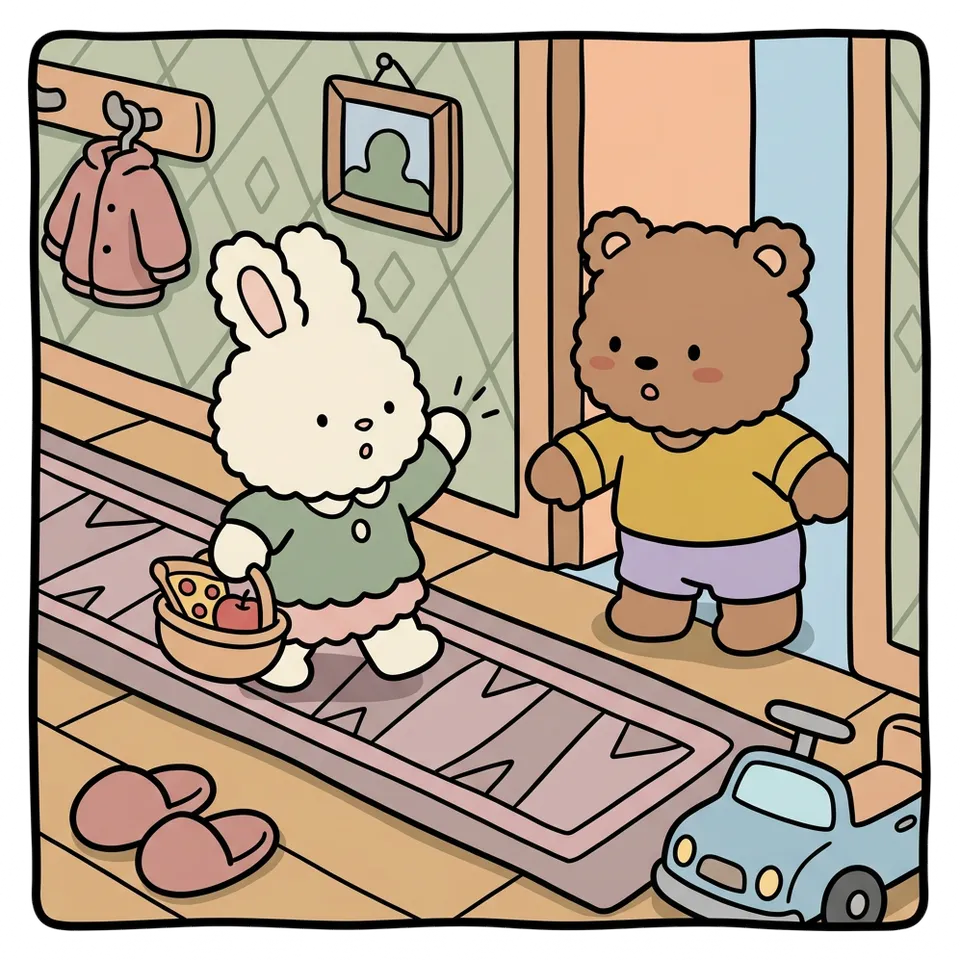
Put toy food in a basket and go around the house making deliveries.
Why it's good
Once you hand them a basket, they stop sitting still. It's a play that goes around only when there's someone to receive, so the better the receiver's reaction, the more round trips there are.
How to play
They put toy food in and make a lap around the house. When I asked where they were going, they said “Delivery!”, and when I asked where they were delivering to, they said “Mommy”. And I was sitting right next to them.
They come saying “Ding-dong~ delivery!”, I pretend to open the door and take it. If I just take it and set it down, that's the end; if I also pretend to take it out and eat, they pick up the basket and head back.
Good to know
- What's in the basket changes even on the way. They say pizza when they set out, then hold out something else when they arrive. They like carrying and walking more than filling, so that's why.
- A shopping bag or paper bag works if you have no basket. It just needs a handle so they can carry it while walking. On days they load it onto a stroller or a ride-on car, they go much farther.
What you'll need
Basket with a handle (or a shopping bag, paper bag) · Toy food
Feeding the Doll
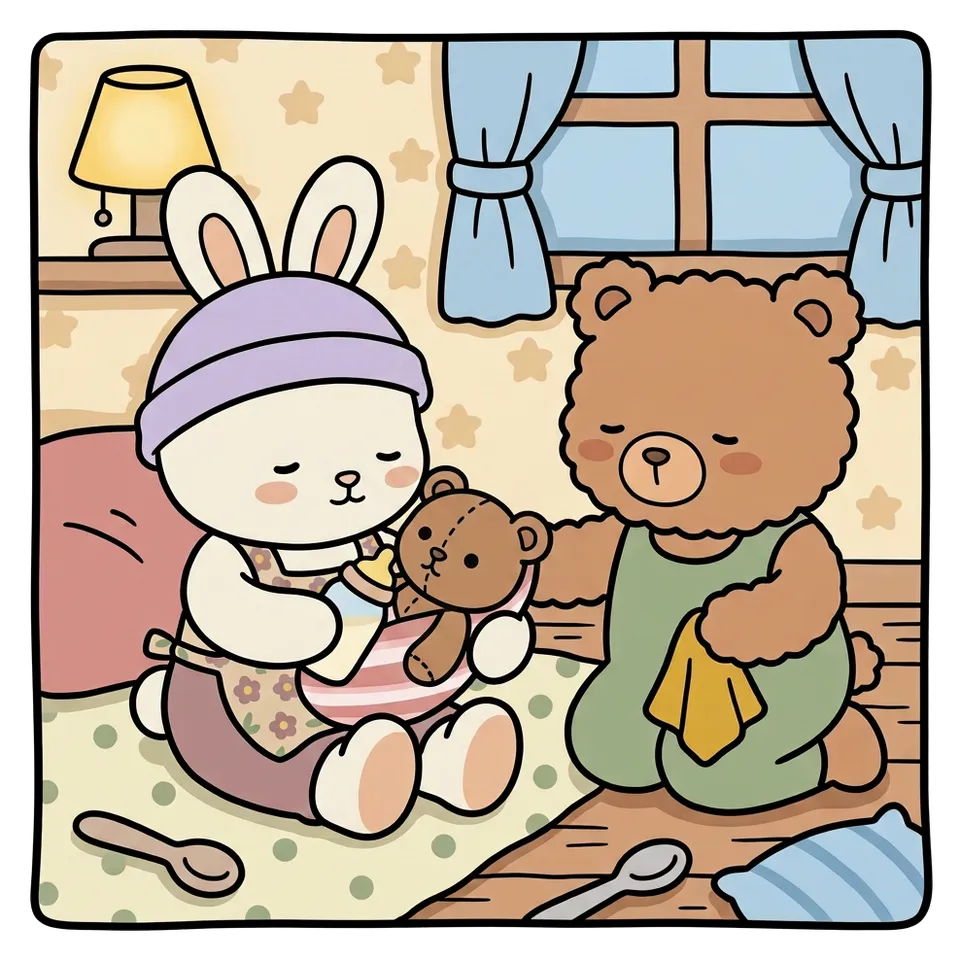
Lay a teddy bear or baby doll down and feed it with a baby bottle or spoon.
Why it's good
When the customer role goes on long, the adult gets tired, but a doll never tires no matter how much it's fed. A child who was always the one eating becomes the one feeding for the first time, and their expression changes.
How to play
When the customer role goes on long, I get tired too. That's when I sit a doll down. If I lay a teddy bear or a baby doll down and put a bottle or spoon next to it, the child hugs it close on their own. “Yummy time.”, “Baby milk.” Short words come out by themselves.
The words are short, but what they do is grown-up. They hold the bottle to the doll's mouth, and if it won't eat, they pat its back. The child said it had finished eating and then right away fed it again. After feeding, they put it to sleep. They lay it down, pat it, and gently tuck in the blanket.
Good to know
- Feeding and sleeping usually go as a set. If you put a handkerchief nearby too, it carries on from feeding to covering the doll and putting it to sleep.
What you'll need
Doll (teddy bear or baby doll) · Baby bottle or spoon · Blanket (or handkerchief)
Asking Where It Hurts and Giving Medicine
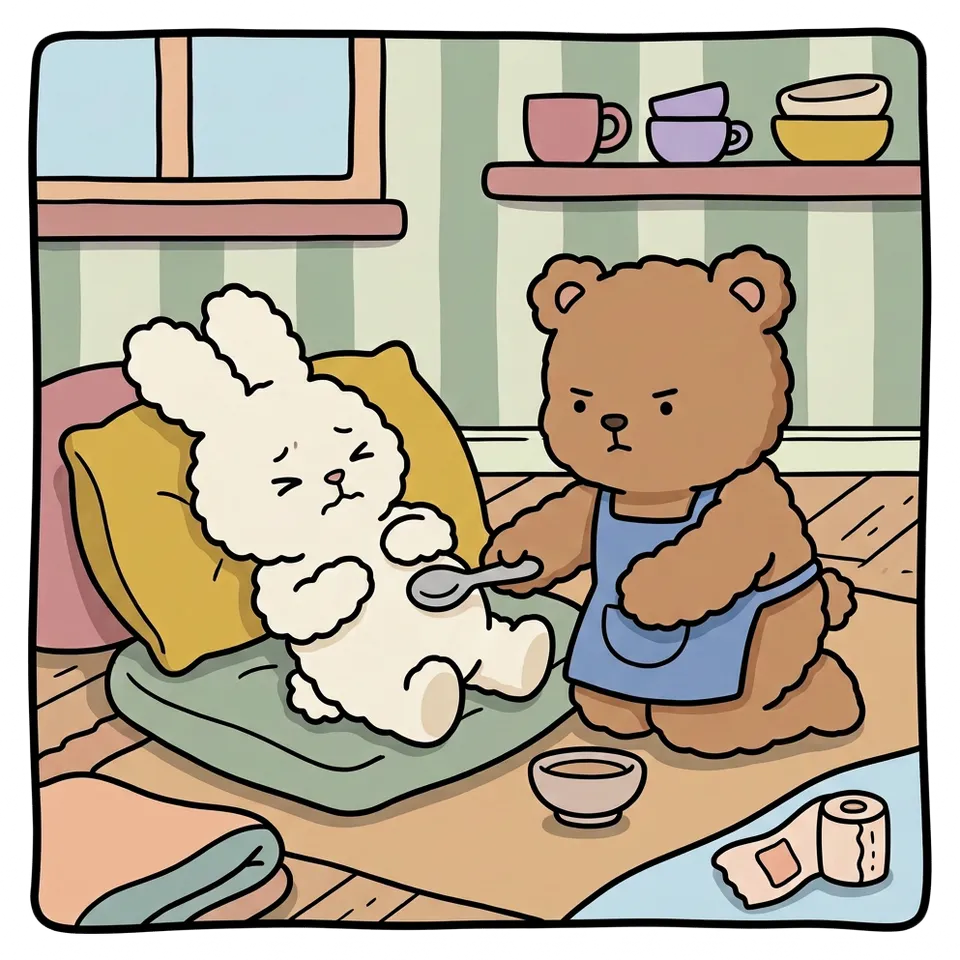
A hospital play. When the doll pretends to cry, ask what hurts, check it with a spoon instead of a stethoscope, and give it medicine.
Why it's good
The child works out on their own why the doll is crying and where it hurts. Even with no right answer, they come up with their own answer and act on it.
How to play
I asked a child who was holding a doll and pretending to cry why the baby was crying, and after thinking a long while whether it was a tummy ache or hunger, they said “Maybe baby's hungry, I have to bring food” and brought food. It began with a hurt, but in the end they fed the baby.
With siblings or a visiting friend, a doctor appears separately. During a mommy-and-daddy play, one child took the baby and cried “Waaah, tummy hurts”, and another child called, “Doctor, the baby says it hurts here!” They brought a spoon, pressed it to the tummy, and said “Your tummy hurts, I'll give you medicine.”
If there's no doll, the adult can be the one who hurts. When I said my tummy hurt, they looked at my tummy with a very serious face and held out a medicine bowl first.
Good to know
- Play kitchen tools become examining tools just as they are. A spoon becomes a stethoscope and a bowl becomes a medicine bowl. You don't need to buy a separate hospital toy set.
- On a day the child is sick or has been to the hospital, the hospital opens. They do to the doll exactly what was done to them. They give a shot, give medicine, and ask where it hurts, with the very same tone of voice.
What you'll need
Doll · Spoon (to stand in for a stethoscope) · Bowl (to stand in for a medicine bowl)
Packing Food in a Lunch Box and Closing It
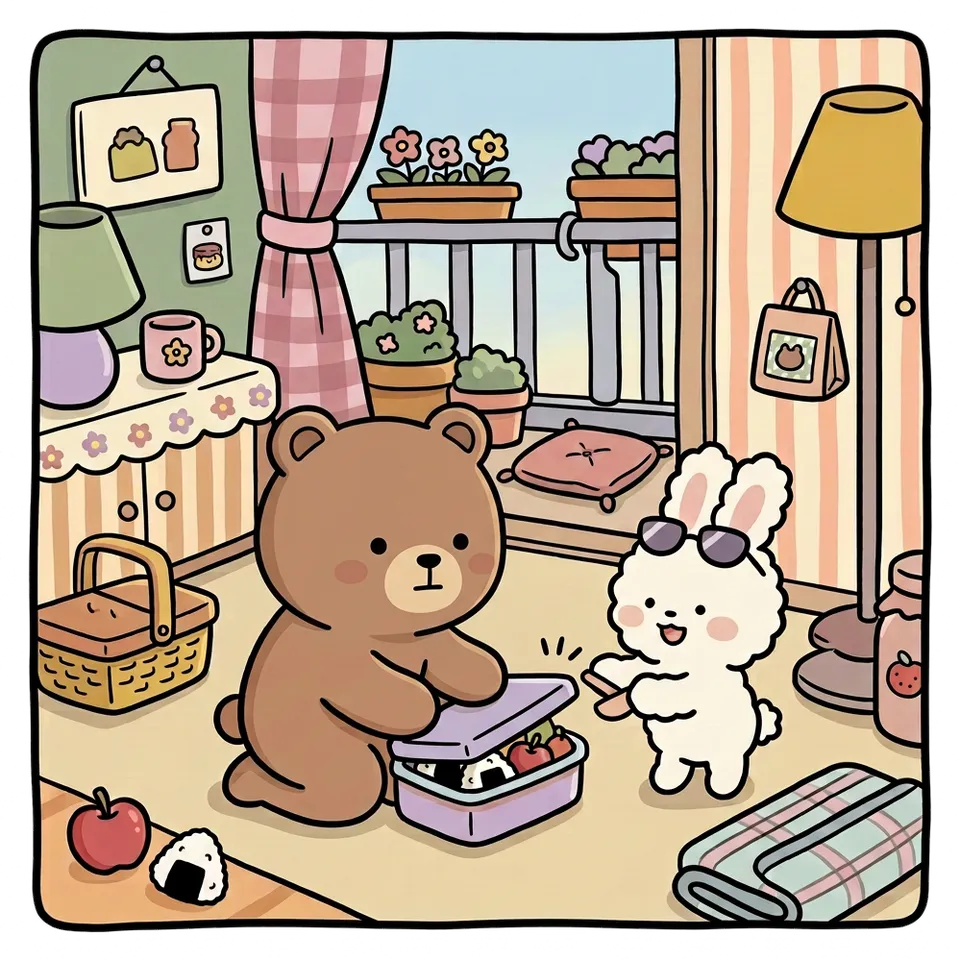
Pack toy kitchen things into a container with a lid, close it, and carry it around, handing out one thing at a time to people.
Why it's good
The lid not closing easily is the most important part of this play. Noticing that it isn't working and coming to ask for help, and then only after checking it's closed running off excitedly with the container, that sequence is the heart of this play.
How to play
Whether it's gimbap (rice rolls) or fruit, once they put in the play food and close the lid, they carry it around from then on. But the lid doesn't close easily. It's beyond the child's strength, so they bring the container and say “Doesn't work.” When I close it, they take the closed container, show it around, shake it, notice the rattle inside, and their face lights up.
Once it's closed, a place to take it comes up. They carry the container to a person sitting in a chair and take things out one by one. Along the way the child even brought sunglasses. When the receiver tucked them beside the chair and pretended to eat each item, the child got more excited and kept bringing more.
Good to know
- If you lay down a picnic mat or a cushion, there's somewhere to sit, and once there's somewhere to sit, the invitations begin. One cushion per container is enough.
What you'll need
Container with a lid · Toy food · Picnic mat or cushion
Deciding Who Plays Mommy
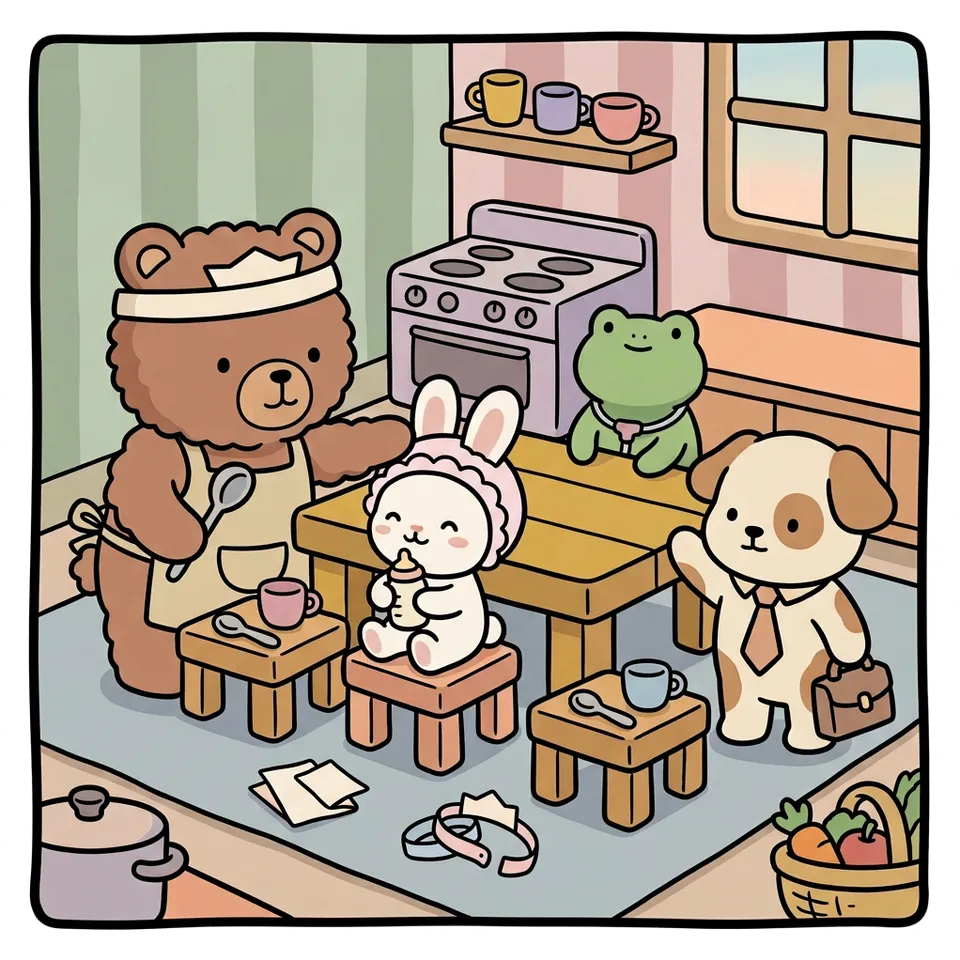
Before setting the table, decide who will be the mom, the dad, and the baby, and play house speaking in the voice of your role.
Why it's good
After age three, play kitchen no longer begins with the meal. It begins with deciding who does what. When a role is missing, the children find and fill it for each other, and even use the role's way of talking exactly.
How to play
When it's just me and the child, one of mommy, daddy, and baby is always missing. So usually I take the baby. The baby looks easiest, but I have to keep eating what's served, so it's the hardest.
With siblings or a visiting friend, deciding roles takes a good while. One child said “Let's play mommy and daddy?” and another said “I want to be baby”, and then the one who started said “Then you be baby and I'll be mommy~ who will be daddy?”, looking for the empty spot. The child beside them said “I'll be daddy” and stepped right in.
The child who is mommy uses mommy's voice exactly. They go to the baby, pat, and say “Baby, yummy time~”, and some days it's exactly what I said last evening, which stings a little.
The table gets names too. They build a table from blocks, set down spoons and cups, and say “Mommy's seat”, “Daddy's seat”, “Baby's seat”. They wait until everyone is seated and say “Now let's eat”, and if someone hasn't come, they go to fetch them saying “Our family has to eat all together”.
Good to know
- A headband or an apron makes the role visible. If you put out family headbands, no one gets mixed up about who has which role. The child wearing the daddy headband goes out saying “I'm going to work!” and comes back saying “I'll clean for you”. A paper band with just a name written on it works the same way.
What you'll need
Family headbands (or aprons, paper bands with names) · Blocks (to stand in for a table) · Spoon · Cup
Being a Picky Customer
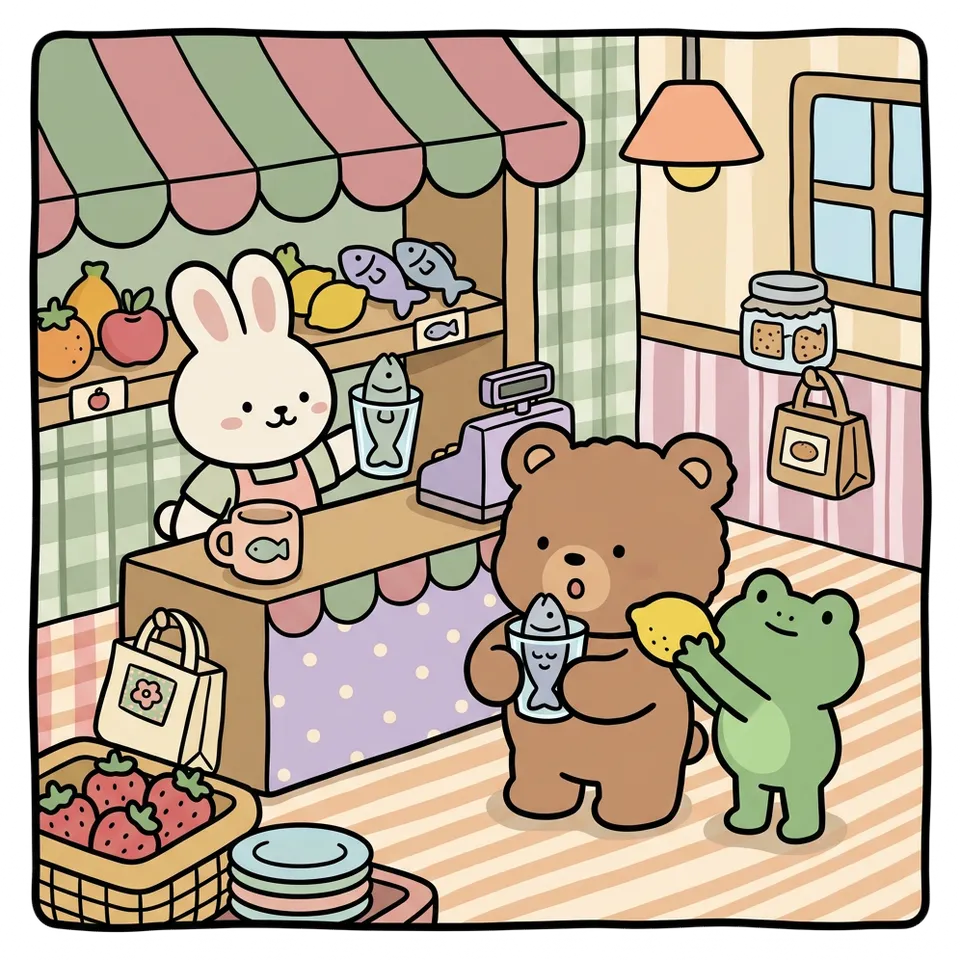
Walk into the shop as a customer and order a specific menu item, and the child makes that dish from the ingredients at hand.
Why it's good
If you just accept whatever, the play ends there, but the more specifically you pin down the order, the more it turns into a play where the child finds things and makes them. When you describe the taste too, even the child next to them chimes in and adds to it, and it goes as far as a child who was serving what they wanted to eat asking others what they want to eat and serving that.
How to play
I started from outside the door. I went in saying “Ding-dong~ customer here.”, and the child answered “Who is it? This is a pizza shop.” When one child answers that way, the child next to them copies it exactly, and soon each of them calls out “Come to our shop quick too.”
Once inside, I ordered a specific item. I asked for a combination pizza, and they asked back “Which pizza would you like?” When I asked for strawberry juice, they picked a toy strawberry and some fruit ingredients into a cup and brought it saying “Here's your strawberry juice.”
When I described the taste too, the child next to them chimed in. One child brought a plastic cup with a toy fish in it and said “Drink this. It's fish juice”, so I tried it and said “What a strange taste! It doesn't taste fishy, though.” Then a child who'd been listening brought a toy lemon, saying “You have to squeeze lemon on it”, and squeezed it with a “Ssss~!”
A child who has been picky asks others too. A child who was putting food on a plate saying “This is cake” asked the child next to them, “What do you like?” When that child said “I like pasta”, they said “Then I'll make pizza too” and even brought a block and set it on top.
Good to know
- The longer the adult's lines, the longer the play. “Yummy” is one line; “It's a little bland, do you have salt?” is an errand.
What you'll need
Toy food (pizza, fruit, etc.) · Cup · Plate · Blocks
Giving One Real Vegetable Leaf
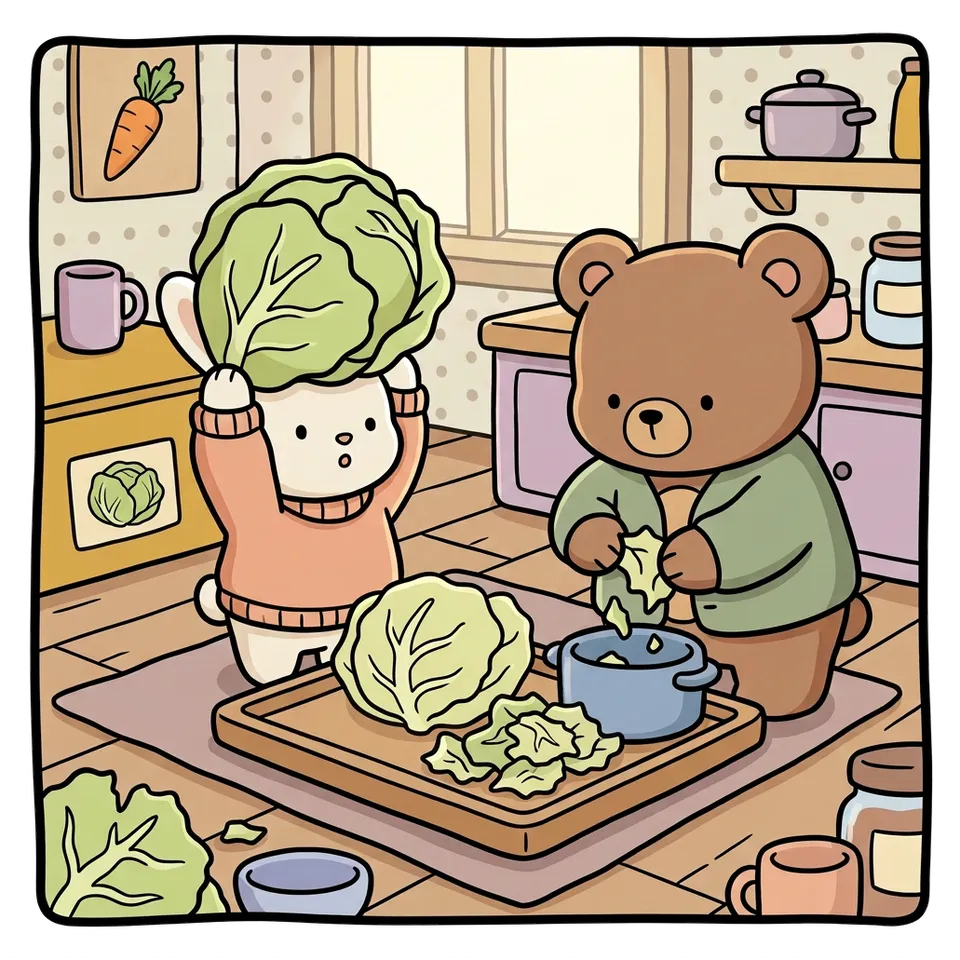
Slip one real vegetable in among the toy kitchen things, and the child touches it, cuts it, and cooks with it.
Why it's good
If you mix just one real thing in among the play food, the play suddenly gets much longer. A play knife won't cut a raw vegetable, but not cutting isn't a failure, it makes them find one more way. Once one real thing is in, they keep comparing the play food to the real thing.
How to play
I put one outer cabbage leaf on a tray in the morning. The moment the child woke up, they sat down right in front of it. They touched it with a flat palm and said “Ah, cold”, pulled my hand over to put it on the leaf, and even held the leaf, bigger than their face, up high with both hands.
They fetched the play cutting board, knife, and bowl and said “I'll make something yummy for you.” When I asked what they were making, they said “Cabbage rice, of course.” After cutting a long while without success, they called me. Next to them another child started tearing it by hand, and when the first child saw that, they put the knife down and tore too, putting the pieces in the pot.
They brought over the play pot and said we have one of these at home too, and they peek over at what I'm using. Once those eyes open, they come and sit next to me while I make dinner.
Good to know
- If you want to give something cuttable, blanched tofu is better. It squishes even when pressed by hand, so they can handle it however they like with the play knife.
- If you worry they'll put it in their mouth, just wash it first. Whatever isn't used that day goes back in the fridge.
What you'll need
One real vegetable leaf (outer cabbage leaf, etc., or blanched tofu) · Play cutting board, knife, bowl · Pot
Setting a Birthday Table
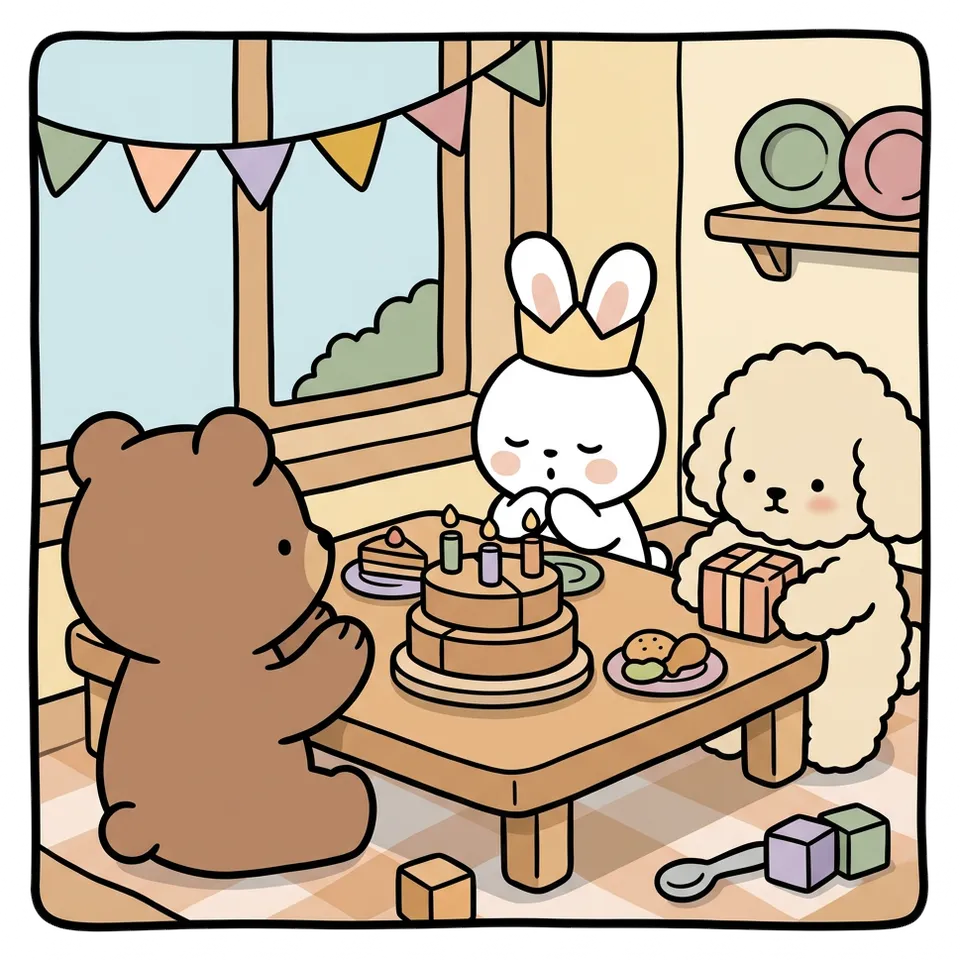
Put toy food on the table one piece at a time to set a birthday table, then build a cake from blocks, stick candles in it, and sing.
Why it's good
If they stop because they don't know how to make it, just ask what there was at a birthday. That one phrase gets the hands moving: a round block becomes the cake and small blocks become candles. Once a table is set, it seems it only ends when it's taken to someone, so when they finish making it, they go delivering too.
How to play
The child was putting toy food on the desk one piece at a time to set a table, so I asked what day it was, and they said it was a birthday. Whose birthday changes every time. They stacked round blocks neatly and said “It's a birthday cake!”, then put a small block on top, saying “It's a candle!” Another child who saw this stacked square blocks, saying “I'm making a present.”
Younger children make cakes too. They stack two bowls and say “Cake”, and that's all, and then the child next to them says “My birthday” and puts themself as the star. Everyone claps and sings, and then says “Now your birthday” and moves on to the next person.
When it's finished, they go on a delivery. The children who finished a cake said “We have to deliver this!” and carried it on a ride-on car.
Good to know
- The star changes after every song, so it doesn't end easily. After celebrating one child's birthday, the child next to them says “My birthday” and takes over.
- Pretending to stick in a candle is enough. If you give them real candles, they count them one by one, pointing.
- It lasts a long time even after a birthday has passed. Once they've seen a cake, birthday tables get set for several weeks after. Whose birthday it is changes every day.
What you'll need
Toy food · Blocks (to stand in for cake, candles, presents) · Candles · Bowls (to stand in for cake for younger children)
Washing and Turning Upside Down
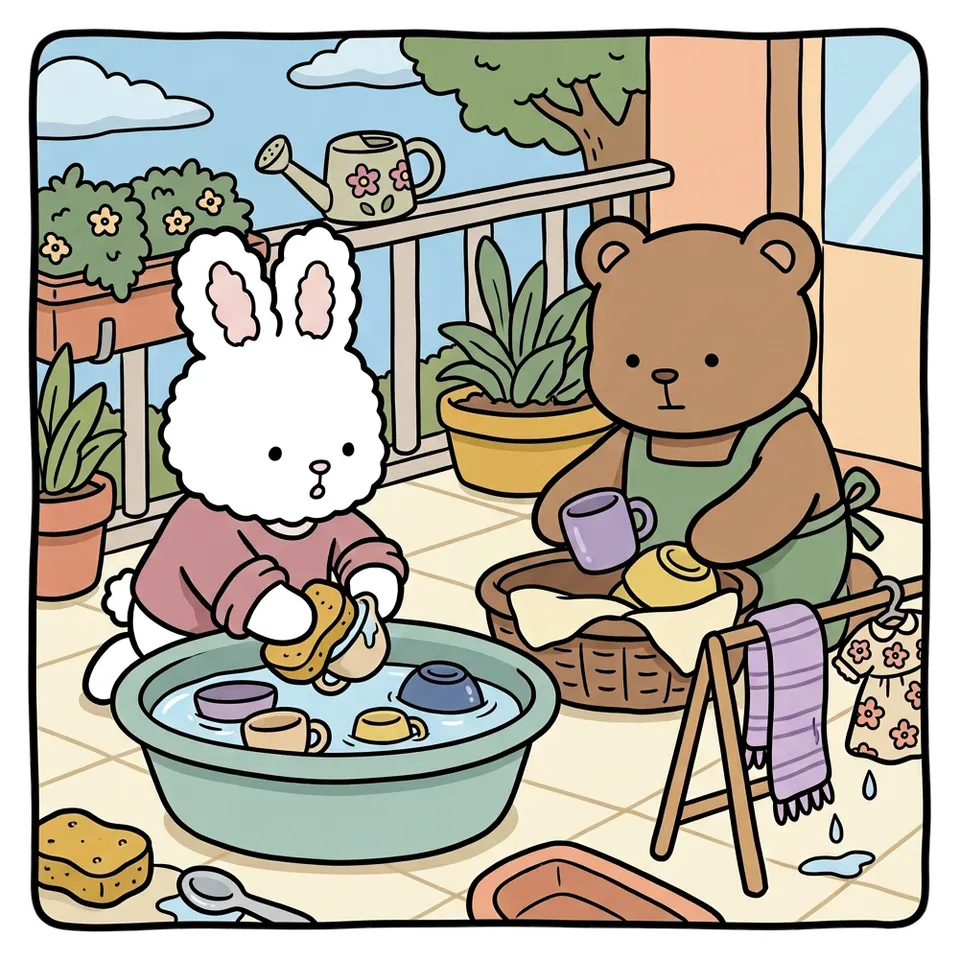
Fill a basin with water, wash bowls and cups in it, and go all the way to turning them upside down to dry.
Why it's good
Play kitchen is a rare play where you don't have to tell them to clean up. That's because after eating, there are dishes left to wash. With two children, the roles of the one who washes and the one who tidies up split on their own, though no one told them to.
How to play
If I pour a little water into a basin, they soak the bowls and cups and scrub hard. They say “I'm washing the plate too.”, “The cup got clean too.” One child washed and another took them and lined them up neatly in a basket.
While they're washing, they move on to laundry. They wet a scarf and a doll's clothes, squished them, said “They got clean,” and hung them on a drying rack. While hanging them they said “Mommy hangs them like this at home too,” and I wondered how much they'd been watching.
Good to know
- The washing side is popular, so swap once in the middle.
- In summer, put the basin on the balcony or in the yard, and spills don't matter. If you float a few ice cubes in it, washing time gets much longer.
What you'll need
Basin · Bowl · Cup · Scarf or doll clothes (for laundry) · Drying rack
Moving Food with Chopsticks
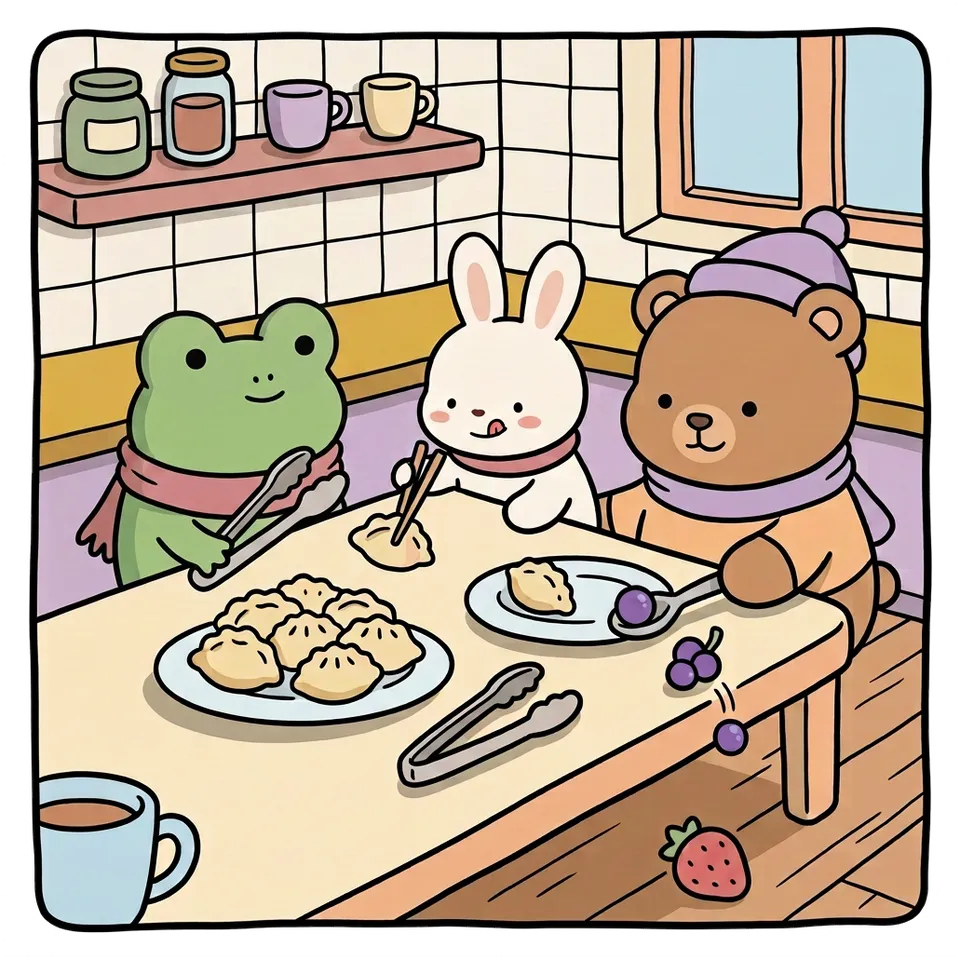
Pick up toy food with chopsticks, tongs, or a spoon and move it to another plate.
Why it's good
Practicing chopsticks with beans usually fails. They're slippery and slide right out as soon as they're caught. Toy food is big and has places to grip, so even a clumsy grab doesn't slip, and the first success comes here.
How to play
Just putting food on one plate and having them move it to another keeps them busy a long while. It works better to set out several tools. If you give a spoon, tongs, and chopsticks together, they switch between them and describe the difference in their own words. They say “Chopsticks are harder”, “Spoon is easy.”
Good to know
- You don't need to start with the hard one. After a few successes with the easy one, they pick up the hard one on their own.
- A child next to them picking up what was dropped is part of this play. Alone it's moving things; with two it becomes play.
What you'll need
Toy food · Two plates · Spoon, tongs, chopsticks
Packing a Lunch and Making a Spot
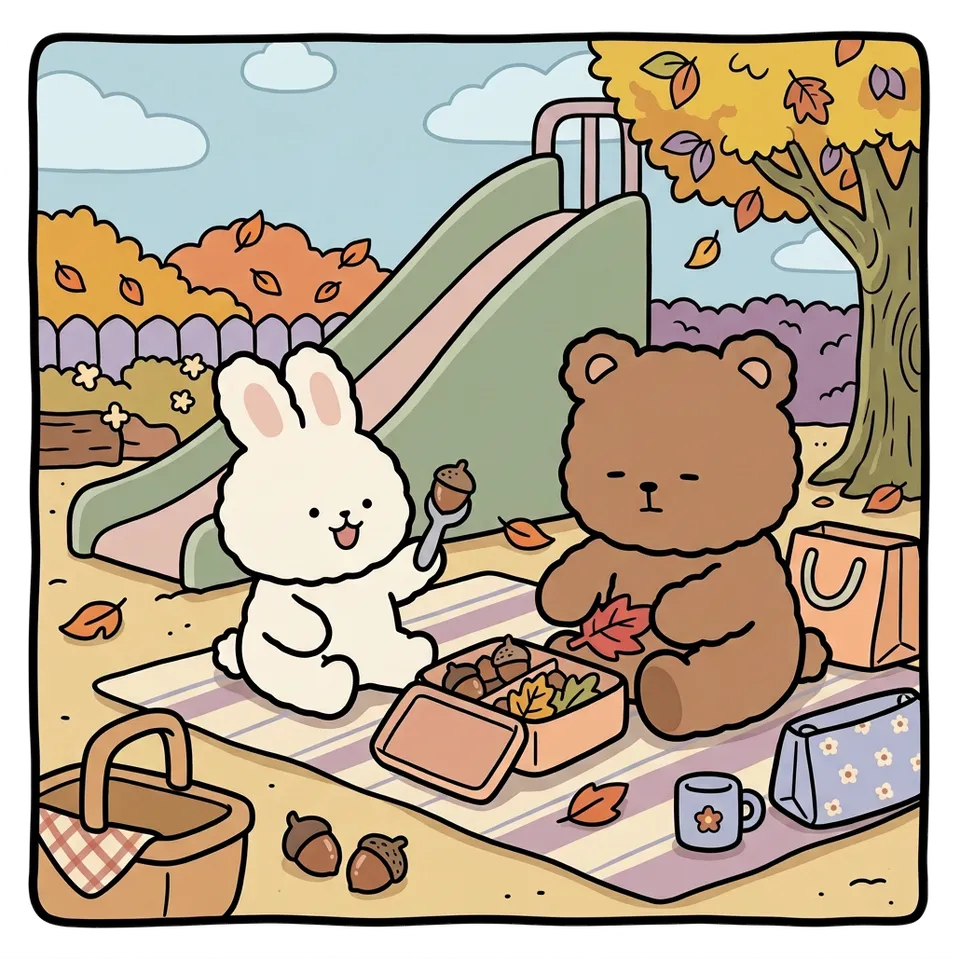
Pack a lunch box, make a spot with chairs, and play to fit that spot. The direction and position of the chairs decide where you are that day.
Why it's good
The first thing a child who has packed a lunch looks for is somewhere to sit. Chairs facing each other become a dining table, side by side they become a theater or a bus. You don't need to set anything up, just turn the chairs, and the child fills in the rest. Same toys, but when the seats change, it becomes a different play.
How to play
While carrying the container around, they drag over a chair and sit in it. If there are siblings or a visiting friend, the scene gets bigger. One child took a lunch box to a chair and sat, and the child next to them said “Hurry up! We have to watch the movie~”, and another child said “Let's eat this while we watch the movie”, and the three of them sat in a row facing forward and ate their lunches. They sat facing a bare wall, and that was the movie theater.
If they carry the whole basket outside, it becomes a picnic. When I took it out to the shade under the slide, it became a picnic the moment they sat. Then one child said “We came on a picnic but the ground is too cold. I wish we had a mat.” When I brought a mat, the four of them each held an end and spread it out, then took out the play food again. All I did that day was bring one mat.
When they sit outside, the lunch contents change. They gather leaves and acorns to fill it and say “This is acorn rice!”, “Let's eat it with leaf kimchi!” They brag more about what they picked up than what they packed at home.
Good to know
- You don't have to go far, a balcony or the front door works too. The trick is carrying out exactly what you were doing in the room.
- It's good to have one basket to pack things in, but it should be a size the child can handle on their own.
What you'll need
Lunch box · Chair · Basket · Picnic mat (for going outside)