Play Ideas with Paint
Adults get nervous about paint before children do. It gets on clothes, runs onto the floor, and stays under the fingernails even after hand-washing. You start thinking about the cleanup before you even take it out, and you end up reaching for crayons.
But for a child, paint is very different from crayons. Drop yellow next to red and you get orange, roll a ball and it leaves a path, fold the paper in half and open it and there is a second, matching pattern. I've gathered the ways in order, starting with ones that work even for children who don't like paint on their hands.
This page was translated by Yeparksam, a preschool teacher in Korea. Some words may sound a little unusual — thank you for your understanding.
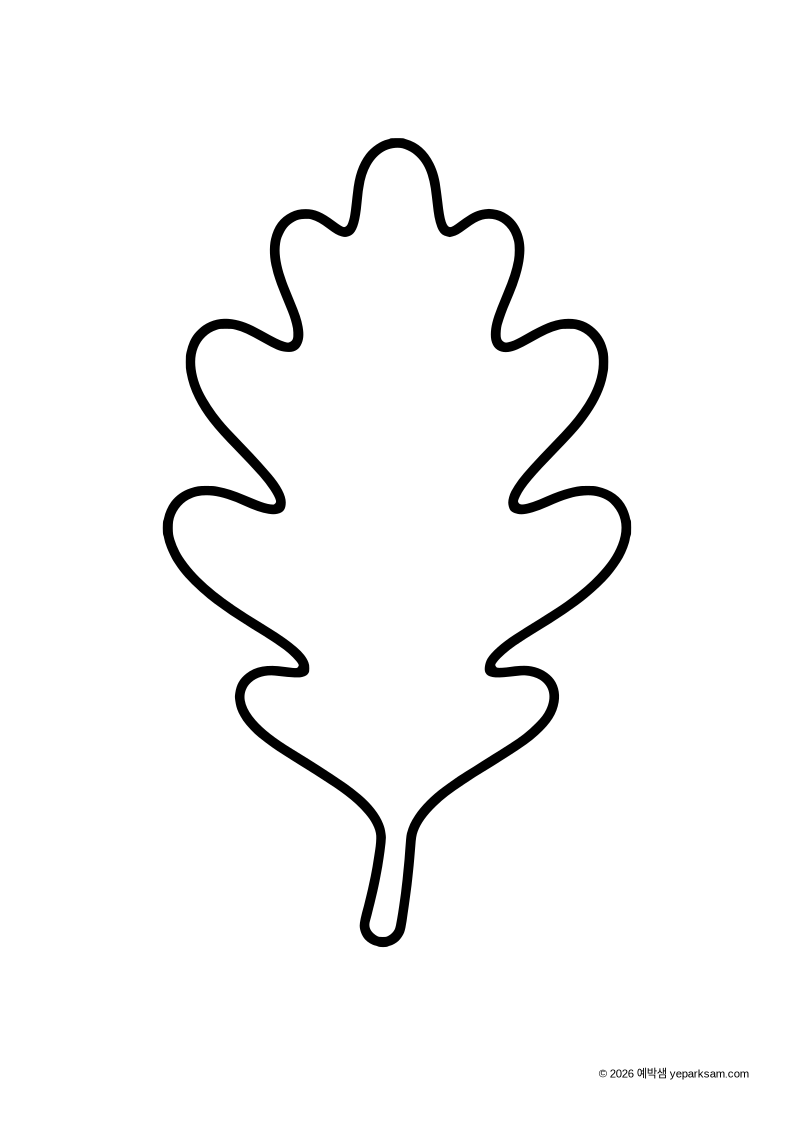
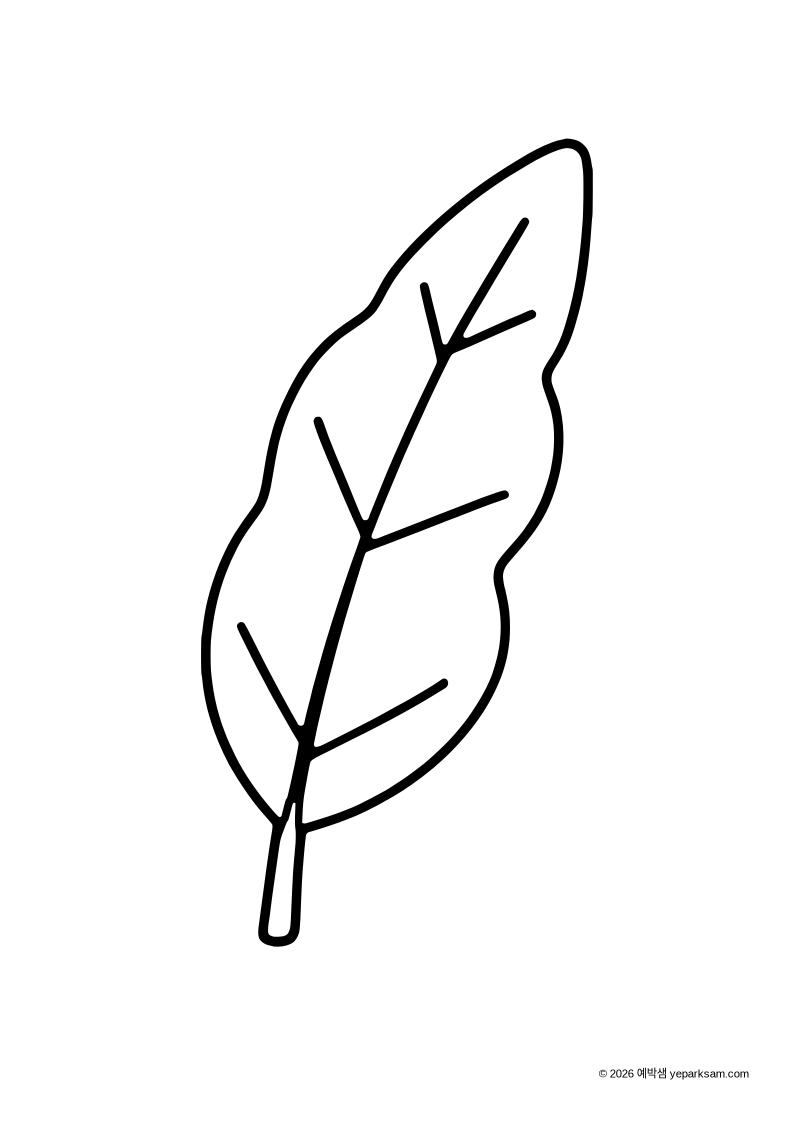
Printables to use
See more ›
Dabbing with Hands
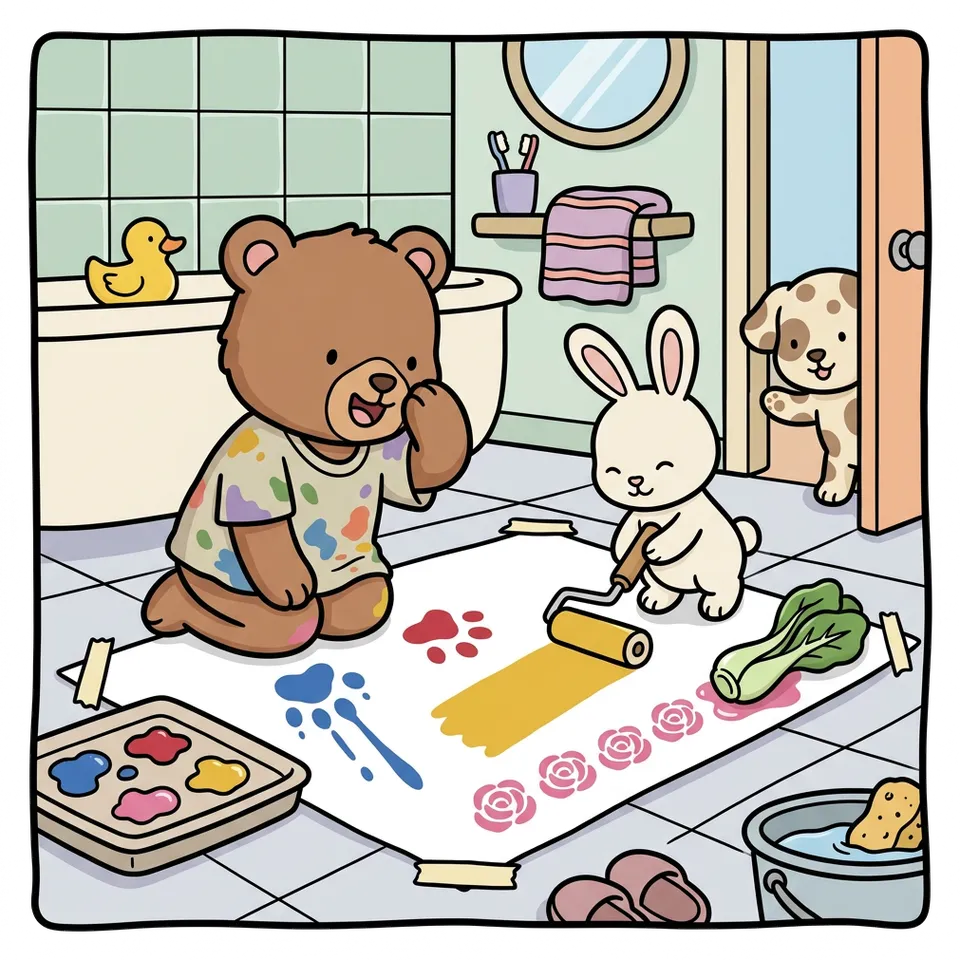
Put paint on a palm and press it firmly onto paper. A child who dislikes paint on their hands can print with a stamp, a roller, or a cut piece of bok choy.
Why it's good
Where you press your hand down, your own hand shape stays on the paper. Palm, stamp, vegetable base — by printing with each one, children learn that pressing makes a shape.
How to play
When I squeeze paint onto a plate, the child dips a palm in and presses it onto the paper. Pressing down and sliding the hand all the way down, they say “Drip, drip,” and tell me it's raining. When I spread paint on a palm with a sponge, they laughed, “It tickles,” and when they saw the print on the paper they said, “Wow~ it's my hand!”
But the younger one had been watching from beside us for a long time. When I asked if they wanted to try, they yelled “Beep beep!” and made an X with two fingers. I wondered if they just didn't like touching paint, and they nodded and hugged their own arms. So I said let's make rain with other tools and handed over a basket. They took things out and put them back for a while, then picked a stamp and started printing. When I put a roller with a handle in their hand, they rubbed it without getting any paint on their hands and said “Fun.”
I cut the base off a bok choy and dipped it in paint, and the child said “Wow! It's like a flower!” and went looking for more colors to print. Then they tried printing with their fingers too. The younger one, who had refused to make a handprint all along, watched the child printing hands and feet everywhere, came over, and held out a hand.
Good to know
- For a child who doesn't like paint on their hands, hand them a stamp or a roller. Printing is just as fun even when nothing gets on their hands.
- Acrylic paint is hard to remove once it dries. Dress them in old clothes that can get messy, and start with water-based paint that washes out.
What you'll need
Water-based paint · Paper · Stamps and a roller with a handle · Bok choy (base cut off) · Old clothes for paint play
Pushing in a Bag
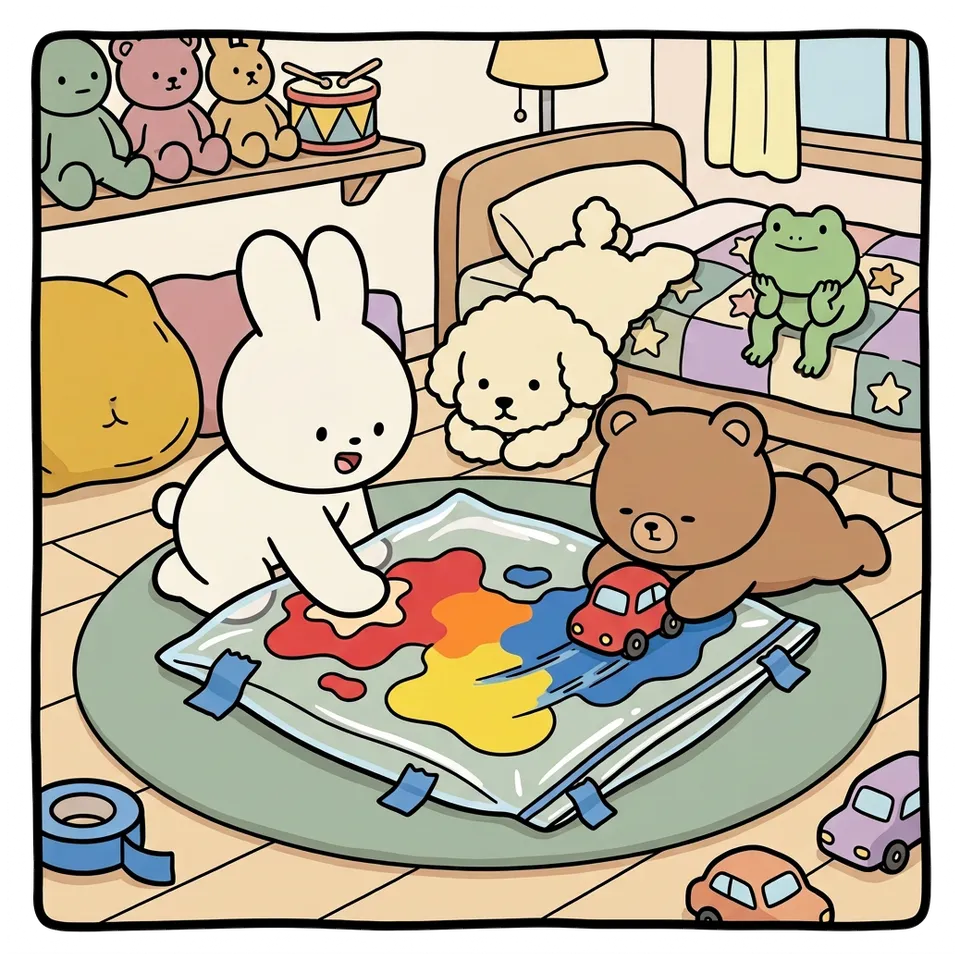
Squeeze a few colors of paint into a thick clear bag, seal the opening with tape, then press and push with your hands to mix the colors.
Why it's good
With a sheet of plastic in between, nothing gets on the hands, yet the paint moves and mixes wherever you press. Children learn through pressing with their palms that colors can mix without being touched.
How to play
When I squeezed paint between clear plastic, the child's first worry was about getting messy. “Won't it get on my hand?” I said it wouldn't, so they pressed lightly with a palm and burst out laughing, “It really doesn't get on me!” and “It's squishy!”
At first they tapped with their fingertips, then gradually pressed hard with their palms. When the paint moved and changed shape, they said “It moved!” and “The colors are running away!” Pointing at the spot where red and yellow had mixed, they said “Red and yellow became one!” I asked what color it was, and they said “It's orange!”
Sitting across from the younger one, they took turns pushing from each end, “Push~ push~,” and then asked, “Can I bring a car?” and rolled a small car over it. When the paint spread like wheel tracks, they said “A road came out!” When I laid it flat on the floor, they held hands and hopped lightly on top, “It's like a bouncy house!” and as the paint sloshed under the plastic they giggled, “The colors are dancing!”
Good to know
- Use a thick zipper bag, not a thin one. Thin bags are floppy and keep folding when pressed.
- Tape the opening and any holes shut, front and back. Paint can leak out of even one tiny hole.
What you'll need
Thick zipper bag · Paint · Tape
Dripping Two Drops
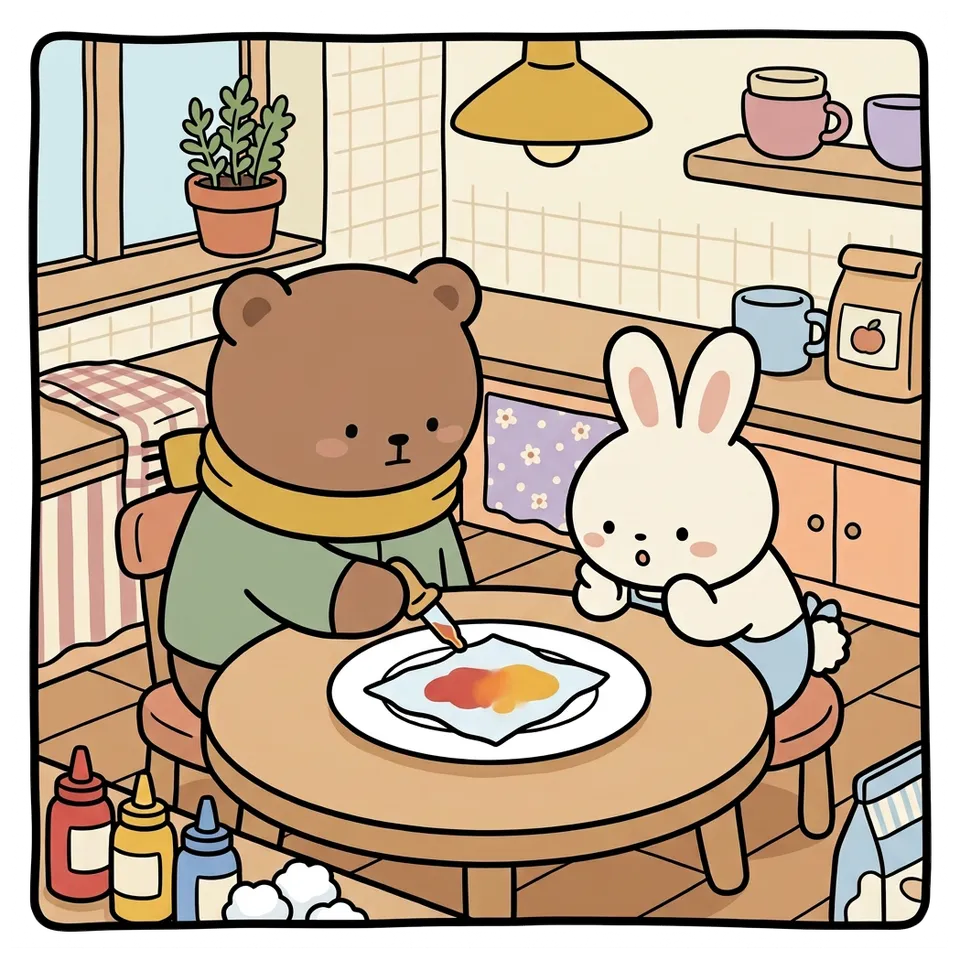
Fill a small medicine bottle or a dropper with paint and drip it one or two drops at a time, then watch the colors mix where the spreading drops touch.
Why it's good
Red and yellow spread slowly, and where they touch they become orange. Children learn by dripping that colors make a new color when they touch, and that mixing too many colors actually makes things darker.
How to play
When I dripped one drop each of red and yellow to show them, the child watched the two spread into orange and then dripped two colors in the same spot with a dropper. After seeing yellow and blue mix into green, they kept mixing, asking “What color will this one be?”
Then many colors layered together and turned dark, and the child got glum: “Why aren't the colors pretty?... I want to do another color...” I told them that mixing lots of colors makes things darker, and we started over on a new plate with just two colors.
When I spread a wet wipe on a plate, the younger one squeezed paint from a medicine bottle and dripped it on. They gazed quietly as it spread along the weave of the wipe, then dripped again on the same spot and said “Yellow and red got mixed.” A hard squeeze sends out a gush and a gentle press gives a little, so they played for a long time just controlling their grip.
On the day I dabbed paint on cotton balls, the child rubbed red over yellow and said “It turned orange,” then kept rubbing many colors round and round, and when I asked what color it was, they laughed, “It's poop.”
Good to know
- If the dropper is hard, lay your hand over theirs and squeeze once together. The motion of pressing, releasing, and drawing up isn't familiar to their hands yet. You can also switch to a medicine bottle that only needs squeezing.
What you'll need
Paint · Dropper or empty medicine bottle · Plate · Wet wipes · Cotton balls (optional)
Rolling to Make Roads
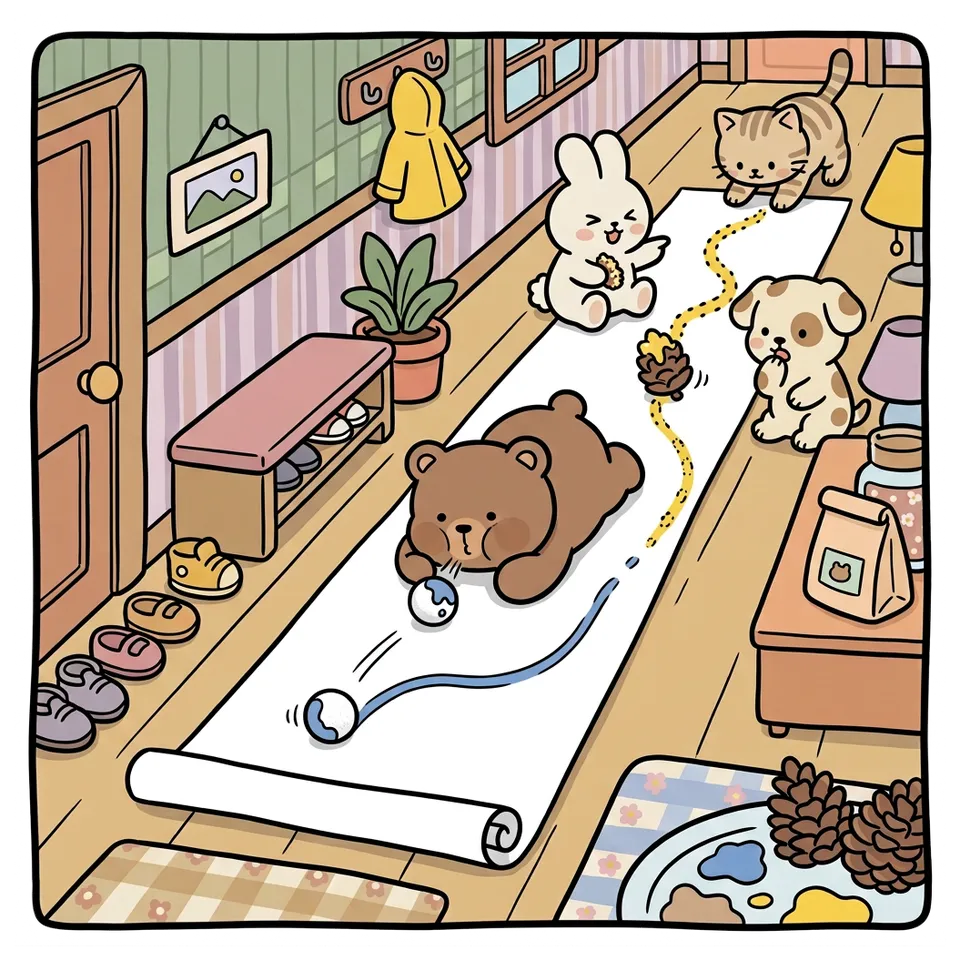
Dip a Styrofoam ball or pinecone in paint and roll it, so it leaves a trail of paint wherever it goes.
Why it's good
It isn't a line drawn by the hand but a line drawn by the thing that rolled. Children learn, by rolling, blowing, and rolling again, that the path the ball took stays behind.
How to play
A child who had been painting a Styrofoam ball asked for help because paint got on their hand, and as I put paint on the ball and passed it over, I dropped it. The ball rolled across the table and left one line. When I said “Wow! A paint road appeared,” the child took the ball, rolled it, and blew on it with “Hoo” to make the road longer.
On the day I gave pinecones, the younger one tried to dip a pinecone in paint and stamp it like a seal but lost hold of it. They laughed out loud watching it roll, and from then on they dipped it in paint and sent it rolling as if throwing it. When I said “The pinecone rolled and rolled, didn't it?” they said “It went this far!” and next “It got longer! This one is blue!” and then “I want to do yellow too!”
Good to know
- A light Styrofoam ball rolls well. It moves with just a puff of breath, so even a small child can make a road.
What you'll need
Paint · Styrofoam ball or pinecone · Large paper
Blowing Bubbles with a Toilet-Paper Tube
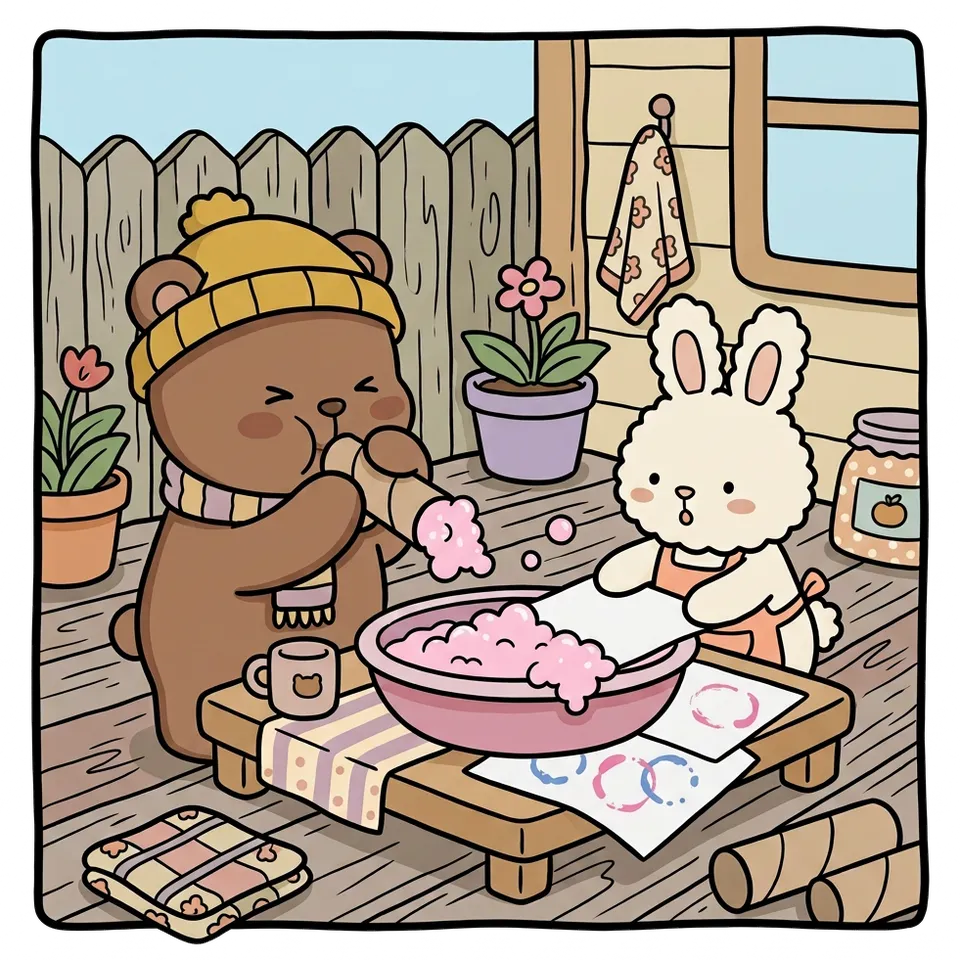
Mix dish soap into paint water, blow through a toilet-paper tube to make colorful bubbles, then press those bubbles onto paper.
Why it's good
When you blow, the colored water puffs up into bubbles, and every spot where a bubble touches the paper and pops leaves a round mark. Children learn by blowing that one breath turns water into bubbles and then into a pattern.
How to play
At first I gave a straw, but the child kept trying to suck instead of blow. So I switched to a toilet-paper tube and mixed dish soap into the paint water. When we dipped the end of the tube in the paint water and blew, bubbles popped out. The child burst some with their hands and blew more over the picture, saying “They're like raindrops,” and “They pop and the water splashes!”
An older child mixed water, soap, and paint in a cup and blew through a straw to raise the bubbles above the rim. They pressed paper onto the risen bubbles and said “When the bubbles pop, round shapes appear! So pretty.” Then they switched to blue paint, red paint, and printed in many colors.
Good to know
- For young children, give a toilet-paper tube instead of a straw. They can't yet tell blowing from sucking, so with a straw it's easy to suck up the soapy water. The tube is too wide to hold in the mouth.
- Soapy water stings if it gets in the eyes. Keep the bowl lower than their face and a towel for wiping hands nearby.
What you'll need
Paint · Dish soap · Toilet-paper tube · Cup or bowl · Paper
Letting It Drip to Make Rain
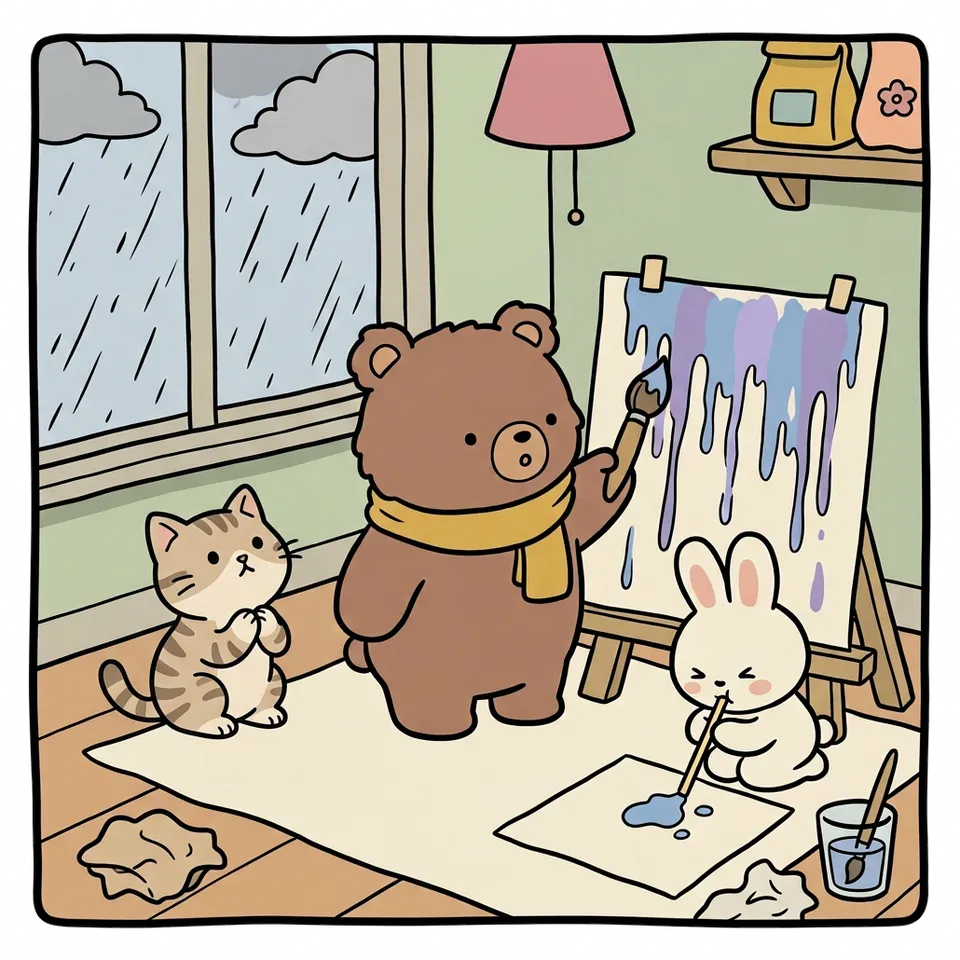
Paint with a brush full of water so the paint runs down, or blow dripped paint outward with a straw to draw a rainy scene.
Why it's good
To an adult's eyes the drips are just marks from not controlling the water, but the child sees them as tears or as a tree. Here they learn that even what ran down can become a picture.
How to play
When the child loaded the brush with water and painted, the paint dripped down, and they didn't see it as ruined. “Mom, the paint runs like this~ It's like tears,” and “The color is this long~ Like a tree, right?” they said. Then they mixed several colors as they ran them down and said “I mixed all the colors here and it turned black.”
On a rainy day, we talked about what rain is like, and they said “The rain falls drip, drip,” and “I use an umbrella,” then dripped paint to make raindrops and blew them sideways with a straw. When blowing the straw was hard, I switched them to a brush.
When I set out several kinds of paper together, such as drawing paper, scrap paper, and pieces of box, the child painted on them and said “This one gets wet fast,” and “This one gets drawn on more,” choosing which paper to use.
Good to know
- Keep tissues and a dry cloth nearby. When there's too much water the paper gets soaked and tears, and that is what children mind most. With something to wipe with right there, they focus more on the fun of the drips.
What you'll need
Paint · Brush · Straw · Several kinds of paper: drawing paper, scrap paper, pieces of box · Tissues and a dry cloth
Fold, Open, and It Matches
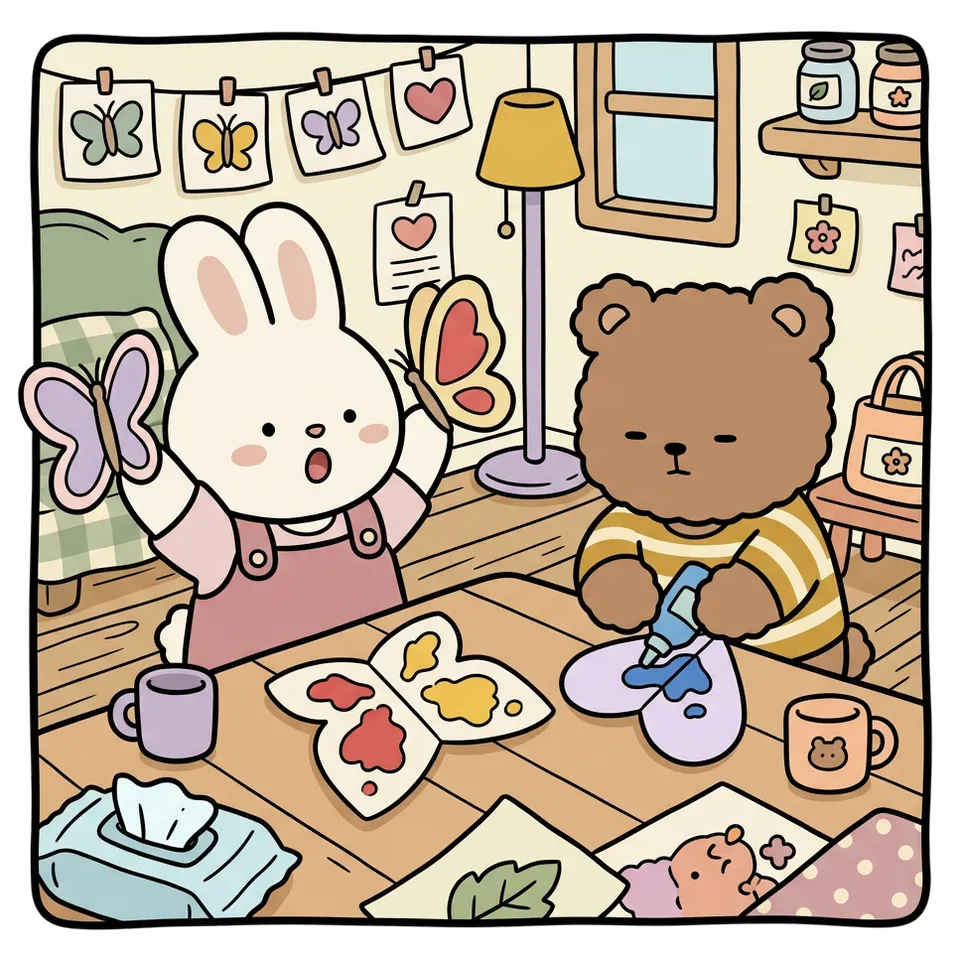
Squeeze paint on one side of a heart- or butterfly-shaped paper, fold it in half and open it again, so both sides have the same pattern.
Why it's good
Paint squeezed on only one side moves to the other side when you fold and open. The pattern is different every time you unfold it, so children find shapes in the pattern that become a butterfly or a leaf.
How to play
In front of a child fiddling with paint, I squeezed paint onto a heart-shaped paper, folded it in half, and opened it, and they said “I want to do this.” They picked the colors they wanted, squeezed them out, folded the heart and opened it, and the same pattern appeared on both sides.
The younger one dabbed paint onto a butterfly-shaped paper, folded and opened it, and cheered “Wow.” An older child opened a leaf-shaped paper and said “It looks like a butterfly!” and “It looks like a leaf flying away!” then looked at the spot where yellow and red had mixed and said “It turned the color of a persimmon!”
When I put the finished ones up on the wall, they found their own, pointed to it, and showed it off.
Good to know
- Some children ask you to wipe their hands when paint gets on them. Keep wet wipes nearby and they wipe and go right back to it.
What you'll need
Paper cut into heart, butterfly, and leaf shapes · Paint · Wet wipes