Play Ideas with Noodles
While tearing open a bag to boil noodles, I dropped a few strands on the floor. Before I could pick them up, a child rushed over, grabbed them, and snapped them, then burst out laughing at the sound. Dinner was a few minutes late, but that day I learned something for the first time: noodles are better for play before they are boiled.
This page was translated by Yeparksam, a preschool teacher in Korea. Some words may sound a little unusual — thank you for your understanding.
Printables to use
See more ›
Snapping Noodles to Find the Sound
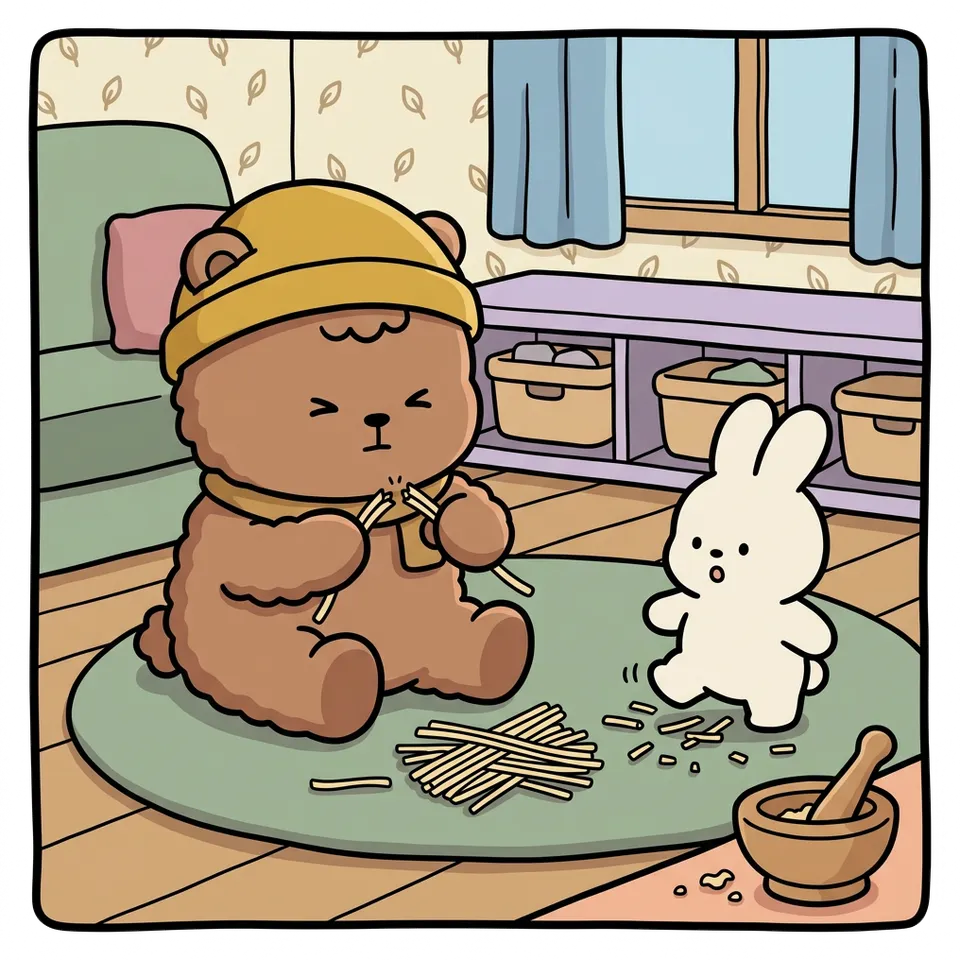
Hold dry noodles in both hands and push until they snap with a crack.
Why it's good
While you bend a noodle, nothing happens, and then at some moment it splits with a snap. Children learn through sound, before sight, that their own hand strength can break a noodle in two.
How to play
I put a handful of dry noodles on a mat. A child came over saying “What's this?”, took one in both hands, and bent it. When it broke with a snap, they paused to look at the broken spot, then picked up another strand and did the same.
When the pieces pile up, they scatter them on the floor and step on them. Every step makes a crunchy snapping sound, so they say “It makes noise” and keep stepping again.
When I gave them a mortar with the pieces, they pounded with the pestle, and the more they pounded, the finer the pieces got, until in the end it was powder.
Good to know
- Only dry noodles make a sound. Boiled noodles are soft and just bend without a sound.
- Small broken pieces go into the mouth. They are not harmful to eat, but stay close and watch that the child chews before swallowing.
What you'll need
Dry noodles · Mortar (if you have one)
Sprinkling Noodle Rain
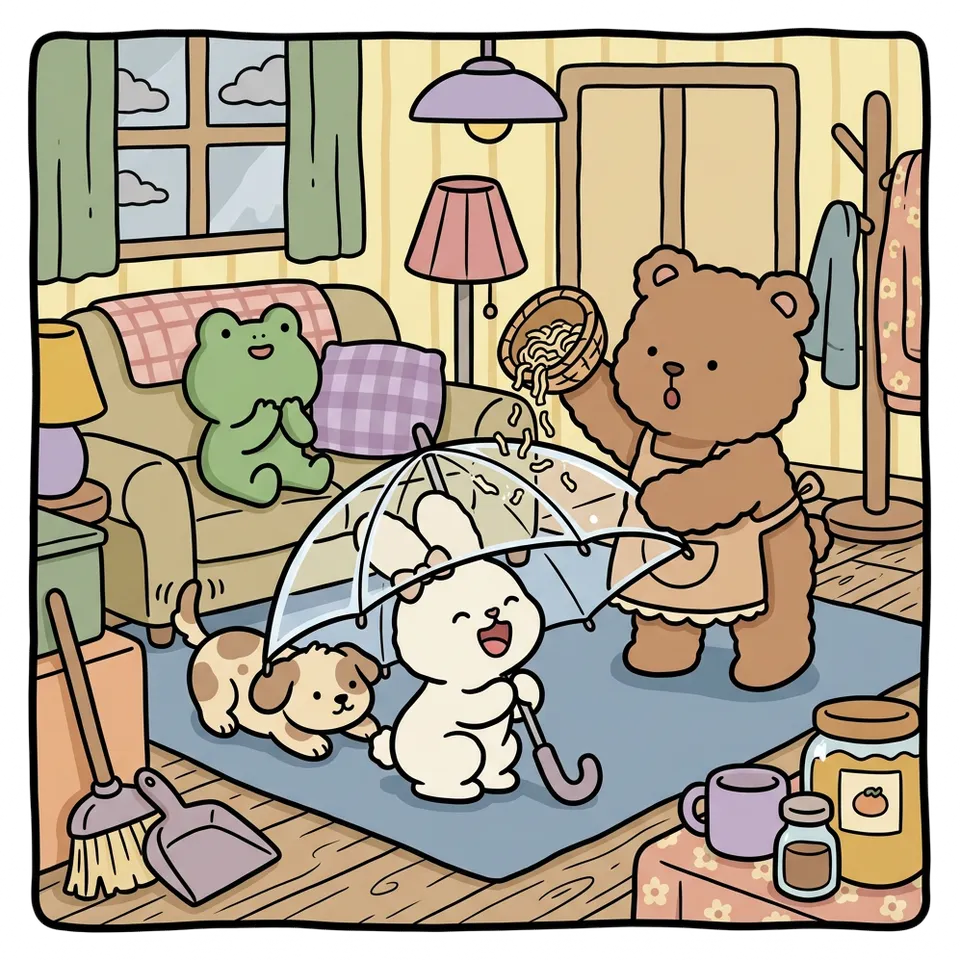
Sprinkle crushed noodles onto an umbrella to make the sound of rain.
Why it's good
The sound of noodles falling on the umbrella sounds like rain. Children make with their own hands the sound they heard under an umbrella on a rainy day.
How to play
I gave a child a basket to hold the broken noodles, and they filled it up, put it on their head, and shook it to scatter them. So I opened an umbrella for them. Sprinkling noodles on the umbrella, they said “It's raining!”
This time the child went under the umbrella and I sprinkled from above. At the sound of the noodles hitting the umbrella, they laughed out loud, “Ahahaha.” A younger sibling watching said “Me too! Do me too~” so I put the two under one umbrella and sprinkled once more.
After choosing an umbrella in a favorite color, each time they sprinkled the noodles they imitated the sound of rain, “Pitter-patter, pitter-patter, splish splash!”
Good to know
- With a clear umbrella, you can see the noodles falling even from underneath.
- When you are done, hand them a broom and a dustpan. Sweeping up the scattered noodles together is part of the play too.
What you'll need
Finely broken dry noodles · Umbrella (a clear one is nice) · Broom and dustpan
Poking Noodles Into a Strainer to Make a Hedgehog
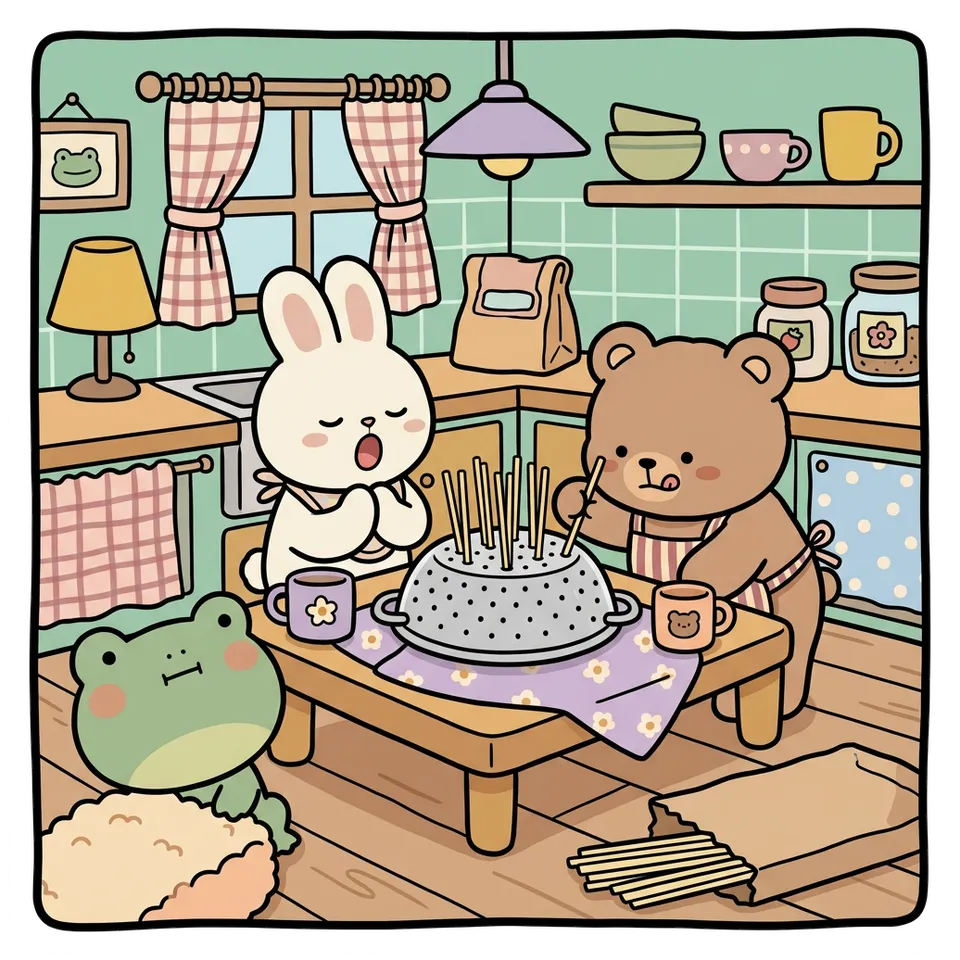
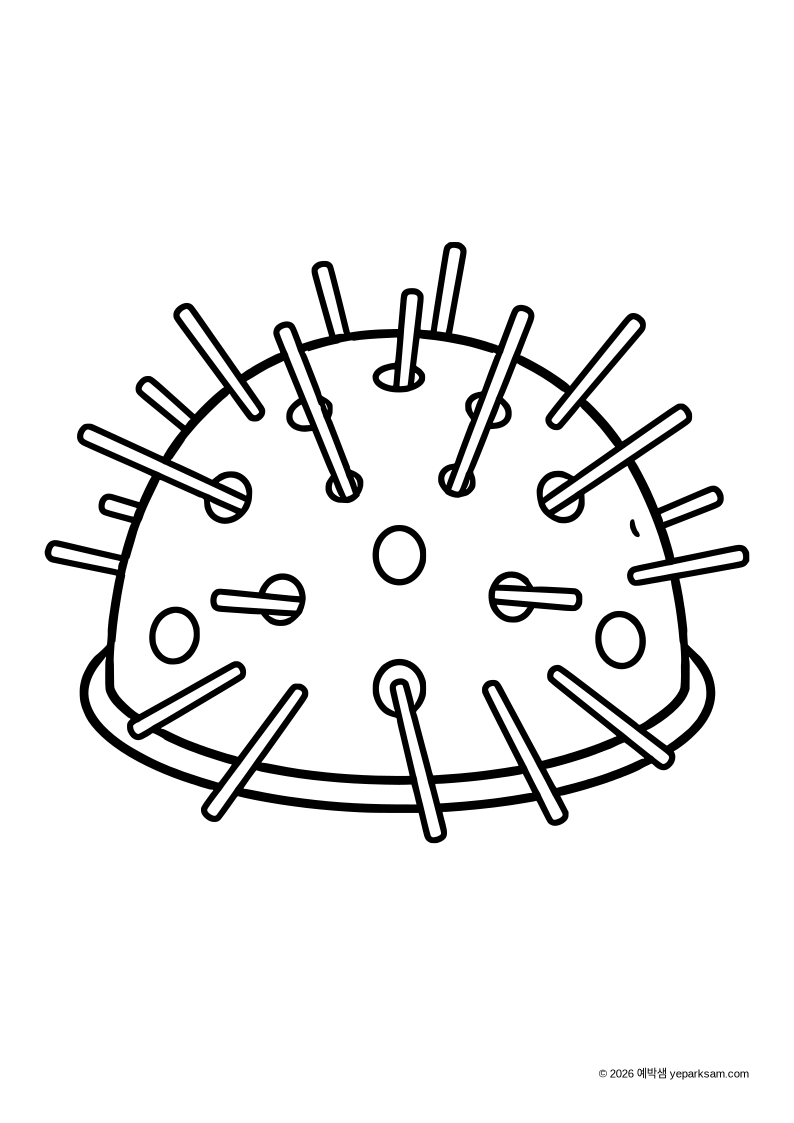
Stand dry noodles one by one in a strainer or basket full of holes. When they are all in, it looks like a spiky hedgehog's back, or a cake full of candles.
Why it's good
To fit the tip of a thin noodle into a small hole, you have to keep changing the direction. After a few misses, it slips in, and what the finished strainer becomes is for the child to decide.
How to play
A child who saw the bag of noodles said “What's this?” and when I asked back “What do you think it is?” they said “Snack.” I thought they would recognize it as noodles, but to the child it seems it was just thin white sticks.
When I put a strainer next to them, they pressed the tip of a noodle against a hole and pushed it in. At first it wouldn't go in, so they changed the direction and moved to other holes, trying again and again. The younger sibling said “It won't go~” and looked at me, so I held their hand and put it in together, and they said “Done~” They also tugged on the noodles that stuck out below the strainer.
After standing one noodle in every hole, they sang “Happy Birthday~” That day, to the child, it was a cake with candles. Then they shook the strainer and peered at the noodles falling through the holes.
Good to know
- Don't say first what it became. If the child says it's a cake, then that day it is a cake.
What you'll need
Strainer or basket with holes · Dry noodles
Winding Noodles Around Your Hand and Stretching Them
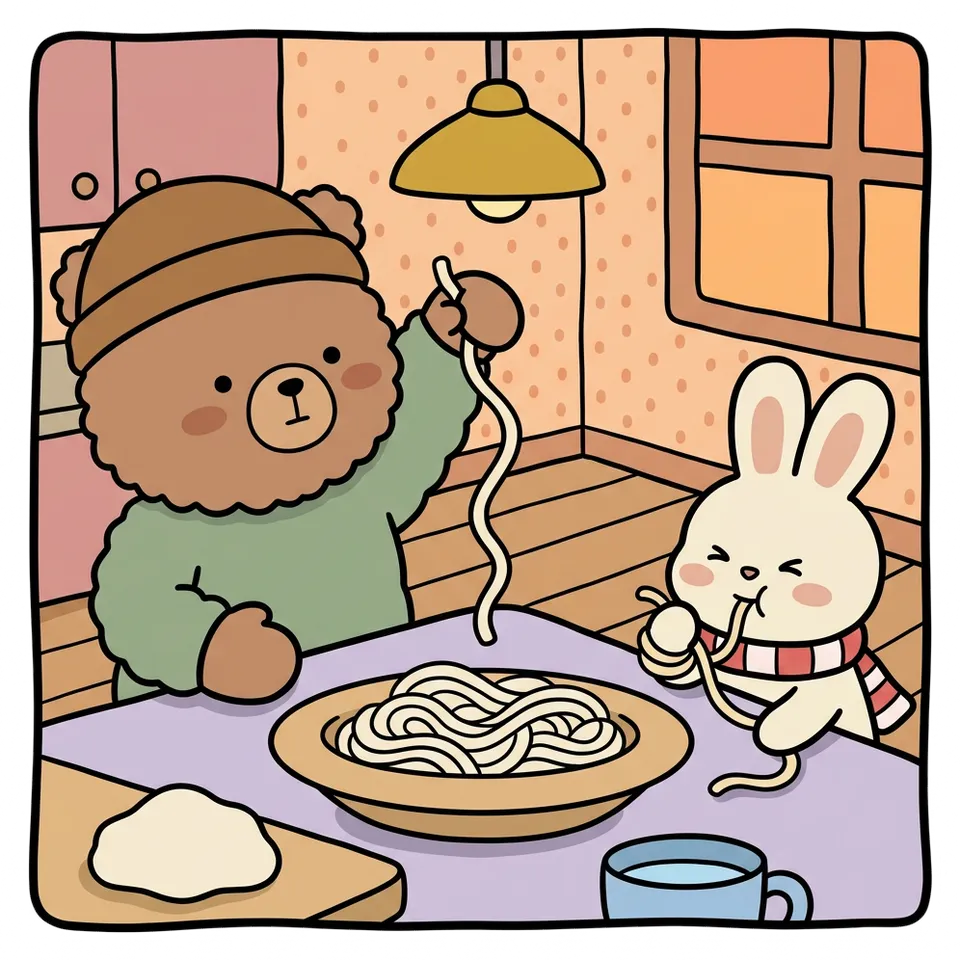
Touch cooked noodles, wrap them around a palm, and dangle them long. Unlike dry noodles, they do not snap; they stretch.
Why it's good
Noodles that snapped when dry wind smoothly around a palm once boiled, and stretch when pulled. Children feel with their hands how noodles from the same bag can become so different.
How to play
On a day when we had played in the daytime by snapping dry noodles, stepping on them, and sprinkling them on an umbrella, I cooled boiled noodles and put a plate of them out. The child touched them carefully and said “It's slimy.” They wound them around a palm, held them with both hands and stretched them long. Looking at the hanging noodles, they said “It looks like rain.”
When I asked “How did the noodles get this long?” they said nothing and just looked at the noodles for a long time. Then they said “Can I eat the noodles?”, and when I tore off a little piece for them, they slurped it up and said “Yummy...”
Good to know
- If they are curious, show them how the dough is pulled thin. They see right away that flour dough has to be pulled thin and long to become noodles, and if it is clumped up it becomes sujebi (hand-torn dough soup).
- Only cooled noodles are for touching. Right after boiling they are hot, so give them only after they have cooled enough.
What you'll need
Boiled noodles · Flour dough (if you have it)
Putting Noodle Hair on a Photo
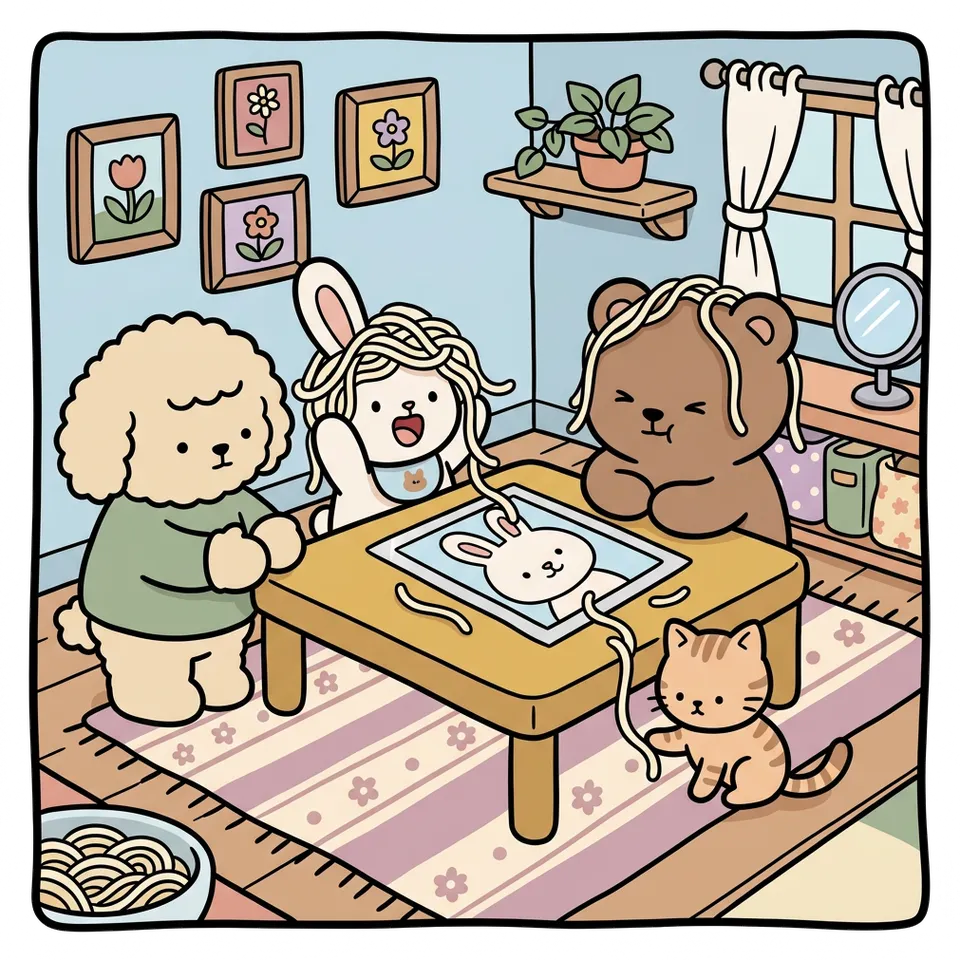
Lay cooked noodles on a photo of the child's face to give them hair.
Why it's good
The noodle strands they always eat become hair on top of their own face in the photo. Children also try, with their own hands, how a face gets hidden when a whole handful is piled on and shows again when it is cleared away.
How to play
I laminated a photo of the child's face and put it next to the cooled noodles. The child looked at the photo for a long time, then carefully picked up noodles one strand at a time and placed them on the head. They pushed the strands around with their fingers to shape the hairstyle.
What began as a few strands became a handful at a time, until the face couldn't be seen at all. When I pretended to look for them, saying “Where did you go?”, the child cleared the noodles away and said “Peekaboo.”
When I put real noodles on a child's head, they tried to eat the strands that slid down onto their face with their tongue sticking out. I tied strands up with a rubber band to attach them to the head and showed the child a mirror, and they smiled brightly.
Good to know
- Putting a little sesame oil on boiled noodles keeps them from clumping. It makes them easier to pick up one strand at a time.
- Laminate the photo or put it in a zipper bag. Moisture from the noodles makes the photo wet.
- If you boil curly ramyeon (instant noodles) and lay it on, it becomes permed hair.
What you'll need
Cooled boiled noodles (or ramyeon) · Photo of the child's face (laminated or in a zipper bag) · A little sesame oil
Shaking a Zipper Bag to Color Noodles
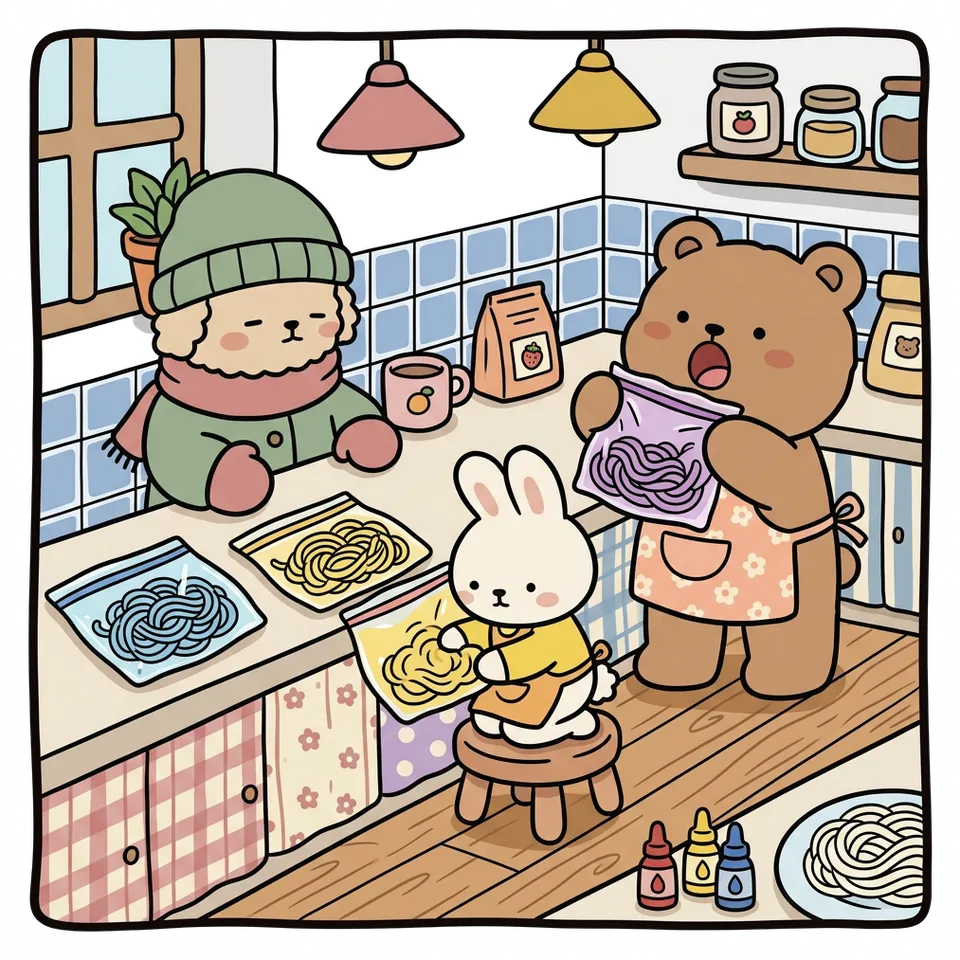
Put cooked noodles and food coloring in a zipper bag and shake it to tint the white noodles.
Why it's good
Children learn that there are paints you can eat. They also make with their own hands, by kneading, how colors mix, like adding pink to blue noodles to make purple.
How to play
I put boiled noodles in a zipper bag and asked what color they wanted, and the child said “I want blue!” I dripped in a few drops of coloring and closed the bag, and the child shook it with both hands and squeezed it. Seeing the white noodles turn blue, they said “Oh, is this paint?” When I said “This is food coloring. You can't eat paint, but this is what we put in cooking, so you can eat it,” they said “Wow! It turned blue!”
Then they said “Now pink, please~” When I added one more drop of pink, it mixed with the blue and became purple. The child shouted “I made purple!” The younger sibling chose yellow, squeezed it, and held up the bag, saying “Yellow noodles!”
Good to know
- If you drip in the coloring and add a splash of water, the color spreads evenly.
- Food coloring in just red, yellow, and blue is enough. Blue with red makes purple, and blue with yellow makes green. Pink comes from a very small amount of red.
- Noodles colored with spinach or sweet potato are sold too. If you put them next to the noodles you colored yourself, children hold the colors up side by side.
What you'll need
Boiled noodles · Food coloring · Zipper bag