Play Ideas with My Body
Ask where the eyes are and a child quickly points: “Eyes!” But when I point at the elbow, wrist, and fingers and ask, the answer is always “Arm.” They don't yet know that even one arm has several names.
They get to know their body one part at a time by pointing and naming, tapping here and there to make sounds, and lying on paper to draw a body picture.
This page was translated by Yeparksam, a preschool teacher in Korea. Some words may sound a little unusual — thank you for your understanding.
Printables to use
See more ›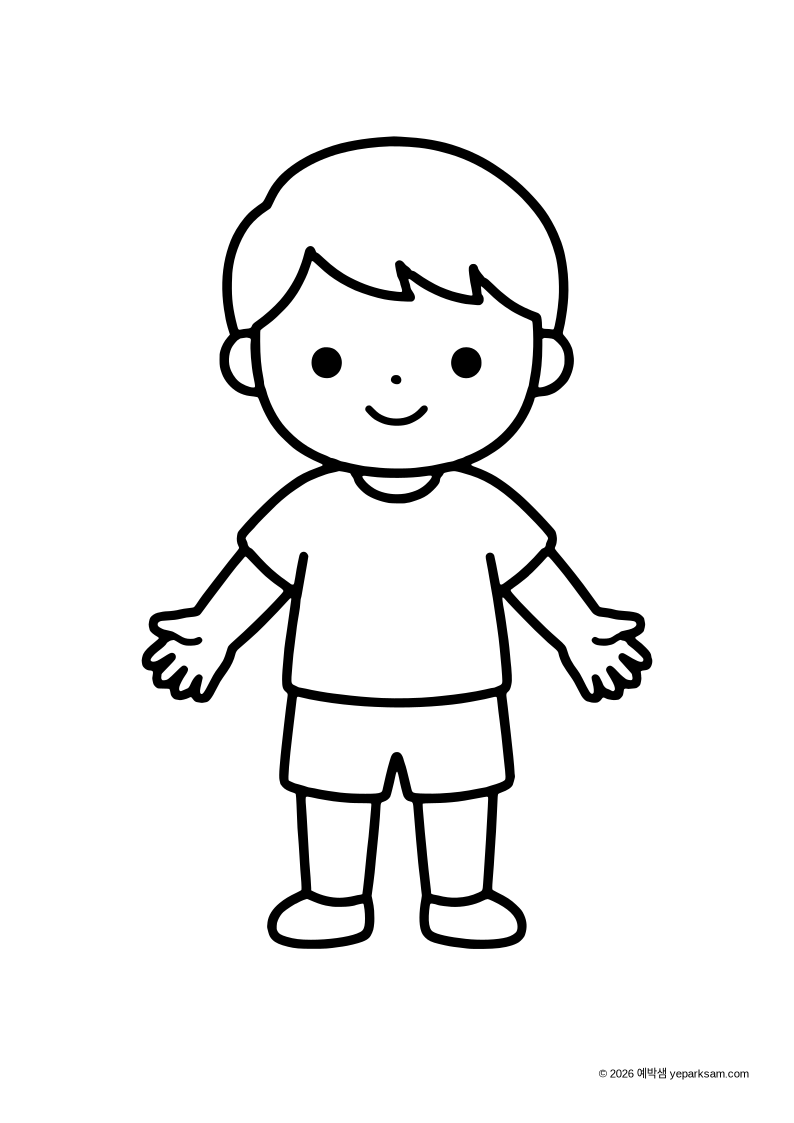
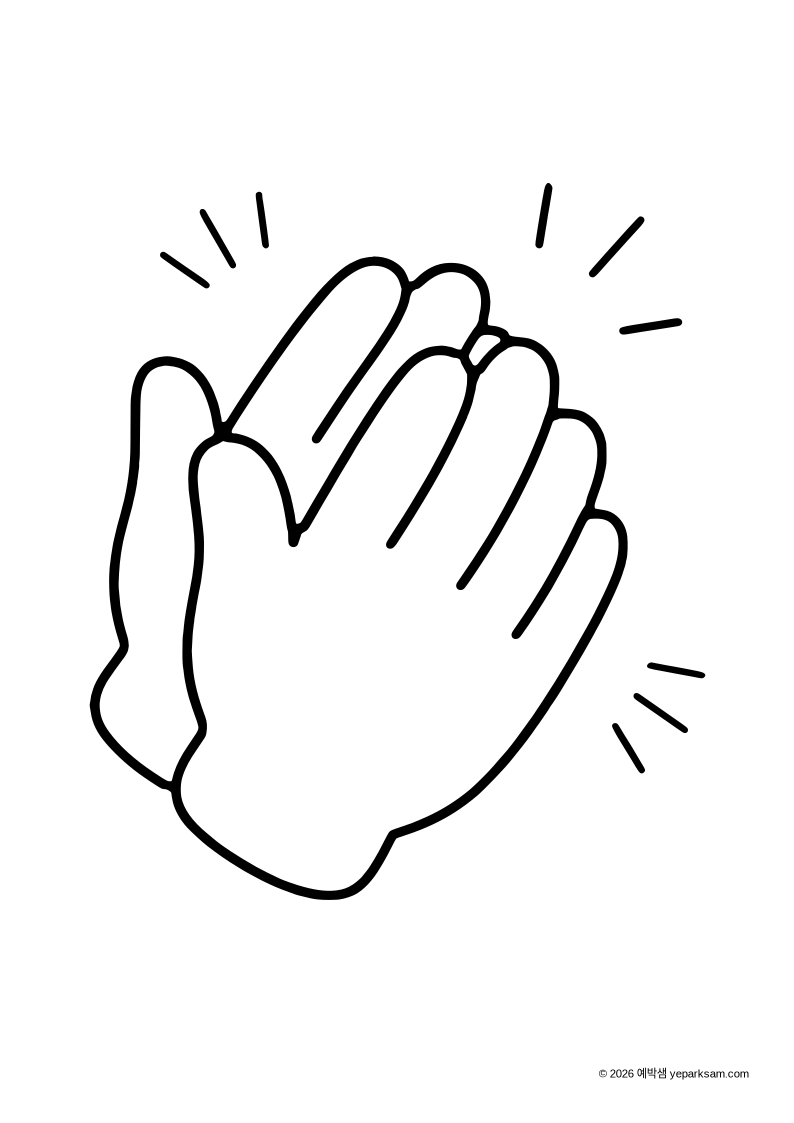
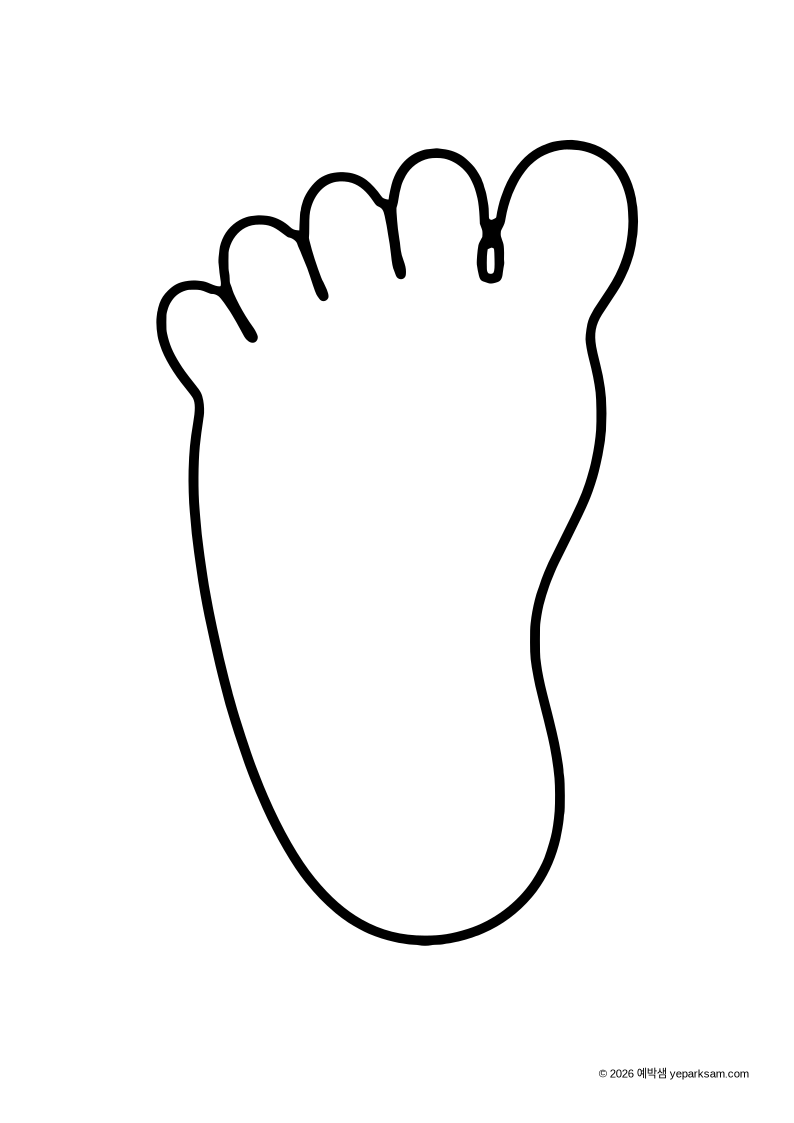
Pointing and Naming Body Parts
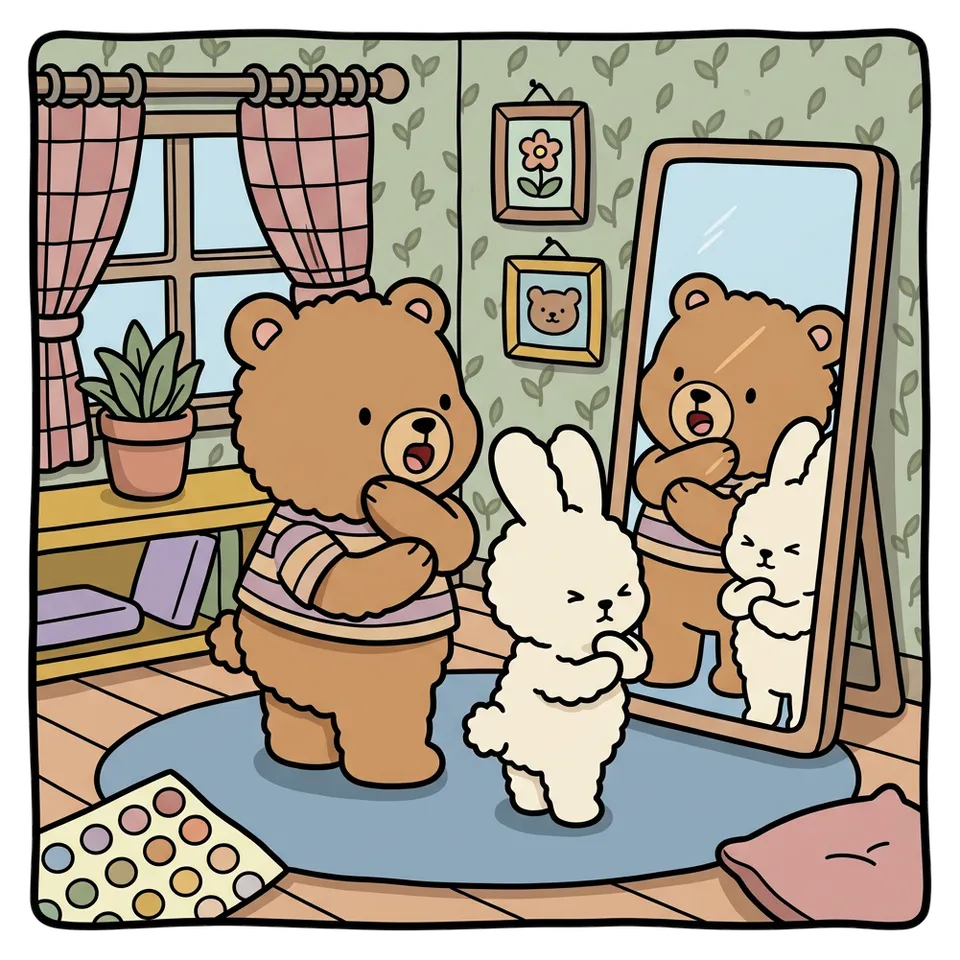
Point to different parts of the body and say their names. The adult says “Do it like me~” and the child points to wherever the adult puts a hand.
Why it's good
They learn by touching that the places they all called “arm” have separate names, like elbow, wrist, and finger. They also learn what parts do, like the knee bending when we walk and the eyes being for seeing.
How to play
Looking in the mirror, I asked about eyes, nose, and mouth and they pointed quickly: “Eyes!”, “Nose!”, “Mouth!” But elbow, wrist, and fingers were all “arm.” After I touched the elbow, wrist, and fingers one by one with them and said the names a few times, they began to say them separately: “It's the elbow!”, “It's the wrist.”
Touching a knee, they asked “Is this the knee?”, “Where it folds?” and I told them it's where we bend when we walk and run. On the day I asked how many eyes they have, they held up two fingers: “Two!” then “Hands are two, feet are two,” and then “Mouth is one!”
When I put my hand on my head and said “Do like me~”, they said “Head!” and did the same, and when I tapped my foot they said “It's a foot~!” When I lifted my arm high they said “It's an arm!” When finding hands, feet, nose, and ears along with a song, they pointed to my face and told me “Here!”, “Eyes!”
Good to know
- Don't only say the name, touch that spot with your hand too. They separate arm and elbow only when they touch while listening.
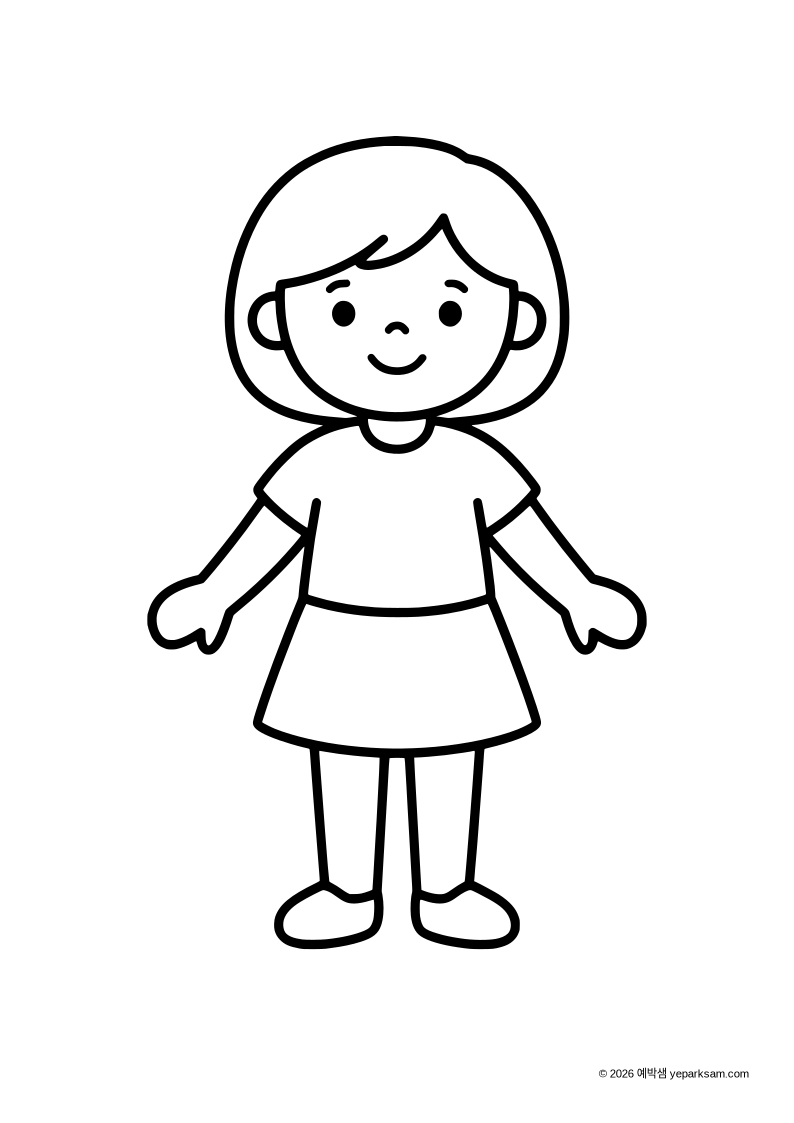
- You can also do it by sticking stickers on a body picture. They choose parts they know to stick on and say the names themselves: “It's a finger.”, “It's a knee~”
What you'll need
Mirror · Stickers and a body picture (if you have them)
Tapping to Find Body Sounds
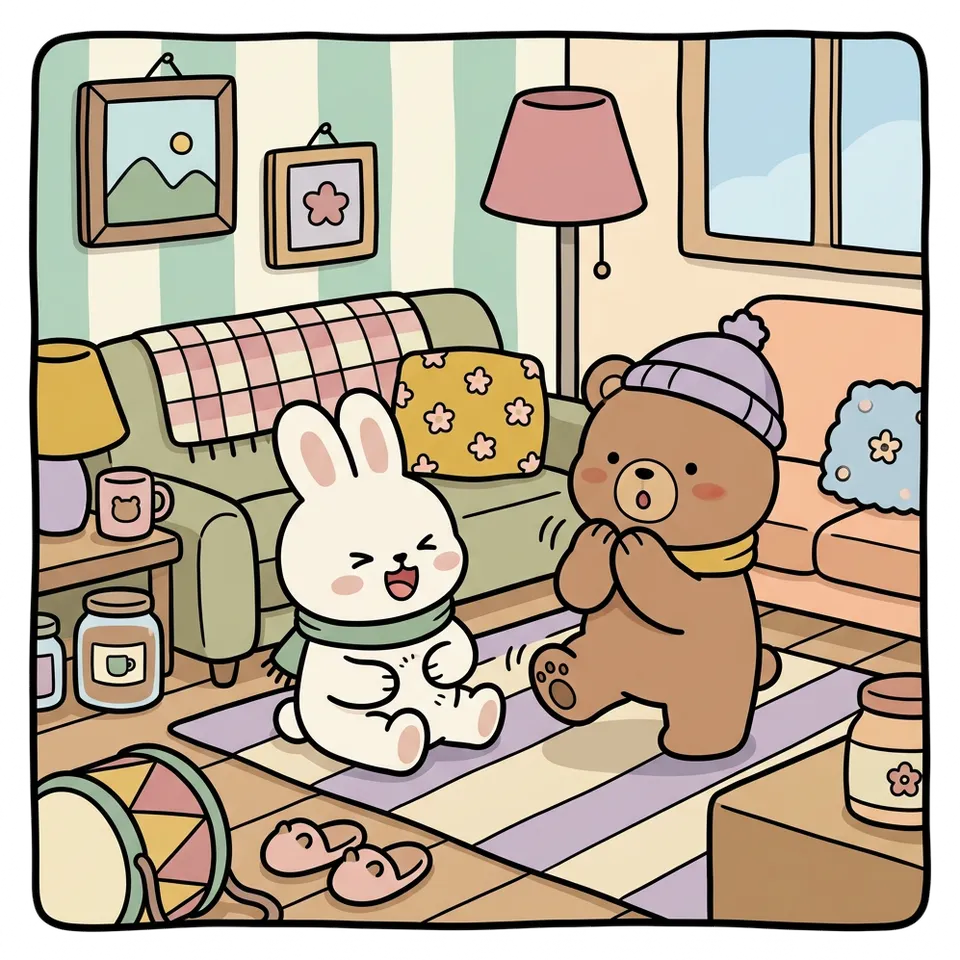
Tap different parts of the body, like hands, tummy, and feet, and imitate the sounds they make with your mouth.
Why it's good
Hands go clap-clap, belly goes boom-boom, feet go thump-thump. They learn by tapping that the sound is different depending on which part of the body is tapped.
Books to read together


How to play
When I clapped, they clapped along and said “Clap clap clap.” When I tapped my belly they said “Boom boom boom” and when I stomped my feet, “Thump thump thump.” When I asked where else a sound could come from, they said “Pooot~” and then “A fart sound comes from my bottom,” and laughed loudly. I said “Pooot~” too and the two of us laughed for a long time.
After that, even without me tapping first, they tapped arms, legs, and cheeks one at a time and were amazed that the sounds came out different.
Good to know
- They hit harder and harder to make a bigger sound. Tell them first to tap cheeks and belly gently.
Lying Down to Trace the Body
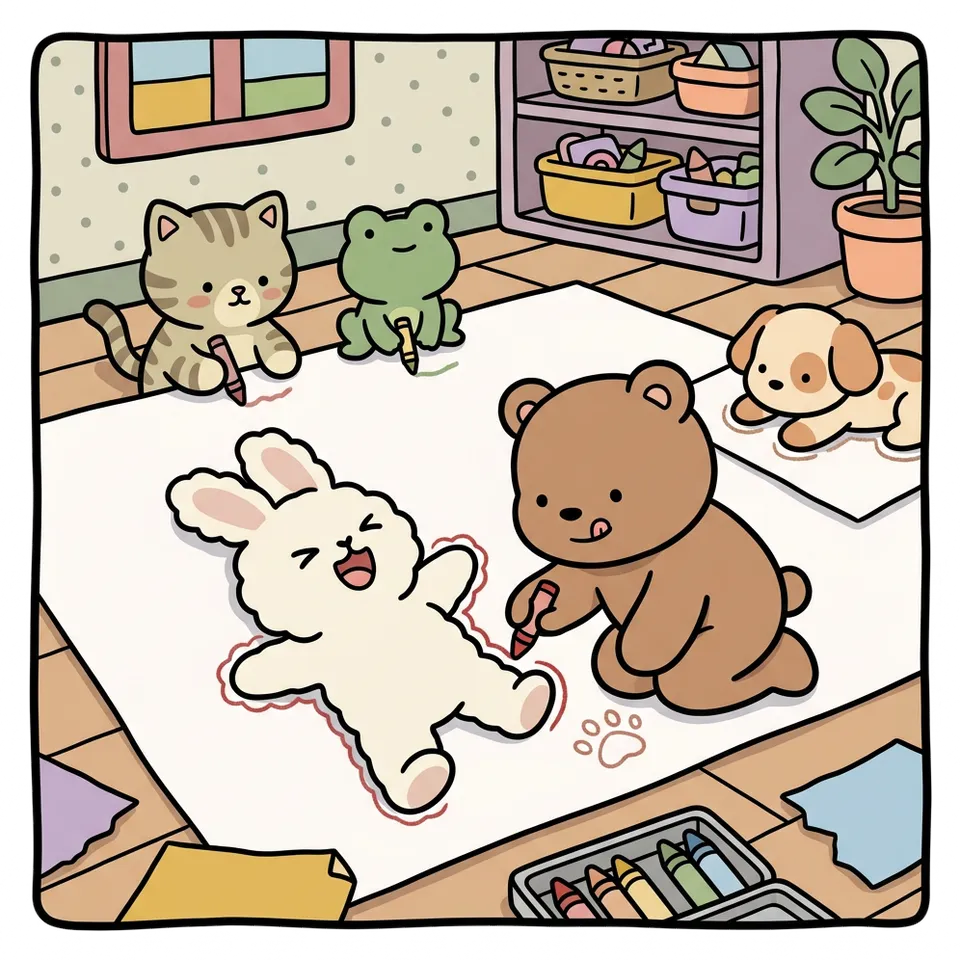
Trace around a hand or foot on a big sheet of paper, or lie down and trace the whole body outline, then color it in and decorate it.
Why it's good
When they lie down on paper, it becomes a picture at their exact body size. They learn where the head, arms, and hands are attached by touching and pointing to the picture.
How to play
When I spread out a big sheet of paper, the child put their hand on it and traced between the fingers with a crayon, saying “This is my hand.” They put a foot down and pretended to trace it too: “Foot~” Then they lay on the paper spread out like a star and said “Draw me~”, so I traced their body. I counted fingers one, two as I traced and they burst out laughing because it tickled.
I told them to get up and said this is what your body looks like, and they laughed and colored their body picture. They stuck on stickers and tore and pasted colored paper, touching the picture with their hands: “It's me”, “My hand!” and pointed one by one: “Here's a foot”, “There's an eye too.”
Good to know
- If they find lying still hard, start by drawing one hand. A hand is done quickly, so the time they have to stay still is short.
What you'll need
Paper bigger than the child (a large sheet) · Crayons or colored pencils · Stickers and colored paper