Play Ideas with Mirrors
On a day when milk left a white mark around a child's mouth, I told them they had a mustache, and the child scampered off to the mirror. They turned their face this way and that for a long time, then laughed and said “I got a mustache”. A mirror catches a child like this several times a day.
This page was translated by Yeparksam, a preschool teacher in Korea. Some words may sound a little unusual — thank you for your understanding.
Printables to use
See more ›
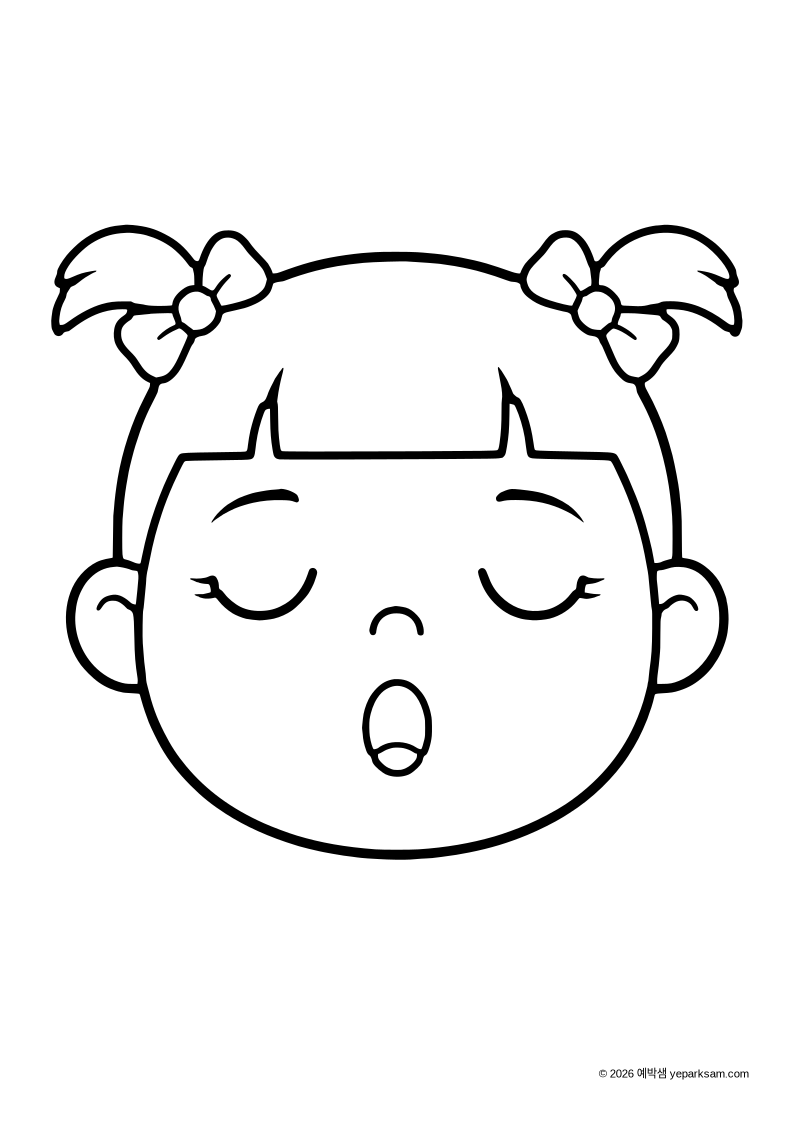
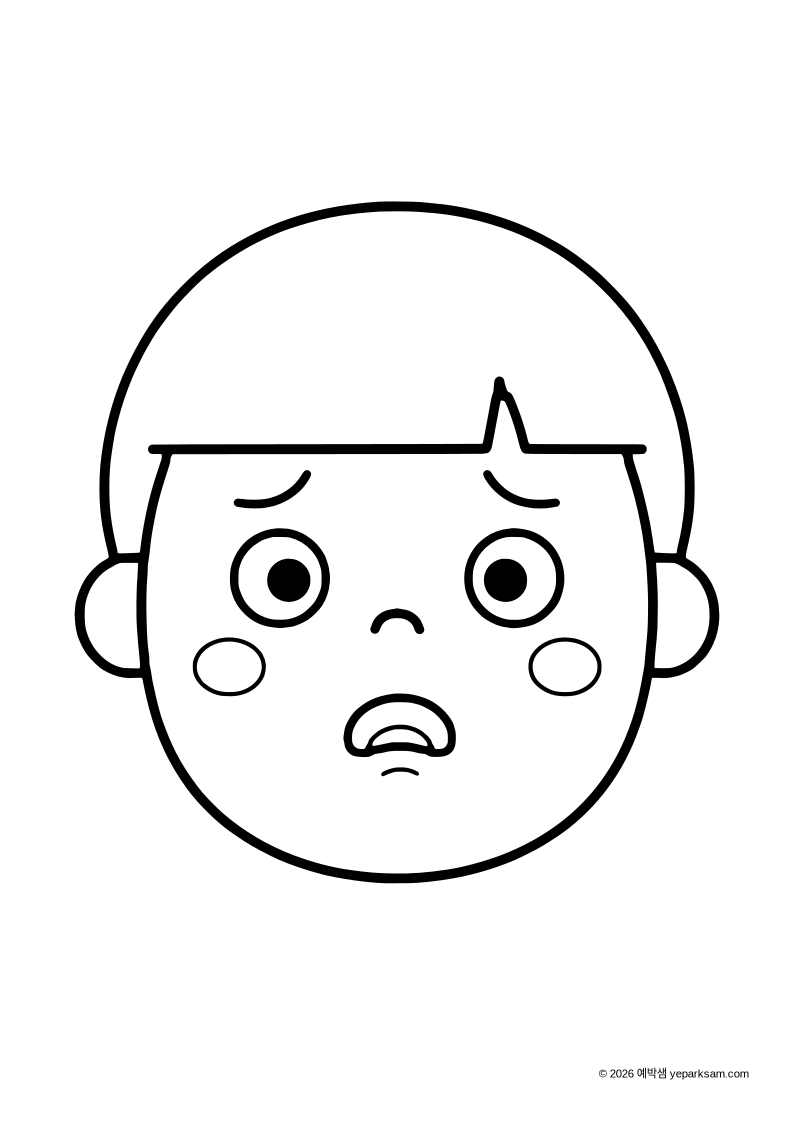
Finding a Person in the Mirror
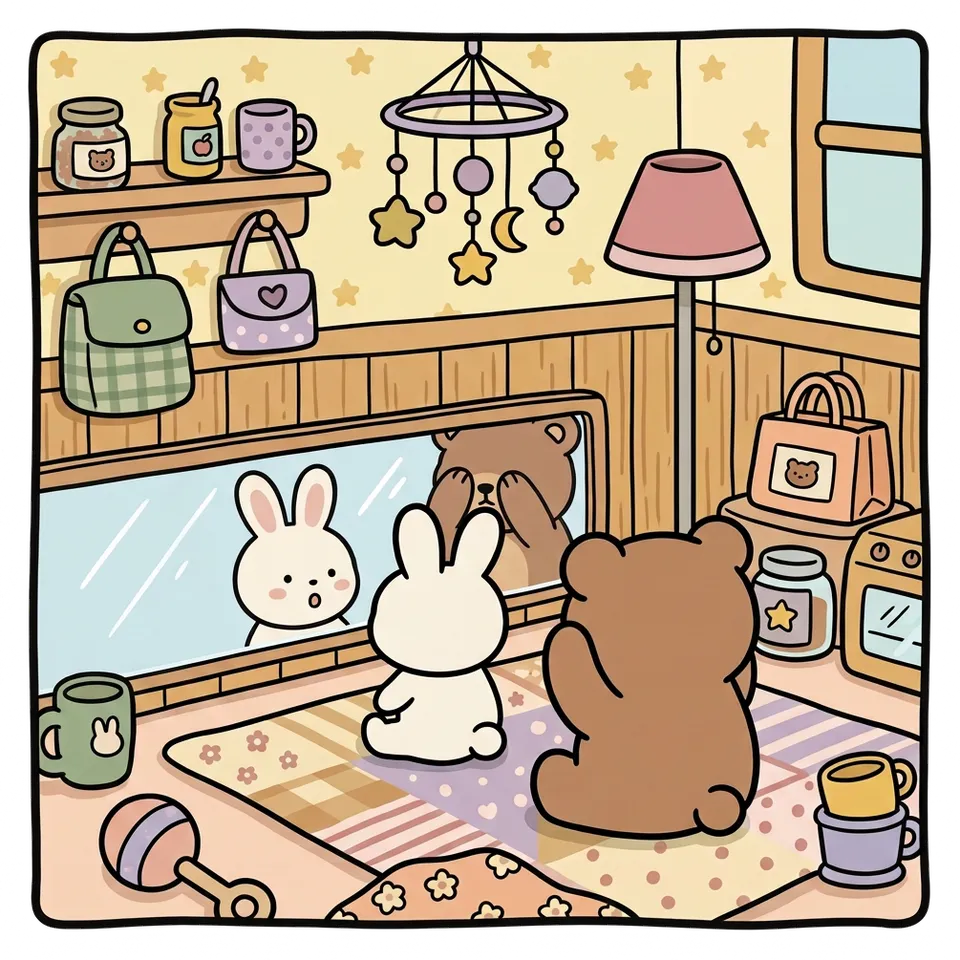
Play peekaboo in front of a mirror and watch a person vanish and reappear. Cover your face with your hands and you disappear from the mirror; take them away and you are back.
Why it's good
A game of noticing that you are still right there, but only gone in the mirror. When I cover my face with my hands, only my reflection disappears, and the child whips around to see the real me. Checking back and forth between the mirror and what's behind them, they find out with their whole body that I didn't vanish from in front of them. I just can't be seen in the mirror.
How to play
The child sitting in front of the mirror ignores their own face and looks for me, sitting behind them. They whip around to see the real me. It seems strange that I'm both in front and behind, because their head goes back and forth several times. So I cover my face with my hand. Only I disappear from the mirror, and the child whips around again. When I take my hand away, I'm back in the mirror.
After a few rounds, the child takes over. They drop onto their belly, pop back upright, find me in the mirror, and stamp their feet and laugh when they do. They even copy the “peekaboo” sound.
Good to know
- The person who disappears has to be behind the child. Children are more surprised when someone sitting behind them vanishes than when their own face does, because their own face is always there. If you sit the child there alone, they look in a few times and then slowly crawl away.
- Keep the mirror low. At the child's eye level, they crawl over and sit down on their own. A mirror hung high on the wall might as well not exist for them.
What you'll need
Safety mirror
Making Faces to Become Someone Else
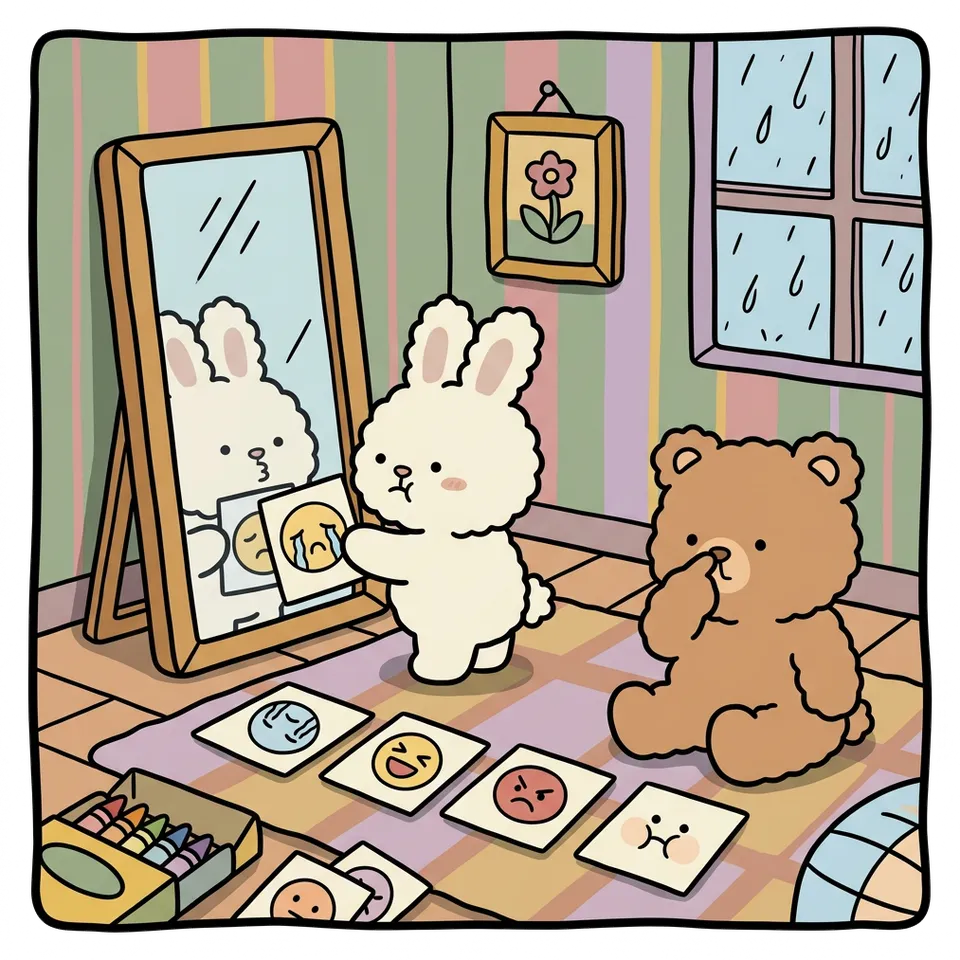
Spread paper drawn with faces on the floor. The child points to them one at a time and copies each expression in front of the mirror.
Why it's good
A game where feelings only get names once the child has made the expression with their own face. The face goes first, and the words follow. That's because children this age can't yet put all their feelings into words.
Books to read together


How to play
When I spread out the papers with faces drawn on them, the child points through them one by one. Their hand stops in front of the crying face, and they pick up that card and go to the mirror. Looking back and forth between the card and their own face, they push out their lips. “This one is upset.” For faces that aren't on the cards, I make them myself. I pressed my nose with a finger and said “oink oink”, and the child pressed their own nose too. They kept it pressed and looked in the mirror once more, let go, pressed again, and made the oink sound each time. “I'm a pig now.”
When I just say “Make an angry face”, they don't look in the mirror, they just stare at me. When I pull my eyebrows way down and press my lips tight, only then do they copy me. The child gives the faces their names. They puffed out their cheeks and called it chubby, and said the face with hair sticking straight up was a goblin. Next they tell other people what to do. They grab me and say “Mommy, you smile too.” When I smile as told, they laugh even more after seeing it.
Good to know
- A grown-up has to make the face first. If you only tell them with words, they won't copy it.
- Let the child pick the names. They name faces much better than a grown-up does.
What you'll need
Mirror · Several sheets of paper with faces drawn on them
Sticking Mirror Paper in a Box
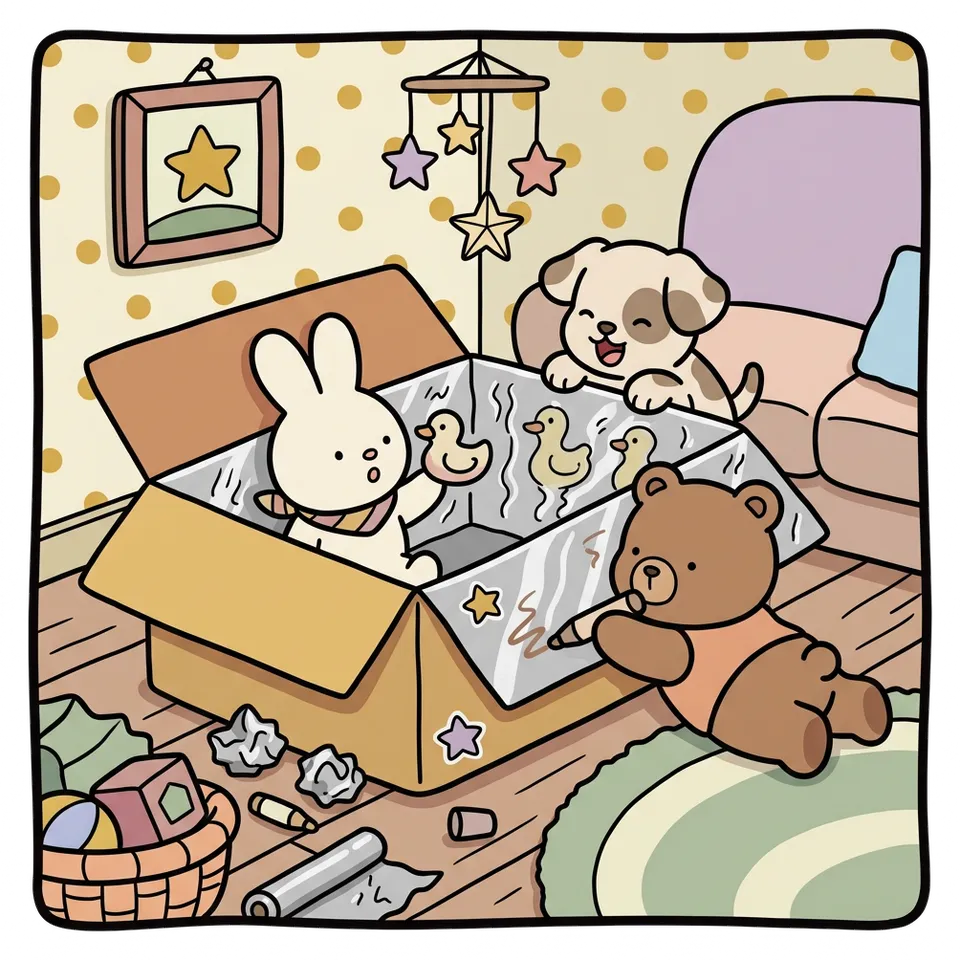
Stick mirror sheets on the inside of a delivery box, then climb in and sit down to look at yourself. One sheet on the side and one on the bottom turn the whole box into a mirror.
Why it's good
A game where children see with their own eyes that their reflection gets bent out of shape as much as they move. In a flat, straight mirror this is hard to notice, but the crinkly mirror paper shows even better that when I move, my reflection moves too.
How to play
I stuck mirror paper inside a delivery box, and the child climbed in, sat down, and wouldn't come out. They pat the mirror paper with their palm, wiggle their body left and right, and look for a long time at how strange they get as they move.
The ceiling is reflected in the mirror paper on the floor. If a mobile hangs there, it swings below their feet. The child lay on their belly facing it and kicked for a long while. When I handed over a whiteboard marker, they scribbled all over it. I put my palm down and traced it, and the child thrust out their own hand to be traced too.
Sometimes the bent faces are scary and a child won't come in. This child also stood at the entrance at first and only looked in. When I got in first and sat down, making my face funny and bendy, they finally followed me in, hesitantly.
Good to know
- It's fine if it's stuck on crinkly. It's actually better. The fun part is seeing your body look bent, so there's no need to try to stick it on flat.
- Some children are scared of the bent faces and won't come in. If a grown-up goes in first and shows their face, they follow.
What you'll need
Delivery box · Mirror paper · Whiteboard marker
Decorating a Hand Mirror to Keep
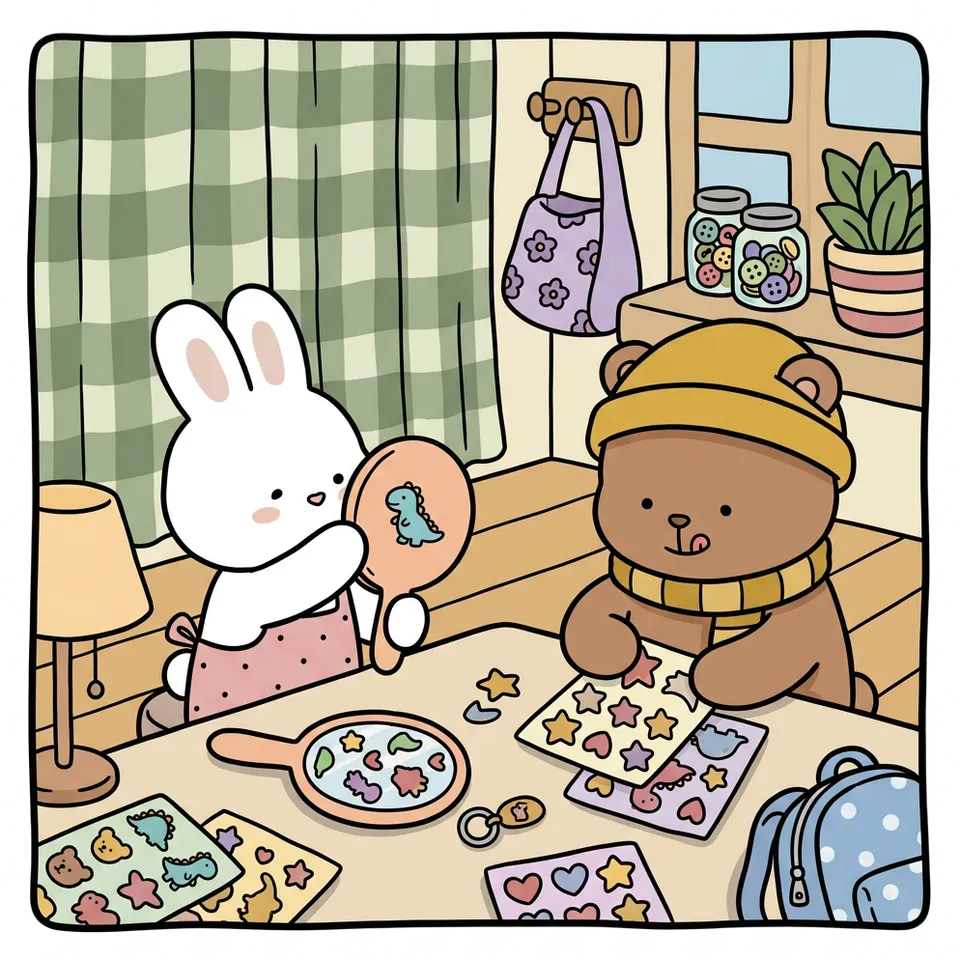
Stick stickers on a plain hand mirror to make a mirror that is all your own.
Why it's good
Checking each time they stick something on is the whole game. Over and over, with one motion of sticking and checking, children learn that what they made becomes theirs.
How to play
Put out just the stickers with one plain hand mirror, and from that moment it's their own mirror. They stick one on and hold their face up to it, stick another on and check again. They check every time they stick one.
A child who stuck on dinosaur stickers called it the dinosaur mirror and carried it around all day.
Good to know
- Before age three, you need thick, puffy stickers. With flat ones, they scratch at the edge with a fingernail a few times, can't peel it, and bring it to me. Puffy ones can be pinched with fingertips, so they peel them alone.
- If you put a ring on a small mirror and hang it on a bag, the play goes outside with them. Every time we went out, the child spun the bag around to look into it.
What you'll need
Plain hand mirror · Thick, puffy stickers · Ring
Being a Hair Salon Customer
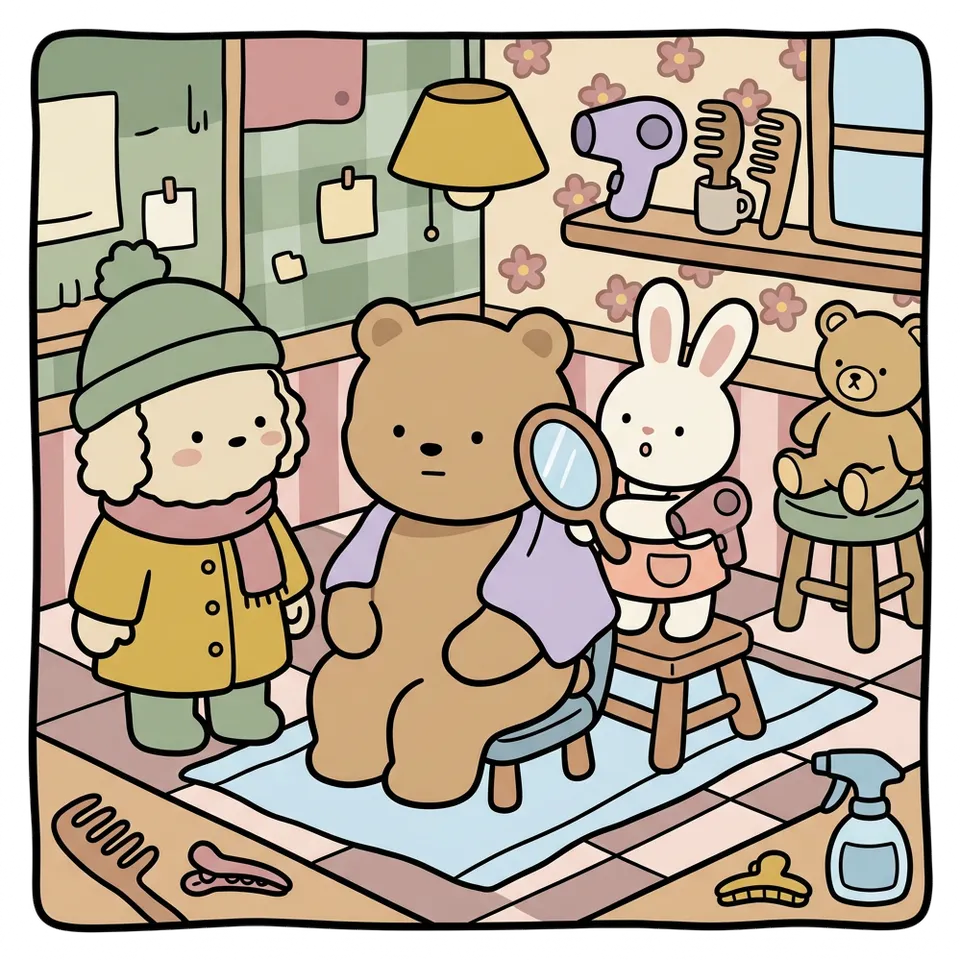
The child is the hairdresser and the adult is the customer. They comb, dry, and check the hair in the mirror in this role play.
Why it's good
Combing and blow-drying are all done to hear one line. “How do I look? Pretty?” The hairdresser role is only complete when the grown-up playing the customer says it looks pretty, so the child repeats the combing and drying again and again until they hear the answer.
How to play
On a day we came back from a haircut, I handed over a hand mirror and a comb, and the child did exactly what they had seen at the salon in the daytime. “Mommy, please sit.” They dragged over a chair, stood the mirror up, and called me. The child was the hairdresser, and I was the customer.
They comb with swish swish strokes, hold the dryer up with a “vroom”, even pretend to cut, and then lift the mirror high in front of my face. “How do I look? Pretty?” When I say it's pretty, they sit me back down and comb once more. Then they ask again.
I get busy sometimes too. But if I try to stand up, that day's play just ends right there. If I say it's pretty, they sit me down again, and if I don't, they sulk. There were many days I couldn't get up for a long time while making dinner.
On a day I couldn't find the hand mirror, the child stood up a square block and sat me down in front of it. They pushed the block, which reflected nothing, up to my face and said I was all done. As long as there is a pretend check, it does the job of a mirror.
Good to know
- Just bring in the next customer. If you sit a doll beside you and say “Next customer is here”, the customer changes, so the child stays the hairdresser and doesn't feel cheated.
- If you only put out a comb and a dryer, the play won't break off. Hair rollers and clips need nimble fingers, so they keep fumbling and dropping them while winding.
What you'll need
Hand mirror · Comb · Toy hair dryer · Doll
Looking in a Mirror and Drawing My Face
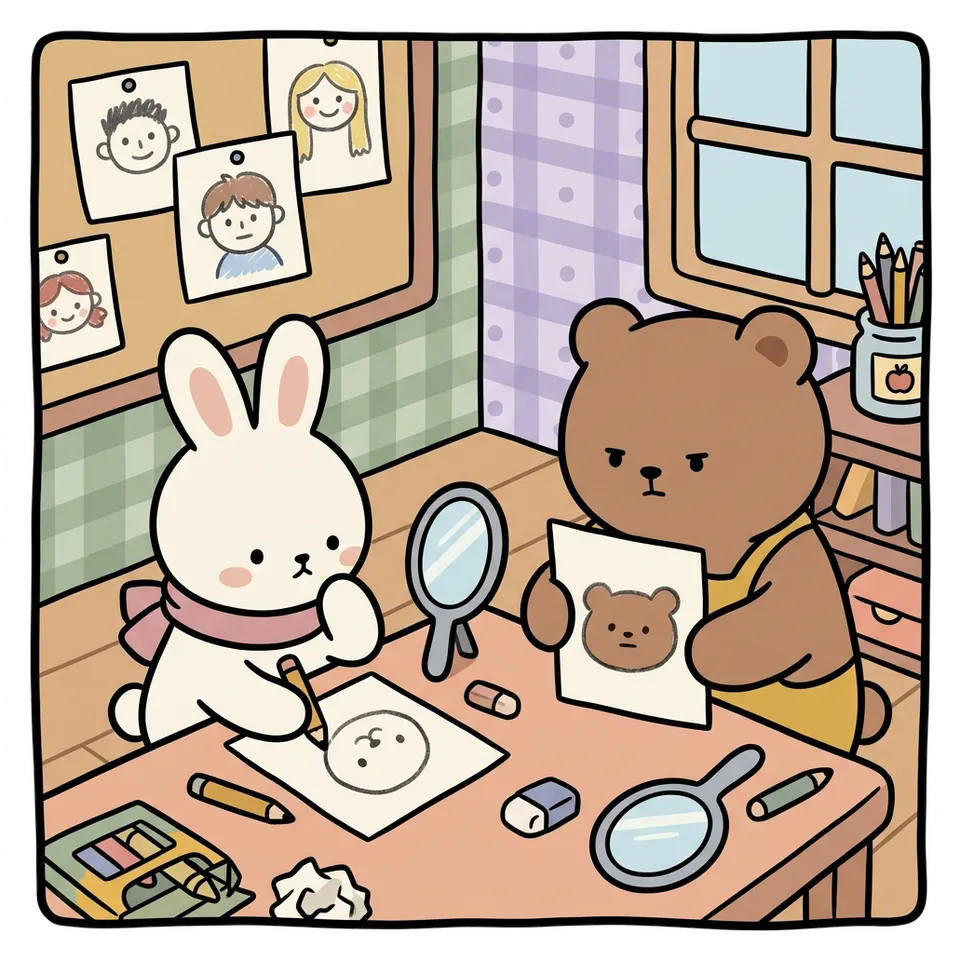
Look at your own face in the mirror and draw it just as you see it on paper.
Why it's good
A game where children look at their own face much longer than usual. In the face they see every day, they find things they don't usually notice.
How to play
When I put paper next to the mirror, the child's hand moved before the pencil did. They traced the shape of their face with a finger from chin to ear, and only then picked up the pencil. They decide the drawing order out loud. “First I draw the face, then I draw the eyes.” They set it and follow it exactly.
Their head keeps bobbing as they look between the mirror and the paper. Draw one eye, look in the mirror, draw the nose, look again. When they finish, they put it next to a friend's and start by finding what's different. Different eyebrows, different hair, they say. Nobody cares whether it's drawn well.
What you'll need
Mirror · Paper · Pencil
Matching the Other Half
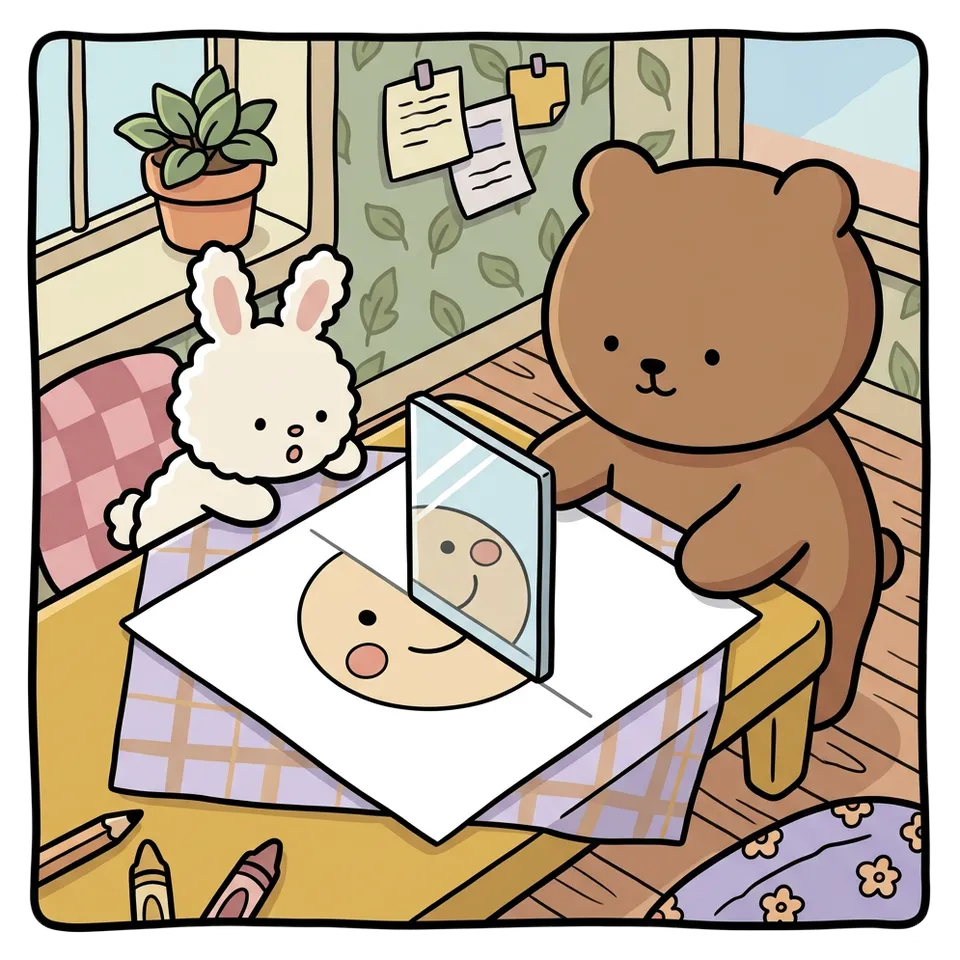
Stand a mirror on a picture with only one half drawn and fill in the other half.
Why it's good
When you only see half, you can't tell whether it's a car or a boat, but the moment you hold up the mirror, it becomes clear. It's the same when a child holds out a half face they drew and asks someone to guess. They guess from the half and check with the mirror.
How to play
I held out a paper with just one eye and one eyebrow, and the child gave me a look that said, what's this? When I stood a mirror on the folded line, the missing half slowly filled in inside the mirror, and a whole face appeared. They picked up the mirror and put it down, looking again several times.
After that it's guessing. You put out a picture where only half shows and guess what it is. A photo of a building works, and so does a picture of a vehicle. Then the child makes the puzzles. They scribble a half face and hold it out for me to guess who it is. I can tell who it is just from the eyebrow, but when I say I don't know, they get even more excited and draw one more part.
If you fold a leaf in half and stand a mirror on the fold, the whole leaf comes to life. At this point they put their nose right up to see how the veins branching from the thick middle stem line up perfectly on both sides.
Good to know
- Fold the paper in half, open it, and draw only up to the fold line. Without a line, they don't know where to stand the mirror, and the face changes every time they put it down.
- The mirror has to stand straight to match properly. Otherwise the face gets long or squished. The child finds the exact spot by tilting it this way and that.
What you'll need
Picture drawn with only half · Mirror · Leaf
Seeing Differently with Magic Mirrors
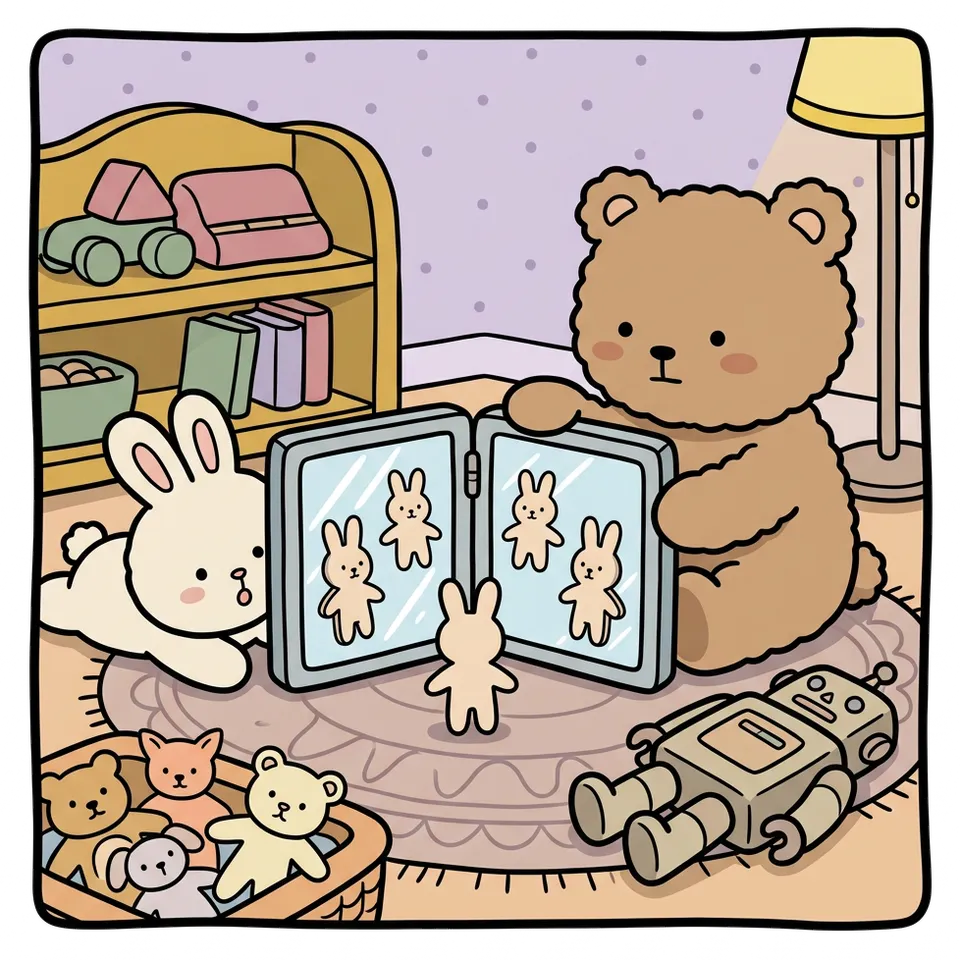
Stand two mirrors facing each other like an open book, put an object between them, and watch the object multiply as you make the angle smaller.
Why it's good
A game where children make with their own hands the discovery that the narrower the angle, the more copies there are. They count how many they see, and then find out that if they close the mirrors a little more, the number grows again.
How to play
I stood two mirrors facing each other like a book, and the child immediately pushed their face right in. “There are two of me.” The narrower the angle, the more two becomes four and four becomes eight. The child chooses what to put there. They scampered off to get their most treasured thing.
When I ask how many they see, they count by pointing at each one, but I see four and the child says two. We're looking at the same mirror, but we're sitting in different places. That's when they realize that the closer together the mirrors are, the more reflections overlap, and after that they fight over seats.
If what's between the mirrors is thick, it gets stuck and the mirrors can't close any further. A child who brought a robot lost interest because no matter how narrow it got, they only saw two. When I switched it for a flat doll, the mirrors closed all the way, and that's when we heard “There are a hundred Elsas.”
Good to know
- The number you see depends on where you sit. Just have them swap seats and look.
- What you put in must be flat. A thick thing gets stuck between the mirrors and the angle won't get any narrower.
What you'll need
Two mirrors (same size) · Flat doll
Bouncing Light Around
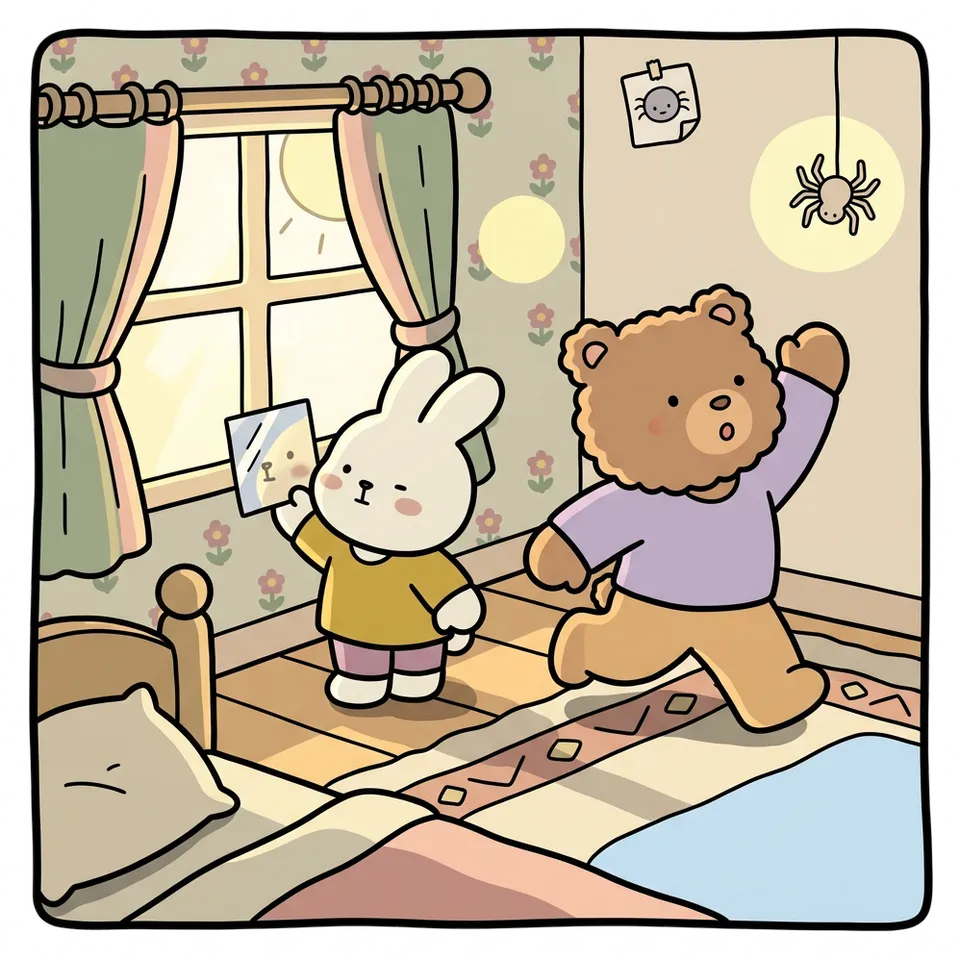
Bounce light off a piece of mirror sheet onto the ceiling or wall, then steer the light spot with your hand and chase it around.
Why it's good
A game where children work out for themselves where the light comes from. While chasing it, a question suddenly pops up, and finding the answer on their own is what makes this game worth it.
How to play
A child playing with a piece of mirror paper looked at the ceiling and tugged me over. A round patch of light the size of a palm floated there. When they wiggle their hand, the light slides along by the same amount. Chasing it is the game. Even a slight twist of the wrist sends it far away, so they run across the room with a thump.
When there is a sibling or a friend over, while one child moves a spot onto the wall, the other child also comes with a piece in hand. With two or three light spots floating, they said “Wow, it's a spider web!” From that day it became a spider game, and when I stuck a picture of a spider on the ceiling, the light they were chasing had somewhere to go.
After chasing for a while, a question comes up. “Where does the light come from?” I just said I didn't know either. They looked up at the window and the lamp in turn, and when they reached toward the window and the light rose again, they shouted that they had found it. On a cloudy day, they held a flashlight to the mirror and watched the light bounce off for a long time, so I asked where yesterday's light had come from, and after thinking for a moment they said “Then yesterday it came from the window.”
Good to know
- On cloudy days, shine a flashlight on the mirror. The way the light bounces is the same.
- If you set the ceiling and walls as the place to play, you don't have to worry about glare. While they play aiming at those, it lasts a long time.
What you'll need
Pieces of mirror paper · Flashlight (for cloudy days)
Making a Periscope
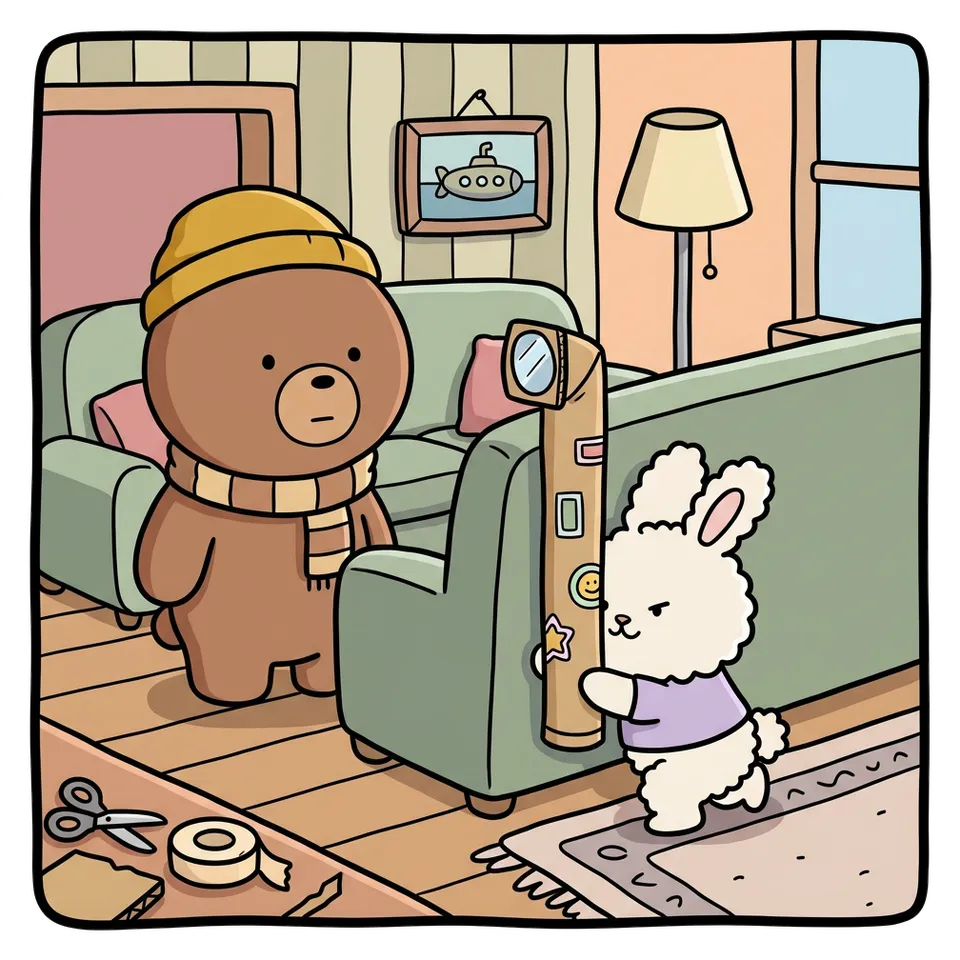
Stick two mirrors at 45 degrees inside a long box to make a periscope that lets you see up and down. When it is done, hide and peek outside with it.
Why it's good
A game where children check for themselves that you can see everything even while hiding. How one question leads all the way to making something and checking it is what makes this game worth it.
How to play
A child looking at a picture of a submarine poked at the tube sticking up on top. “What was attached up here?” That one question turned into making something. A grown-up does the part up to cutting with the knife, and the child is left to decorate the outside.
The first thing they do when it's done is hide. Crouching behind the sofa, their eye level is blocked and they can't see anything, but when they raise just the tube, everything beyond is visible. They bragged that they knew exactly where I was. All I could see was the end of the box.
When they hold it upside down, this time they can see toward the floor. “I can see down there too,” they said, and went around looking under the sofa and under the bed.
Good to know
- The angle you lay the mirrors at is everything. Make one hole each at the top and bottom of a long box, on opposite sides, and stick a mirror laid at 45 degrees on the inner wall opposite each hole. If you stand them straight up facing each other, it's pitch dark inside.
What you'll need
Long box · Two mirrors