Play Ideas with Magnifying Glasses
When you buy a child a magnifying glass, they are thrilled and press it right up against their eye, like glasses. Then they can't see anything, and by the next day it has gone into a drawer. Just tell them it goes toward the thing they want to look at, not toward the eye, and from then on it never leaves their hand.
This page was translated by Yeparksam, a preschool teacher in Korea. Some words may sound a little unusual — thank you for your understanding.
Printables to use
See more ›
Looking at Flowers
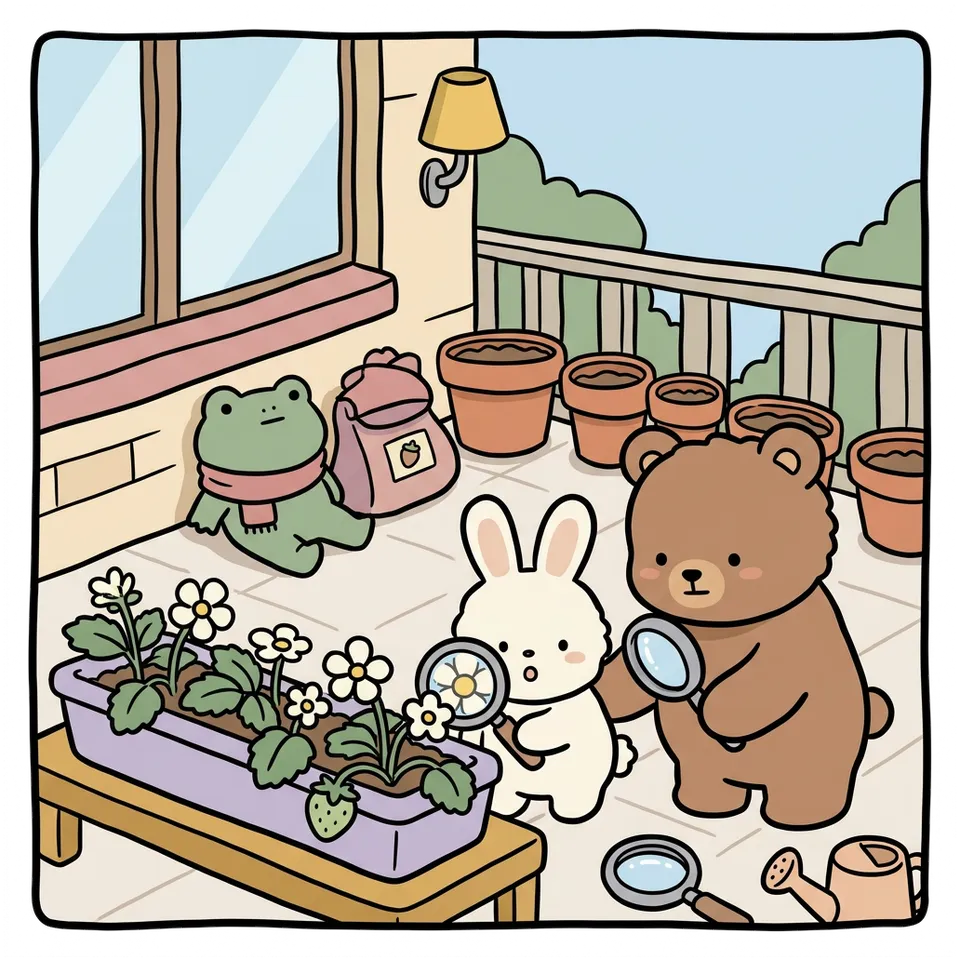
Hold a magnifying glass up to a flower and look closely. It looks much bigger than it does to the eye, and the child puts into words what they see right then.
Why it's good
Children turn what they see into their own words, then and there. No difficult explanation is needed. If a child looks at a petal and says “This is pink pink,” or finds the pointy bit in the middle and says “Pointy,” that is enough. These aren't words said to get an answer, just words spilling out about what they see, so even two words means the play is done.
How to play
A child who gets a magnifying glass first presses it right against their eye. Then they can't see anything and pull back. Tell them it goes toward the thing they want to see, not toward the eye, and from then on it never leaves their hand.
A child looking at a strawberry pot said “The flower is small,” and a child nearby, who had been looking at a toy frog, held out their own magnifying glass without even being asked. The child who took it and tried it changed expression right away. “It's so big,” they said, then grabbed the child who had just handed it over and told them what to do. “You try it like this.”
After looking for a long while, a child said “When the strawberry flower falls off, a strawberry comes,” then put the magnifying glass down and started counting the strawberry leaves. The hand that had just been holding the magnifying glass was now pointing at leaves.
Good to know
- You need two or three magnifying glasses. With only one, the day's play ends up being a fight over who looks first.
- When a child says they can't see, the child next to them tells them before an adult does. A child who has just got the knack holds their own magnifying glass out toward the flower and shows them, “Like this!” Wait a moment before you step in.
What you'll need
2–3 magnifying glasses · Flowering potted plants (or a flower bed)
Finding Earthworms on a Rainy Day
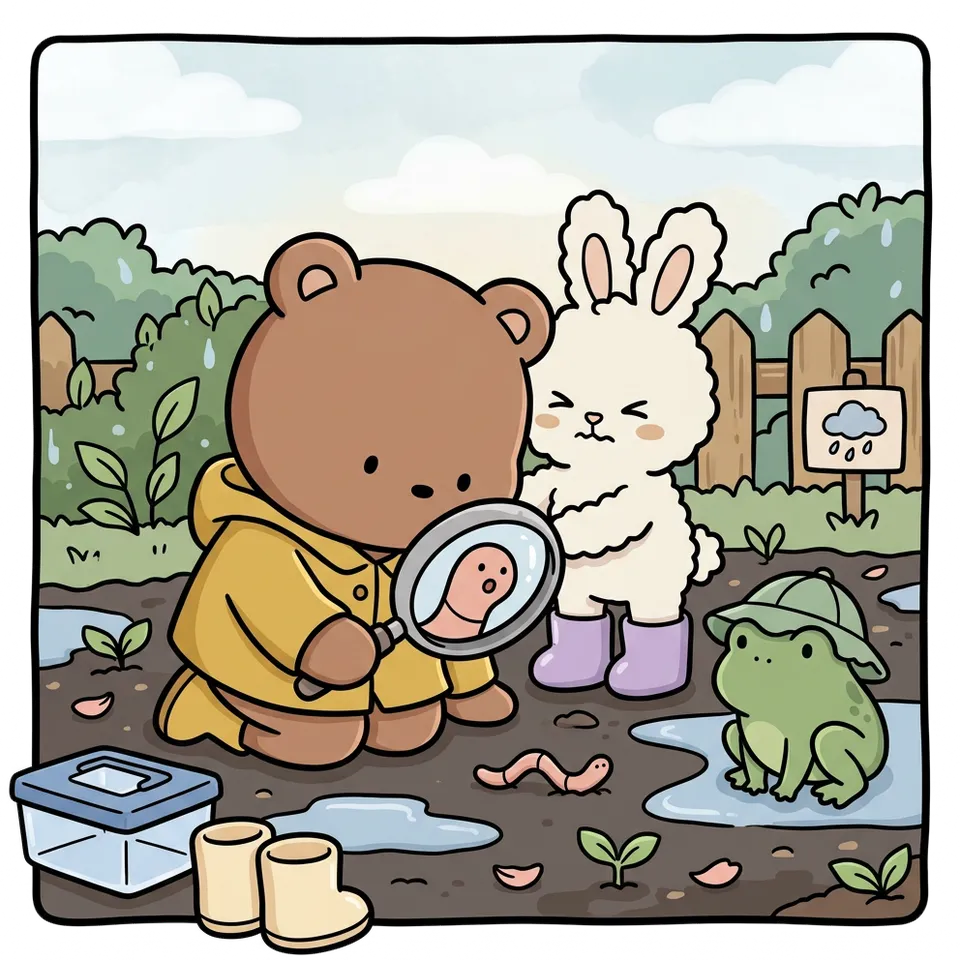
The morning after the rain stops, take a magnifying glass outside and look for earthworms and snails. More often than not, you don't find any when you get out there.
Why it's good
It helps children practice accepting, on the spot, that things don't go the way they hoped. On days they come back without finding any, they accept it once they hear the reason. On days they do find one, instead of being scared they step up and say they will protect it.
How to play
There is always one child who saw an earthworm on the way in, and a child who hears that gets curious too and says let's go out and look. Before even going out, one child says “If we want to find ants and earthworms, we need a magnifying glass!” and grabs the magnifying glass first.
Once outside, they usually can't find any. When the rain stops and the sun comes out, the earthworms and snails go back into the soil. When they ask “Where did the earthworm go?” or “Why are there no earthworms or snails?”, I tell them that.
There were days we did find an earthworm. A child called me over to see it, and when I said it was a bit icky, they said “I'll protect you,” and pulled me along by the hand. I was busy being led around that day.
Some days children bring a snail back in a container. Telling them not to shake it doesn't work very well. Instead, I say it must hurt and ask how they will take care of it, and the child comes up with the answer first. “Give it lots of food,” one said.
Good to know
- The morning after the rain stops is the day for this play. One day later and they are gone.
- Wash the hands that touched them before going back in.
What you'll need
Magnifying glasses · A container to hold finds
Making Color Magnifiers
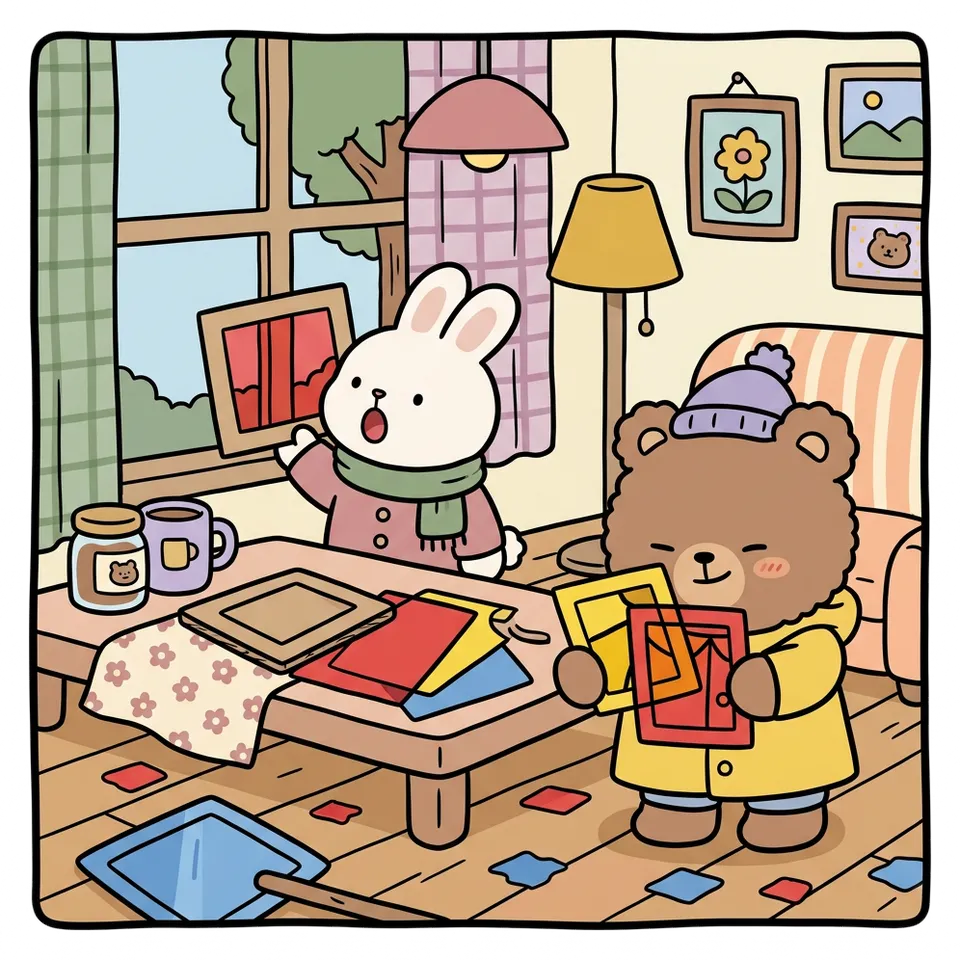
Poke holes in thick paper and stick cellophane over them, and it becomes a color magnifier. As soon as it's made, the children run to a window or out to the sky to see the world look different.
Why it's good
Children check that the world looks different through something they made themselves. It doesn't even magnify more than a real magnifying glass, yet children always use this one longer.
How to play
I only cut the cellophane and leave the rest in the child's hands, because it is thin and easy to put in the mouth. If you attach a handle, it is easier to carry around.
A child who stuck on red cellophane looked out the window and said “Wow~ It looks red!” Then they looked up at the sky and called out “The sky looks red too!”
A child who layered red over yellow quickly noticed, “It's orange.”
On a day when it was too bright to go out, the children each picked two color magnifiers and said let's go out. Looking at the sky, they were amazed, “I can open my eyes!”
The play starts again even after they put them down. If you leave them anywhere in the sun and go off to other play, when you come back, blue marks and red marks are left on the floor. The child finds them first and calls me over.
Good to know
- On a bright day, children sometimes look at the sky with these for a moment. They only reduce the glare, so they are not something to wear for long. Let children put them down after a short look.
What you'll need
Thick paper · Cellophane in several colors · Sticks for handles
Putting Ants on Paper
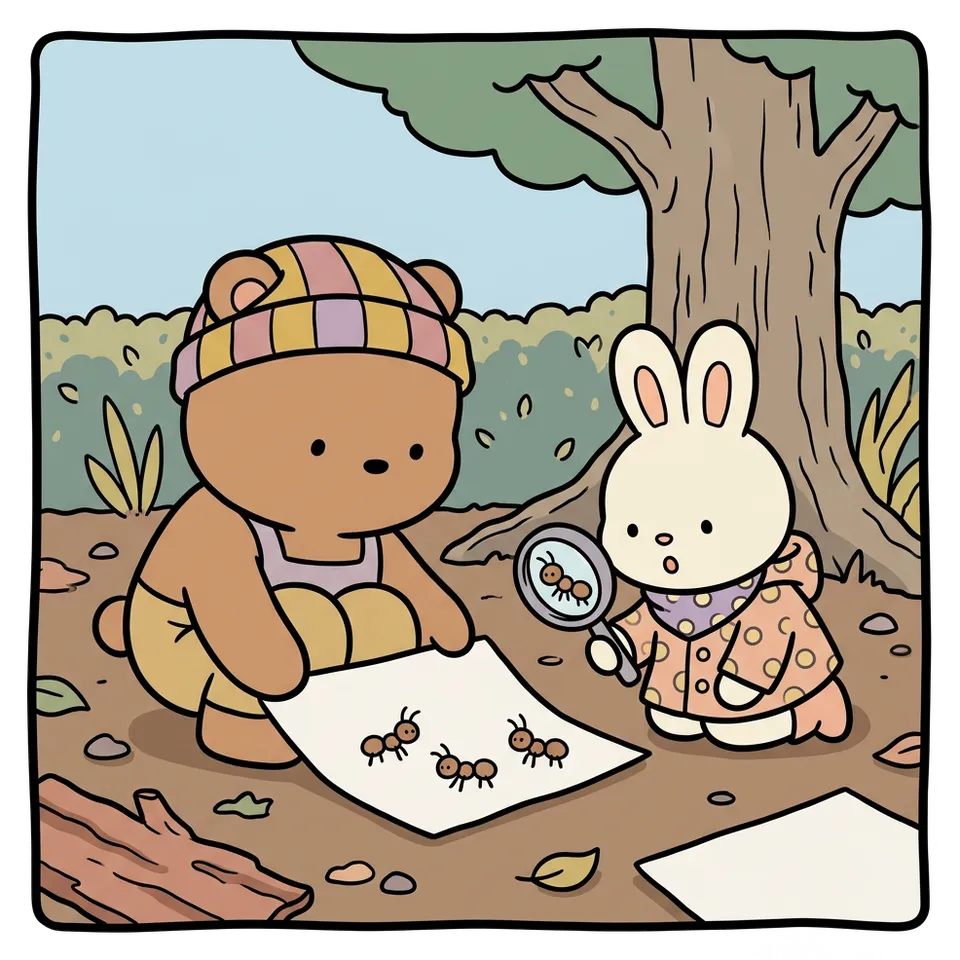
Slip a sheet of white paper in front of an ant so it climbs on, then look at it through a magnifying glass. A black speck on the dirt turns into an ant with legs and antennae and all.
Why it's good
Children find on the paper what they couldn't see in the dirt. A child finds it on their own, “The head and the body are separate.” An ant's body has three parts and a narrow waist in the middle, and that joint, invisible in the dirt, jumps out on the paper.
How to play
One sheet of paper is all you need. Ant and dirt are both black, so without the paper, looking just makes the dot a little bigger. The moment it climbs onto the paper, the child shouts first, “It looks so big,” “I can see lots of legs.”
A child moves their arm up and down, saying “I can see well here,” “I can't see here,” and finds just the right distance on their own. A child who has found it once starts from that distance whatever they look at next.
An ants' nest turns up inside tree bark too. One day a child touching the bark said “The bark is like a puzzle,” and carefully peeled off one piece. Ants came streaming in and out of the gap. “Wow, an ant house!” they shouted, then stayed glued to it for a long time saying “They go in the little hole,” “They carry food.” We covered the peeled bark back over and left.
On the paper too, the ant keeps walking without rest. At the edge it sometimes turns around, and sometimes it just walks off the paper. A child watching an ant go down into the dirt waved and said “Bye, go safe!”
Good to know
- It is better not to teach children about the focus. Too close and it gets blurry, too far and it gets small. Let the child move their arm and find the distance on their own.
What you'll need
Magnifying glass · White paper
Finding Bugs from Far Away
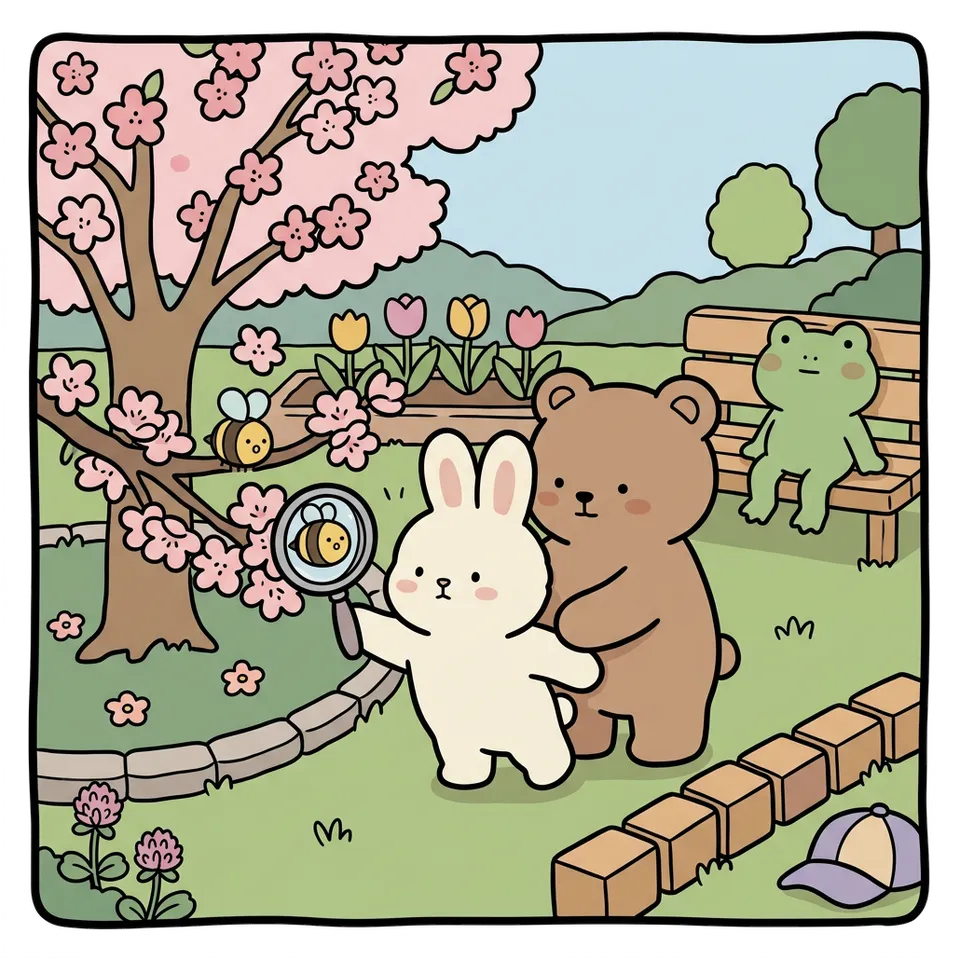
A magnifying glass makes things look big, so you can look at bugs without getting right up close. Both a child who is afraid of bugs and a fearless child who gets dangerously close keep their distance this way.
Why it's good
Children check that they can see without going close. A child who had not wanted to go outside because of bugs walked at the very front that day. What scares them isn't the bug, it's the bug coming toward them, and holding a magnifying glass creates distance, so they feel like looking.
How to play
Children who had been climbing up on tall rocks and pushing through the grass with their hands to find insects stopped right where they were as soon as they held a magnifying glass. They didn't have to go closer, so there was no reason to go anywhere dangerous.
Still, that day we only saw bees. Flowers were out on the tree and we saw a few bees, but no ants or butterflies. When I asked how it was after we came in, a child said “I was scared, but the bee was small and cute,” and “I hope we see a butterfly next time.”
The disappointment didn't just pass. A child said if bugs don't come, we can call them, and started joining wooden blocks in a line. They said they were making a path so insects could come. Even after finishing, they couldn't let go, straightening the bends and reconnecting the broken places.
Good to know
- Half of this play is not how well you can see but how little you need to go close. It is needed for the same reason by timid children and by fearless ones.
- Choose a magnifying glass with a neck cord. A magnifying glass is the thing most often lost on walks.
What you'll need
Magnifying glass with a cord
Discovering Snowflakes
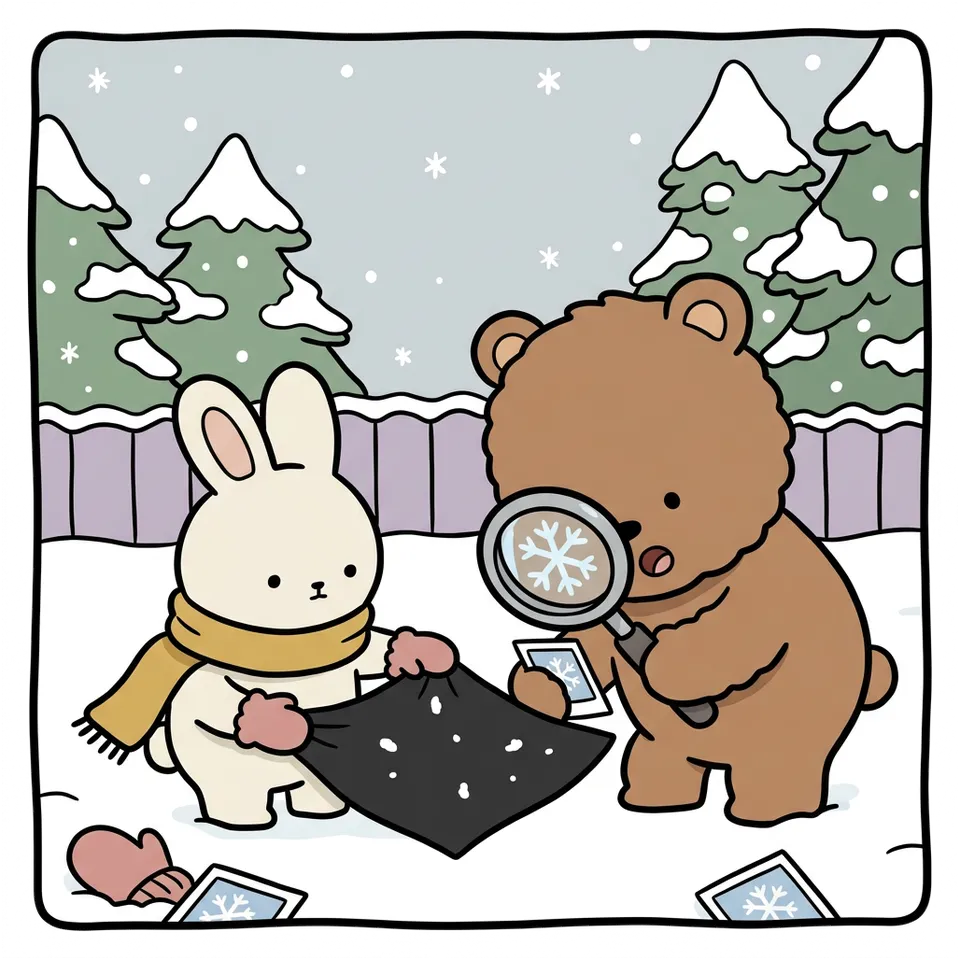
On a snowy day, catch snow on black cloth and look at it through a magnifying glass. The colors you see every day look flipped.
Why it's good
Children experience something they knew flipping, right on the spot. The moment of surprise, “Huh? It's not white, it's clear,” is the whole play. A color seen every day flips with just one magnifying glass.
How to play
Dress them in everything, gloves and scarf included. If their hands get cold, they will soon say let's go in. To catch the snow, instead of their palm, give them a piece of black cloth to catch it on. On bare hands it melts the moment it lands.
I brought a few photos of snow crystals out with us. A child who tried the magnifying glass shouted, “Usually snow looks round, but with the magnifying glass I can see snow flowers!” The moment a child, photo in hand, searched the snowy ground and called out “I found one just like this!” was the end of that day.
Good to know
- You need to go out while the snow is falling. You only see the snow flowers if you catch falling snow on the cloth.
- Each grain is clear, but piled up in layers it looks white. That is because they bounce the light around. If a child asks “Why is the color different?”, you can tell them this.
What you'll need
Magnifying glass · One piece of black cloth · Photos of snow crystals
Holding It Up to Faces and Laughing
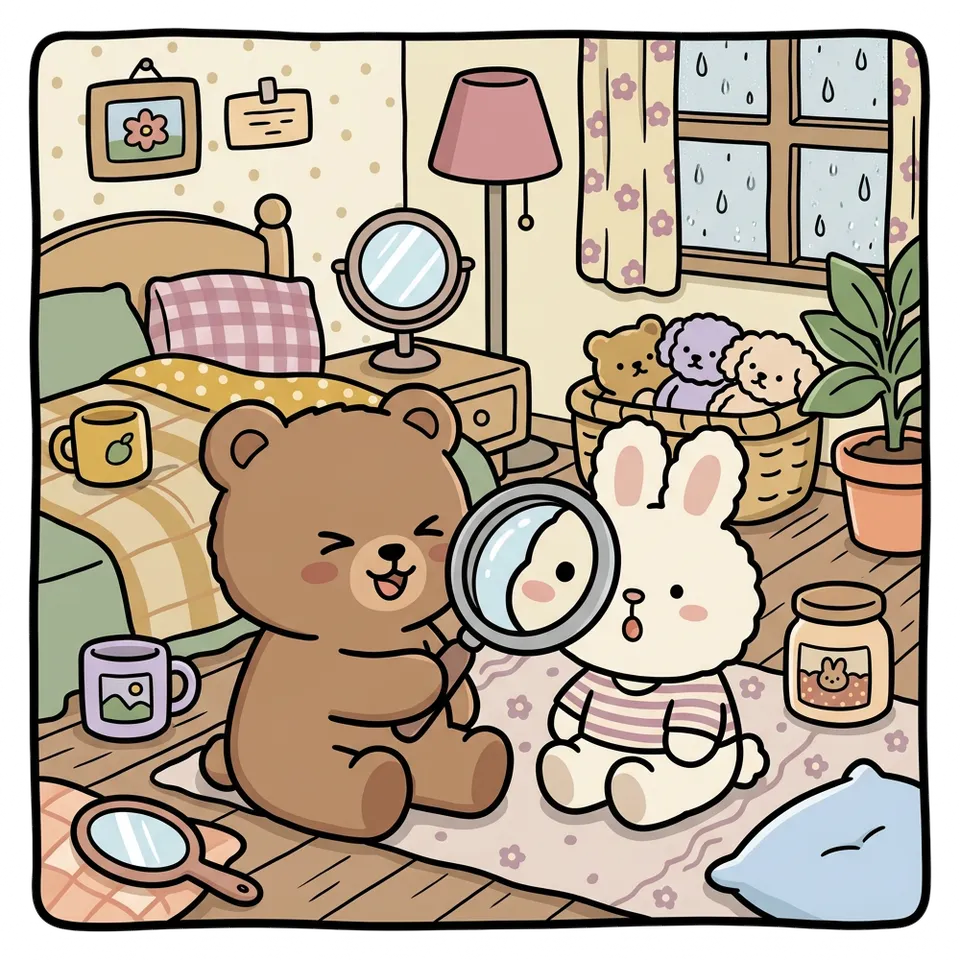
Put a magnifying glass next to a mirror and look at your own face, then the face of the person beside you.
Why it's good
Children find what they can't usually see and laugh right there. They say “My eye looks bigger,” then find “There's a mole,” and finally burst out laughing at “I can see your nostrils.”
How to play
A child looks at their own face first. They hold eyebrows and front teeth up close one by one, and when they have looked enough, they move on to the person next to them.
A child who had been looking at a picture on the wall for a long time suddenly turned and said “What shall we look at this time? Bori, your face looks so big.” There is no particular reason to move from looking at things to looking at people.
Have them hold the handle and approach slowly. When they get excited, they get so close they nearly poke you with the lens, and then I gently move it away.
Good to know
- If there is no one to look at, offer your own face. Anyone sitting across looks equally funny in front of a magnifying glass.
What you'll need
Magnifying glass · Mirror
Who Took It?
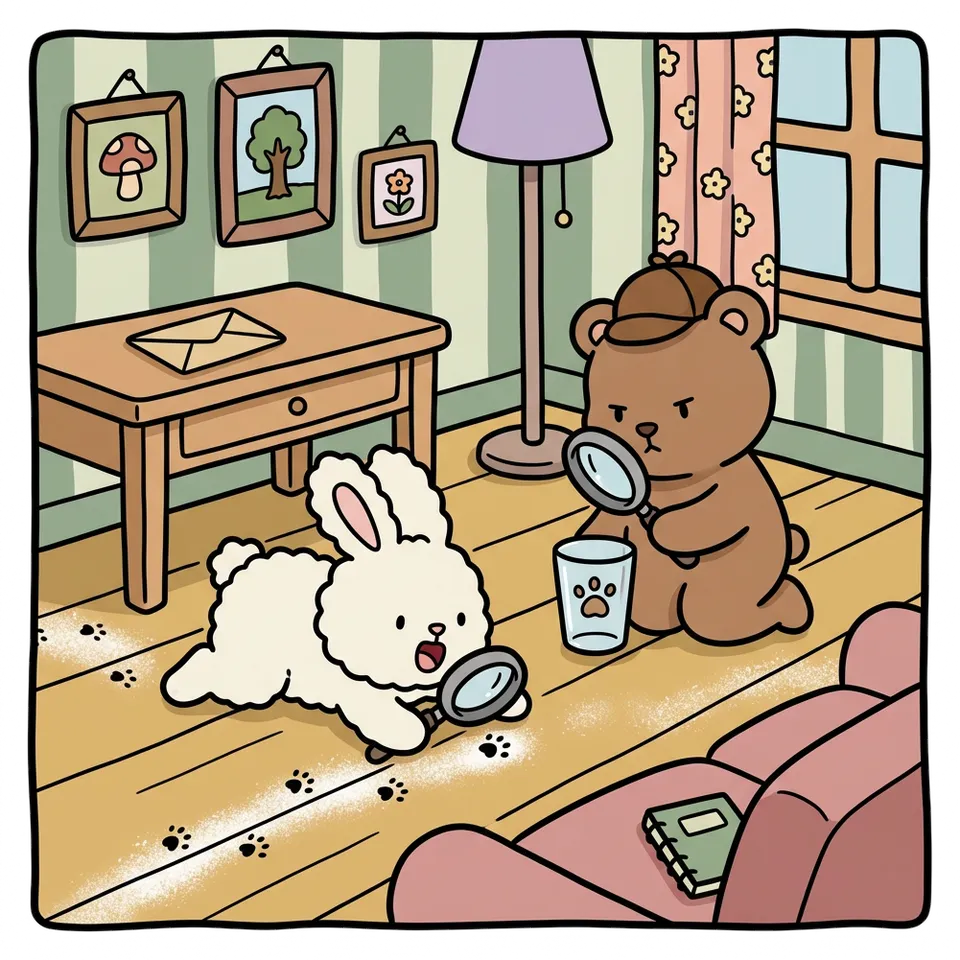
Secretly hide something and the children look for clues to name the culprit. They search for footprints and fingerprints with a magnifying glass.
Why it's good
Children make up a plausible story from clues that aren't there. If you ask why they think so, they give their own reasons. The value of this play is in giving a reason, more than in being right or wrong.
How to play
One day a letter a child treasured vanished without a trace. When I said it had been in their hand a moment ago and now they couldn't see it, everyone's eyes went round, and the next moment they began searching the whole room. One child crawled along the floor with their nose down and shouted “There are footprints here!” At that one word, everyone grabbed a magnifying glass and crawled across the floor.
We also set up a few suspects. We put up photos of a market lady, a police officer, and a mail carrier, and at first they were careful, “All three could be the culprit,” but in the end they pointed firmly, “The police officer is the culprit!”
You don't have to reveal the culprit. I never gave the answer that day. The next morning they looked for the magnifying glasses before even putting down their bags. Then they announced it was their turn to hide something.
Good to know
- The clues must be too small to see without a magnifying glass. Sprinkle a little flour to make footprints, or press handprints on a glass cup. If it is visible to the naked eye, it isn't play, it's an errand.
What you'll need
Magnifying glasses · An item to hide · Clue materials (flour, glass cup) · A few photos of suspects
Printing and Comparing Fingerprints
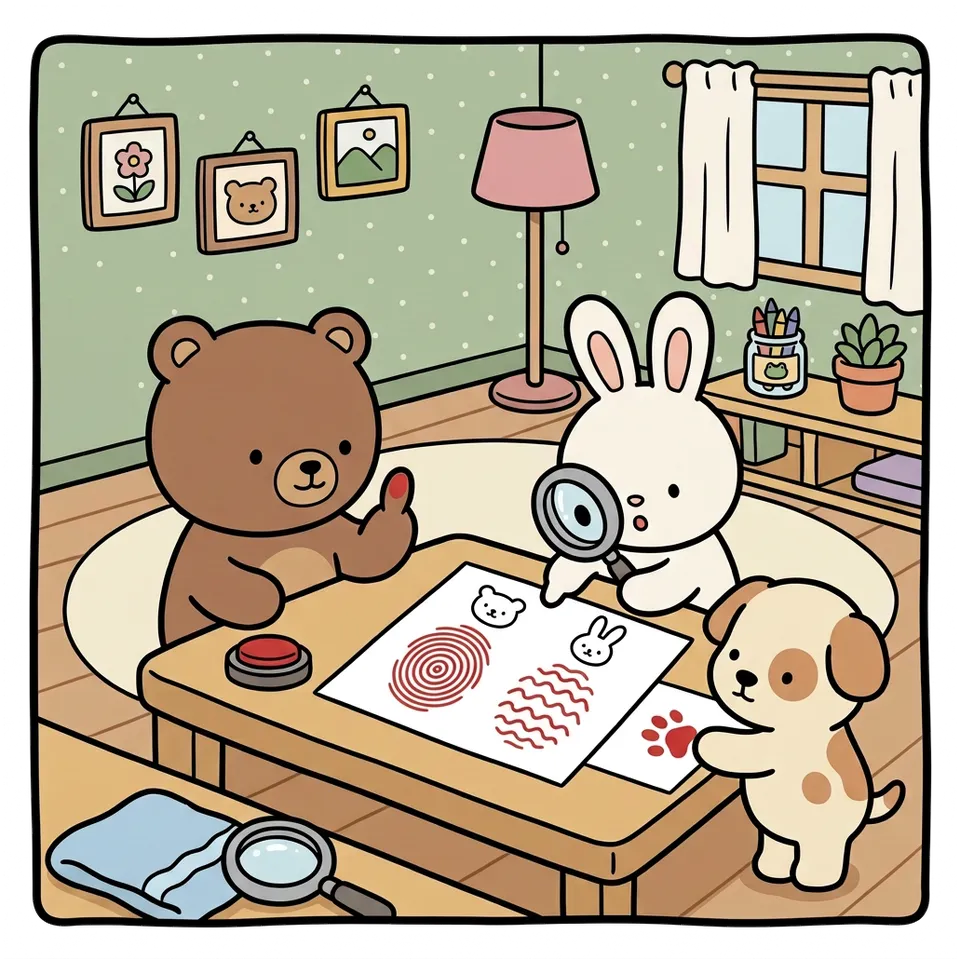
Look at your fingerprints through a magnifying glass, then press them in ink and compare them side by side. It's the hand you see every day, but you've never seen the fingerprints before.
Why it's good
Children see with their own eyes that they are different from others. They even go on to compare their own prints with someone else's. If you tell them even twins have different fingerprints, they don't believe it, “Really? They look exactly the same?”
How to play
Put the child's fingertip under the magnifying glass. They are surprised, “Huh? There are lines,” then move over to the fingernail and say “The nail looks so big.”
If I tell them you can tell who someone is by a fingerprint alone, without a name, the child pulls my finger over next. They put them side by side and find the difference first, “Mine is a circle and this one is waves.”
Just holding it up to look gets boring fast, so we print them. Press a finger on the ink pad and then onto white paper, and the pattern stays as it is, and looking at the print with a magnifying glass actually shows it better than holding it to the finger. From then on they print all ten fingers.
Laying the prints out side by side and comparing them is the real play. Only then do they realize even their own ten fingers are different from each other. They start giving them their own names, “This is a circle, this is a mountain shape.”
Good to know
- If you use washable ink, it doesn't matter if some gets on their hands.
- Let the printed paper dry and write the name on it. A child who takes it out again a few days later is amazed, “This was my finger?”
What you'll need
Magnifying glass · Ink pad · White paper
Rubbing Coin Patterns
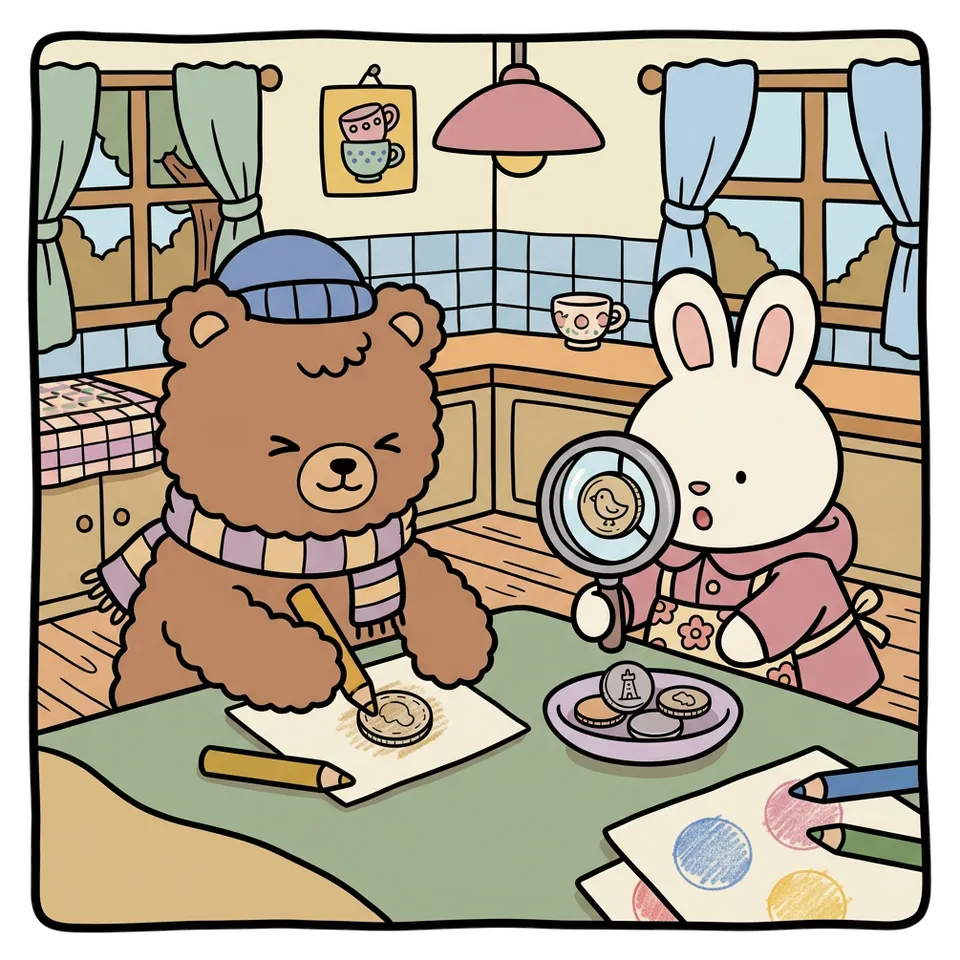
Look at a coin through a magnifying glass, then lay paper over it and rub with a colored pencil to copy the pattern exactly.
Why it's good
Children do something they couldn't do by drawing, in a different way. Patterns that a child couldn't draw by hand even with their eyes right up to the coin come up just as they are when they cover it with paper and rub. It wasn't drawn by them, but it feels like they drew it, so the child writes their name beside it.
How to play
Ten, fifty, one hundred, and five hundred won coins, four in all, are enough. Put them on a plate and show them with the magnifying glass. The ten won has a pagoda, the fifty won has ears of rice, the hundred won has a person's face, and the five hundred won has a bird. A child looking at the five hundred won shouts first, “Look at this, there's a bird!”
When you tell them to draw it just as it is, everyone struggles. They can manage the round edge, but not the letters and patterns inside.
This is when you lay paper over the coin, tilt the colored pencil on its side, and have them color gently. The pattern comes up as they color. The pagoda and rice ears they couldn't draw a moment ago show up on the paper. When they finish, they hold up the paper and show each other. “Mine came out darker!” they say.
Good to know
- Small coins can be swallowed by a younger sibling, so after play put them out of reach.
What you'll need
Magnifying glass · Four kinds of coins · Paper · Colored pencils
Making Water Drop Magnifiers
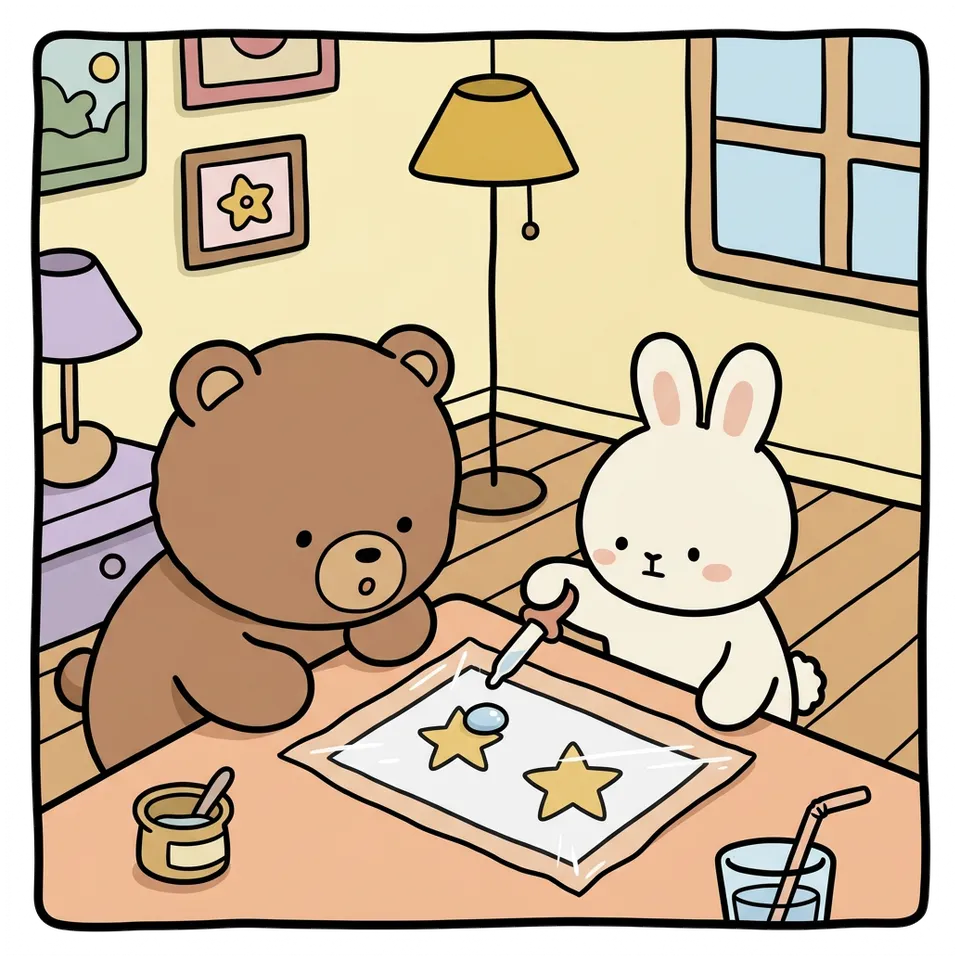
Drop a drop of water onto plastic wrap and check that the drop makes the letters underneath look bigger, like a magnifying glass.
Why it's good
Children come up with the answer to why on their own. One child said “The water drop looks like a magnifying glass,” then “So it looks bigger,” and the child next to them chipped in, “Maybe the light bends.” Both were roughly right.
How to play
Cover newspaper with plastic wrap and place one drop of water on it, and you have one more magnifying glass. Only the letters under where the drop sits leap bigger. The rest stays the same and only that spot grows, so a child seeing it for the first time rubs their eyes.
The trick is to put two of the same picture side by side and drip on only one. Two pictures that were the same size a moment ago suddenly differ. “Huh? It's getting bigger,” said a child, and looking back and forth between the two pictures, “One side is getting a little bigger.” I only gave it one name. Water magnifier.
Good to know
- The magnification changes with the size of the drop. The smaller the drop, the rounder it gathers and the bigger things look; a large drop spreads sideways and flattens, so things look less magnified.
- If you don't have a dropper, a straw will do. Dip the end of the straw in water, cover the top with your finger, then lift your finger and a drop falls.
What you'll need
Plastic wrap · Newspaper · Water · Dropper (or straw)
Reading Snack Bags
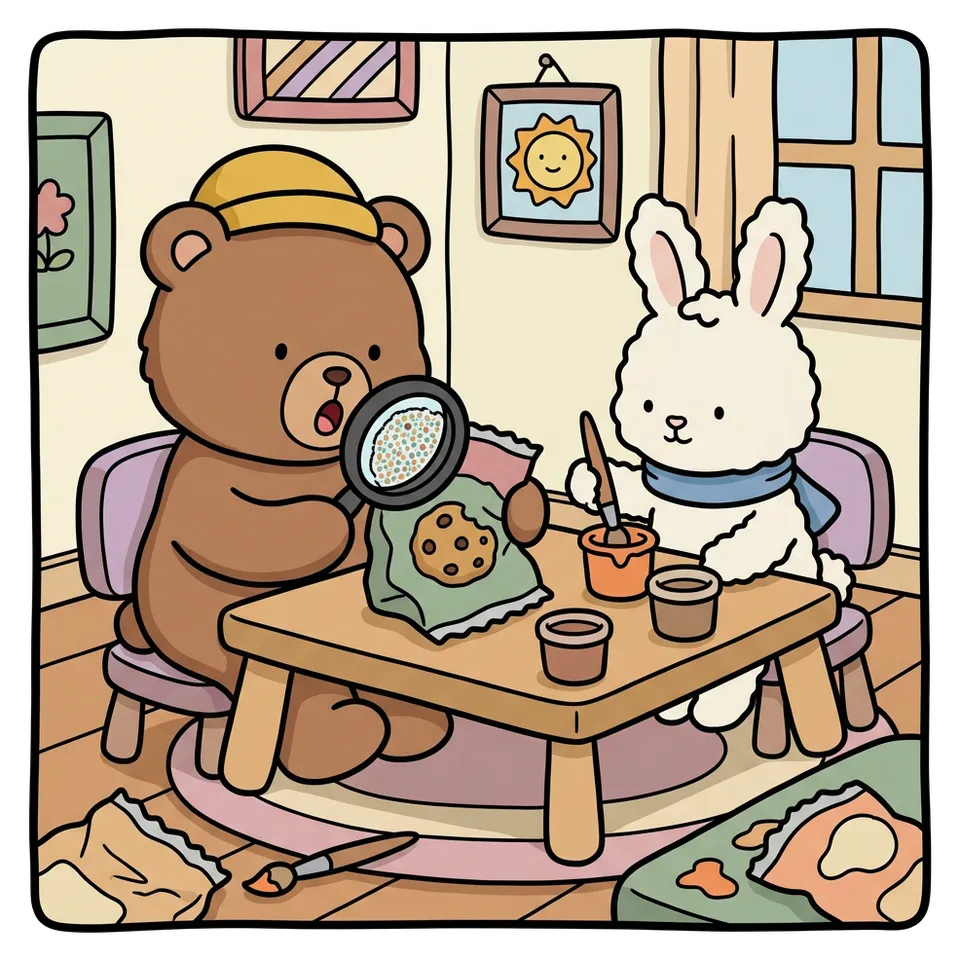
Look through a magnifying glass at the tiny print on the back of an empty snack bag. The child dives in first at letters so small even a grown-up has to squint.
Why it's good
Children satisfy their curiosity about tiny print right there. They point with a finger and ask “Why is so much written here?”, and sometimes try to work out the answer themselves.
How to play
Don't throw away the empty snack bag, put it next to the magnifying glass. One child said “It says there's color in it,” and the child next to them asked “What's food coloring?” To check the answer with our bodies, we dripped in a few drops of paint to imitate the bag's color, and they shouted “Huh? It's really the same as the snack color!”
They reach out first. Even while doing a hidden-picture game, they ask for it themselves, “I can't see the small letters! Give me a magnifying glass!” On days an adult hands it over, they look a few times and put it down, but on days they pick it up themselves because they want to, they don't put it down.
I first held it up to the picture on the bag, but the colors only smeared and I couldn't tell what was what. When I held it to a newspaper photo, only then could I see the dots packed tightly together. What I had thought was a person's face was actually a picture made of many small dots. Once they have seen it, they bring every printed thing in the house.
Good to know
- Held up close, you can see the dots. For printed things like the picture on a bag or a newspaper photo, up close you see not colors but tightly packed dots.
What you'll need
Magnifying glass · Empty snack bag · Newspaper · Paint