Play Ideas with Leaves
You don't go out to buy leaves. Pick them up on a walk and that day's play is in your hand. They make a sound when stepped on, each one you pick up is a different color, and bringing them home starts more play.
This page was translated by Yeparksam, a preschool teacher in Korea. Some words may sound a little unusual — thank you for your understanding.
Printables to use
See more ›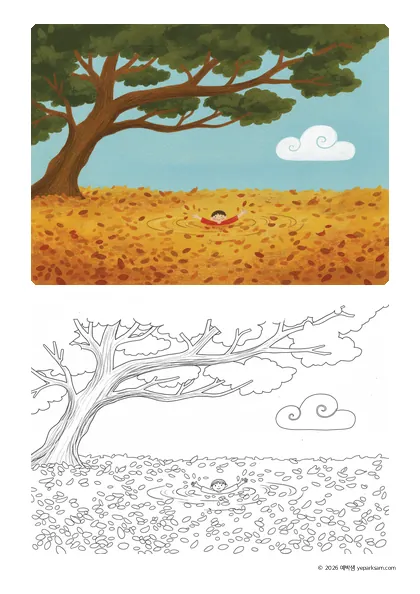
Stepping to Make Sounds
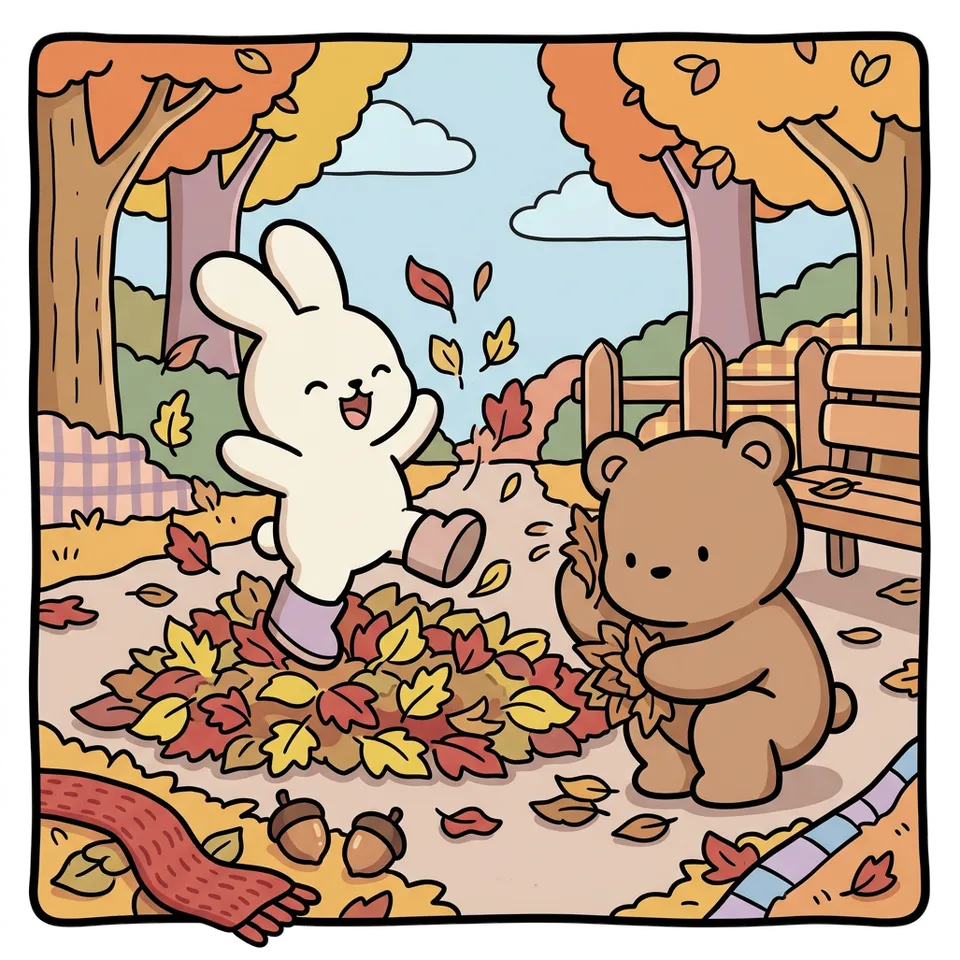
Pick a spot where fallen leaves lie thick and walk over them to listen to the sound they make.
Why it's good
A play of hearing the sound of stepping on leaves and putting it into your own words. What the ears hear goes straight into body and words. Running around chasing the sound also brings balance in movement.
How to play
The child spots the thickly piled leaves first. Each step makes a sound, so they pick only the thick spots on purpose. “Crunch, crunch~” they say as they walk, then rub the leaves by hand and laugh, “It rustles!”
Since the sound keeps coming, they just start running. When they even see the leaves fly up, they run more excitedly. If I scoop up leaves with both hands and toss them up, they play one more round, reaching out to catch them as they fall, though they can't catch them well.
Good to know
- The day after rain, pick dry spots. Wet leaves are slippery and don't make much sound.
What you'll need
Fallen leaves
Picking Up Leaves by Color
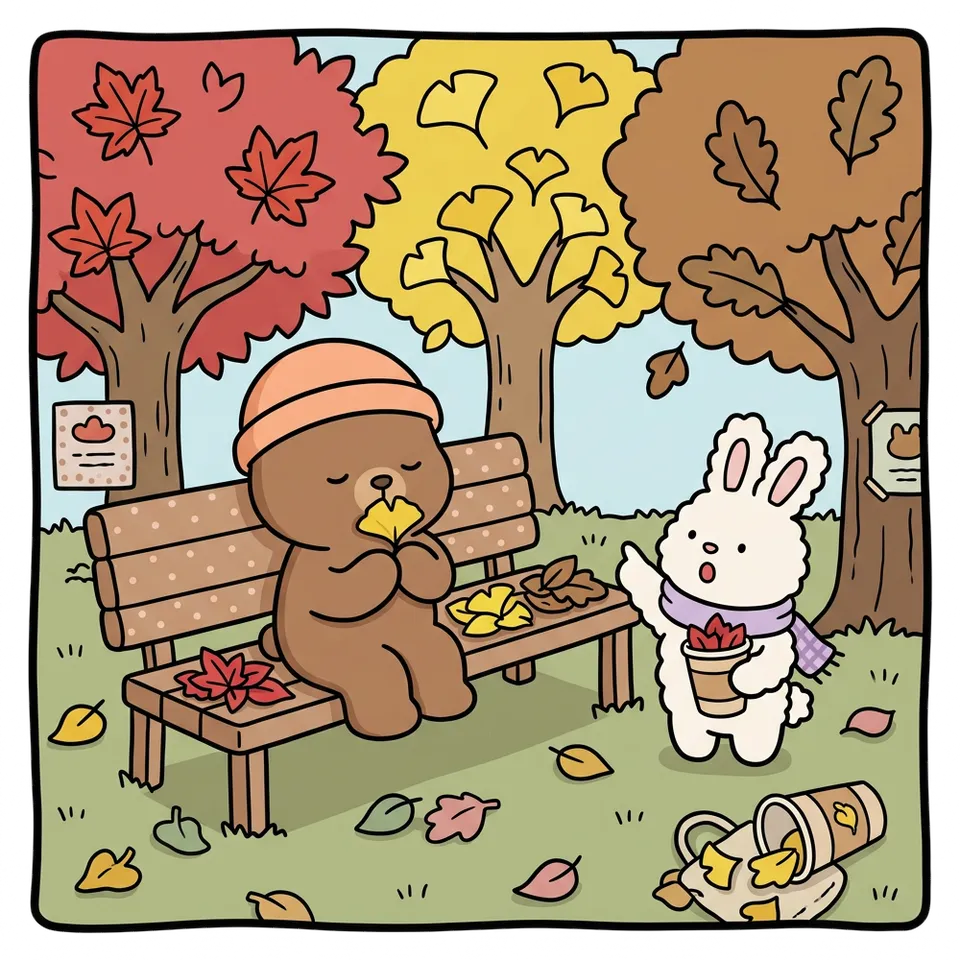
Hand the child a bag or paper cup, and from then on they gather leaves by color.
Why it's good
A play of noticing that each leaf has a different color and finding and gathering the same colors. They compare with their eyes and sort, and also feel color through their senses by touching and smelling.
How to play
Hand them a bag or paper cup and they start picking right away. They quickly notice that the colors are all different, saying “Red~ yellow~” and then pointing at a tree, “It's brown, brown.” If you suggest gathering the same colors together, they sort for a long time.
Touching is play too. “It's scratchy,” “This one broke,” they say, and a child who sniffed one said “It smells yellow.”
If you ask why they fall, answers come. “Because it's cold~”, “Because the wind blows!”, they answer.
Good to know
- Don't pick them up ahead of time. Just bring one bag when you go out. Picking is part of the play, so if you fill it beforehand, half of it is gone.
- Shake the leaves off once before using them. Dirt and bugs come along.
What you'll need
Fallen leaves · A bag or paper cup
Waving to Make a Breeze
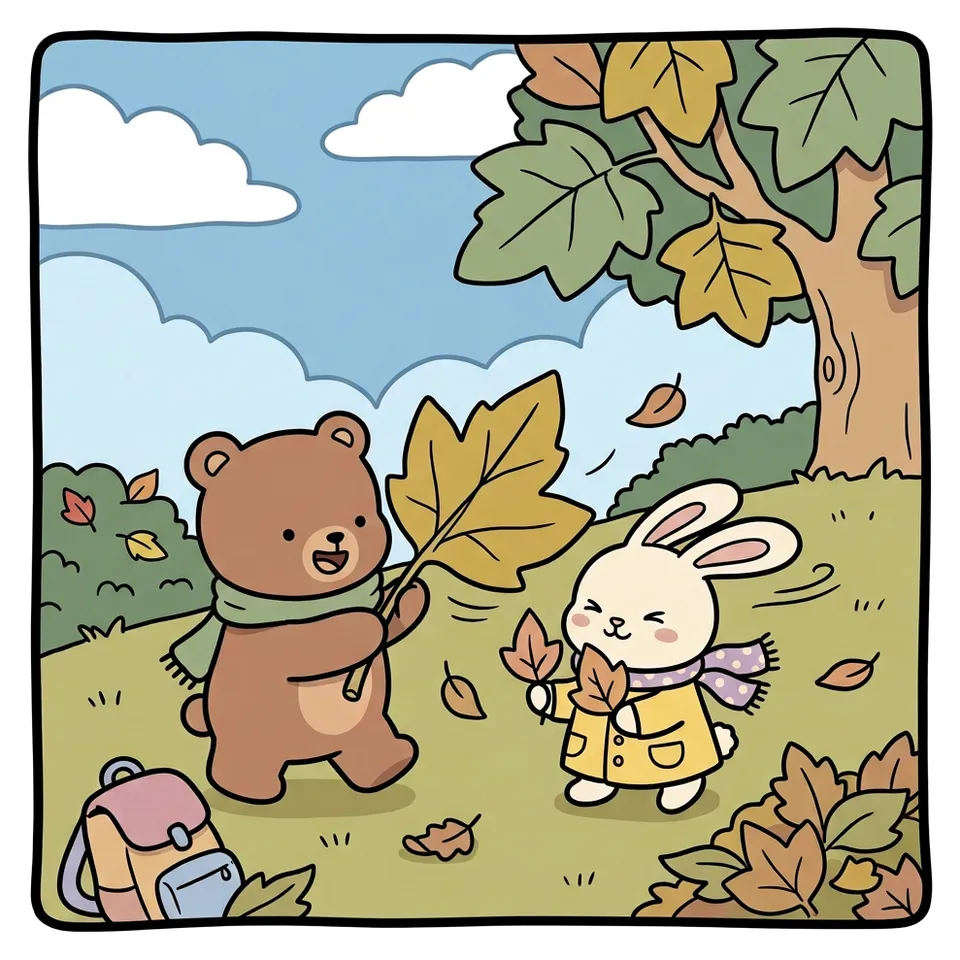
Hold a few big leaves and shake them to make wind.
Why it's good
A play of feeling the wind made by waving leaves right on your face. While holding and waving them, the arms and the whole body follow the motion.
Books to read together


How to play
Gather a few big leaves in your hand and wave them, and you get a breeze. When I fan first, the child who feels it on their face says “Cool,” and holds out a hand to try it too.
While holding and waving, the body turns along. They hold a handful in each hand and spin around waving, and when they let go, they enjoy the leaves scattering. On a windy day, just holding one up is enough. They watch the leaf flutter by itself for a long time.
Good to know
- One wide leaf is enough. With big leaves like sycamore, you don't need to gather many to make a breeze.
What you'll need
Several big leaves
Tucking a Bug in with a Blanket
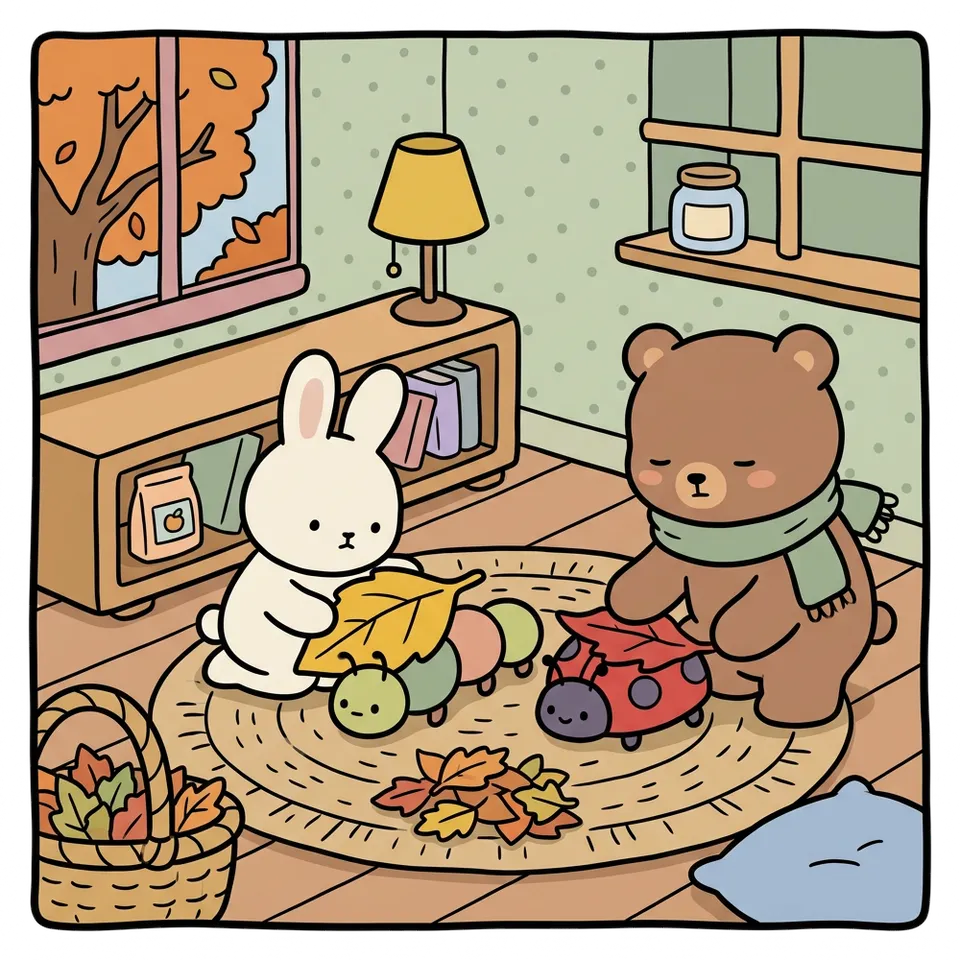
Put a small doll or insect toy on the floor and cover it with fallen leaves.
Why it's good
A role-play where the child uses leaves as blankets, gives reasons for covering, and even names things. They express a caring heart through play.
How to play
Set a small doll or toy insect on the floor, and after I cover it with one leaf to show how, the rest is up to the child. “The bug is cold so I have to cover it with a blanket,” they say, laying it on carefully, and a child nearby may nod, “It's warm.”
Once covered, that spot becomes a home. “This is the moth's room,” “This is the butterfly's house!”, “Ant room here!” they say, showing each other.
Good to know
- If you meet a real bug outside, just look; don't cover it. Setting a leaf beside it is enough for the child.
What you'll need
Fallen leaves · A small doll or toy insect
Making a Path on the Floor
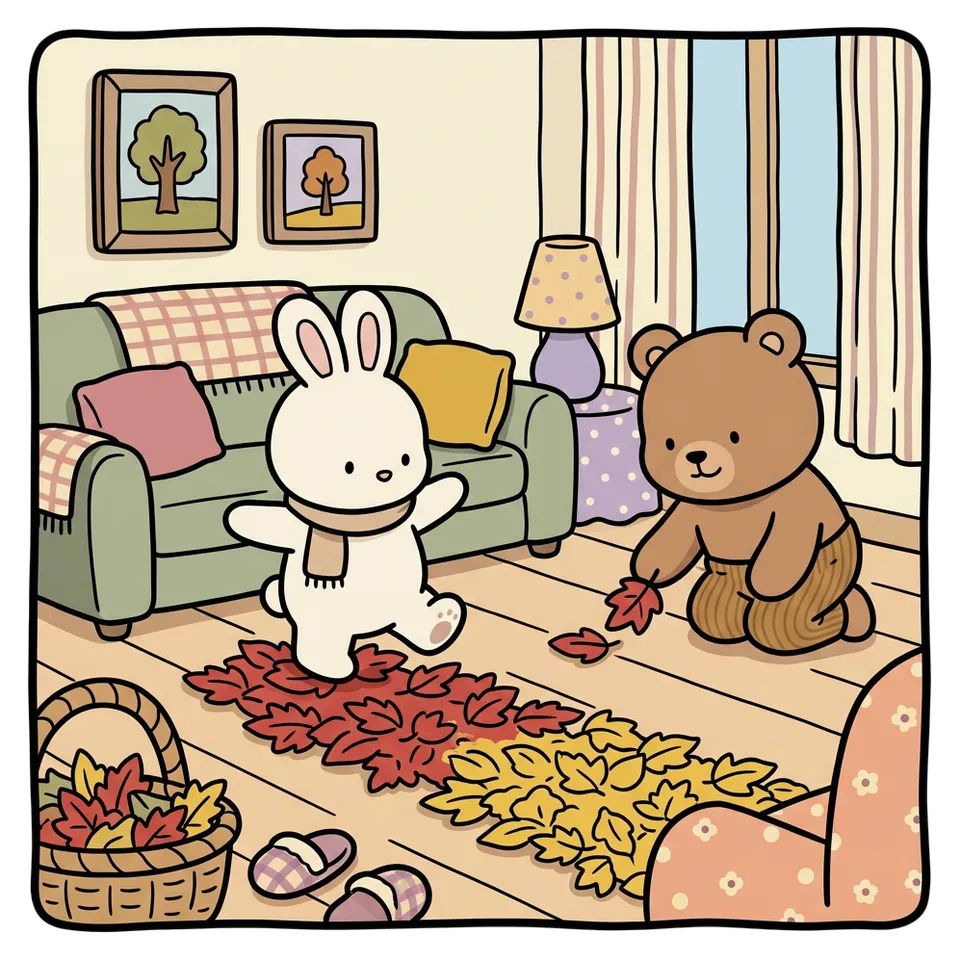
Line fallen leaves up in a row to make a path and walk only on it.
Why it's good
A play of connecting leaves into a path and keeping balance so as not to step off. They know right away whether they've left the path, not by eye but by feet and sound.
How to play
Lay leaves in a line and it becomes a path. Place it across the room and walk only on it. Stepping makes a sound, so to stay on the path they place each foot carefully.
They give the path a name. One child connected leaves and said “This is the flower path.” Ask where the path goes, and a story comes out.
Good to know
- If you divide the path into color sections, they play longer. With a red section and a yellow section, they call out the colors as they cross.
What you'll need
Many fallen leaves
Cooking in Play Dishes
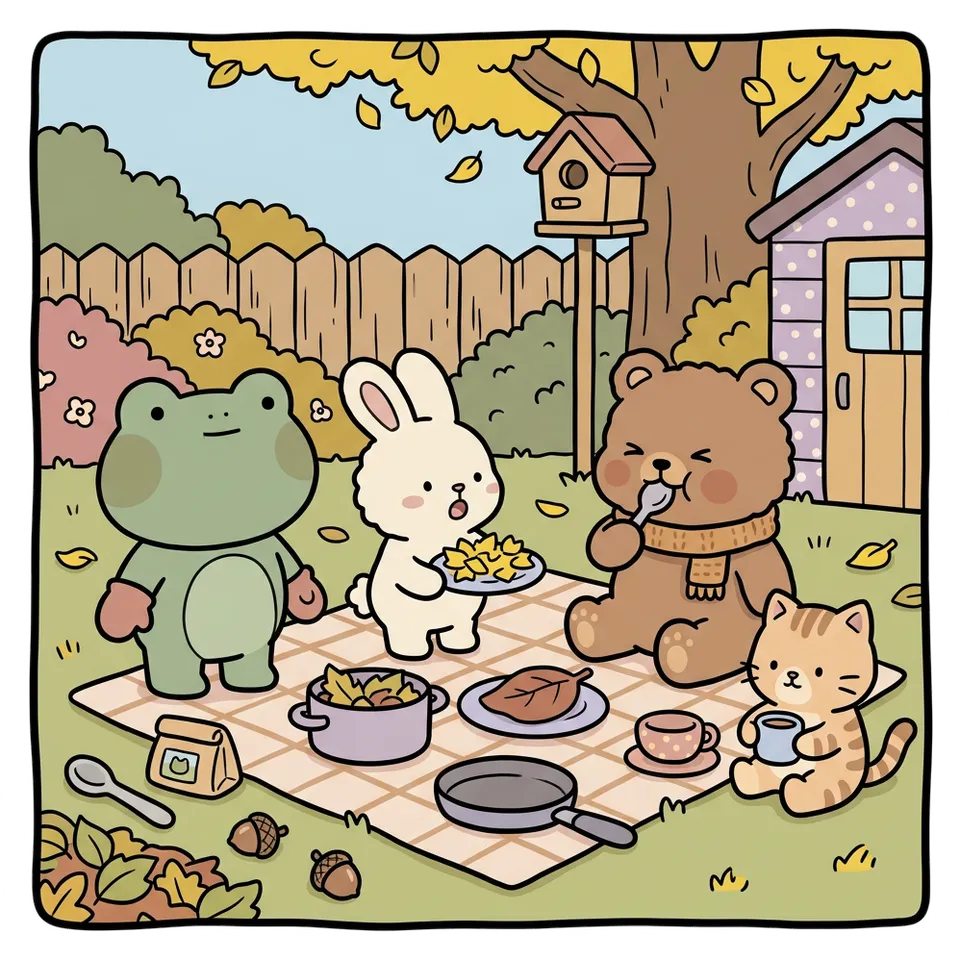
Put out toy dishes and spoons and the leaves become food, in this role play.
Why it's good
A role-play where the child treats leaves like real food and even names them. At first they just call it leaves, then name it themselves, and also choose which leaf is which food.
How to play
Just set play dishes and spoons nearby and the leaves become food. They put them in a pot and stir, and move them onto a plate. When asked what dish it is, at first they say “Leaves!”, but after being asked a few times they start naming it. “It's yellow leaf food, try it,” they said, handing it over.
They might bring a big leaf and put it on the plate saying “It's meat,” while small leaves are torn into bits to become rice or seasoned greens. If I pretend to eat, they keep bringing more, and when I ask how it tastes, a story starts.
Good to know
- Set wide leaves aside. Small leaves are torn into rice, but wide ones become meat or pancakes as they are.
What you'll need
Fallen leaves · Play dishes, spoons
Printing Leaf Patterns on Cloth
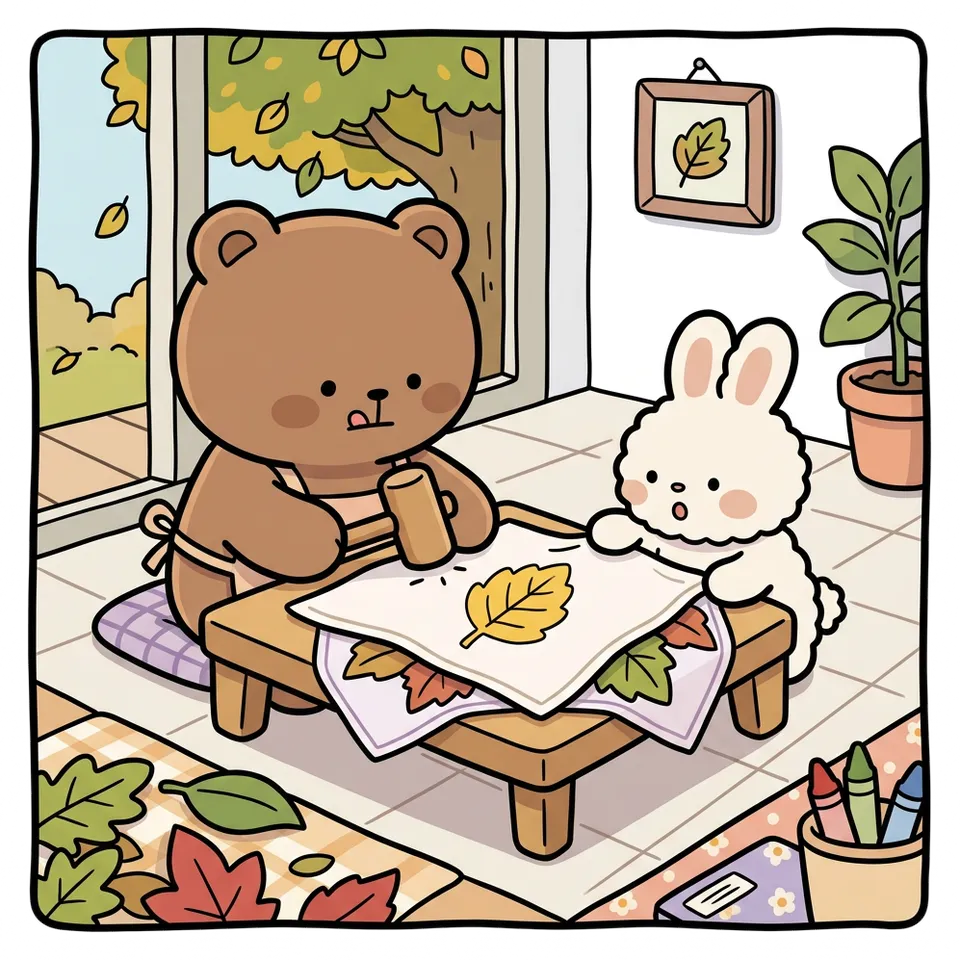
Lay leaves on white cloth and pound them with a hammer to print the patterns where the leaf juice seeps through.
Why it's good
A play where the color transfers just as you pound it and becomes your own pattern. They first guess, then pound to check whether it's really so, and see the leaf they chose become the artwork.
How to play
Put a leaf on white cloth and pound it with a hammer; the juice seeps out and prints a pattern. A gauze handkerchief works best.
You wonder whether it will come out, and it does. The moment the pattern appears is when the child is most surprised. “The color came out,” they call, and “The yellow leaf turned yellow,” they say, stopping mid-pound to peek. If you have them guess first what color will come, they pick one saying “I think this will be red.” When it's all done and the cloth is spread out, they say “It's the color of fall.”
Good to know
- The side where the veins stand out should touch the cloth for a clear pattern. Turn the leaf over so that side touches, then pound.
- A toy hammer works too. You can start even without a real hammer.
- Rubbing with colored pencils or crayons works too. Put a leaf under paper and rub with the side of the crayon laid flat, and the pattern rises up.
- The leaf must be one that hasn't dried out for color to come. Crunchy fallen leaves won't transfer color however much you pound. Leaves that fell recently or were picked from a flower bed work well.
What you'll need
Leaves · White cloth (gauze handkerchief) · Hammer (or toy hammer) · Colored pencils or crayons
Making Faces and Sticking Them On
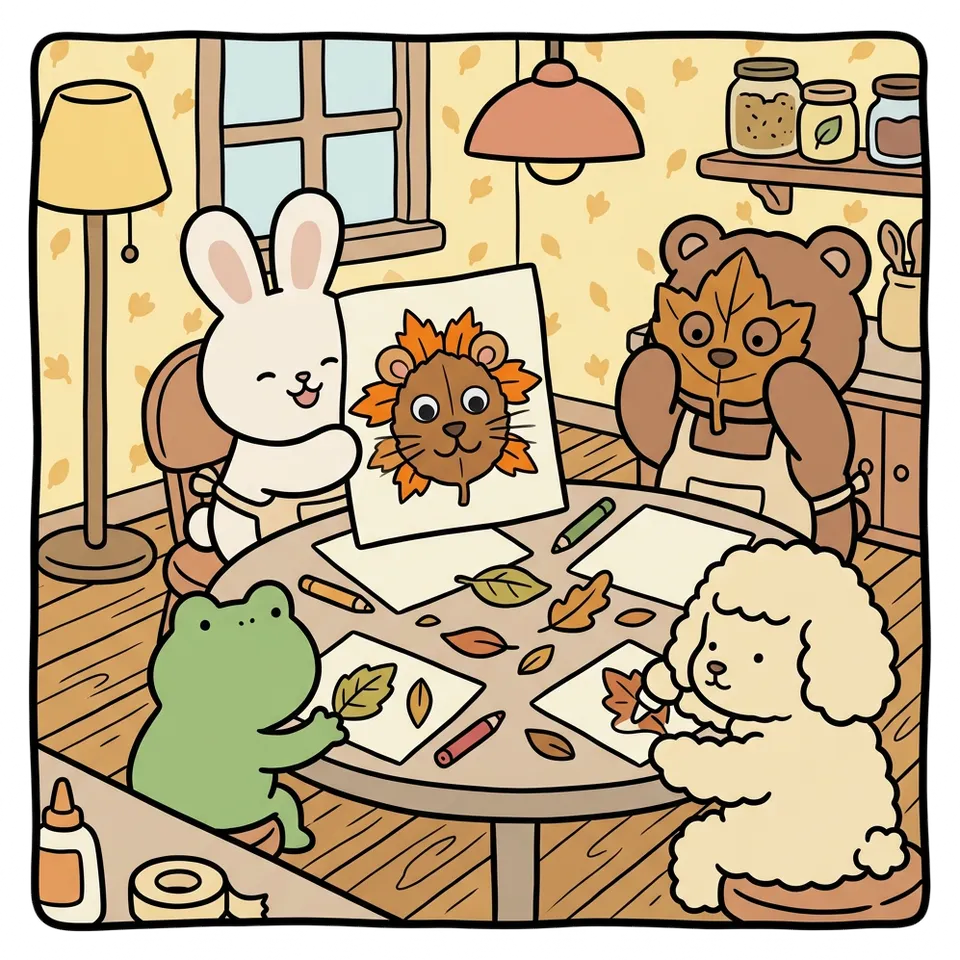
Spread the leaves you gathered out on paper and glue them down to make faces or animals.
Why it's good
A play of looking at the shape of a leaf and finding on their own what it looks like, then making it.
How to play
Spread the picked-up leaves on paper, and as you stick them on, ask what they look like. The child decides first, before sticking. “I'll make a lion face!”, “It's a butterfly!” they say. A lobed leaf is used as a mane, and two placed side by side become wings.
For eyes, stickers are fastest. They stuck on googly-eye stickers and drew a mouth with a colored pencil, then said “My leaf is smiling!” If you just punch eye holes in a big leaf, it becomes a mask, and they play peekaboo for a long time, hiding and showing their face.
Good to know
- Dry leaves crumble as you stick them. It's better to do it the day you pick them up, and if you'll do it later, press them between book pages. In a day or two they flatten and are easier to stick.
- Glue or tape is enough. You can start without special tools.
What you'll need
Leaves · Paper · Glue or tape · Googly-eye stickers · Colored pencils
Making a Headband
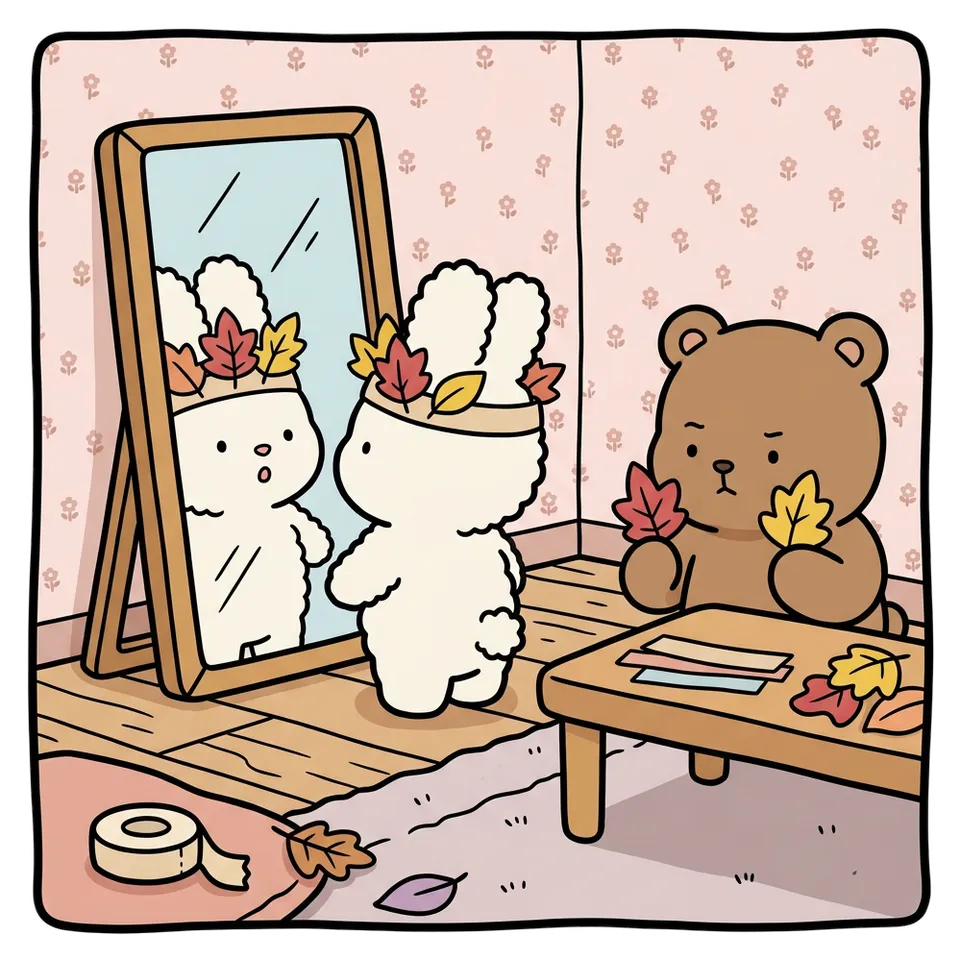
Wrap a paper strip around the head and stick leaves onto it to make a headband.
Why it's good
A play of choosing for yourself where to stick the leaves and which colors to use. The choosing time itself is the play.
How to play
Cut paper into a long strip, wrap it around the head, and stick leaves on it. Tape or glue both work. Choosing takes the most time. “This one?”, “This one?” they say, holding up colors, sticking and peeling over and over. That time might seem wasteful, but it is the play.
When it's done, put it on them and show a mirror. The moment they put it on they ask “How is it?” and when you say it's pretty, they smile, “Good,” “Pretty.” Then they always say something. “Dad, Mom!” If you suggest taking a photo to send, they strike a pose.
Good to know
- If you dry the leaves ahead of time, they last longer. Pressed between book pages, they flatten in a day or two and are easier to stick.
What you'll need
Leaves · Paper strip · Glue or tape