Play Ideas for Kimjang (Kimchi-Making)
On Kimjang (kimchi-making) day, adults' backs are breaking, but the child is watching something else. They lift a whole napa cabbage in both arms and grunt that it's heavy, but give them a single outer leaf and it becomes a hat, then a blanket. While the adults salt the cabbage, the child is busy transforming things beside them.
This page was translated by Yeparksam, a preschool teacher in Korea. Some words may sound a little unusual — thank you for your understanding.
Printables to use
See more ›
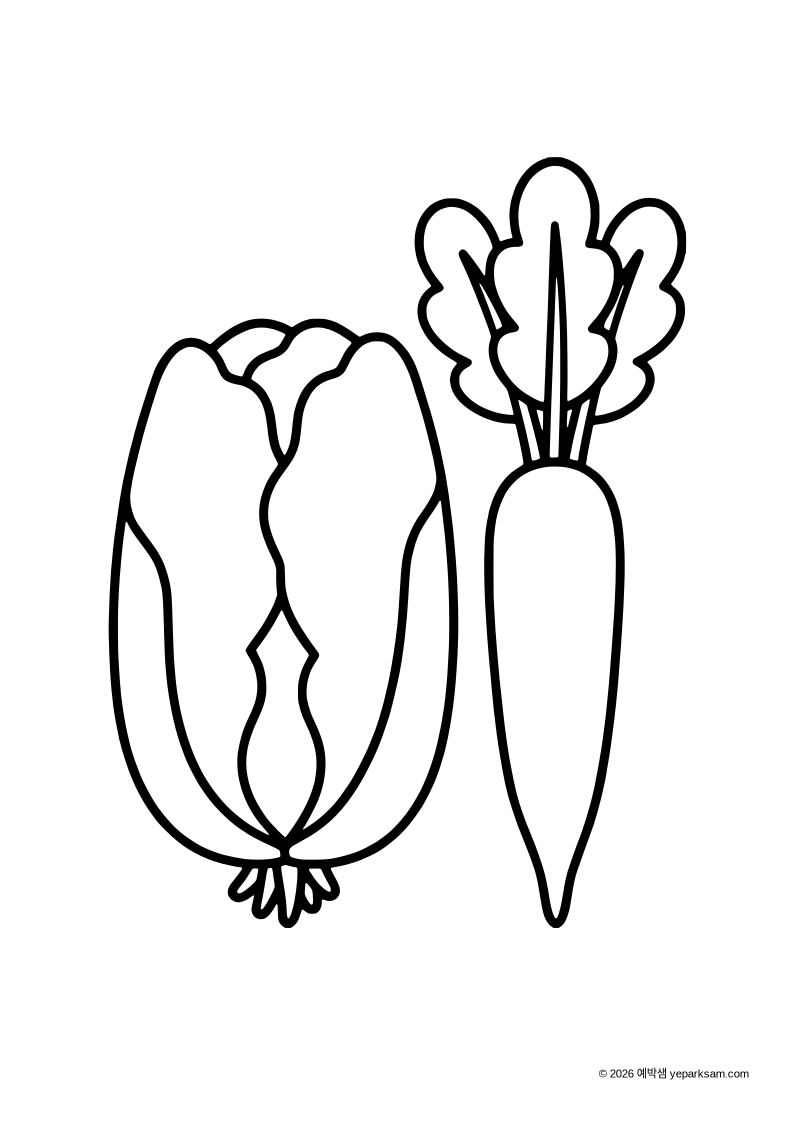
Pull It Out with a Pop
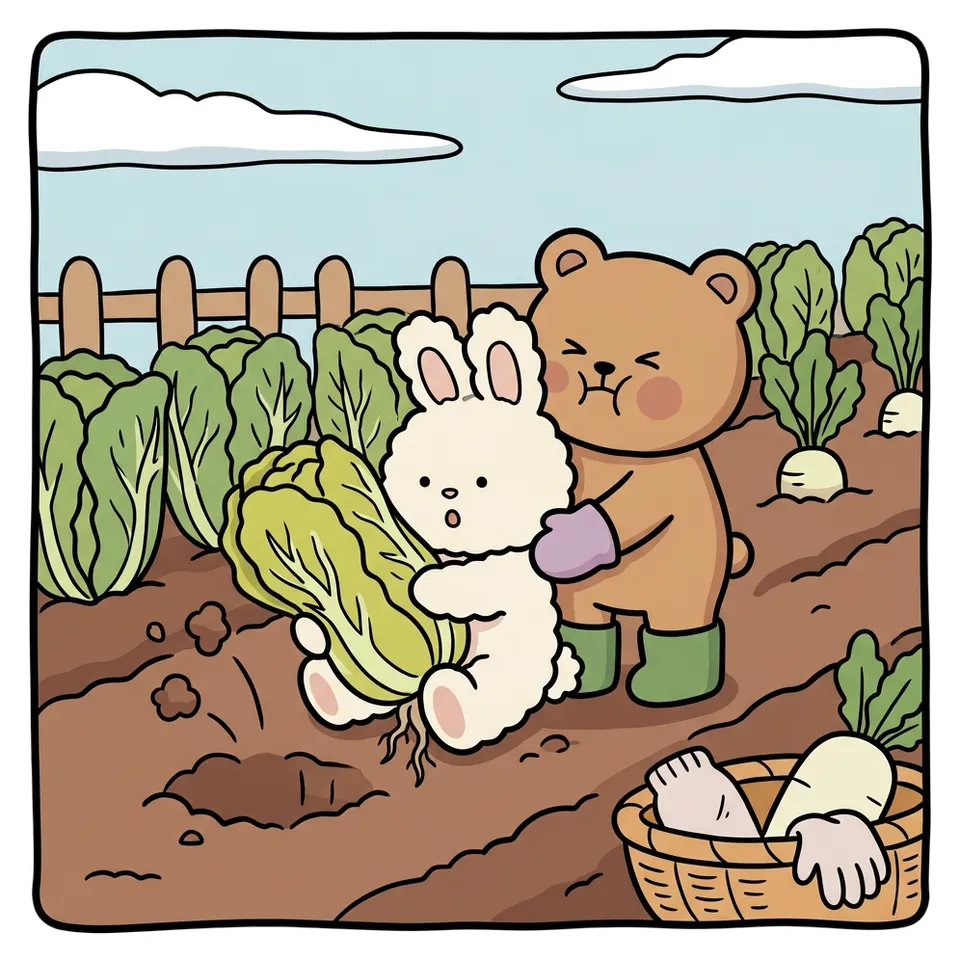
Grab cabbages and radishes that are still planted, down by the roots, with both hands and pull with all your might to yank them out.
Why it's good
At first it won't come out. That moment of going from not working to working is the whole play. It's an experience of feeling resistance with your whole body and overcoming it, so the child's face is different after pulling.
How to play
If I tell the child to grab the bottom of the cabbage and pull, they grab the leaves with both hands and pull as hard as they can. But it doesn't come out as easily as expected. Even after putting in effort it wouldn't budge, and the child said “It won't work”. When I held their hands too and pulled slowly, the cabbage came out with a “Pop!” and the child cried out in surprise, “I did it!” The radish beside the cabbage is pulled up next, right there.
After pulling, putting them away becomes play too. “So many!”, “The radish is big!” they say, showing what they pulled. When I ask what they'll do with the pulled cabbage and radish, they answer with a laugh, “Eat it!”
Good to know
- They rarely come out with a child's strength alone. After holding hands together and succeeding with one pull, they'll want to try alone next time.
What you'll need
Cabbage and radish with roots (home garden or kimjang experience farm) · Basket to put them in
Peeling Outer Leaves, Finding Colors
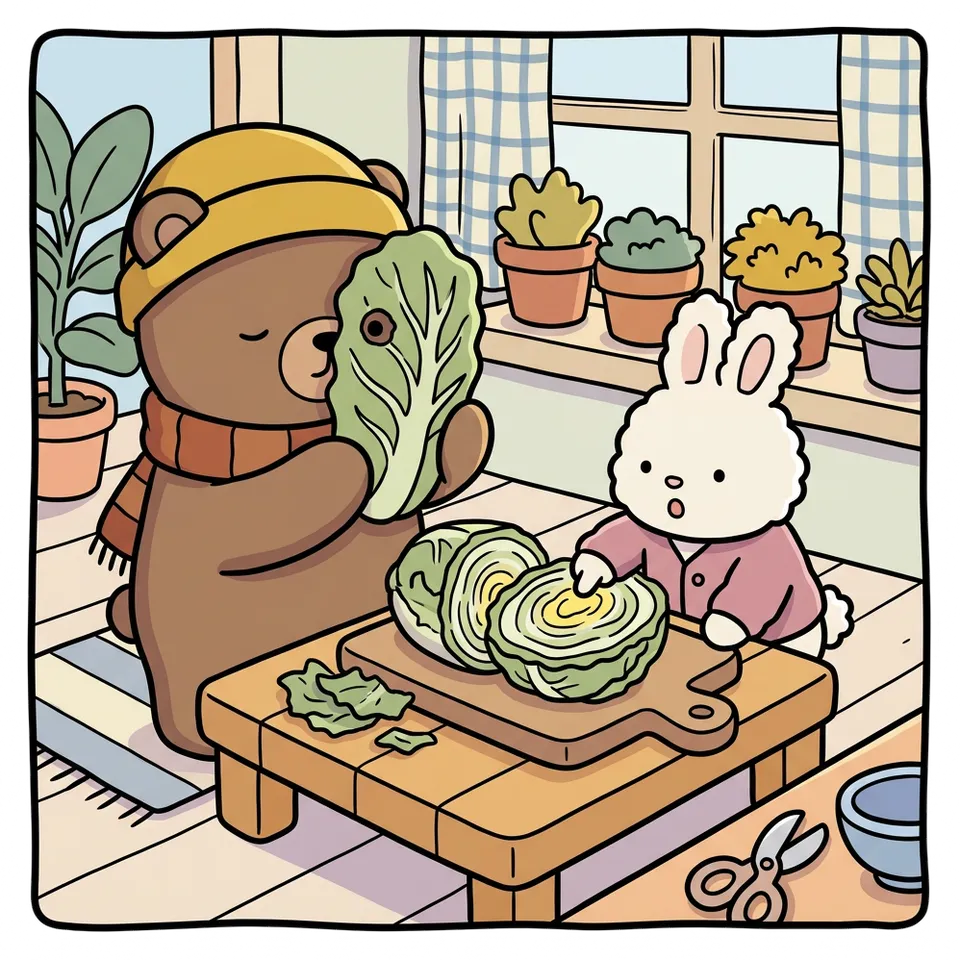
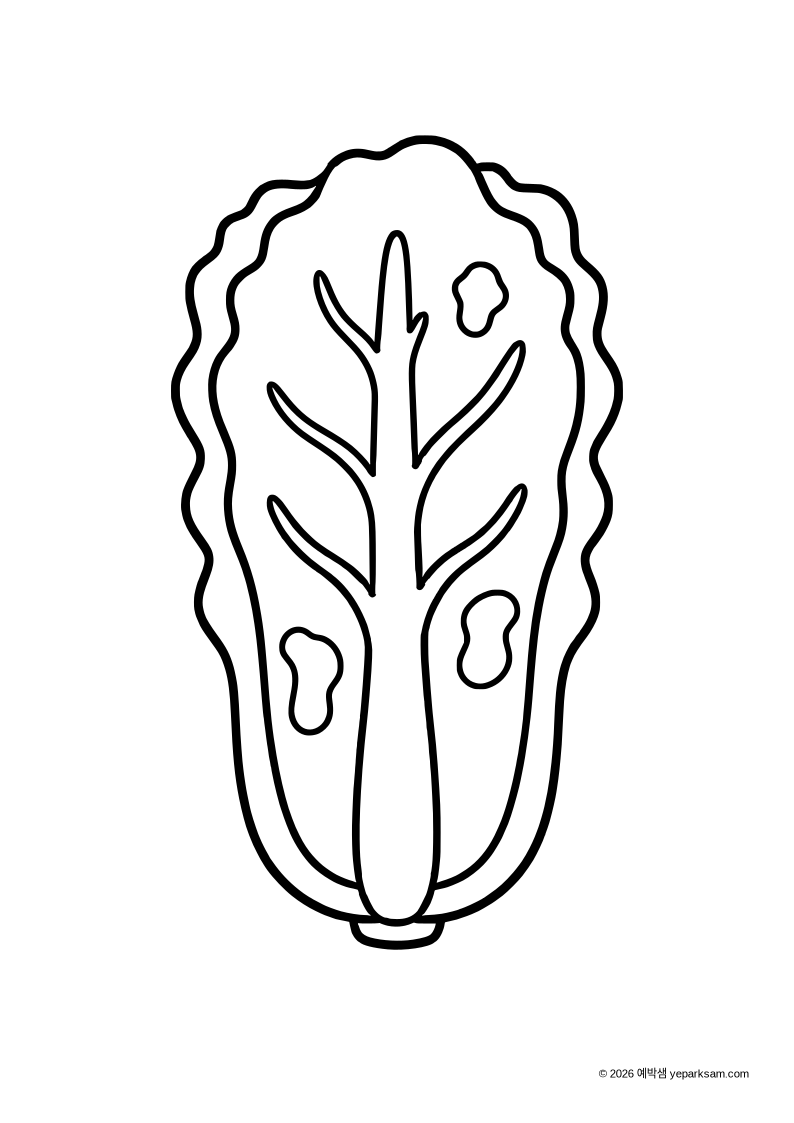
Lift the cabbage in your hands and peel it off one leaf at a time, starting with the outer leaves. When it's all peeled, put it on a cutting board and cut it up with a child-safe knife and safety scissors.
Why it's good
A cabbage's outside and inside are different colors. The outside is green, and going inward it turns white and yellow. Peel the outer leaves and split the middle, and the color difference shows at a glance, so the child naturally compares colors.
How to play
When I hand over a whole cabbage, the first thing the child does is lift it. They raise it with both arms, say “It's heavy”, and put it down. Next they tear off the outer leaves. When I asked “How does it feel?”, they answered “It's crunchy”.
Then it gets fun when I show the inside of a cabbage cut in half. “The cabbage was green but I see white and there's yellow too”, they said, poking a finger inside to touch. They found for themselves how different the outside and inside colors are.
When I hand over a cutting board and a child's knife, they start cutting, saying “I have to cut it small”. I help with the tough stem parts that won't cut, and when I give them safety scissors they focus even more on the crunchy snipping sound. When I ask them to smell it, they readily notice, “It smells like cabbage”.
Good to know
- The stem end of a cabbage is tough, so a child can't cut it alone. Help with just that part and they cut the rest of the leaves fine on their own.
- Even if knife work is hard, give safety scissors and they catch on quickly. Scissors are easier, and the snipping sound is easier to hear too.
- A hole in an outer leaf is where a bug ate first. Don't throw it away; keep one, and the child will find that hole first.
What you'll need
Cabbage · Child's knife (such as a bread knife), safety scissors · Cutting board
A Hat, and Laundry Too
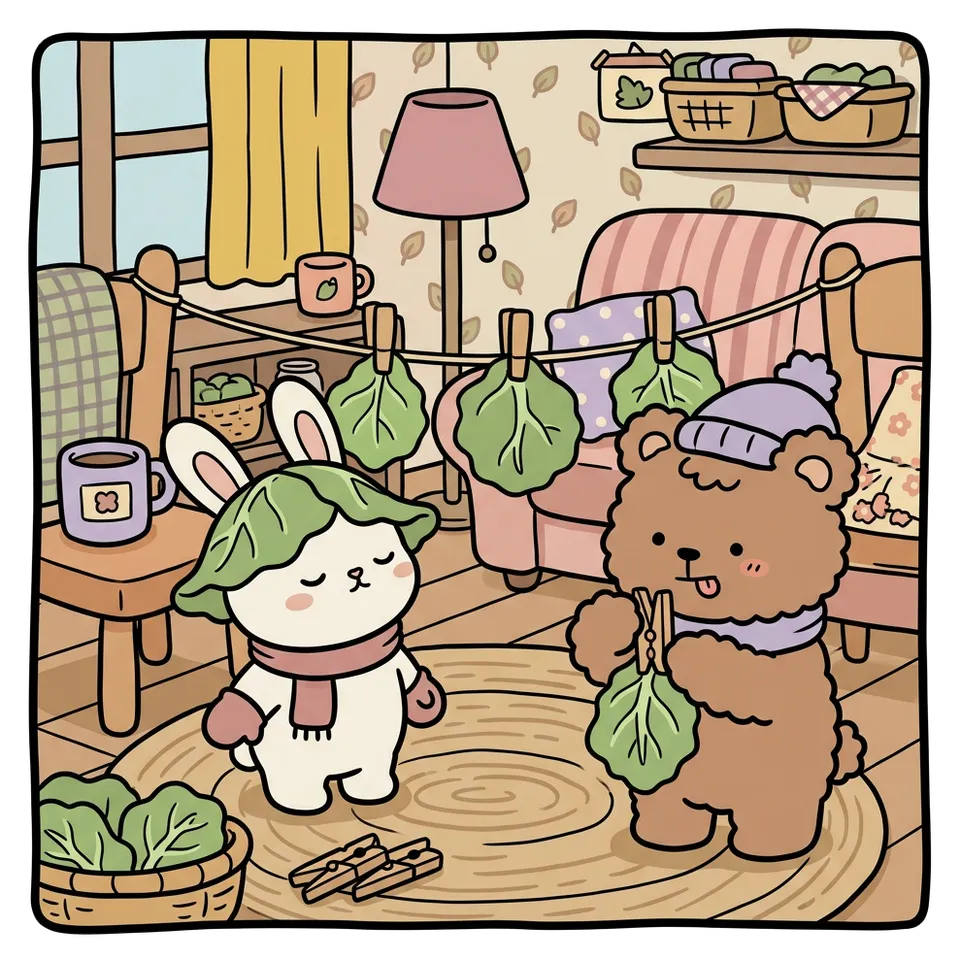
Peel off cabbage leaves one at a time, and a leaf on your head becomes a hat, on your chin a beard, and over your feet a blanket. When you're done playing, clip them to a line with clothespins to make laundry too.
Why it's good
The whole of this play is that a cabbage leaf turns into something different every time. The child uses eyes that see the same leaf in many ways. And opening a clothespin with fingertips to bite a leaf takes fairly capable hands.
How to play
It starts with tearing off a few outer leaves of the cabbage. I set them out to touch and play, and the child put a leaf on their head and said “Hat!” proudly. Then they stuck a leaf under the chin and pretended to have a beard, and laid one on the tops of their feet like a blanket.
After playing like that for a while, they tore the leaf into little pieces and began cutting with a toy knife, saying “I'm making baechu-jeon (cabbage pancakes)”. I thought the hat play was the end, but in the child's head it was continuing into cooking.
When I hand over clothespins and hang up a line, the play moves on once more. When I suggested hanging the cabbage with clothespins like laundry, at first their fingers lacked strength and they dropped it several times, but once one hung, from then on they kept hanging more.
Good to know
- You need several leaves for the play to continue. With one leaf, it's a hat and that's it, but with several it can be a hat, then a blanket, then laundry.
- Clothespins are a hard tool for a child with weak finger strength. At first press lightly beside them to help, and from the next time they do it alone.
What you'll need
Cabbage (several outer leaves) · Clothespins · Rope or a clothes drying rack
Cutting Radish, Stamping Shapes
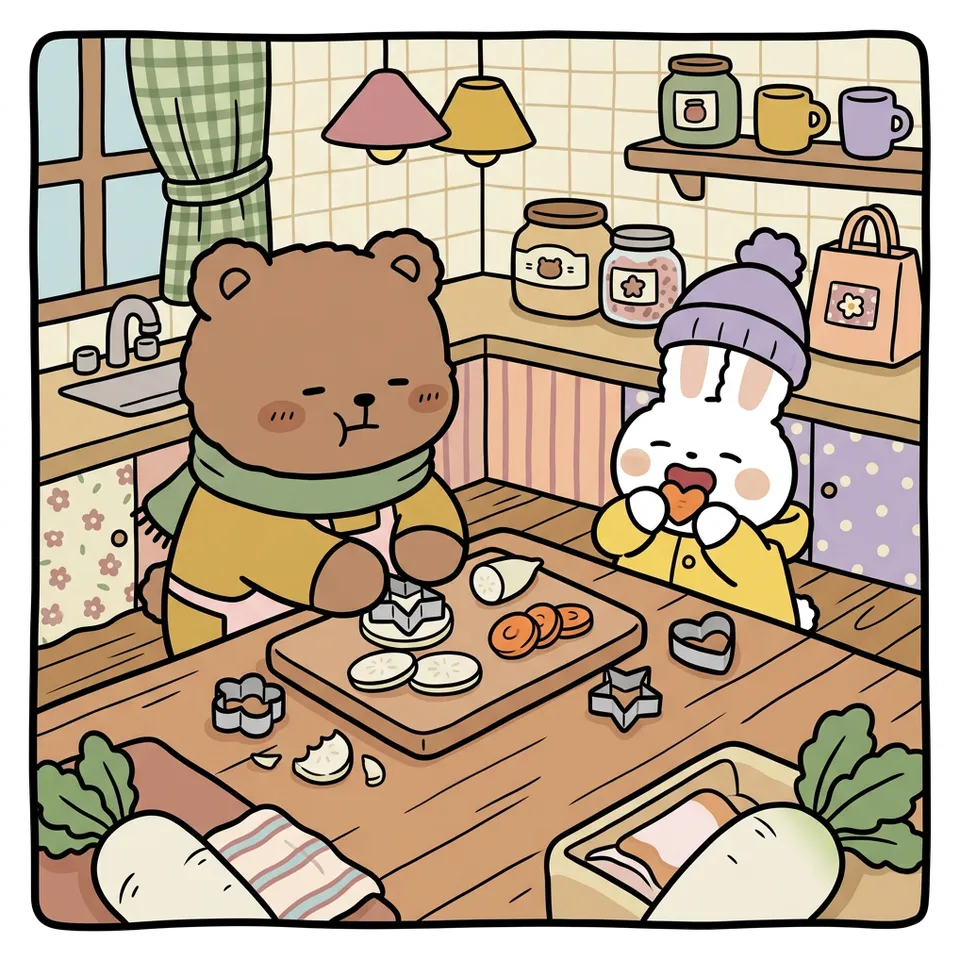
Stamp thin slices of radish and carrot, cut by a grown-up, with cookie cutters to make ingredients for kkakdugi (cubed radish kimchi) in this cooking play. Taste the leftover scraps right away.
Why it's good
The outside is a hard lump with dirt on it, but a knife reveals another face. Only when they see the white, shiny inside does a child understand that a radish is something to eat.
How to play
When I set a wiped radish on the cutting board, the child comes over and lifts it in both hands. “Wow, the radish is cold!”, “It smells like radish!” — they check with their senses first. When the knife cuts the outside open, only then do they marvel, “It's white!”, “It's sparkly!”, and after tasting a piece, “Crunchy!”, “It's refreshing!”, they ask for more.
Press a cookie cutter firmly on the thinly sliced radish and carrot and stars and hearts come out. “It's a heart carrot!” they show off, then pick up and eat the leftover scraps they didn't stamp.
If they say they want to slice it themselves, I hand them a child's knife. “It's hard!”, “I have to be careful with the knife!” they say, quite focused.
Good to know
- The adult can do the cutting and the child can just do the cookie cutters. Stamped into hearts or stars, it's not a side dish but something they made.
- Slice thin so the cutter can go through. If it's thick, no matter how hard they press it won't cut through, and the child quickly gives up.
What you'll need
Radish, carrot · Cookie cutters · Child's knife (such as a bread knife — for when they want to slice themselves) · Cutting board
Spreading the Red Seasoning
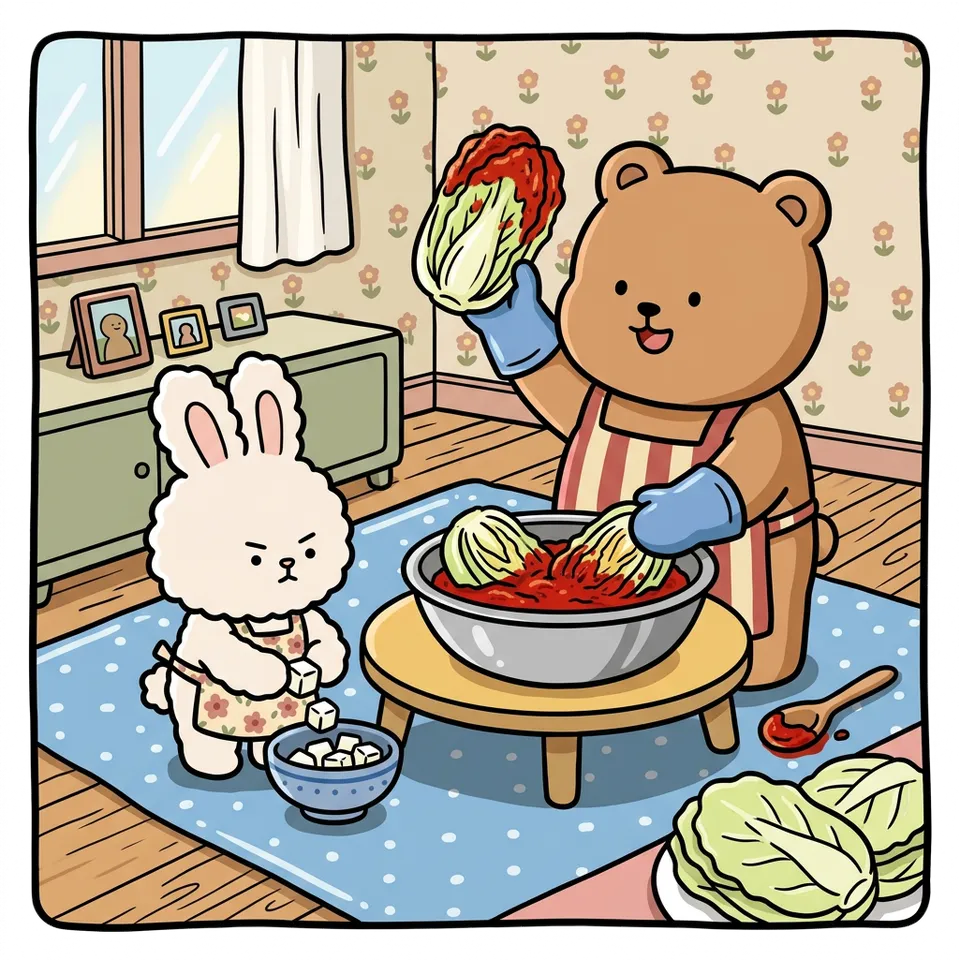
Put on an apron and rub seasoning onto a real cabbage to make kimchi. Siblings or friends can take the radish or kkakdugi instead of the cabbage, and making it together turns into a whole Kimjang (kimchi-making).
Why it's good
In real kimjang the adults do everything and the child often just watches, but in this play the child becomes the one who spreads the seasoning. Once they've spread it with their own hands, that kimchi becomes theirs. With siblings or friends, they even decide among themselves who takes the cabbage and who takes the radish.
How to play
When I bring out the cabbage and the seasoning, the child smells it first. “It really smells like cabbage!” they say. When I show the big bowl for the seasoning, they ask “Is this gochugaru (red pepper flakes)?” and sniff it, and even tell apart the smell of salted shrimp.
When siblings or friends share the work, from here on each takes a different job. “I'll put seasoning on the cabbage!”, “I'll make the kkakdugi!” they choose their own roles, and look after each other, “You have to spread the seasoning evenly!”, then put a hand between the leaves and find gaps, “It didn't get in here!” A child who cut radish into squares compares, “Kkakdugi is made with square radish, right?”
When it's all spread, they hold it up, “Kimchi is done!” Then they say, “This is our family's kimchi.”
Good to know
- It doesn't have to be kimjang day. Stick red cloth or colored paper on a toy cabbage and that's the seasoning. But smell is half of this play, so with real seasoning the child even picks out the red pepper flakes and the salted shrimp.
- Roles last longer when siblings or friends choose them. If you decide in advance, “You do the radish”, from then on they only do as told.
- If you use real seasoning, let the child decide how spicy. If they make only their own portion mild, even a child who couldn't eat spicy food eats it, saying “What I made is yummy”.
What you'll need
Cabbage, radish · Kimjang seasoning (or red cloth/colored paper) · Apron, large bowl
Pack It Tight, Close It with a Click
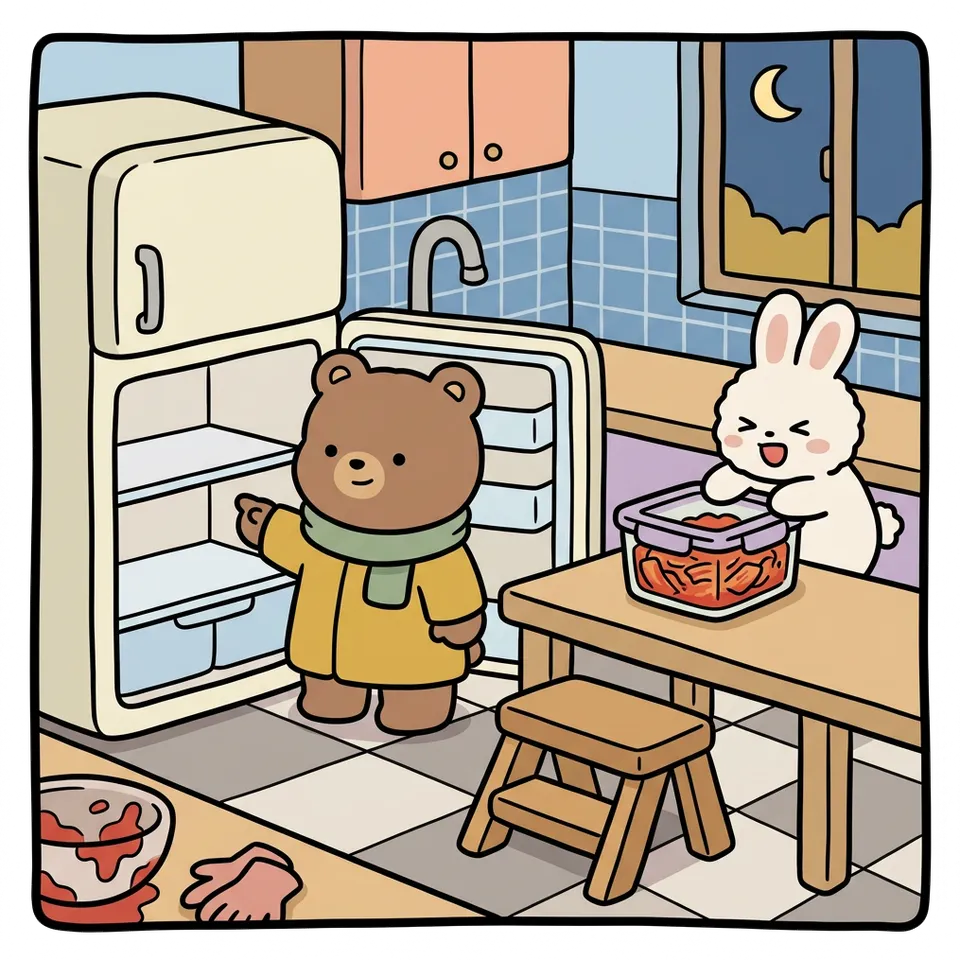
Press the mixed kimchi into a container firmly with your palm, close the lid with a click, and even decide where to put it, in this housekeeping play.
Why it's good
They pack what they mixed themselves. After pressing it down tight and closing the lid, it becomes the child's, and where to put it is the child's decision too.
How to play
When moving the mixed kimchi into the container, the child makes a “Press, press~” sound and pushes with their palm. It doesn't all fit at once, so they press, add more, and repeat.
When I suggest closing the lid, they press it down with both hands. When it made a “Click!” they laughed happily, seeming to find it fun. When I asked “Where should we put our kimchi?” they pointed a finger at one spot and decided right away, “Here!”
Good to know
- Let the child close the lid with their own hands. The 'click' sound at the moment of closing is the signal that ends the play.
- Ask the child where to put it, too. Whether it's the fridge or a shelf, if it goes where the child decided, they'll remember that spot the next day and come back to it.
What you'll need
Mixed kimchi · Container (with a lid)