Play Ideas with Stickers
I've hardly ever bought heart stickers on their own. Usually one or two come tucked into some other sticker set, rolling around the corner of a drawer. But once they get into a child's hands, they're treated differently from stars or circles. Other shapes get stuck anywhere, but when they stick a heart, they always call out someone's name first.
This page was translated by Yeparksam, a preschool teacher in Korea. Some words may sound a little unusual — thank you for your understanding.
Printables to use
See more ›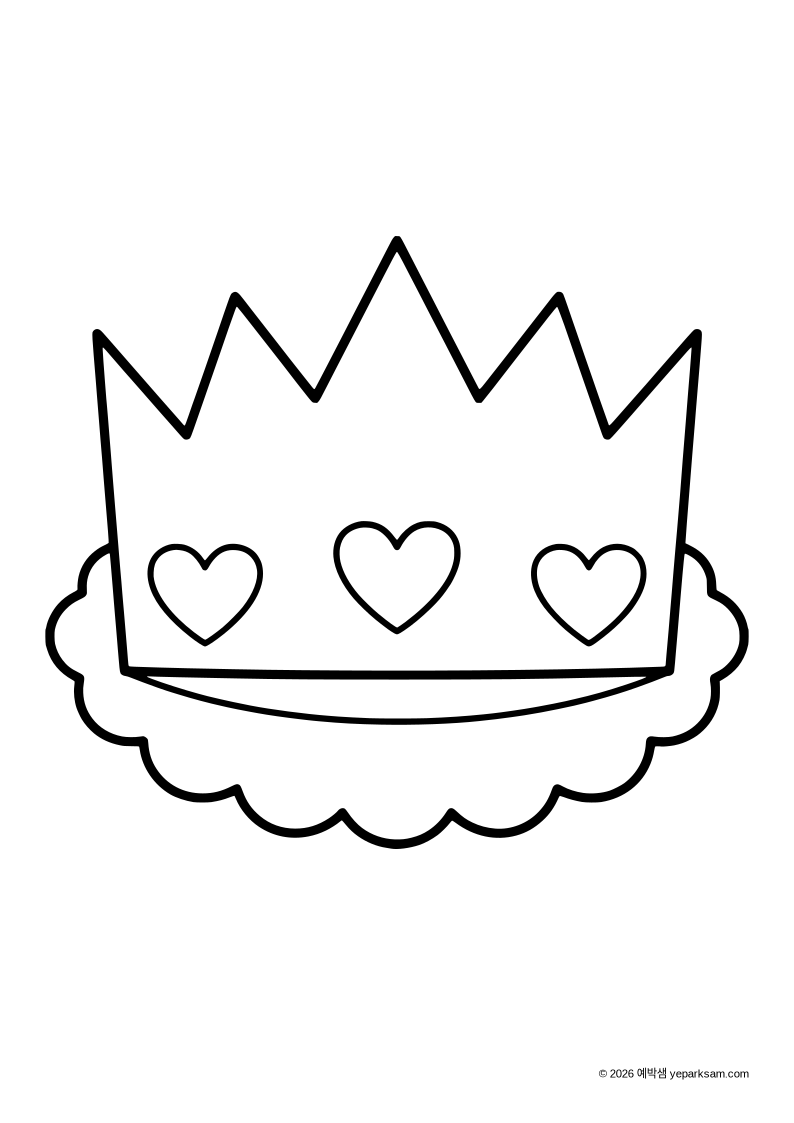
Sticking "I Love You" on Every Photo
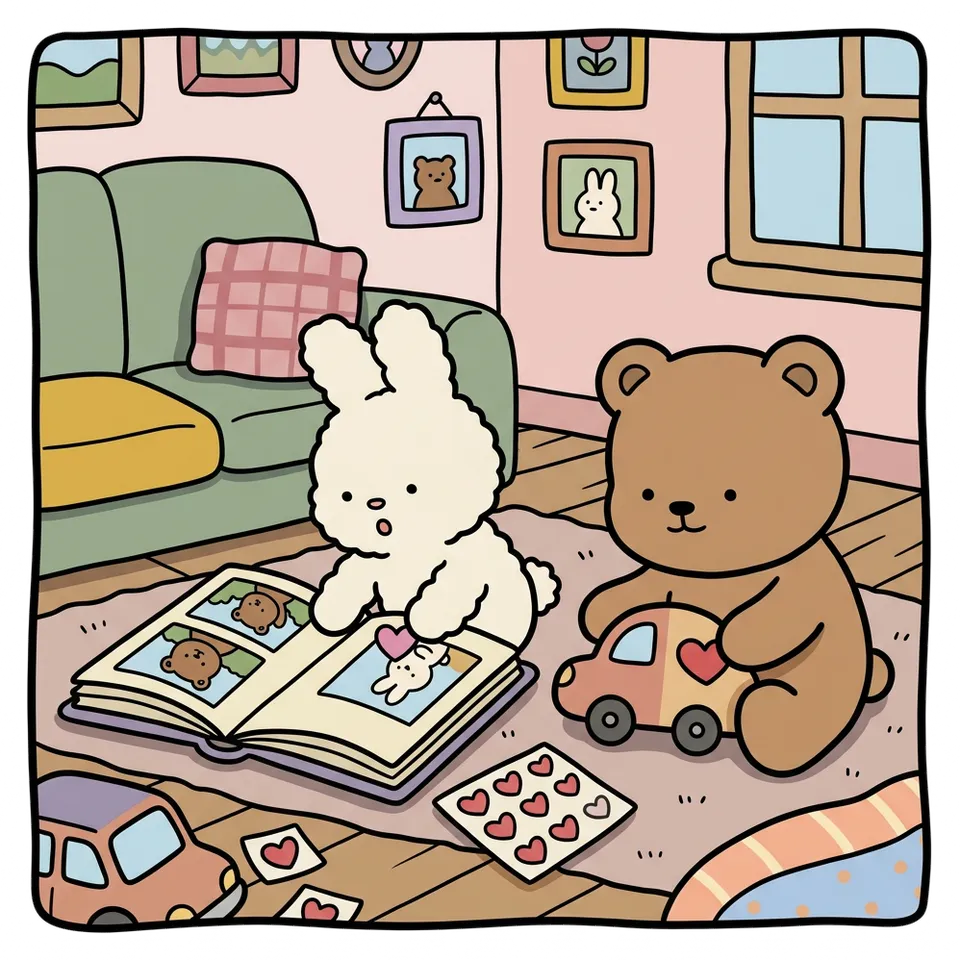
Stick heart stickers on faces in photos or picture books while calling out their names.
Why it's good
Why it's good: in this play the child decides on a feeling and expresses it toward what they love. While they call out a name and stick a heart on each photo, where the heart goes shows where that feeling is headed.
How to play
Whether it's a family photo or an animal picture book, all you do is give them a heart sticker to put on the picture. The child calls each name and sticks on a heart. “Squirrel, I love you.” “Tiger, I love you too.” Some children point to their own face, pick a sticker, put it on, and say “This one is mine.” If I ask why they put it there, they answer “I like me, I love me.” Some stick them on toys. One put a heart on the side of a toy car and said “This is the heart that says I love you to Mommy.”
A child sticking hearts on a friend's photo may suddenly get up, go to that real friend, and stick a heart on their face. The friend doesn't just stand there and sticks one on the child's face too. The photo is only the beginning, and when a real face is right there, they go to that. Some children put one on the back of my hand. When they stick it on saying “Here!” and “Heart!”, I say “Thank you.” Some check their own face in a mirror, and some put a heart on a finger and show it off as a “ring.” Where to use the heart is always the child's decision.
Good to know
- It doesn't have to be a person's face. An animal picture book or a toy works, anything the child likes can be a place to stick one.
- It helps to have stickers in different sizes. The child alternates between big and small, pressing with different strength, and picks a big one for a wide spot and a small one for a narrow spot.
What you'll need
Heart stickers · Family photos or an animal picture book
Passing love along sideways
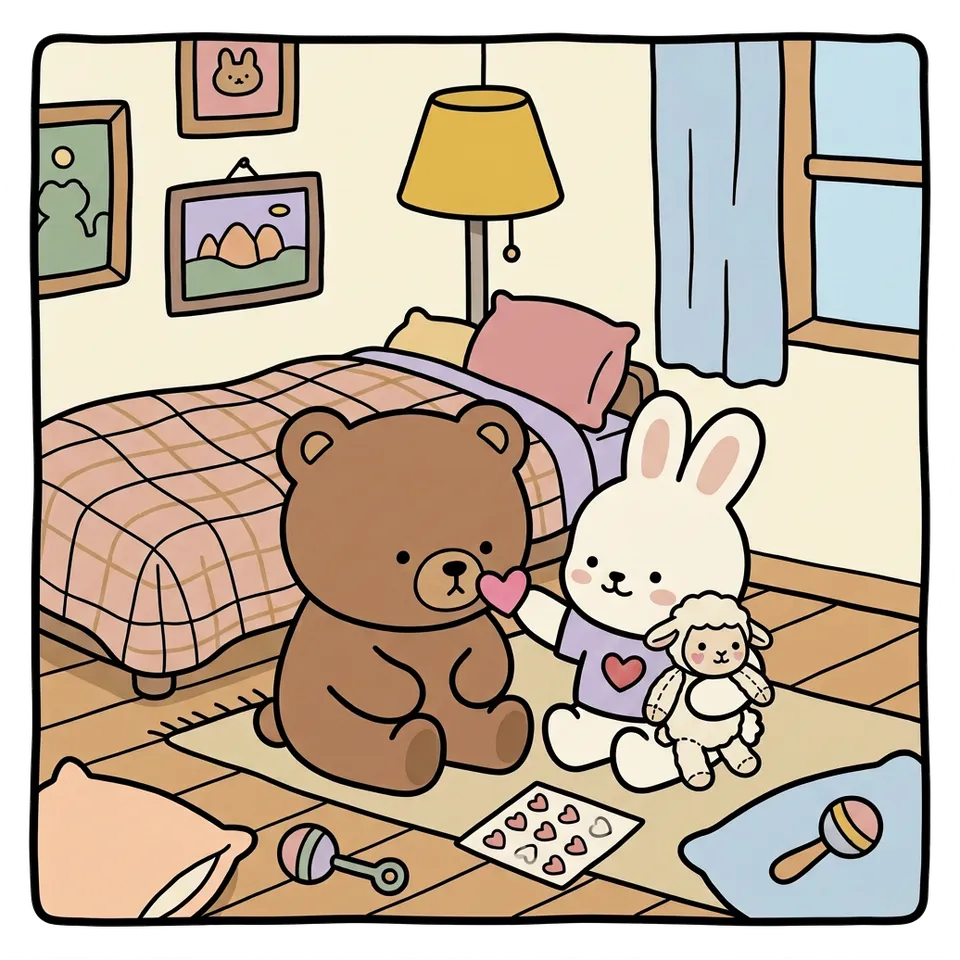
The child peels off a heart sticker that was stuck on their cheek and sticks it on someone else.
Why it's good
Why it's good: in this play the child takes the love they receive as their own, then moves it sideways and shares it. They don't leave the heart they got where it is. They peel it off themselves and stick it on the other cheek, or move it to a younger sibling, and that is how they express sharing.
How to play
When the child is hugging a doll and patting it, saying “Baby, baby,” I put a heart sticker on the child's cheek and say “I love you.” The child doesn't leave the heart they got alone. They peel it off themselves and stick it on the other cheek, then go to a younger sibling and put one on their clothes and one on their face. When the stickers run out, they shake the empty sheet and ask for more. The funniest thing came from the child who used them all up: they stuck one back on the face of the person who had given them a heart. When our eyes met, they laughed out loud.
Good to know
- If you fold the paper in half, they can peel it by themselves. For a child with weak fingertips, fold it that way before handing it over.
What you'll need
Heart stickers · Doll
Gathering to make a big heart
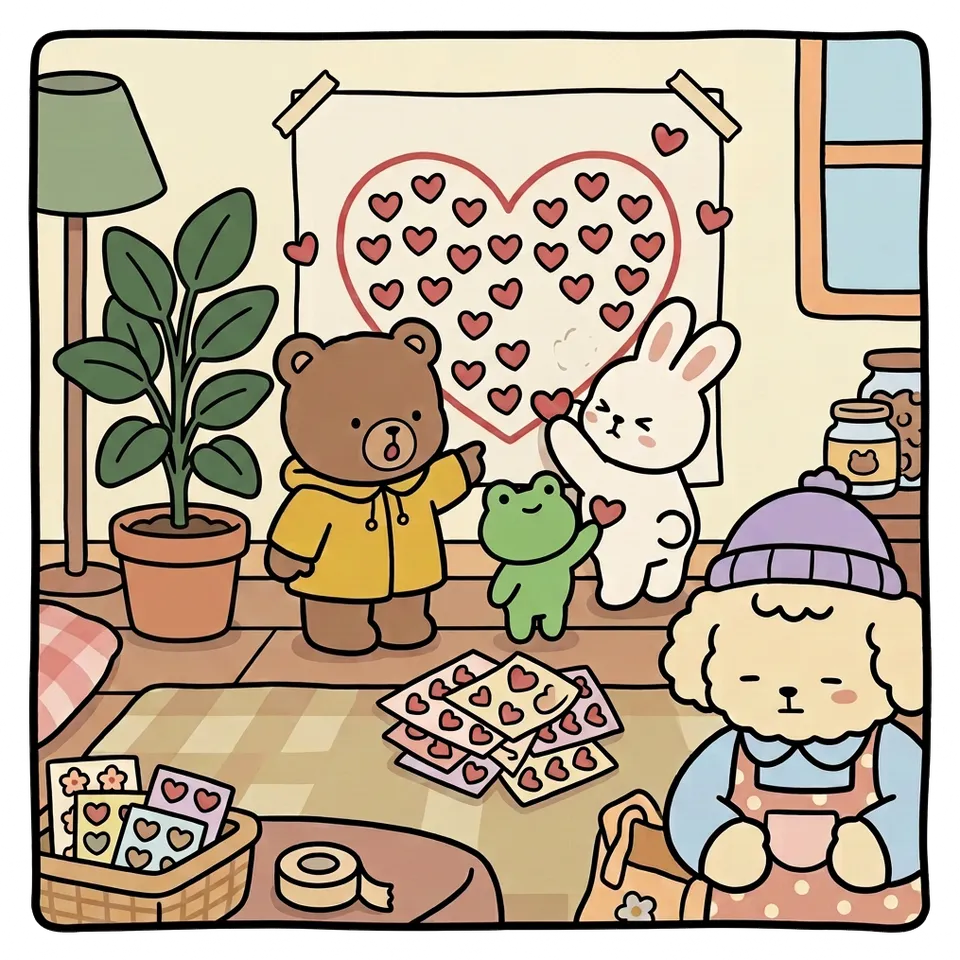
Fill the inside of a big heart template with small heart stickers.
Why it's good
Why it's good: in this play, stickers that were stuck anywhere gradually narrow down to the inside of the heart's outline. Where the hands go spreads wide at first, then slowly gathers toward the heart shape.
How to play
Draw one big heart on a sheet of paper, put it on the wall or floor, and pour the small heart stickers out next to it. At first they stick them anywhere. They look for empty spots and press them on here and there, and after a while they start choosing only the inside of the big heart's outline. With siblings or friends, one child's stickers get joined by another's right alongside, and when gaps are left, they point at them and fill them in for each other.
When all the small hearts are on, we step back and look at it together. When I say “All our hearts came together,” both point at the places they stuck. We cut out the finished heart and put it back on the fridge. Passing by, they touch it now and then.
Good to know
- The outline of the big heart has to be visible for them to notice they should stick inside it. If you only give stickers without an outline, they stick them wherever they like and that's the end.
What you'll need
Paper with a big heart drawn on it · Small heart stickers
Making a heart necklace and crown
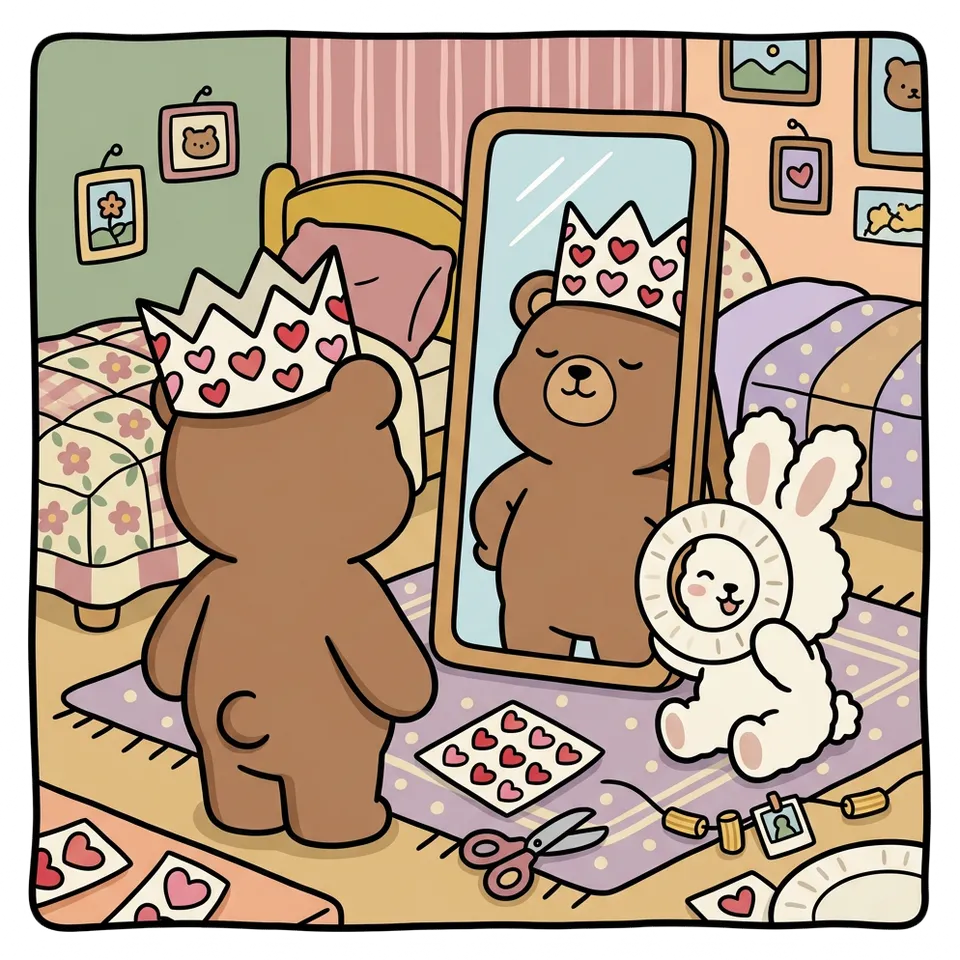
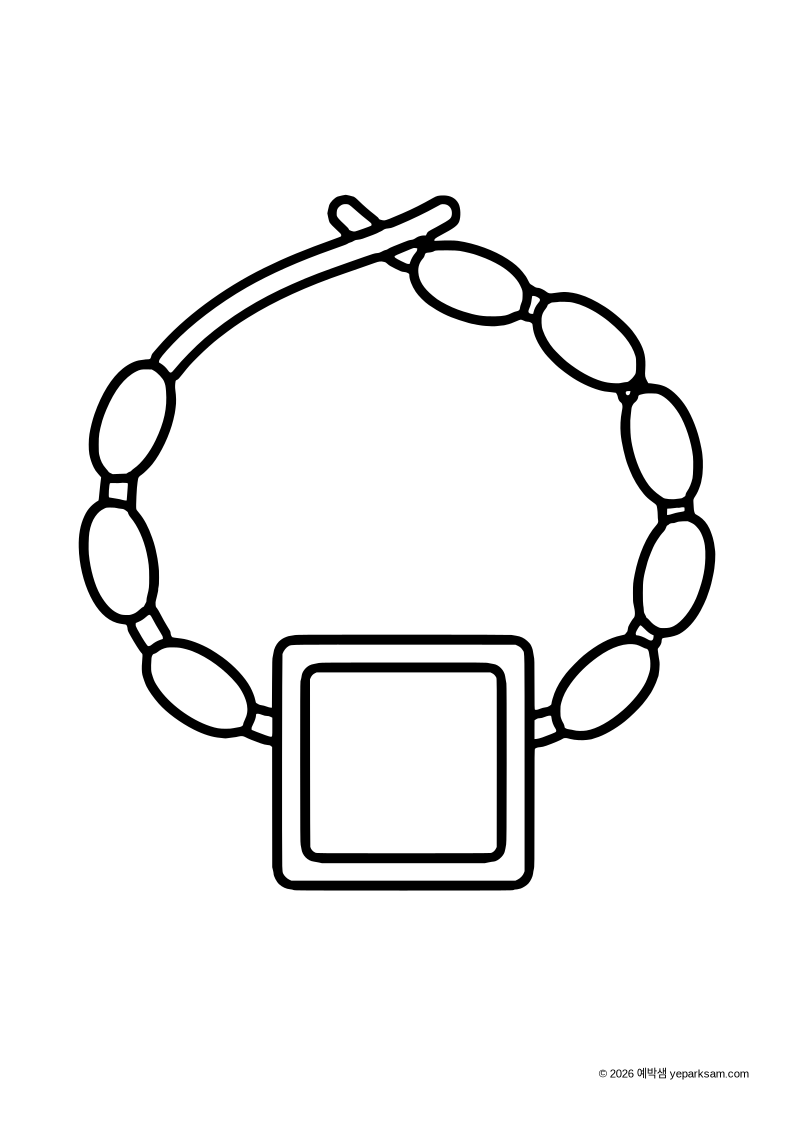
Decorate paper plates and necklace strings with heart stickers to make crowns and necklaces.
Why it's good
Why it's good: in this play the child gives meaning to something they made themselves. Whether they call the finished shape a crown or a wheel is up to the child, and whatever it's called, they put it on and take it off and play for a long time. When the necklace is done, they hang it on the neck of someone they like.
How to play
One day the crown we'd been playing with broke, and instead of going out to buy a new one, I took out a paper plate. I cut out the middle in a circle and cut the remaining rim in zigzags, and it becomes a spiky crown. When I handed over the heart stickers, the child said “I'm going to put lots on my crown” and stuck them on without stopping. After putting it on their head and going to the mirror, they admired it themselves: “It's so spiky, this crown.” A younger sibling watching said “It looks like a wheel” and saw it completely differently.
I hang a photo of the child on the necklace string and show it to them. While trying it on, they look at the photo and sometimes recognize themselves, “Me?” Next to it, they thread macaroni one at a time. They also stick heart stickers on the photo. They wear it around, and then hang it on the neck of someone they like and say “I love you” as they give it.
Good to know
- Big stickers work well. Small stickers suit photos or cards, but for wide places like a crown or necklace, big ones stick better.
- Some children try to put macaroni in their mouths. For children under 3, it's best to stay beside them and watch.
What you'll need
Paper plate · Heart stickers · Necklace string · Macaroni · Photo of the child
Sticking them close together and showing off
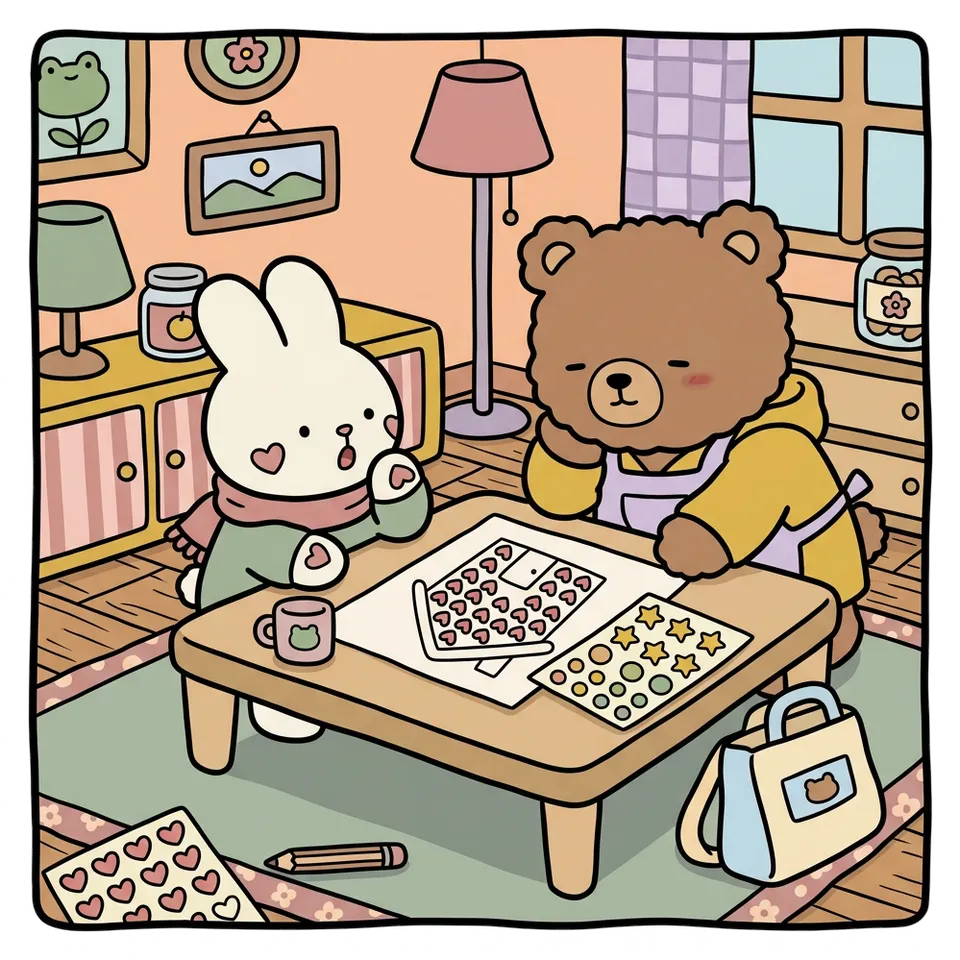
Fill an uncolored letter or template completely with heart stickers, leaving no gaps.
Why it's good
Why it's good: in this play the child keeps filling every gap because they want to hear that they did well. Whether it's pretty isn't the point. They make that one word, "pretty," happen themselves.
How to play
Give some children an uncolored letter or template, and they fill the whole inside with heart stickers without leaving a gap. I'd put out star stickers and circle stickers too, but they picked only hearts. They stick small hearts close together, then put one on a cheek and one on the back of a hand. Then they always ask, “Isn't it prettier this way?” They didn't stop what they were doing until they heard an answer. Only after being praised did they smile.
Good to know
- They need an answer to finish. If you don't tell them they did well, they ask again and again and keep sticking.
What you'll need
Uncolored letter or template · Heart stickers
Putting hearts on a gift
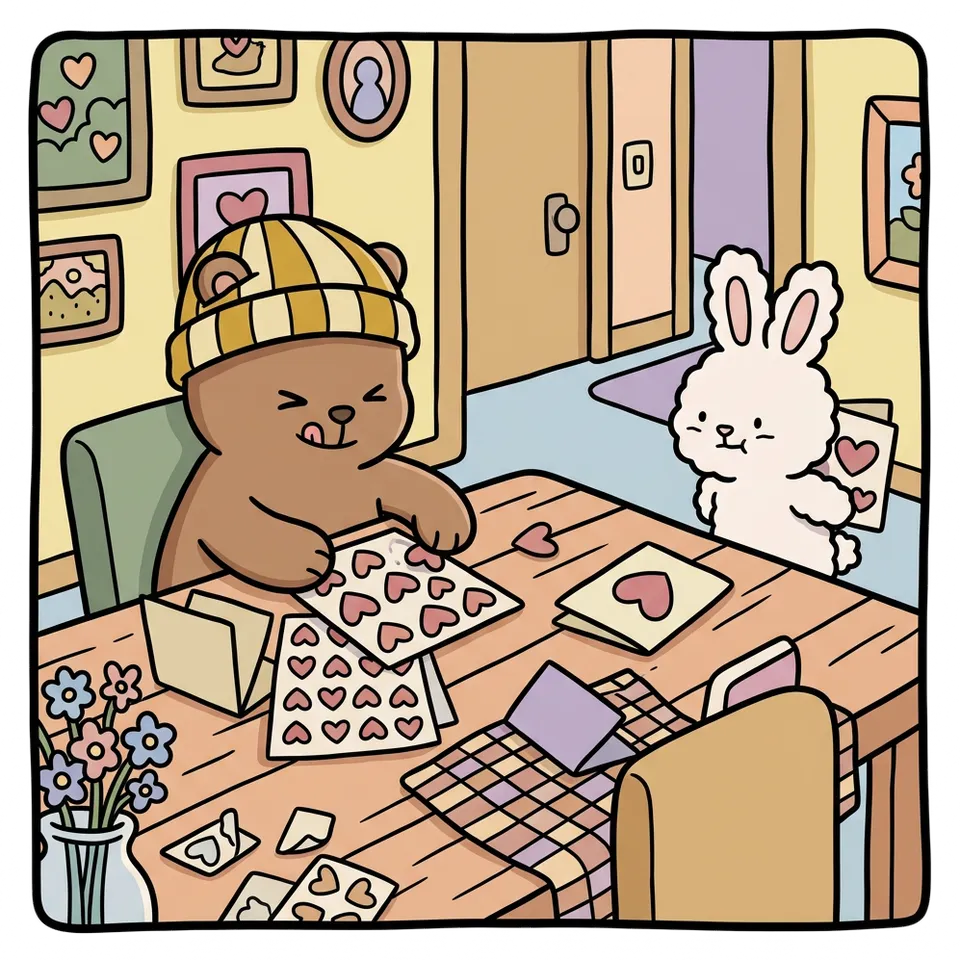
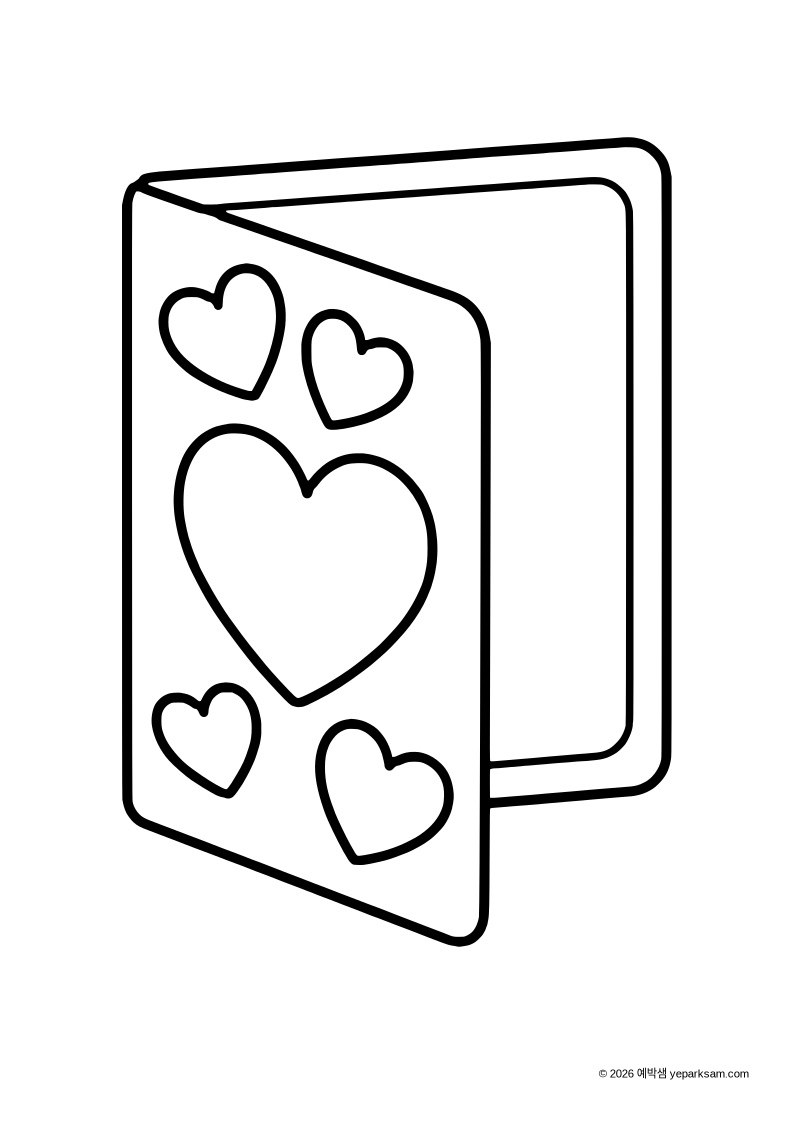
Stick heart stickers on colored paper to make a gift for someone you care about.
Why it's good
Why it's good: in this play, while putting hearts on a card, the child imagines the face of the person who will receive it. The number of hearts stuck on becomes the size of the feeling.
How to play
I set out colored paper and heart stickers on the table and ask “Who is it for?” Mom, Dad, a younger sibling, a friend. While sticking hearts, the child is already imagining that person's face. “My friend will like it.” Some children cut out a photo and stick it on. One said it was going to Grandma, picked a photo of Grandma to stick on, and added a few more hearts next to it.
When I ask them to count how many they stuck, they get excited and keep adding more. When I asked why they put so many, they said “This one has lots of I love you.”
What to write is also the child's decision. “Please write I love you.” “I want to write thank you too.” Holding the finished card, they get impatient: “When can I give it?” They looked as if they had already given it all away while making it.
Good to know
- If you ask them to count, they stick more. When I ask how many they've stuck, they get excited and keep adding, and when they're done we count together.
- The child decides the words on the card. Not just “I love you” but “Thank you” comes up too.
What you'll need
Colored paper · Heart stickers · Photos
Voting with hearts
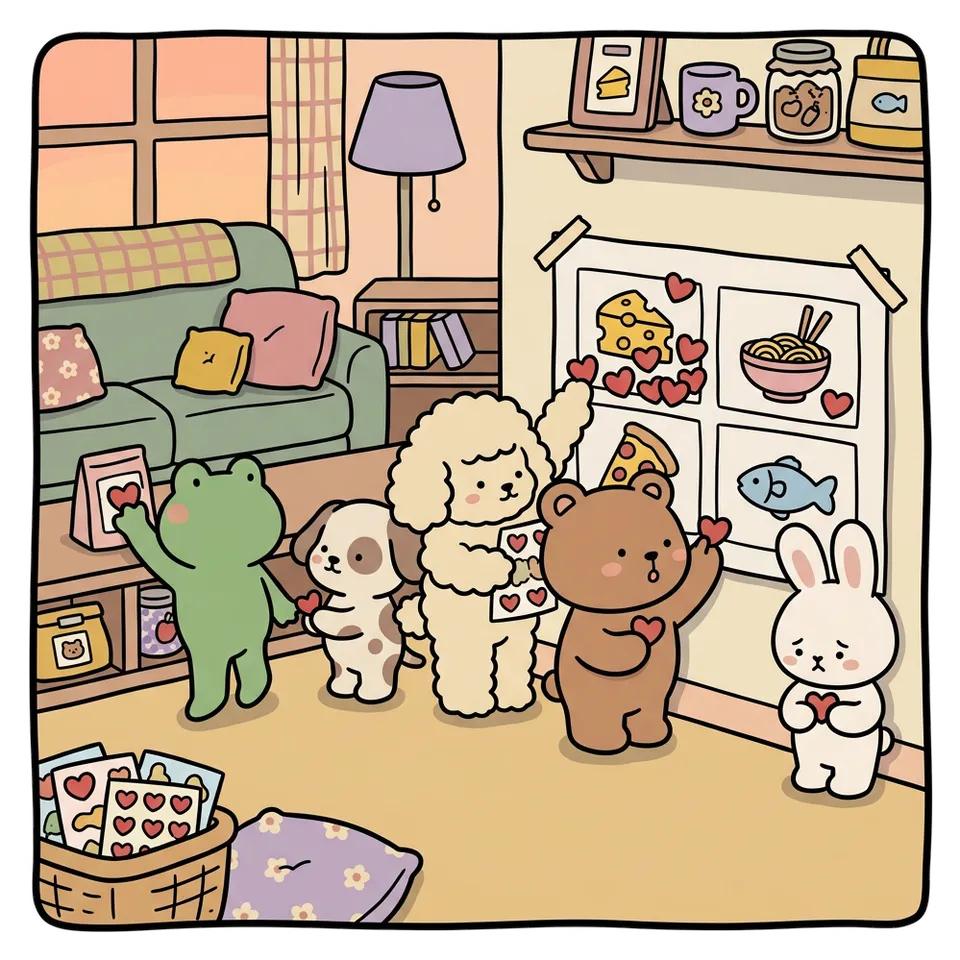
Stick a heart sticker in each box next to a candidate, and the family decides what they want.
Why it's good
Why it's good: this play turns arguments over the menu into a vote. By sticking a heart in the box they want and counting together, the child sees who won and who lost and accepts the result.
How to play
When I'm squabbling with the child over dinner or a snack, I divide a sheet of paper into several boxes, write one option in each box, and take out a bag of heart stickers. I point to the boxes one at a time and ask “What's this?” and have the child stick a heart in the box they want. “I like cheese,” they say as they stick it, and the other family members take turns sticking theirs. The popular boxes keep getting hearts until they spill past the lines.
When everyone's done, we count together. Pointing with a finger, they say “One, two, three,” and shout first, “This one has the most!” Some look at the box with the fewest and say “Nobody likes this one,” a little sad. That evening, we really do go with whatever got the most.
Good to know
- You have to really do what the vote says, so the child trusts it next time. Then next time they come asking for it, paper in hand.
What you'll need
Paper with the options written on it · Heart stickers