Play Ideas with Flour
One bag of flour makes two kinds of play. One while it's dry powder, and another once you pour in water and it becomes dough. The feel is so different that children don't think of them as the same thing.
This page was translated by Yeparksam, a preschool teacher in Korea. Some words may sound a little unusual — thank you for your understanding.
Printables to use
See more ›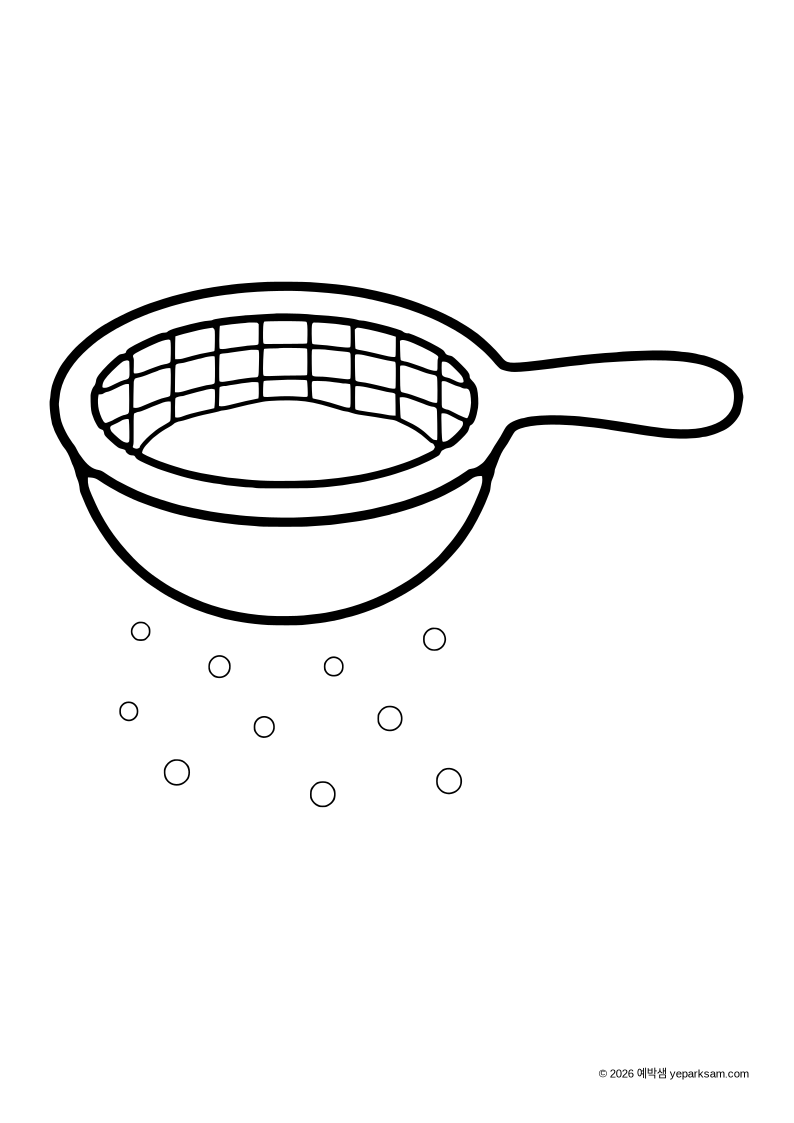
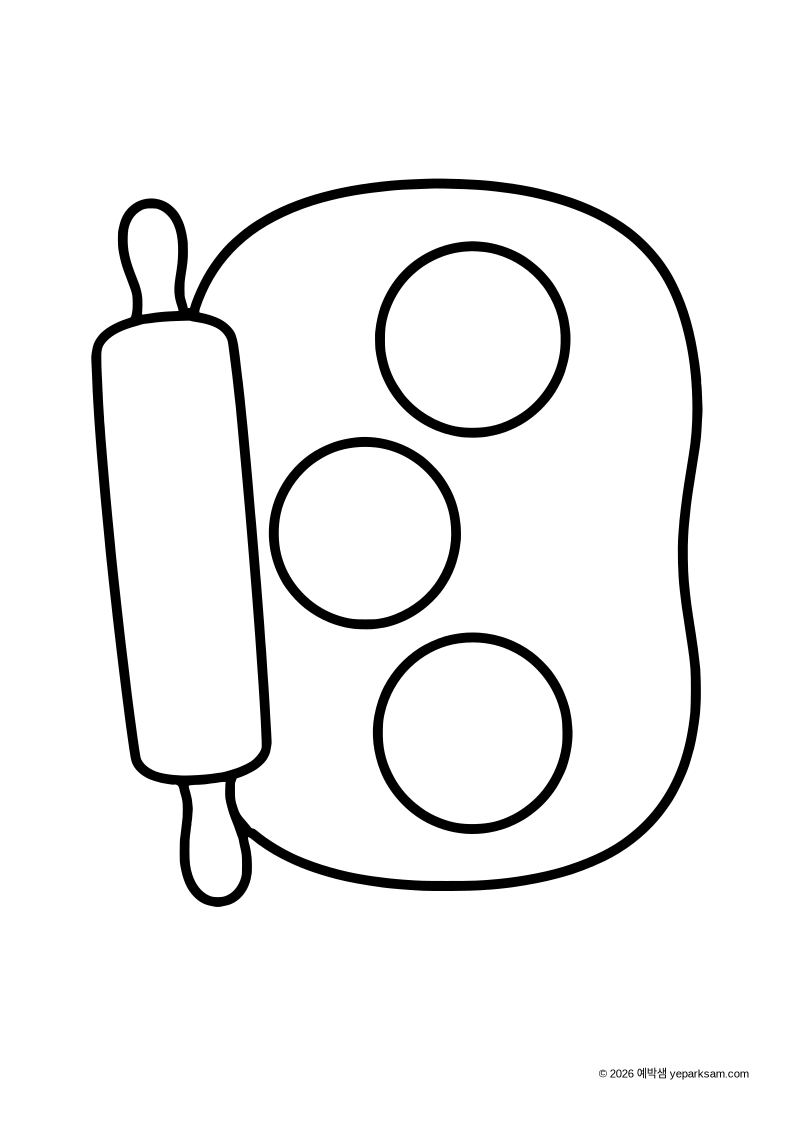
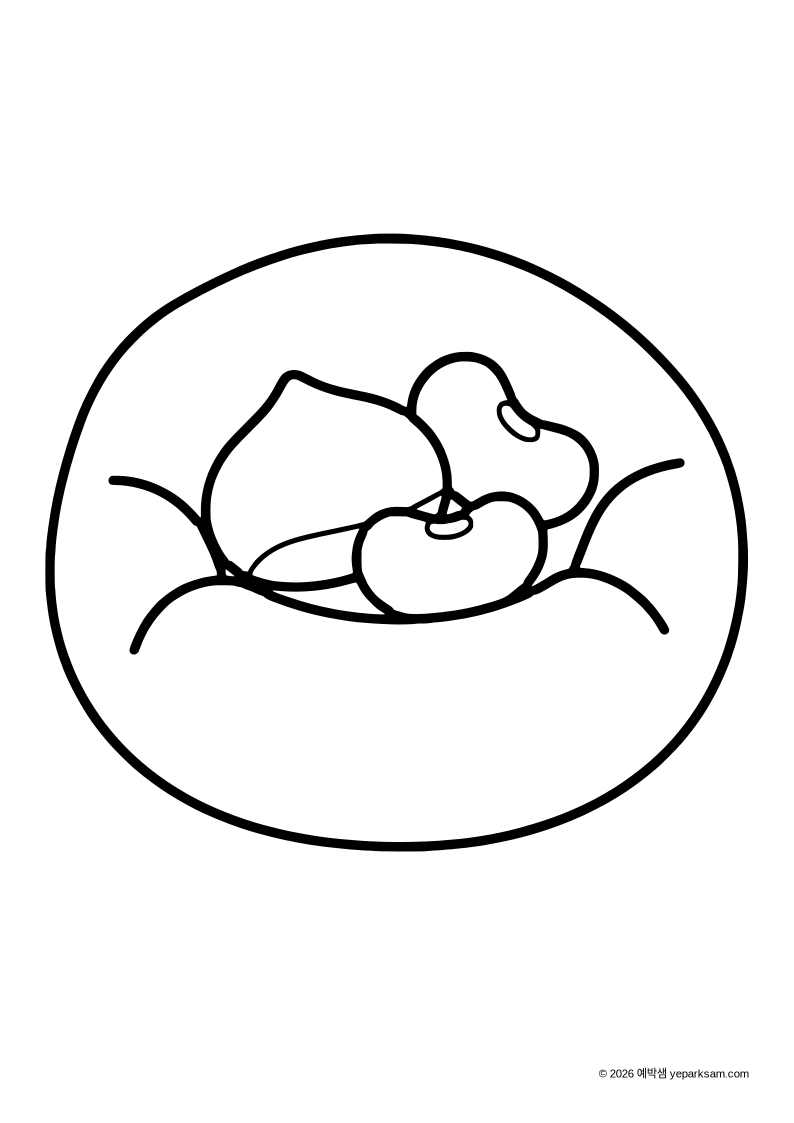
Sifting Down to Make Snow
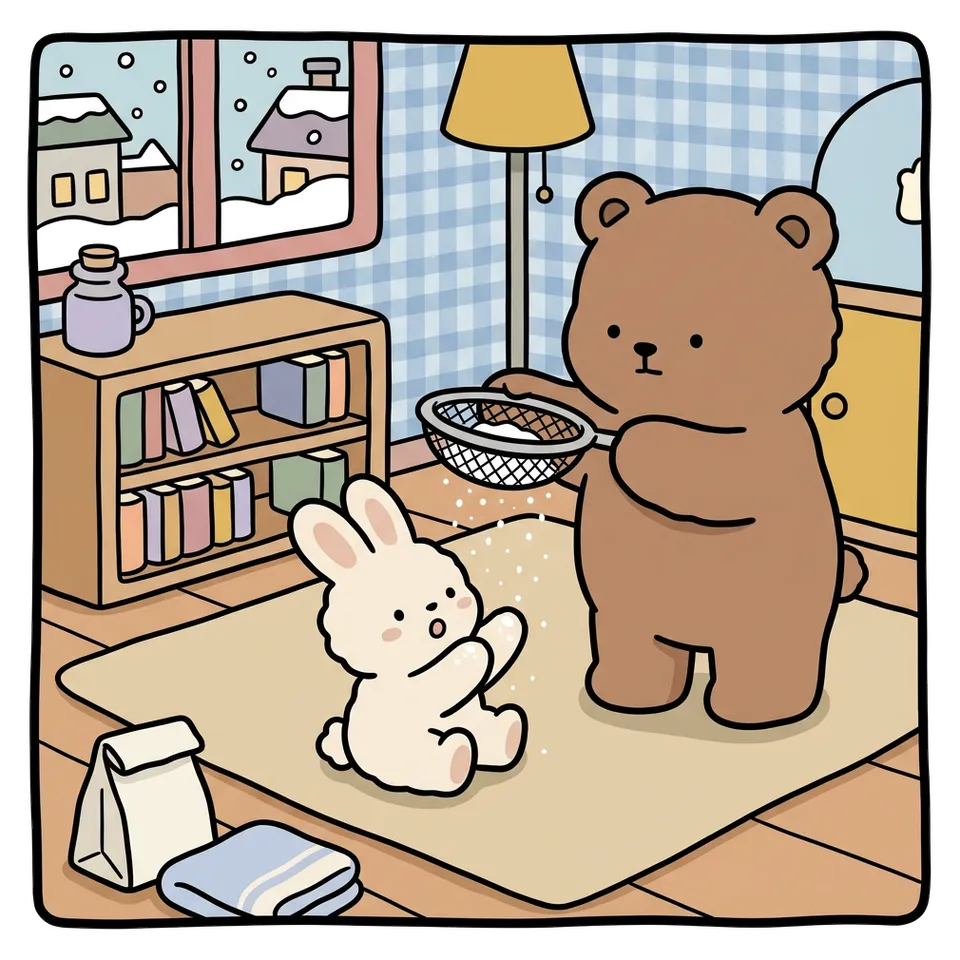
Put flour in a sieve and shake it over the child's head so it falls like snow. A flour sifter or a fine sieve works.
Why it's good
A sensory play where they follow the falling powder with their eyes, then catch it with their hands to check.
How to play
Put flour in a sifter and shake it gently above the child's head, and the powder falls like snow. A squeal bursts out the moment it falls. “It's like real snow!” they say, reaching out to catch it. Some look at the powder settled on the back of their hand, then puff it away.
Some children ask first if they can touch it. “What is this? Can I touch it?” they ask, and when I say yes, from then on they sweep and rub it with their palms.
Good to know
- Some children don't want to touch the powder. You don't have to push them.
- If you lay out a big sheet of paper or a mat, cleanup is easy. When they're done, just fold it up with the paper and you're finished at once.
What you'll need
Flour sifter or fine sieve · Flour · Paper or mat to spread on the floor
Touching the Powder
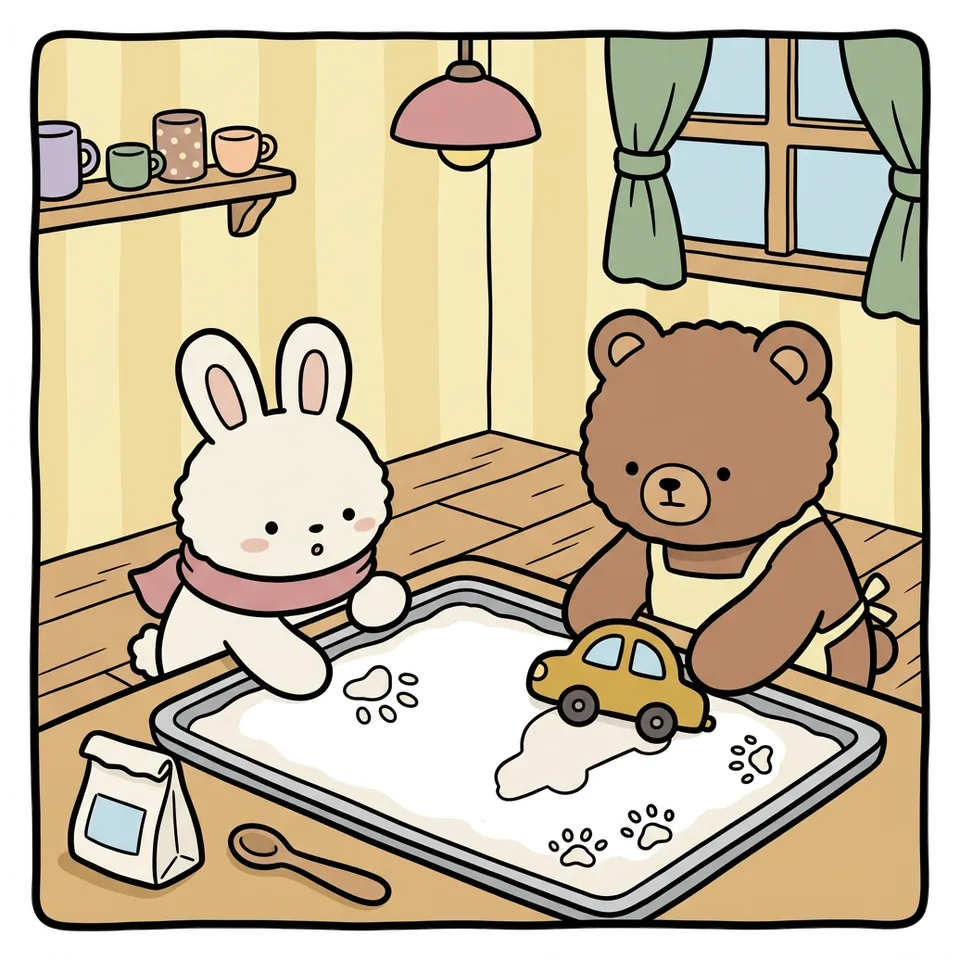
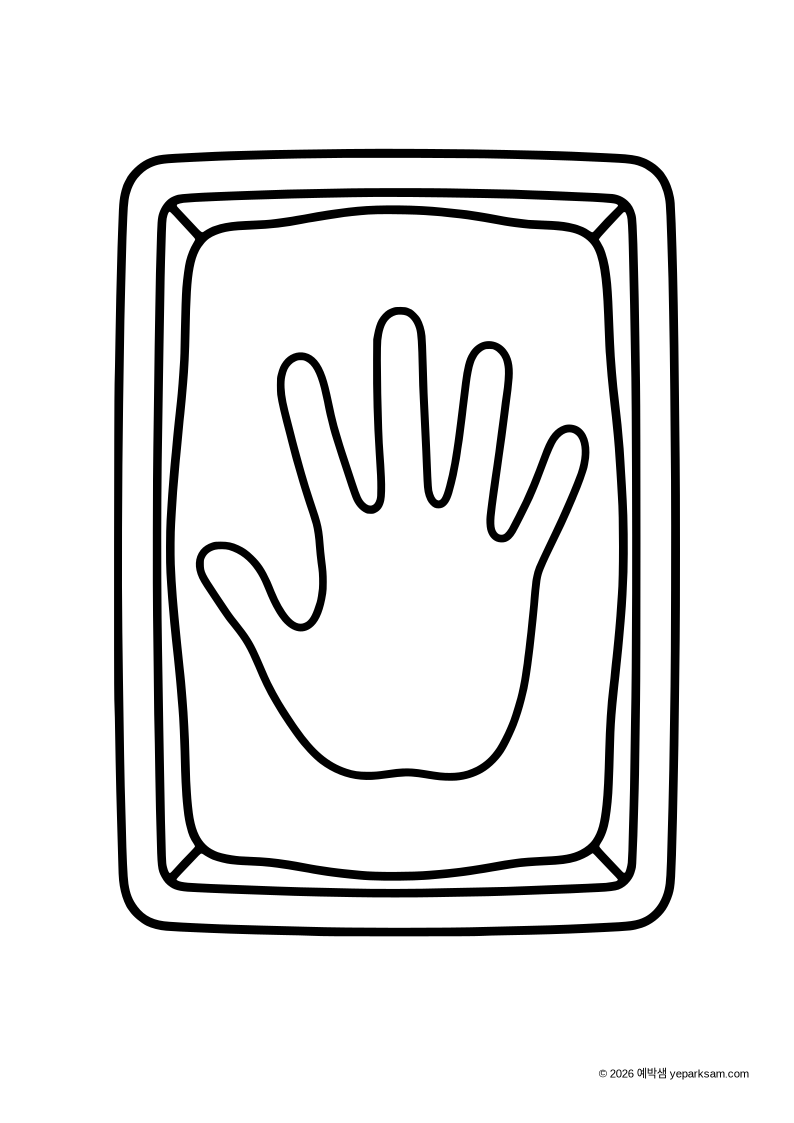
Spread flour flat on a tray and press it with your hand to leave prints.
Why it's good
Unlike wet sand, flour doesn't stick to hands much and feels soft. Even a child who backed away from other messy sensory play because they didn't like dirty hands will touch this readily.
How to play
If you spread the powder flat on a tray, handprints stay on top. They press their palms, draw lines with their fingers, shake it to erase, and draw again. It makes a squeaky sound.
If you let them squeeze it in a fist and open it, it clumps and then crumbles away, and they do this many times.
Good to know
- If it flies up, breathing gets stuffy. Just watch that they don't blow on it close to their face.
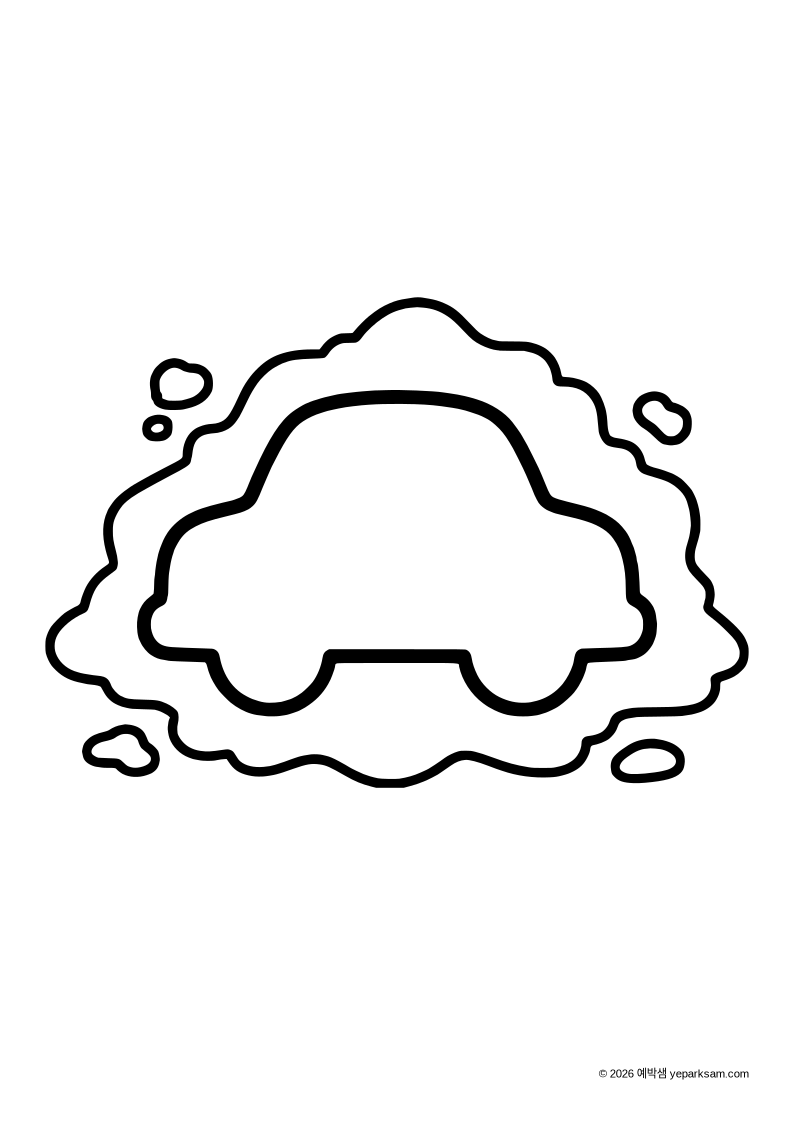
- If you put a toy underneath and sprinkle the powder, a shadow-like shape is left when you lift it. Place a car or a block, sprinkle a thin layer, then lift it and show them.
- If there's a flour allergy, some children react just from touching. Start with just a little.
What you'll need
Flour · Tray
Pouring in Water to Make Dough
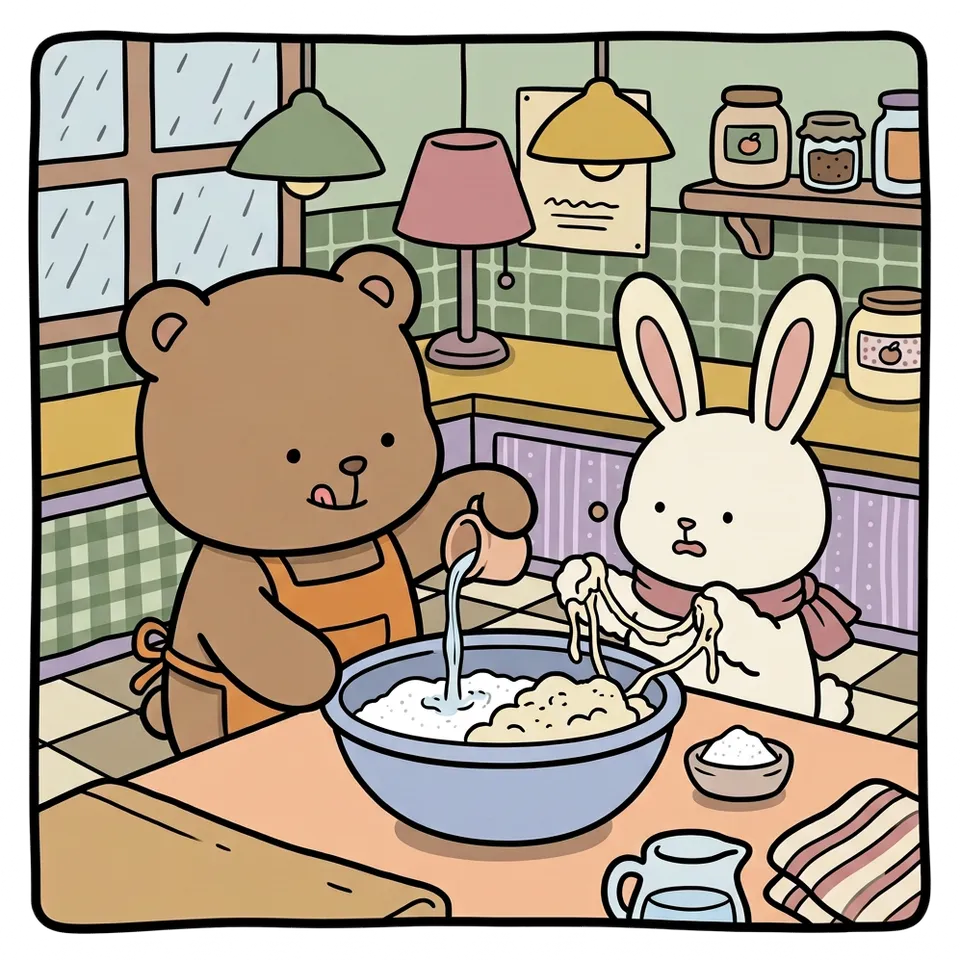
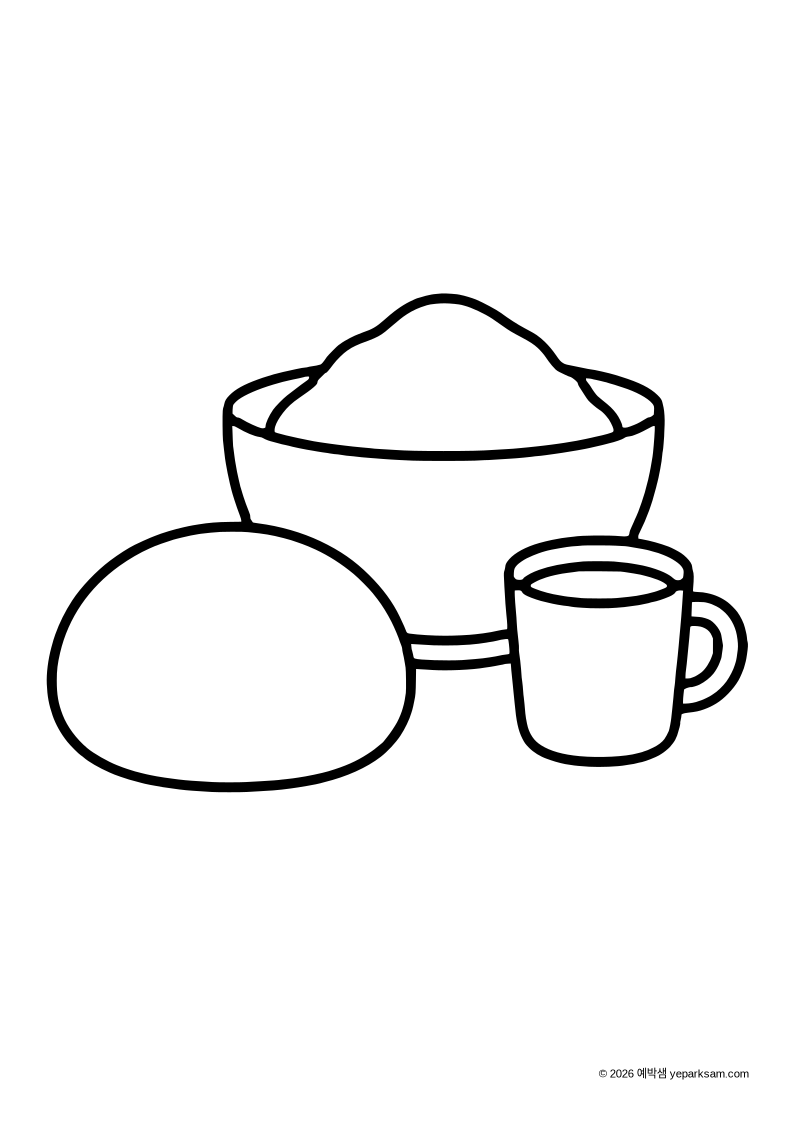
Pour water into flour a little at a time and the child mixes it by hand into dough.
Why it's good
A science play where the child directly experiences powder turning into dough when it meets water. They check with eyes and hands that the state changes.
How to play
When you pour water into the powder a little at a time, the child mixes it with their hands. If you pour it all at once it becomes a paste, so adding it a little at a time is the key.
There's always a stage where it sticks to their hands. The child gets flustered and shakes their hands. If you add one more handful of powder then, it clumps quickly. When it's done, words come out. “It's soft,” and “It's long!” they say, stretching and tearing it.
Good to know
- If it sticks to their hands, adding more powder makes it clump quickly. This back and forth is the heart of this play.
- If you add a spoonful of oil, the dough becomes smooth and sticks less to hands.
- Dough hardens and gets stiff after a day. It's easier to play it all out that day and throw it away, and if you want to keep it, wrap it in plastic and put it in the fridge.
What you'll need
Flour · Water · Cooking oil
Rolling and Stepping
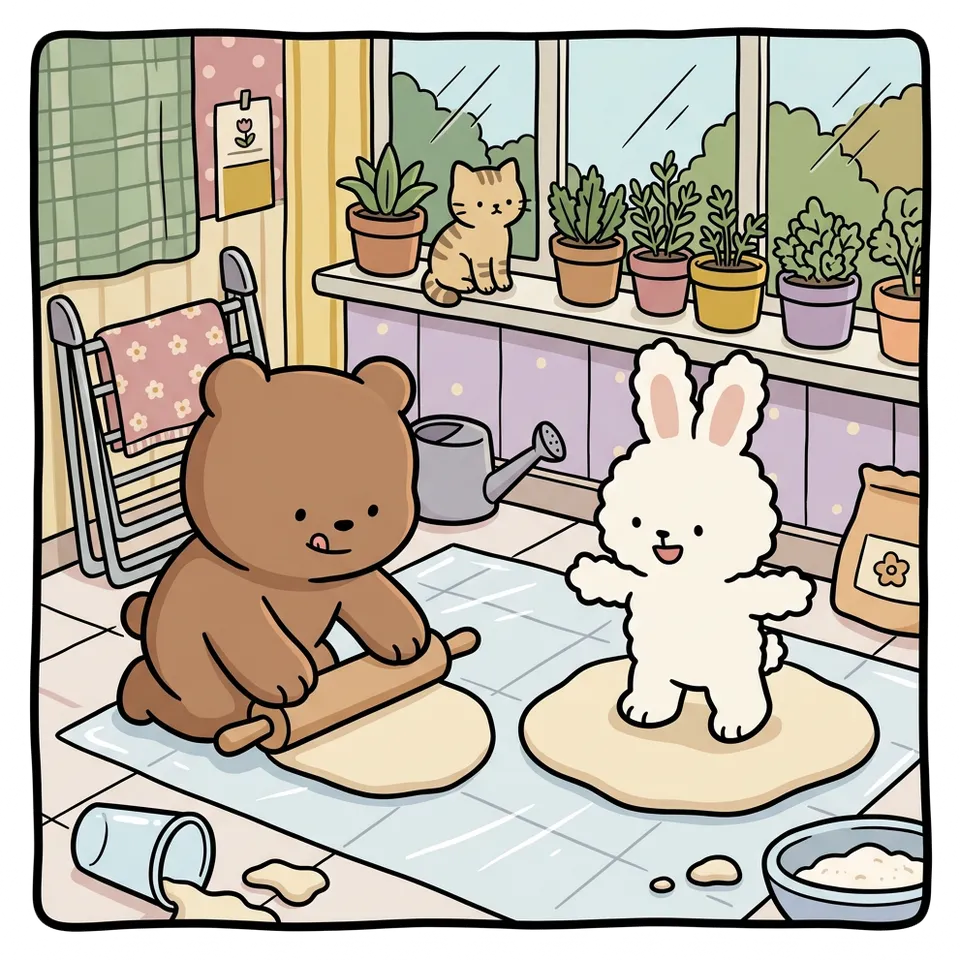
Put the dough on the floor and flatten it with a rolling pin or by stepping on it.
Why it's good
A play where the child feels with their body how rolling with hands differs from stepping with feet. They can see right away which way the same dough spreads wider.
How to play
When I put dough on a sheet of plastic and roll it with a rolling pin, the child sees it flatten and says so right away. “The dough got flat,” they say.
They step on it too. A child who was rolling with the rolling pin stopped partway, stepped on it, and said the same thing. Feet are stronger than hands, so it spreads wider.
Good to know
- If you don't have a rolling pin, you can lay a cup on its side and roll it.
- If you don't have a cookie cutter, pressing with a cup makes a circle too.
What you'll need
Dough · Rolling pin · Plastic sheet
Filling and Shaping
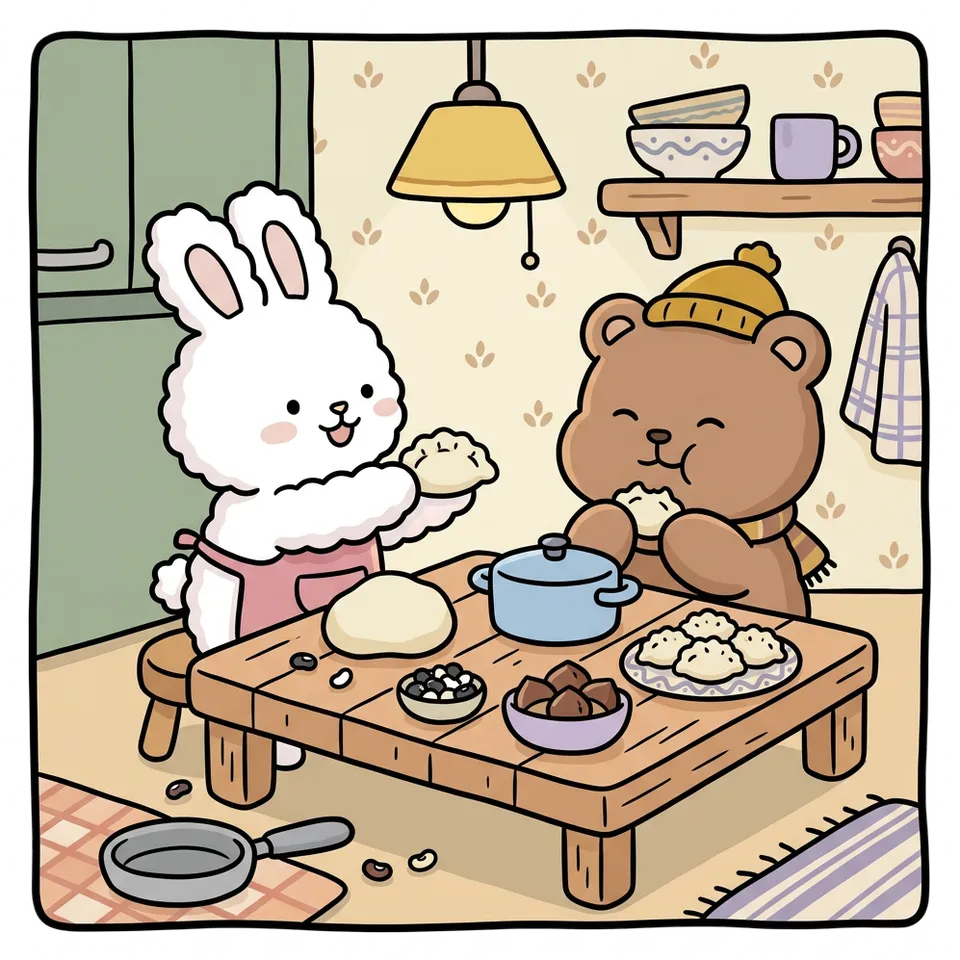
Pinch off some dough, put something small like a bean or a chestnut inside, and close it up to shape a dumpling (mandu).
Why it's good
A play where the child gives it a name depending on what they put inside the dough. The flow of the play goes all the way to handing it to someone after making it, so words pass between the giver and the receiver.
How to play
When I pinch off dough and hand it over, they put something inside and close it up to make a dumpling. What goes in can be beans, chestnuts, or small blocks from home.
After putting it in, they give it a name. A child who put in a chestnut said “I made a dumpling,” and a child who put in a bean said “It's a bean.”
Once made, they give it to someone. When they hand it to a friend saying “This is a dumpling I made, eat it,” the friend who receives it says “Okay, thank you.” If I pretend to take it and eat it, they keep making more and bringing them.
Good to know
- Tell them ahead of time that it's not for eating. Some children think it's a real dumpling and put it in their mouth.
- If you keep play dishes or a pot nearby, the play spreads into cooking. It sometimes goes on to pretending to bake what they made.
What you'll need
Flour dough · Things to put inside (beans, chestnuts, small blocks, etc.)
Guessing the White Powders
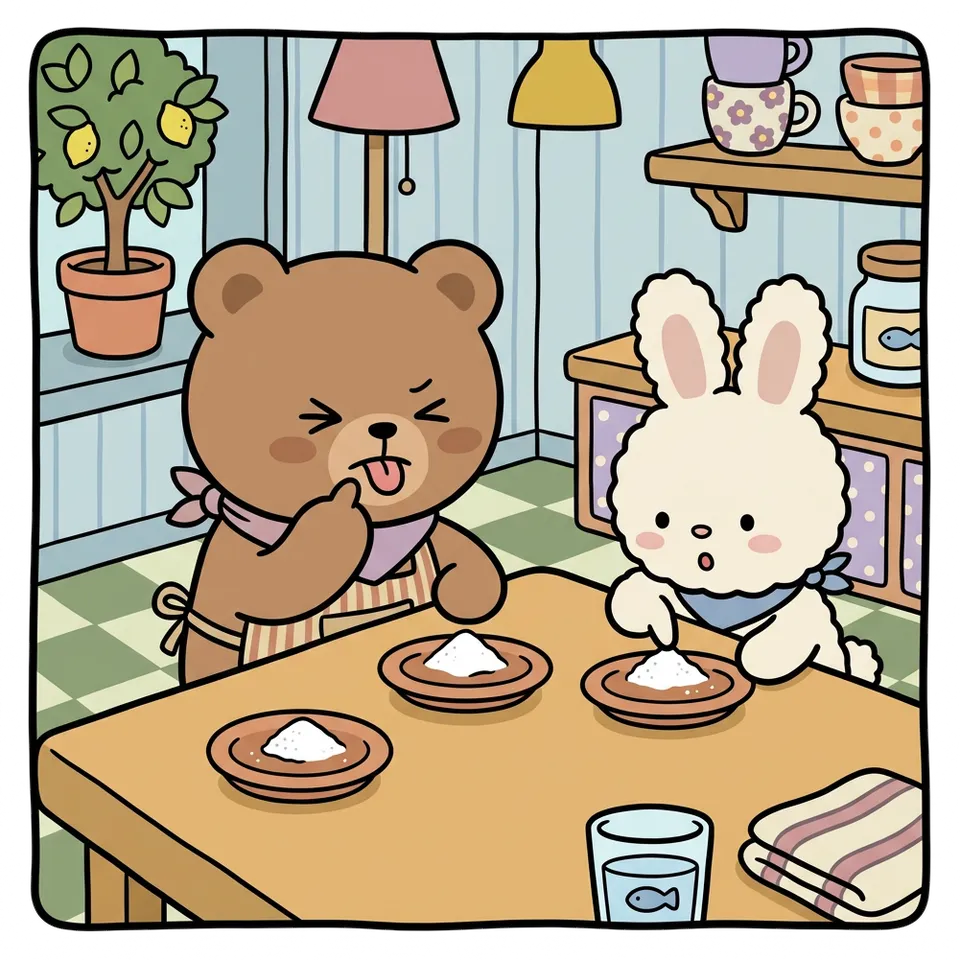
Put flour, salt, and sugar on separate plates and guess which is which.
Why it's good
A play where the child experiences for themselves that what you see can differ from what's real. All three are white so eyes alone can't tell them apart, and if hands aren't sure either, the answer only comes after tasting.
How to play
Put flour, salt, and sugar on separate plates and guess which is which. All three are white, so you can't tell by eye.
They go by eyes first, then hands, and finally taste. When they dab a little on a finger and taste, they tell right away, “Salty!” “Sweet!” “This one has no taste!”
They're most surprised when they get it wrong. A child said, “I thought it was sugar but it's salty!”
Good to know
- Adding rice flour or powdered milk makes it harder. Start with three and add one at a time.
What you'll need
Flour · Salt · Sugar · Plates