Play Ideas with Flashlights
Turn off the lights, hand a child a flashlight, and the first place they shine it is not the wall or the ceiling but their own hand. Hold it right against the palm and close the fingers, and the space between the fingers glows red. That's because the light passes through the skin and only the red is left. They gaze at that for a long time, and after that they poke into every dark corner.
But if you just hand it over in the daytime, they lose interest on the first day. That's what happened when I first gave one too. In a bright room you can't see where the light went, so the child clicked it on and off a few times and tossed it aside. Making the room dark is part of the preparation. A child who has done it a few times says this first, on their own. One child hung the flashlight around their neck, turned it on, and said “I can't see the light, let's turn off the lights,” and after we closed the curtains said “Now I can see it well.”
This page was translated by Yeparksam, a preschool teacher in Korea. Some words may sound a little unusual — thank you for your understanding.
Printables to use
See more ›
Put It on Your Palm
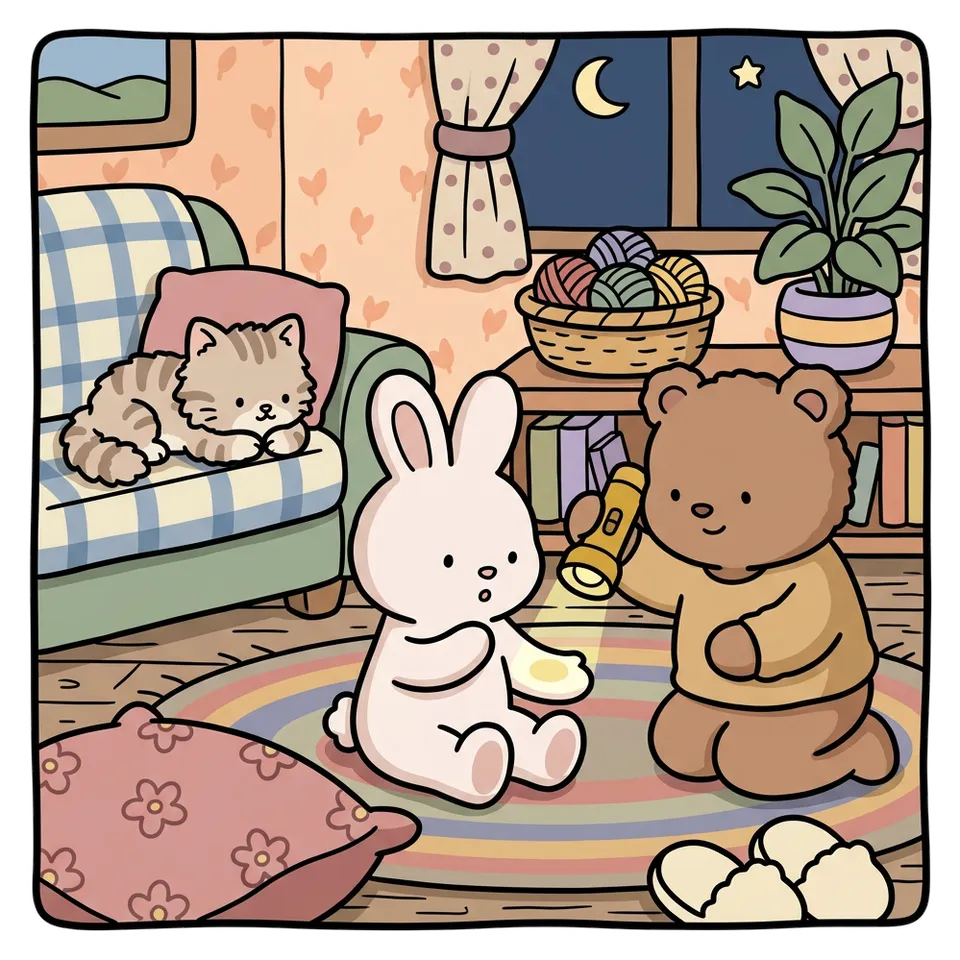
Rest a flashlight's glow on the child's palm.
Why it's good
They make the light appear and disappear with their own hand. Covering it with the back of the other hand makes it vanish and lifting it makes it come back, and repeating this teaches their body that their own action makes the result. The light they caught with their hands they try to catch with their feet too, and they notice that the shape of the light changes as they close or open their hand.
How to play
Have the child hold out an open hand and place a round light on it. It's their own hand, but they gaze at it for a long while as if something unfamiliar had appeared. One child looked straight at my face and asked “Did a circle come on my hand?”
After that it's all about making it disappear and appear again. When I slipped the back of my hand over the light to hide it, the child said “Oh, it's gone,” and with sparkling eyes held out a hand again right away. “Do it again, please” — I heard these words over and over.
When you move it to the wall, the hand shoots out first. They slap it and say “Got it!” When you put it on the floor, the feet step in this time. Place the light on top of a foot and move it slowly, and the child follows along, moving their foot.
Half-cover the front of the flashlight with your fingers and the shape changes. A child moving their hands this way and that said “Tail” and “Heart,” and called the plain round light with nothing covering it “Wheel.” Once they start naming things, there's nothing more for the adult to do.
Good to know
- The flashlight should be small enough for a child's hand and turn on with a firm press. Adult ones are heavy and dazzling, and a slide switch is hard to push with a child's finger strength, so the fun of switching it on and off themselves is lost.
What you'll need
Flashlight
Read a Picture Book in the Dark
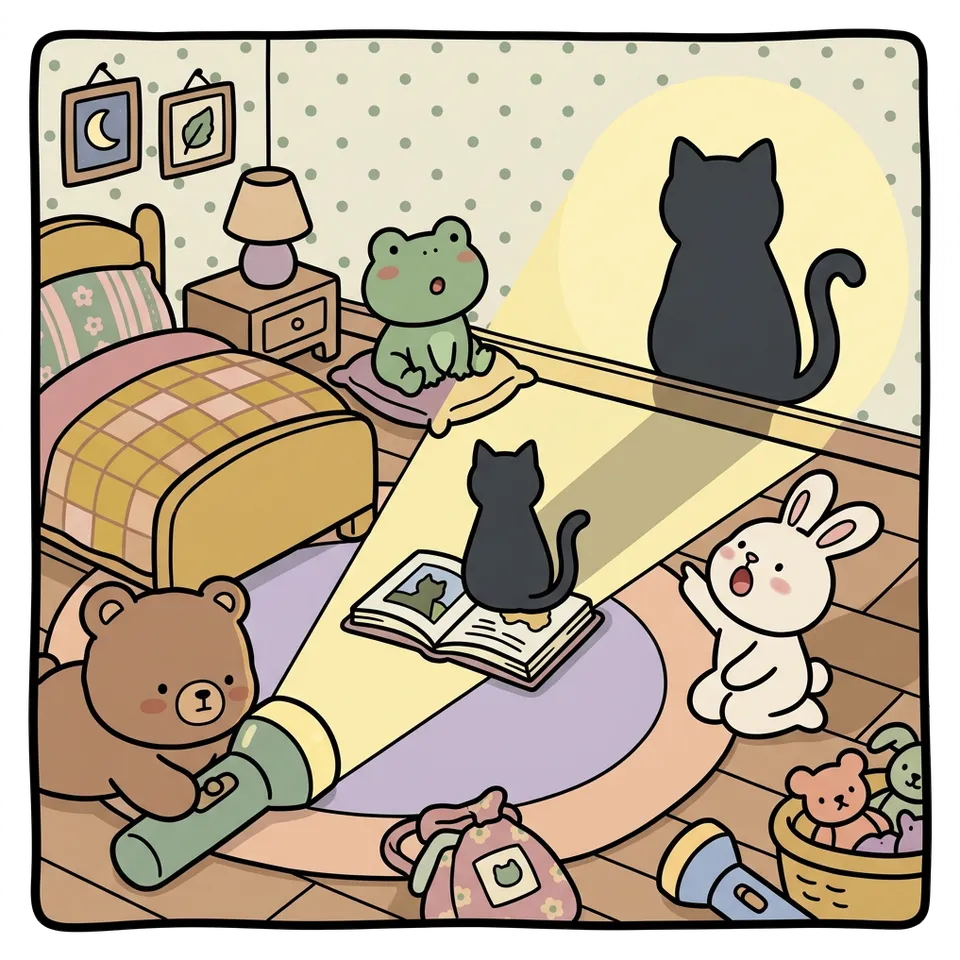
Turn off the lights and shine a flashlight on a shadow book, and the shapes in the book show up on the wall as huge shadows.
Why it's good
With every light off, their eyes go to just the one shadow on the wall. They work out what has appeared and name it, and then move on to telling a friend beside them first, passing on what they know.
How to play
There's a shadow book where black paper shapes stand up in 3D on each page. There's a cat and a tree, and when I held the flashlight up to it, a child asked “What's this?” and when I said it was a tree, they turned to the next page right away. This time a cat appeared. “Cat!” And when I asked where it was, “Here!” and the child pointed at the wall.
Then the child starts telling a friend sitting beside them first. “Shadow!” Then the friend said “It's a shadow?” and then “It's a cat shadow!” and then “I want to do it too!”
There's something left to do only while I'm the one holding the flashlight. When I moved it back and forth to show it better, the picture on the wall got bigger and smaller, and each time the child opened their eyes wide and only leaned their body forward. Their hands didn't reach out. Only after I handed them one each did they walk around themselves and adjust the size. Handing it over works better than showing it well.
Good to know
- You need at least two flashlights. With one, it splits into a child who holds and a child who watches. Only when each has one do they start walking around on their own.
What you'll need
Two flashlights · Shadow book
Poke a Star in a Paper Cup
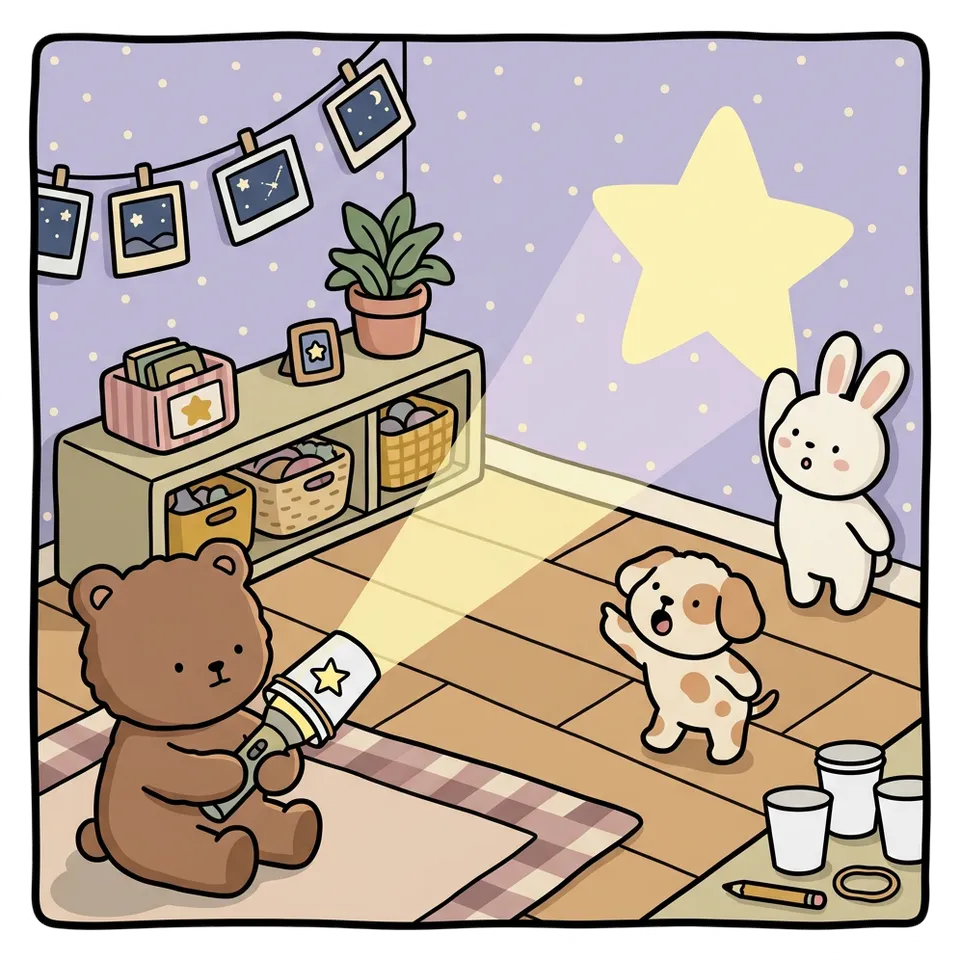
Cover a flashlight with a paper cup that has star-shaped holes and turn off the lights, and stars appear on the wall.
Why it's good
The light goes out in the shape of the hole and appears on the wall exactly like it. While recognizing and touching the shape on the wall, they confirm with their bodies how light and shape are related.
How to play
This child had been tracing the star pictures on the wall with a finger these past few days. I put a paper cup with a star-shaped hole over the flashlight and then suddenly turned off the lights. As soon as a star appeared on the wall, the child jumped up, ran to it, and pressed a hand against the wall. A friend watching beside them pointed at the star with a fingertip and shouted “Star!” and when I said yes, there's a star, they said “Yeah!” and stamped their feet happily. The child poked the star with a fingertip and pulled away, again and again, then spread out a palm and quietly laid it on top.
Good to know
- Pressing the hole through with a pencil tip is safe and makes a perfect fit.
- If you add a cup with a triangle hole beside the star, some children pick up the triangle cup instead of the star. Three with the circle is plenty, and when the holes get complicated the light smears and just looks like a blur on the wall.
- If the cup is loose, the shape won't come out. Light leaks out the sides and it becomes just a round light. Wrap a rubber band once around it to attach it snugly to the flashlight and the shape comes out.
What you'll need
Flashlight · Several paper cups · Rubber band
Find the Leaf Shadow
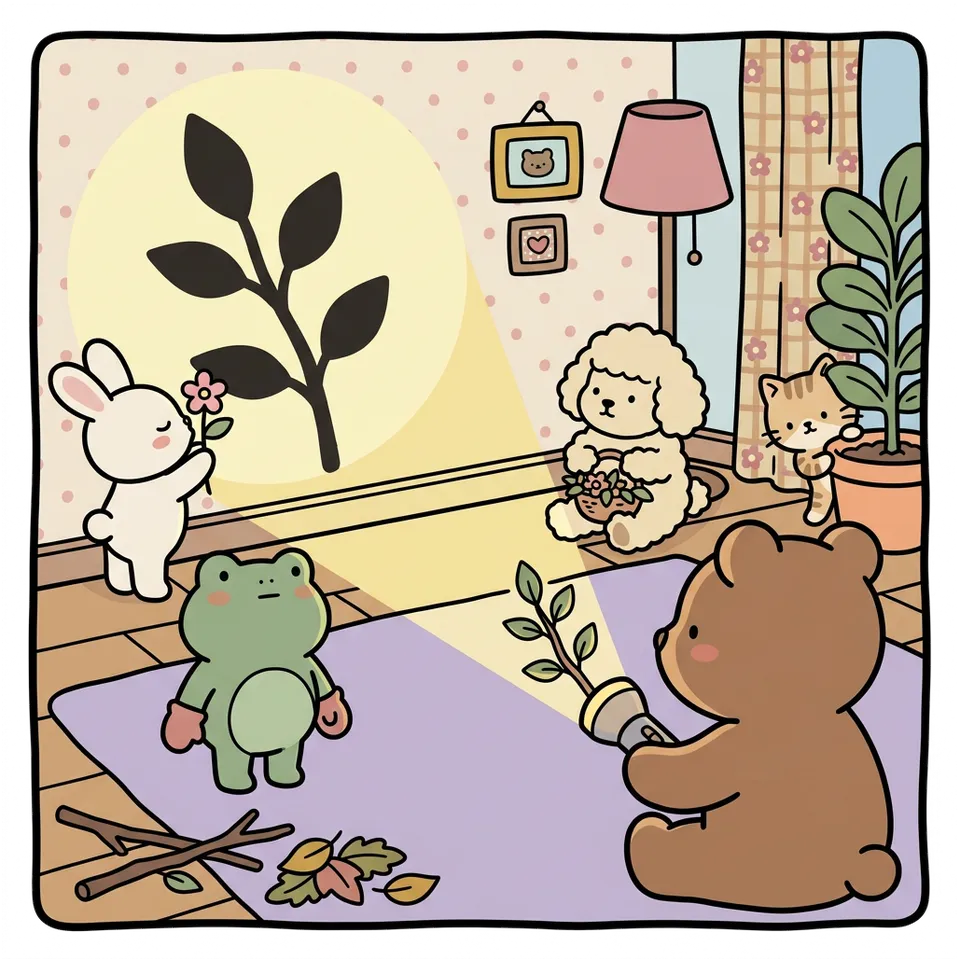
Hold a twig you picked up on a walk in front of a flashlight and see what shadow it makes on the wall.
Why it's good
The shadow found in the room doesn't end when the flashlight goes off. They notice for themselves that the shadow they were finding on the wall connects to the real shadow the sun makes, linking the flashlight and the sun, the room and the outdoors.
How to play
Hold a branch in front of the flashlight and its edges are jagged, so the shadow looks as if something real is standing there. I wiggled the light gently to make it look alive, and one child, startled to see the shadow squirming, ran over and clung to me. I sat the child on my lap and told them several times that it was the same branch as before. Only then did the child look at the wall again, and from that day on they picked what to shine on for themselves.
After making a shadow, if you match a real leaf or flower to it and stick it on, the play gets one step further. To a child who didn't understand when told to stick it on, I said “Shall we give the shadow a kiss with the flower?” and they understood the kiss and first put the flower to their own lips.
When you go outside, the sun has already made leaf shadows on the ground. Even when the flashlight is off, the play doesn't end, so every time we go for a walk they look for the shadow before the leaf.
Good to know
- A branch picked up on a walk is better than a smooth toy. Pick up a few on the way back in and you can use them that very evening.
- At first, just hold it still. If you wiggle it to look alive, they get scared.
What you'll need
Flashlight · Branches · Leaves or flowers
Make a Hand Shadow Big
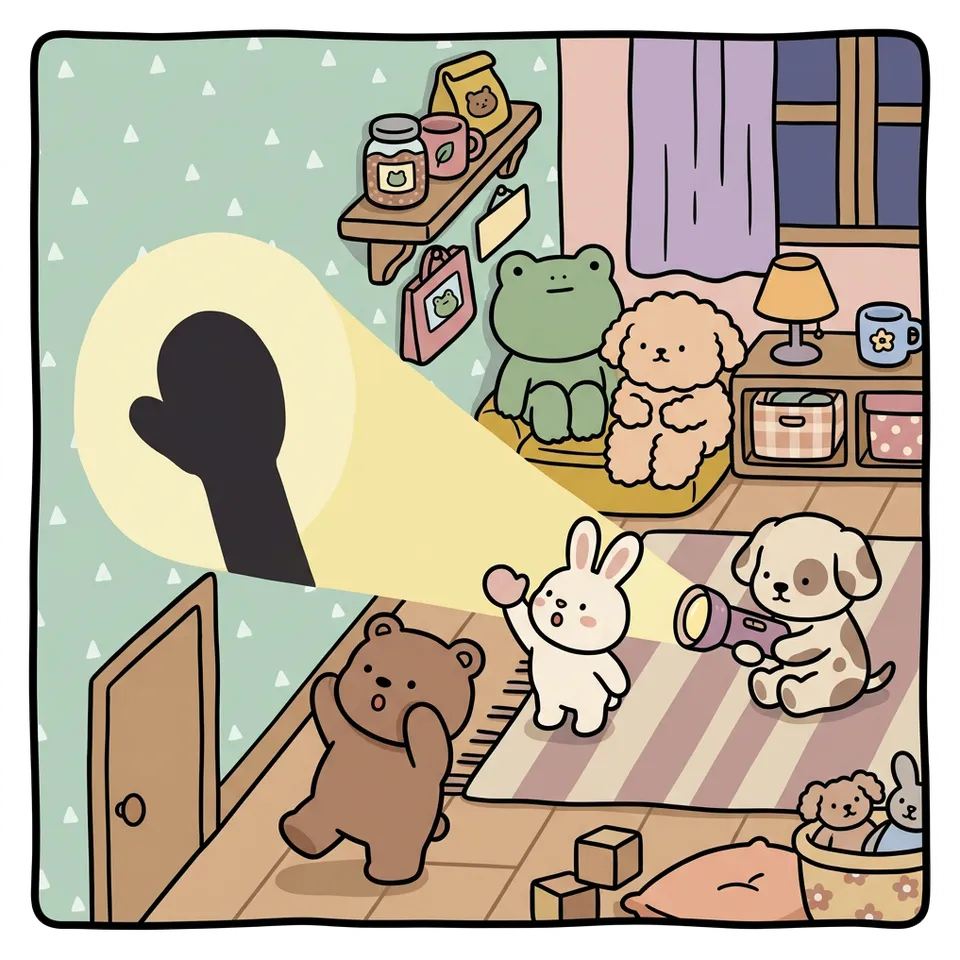
Move your hand closer to the flashlight and watch the shadow on the wall get bigger. It's easier to see when the room is dark.
Why it's good
They change the distance between the flashlight and the hand themselves and check how the shadow size changes. They learn with their bodies that it gets bigger the closer it is and smaller the farther back it goes, and then notice on their own that no matter how far back they go, the shadow never gets smaller than the hand. It's a play that raises a question even an adult can't answer right away, so it becomes an experience of wondering together.
How to play
It shows better in a dark room, so when a child said “It's bright now so I can't see well. Please turn off the lights,” that's when I turned them off. A child with a hand on the wall said “Oh, I have a hand shadow,” and a friend who saw it said “It looks like a hand monster? It's so big.” The child holding the flashlight grinned and said “If you do this, it gets small,” and pulled the hand back.
But no matter how far back it goes, the shadow doesn't get smaller than the hand. The child asked “But our hands are small, why is the shadow always big?” I froze on the spot too. I put the hand right up against the flashlight, then stretched my arm out as far as I could, and the shadow got smaller but never smaller than the hand.
A butterfly doesn't come out when you're alone. If one hand holds the flashlight, the other hand can only manage a dog or a duck. When a child couldn't do it alone, they handed the flashlight to a friend and said “You hold this.” With both hands free, they finally overlapped their hands to make a butterfly, and the friend holding the flashlight said “This looks like a butterfly.” After that they take turns holding the flashlight and making shadows for each other.
Good to know
- Stand the flashlight up or have an adult hold it. Both hands need to be free to overlap them into a butterfly.
What you'll need
Flashlight
Be Bats and Vampires
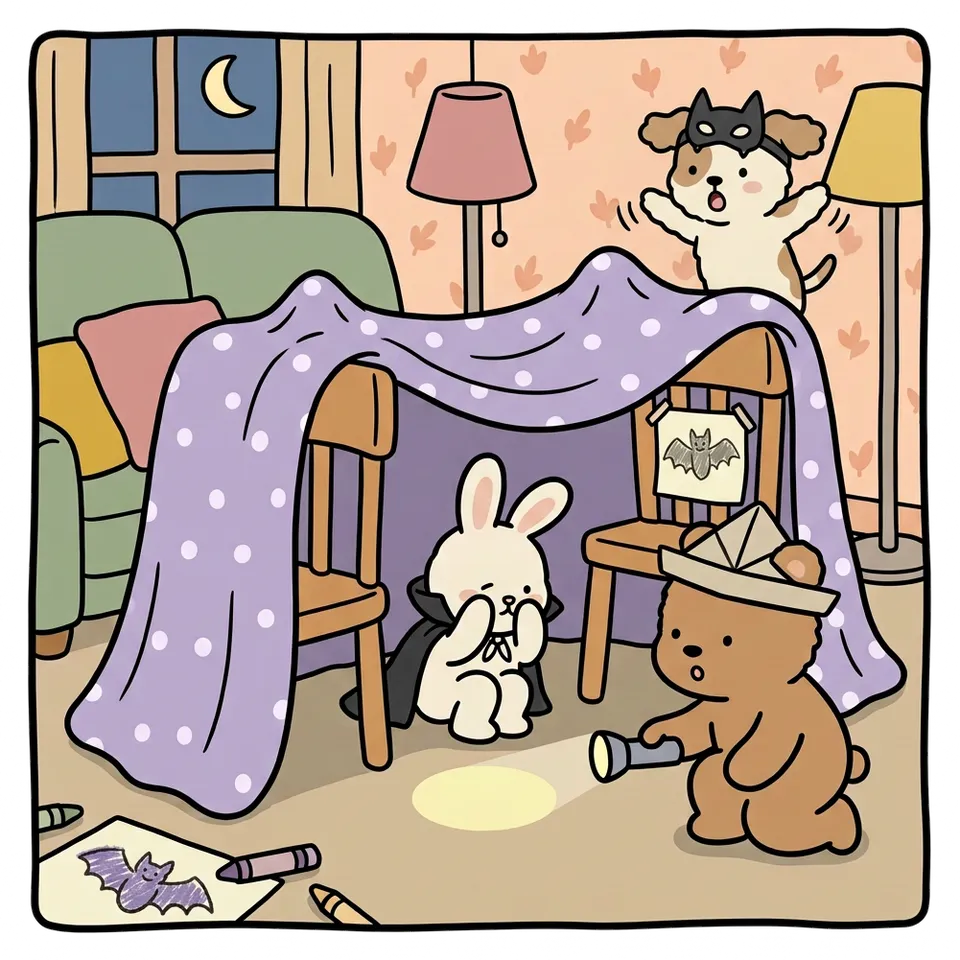
Pretend there's a cave where bats, vampires, and an explorer with a flashlight live, in this role play. Behind a curtain or under the sofa, wherever the child says is dark becomes the cave.
Why it's good
One flashlight splits up the roles. Some become bats, some become vampires, and the child holding the flashlight becomes the explorer. They experience one object being used with a different meaning for each person in the story.
How to play
If you first ask what kind of place the cave is, the child makes up everything after that. I just asked because I was curious. “What do you think is inside?” and the child said “It's dark!” and a friend beside them picked it up with “Bats live inside!” and “There might be vampires too!” You can decide where the cave is afterward.
Once there's a place, everyone takes a part. One child says “I'll be a bat!” and flutters around making a “squeak squeak~” sound, a friend says “I'm a vampire!”, and there's an explorer with the flashlight. I handed over just one flashlight, and the three of them each picked a different role.
The vampire made the rules. “You have to be quiet, if you see the light you disappear!” With that one line, the flashlight became a weapon. The vampire went looking for places to hide, and the explorer swept the light from the corners saying “There's a bat here!” and “Watch out for the scary vampire!” I knew where they were hiding but stayed back and pretended I didn't.
After a few more rounds, they draw bats on paper and stick them inside the cave. Once the pictures are up, you end up leaving that cave as it is until the next day.
Good to know
- For a child who is afraid of the dark, give them the explorer role first. Once the child with the flashlight goes in first, the bat and vampire roles get sorted out naturally.
What you'll need
Flashlight · Paper and colored pencils
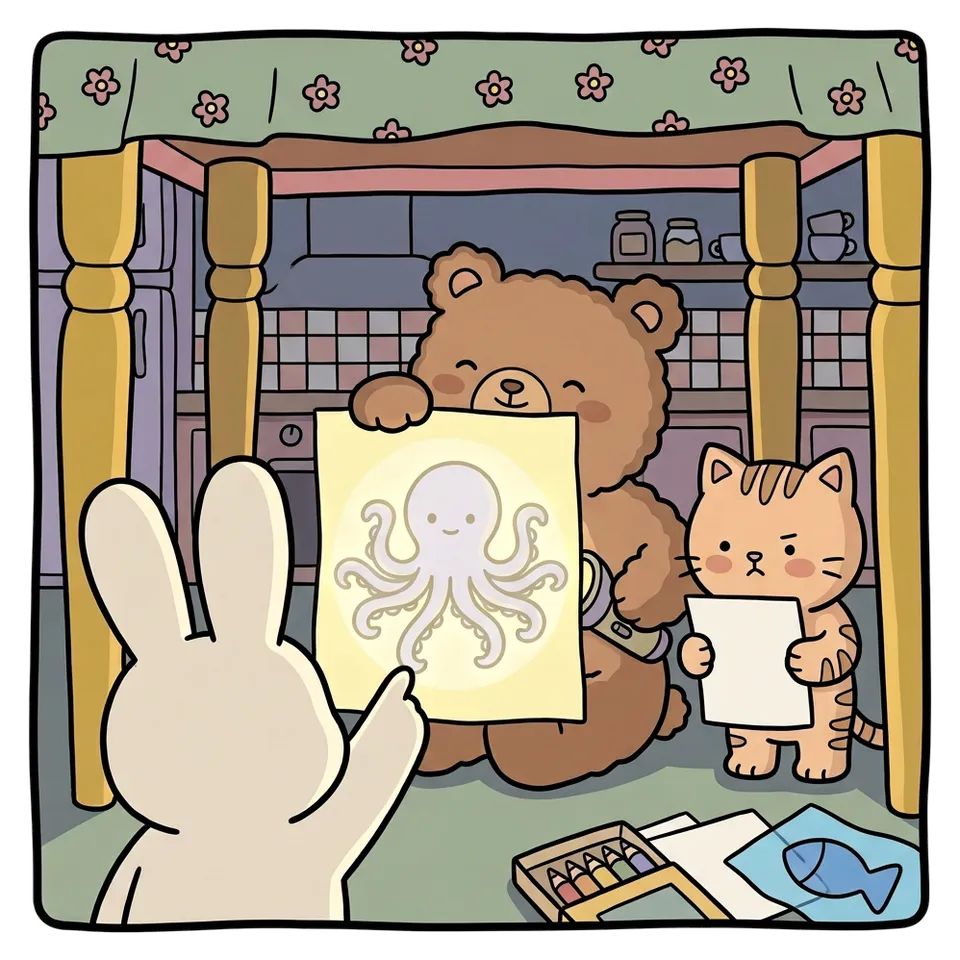
Open a Shadow Theater
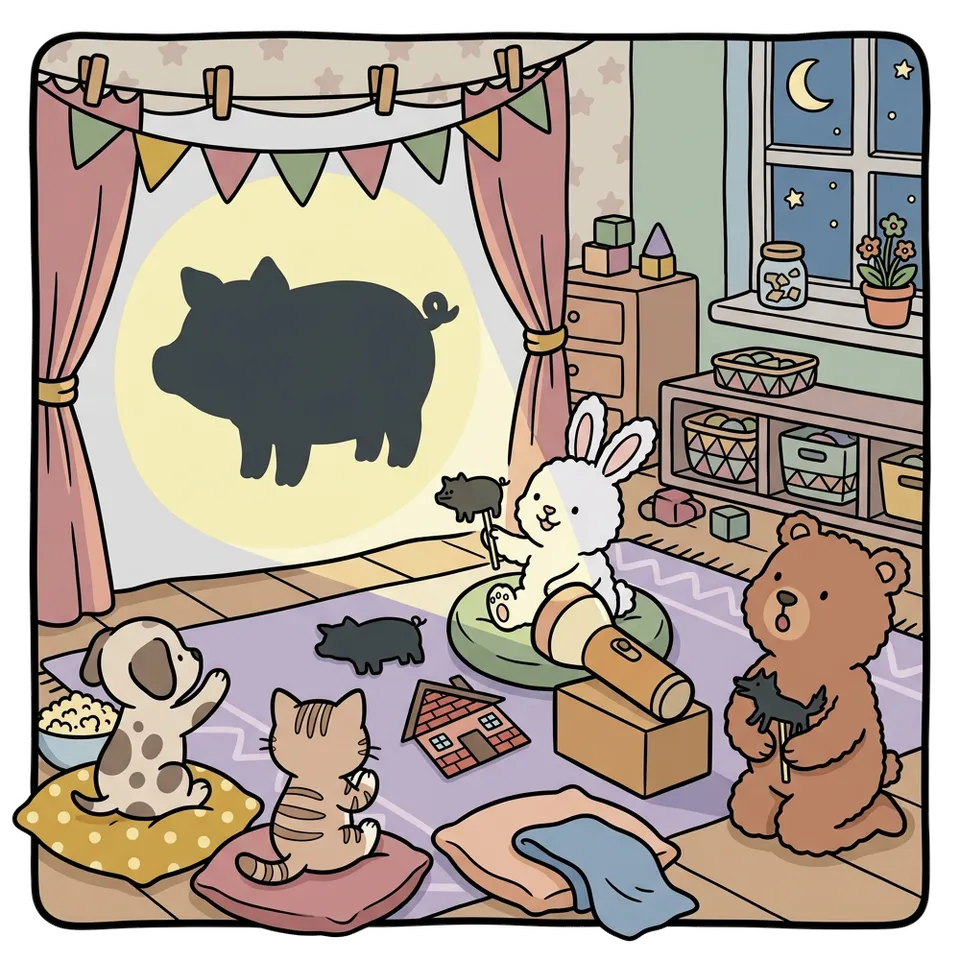
Cut out black paper, stick it on a straw to make a shadow puppet, then turn off the lights and shine it on the wall, and it becomes a theater just like that.
Why it's good
They recreate a story they know with shadows. With a familiar story like The Three Little Pigs, children carry on to the next scene on their own. They also make a puppet bigger by moving it closer to the flashlight and notice this inside the story.
Books to read together


How to play
Turn off the lights and shine it on the wall and it becomes a theater right away. It's better to use a story they know. With The Three Little Pigs, the child knows the next scene on their own. When the wolf is moved close to the flashlight it gets bigger on the wall, and seeing that, they said “The wolf got big” and “The house flew away,” and then a child said “The youngest pig is small, small, so he went close to the light.” They told the story of getting bigger when you go close.
If you stand the flashlight on blocks, both hands are free and they hold two puppets each. A child did this before I did. It's the play where “I can't, please do it for me” is heard most. I only drew thick lines to cut along and stepped back, and a child who got one done started going to friends and teaching them.
Once the stage is set, they look for an audience. A child who had finished the puppets asked “When are we inviting our younger siblings?” and really did call guests over to sit down before starting. When a child said they had no flashlight, a friend told them “There's the flash on your phone,” and that really does work for all of it.
Good to know
- Stand the flashlight on blocks to fix it in place. Holding it in one hand while moving puppets with the other makes the picture shake and tires them out quickly.
- Hanging a sheet and shining from behind makes the stage wider. Thin cloth lets the light through, so the shadows made behind it are seen as they are by the people sitting in front.
What you'll need
Flashlight · Black drawing paper · Straws · Tape · Blocks · Bed sheet
Take It Out at Night
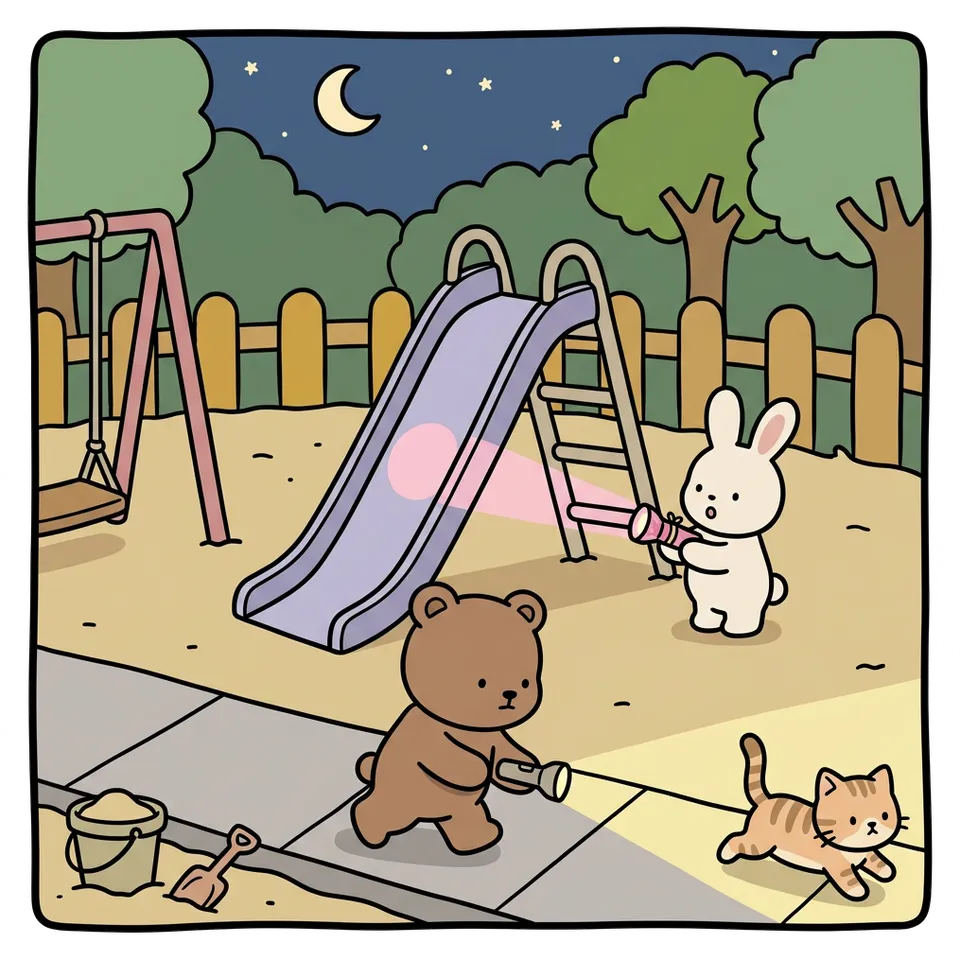
By day, wrap cellophane around a flashlight to give it color, then take it and a white flashlight out to the playground at night.
Why it's good
The same playground equipment looks like a different place just by changing the light. By alternating white and colored light, they notice for themselves that the same spot looks different depending on the light, and even invent the rule of choosing the tagger with a single light.
How to play
We took the flashlights out to the playground. At first I had only taken one white flashlight, and only after I sent the colored one along too did the child start alternating between the two lights. They shone white, switched to the colored flashlight, and said “This looks like the sea,” and “It's pretty when it turns pink,” and then suddenly shouted “It's like space!”
The child and the friend who had been comparing together each made a different play. The child stretched the light long along the ground and followed that path pretending to look for something, and the friend started dodging that light this way and that. As they dodged, a rule appeared: if you shine the flashlight on a friend's clothes, that friend is the tagger. Deciding and choosing were all done with a single light.
Good to know
- Bring both a white flashlight and a colored one. With only one, it just ends as a night walk. Give two lights together and the child starts alternating them.
- Shine it at their feet and they won't fall. In the dark everyone looks only far ahead and doesn't watch their feet. Once someone falls, the night's play ends right there.
What you'll need
Two flashlights · Cellophane