Play Ideas with Fishing
When you buy a fishing set, you get one magnetic rod and a few paper fish, and that's it. But I've often seen how differently children play depending on what I set out next to it.
What you set out changes who the child becomes. Cut slits in a big sheet of blue paper and they turn into winter ice fishers waiting in gloves; set out a colander basket and they become fishmongers pricing their catch. And when even the store-bought rod gets boring, the children tie string onto a straw themselves.
This page was translated by Yeparksam, a preschool teacher in Korea. Some words may sound a little unusual — thank you for your understanding.
Printables to use
See more ›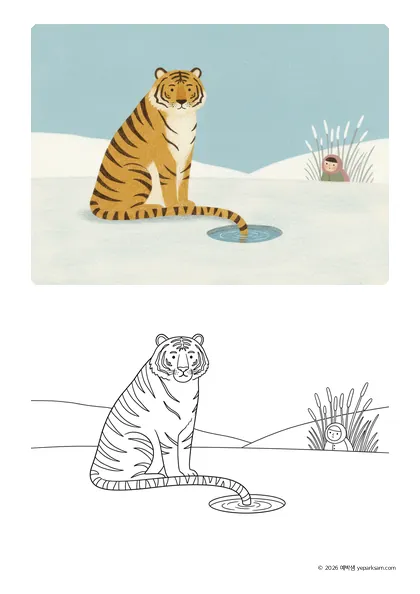
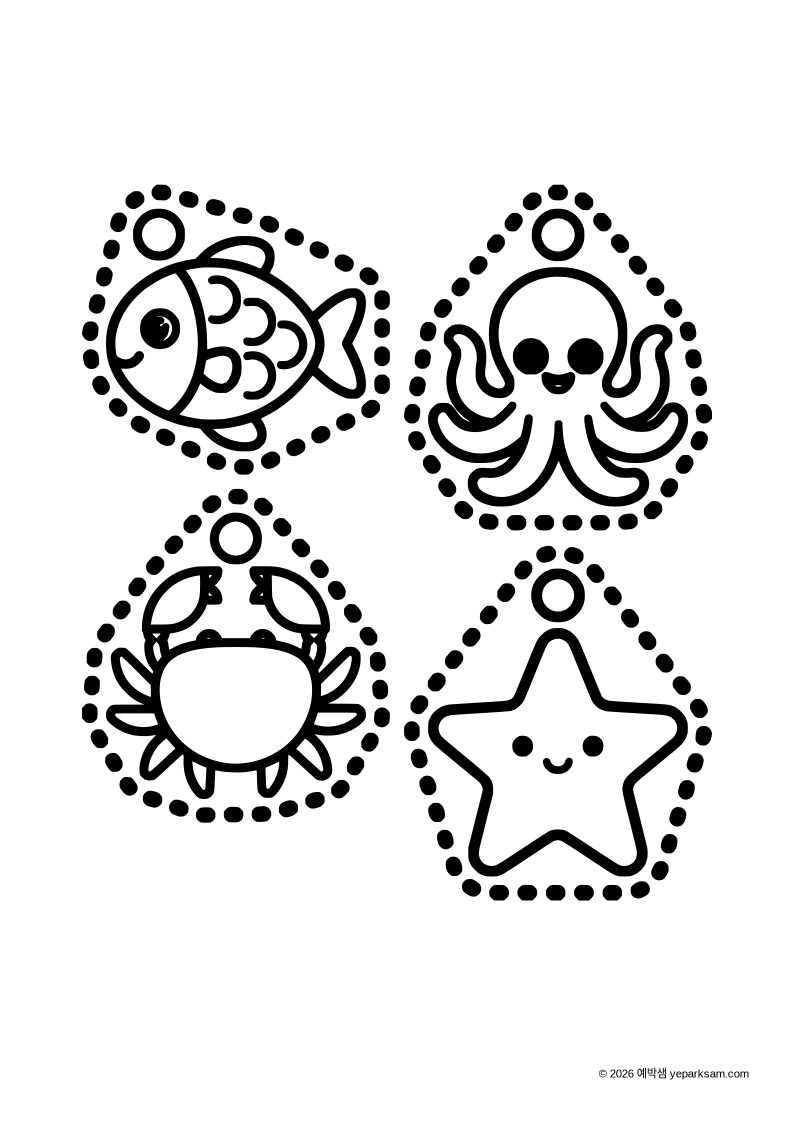
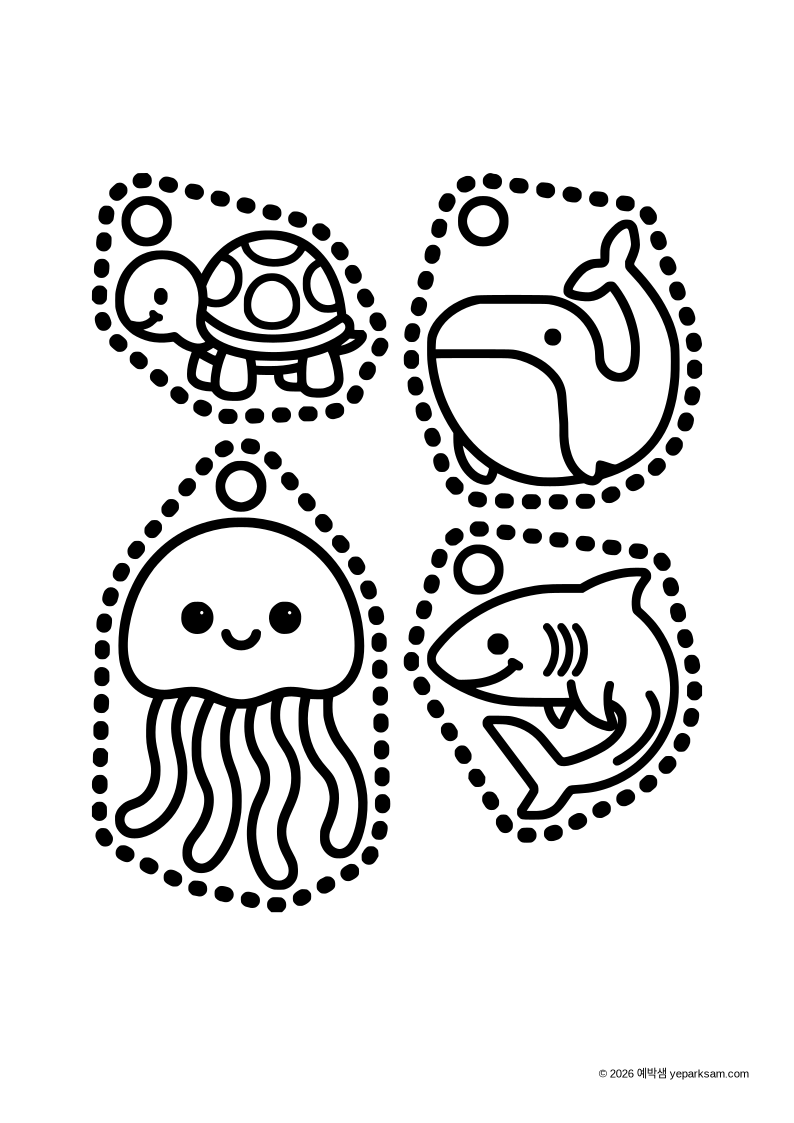
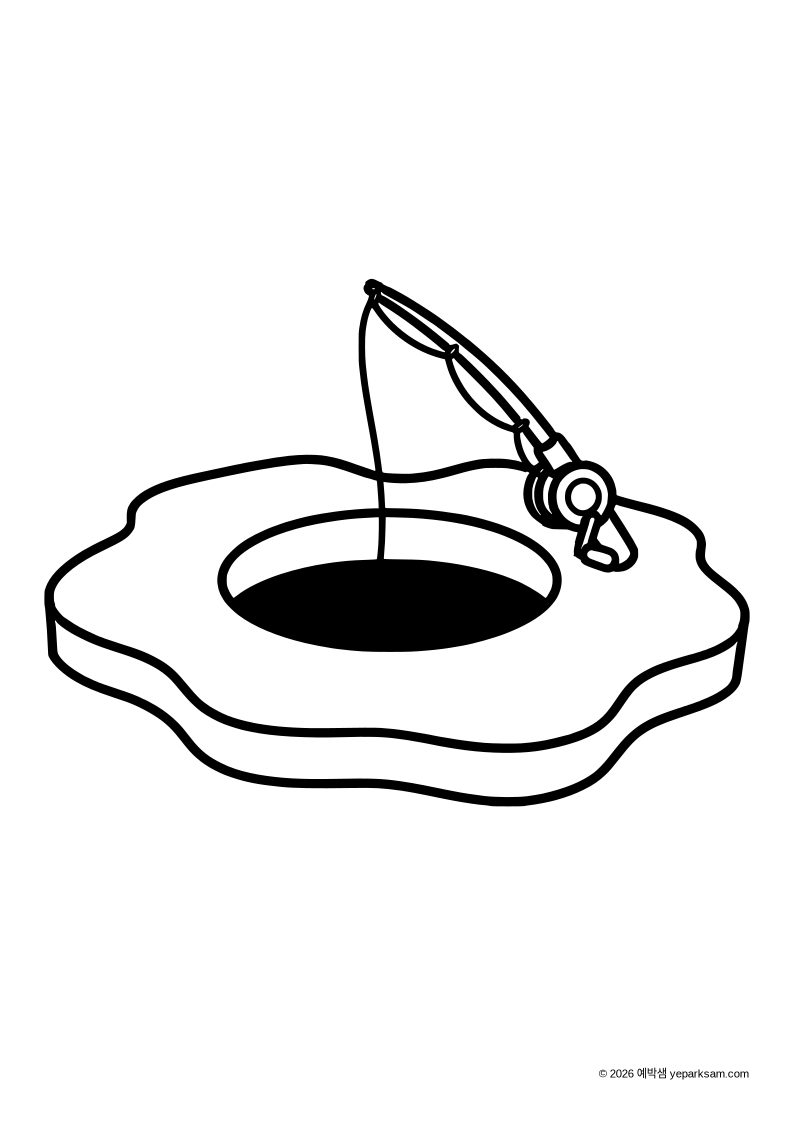
Building a Fishing Spot
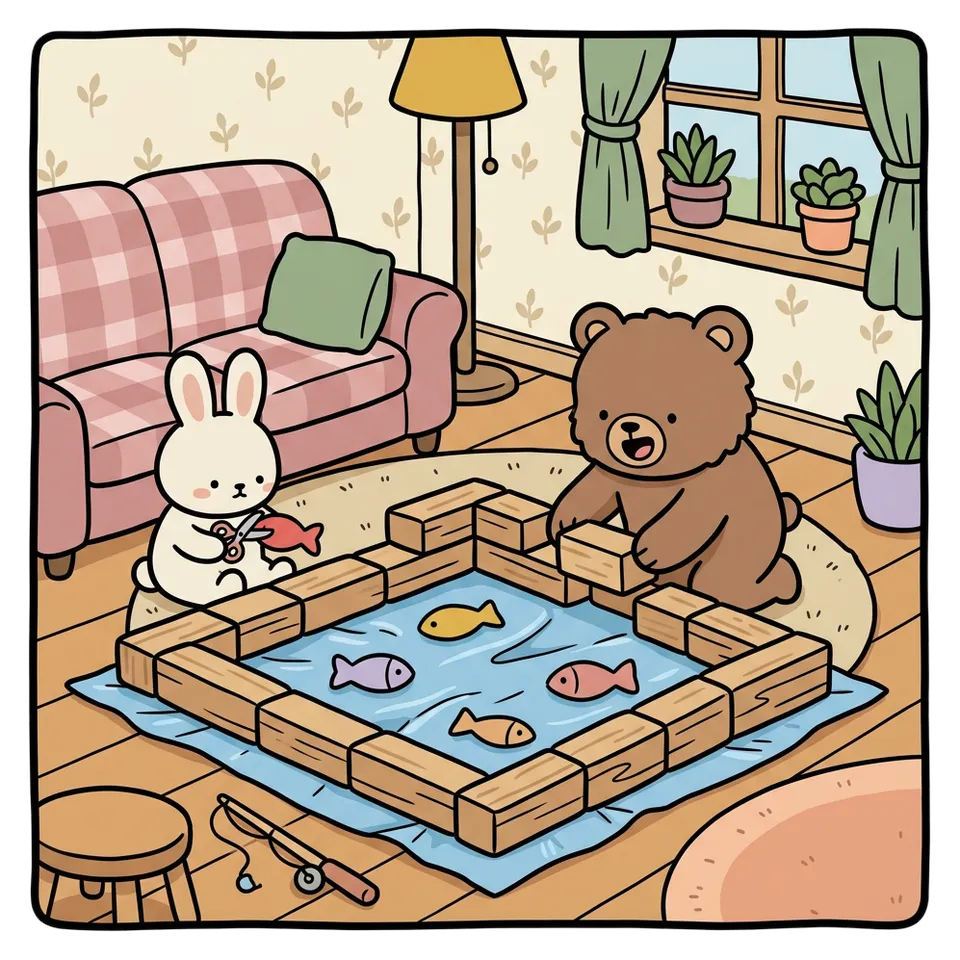
Build a fishing spot yourselves with blocks and go fishing there. Instead of a store-bought fishing set, the child builds the water, the bank, and the fishing spot from blocks and colored paper.
Why it's good
Good for building a place that didn't exist out of blocks. The child notices the water leaking and says let's lay down plastic, working out the problems they run into while building all on their own. When it's done, they explain the place from start to finish in their own words, which is also a moment of checking for themselves that they turned what they imagined into something real.
How to play
It starts when you open the box of blocks. One day my child spoke up first, “Let's make a fishing spot too,” and I said sure, why not. Once we settled into one corner of the living room, who does what sorts itself out. My child laid blocks side by side on the floor saying “Here's the water,” the younger sibling cut colored paper into fish, and I dragged over a low stool.
It was my child who first noticed the fish kept slipping through the gaps between the blocks. “The fish keep falling,” they told me, so I laid a sheet of blue plastic over the top, and only then did the paper fish float instead of sinking. They brought more blocks to build a wall around the edge so the water wouldn't spill out, and cheered, “My idea really worked!”
When it's all built, they call out “I'll show you our fishing spot!” and start the tour, pointing at the blue plastic first. When they say “This is the water of our fishing spot,” the younger sibling chimes in, “I made this one.” Only after going all the way around do they pick up the rod.
Good to know
- Let the two children set the rules. Promises they make themselves are kept better than ones I make for them. Things like “We have to take turns” or “No throwing the fish” that they decided on their own.
- No need to build it all at once. What isn't finished can carry on for days, and in the meantime the child comes back with ideas about where to build the wall higher.
- Tie small magnets firmly to the string. The stronger the magnet, the smaller the pieces, and the easier they are to put in a mouth. If a young child like the younger sibling is nearby, choose big magnets and big clips.
What you'll need
Blocks · Colored paper · Blue plastic sheet · Magnetic fishing rod · Low stool
Ice Fishing
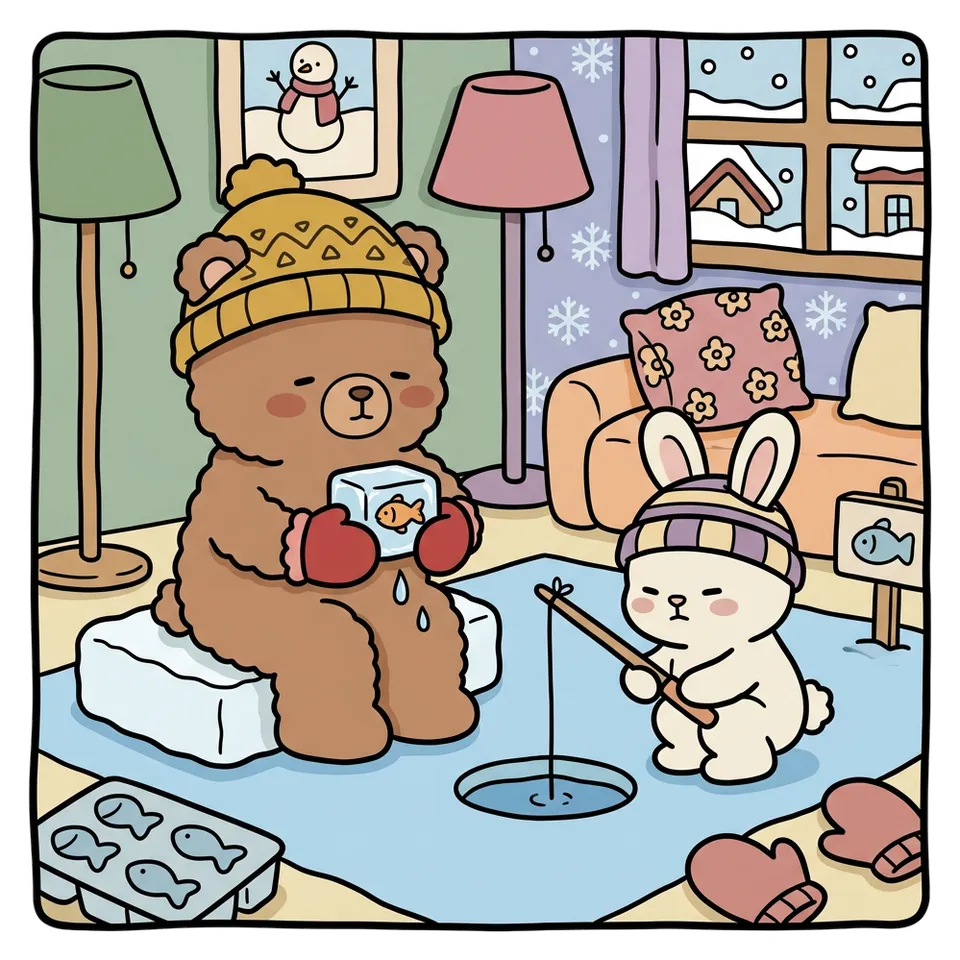
Cut slits in blue paper to make an ice sheet, then fish up the frozen fish underneath with a magnet fishing rod.
Why it's good
Builds the strength to put up with things that don't work right away. Only after finding that neither the magnet nor their hands work do children figure out for themselves that waiting makes it loosen up.
How to play
Tape a big sheet of blue paper wide across the floor and just cut slits here and there. The moment a child pokes through with one finger, the floor becomes an ice sheet. Even a child who came running suddenly turns careful in front of the ice. They test one step at a time, spreading both arms for balance as they cross. “It's ice, so we have to go slowly,” they tell the younger sibling the rule they made up, then soon start playfully pretending to slip. When my child steps up with “I'll be the person who makes the ice holes,” they poke through a hole for the younger sibling too.
The fish that go under the holes are frozen whole inside ice. Even when the magnet touches them, at first they don't budge. The child pulls hard and even tries a different rod.
When that still doesn't work, they wrap both hands tightly around the ice with the fish in it. Their hands are freezing, but they don't let go. They see water seep slowly between their fingers and sit right there to wait. The rod has to touch just as the ice softens for the fish to stick and come up. The shout of “Got it!” always comes after that. When they had caught them all, my child summed it up for me: “Ice fishing is fishing where you have to wait.”
One hole soon isn't enough. If they ask for another slit next to it, just add it. If you tape on more white paper or plastic, the ice sheet gets bigger, and if you set light blocks in a ring around it, it starts to look like a real fishing spot. Some children build a seat from blocks saying “Let's make a place to sit too.” Put gloves on them and from then on they are a full-on winter ice fisher. At first I only wrapped hard blocks in paper, and I got scolded for it once. My child, building the ring up and knocking it down again and again, almost dropped one on their foot while carrying it. Since then I only use sponge blocks or styrofoam wrapped in white paper.
Good to know
- Choose light blocks for stacking. With sponge or styrofoam, it doesn't matter if they fall down or get dropped while carrying.
- When the ice melts, fishing for the day is over. If they're disappointed, just freeze it again a few hours later. Small ice trays freeze even during a nap, so if you freeze them in the morning, they're ready to play again in the afternoon.
- The ice sheet has to be big paper so you can cut slits. Plastic or a cloth wrap won't tear through.
What you'll need
Big sheet of blue paper · Magnetic fishing rod · Fish frozen in an ice tray · Sponge (or styrofoam) blocks · Gloves
Scooping with a Net
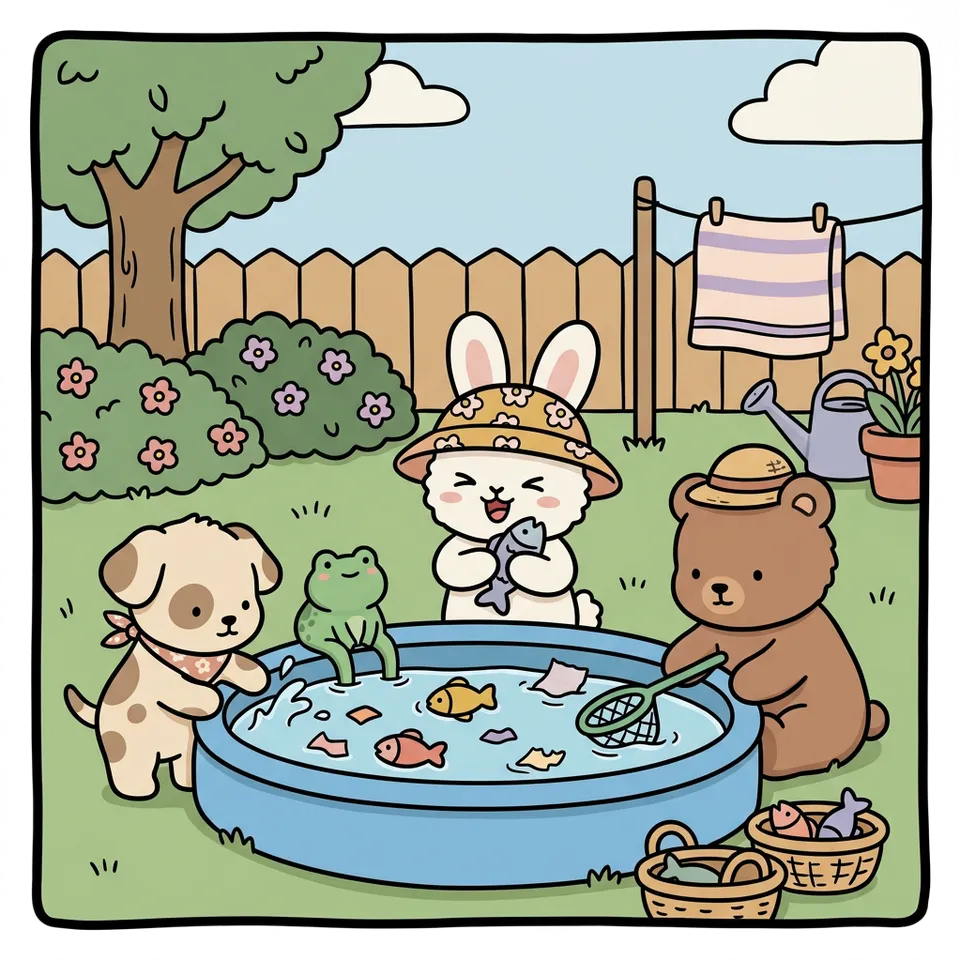
Float toy fish and bits of paper in a basin or small pool and scoop them up with a net.
Why it's good
Children get the feel of stirring water with their hands and scooping with a net. They find out on their own that if the net doesn't work, grabbing with their hands is fine, and they notice for themselves that it stops being fun once they've caught everything, and that the water gets clearer.
Books to read together


How to play
Fill a basin or small pool with water and float toy fish together with paper scraps, and that becomes the sea. My child quickly stirs the net around to scoop up the fish. The younger sibling is different — they splash the water with their palms first and only then pick up the net. But the more they stir, the more the water sloshes and the fish keep slipping away. After a long struggle, they held the net out to me and said “Can't.” I put my hand over theirs and we scooped together to catch one fish, and they gripped it with both hands and said “Fish!” looking me in the eye.
If the net can't catch them, hands can. Since the fish keep slipping away, the younger sibling grabs them in a fist and presses them into the net. When it works, they look at me and laugh, “Eee~~!” Give each child a basket and from then on they fill their own without fighting.
After putting them in the basket, they dump them back out and catch them again. They cheer “Got it,” then soon say “Gotta catch them again,” and let them go in the water. Once they've caught plenty of fish, the paper scraps floated in at the start finally catch their eye. They scoop those out with the net too, and the water slowly gets clearer. When they were all out, my child looked into the water and said “It's clean now~” and then, “The sea likes it~”
Good to know
- A net works right away even if a fishing rod doesn't yet. Casting a line and flicking the wrist is hard, but with a net you just put it in the water and swish it around.
- Put caught fish in separate baskets. If you leave them together, children easily fight over taking them.
- Pour water only up to a level that doesn't cover their ankles. If there's a lot, it turns into water play and the fishing gets pushed aside.
What you'll need
Basin (or small pool) · Toy fish · Paper scraps · Net (or kitchen strainer or ladle) · Basket
Fish Shop
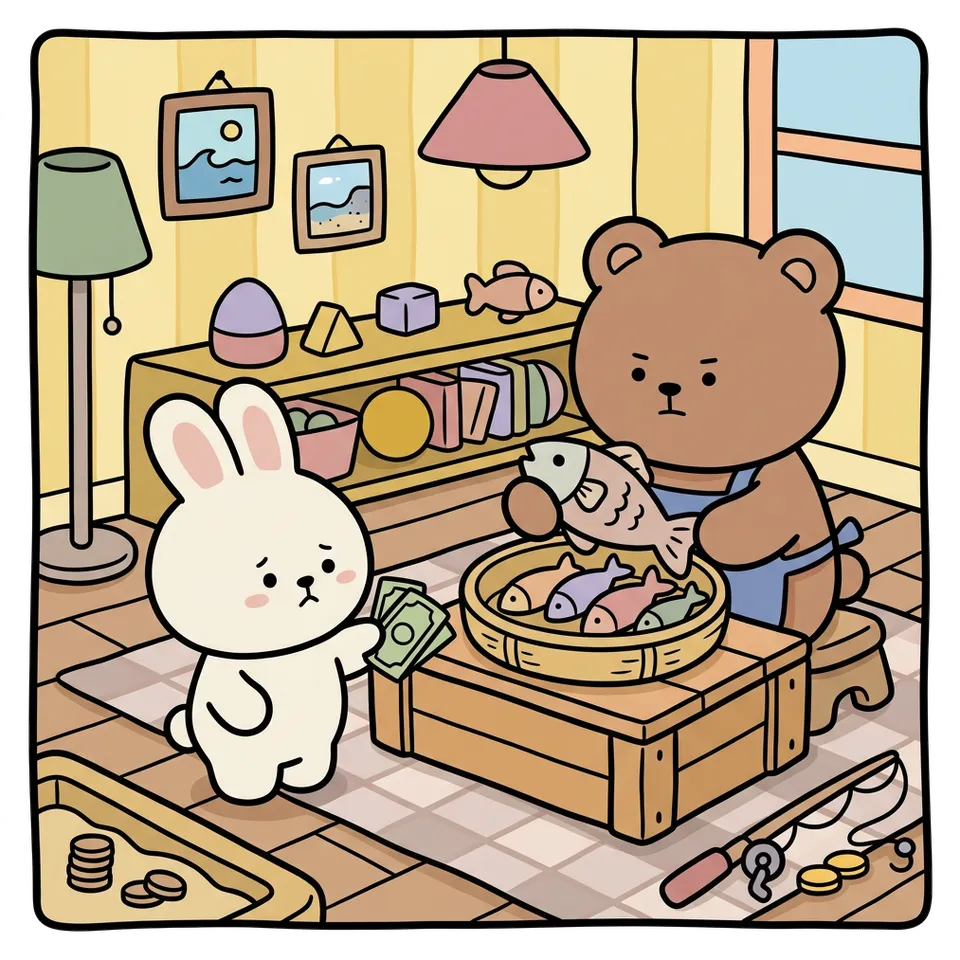
Lay the fish you caught out in a basket and play fish shop, buying and selling. All you need is paper fish, a magnet fishing rod, and toy money to start.
Why it's good
Children learn how to bargain on their own. They name any price they like, beg for a discount if it seems expensive, and when they run out of things to sell, they go catch more or buy some back, working through the situation themselves. No adult sets the roles or the rules, and still the play rolls along by itself.
How to play
The moment the caught fish are laid out in a basket and my child calls “Get your fish!”, the fishing spot turns right into a shop. All I have to do is sit nearby and play the customer. The two children decide who is the owner and who is the customer. “I'll be the customer.” When the younger sibling decides first, my child sitting in front of the fish answers, “Then I'll sell.”
Prices are purely made up. “This one's just been caught, so it's expensive.”, “This one's big, so it's more expensive.” They set prices by whether it was just caught or whether it's big. When I become the customer and ask “How much is this fish?”, they think for a moment, then say “Three thousand won, give me money.” and call out any number. Customers say so on the spot too if they don't like the price. “Too expensive, give me a discount.” The owner holds out at first, “No way, this one is big.”, but when the customer begs again, gives way, “Then give me just two thousand won for this one.”
After selling for a while, the basket empties. When the next customer comes, they're flustered with nothing to sell. From here on, the child comes up with the answer themselves. Sometimes they pick the rod back up saying “Then I'll go fish and come back,” and sometimes they buy back what the younger sibling bought, “Can't I sell that again?”
Good to know
- Memories of visiting a real market come right out. They might bring a fish folded in half and flattened and say “This one is dried so you can keep it a long time.” If you ask where they heard that, they happily explain.
What you'll need
Colored paper fish · Magnetic fishing rod · Basket · Toy money
Card Fishing
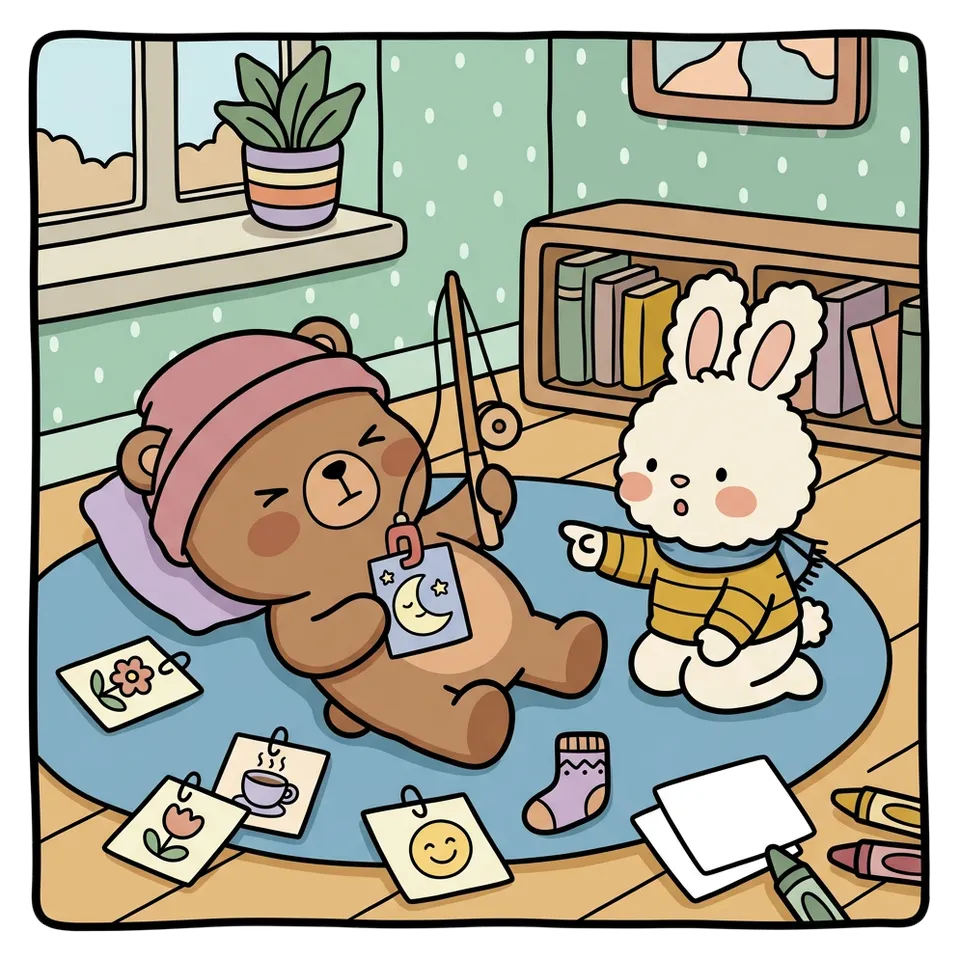
Spread cards drawn on paper around the fishing spot, and whatever the card you reel in says to do, you do it with your body right there.
Why it's good
When children see a picture, their body moves before words do. The movement comes first and words follow, and when something unfamiliar comes up, they ask and only then move on to the next one.
How to play
When cards made by drawing on paper are spread out at the fishing spot, the child doesn't just reel in a card but does what the card says right on the spot. When a card drawn with someone greeting gets caught, they jump to their feet and do a real greeting first, “Hello!”, and when a card drawn with sleeping gets caught, they flop down right there, close their eyes, and pretend to snore.
The magnetic rod is clumsy at first. They touch the tip to the card and keep missing. I showed them just once how to tilt the wrist slightly and tap it onto the clip. That's enough. After “So that's how you do it!”, from then on they catch cards their own way.
When a picture of being thirsty is caught, the body goes before words. They fan themselves first and say “Ah, I'm thirsty” and then “I want to drink water!” When a bathroom picture is caught, they twist their legs in a holding-it pose first and only then does “I want to go to the bathroom!” come out. The younger sibling next to them sometimes guesses first from the gestures alone, “You want to go to the bathroom, right!”
When a flower card is caught, this time they become a bee. If it's a flower they know, they shout “This is a morning glory!” and fly over to land on it, and if they don't know it, they ask “What's this?” and only then fly over. Expression cards are the same — when a sulky face is caught, my child pouts first and then explains, “This is my face when I fell down.” When a smiling face is caught, they smile along without thinking and then add, “This is when I eat candy!”
Good to know
- Once they're hooked, children sometimes make their own cards and sneak them into the mix. They recognize their own even among others', and when it's caught on their turn, they take on that role more excitedly than anyone.
- Choose strong magnets and big clips. A thin, weak magnet can barely lift even one card. Small clips keep falling off, so put on a big one and add one more piece of tape and it won't come off.
What you'll need
Cards (drawn or cut out) · Magnetic fishing rod
Making Fishing Rods
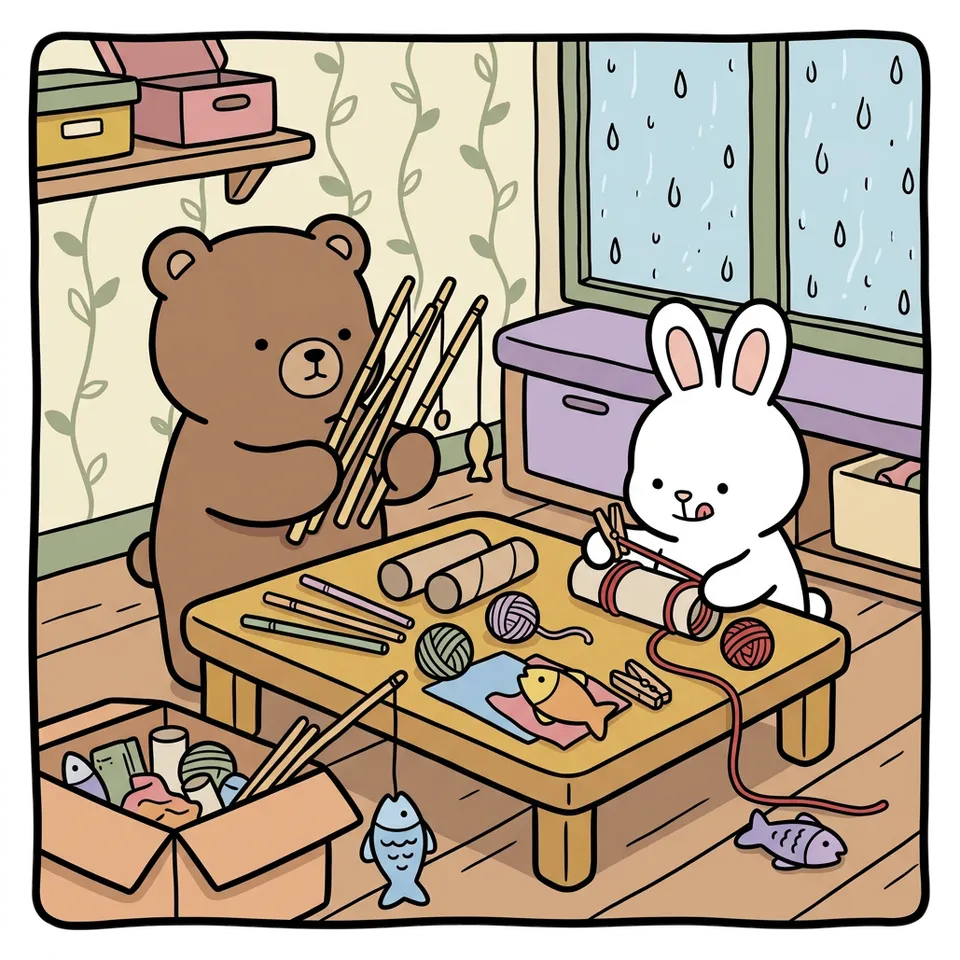
Make your own fishing rod from straws, wooden chopsticks, paper towel tubes, or the like.
Why it's good
Children find for themselves what fits their own hands. If they don't like one, they make it again, and they line several up side by side, pick each one up, and choose the one that fits. Which is better, long or short, they only know after experiencing it themselves.
How to play
I handed over one box holding straws, wooden chopsticks, paper towel tubes, string and clips, building blocks, and even colored paper, and after rummaging a long while, my child picked up a straw and said “It would be good to use this as the rod stick.” The younger sibling watching next to them grabbed a ball of string, “I'll use this for the line.” My child taped several straws end to end and made one long enough to stretch across the room. Once finished, they swung it around excitedly and nearly grazed the younger sibling's face.
At first I was startled and said we had to cut it right away, but when I saw my child's face stiffen, I changed what I said. When I suggested making a new short one instead of cutting, they made three about the length of an arm from the leftover straws, lined them up, and picked each one up in turn. That's how they learned that it's not good because it's long but because it fits the hand. A few days later they tried again with building blocks. They snapped pieces together one by one to make one as tall as themselves, and this time, instead of swinging it around, they first built a place to fish with blocks, stood the rod up in it, and showed it off, “This is for long fishing.”
Meanwhile the younger sibling wound string around the end of a paper towel tube, stuck it on, and fixed it with a clip to make their own rod. When it was done, they tugged on the string and said “This seems a little short,” and let it out bit by bit to make it longer.
Playing with the rods each made is the real thing. They lay colored paper fish out at the fishing spot and each catches with their own, and when something heavy bites they say “This one is really heavy!” and then “I have to let it go again!” and release it back.
Good to know
- Play doesn't have to wait until the rod is finished. Some children bring a paper straw with a colored paper fish already hanging from it. Waving it around saying “I caught a big fish!” counts as a finished piece in its own way.
- Keep making days and playing days separate. If you only make rods on the day the materials are gathered, next time they can pick them up and start fishing right away.
- Materials from home are enough for a rod. Wooden chopsticks or rolled-up newspaper can be a rod too, and the line only needs to be about as long as the child's arm.
What you'll need
Straws · Wooden chopsticks · Paper towel tubes · String · Clips · Building blocks · Colored paper