Play Ideas with Dinosaurs
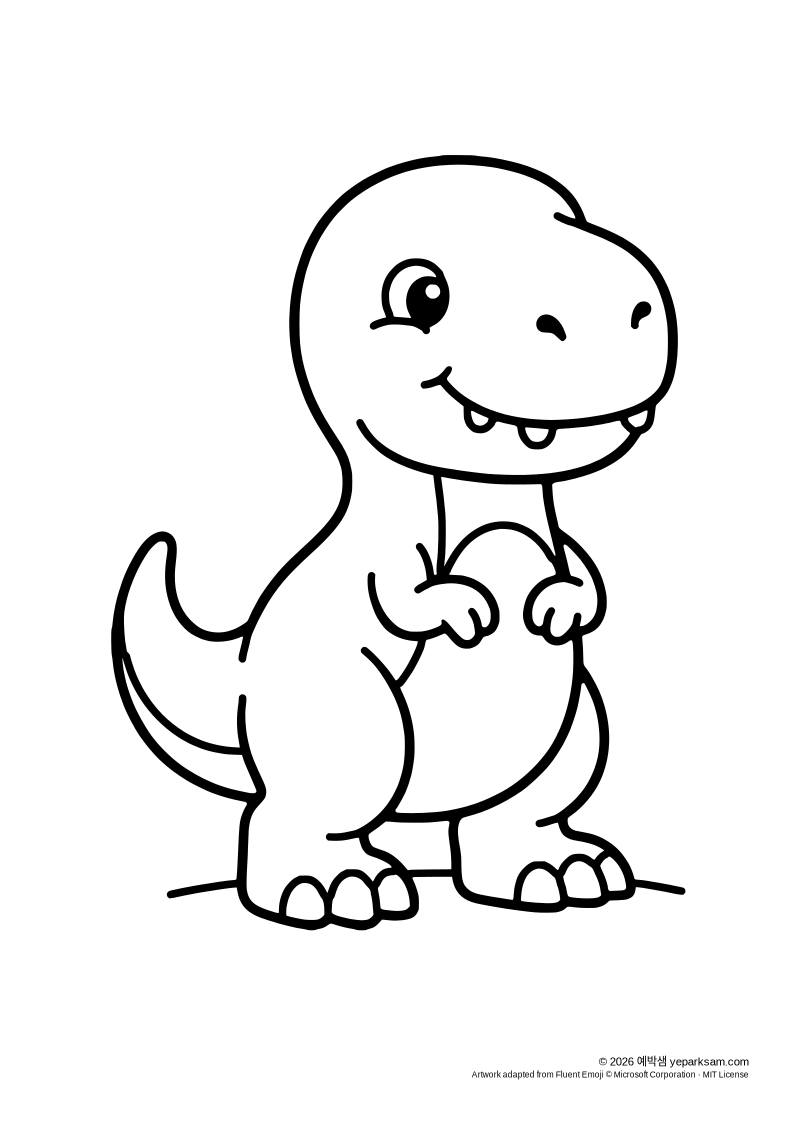
Dinosaurs are the first thing a child beats a grown-up at. A four-year-old tells T. rex and Spinosaurus apart and says I've got it wrong, and I still mix them up. If you pretend to know and toss out any old name, you get caught on the spot.
So dinosaur play starts when the grown-up stops pretending to know. For my first few years I memorized dinosaur names the night before. But the more I'd memorized, the less the children talked, because I told them everything. These days I just ask. “What's that one?” That one line and they talk for ages.
This page was translated by Yeparksam, a preschool teacher in Korea. Some words may sound a little unusual — thank you for your understanding.
Picture books to go with this play


Printables to use
See more ›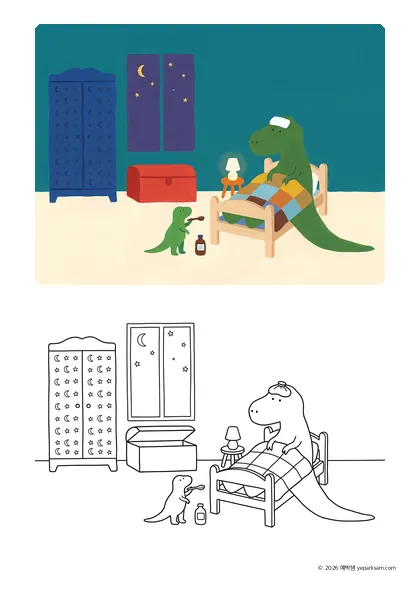
Finding Dinosaurs in Korea
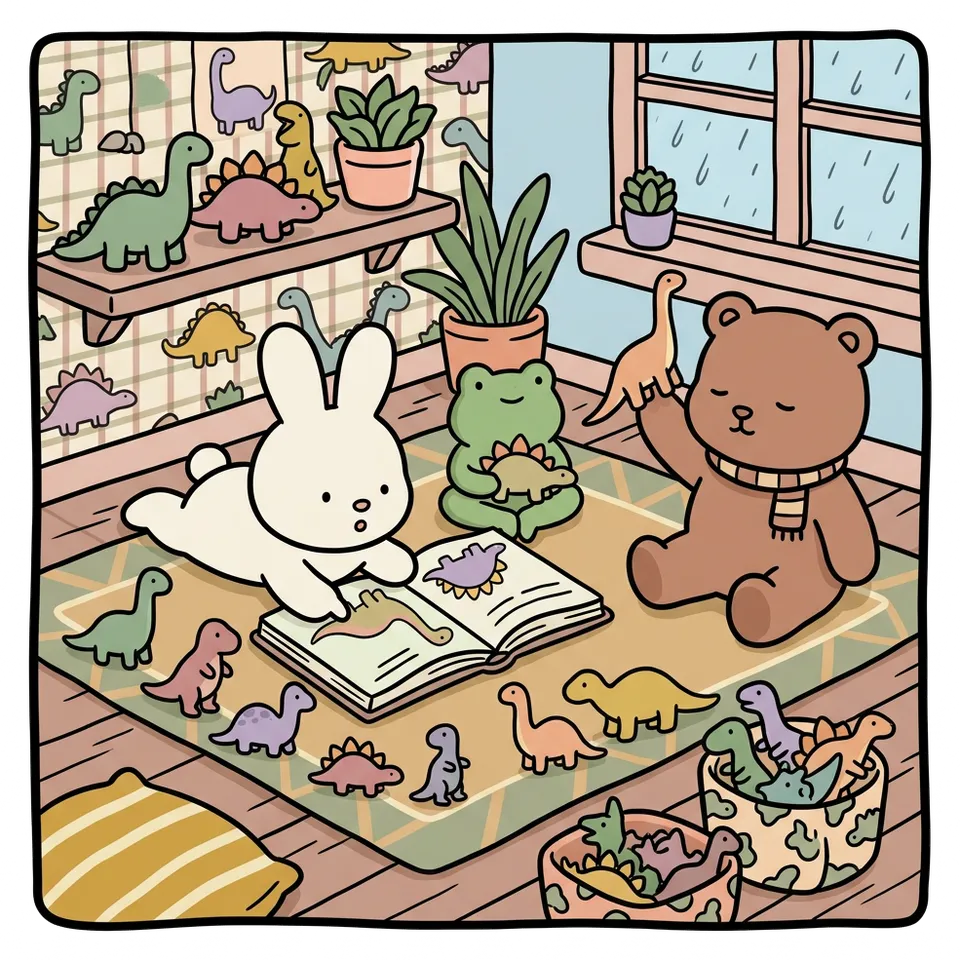
Open a dinosaur book and look together to find out whether there were dinosaurs in Korea too.
Why it's good
When you admit you don't know, the child goes looking on their own. If a grown-up gives just any answer, that's the end of it, but if you say you don't know, the child opens the book and checks it for themselves, then tries the new knowledge out elsewhere and makes it their own.
How to play
A child who had been lining up dinosaurs looked up and asked, “Were there dinosaurs in our country too?” I answered that there were, but I didn't know the name. When I said I wasn't sure, the child said “We have a dinosaur book, you know!” and scampered off to get it.
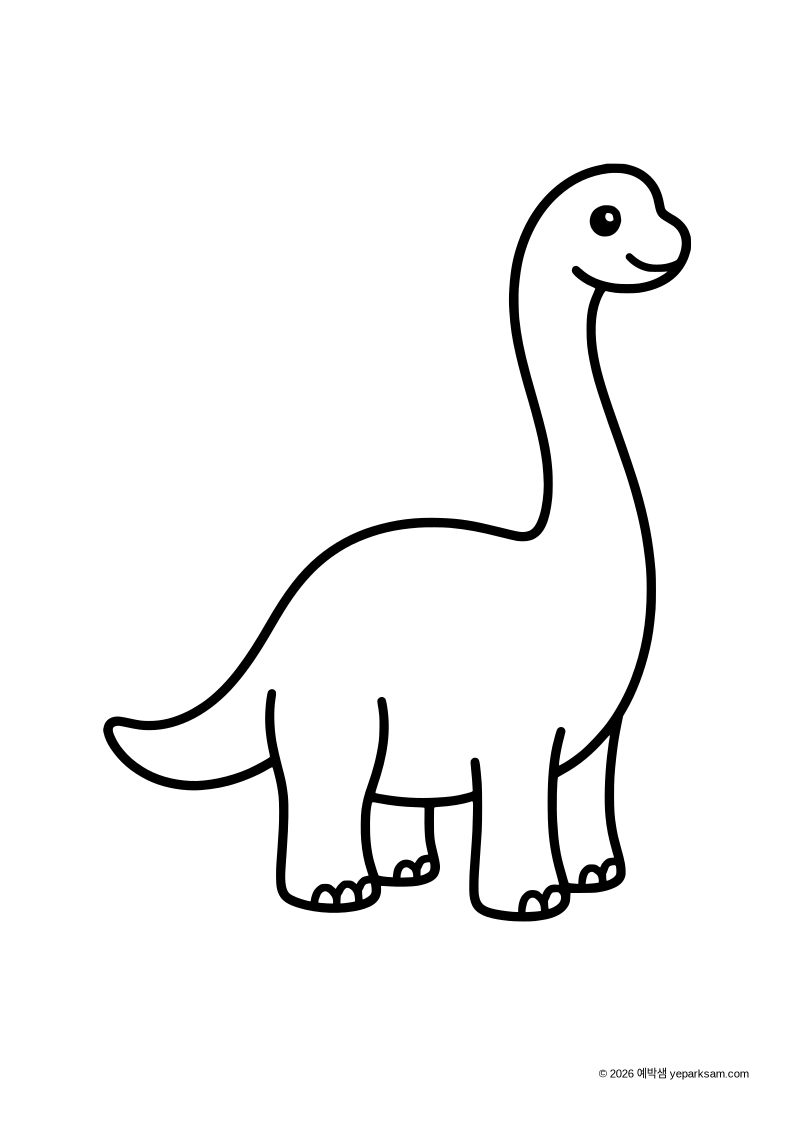
Turning the pages together, we found Pukyongosaurus. It's a long-necked plant-eating dinosaur whose bones were found at Pukyong National University, and it was named after the school. Hearing that, the child held up the Brachiosaurus in their hand and said “Then this one is Pukyongosaurus now!” They both have long necks, after all. From that day on, that toy was called Pukyongosaurus.
Good to know
- If you don't have a dinosaur book at home, let the child pick one at the library. A book they chose themselves is a book they'll open and search themselves.
What you'll need
Dinosaur book
Stomping Like a Dinosaur
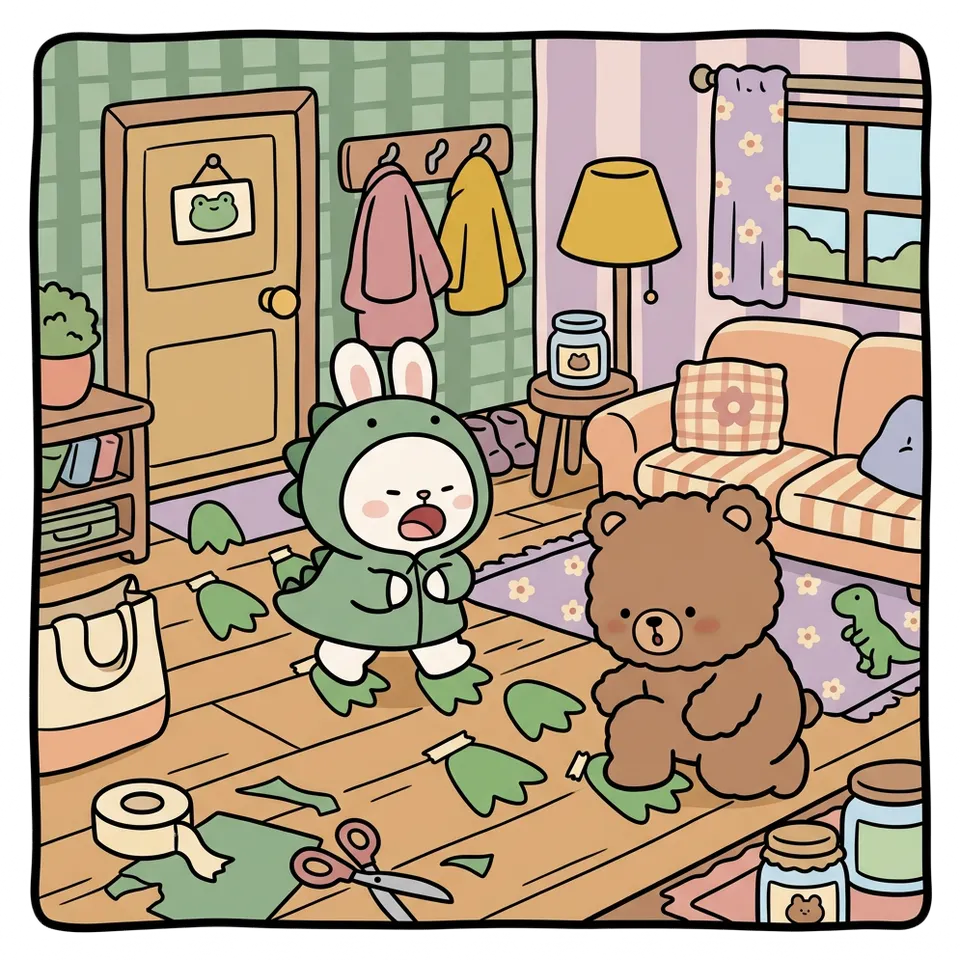
Cut big footprints out of paper, stick them in a row on the floor, and walk only on them. You can also become a dinosaur with clothes or a headband and stomp around.
Why it's good
Putting their own foot next to a big footprint, children feel the size difference with their bodies. They check with their feet, not their eyes, that dinosaur feet are big and theirs are small. Every child also walks differently — hopping, crawling on all fours, or tucking in their arms and walking with sounds — each finding their own way to express it with their body.
How to play
If you cut out big three-toed footprints and stick them on the floor, children walk only on them. Nobody minds if they're crooked. I stuck about ten from the door to the room.
At some point the child walking on them crouches down and puts their own foot against one. With a tiny foot on a footprint they said “Mommy's foot, my foot!”, then “My foot small”, and tugged me over to try it too. The way of moving along is different on every footprint. Some children hop across, some crawl. Some tuck both hands against their chest and scurry along saying “Rawr~ I'm a dinosaur~”.
Put on a green outfit and a headband and the child becomes a dinosaur for real. They stomped around saying “I'm a dinosaur, rawr!”, and when one child stepped up with “I'm T. rex, rawr!” the rest scattered, shouting “Run away! A dinosaur's coming!” When I became a dinosaur and chased them, one child brought a wolf toy to beat me and blew “Whooo~~” at me, and when I didn't fall for it, tattled “Mommy dinosaur won't blow away!”
Good to know
- The grown-up has to act scared, or they won't chase you. If you just laugh when they say “Rawr”, they do it once and stop. Back away as if scared, and that's when they start chasing.
- Stick the footprints down with masking tape. It doesn't slip much and doesn't damage the floor when you peel it off.
- Just clear away anything along the footprint path that could trip them. It's a running game, so anything in the way is dangerous.
- It goes even better on a day you've been to a museum or a fossil site. If you stick footprints on the floor that night, they redo what they saw in the daytime exactly.
What you'll need
Paper footprints · Green clothes · Headband · Masking tape
Making Footprints
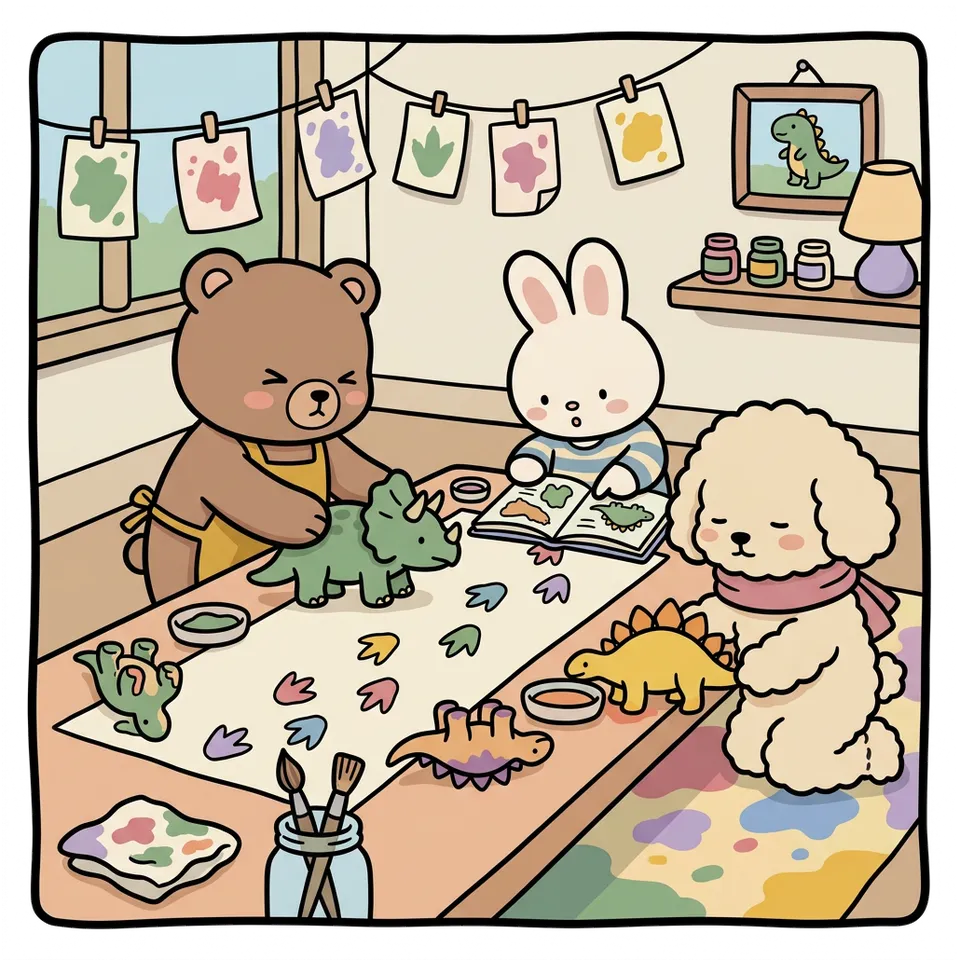
Flip a dinosaur model over, dab paint on its feet, and press it firmly onto paper to make footprints.
Why it's good
At an age when their hands freeze if you tell them to draw, a footprint stays on the paper the moment they stamp it. The child decides for themselves which dinosaur the print belongs to. Even though the soles all look alike, they come up with an answer on their own and even check it against the book.
Books to read together
How to play
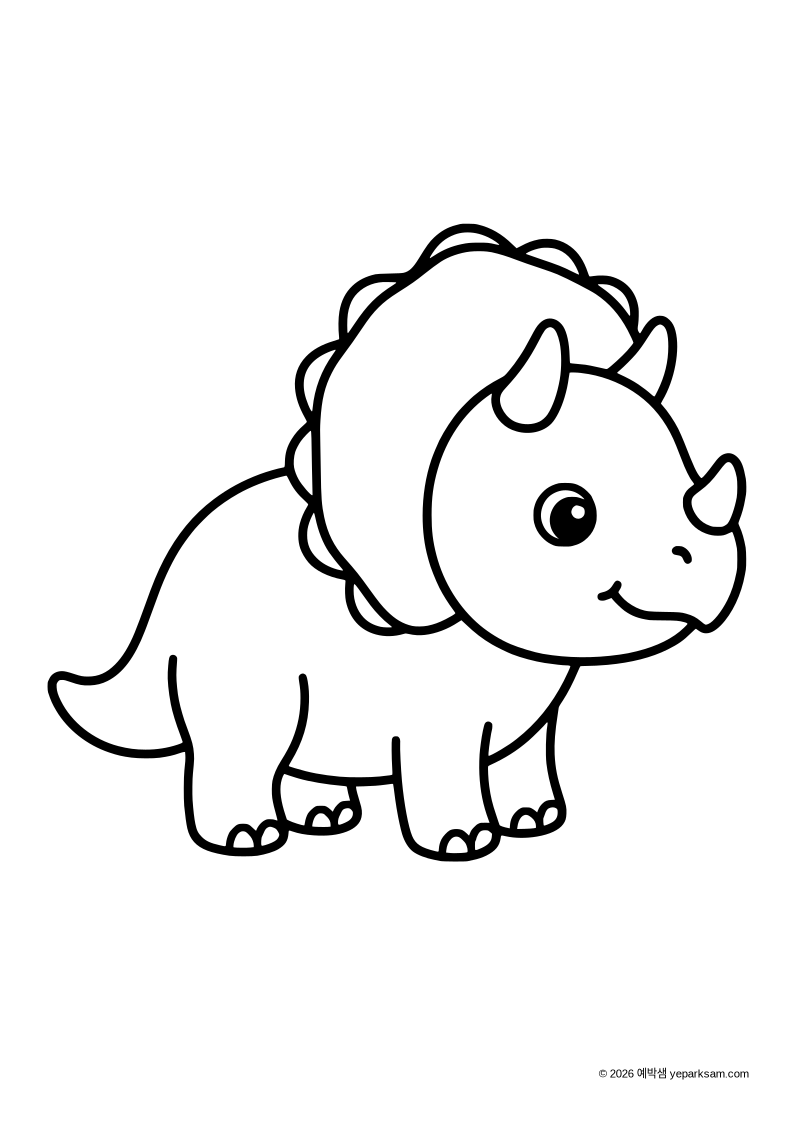
Turn the toy over, put paint on its feet, and press it onto the paper, and a footprint is left. After stamping, the child decides whose footprint it is. The child studied what they'd stamped for a long time, said “What dinosaur is this?”, and right away answered themselves, “Oh, this is Triceratops!” They opened the dinosaur book, jabbed a finger at the picture and said “Look. It's just the same as this,” and even made me check.
They stamp harder and harder. At first they press carefully, but once they notice it makes a sound, they pound it down with thuds. When one sheet fills up, it becomes a path. If you tape several sheets together, the footprints run on in a line, and once dry, you lay them on the floor and the children walk only on them.
Good to know
- Spread a thick layer of newspaper underneath and they'll stamp to their heart's content. They like the sound so much that they pound harder and harder.
- Keep wet wipes handy. If paint gets on their hands, the child wipes it off and stamps again.
- Toys with broad, flat feet leave better prints.
What you'll need
Dinosaur toys · Paint · Paper · Newspaper · Wet wipes
Standing Dinosaurs on the Wall
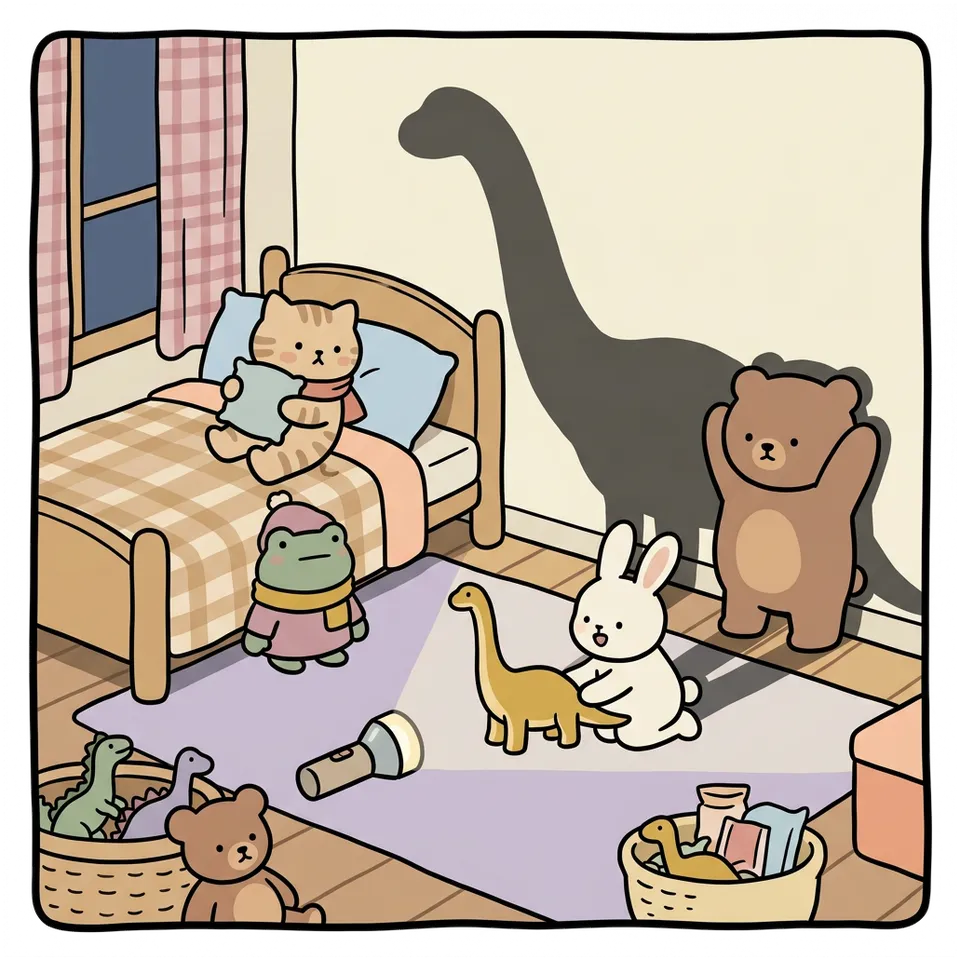
Stand a dinosaur by a sunny window or in front of a flashlight to cast a shadow on the wall. Move it back and forth to change the size of the shadow.
Why it's good
A palm-sized toy becomes a shadow as tall as the child on the wall. They get to feel the size they've seen in books. By pushing and pulling the light and the distance, they learn on their own, hands-on, that the size changes right along with it. They can name the dinosaur from the outline of its shadow alone, which means they've looked at its shape that closely.
How to play
Just put a dinosaur by a sunny window or in front of a flashlight and a shadow as tall as the child stands on the wall. The moment they saw it, they yelled “It got huge!” and “The dinosaur climbed up the wall!” Once they notice that pushing it toward the light makes the shadow bigger and pulling it back makes it smaller, the dinosaur's size is the child's to decide. They push and say “Bigger!”, then pull and say “Smaller!”, and keep at it for a long while.
The child knows who it is from the shadow alone. Plates on the back mean Stegosaurus, three horns mean Triceratops, a long neck means Brachiosaurus. Once one is up, they keep bringing more, and when they tried standing up a teddy bear too, they saw its shadow come out as just a blob and went back to picking up a dinosaur.
Good to know
- Cars or teddy bears won't work. Only dinosaurs, each with its own shape, can be told apart by their shadows.
- Have at least one big one to make it worth it. If all you have is palm-sized ones, the shadows come out just that size.
- It shows up much better at night. Turn off the room light and one flashlight is enough; a phone light works if you don't have one.
What you'll need
Dinosaur toys · Flashlight
Making Tall Trees
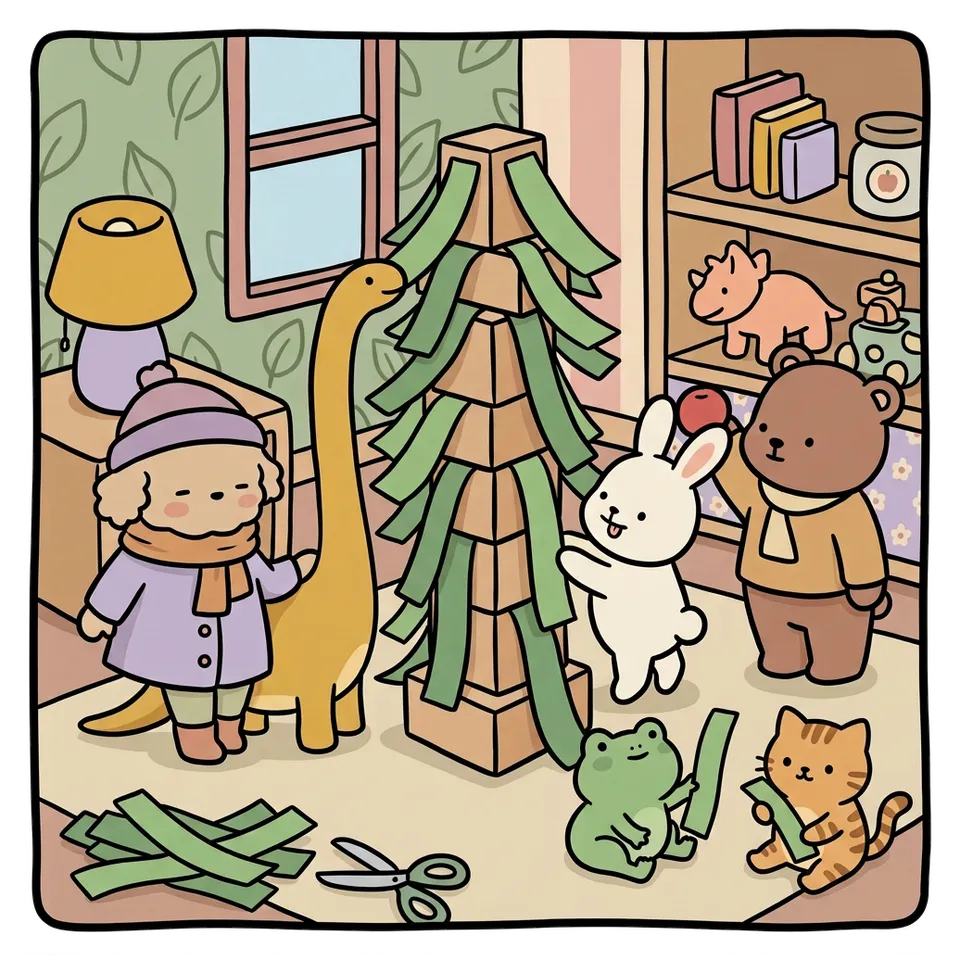
Cut green construction paper into long strips and tuck them between blocks, and it becomes grass for the dinosaur to eat. Do just that much and the child takes it from there.
Why it's good
The child figures out for themselves that grass lying on the floor is awkward for a long-necked dinosaur to eat. Without anyone teaching them, they find out with their hands why the neck is long. They solve the problem by changing the tree, not the dinosaur. It's the same when there's no fruit: they bring blocks or other toys and decide those are the fruit.
Books to read together


How to play
Cut green construction paper into long strips and tuck them between blocks, and it becomes grass for the dinosaurs to eat. You can also set a dinosaur next to a plant pot. Once you've done that much, the rest is up to the child. A child who was bringing Brachiosaurus up to the grass stopped and said “But Brachiosaurus has a long neck so it has to bend its head down to eat.”
A child playing alongside said “Let's make the tree taller so it's easy to eat” and added more paper upward to raise its height. When finished, they said “Now it's a really tall tree so I think it can eat.” I didn't tell them anything here, yet the child worked out with their hands why a dinosaur's neck is long. When I said it eats fruit too, they paused because there was no fruit, then gathered up blocks and toy fruit and said “I'll say these are the fruit.”
Good to know
- Dinosaurs with big teeth don't get fed in front of the grass. They head to the meat side, saying “T. rex eats other animals and dinosaurs!” The children already tell meat-eaters from plant-eaters.
- If they argue, leave them be. A sibling or friend may take the meat that's been collected and they fight, but even without stopping them, the two work it out with “Can you give it to me later?”
What you'll need
Green construction paper · Blocks · Dinosaur toys
Building a Dinosaur House with Blocks
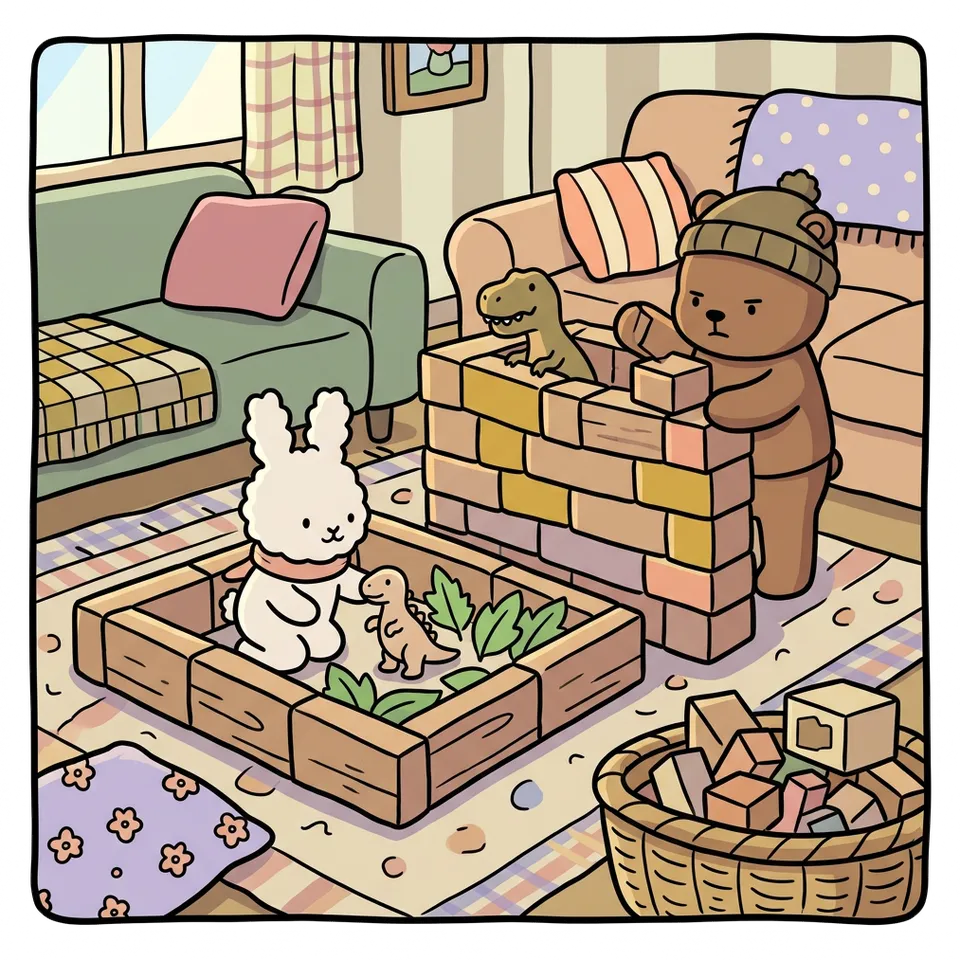
Build a house for the dinosaurs with blocks. Line up the dinosaurs and slide the blocks over next to them, and the child takes it from there and builds.
Why it's good
The child first sorts out where each one will live. They separate the meat-eaters from the plant-eaters and give their own reasons for it. The scary ones get higher walls, so their own rule carries all the way into what they build with their hands.
How to play
As children play with lined-up dinosaurs, they start by building a house. If you slide blocks over beside them, they take it from there. One child said “T. rex eats meat so it's a meat-eating dinosaur!” and the child next to them replied “Brachiosaurus eats grass. It has a long neck so it eats leaves.” Then “Meat-eaters have to be somewhere separate!” and they draw a line on the floor.
That's where the wall height gets decided. The plant-eater side is left wide open, and on the meat-eater side they keep piling blocks higher. When I asked why they stacked only that side high, they said “Meat-eating dinosaurs are scary so they need a tall wall, so I have to make it this high.” They weren't building a home; they were locking up the scary ones.
As they live there, the family grows. They move blocks around to make more room, saying “There are more dinosaurs now!” and “A baby dinosaur was born too.” If you've stuck paper footprints on the floor, some children build a block fence at the end of them and say “Let's take the dinosaurs home.”
Good to know
- Give them big blocks. If they build walls with small ones, the walls keep collapsing as they put dinosaurs in, and the child quits first.
What you'll need
Blocks · Dinosaur toys
Dinosaur Family Play
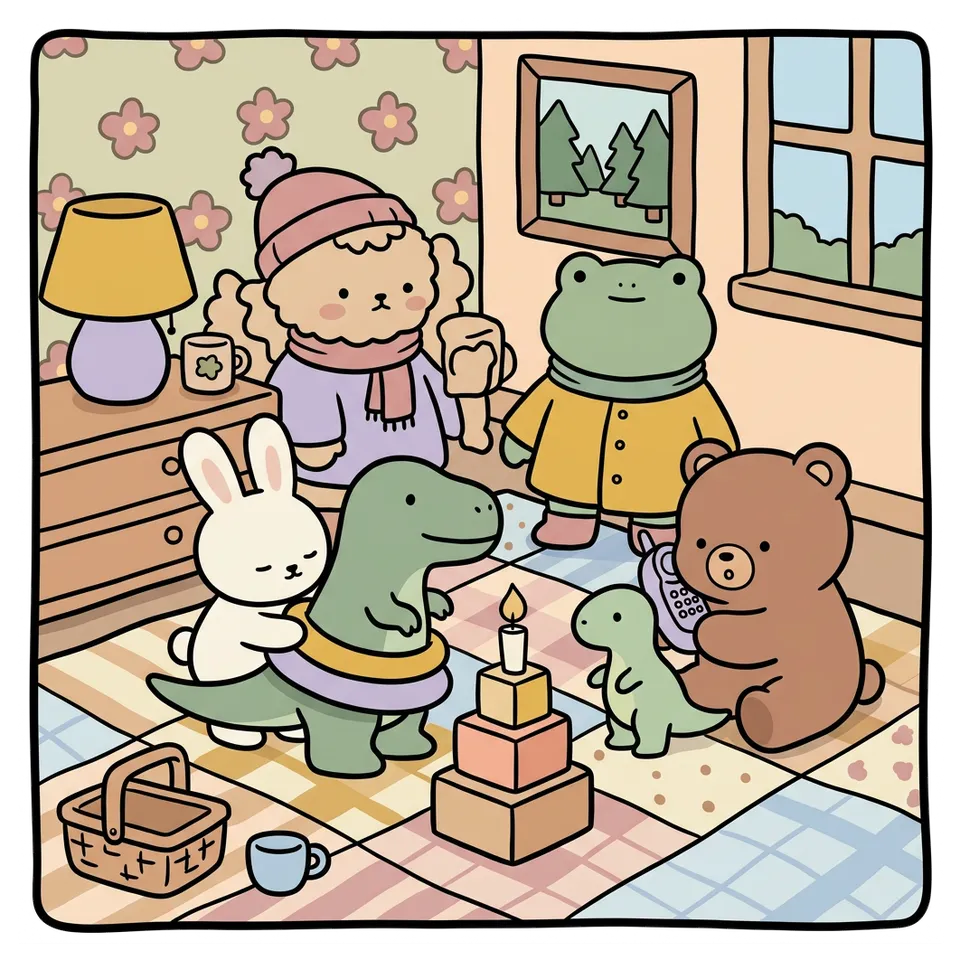
Dress the dinosaurs and make them a family in this role play. Once there's a mommy and a baby dinosaur, everyday life like birthdays and picnics gets moved right over.
Why it's good
Even the fiercest dinosaur isn't scary anymore once it's dressed up and made a mama. That's why this play works especially well for children who are afraid of dinosaurs. They carry their own everyday experiences, like birthdays and picnics, straight over to the dinosaurs. They aren't just copying what they've lived through; they're remaking it in their own way.
How to play
It starts with dressing up. One child slid a ring with a hole in the middle onto a dinosaur, carried it over and said “Look, a dinosaur skirt. Pretty, right?” Another child watching laughed “What? The dinosaur's wearing a skirt? Haha,” but the first hugged it close regardless and said “Aww pretty~ it's a mama dinosaur.” Once there's a mama, they go looking for the baby. They rummaged through the basket, pulled out the smallest T. rex saying “Here's a baby dinosaur too!” and set them side by side, and from then on the big one and the small one always go around together.
A birthday can come on any day. If they say “Today is the dinosaur's birthday,” then that's the birthday. They stack blocks into a cake, stick in candles and sing, and one child even held a toy phone to the dinosaur's ear and said “Dinosaur, it's a present. It's a cell phone.”
They go on picnics too. A picture on the wall or the pattern on a blanket becomes the forest of the day. They move the dinosaurs across it saying “Let's go play” and “Okay, let's go on a picnic!”
Good to know
- Hold back your laughter. The moment a dinosaur puts on a skirt, that's where a mama dinosaur comes from.
- It works especially well for children who are afraid of dinosaurs. Once even a big-toothed one becomes a baby, it isn't scary anymore.
What you'll need
Dinosaur toys · Ring toy · Blocks · Toy phone
Healing a Fallen Dinosaur
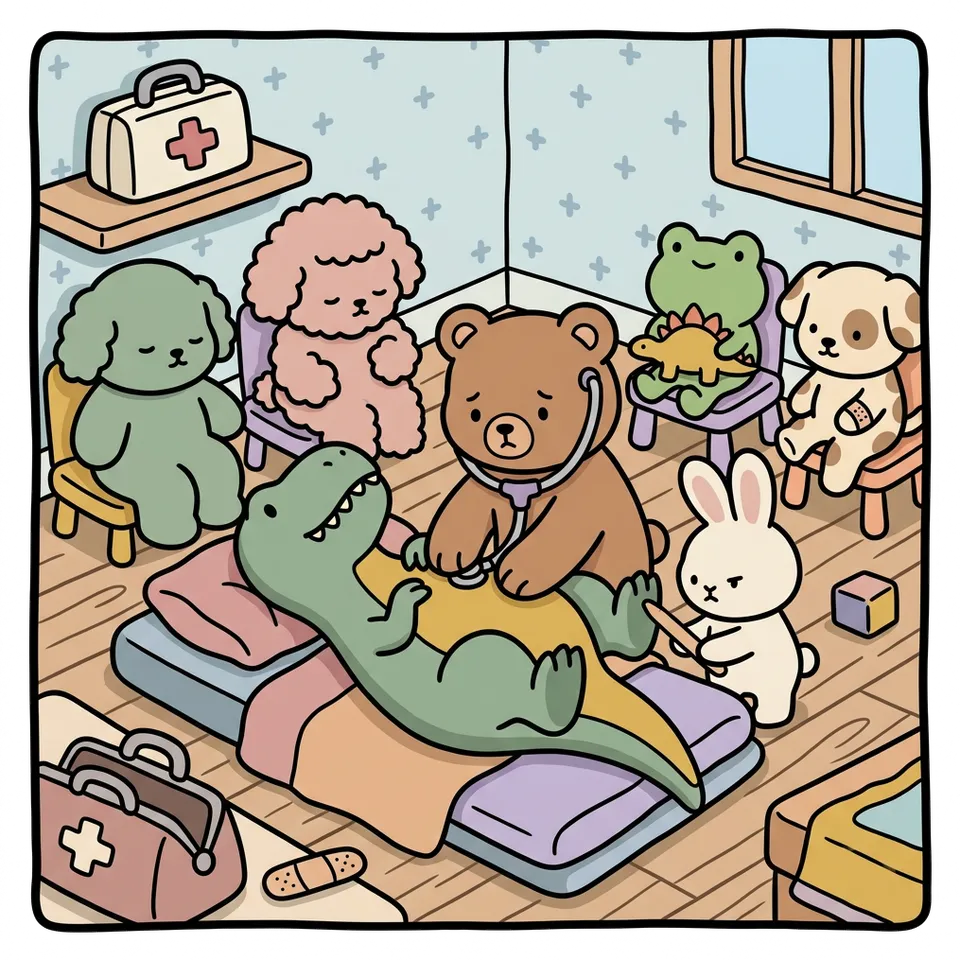
Lay the biggest, fiercest dinosaur down with a tummy ache and the child makes it better in this role play. Later the child may become the dinosaur themselves, falling down and getting fixed.
Why it's good
In doctor play everyone wants to be the doctor and there are no patients, so it stalls. Lay a dinosaur down and that problem goes away. When the biggest, fiercest dinosaur lies there sick, everyone sets out to fix it. Why it hurts is also a story the child makes up, and they build the sequence of falling, healing and feeding themselves.
How to play
When the biggest, fiercest one lies down with a tummy ache, it's a big deal for the child. Why it hurts is up to the child. At our place it was decided that the dinosaur swallowed a block and got a tummy ache. They pressed the tummy saying “Does it hurt?” and “I'll take a look here~”, and wouldn't let go until it was all better.
Then a child sometimes becomes the dinosaur. When a friend blew “Whoo~” at a child walking around pretending to be a dinosaur, the child went “Aaah~” and flopped right over. A child watching ran up and said “Dinosaur, don't be sick, I'll heal you” and gave a shot with whatever stick was at hand. When the first child jumped up saying “Dinosaur isn't sick now,” the other right away said “Dinosaur, let's eat~” and brought a spoon. Falling down, getting healed and getting fed are all one game.
Good to know
- The grown-up's job is to be very surprised. If you run to the fallen child and say 'oh no, what do we do,' the next child comes right over to fix them.
- The bigger, the better. Lying them down and fixing them only feels real with a big body.
- If there's no stethoscope, hold a long chain of blocks against the chest. For medicine, pretending to rub on anything will do.
What you'll need
Dinosaur toys · Blocks
Making Dinosaur Eggs with Balloons
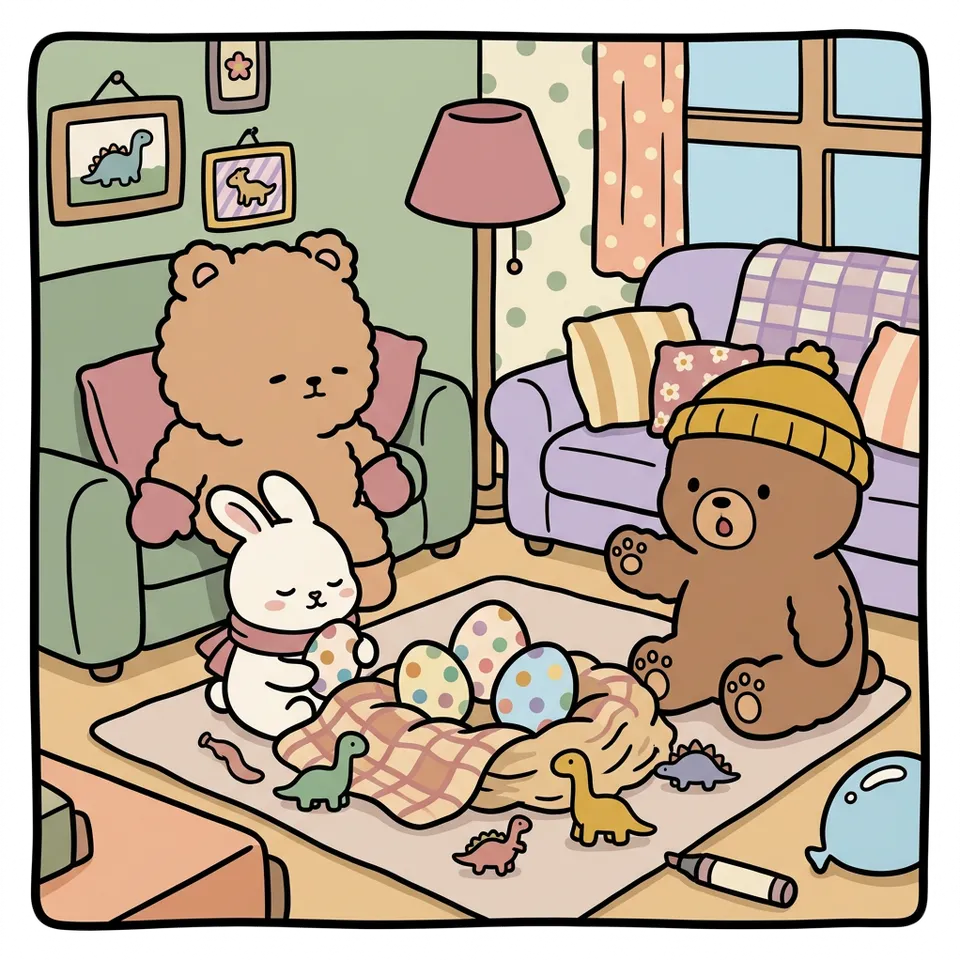
Dot a small blown-up balloon with a permanent marker to make a dinosaur egg. Everyone argues about what will hatch out of it.
Why it's good
A dinosaur egg drawn on paper tears the same day, but a balloon egg lasts, even when it's rolled, hugged and tucked under a blanket. The child treats it not as a picture but as a real egg. They decide what will come out by insisting on it, and it's the child who first stops others from breaking it.
How to play
A dinosaur egg drawn on paper for the child tears within the day. They even color it nicely and then carry it around to play. They stick it on the wall and peel it off, set it on blocks and pile more blocks on top. I only realized when a child pushed out their lip and said “My dinosaur egg is tearing!” The child hadn't drawn a picture; they'd made an egg.
Blow a balloon up small, tie it, and dot it with permanent marker, and from then on it's a real egg. One child peered at a balloon and said “What dinosaur is it?” and the child beside them said “Brachiosaurus!” Another insisted “I think it's T. rex?” One egg gets three dinosaurs.
When a friend was tapping on the egg, one child grabbed their hand and said “Don't hit it. It'll break.” I asked why not, and they said “It hurts the dinosaur.”
Good to know
- If they move on to breaking it, the play ends there for the day. Don't pop it; put it in a box or under a blanket and let the child take it out. The hatching scene can be replayed again and again.
- Blow it up small to make it look like an egg. Blown up big it's just a balloon, and it's hard for the child to carry in their arms.
What you'll need
Balloons · Permanent marker
Waking Eggs in Water
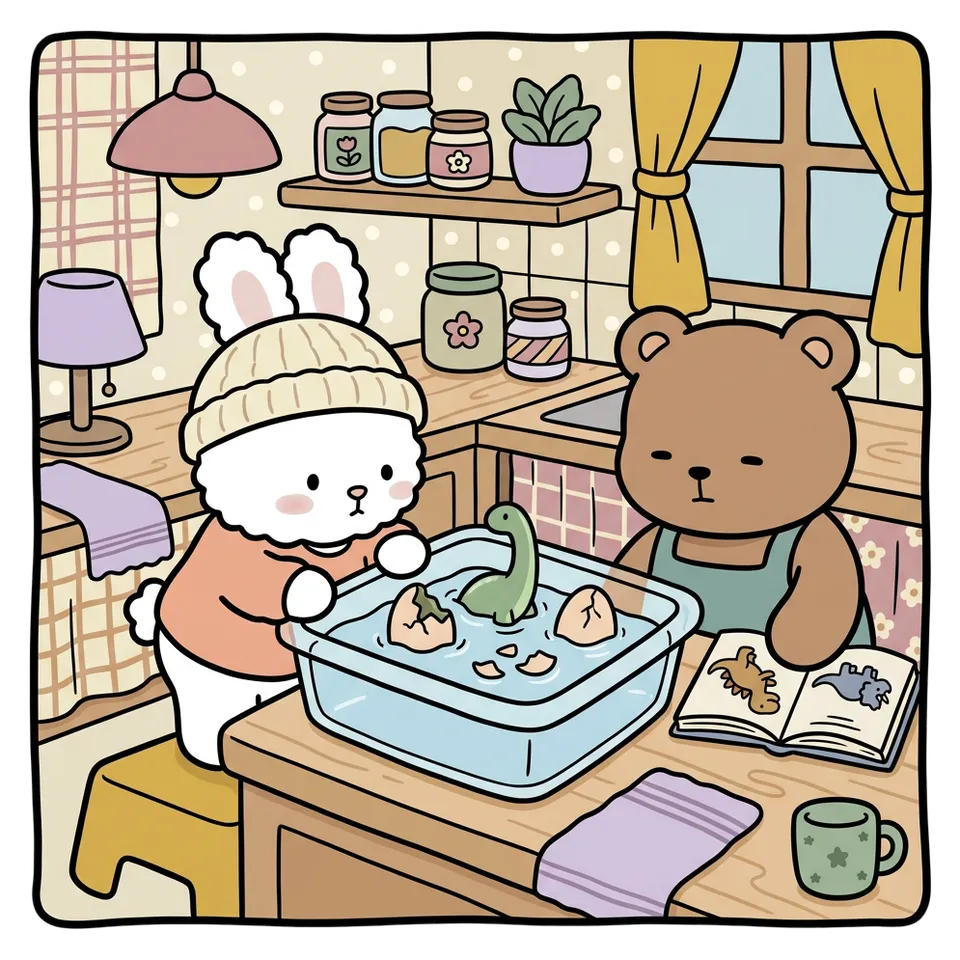
This egg toy melts its shell in water and a dinosaur swells out from inside. Pour water into a container and put the egg in, and you're ready. It changes a little bit over several days.
Why it's good
It doesn't finish overnight; it grows a little over several days, so the child has something to go check every morning. This is the best part of this play. Once everything is out, the shapes are stubby and it's hard to tell which dinosaur is which, but if instead of giving an answer you open a book beside them, the child puts their head together with others and looks for it.
Books to read together

How to play
Soak it in water and the shell dissolves while the dinosaur inside soaks up water and swells. All you do is pour water into a tub and put the egg in. You don't see anything until a night has passed. In the morning, some have already come out and some are just cracked and unchanged. The child put their nose right up to the tub and pointed at them one by one, saying “The dinosaur got bigger.” and “This one isn't born yet.”
Once they're all out, children are sometimes let down. Swollen with water, the shapes are stubby and it's hard to tell which dinosaur is which. One child said “This is T. rex.” and another said “No, it's Spinosaurus.” and they argued for a long while. If you open a dinosaur book full of pictures beside them, the two put their heads together and look for it.
Good to know
- Don't decide the answer for them. Open a picture-filled dinosaur book beside them and the child finds it on their own.
- Pick a spot ahead of time for where to set them out and it lasts longer. We crumpled paper into a basket and set them on top. The children called it a nest and kept watching it for days.
- If there's a younger sibling under three, choose big ones. Egg sizes differ by product, from hen's-egg-sized to thumb-sized.
What you'll need
Dinosaur egg toys that swell in water · Basket · Dinosaur book
Burying in Sand and Excavating
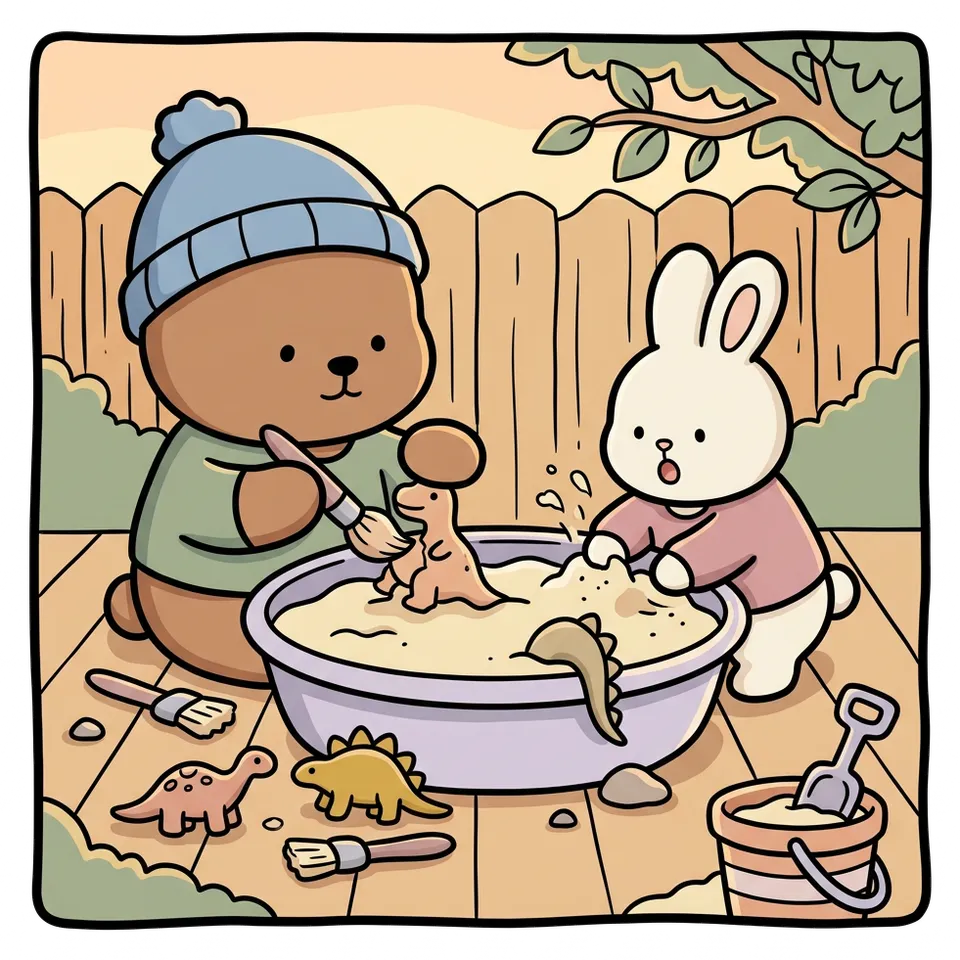
Fill a basin with sand, hide a dinosaur in it, and feel around with your hands to find it. Once found, gently brush the sand off with a brush.
Why it's good
Feeling around by hand without knowing what you'll catch is already the fun. Hand over a brush and the play grows once more — what used to end with pulling the find out with a grab becomes gently brushing it clean, and the brushing time gets much longer than the digging time.
How to play
Put sand in a basin and hide a few dinosaurs, and you're ready. If you just bury them, it's over in thirty seconds. They sweep it all aside with their hands, pull everything out, then ask you to bury them again, and after a few rounds the fun drops right off.
One child set a dinosaur out and said “But the sand won't come off”, and a child listening said “Brush it with this brush” and handed over a paintbrush. From then on they started brushing gently, and the brushing time was much longer than the digging time. After that, I put the brush out first.
Good to know
- It's best to bury things so they don't know what will turn up. Mix in seashells, stones and bone-shaped toys, not just dinosaurs. Each time one turns up, they bring it in both hands saying “What's this? I was surprised.”
What you'll need
Basin · Sand · Dinosaur toys · Brush
Fossil Museum Play
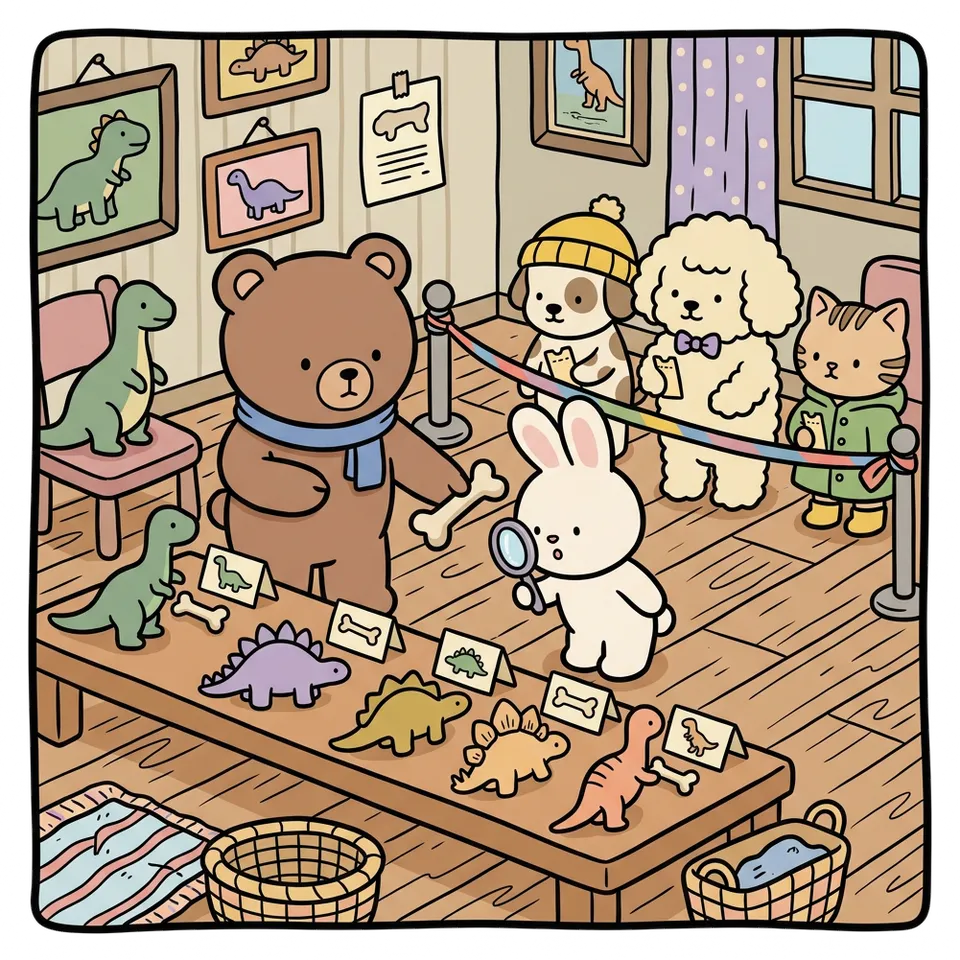
Just lining up what you dug out of the sand or bone models in a row makes a museum. The child is the guard and a grown-up is the visitor asking questions in this role play.
Why it's good
Just lining them up creates roles nobody assigned. Guard, visitor, even the person who cleans, they divide and take them on by themselves. When a visitor asks what something is, they point to each one and explain what they know. They organize what they know in their own words and pass it on to someone else.
How to play
I don't put away what came out of the sand right away. Just lining it up in a row makes it a museum. Before I'd done anything, a child planted themselves in front and said “This is the museum where the dinosaur fossils are. I'm the person who guards it.” Then a sibling said “I'm a visitor” and lined up, and a friend who had come to play thought for a long time, said “I'm the person who cleans the fossils” and went to get a rag. Nobody told them to, yet a cleaner appeared.
When a visitor comes, explaining begins. The grown-up only has to be a visitor. Asked what something is, they point to each one and tell you “This looks like the head” and “This is the tail.” Even if they point wrong, leave it, and they explain even longer to the next visitor.
Good to know
- You don't need real fossils. You can use the models from the digging play as they are, or cut out and set out bone pictures. Tell them there are even fossils made from hardened poop and it instantly becomes the most popular exhibit.
What you'll need
Dinosaur toys · Rag
Gluing Bones with Toothpicks
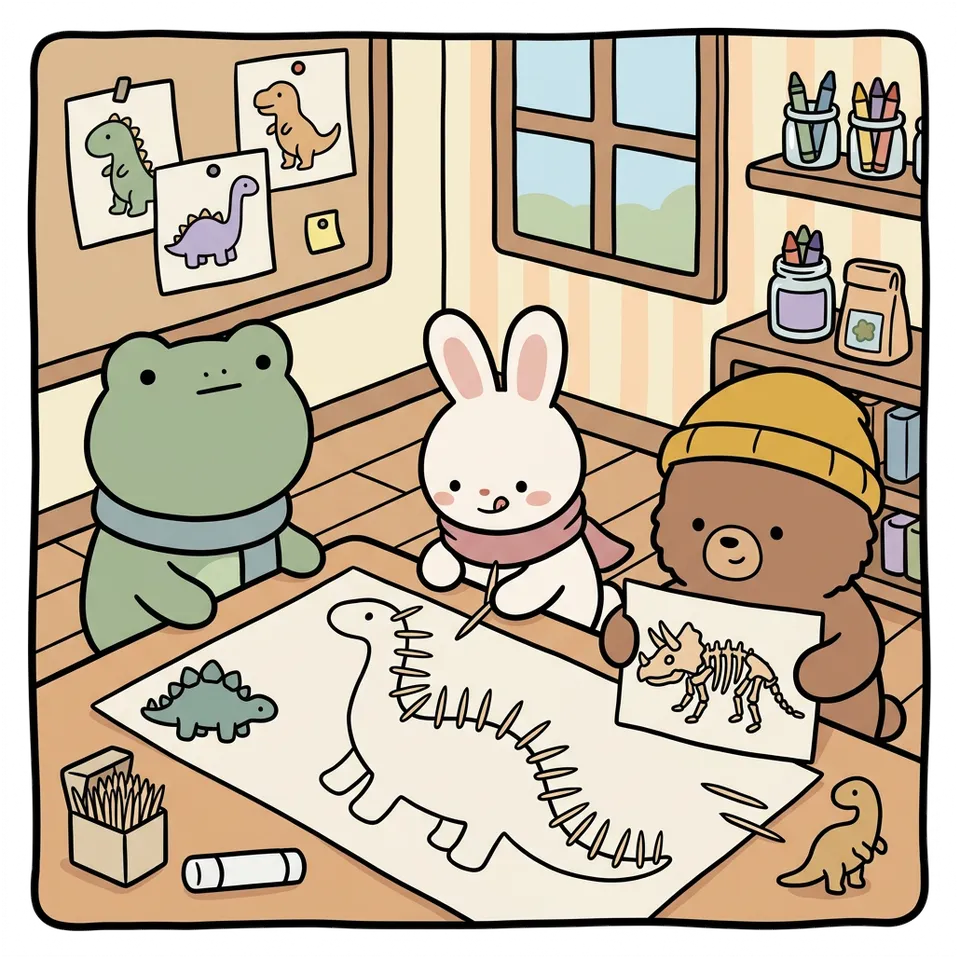
Draw a big dinosaur on paper and stick toothpicks on it to make bones. For a long neck, add several to the neck, and for a long tail, add several to the tail, and that's enough.
Why it's good
A child who could name a dinosaur from a bone picture alone now makes the bones with their own hands. They pick which dinosaur to do on their own, and already know where its particular features, like horns or a neck, belong. The play includes carrying the finished piece around to show others, so it extends to wanting to explain what they made to someone else.
How to play
Draw a big dinosaur on paper and let them glue on toothpicks. Nobody worries about where the bones go or how many. A long neck gets several on the neck, a long tail gets several on the tail. For a child, that's bones. One child said “I want to try dinosaur bone puzzle too” so I asked what they'd make, and they chose, “Okay, I want to do Triceratops.”
When it's done, a child passing by names it. Seeing one all glued up, they said “Wow! This is Elasmosaurus, my favorite!” and named it. That was the first time I'd heard that name. They spend more time carrying it around than making it. Stuck on the wall, it makes everyone stop every time they pass.
Good to know
- Toothpick tips are sharp, so for a child whose hands are still clumsy, give cotton swabs or chopped-up straws. They're white like bones, so they actually show up better.
What you'll need
Paper · Toothpicks
Building a Volcano and Pouring
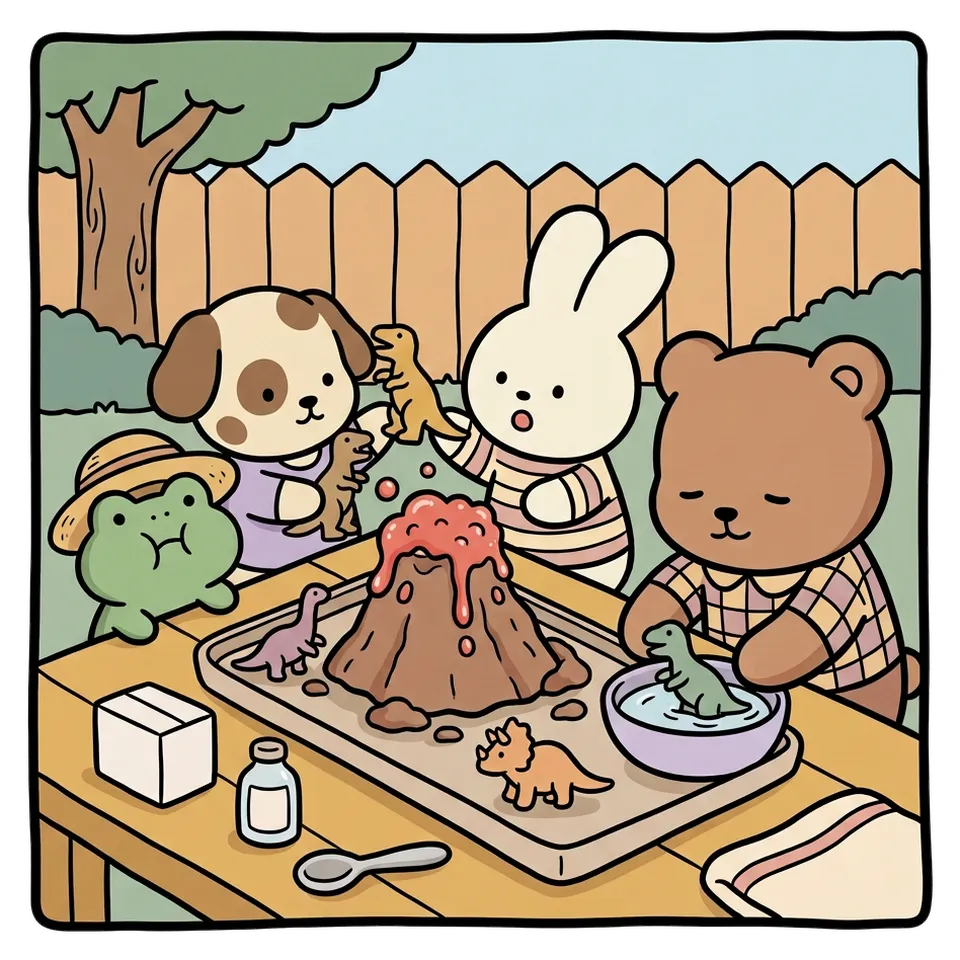
Put baking soda and vinegar in a small cup so the foam overflows, and pile clay or soil around the cup into a mountain shape for this volcano play.
Why it's good
The child finds out for themselves why it doesn't erupt and how to make it. Without anyone telling them, they realize more vinegar is needed. It looks like it's boiling hard, yet it's actually cold to the touch, and they check that with their own hands. It's play where they learn with their body that what the eyes see and what the hands feel are different.
Books to read together

How to play
Put two spoonfuls of baking soda in a small cup and pour in vinegar, and it bubbles over. Pile clay or soil around the cup like a mountain and set the cup inside, and it's a volcano. Mix in a little paint and it overflows red. At first they said “It's bubbling and boiling”, and soon “Why doesn't it explode?” The child found a way by themselves: “We have to put more vinegar in.” When they poured more, it really did gush over, and from then on how much to pour became the game.
Stand dinosaurs around it and a story attaches. A child watching it overflow worried “Poor dinosaurs... I think it's too hot for them.” The child who heard that said “Then how about we rescue them?” and the two quickly pulled the dinosaurs out, washed them in water and said “Phew~ saved!” After that everyone became dinosaur rescuers.
It looks like it's boiling hard, but it's cold to the touch. Before piling up the mountain, try it once with just the cup. Wrap your hands around the cup and it's actually cool, and so is the foam that spilled over. If you let a child who was worried the dinosaurs were hot touch it, the story goes one step further.
Good to know
- Don't hand over all the vinegar at once; portion it into a small cup. The child pours more themselves and finds out how much it takes to overflow.
- Vinegar smells strong, so open a window. It's an overflowing play, so just set everything on a tray or basin.
What you'll need
Baking soda · Vinegar · Clay · Cup · Paint · Tray