Play Ideas with Corn
The first time a child sees corn with its husk and silk still on, they don't know it's corn. It looks completely different from the yellow kernels they've seen at the store. Peel off one layer of husk and another green leaf appears, under that comes the soft silk, and only when you move the silk aside do you finally meet the familiar kernels.
This page was translated by Yeparksam, a preschool teacher in Korea. Some words may sound a little unusual — thank you for your understanding.
Printables to use
See more ›
Plant It and Measure Your Height
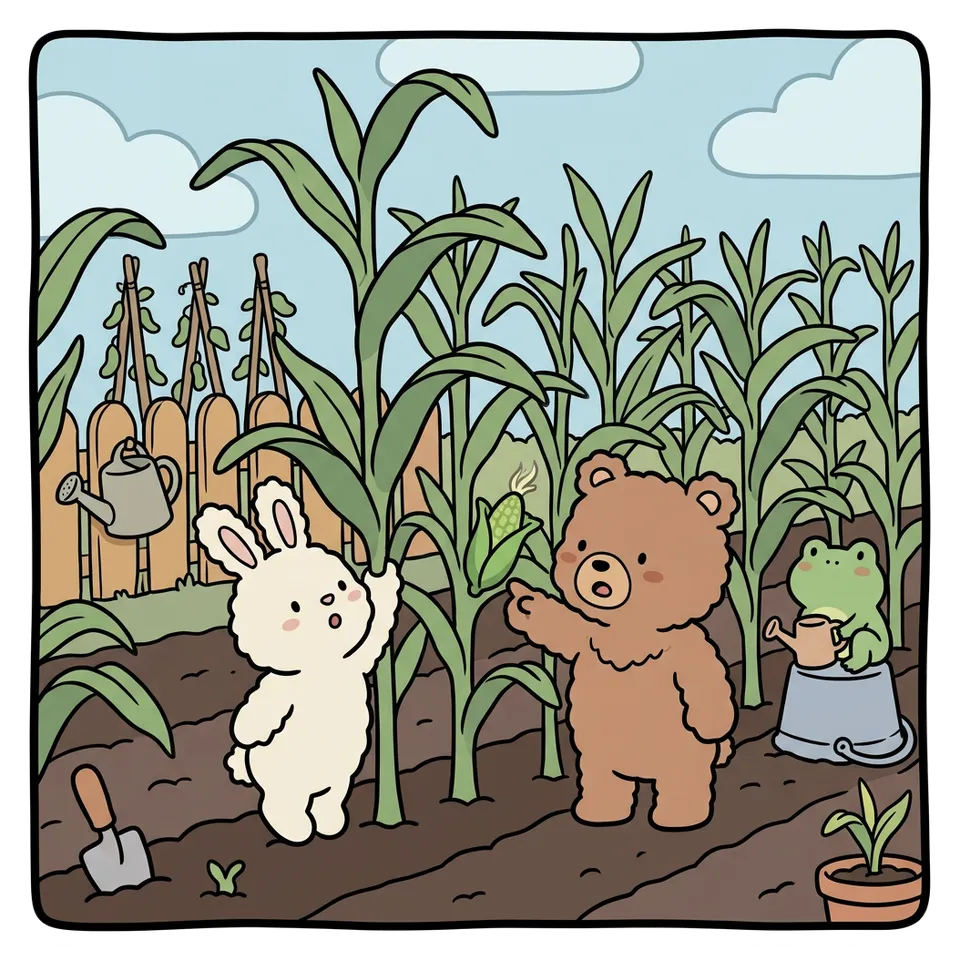
Plant corn seeds or seedlings in the garden, and as they grow, the child raises a hand above their head to compare their height with the corn.
Why it's good
When people say corn, they usually think only of the yellow kernels, but when you plant and grow it, you meet the whole plant, which towers over the child. Raising a hand above the head to measure against the corn every time it grows is itself a way of seeing corn again, as a whole plant rather than a single kernel.
How to play
It starts with planting corn seeds in the garden and watering them. After sprouting, it grows by the day, and each time, the child raises their hand above their head on their own to compare with the corn's height. It had only just been planted and had already passed the child's height. This speed was a surprise to me too.
A child looking closely between the stalks pointed and said “I think the corn is here!” It was a different spot from the yellow thing they'd seen at the store, so I was unsure at first too. Passing by the fully grown corn, a child said “Corn must eat its meals well, so it got really big,” and I didn't correct it, I just nodded.
Good to know
- Aphids tend to appear around the time it flowers. It's good to check on it every now and then around that time.
- Planting seedlings instead of seeds lets you see it grown sooner.
What you'll need
Garden plot · Corn seeds or seedlings
Pick It Yourself in the Field
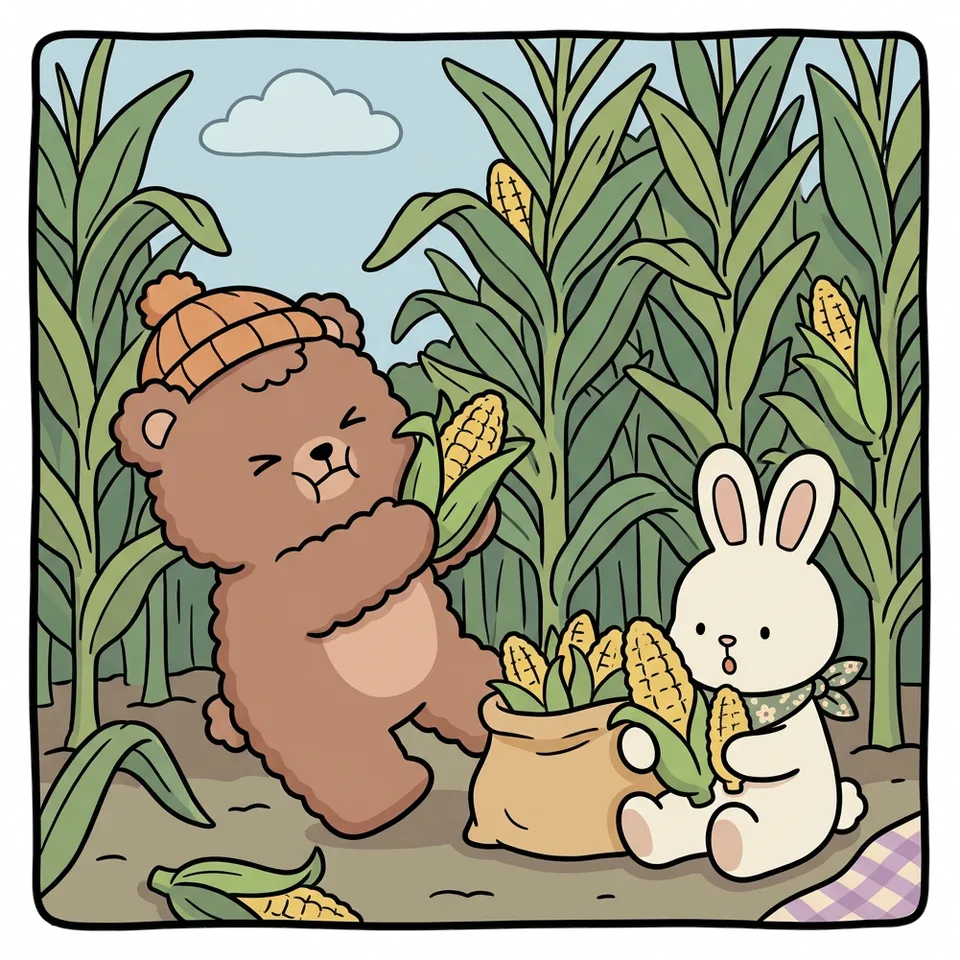
Pull the corn off the stalks one by one right in the field, put it in a bag, and compare the size and weight.
Why it's good
By gripping an ear and pulling it off, children learn it's heavier and takes more effort than they expected. When they compare the sizes of what they picked, that's also when they learn that every one is different. These are things they couldn't tell from only seeing corn lined up neatly on a store shelf.
How to play
From the bus ride on, the child is full of anticipation. They ask over and over, “Are we really picking corn?” When we arrive at the field, they touch the leaves first. “The leaves are scratchy” is their first reaction.
We pick one and hold the ear together and pull. The feeling in the hand as the corn pulls free must have been more fun than expected, because the child said they wanted to keep going. Each time we put the picked corn in a bag, we lift them to compare the weight and size. Looking again at the corn in the bag, every one was a different size.
Back home, the play continues once more with the picked corn. The child becomes the shopkeeper and sells corn, and I become the customer who comes to buy. Setting the price by size is the child's job too.
Good to know
- Wash your hands well after picking. There's a lot of soil on the corn, so your hands feel rough after touching it.
- June and July are harvest season. It varies a little by region, so it's good to check ahead with the farm you plan to visit.
What you'll need
A corn-picking experience farm (weekend farm or harvest program) · Bags
Peel the Husk
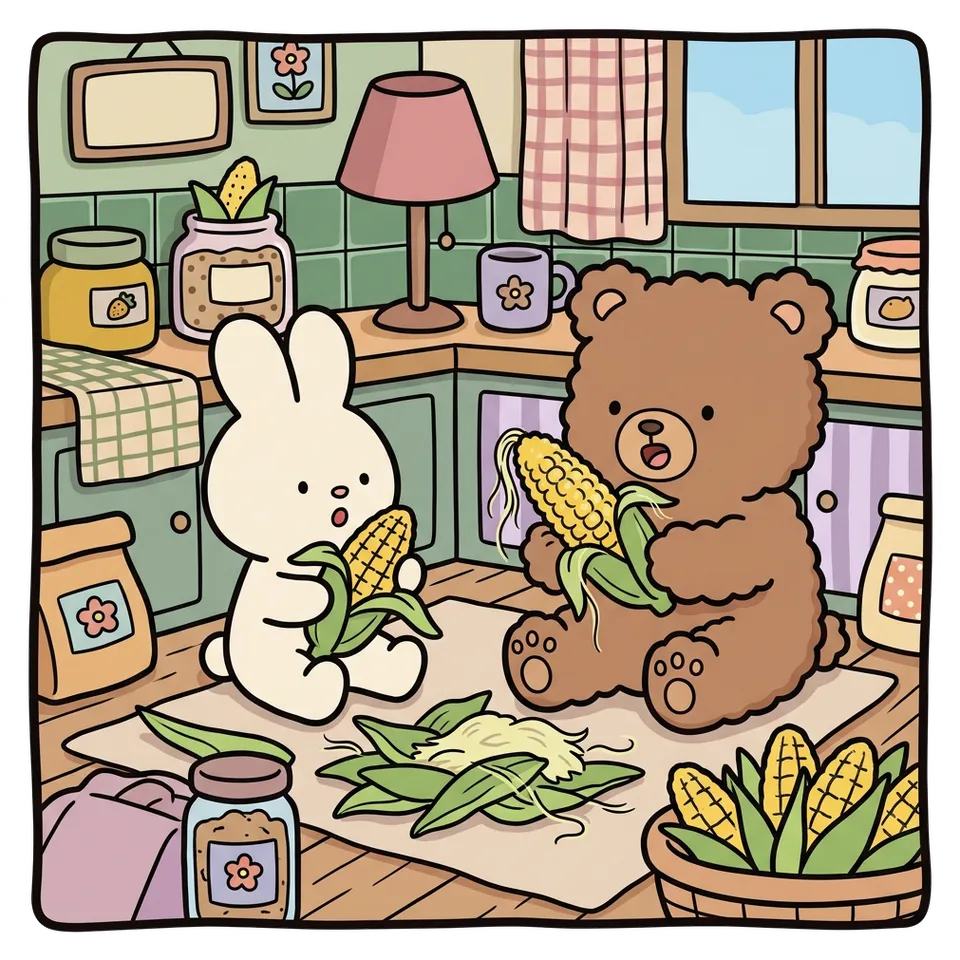
Peel the corn husks off by hand, one layer at a time, until the yellow kernels show at the very end.
Why it's good
Each time they peel off a layer, something different keeps appearing inside, and only at the very end do they meet the yellow kernels we know. A child who, when first holding corn with its husk and silk still on, wasn't even sure this was the corn you eat, knows for certain after going through this process.
How to play
When I first showed them a whole ear of corn, I was the one who assumed they'd find it strange. The child came right over without hesitating, touched it, and wondered “What's this?” When I peeled off a layer, another green leaf appeared, and they enjoyed it, saying “There's more!” Only then do they learn that several more layers have to come off before the real corn appears. Sometimes they even call out their own cadence, “Top to bottom,” as they peel.
When the yellow kernels finally show, their eyes light up, saying “Wow, it's yellow” and “It's corn.” If a caterpillar turns up between the husks while peeling, the day's play gets even more fun. They shout, “Mom, there's a caterpillar here!”
Good to know
- If you peel just the top a little, they can try the rest on their own. For children with weak fingertips, helping with just the start is enough.
- If corn has made them curious today, make popcorn together in the evening too. If you microwave a bag, you can watch the corn pop and turn into a snack. But it's a different variety from the corn you peeled today, so you have to buy a product made from corn meant for popcorn.
What you'll need
Fresh corn with the husk and silk still on
Silk Becomes Hair
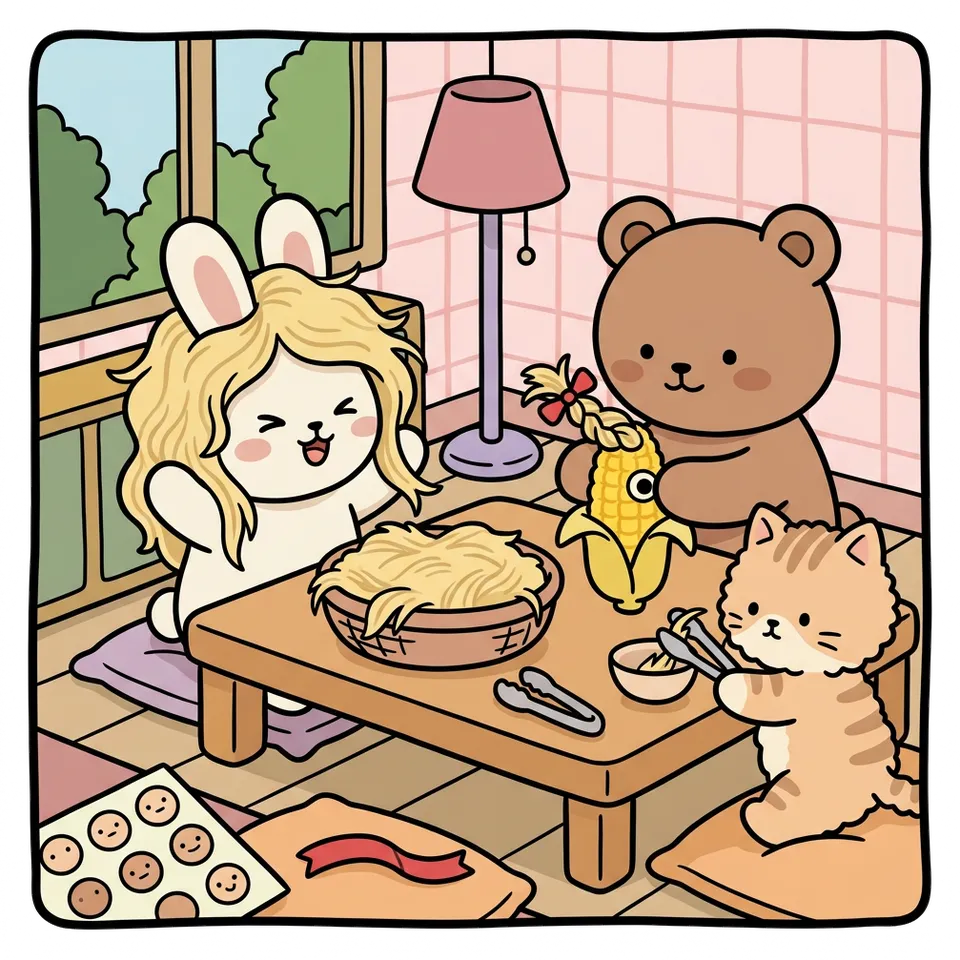
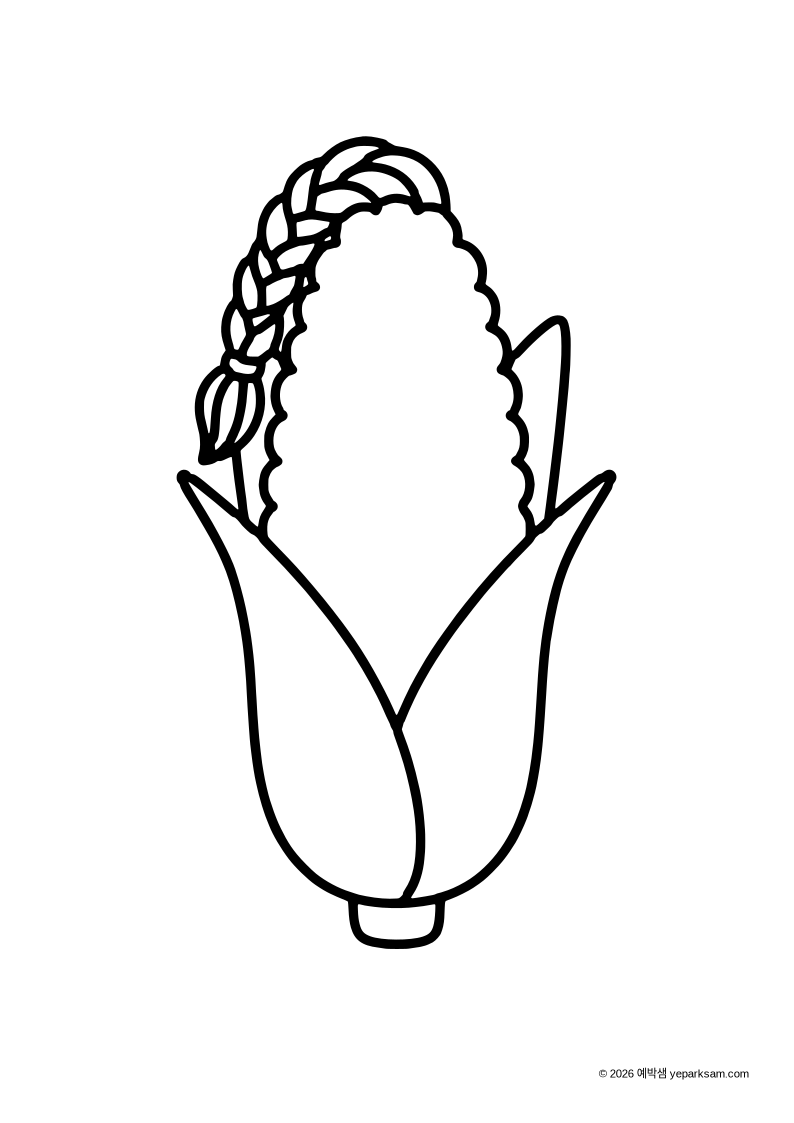
Lay soft corn silk on top of your head, or braid it, and dress up the corn itself like a doll.
Why it's good
To adults, corn silk is just the part you throw away. But before being told its name, the child calls it “hair” first. They put it on their head and braid it onto the corn, and one strand of silk becomes a person or an animal.
How to play
If you give them the silk in a basket, they touch it first. They keep reaching for the soft, fluffy feel. They put it on their head and play for a long time, saying “It's like hair” and “It's like a lion.” They also hold the husk up to their head to hide their face. Some children pick it up one strand at a time with tongs and move it to a bowl.
When I braid the silk and set it on the corn, they love it, saying “So cute! It's like a doll.” Then right away they point out, “But it doesn't have eyes, nose, or mouth!” I thought that was good enough to call it done, but the child's standard was higher. It was only finished after I put eyes-nose-mouth stickers on the corn kernels.
Good to know
- Moving strands one at a time with tongs builds strength in the fingertips. It adds one more kind of play beyond just touching with hands.
What you'll need
Corn silk · Ribbon for braiding (daenggi) · Eyes-nose-mouth stickers · Tongs
Press the Zip Bag
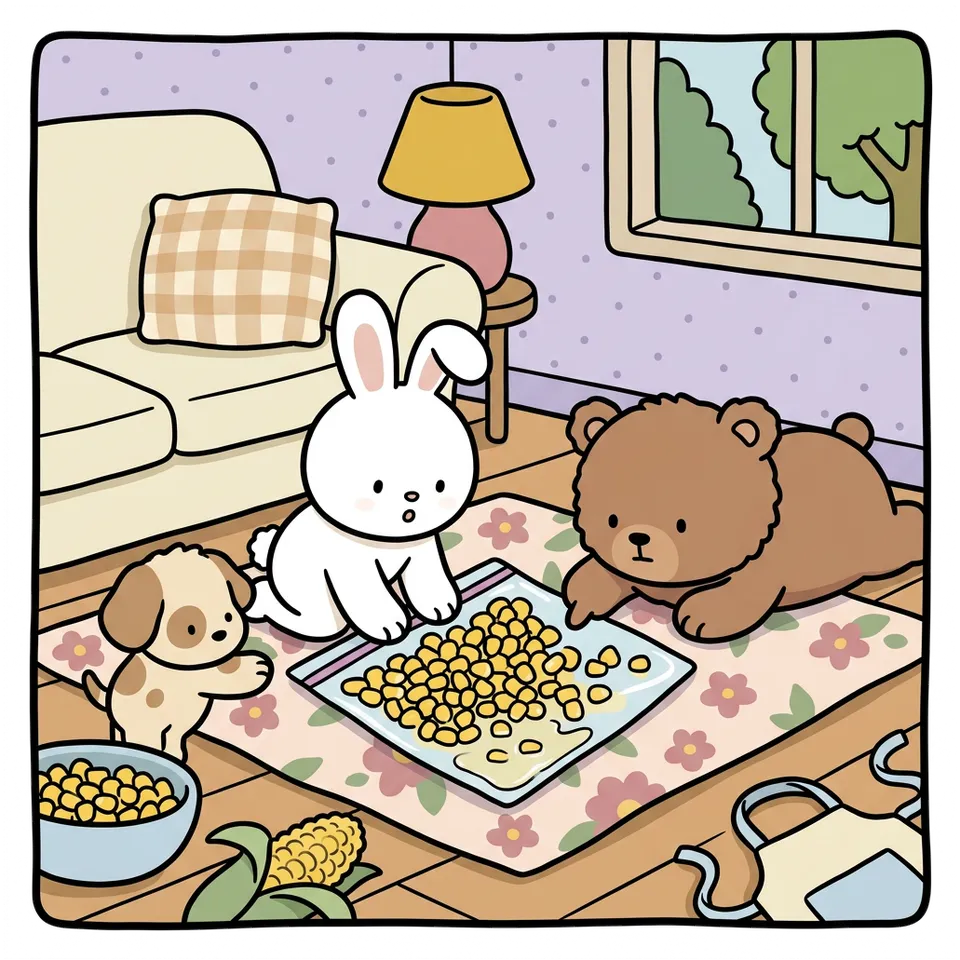
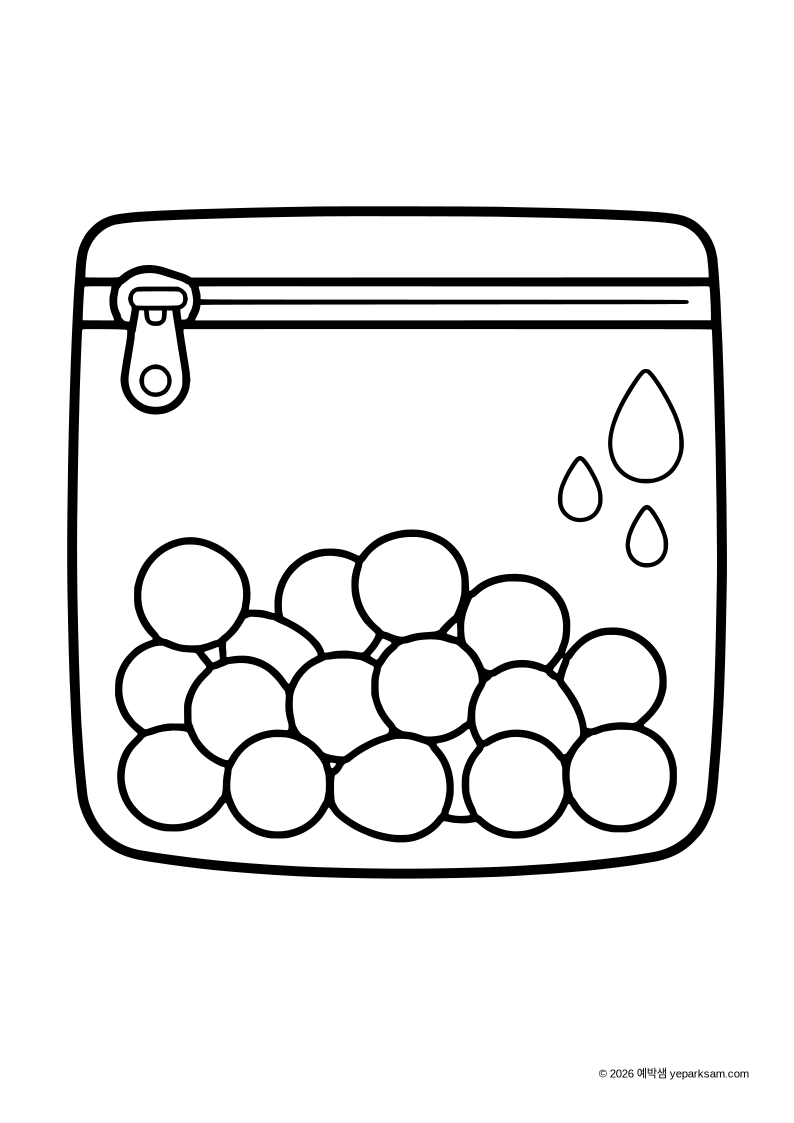
Press and tap the corn kernels in a zip bag with your hands and feel the texture and the juice.
Why it's good
When you press the kernels hard through the zip bag, they go squishy as if bursting with a pop, and juice even seeps out. Every time they press, you see a new look of surprise on their face.
How to play
When I handed over a zip bag saying “Look, here's the corn we peeled yesterday,” they looked it over first and then pressed it with their hands. When pressed hard, the kernels went squishy as if bursting, and the juice seeped out. They asked “What's this water?” and when I told them “The corn has lots of water, so juice came out,” they asked back “Corn water?” and pressed more, as if they couldn't believe it.
Good to know
- Close the zip bag opening tightly. Otherwise juice leaks out while they press.
- Juice can splash on clothes. Laying down a mat or an apron makes it less of a hassle.
What you'll need
Zip bag · Corn kernels