Play Ideas with Colored Paper
A pack of colored paper has about twenty colors in it. Just choosing the colors, cutting, tearing, and crumpling can fill a whole day. When I was little I folded boats and cranes, and the only thing I can still fold is an airplane, but even without folding there is this much to do.
This page was translated by Yeparksam, a preschool teacher in Korea. Some words may sound a little unusual — thank you for your understanding.
Printables to use
See more ›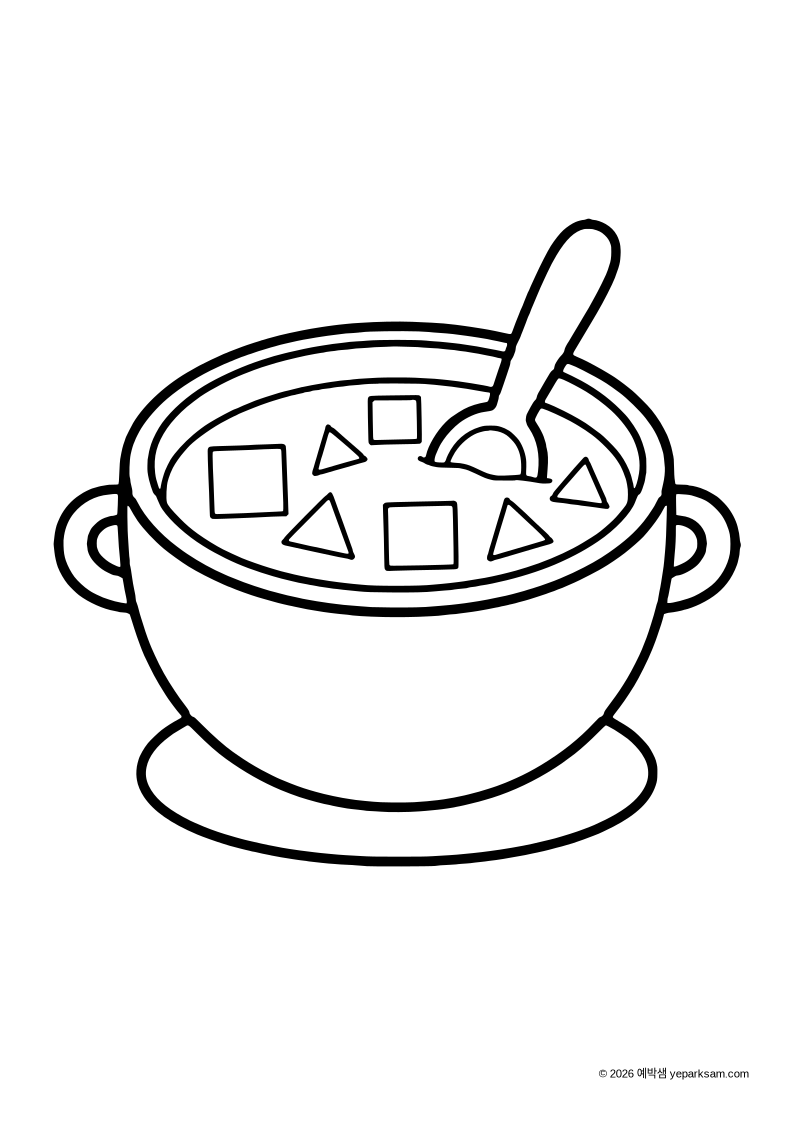
Hold Up a Color and Match It
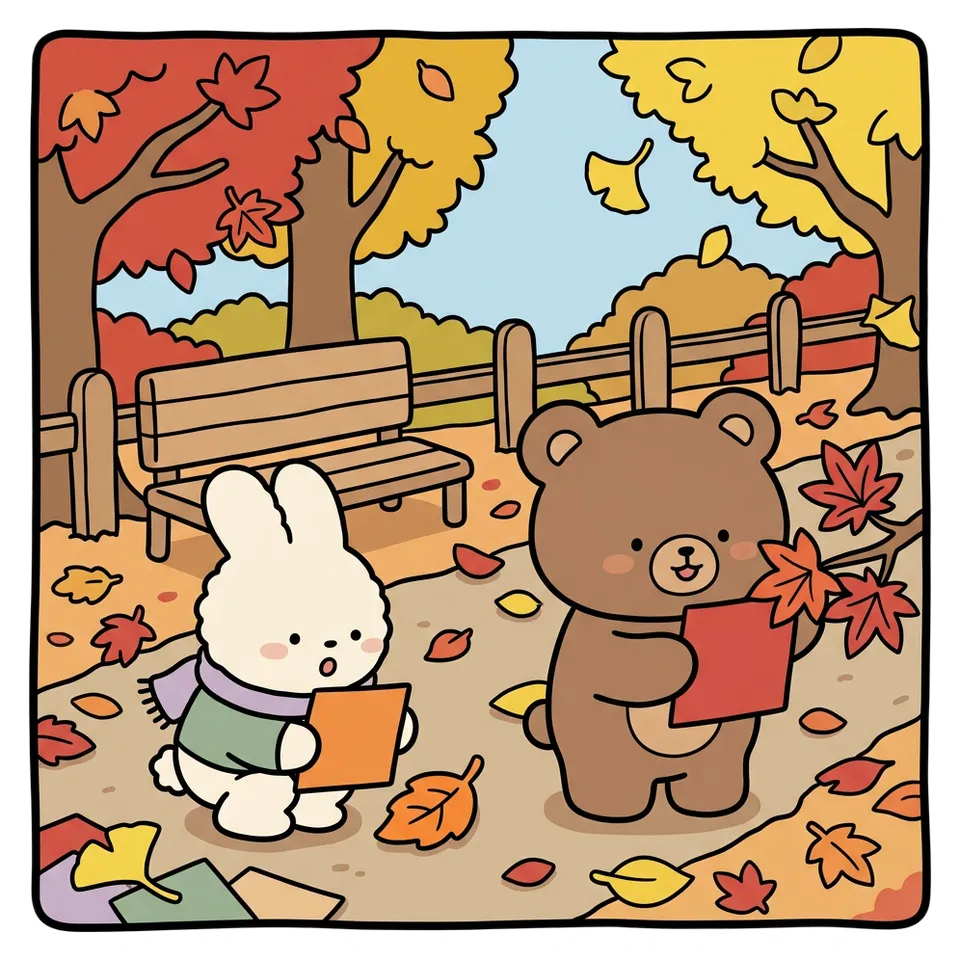
Carry a sheet of colored paper around and hold it up to anything and everything.
Why it's good
It's good for holding a color up to everything the child sees and giving it a name. Indoors it's mostly wallpaper, clothes, and toys, but outside there is so much more to hold it up to, and color names keep coming.
How to play
Hand a child one sheet of colored paper and they walk around holding it up to anything. They hold it to the wallpaper, to their clothes, to a toy, and when they find the same color they bring it over to show you.
Outside there is much more to hold it up to. A child who picked up a fallen leaf said “The leaf turned orange,” and another child choosing colored paper next to them said “Maple leaf is red,” and someone else said “Ginkgo leaf is yellow,” and “The sky is blue.” From there they name the color of everything they see.
Good to know
- It gets more fun when they look for a color that doesn't exist. The child searches a long time for a blue leaf or a black flower, and then figures out on their own that there isn't one.
What you'll need
Colored paper
Cut It Small
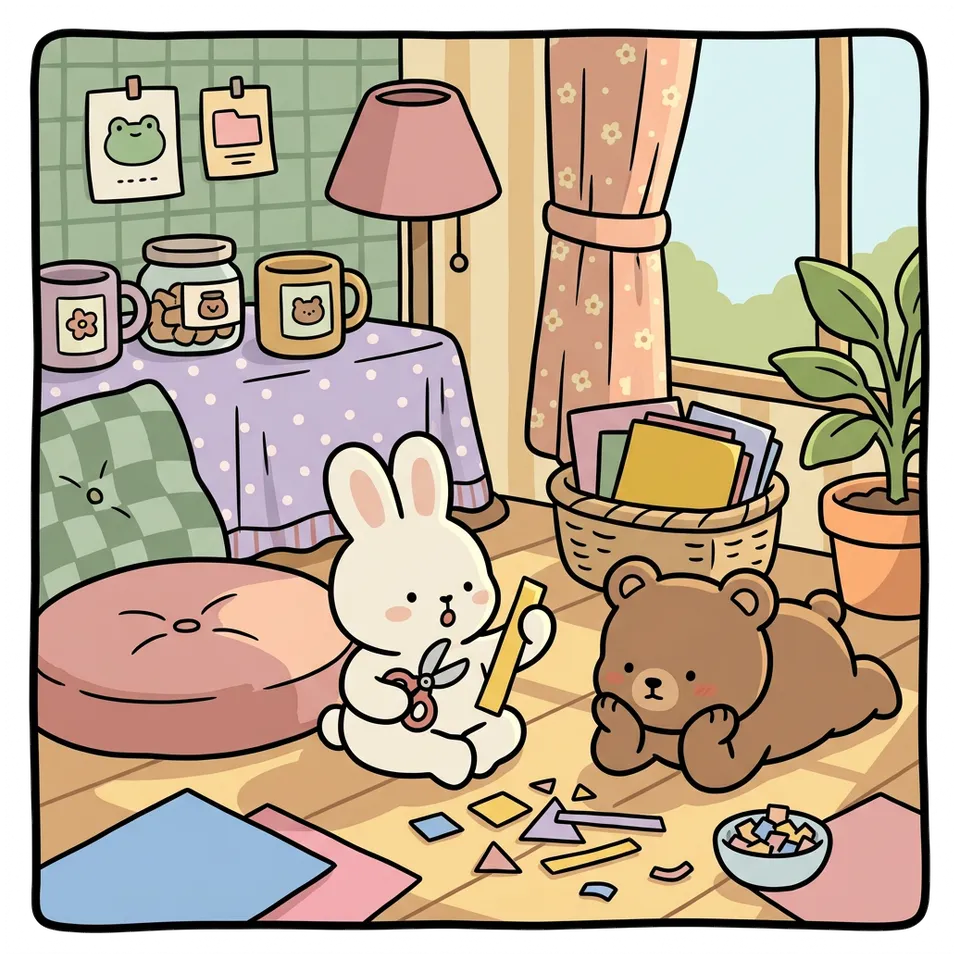
All you need to give is scissors and a sheet of colored paper. You don't have to ask them to make anything. They'll keep on cutting for a long time.
Why it's good
Their scissor skills get more comfortable with every cut. The shape of the piece changes depending on how they cut, so names like square and triangle come right out, and the pieces getting smaller turns into words too.
How to play
One cut and “It's a square,” a slanted cut and “It's a triangle,” and as the pieces get smaller, “It got small!” Let the child cut one sheet all the way. They cut until the pieces are as small as a fingernail, and that is where the play ends. Gather the finished pieces in a bowl and they become material for the next play.
Good to know
- Use child safety scissors. Choose ones with rounded tips, and there are separate left-handed ones for left-handed children. If cutting is still hard, cut the paper into long strips ahead of time. A narrow, long strip snaps off in one snip, so success comes quickly.
What you'll need
Colored paper · Scissors
Cut Small and Cook
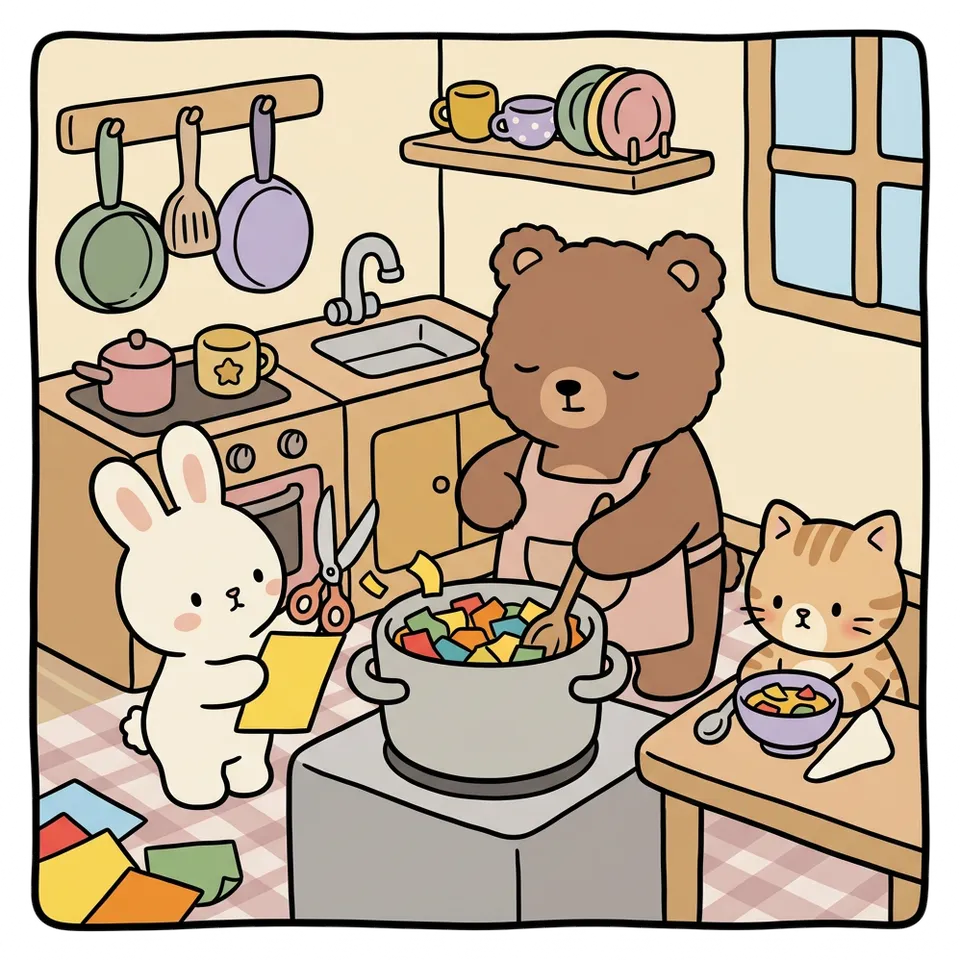
All you need is a bowl and scissors for this role play. Cut up colored paper and put it in the bowl, and it becomes food.
Why it's good
They can pretend to cook without any real ingredients. They cut colored paper, put it in a bowl, name it, then stir, move, and hand it over, copying what they've seen in the kitchen.
How to play
Set out a bowl and scissors, and they start by cutting and putting pieces in. When the bowl was about half full, a child started stirring with a spoon and said “I'm making yummy food.” Then, cutting more colors, the child said “I'm going to make soup.”
They simply love cutting, so it's fine if the scissor skills aren't there yet. Big or crooked, anything that goes in the bowl is an ingredient. If you put toy bowls and spoons beside them, they go on to scooping, moving, and handing over. If you pretend to eat, they keep bringing you more.
Good to know
- It's much more fun when the colors get mixed. Only yellow becomes eggs, and lots of colors mixed together become bibimbap (mixed rice). If you ask what dish it is, names keep coming.
What you'll need
Colored paper · Scissors · Bowl · Spoon
Tear Paper Rain
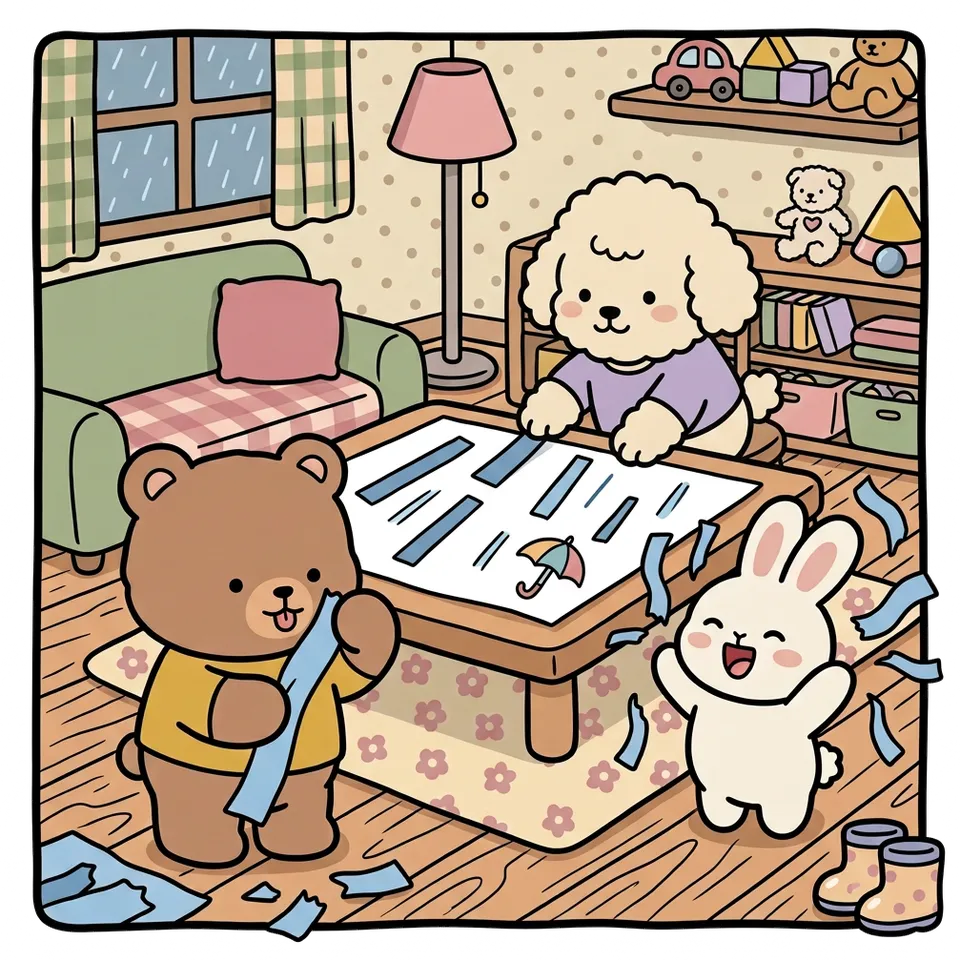
Tear colored paper with your hands, no scissors, to make streaks of rain.
Why it's good
They tear paper using only the strength of their fingertips and try controlling how thick the strips are. The thickness they tear becomes the rain, so they can see right away what their control produced.
How to play
Tear it into long pieces by hand, no scissors. Tear blue paper long and narrow and it becomes streaks of rain. As they tear, thick and thin ones get mixed, and while sticking them on a sheet the child sorts them first. The thick ones are a downpour, the thin ones a drizzle.
Throwing the torn pieces up in the air makes another play. They run around trying to catch the scattering pieces in their hands. The rain shows up well when stuck on white paper, and some children draw in an umbrella or rain boots too.
After rain, snow works too. Tear white paper into four pieces and crumple them and they're snowflakes. Roll them into round balls and toss them up and it's a snowy day, and they show up much better when stuck on black paper.
Good to know
- Tearing by hand is better than scissors. Colored paper has a grain, so tearing along it goes straight down, and tearing against it goes crooked. If a child says it won't tear, turn the paper sideways in their hands.
- Bring it out when a child keeps tearing things. There's a stage of tearing pages while turning them and pulling tissues apart, and giving colored paper that is okay to tear works faster than scolding.
What you'll need
Blue colored paper · White colored paper · Black colored paper
Stick on Hair
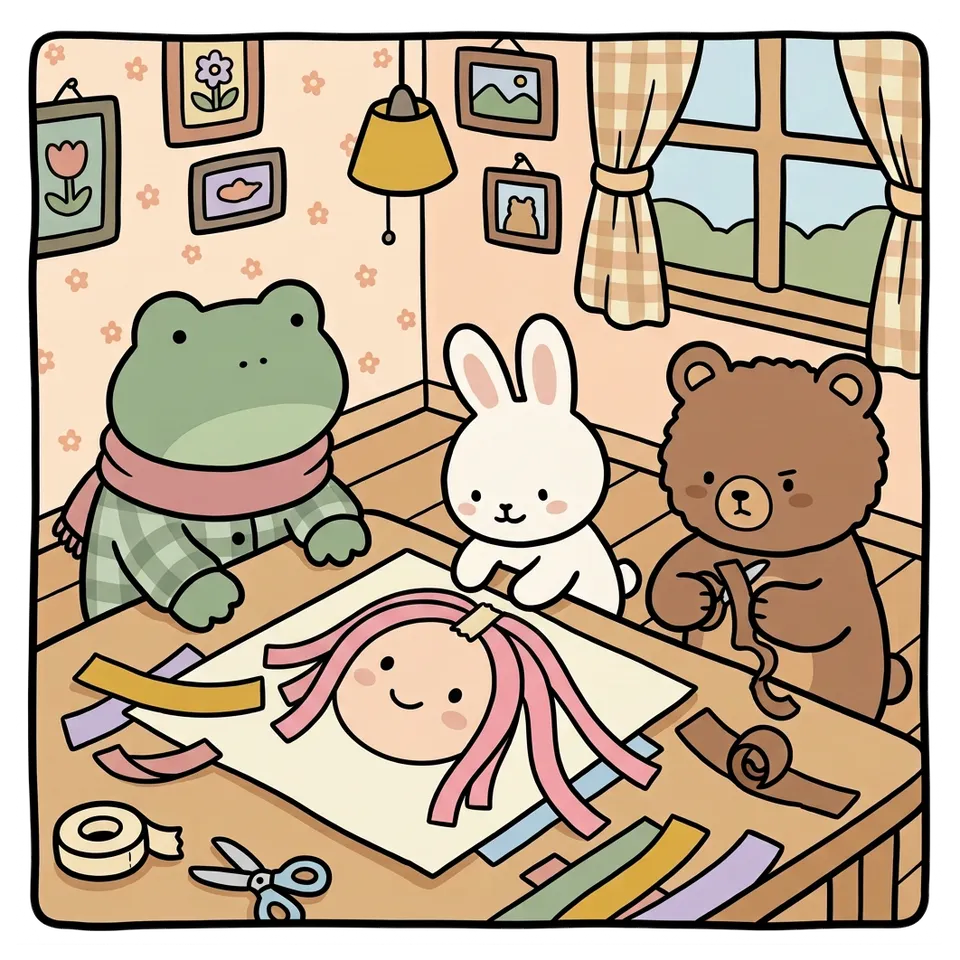
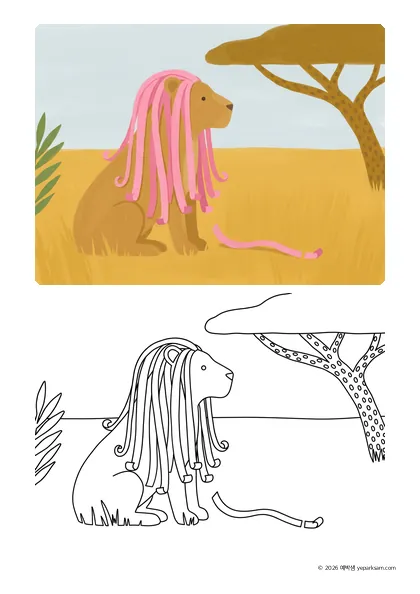
Cut colored paper into long strips and stick them on a face picture with no hair to give it hair. The child decides the length and the color.
Why it's good
They choose the color and length they want and stick it on themselves. Whether to cut it long and let it hang or cut it short and stick it close together is all up to the child, and when it's done, that color and length is truly the child's own.
How to play
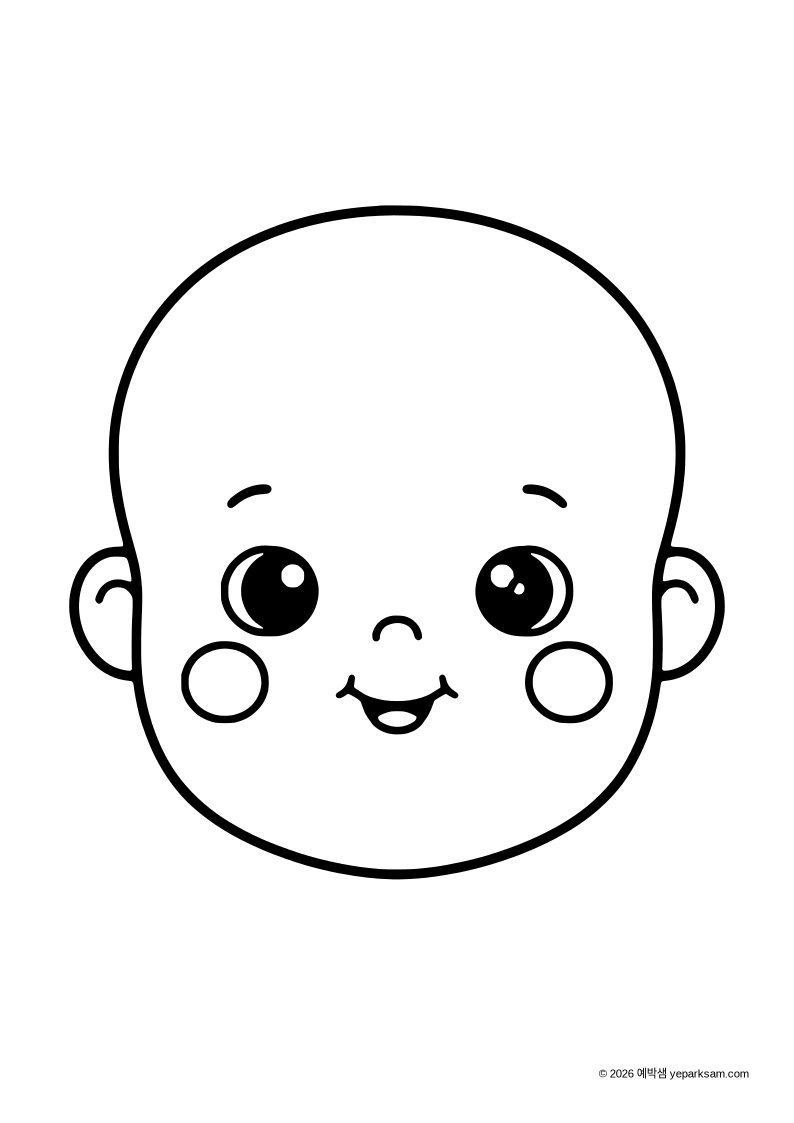
Draw a face with no hair and the child asks first. “Mom, why doesn't this one have hair?” When I suggested cutting long strips of colored paper and sticking them on, the child rummaged for a long while and chose, saying “I'm going to give it pink hair.” After sticking it all on, the child said “I got long hair.”
Some children snip the ends many times with scissors to make curly hair. If you draw several faces, they make a family. They pick different colors while saying whose hair it is.
Good to know
- Tape is better than glue. They can play right after sticking. With glue you have to wait until it dries.
What you'll need
Colored paper · Scissors · Tape · Drawing of a face with no hair
Put in a Container and Shake
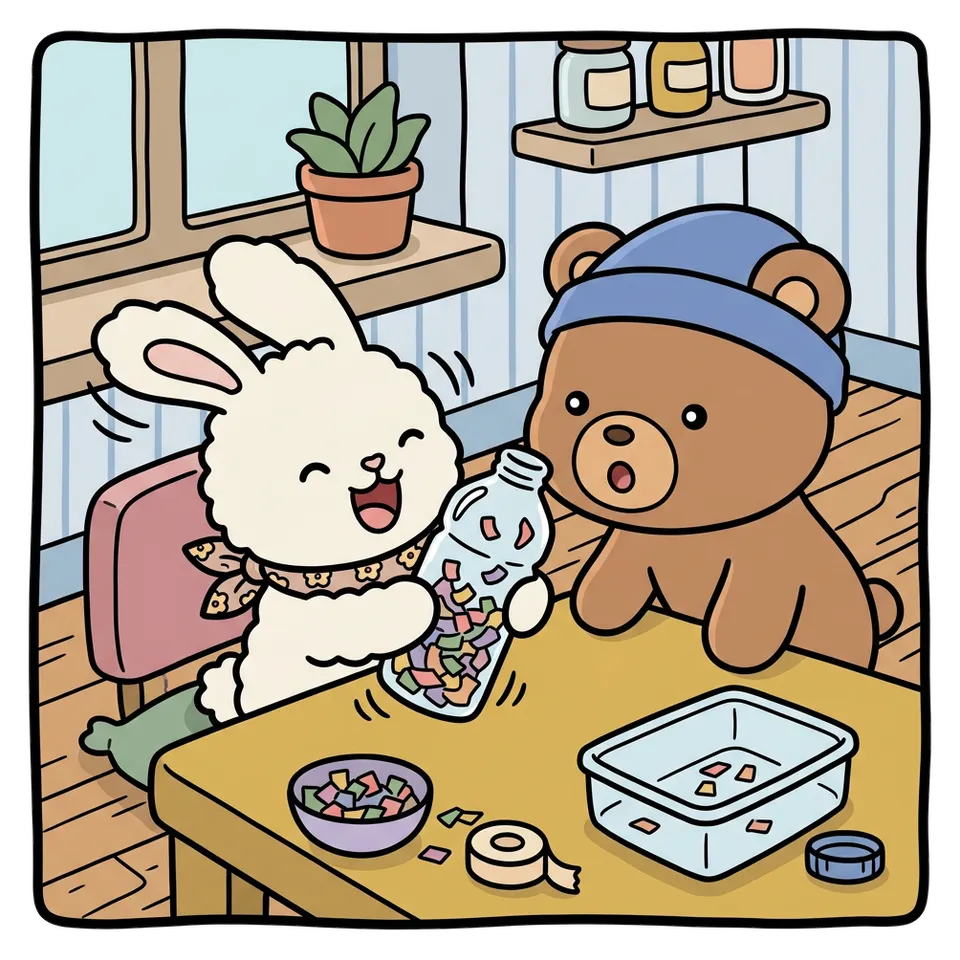
Snip colored paper into tiny pieces, put them in a clear container, and shake.
Why it's good
They watch the colors seem to mix every time they shake. They notice for themselves the moment the paper tumbles together in the container, and say the color names as they see them.
How to play
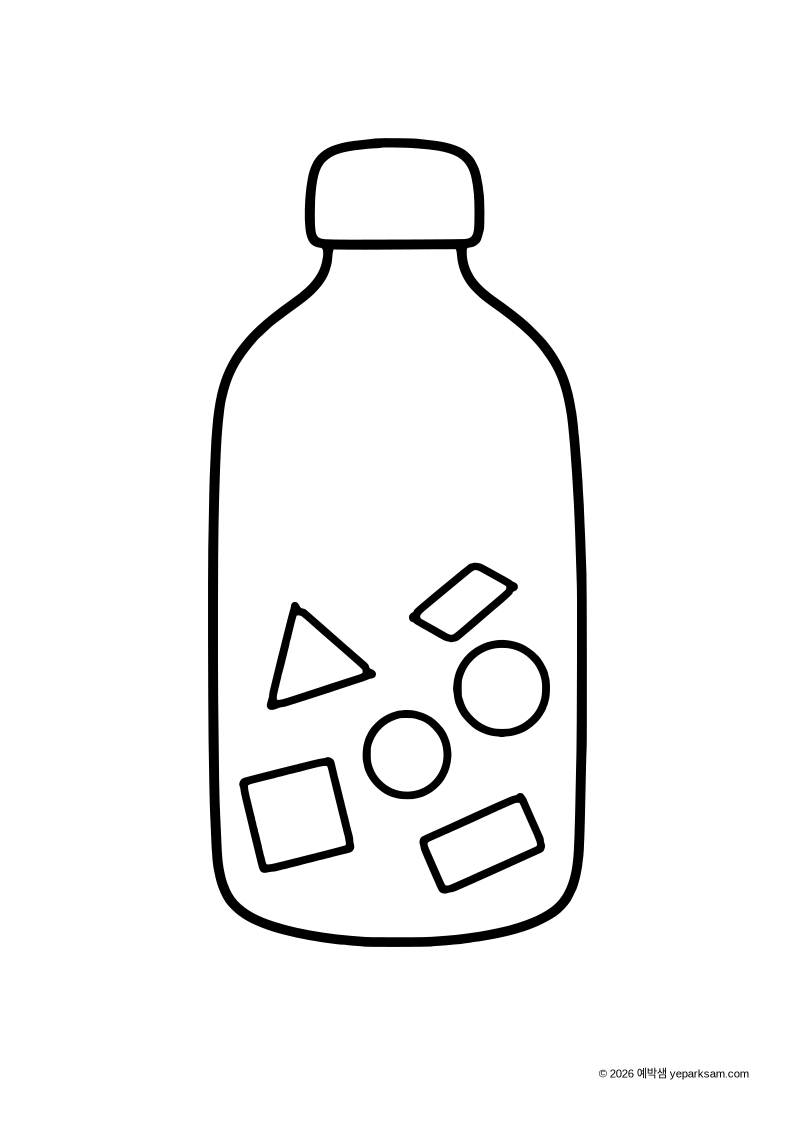
Cut colored paper into tiny pieces, put it in a clear container, close the lid, and shake. A plastic bottle or a food storage container will do. The colors look mixed every time you shake, and a child looking into the container said “Wow, it's rainbow colors,” and “I see orange and yellow.”
If you add a little water, the colored paper sinks slowly. Sometimes the color seeps out into the water, and the child looks closely at that too.
Good to know
- Let the child choose what goes in and it lasts much longer. If you put in beads, glitter, or rubber bands too, it makes sounds when shaken and the weight feels different. Some children make several containers, each with only one color.
- Wrap the lid once with tape. If it comes open while shaking, everything spills out.
What you'll need
Colored paper · Scissors · Clear container (plastic bottle, food storage container) · Tape
Send the Airplane Far
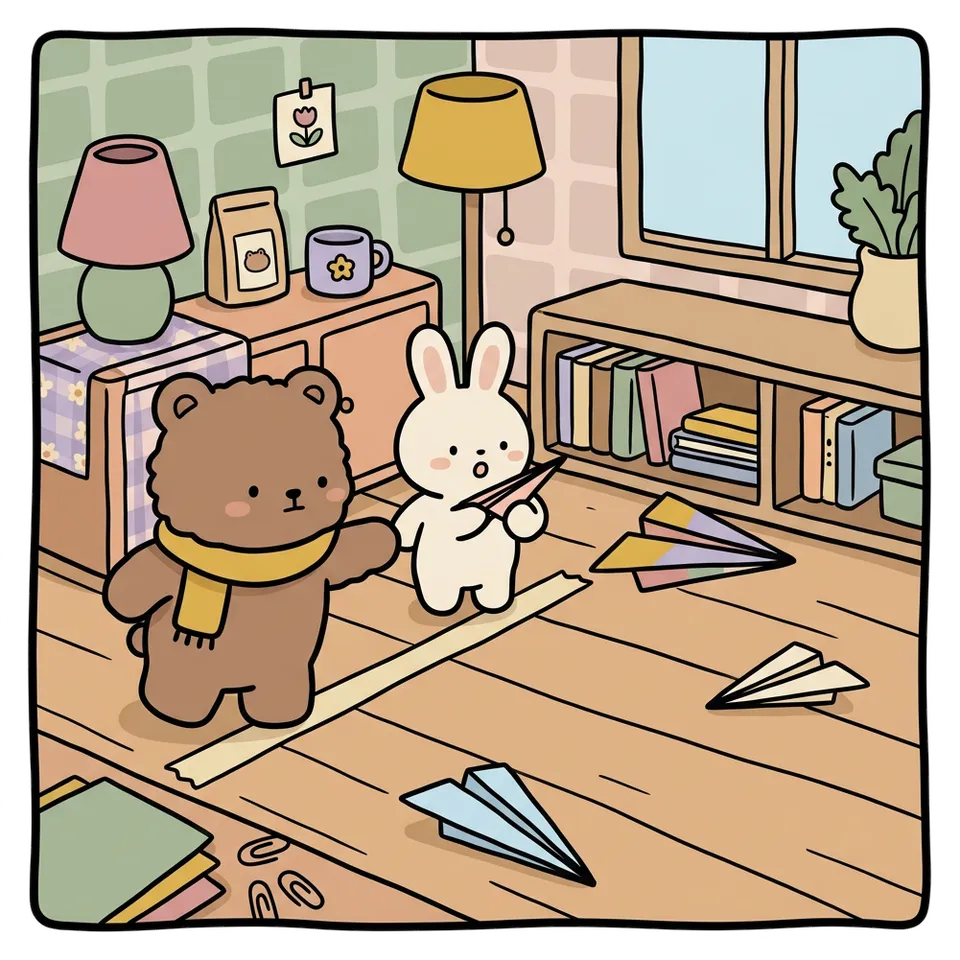
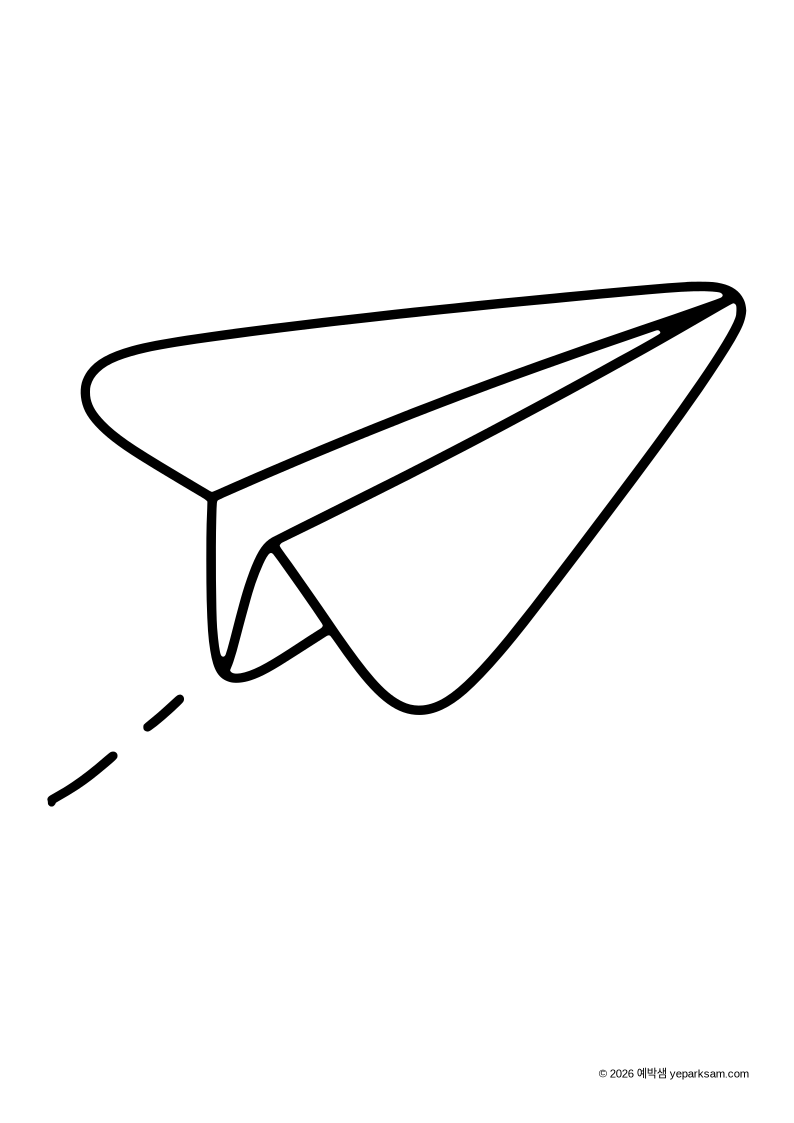
Fold paper airplanes and compete to see who can send theirs the farthest.
Why it's good
By folding and throwing together, they find out for themselves what goes farther. If you set a place to throw from, they compare under the same conditions, and by throwing they discover that the results change with the shape of the wings or the wind.
Books to read together


How to play
If you can't remember how to fold one, just fold the paper in half and fold the front into a triangle to make only wings. It doesn't have to go far. Children are happy just watching it fly.
The play is to fold several and see whose goes farthest. If you put tape on the floor where they throw from and have them throw only from there, the children can tell on their own whose went farther.
When thrown outside, it goes differently every time because of the wind. Children quickly notice that it goes much farther when thrown with the wind at their back.
Good to know
- Fold the back of the wings up slightly and it lifts; put a clip on the nose and the front gets heavy and it flies straight. If only one child's keeps not going far, these two are worth trying. Which is better, you only find out by throwing.
What you'll need
Colored paper · Tape · Clip