Play Ideas with Paper Cups
A paper cup is already something else before you do anything. Put it to your mouth and it's a microphone, to your eye and it's a telescope, to your ear and it's a phone. The cutting and gluing play comes after that.
This page was translated by Yeparksam, a preschool teacher in Korea. Some words may sound a little unusual — thank you for your understanding.
Printables to use
See more ›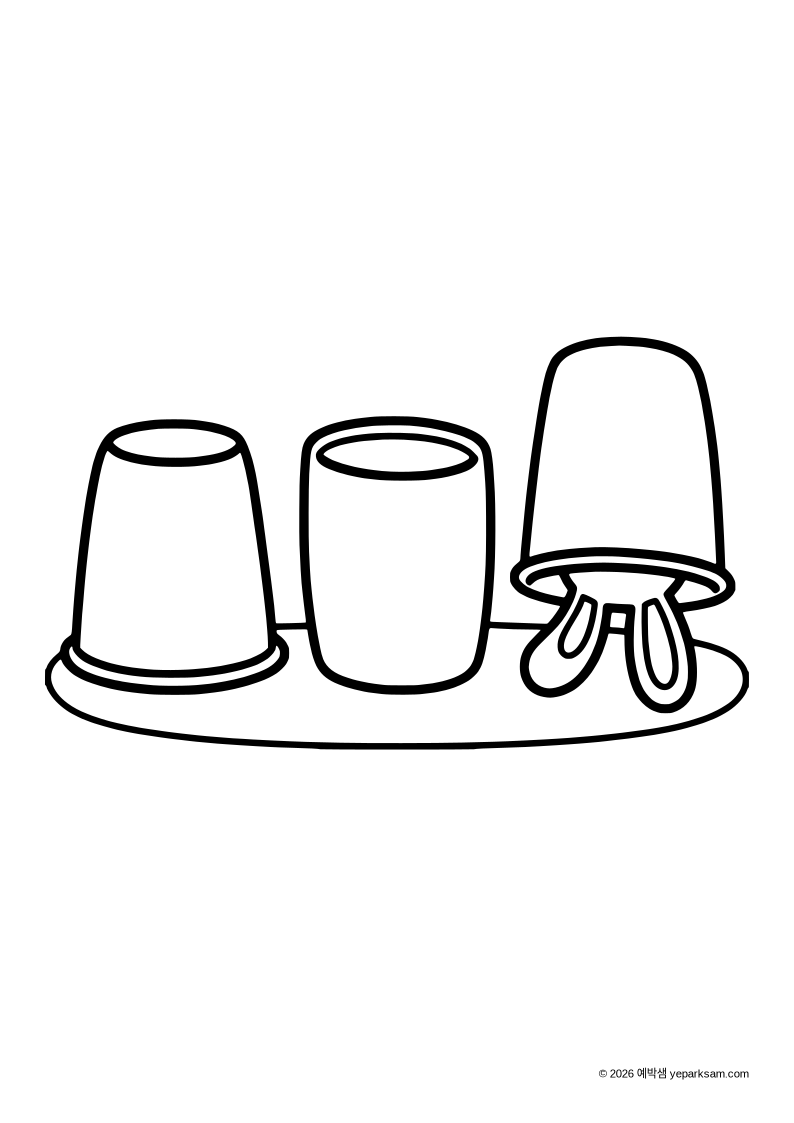
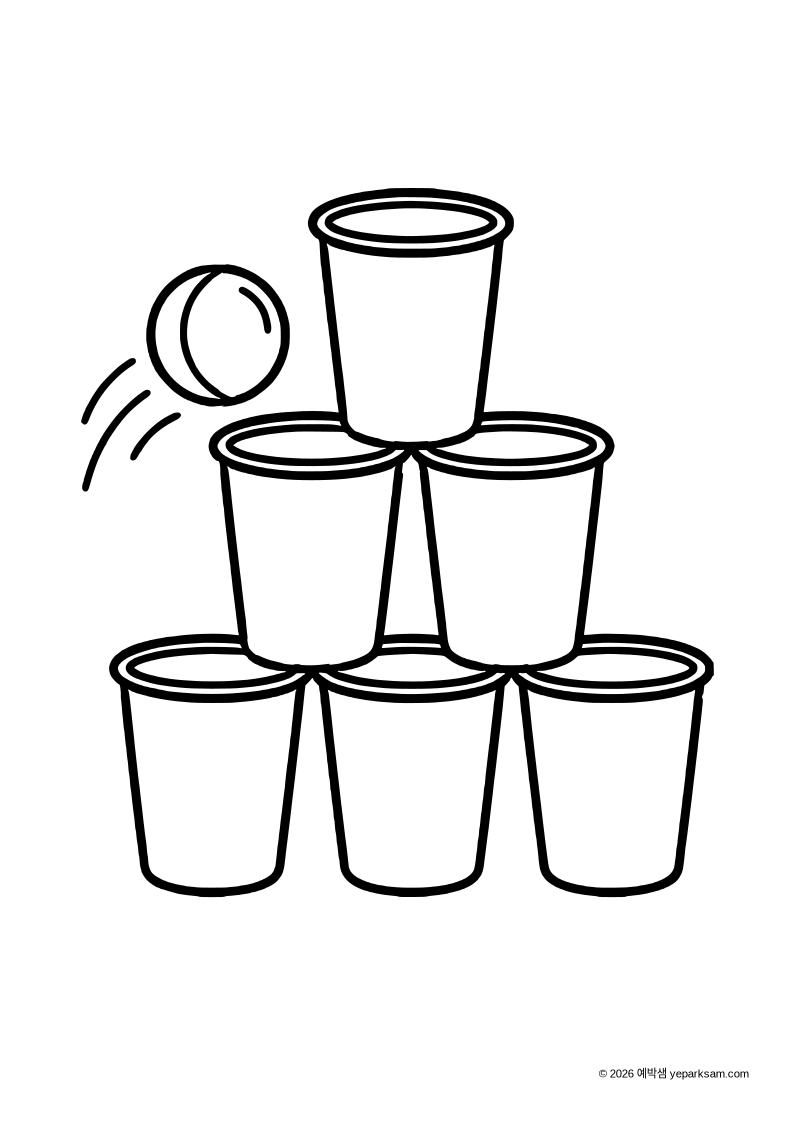
Stacking Up
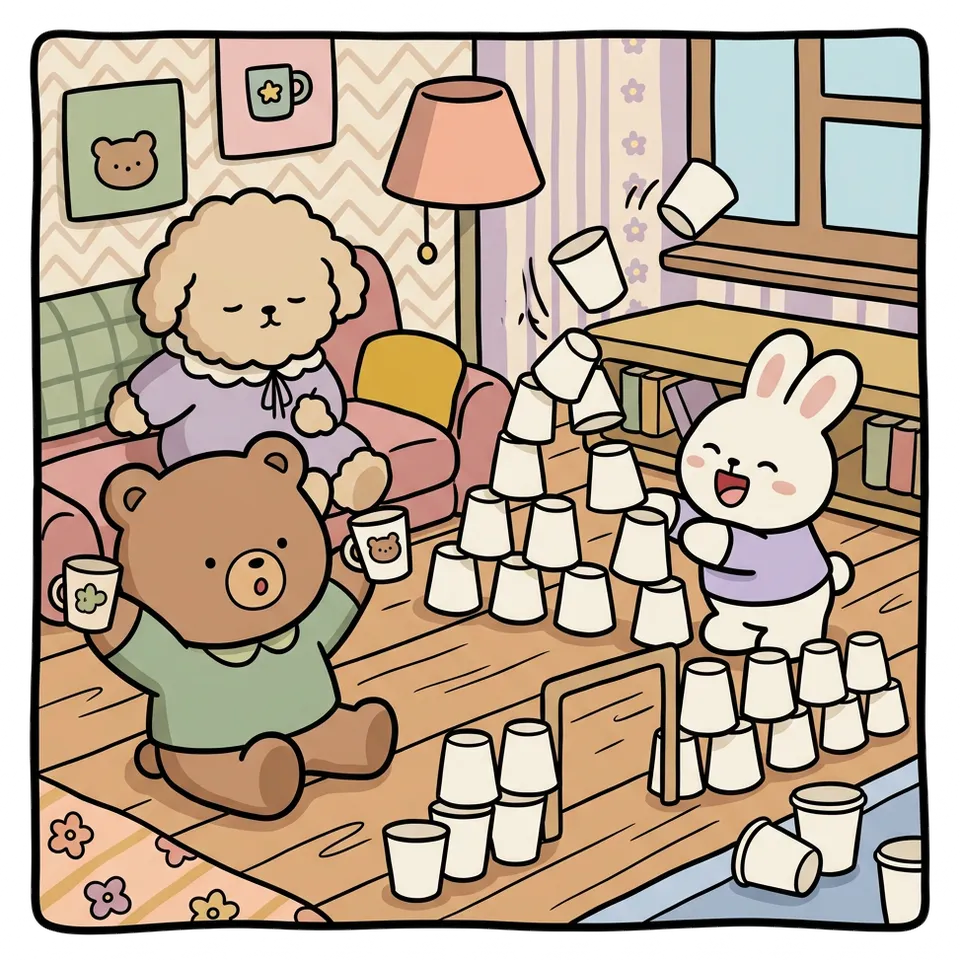
Stand paper cups up and stack them into a tower. After you stack them, pushing them down with your hand is all part of the set.
Why it's good
If you just set a cup on top, it slips right inside, so you have to stand two cups a little apart and set one between them for the tower to stand. Matching that spot is good fingertip control practice. At an age when that control is still clumsy, it's natural to want to knock things down before stacking. One push of the hand gives a big result right away.
How to play
Show them once how to stand two cups slightly apart and set one between them, and after that the child does it alone. After stacking about three, they push it over with a hand right away, or knock it all down together shouting “One, two, three!” to end a round. If a sibling or friend is playing too, they may bump each other's tower and argue; I've also seen them make a deal to knock down only the one you built yourself. Just say that rule back to them.
When two rows are stacked side by side, a gap forms between them, and the child doesn't walk past that gap. They peek in and say “It's a door.”
When the tower gets as tall as the child, their arms can't reach. From then on they lay the cups on their sides, fit them into each other to make a long line, and drag it around. If it breaks in the middle, they leave it broken and hit it around, laughing as the cups bounce away. If you can't go up, you go sideways.
Good to know
- When several children stack, agree on "only knock down the one you built." This one sentence settles the arguments over knocking down someone else's tower.
What you'll need
Lots of paper cups
Rolling a Ball to Knock Cups Down
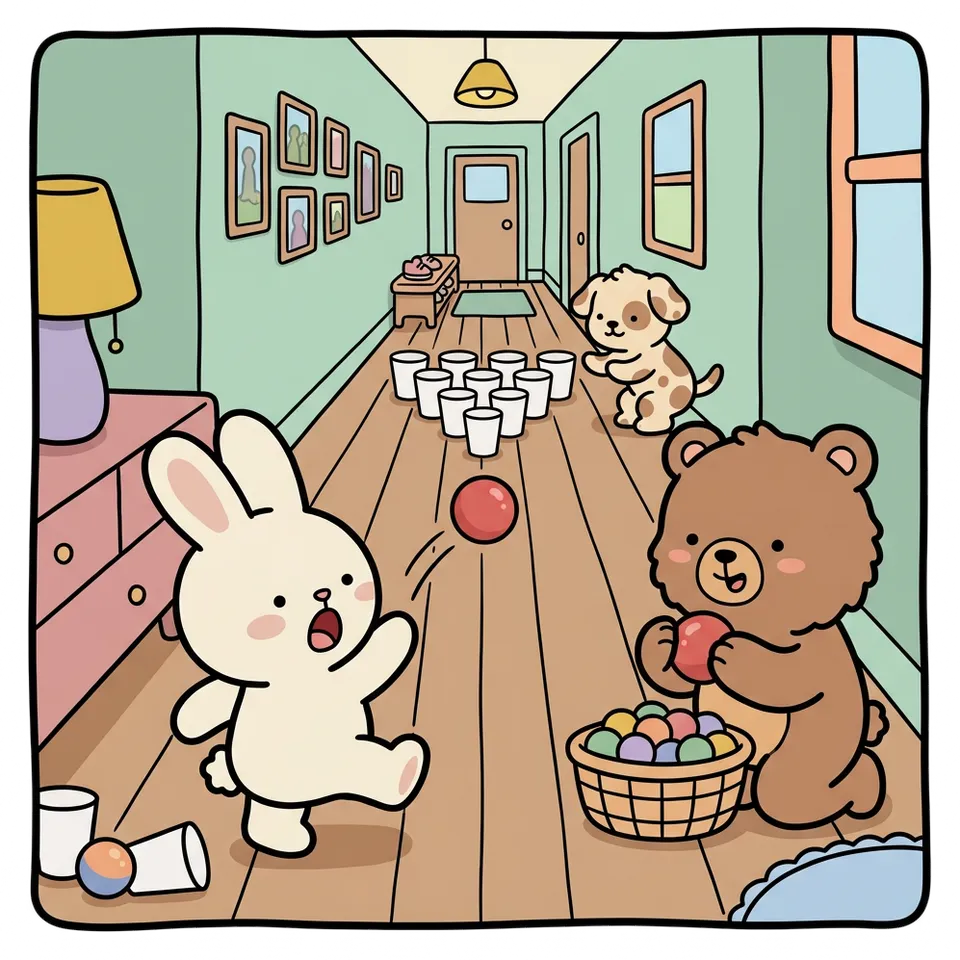
Set cups up in a triangle and roll a ball to knock them down. A ball-pit ball or a small rubber ball works, and let the child decide how many cups to set up.
Why it's good
At this age throwing comes before rolling, and this play follows that order as it is. Children also adjust the distance themselves. If they miss, they move closer; if confident, they step back and throw, adjusting the difficulty with their own eyes.
How to play
Just standing the cups in a triangle, the child recognizes it first. “I wanna knock 'em down!” they say, running over. Some even knew the name. “My brother said it's, like, bowl... something.”
Young children, even when told to roll, throw more than roll. Still, they're much happier when they hit. They adjust the distance on their own. They step back saying “Far this time!” and come forward again if they miss.
Standing the fallen cups back up is play too. If a sibling or friend is there, they decide an order, saying “Big ones at the bottom, small ones on top!” Only one thing needs to be settled: if you knock them down, set them back up for the next person. You can roll a toy car instead of a ball, and then they start counting who knocked down more cups.
Good to know
- Let the child decide how many cups to set up. The number changes how hard the play is that day.
- If you knock them down, set them back up for the next person. Settle just this and even a group won't argue.
What you'll need
Lots of paper cups · Ball-pit balls or small rubber balls
Lining Up a Train
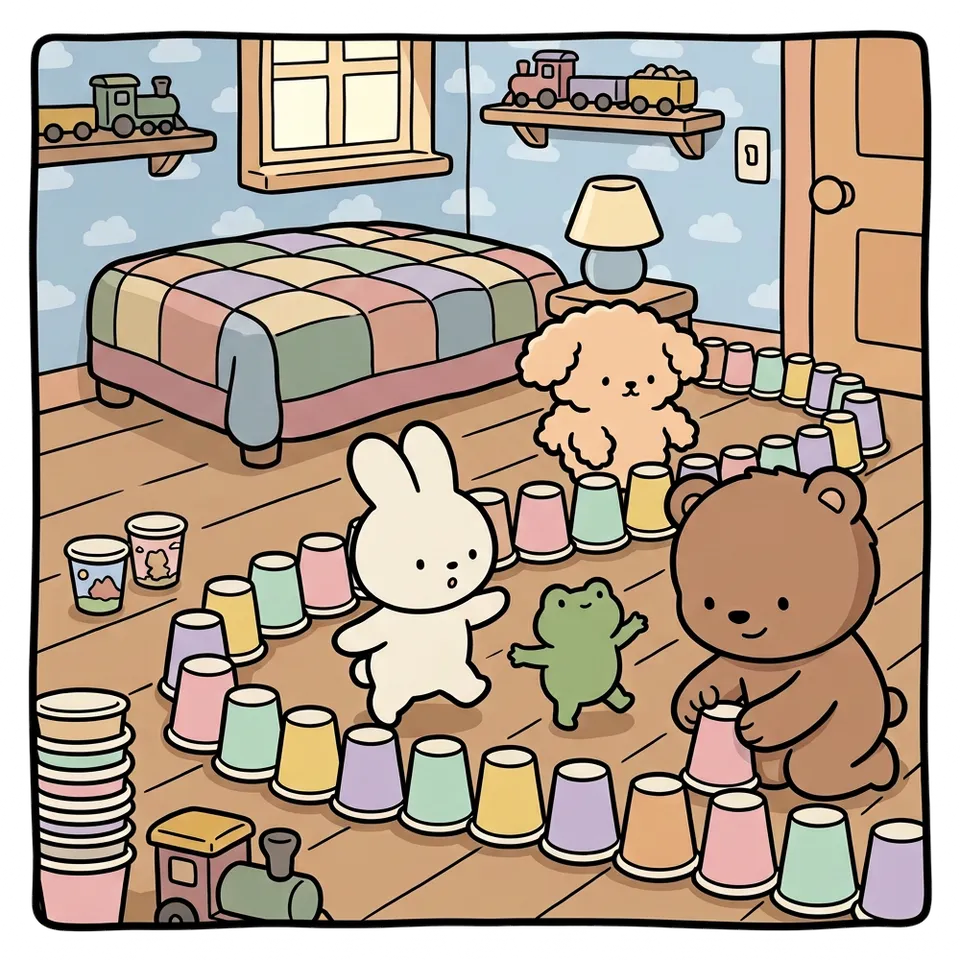
Line paper cups up in a row on the floor to make a train. Even a child who can't stack yet can do this.
Why it's good
Setting down cups one at a time, they count without thinking about it. Walking along the line, they rise on tiptoe and go slowly so as not to touch the cups. Counting and balancing happen at once.
How to play
Laying them out is the play itself, and some children count as they add. “One, two, three, a hundred! So many!”
If different kinds are mixed, the child sorts them out. One child who had put picture cups between colored cups noticed the heights were different and pulled the picture cups back out.
When all are laid out, they walk along the line. They go slowly on tiptoe so as not to touch the cups. They look after each other, saying “It won't fall down” and “Go slow.” If one cup falls, you only reset that one, so it doesn't all collapse at once like a tower, and the play lasts longer.
Good to know
- Matching the same cups makes a smoother line. If colors or heights differ, the child notices and may pick them out.
What you'll need
Lots of paper cups (different colors and patterns)
Placing Cups Around a Lying Body
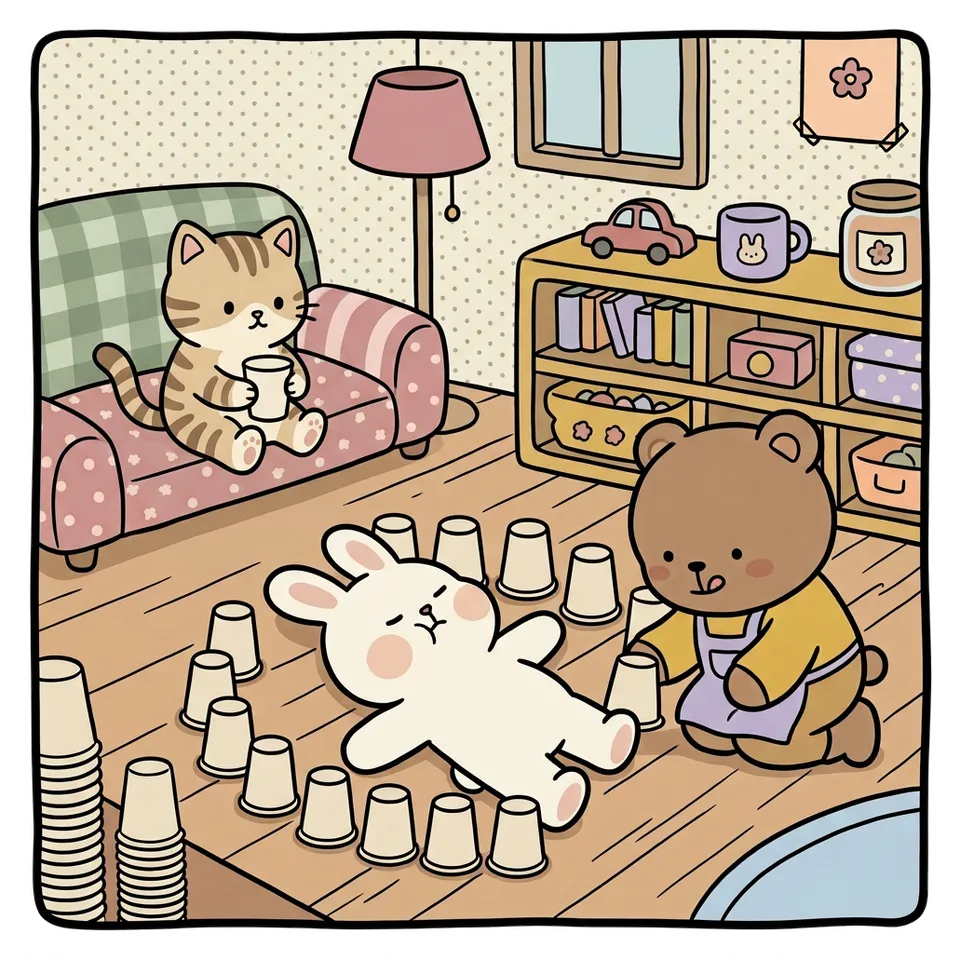
A grown-up lies down on the floor and the child sets cups one by one around their body. When they get up, a person drawn in cups is left on the floor.
Why it's good
While placing cups, children naturally say the names of body parts. When it's their turn to lie down, it practices keeping the body still, and getting up to see the shape of their own body is a moment only this play gives.
How to play
What the child says while placing is fun. “You can't move.”, “Here's the head, and here's the arm.” They place cups while pointing out which part is which.
When the child lies down instead, it becomes a game of holding still. “If you touch this, the paper cups fall down!” they say, even breathing carefully. Getting up and seeing their own shape, they're amazed: “Wow, that's me! Was I lying like this?” If a sibling or friend is there, they line up after that. “Mom, do me too!”, “I'll try a different shape!”
Some children go inside the finished outline and lie down. When they start talking about what's inside the body, it goes as far as placing cups for bones. “I have bones like a dinosaur.”
Good to know
- An adult's body takes about thirty cups. A child's body takes far fewer. If you run short of cups, start with the child's body.
What you'll need
Lots of paper cups (about thirty for an adult's body)
Hiding Things Under Cups and Finding Them
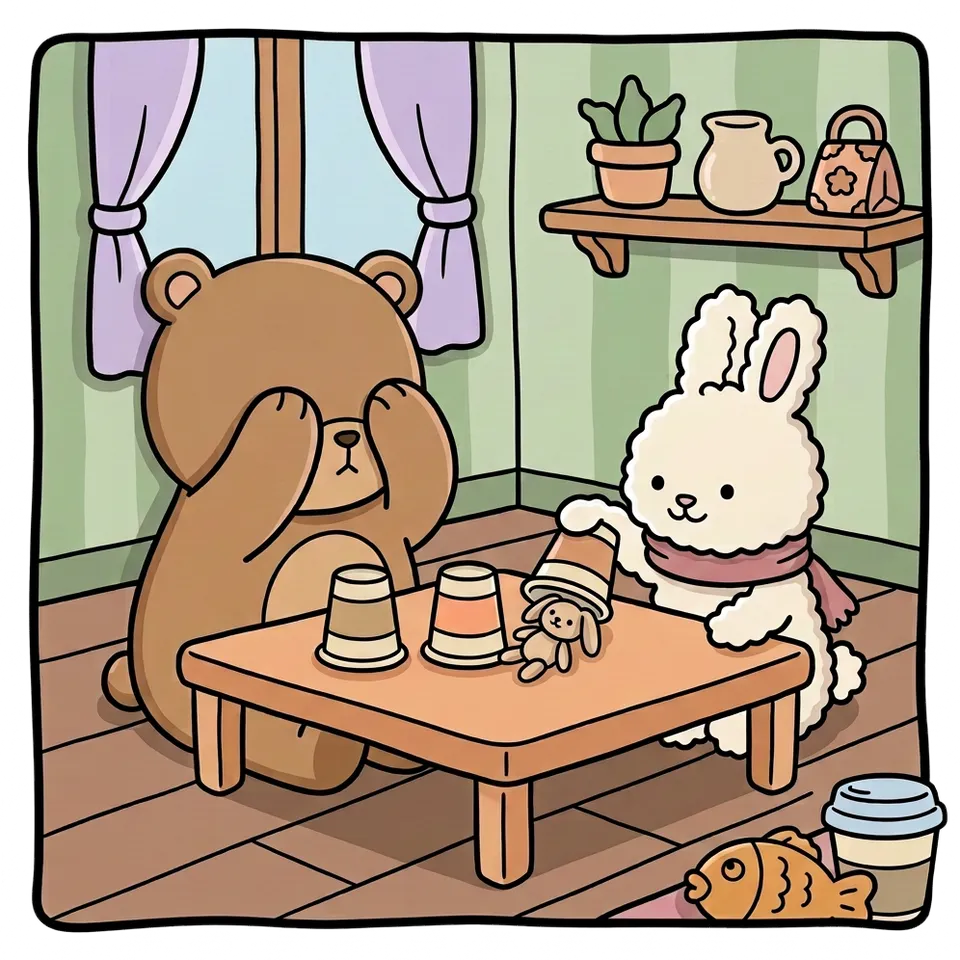
Turn a cup over, hide something small underneath, and guess which cup it's under. A small doll works, and so does a toy fish-shaped pastry.
Why it's good
Children want to do the hiding much more than the guessing. They make that order themselves. It's a memory game of remembering what's under which cup, and also a game where they take on the role of hider.
How to play
They want to be the hider more than the guesser. They say “Don't look for a second!”, have you turn your back, then say “Okay, now find it.” Sometimes after hiding they ask first, “Guess where the bunny is!”
If a sibling or friend is there, they can argue over the hider role. Once, when one child lifted the cup first, the other grabbed it away saying “Stop it, I'm going to do it!” Just hand out plenty of cups so each hides and the others guess.
Good to know
- Let them be the hider first. They like that far more than guessing.
- Handing out plenty of cups cuts down arguments. Since everyone wants to hide, let each hide and guess for each other.
What you'll need
Lots of paper cups · A small doll or pretend-play toy
Singing into a Microphone
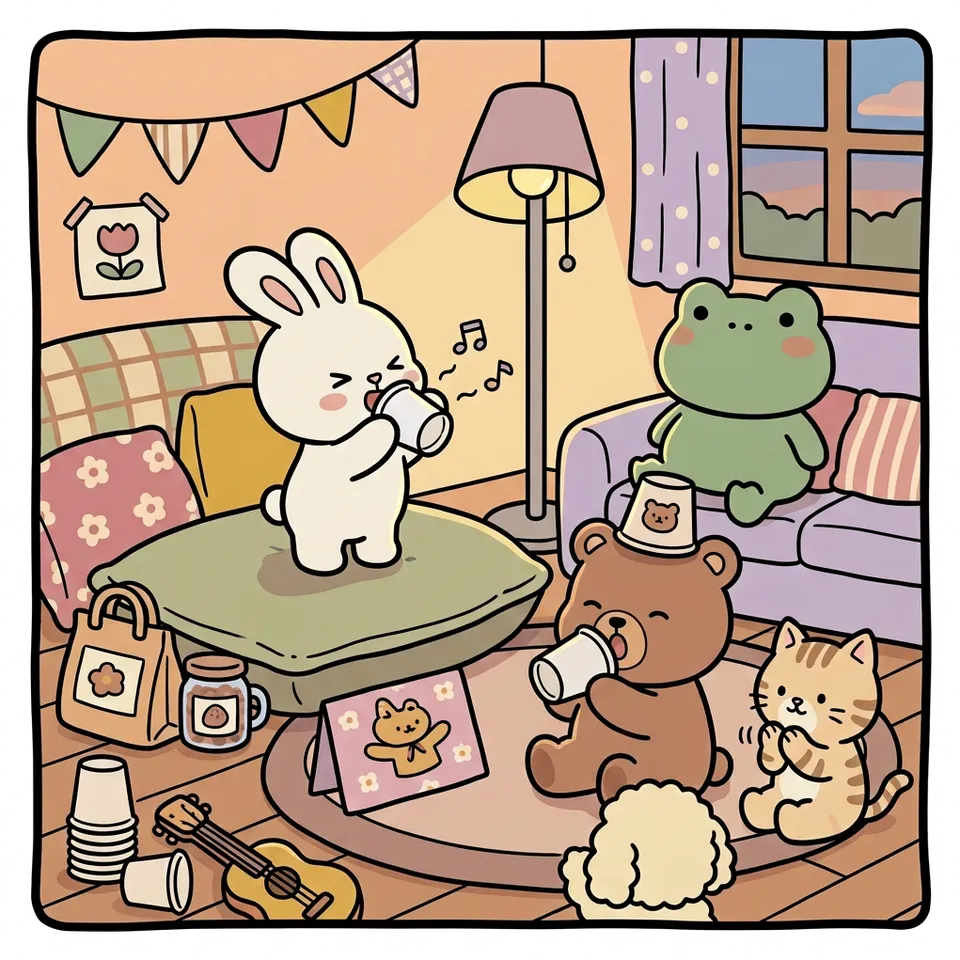
Hold a cup right up to your mouth and make a sound, and your voice booms like a microphone. No cutting or gluing needed, just one cup.
Why it's good
Once a child learns one cup makes the voice ring loud, they add songs and roles to it. Put the cup on their head and they see a hat or horns, so one cup becomes a different thing in each situation.
How to play
Hold the cup right to the mouth and say “Ahh~”, and the voice rings loud. A child nearby copies. Next comes singing. They take turns, singing “It's a microphone.”
When a role is added, it goes on a long time. One child playing airplane held a white cup and said “Check-in is now starting~”
Put the cup on their head and they see something else again. “Looks like a hat”, “It's horns”, and it turns into a game of walking without dropping it.
Good to know
- Write a name on the cup to make it theirs. If there are siblings, give one to each person. Having their own makes them like it more.
What you'll need
Paper cups
Making a Telescope
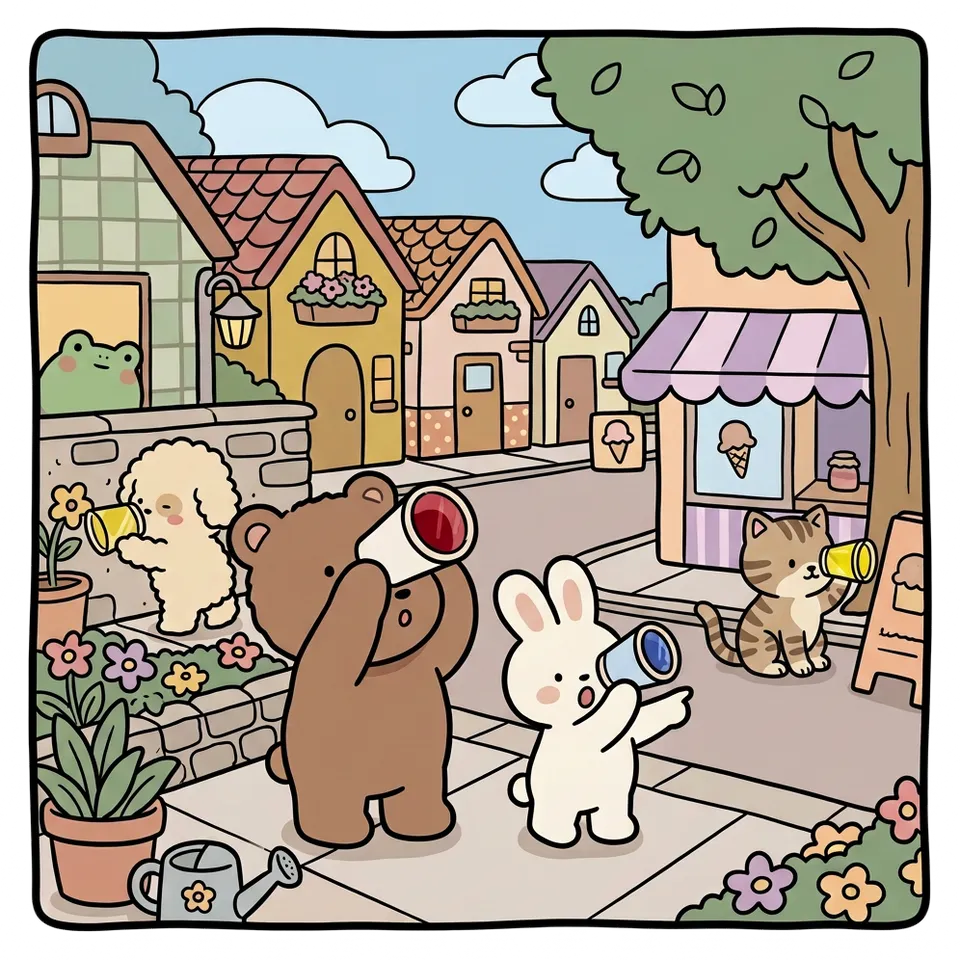
Cut out the bottom of a cup to make a telescope, then take it outside and look around.
Why it's good
Even before cutting, the child puts the cup to their eye and calls it a telescope. The real value comes after it's made: carrying it outside turns into an observation game of finding things they know one by one. Sticking cellophane on it lets them see with their own eyes the world turning that color.
How to play
Even before cutting, they hold the cup to their eye and call it a telescope. They do, even though they can't see anything. If the bottom won't poke through and they get upset, turn the cup over and hold it with the bottom up. An adult can make the first hole and leave only the widening to the child.
Once made, it becomes play only if you take it outside. Indoors it fades quickly. Walk around the neighborhood and they find things they know, one by one. “I can see letters on the sign”, “That's where they sell ice cream”, and looking elsewhere they call me, “Look over here too.”
Stick cellophane over the hole and the world looks that color. They switch colors and look through each in turn.
Good to know
- An adult makes the hole first. If you leave it to the child from the start, it won't poke through and they get upset. Hold the cup upside down with the bottom up, make just the starting hole, and let the child widen it.
- Always take it outside once it's made. Indoors it fades quickly, and outside there are things to look for.
What you'll need
Paper cups · Scissors · Cellophane
Selling Juice
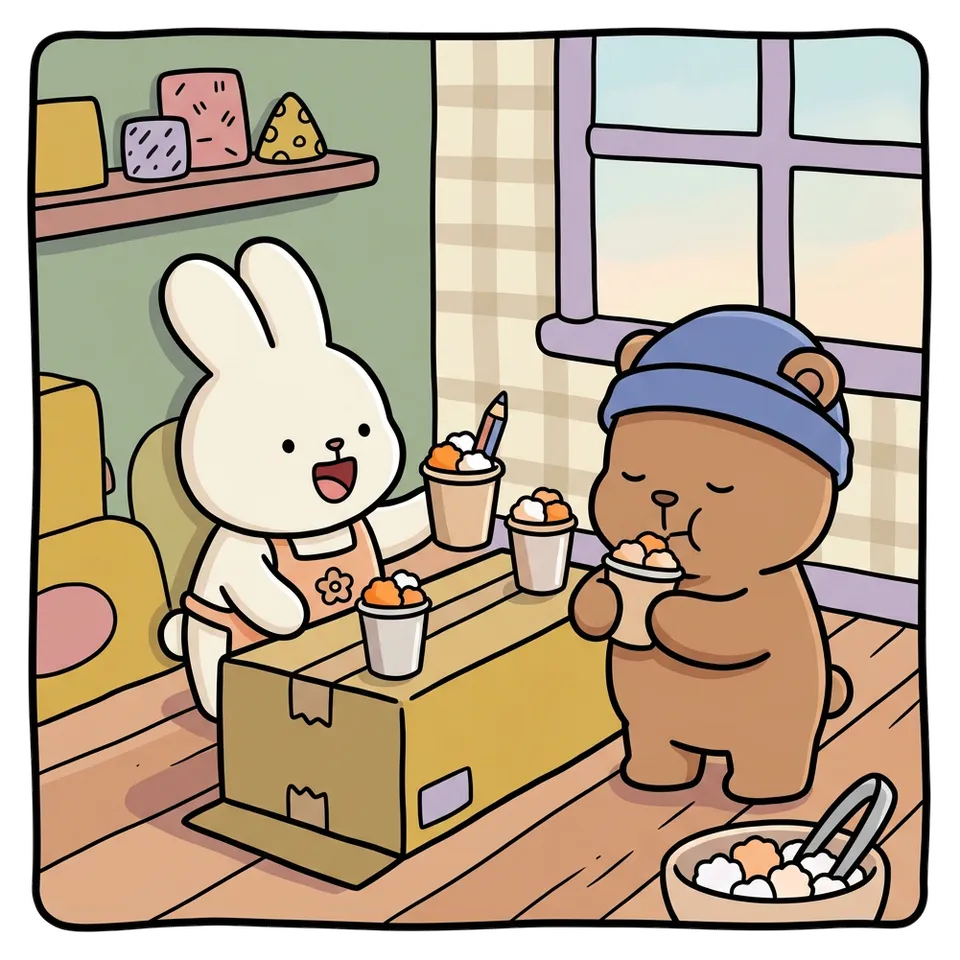
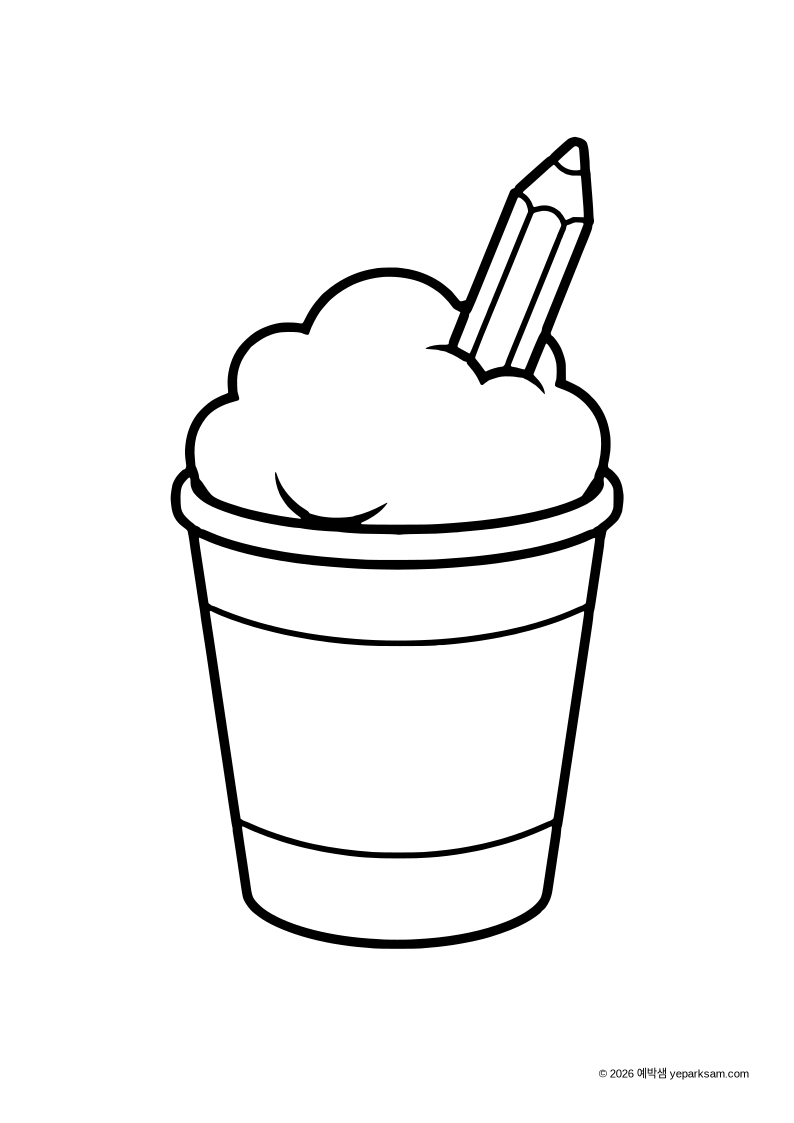
Fill cups with cotton balls or the like to make drinks, then sell them to a grown-up in this role play. Start by setting up a place to sell.
Why it's good
They want to hand things over much more than fill, and when you pretend to take it and drink, the child adds one more bit of story. Taking their orders makes the play last longer.
How to play
Whatever goes in the cup becomes a drink. Cotton balls are used most. They fill it up and call it coffee or juice. Start by making a place to sell. Give them a pair of tongs, and the filling itself becomes play. They move cotton balls one by one, then put some in their own cup too.
They want to hand things over more than fill. They bring it saying “Mom, drink this, it's orange juice.” When you pretend to drink, the child adds the next part of the story. A child handed me a cup with a cucumber in it; when I said it looked tasty and drank it, they said “Tummy hurts.” If you ask back whether the tummy hurts from drinking too much, the story goes one step further.
Taking orders makes play last longer. When I asked for coffee, a child said “Wait a minute,” went off, and came back with bubbles in a cup and a colored pencil stuck in. With no straws, the child finds something to stick in on their own. Sometimes their own story comes out while making. A child who made coffee said “This is what Mom likes” and “It's the same as Mom.” Children also move the shop. One put cups in a carrier and went to another desk, saying “Come here, it's ready.”
Good to know
- Hand them a pair of tongs. Filling, rather than moving things by hand, keeps the play going longer.
- Even without straws, the child finds something. They find and use a colored pencil or anything that can be stuck in, so you don't need to have them ready.
What you'll need
Paper cups · Cotton balls · Tongs
Stamping
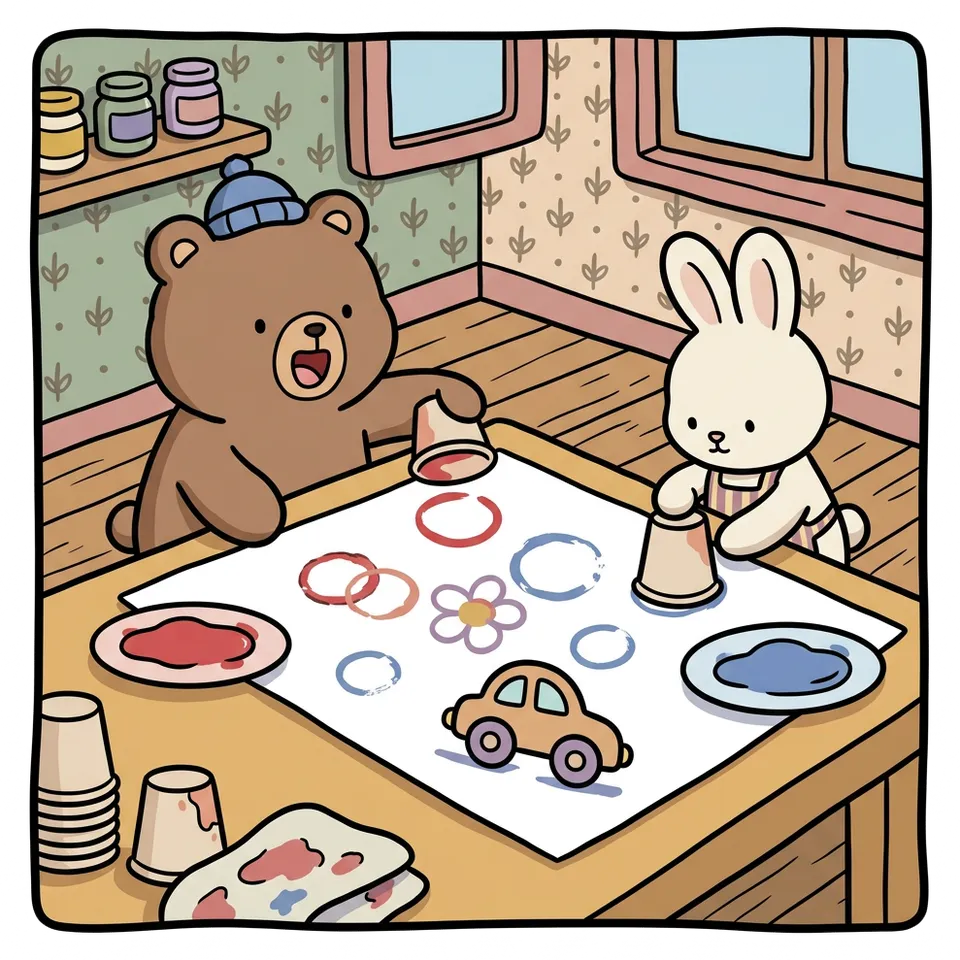
Dab paint on the rim of a cup and press it onto paper, and you get circles.
Why it's good
Each child sees the stamped circles differently. They also notice on their own that the color gets darker the more they stamp over each other.
How to play
Pour paint on a plate, dip the cup rim, and press it on paper to get a circle. Hold the cup upside down and touch lightly, then lift. They love the moment it prints. They call out “Look at this! It's such a circle~” and after that stamp until the paper is full.
What the circles look like, the child says first. One said it looked like a wheel and drew a car beside it; another piled several on top of each other and called it a flower. Once they notice the color gets darker with overlapping, they stamp the same spot several times.
Good to know
- Before starting, agree on stamping on the paper only. The cup bottom prints too, so if you don't agree, you'll get two circles of different sizes.
What you'll need
Paper cups · Paint · Paper
Making Maracas
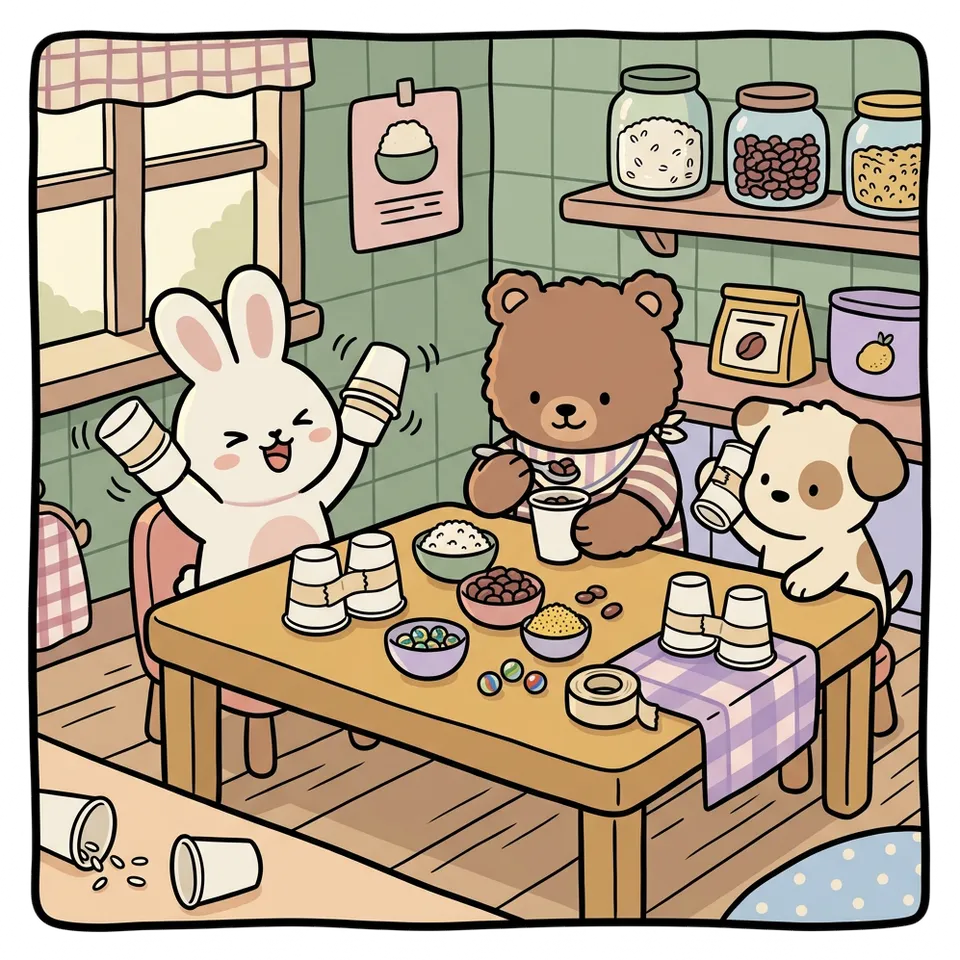
Put rice in a cup, press another cup against it, and shake to make maracas.
Why it's good
Children make something that sounds when shaken. They also learn by hand that the sound changes with what's inside.
Books to read together


How to play
Put in just enough rice to cover the cup bottom, put another cup rim to rim, and wrap tape all around. Make two or three with different amounts of rice. They quickly notice the sounds differ. They shake each in turn, saying “It makes a sound” and “This one's loud.”
Letting the child pick what goes in makes it last longer. Take out beans, millet, barley, and marbles a little at a time, and they shake each one and notice the sounds differ. Some also cut straws with scissors and put them in.
Good to know
- Wrap plenty of tape around the joined spot. If it comes apart while shaking, the rice spills.
What you'll need
Paper cups (2 per pair) · Rice · Tape
Making Flowers
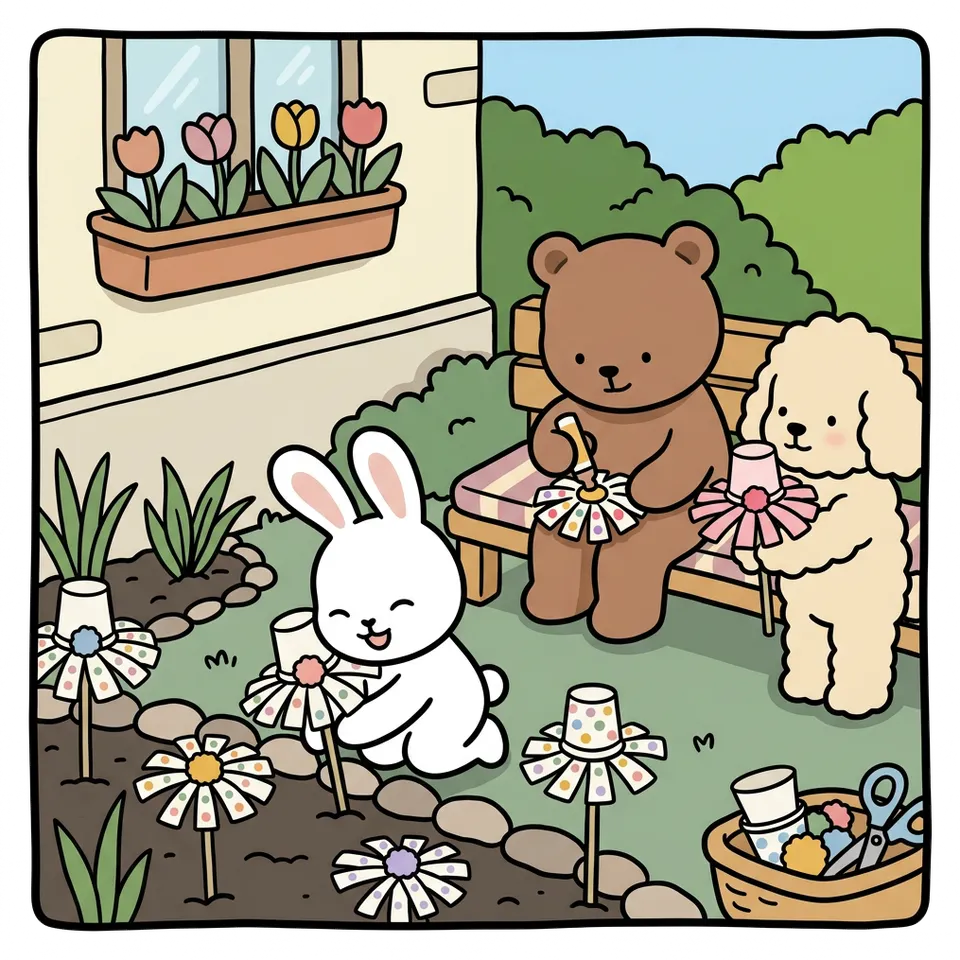
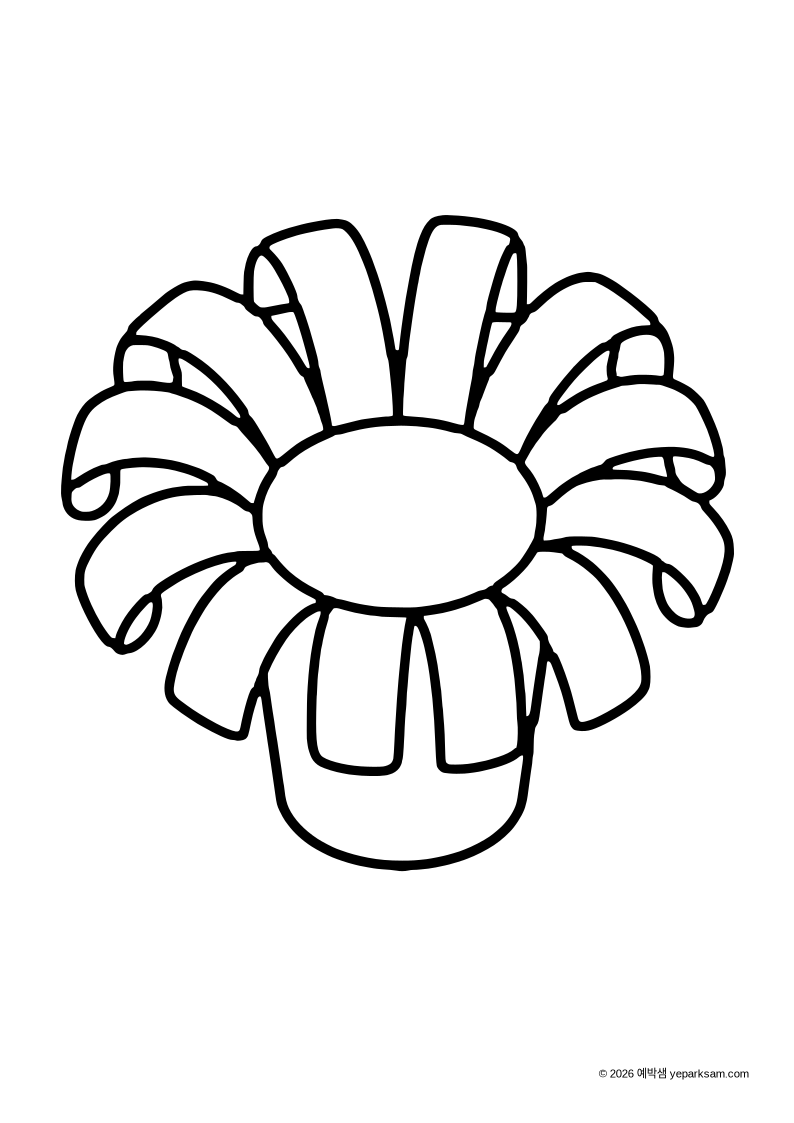
Cut slits in a cup and fold each piece outward one by one, and it becomes a flower. A grown-up does the cutting, and the child does the folding and decorating.
Why it's good
Each child sees the same opened-out shape differently. They spend a lot of time decorating, and who they're thinking of while making shows right there.
How to play
Cut several slits from the cup rim toward the bottom, stopping about halfway, then fold each piece outward to make a flower. An adult cuts, and the child can just do the folding. When you open it out, they ask first what it is. Sometimes they see a flower and sometimes not. One child put on stickers and said “This is a sparkly star~”, and another called the same shape an octopus.
They take a long time dabbing dot paint on each petal or sticking on pom-poms. A child choosing rhinestone stickers said “This is for Mom.”
When it's done, just ask where they'd like to put it. If they say they'll stick it in the flower bed, that day's play continues once more outside.
Good to know
- If you stick the child's photo on the inside bottom of the cup before cutting, their face shows when you open it. They're right in the middle of the flower.
- The number of cuts changes the shape. Fewer cuts make broad petals, more cuts make them dense.
What you'll need
Paper cups · Scissors · Decorating supplies (dot paint, pom-poms, stickers)
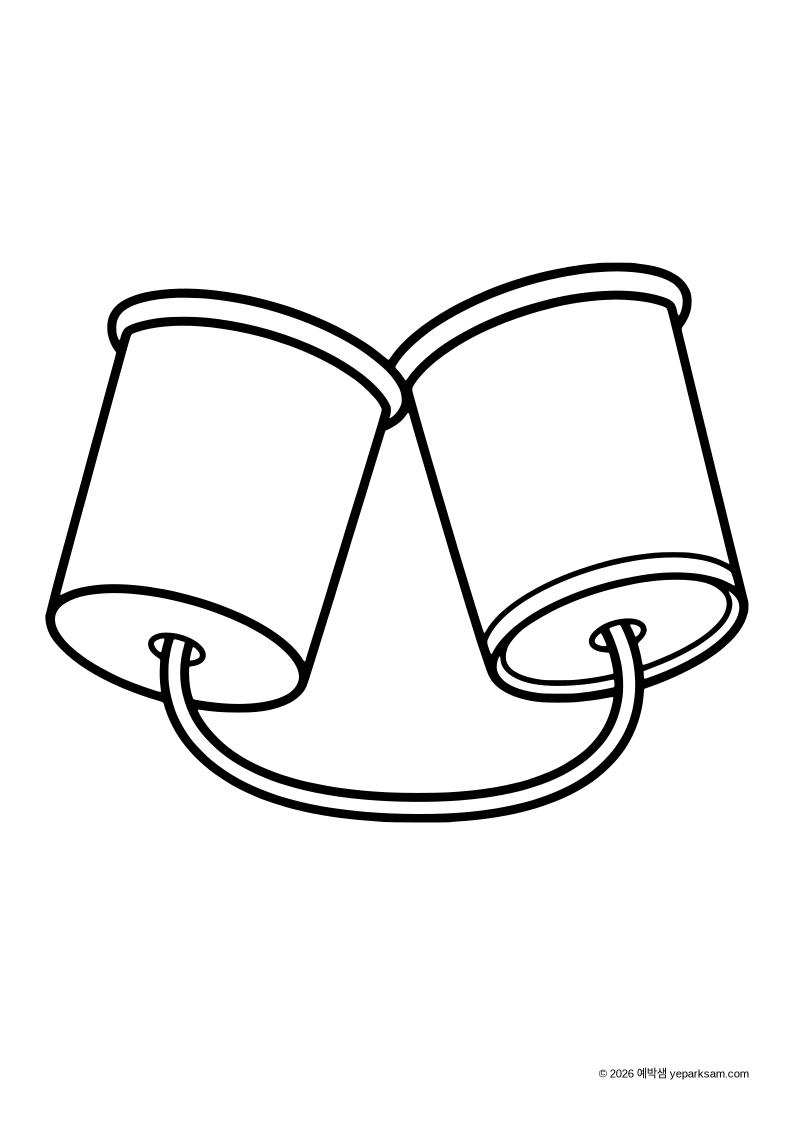
Making a String Phone
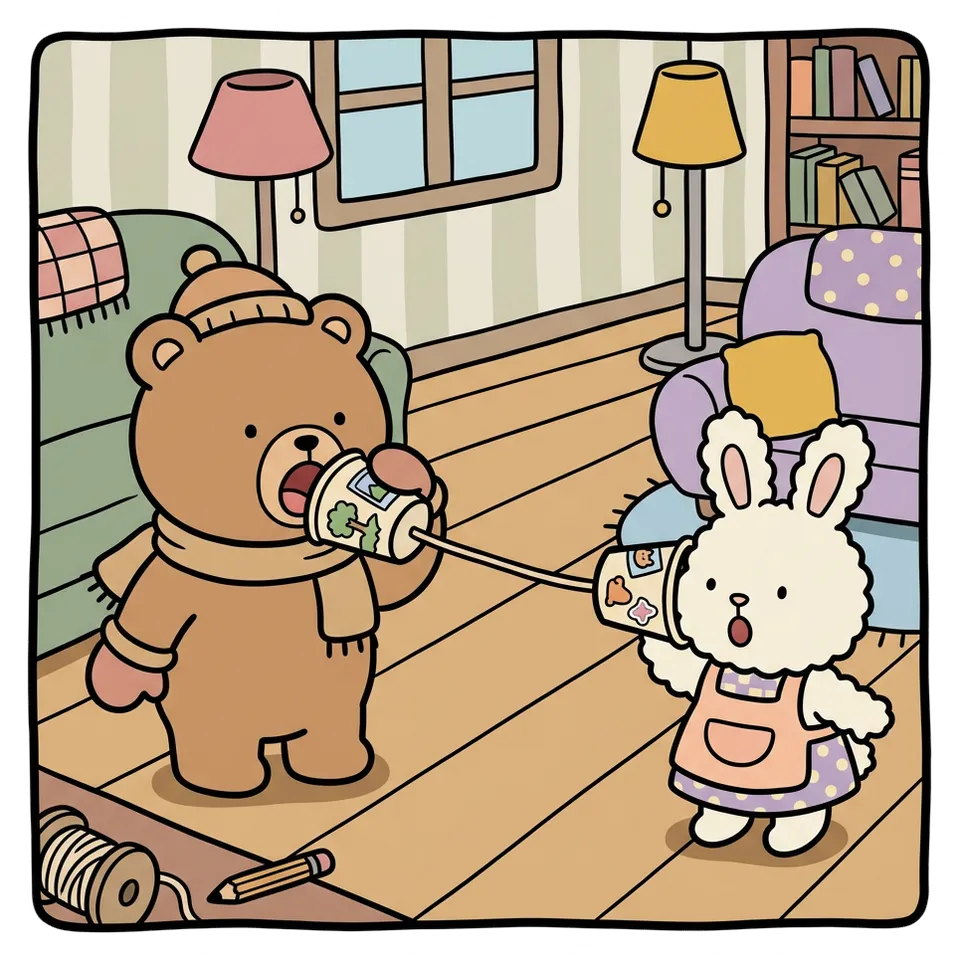
Connect two cups with string to make a telephone and send sounds back and forth.
Why it's good
Even when you make it for them, at first they don't believe it, and only believe when they actually hear. Once they believe, they take turns talking and listening. They also learn firsthand that the sound is different when the string is taut or slack.
How to play
Press a pencil through the middle of each cup bottom to make a hole, thread the string from outside to inside, and tie a big knot inside so it won't come out. The longer the string the better. You get the feel of a phone call only when standing at opposite ends of the room.
Even when made for them, at first they don't believe it. They look at the cup and laugh, “What kind of phone is this?” Then put one cup to the child's ear and call their name into the other, and they're startled. “I can hear it!” Once they hear it, they both want a turn. They take turns: “I'll talk first”, “Can you hear me?”, “Yeah, say something.” The child holding it to their ear sometimes says “Ah, it tickles.”
If the string is long, the string itself becomes something to play with. As soon as they get it they pull it tight to measure the length and say “It's long.” Some scrunch it up or tap it.
Good to know
- If the string is slack, the sound doesn't carry. At first everyone talks with the string drooping and says “Why can't I hear?” Just tell them to pull it tight.
- Let them decorate the cups before assembling. If you finish it for them, they try it once or twice and stop; after spending time drawing with colored pencils and sticking stickers, they won't put the cup down. Some carry it around in a pocket.
What you'll need
Paper cups (2) · String · Pencil
Making Fireworks
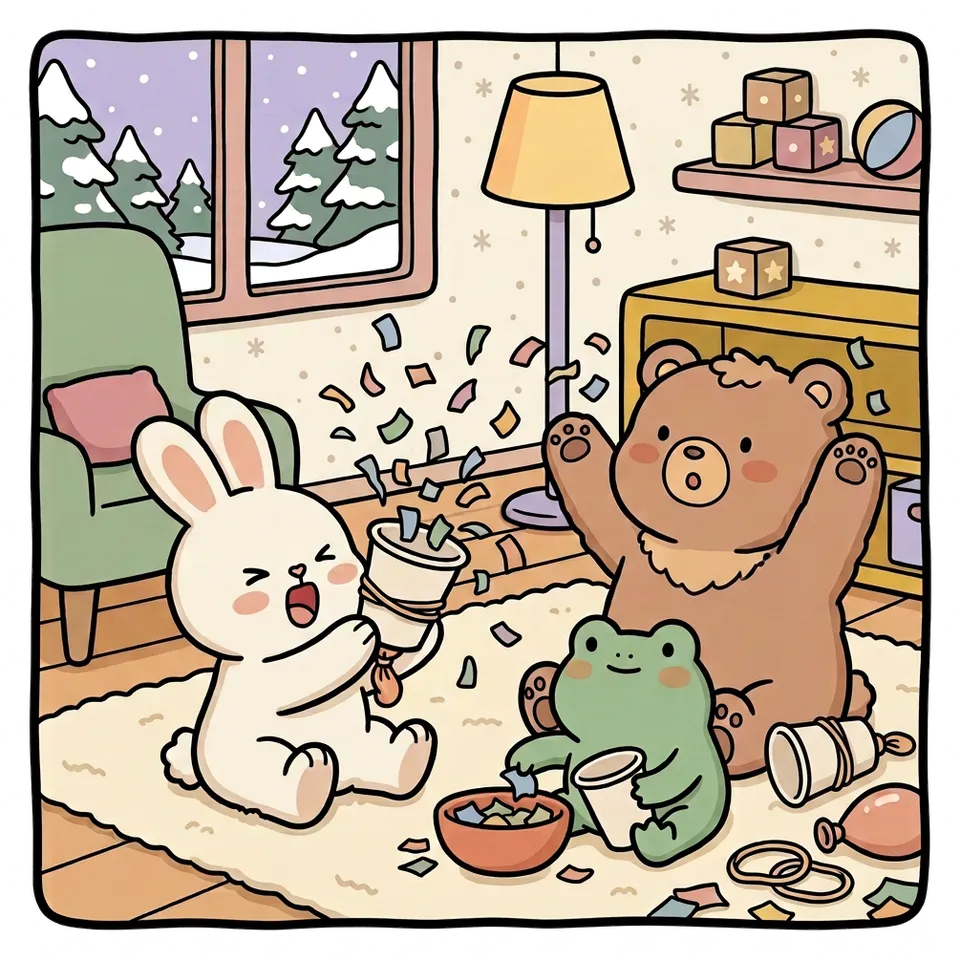
Cut the bottom out of a cup, stretch a balloon over it, put in bits of paper, then pull and let go, and the paper shoots up like fireworks.
Why it's good
The hand holding the cup and the hand holding the balloon must go opposite ways for it to pop, and once they get that feel they do it again and again. If you let them vary the amount, they also compare for themselves that a little and a full load burst differently.
How to play
Cut out the cup bottom to make a tube, cut off about a third of the wide part of an uninflated, knotted balloon, cover the cup base with it, and wrap with a rubber band to make a firework. Put finely cut paper in the cup, pull the balloon's tip down and release, and it flies up. Show them once and they keep going. They pull with “One, two, three!”, fetch what flew off, and put it in again. They love it, saying “It goes pop-pop like fireworks and it's like snow falling!” One child wanted to put in colored paper instead of white snow to make colored snow.
They can't pull it well alone. The hand holding the cup and the hand holding the balloon must go opposite ways, and they can't, so they stop saying “I can't.” Hold both their hands and pull once, and after that they do it alone.
They also notice something from the cup with its bottom cut out. When I asked whether you could drink water from it now, they said “No. It all spills.”
Good to know
- Finely cut paper or crumpled tissue works better than cotton balls. It scatters and falls like snow.
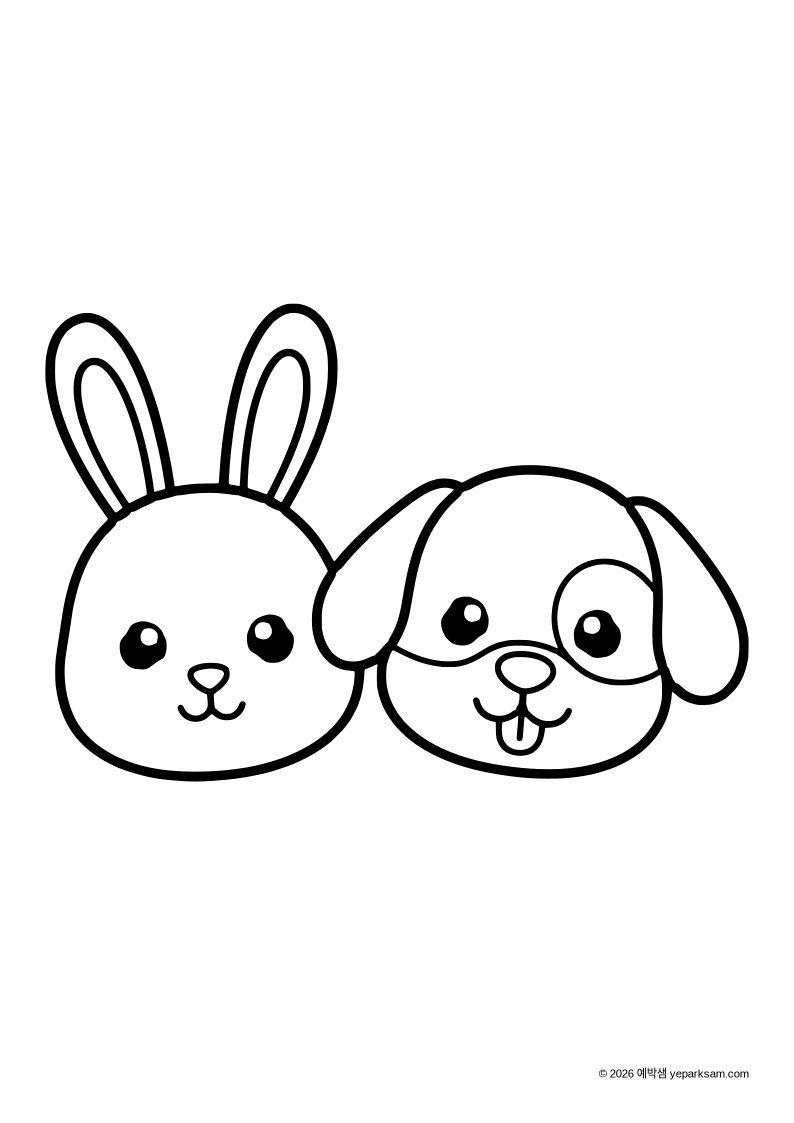
- Sticking an animal face on the cup makes it easier to explain. Tell them to put it in the belly and pull the tail, and they understand right away. When it's stuck on, they first say what's on it. “Bunny!”, “Doggy!”
What you'll need
Paper cups · Balloons · Rubber bands · Finely cut paper or tissue