Play Ideas with Cicadas
Cicadas come by sound before sight. To an adult it's a loud noise all summer long, but when a child hears “Maem maem” from a tree, they perk up their ears and say “The cicada is singing~!”
Follow the sound and look up at the tree, and there's a cicada. If you catch one and show it, they look at it for a long while and then send it off with “Bye.” Even on days when no cicada shows up, the shed shells the cicadas left behind are stuck to the trees.
This page was translated by Yeparksam, a preschool teacher in Korea. Some words may sound a little unusual — thank you for your understanding.
Printables to use
See more ›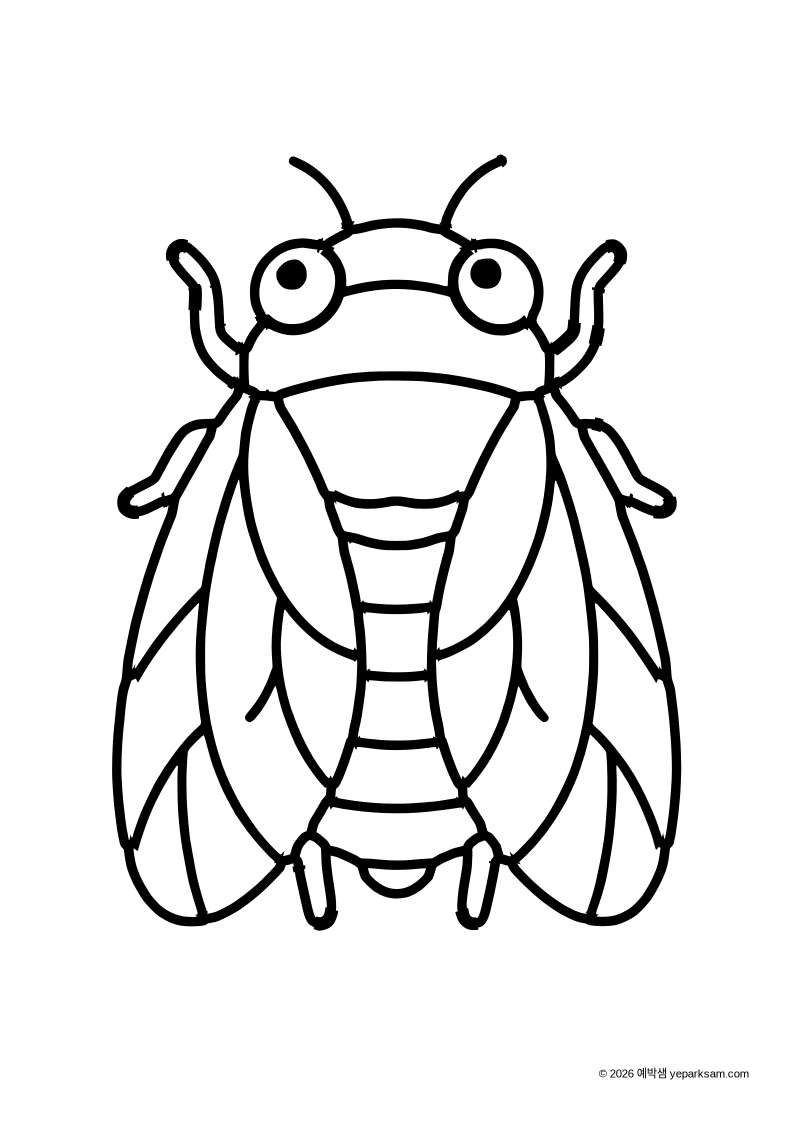
Following the Sound to Find a Cicada
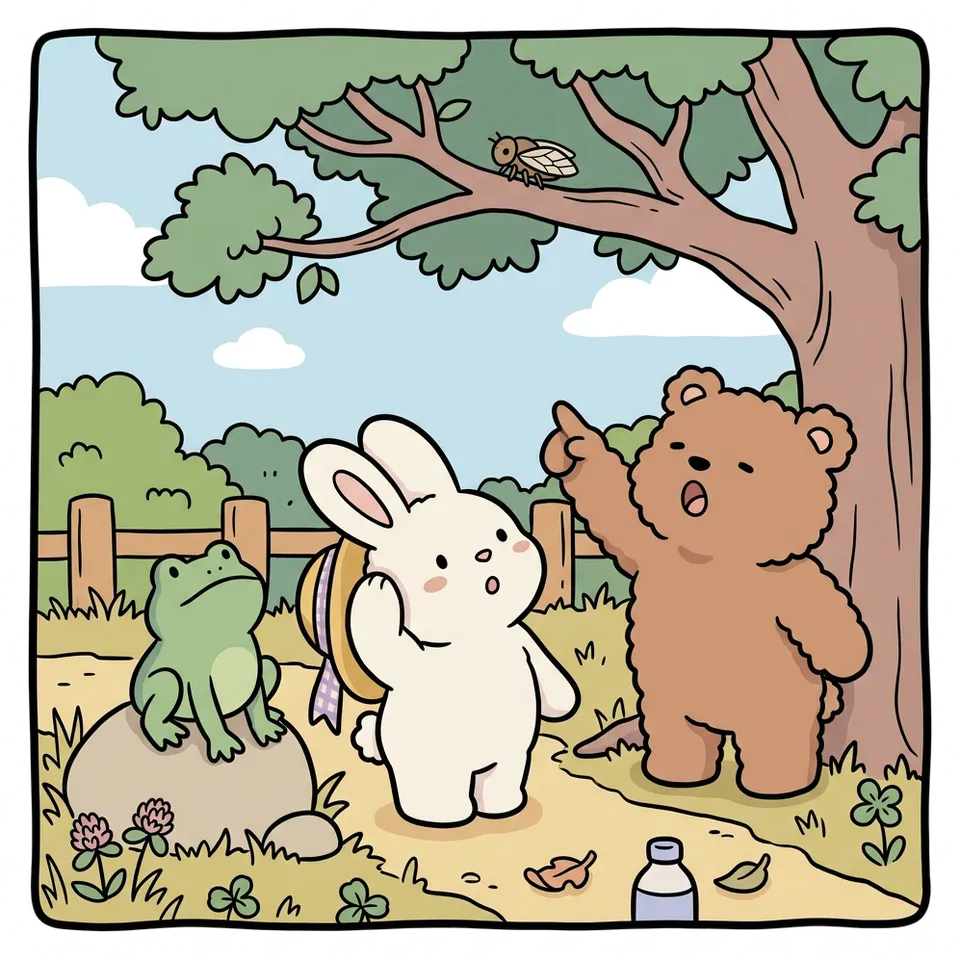
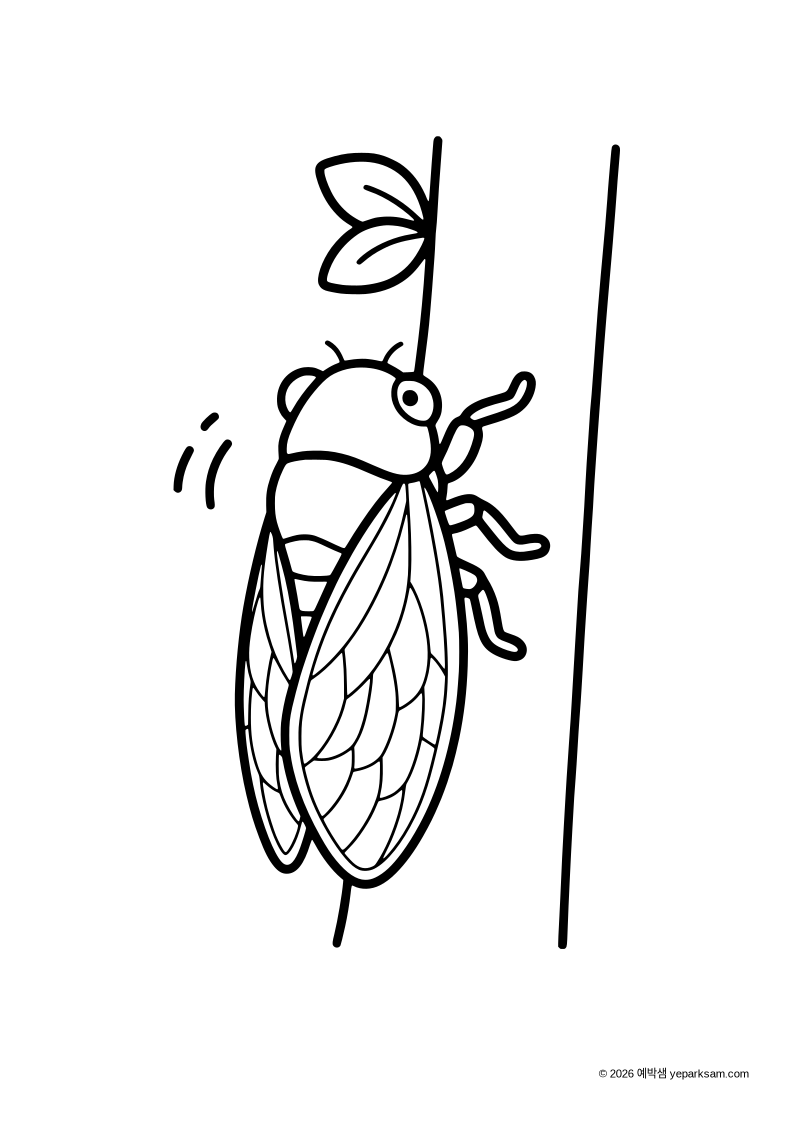
When you hear cicadas, walk toward the sound and look up into the trees to find the cicada.
Why it's good
If you follow a sound you can't see, the cicada that made it is stuck on the tree. Children learn by listening, walking, and looking up that the thing that made a sound is in the direction the sound comes from.
How to play
On a walk, a cicada sounded from up in a tree and the child perked up their ears, saying “The cicada is singing~!” When I asked where the sound was coming from, they walked toward it with a hand on their ear and looked up into the branches.
On a day when the “Maem maem~” sound reached all the way into the house, I asked if we should go find the cicada, and they said “Cicada!” and “Let's go!” and headed out first. They looked up first at the tree where they had seen a cicada last time, saying “Here!” and “Not here~,” and moved from tree to tree. On days when they couldn't find one, they said “Cicada, where are you~” with disappointment, then said let's come again next time and headed back.
Good to know
- Cicadas sing most in midsummer, July and August. Look in the shade of trees along your walking route then and you'll hear them right away.
What you'll need
Hat and water (for midsummer walks)
Imitating the Maem-Maem Cicada
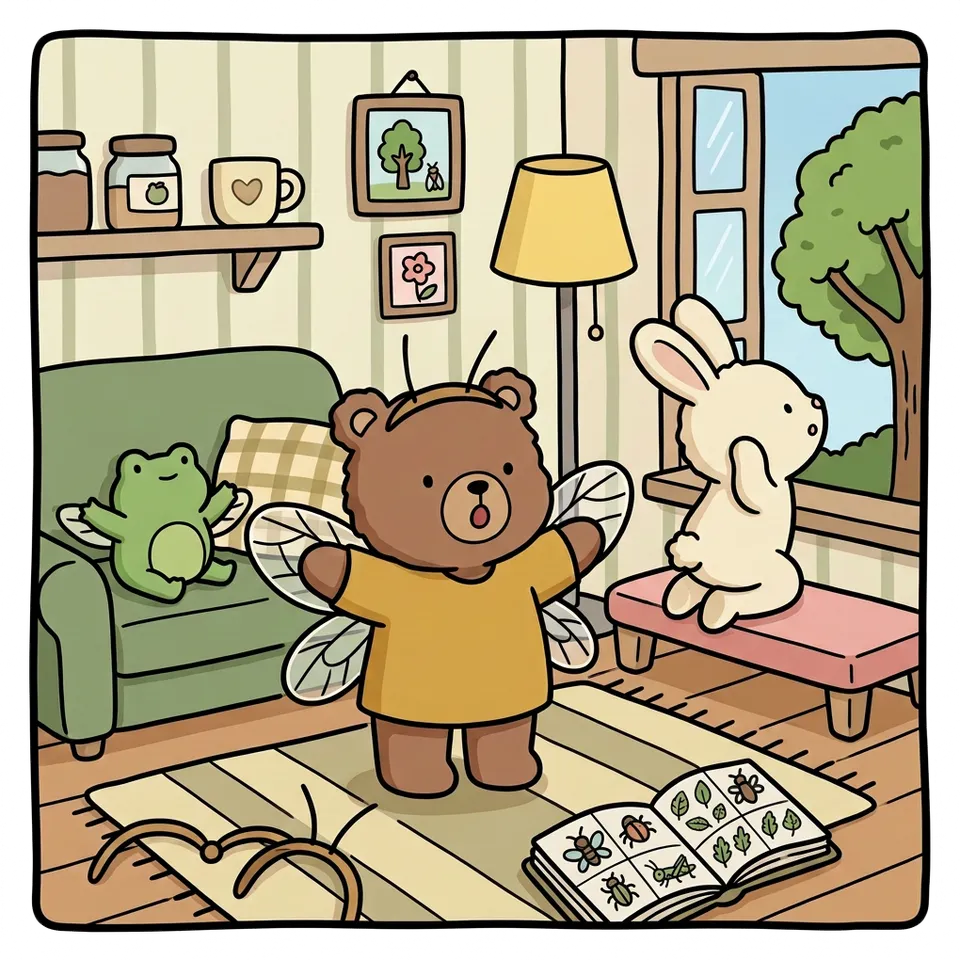
Imitate the cicada's sound with your mouth and become a cicada with your body.
Why it's good
No materials needed — a mouth is all it takes to become a cicada. By making the sounds they heard with their own mouths, and by imitating, children learn that each insect has its own sound and movement.
How to play
When a cicada sound came from outside, the child copied it, “Maem maem,” “Mae~.” Pointing at a picture of a cicada, they said “Uh~~,” so I said “Maem maem maem, it's a cicada~” and they said “Em em em.”
On a day when the sound came through the window, they put a hand to their ear and said “What's that sound?” Then on their own they said “It's the cicada sound,” and went to the window imitating the maem-maem, looking around up in the trees.
When I asked a cicada riddle, they got it right: “It sings in the tree,” and “It makes a big sound.” When I suggested we imitate summer insects with our bodies, they moved differently for each one, saying “A mosquito flies like this,” and “A cicada goes maem maem,” and “A praying mantis moves slowly like this,” and with a headband on they said “I am a cicada.”
Good to know
- For young children, just copying the maem-maem sound makes it cicada play. Imitating each insect with a different movement comes when they're a bit older.
What you'll need
Insect headband (if you have one)
Catching and Letting Go
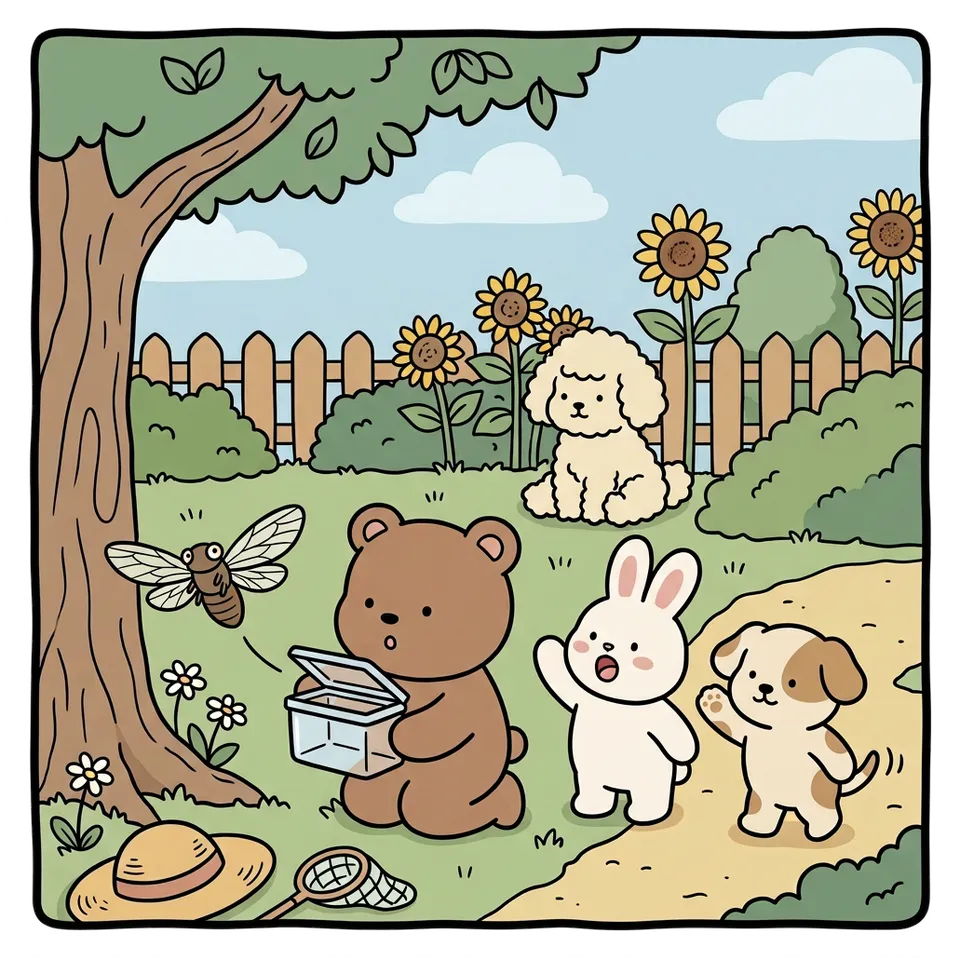
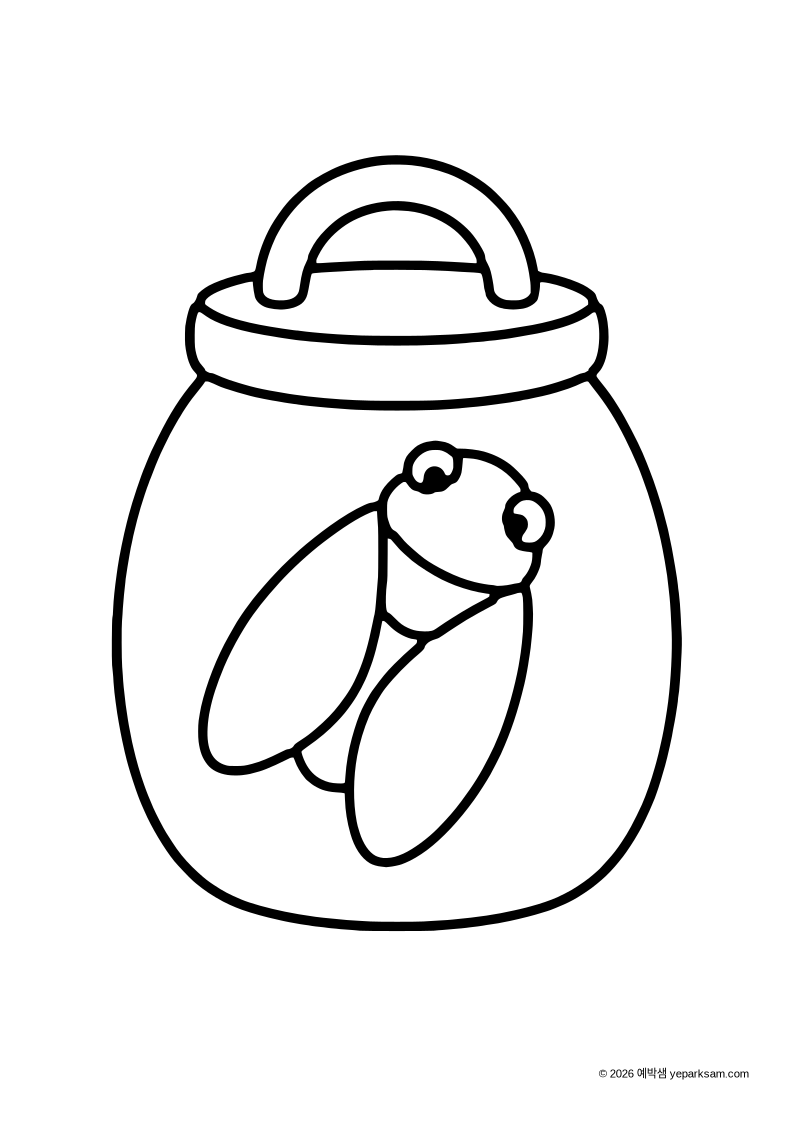
A grown-up carefully catches a cicada from a tree to show the children, or puts it in a clear container for a quick look, then lets it go again.
Why it's good
Children see up close the wings and body of a cicada they only knew by sound. By saying goodbye as they let it go, they learn that even if they want to take it home, a cicada needs to stay in the tree.
How to play
When I carefully caught a cicada stuck to a tree and showed it, the child came close and looked over its wings and body. When I put it back on the tree, they waved and said “Bye, cicada~” and then “Bye!”
On a day when they spotted a cicada first on a walk, they said “There's a cicada here,” and “Catch it for me.” When I put it in a clear container they looked in and asked “Why isn't the cicada moving?” and “Oh, the cicada is trying to fly away,” and “The cicada is small,” and then said they wanted to take it home. I told them a cicada is happier living in the tree with its friends and let it fly off, and they waved, “Bye,” and “Cicada, come play again.”
On a day they saw a cicada sitting still on the ground, they said “Wow, yesterday I only saw the shell, but today it's a real cicada!” and asked one question after another: “Why is it so still?” and “When does it sing?” and “Can I put it on my hand?”
Good to know
- An adult catches the cicada to show it. Held in a child's hand the wings are easily damaged, and a child who is scared can look from a little way off.
- After looking at a cicada in the container, put it back on the tree where you caught it. Kept in a small container for long, a cicada loses its strength.
What you'll need
Clear bug-catching container
Finding Cicada Shells
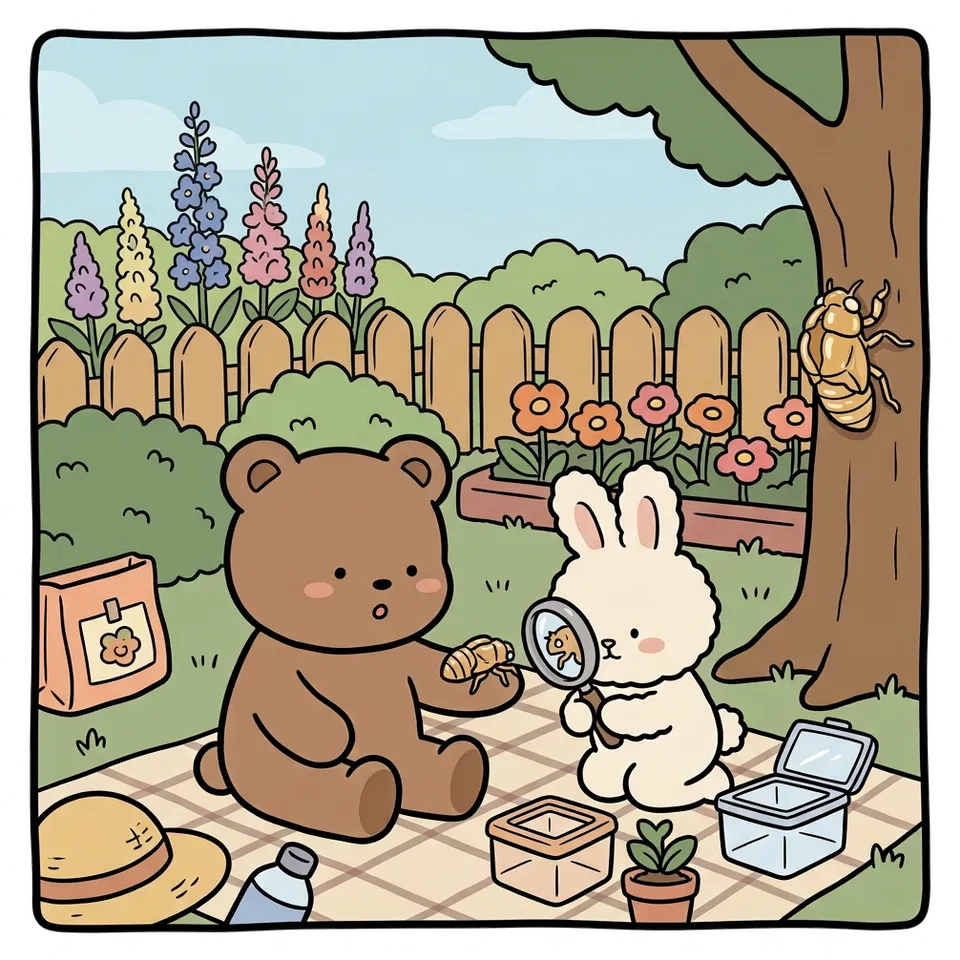
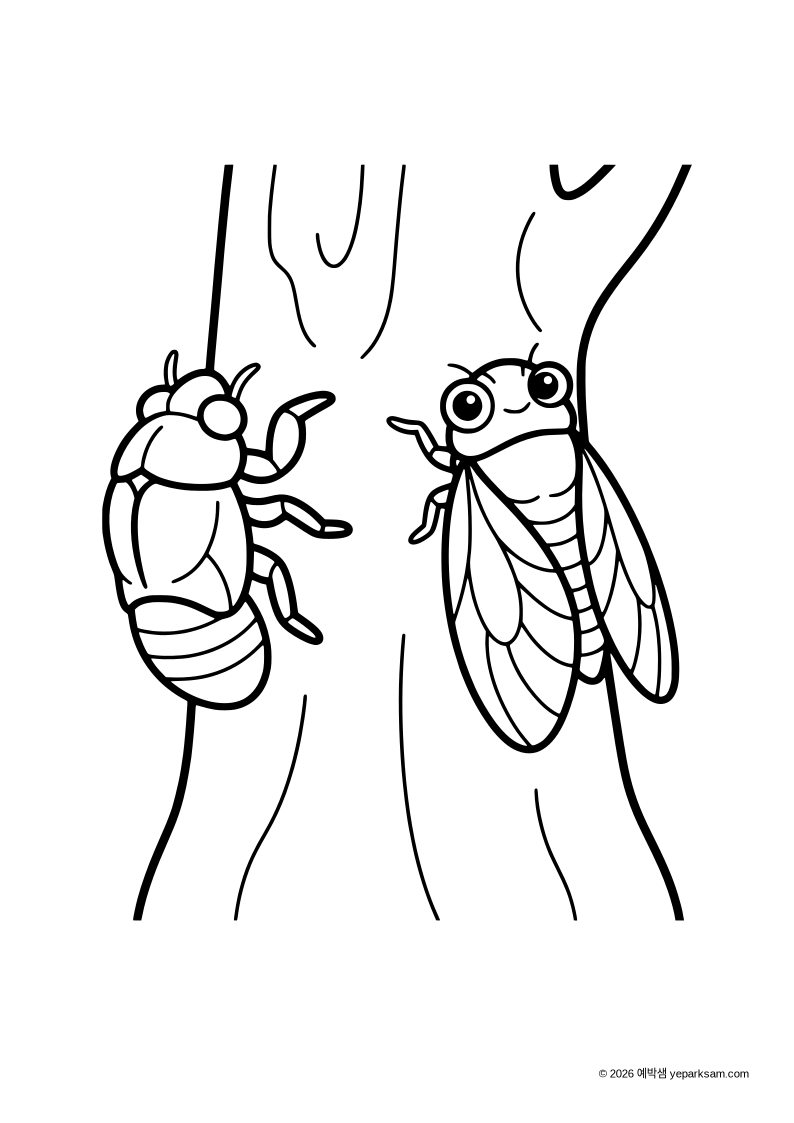
Find a cicada shell stuck to a tree or leaf, carefully peel it off and put it in a container, then touch it and look closely.
Why it's good
It's shaped just like a cicada, but empty inside. Once children know it's the shell a cicada took off and left behind, they set out to find where its owner went.
How to play
While looking for ants in the shade of a tree, the child spotted a shed shell stuck to the tree and, saying “What's this?” and “It's a cicada!”, looked closely at its shape. We carefully pulled it off and put it in a bug container, and they asked “What is this one?” I said “It's the cicada's clothes. Where did it go after taking its clothes off?” and they said “Let's look for Mama cicada.”
They held the shell tightly in one hand, stopped at the crackling sound, then pressed again on purpose to hear it again. When it fell from the hand and stuck to their pants, they looked around for it, and when I told them where it was, they looked at it for a while and picked it up again.
When I put a dried shell, brought home, into a magnifier, they looked in and said “Cicada?” and held the magnifier up to the younger sibling's eye beside them, saying “Cicada, cicada.”
There was also a day when we saw a dead cicada in the flower bed. They asked “Why is it lying here?” and I said maybe it sang its song so hard that it's lying down to rest, and they said “It must be sleeping.”
Good to know
- Shells break easily, so bring them back in a container. Dried and kept in a clear container or a magnifier, you can look at them for a long time.
What you'll need
Bug-catching container · Magnifier (if you have one)