Play Ideas with Chestnuts
When I buy chestnuts, I peel them all ahead of time. By the time I put one in a child's hand, only the hard nut is left. But once I brought home a whole chestnut burr I'd picked up on a walk, and what the child kept looking at wasn't the chestnut inside at all, but the prickly spikes covering the outside. The child reached out and pulled back, again and again, studying it for a long while.
This page was translated by Yeparksam, a preschool teacher in Korea. Some words may sound a little unusual — thank you for your understanding.
Printables to use
See more ›
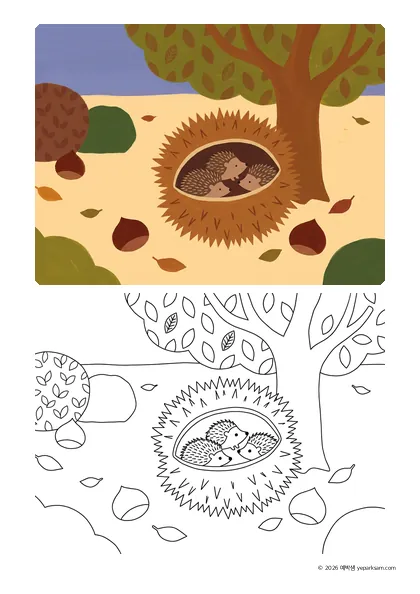
Treasure Hunt Inside the Spikes
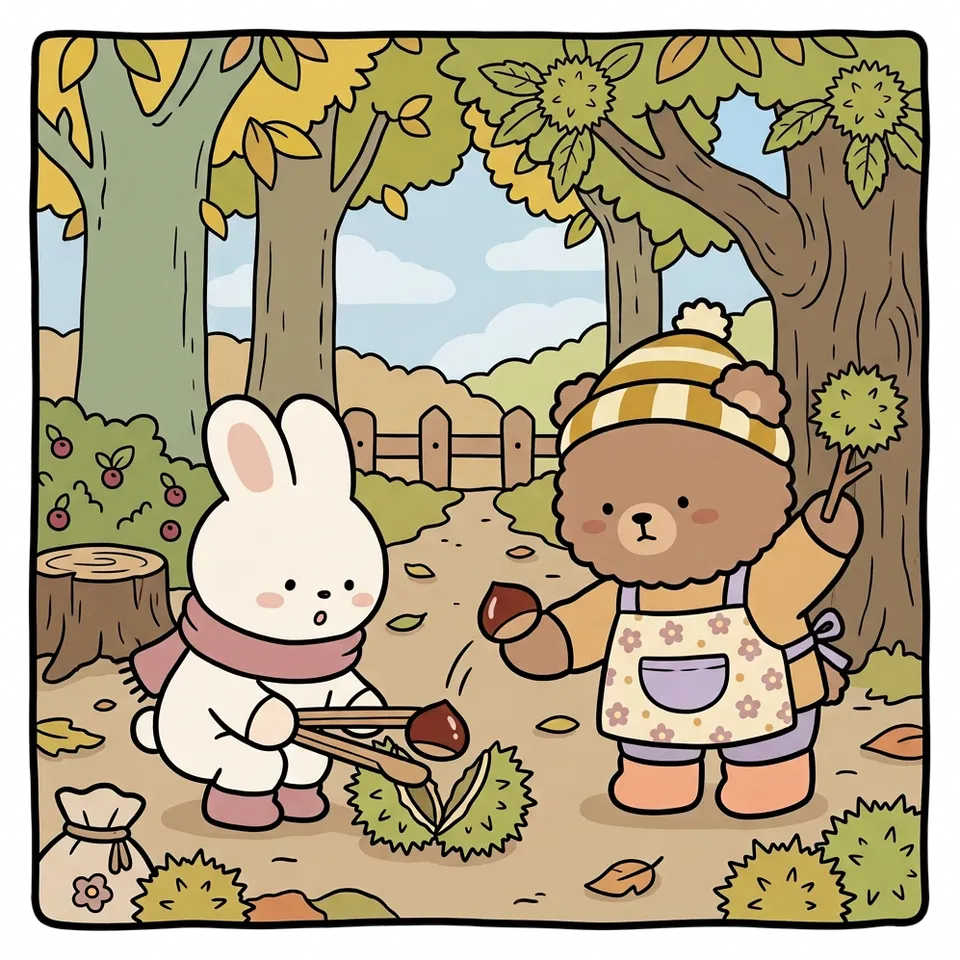
Carefully touch a prickly chestnut burr you picked up on a walk, then pry open the split with wooden tongs and pull out the chestnut hiding inside.
Why it's good
A chestnut burr is covered in spikes, so a child hesitates to touch it. But inside is the chestnut the child wants. This play has exactly that in it: you have to get past something scary to reach what you want.
How to play
Everyone pulls their hands back when they first see a chestnut burr. “So many spikes~”, “It's all pointy~ I think it would hurt if I touched it~” they say. When that happens, I put a pair of wooden tongs in their hand instead. The child poked the burr with the tongs and laughed, “It prickles!”, so I asked, “What's inside, I wonder?” The child rolled the burr gently, peeked into the split, and said “Chestnut!” with wide eyes.
Once I held a burr out on my hand to show, and the child pushed my hand away with the stick they were holding, saying “Ouchie”. I think they meant I should be careful. When I took that stick, poked the burr and lifted it up for them, they finally looked at it for a long while without touching it.
When I hand over the tongs and suggest pushing them into the split, the child opens it up themselves. When the chestnut inside popped out, they caught it in an open palm and cheered, “I took it out!”
Good to know
- The burr has to be split open. A closed burr can only be touched on the outside, and the tongs have nothing to slip into, so it's best to pick one whose mouth is slightly open.
What you'll need
Chestnut burr · Wooden tongs
Touch It, Then Split It
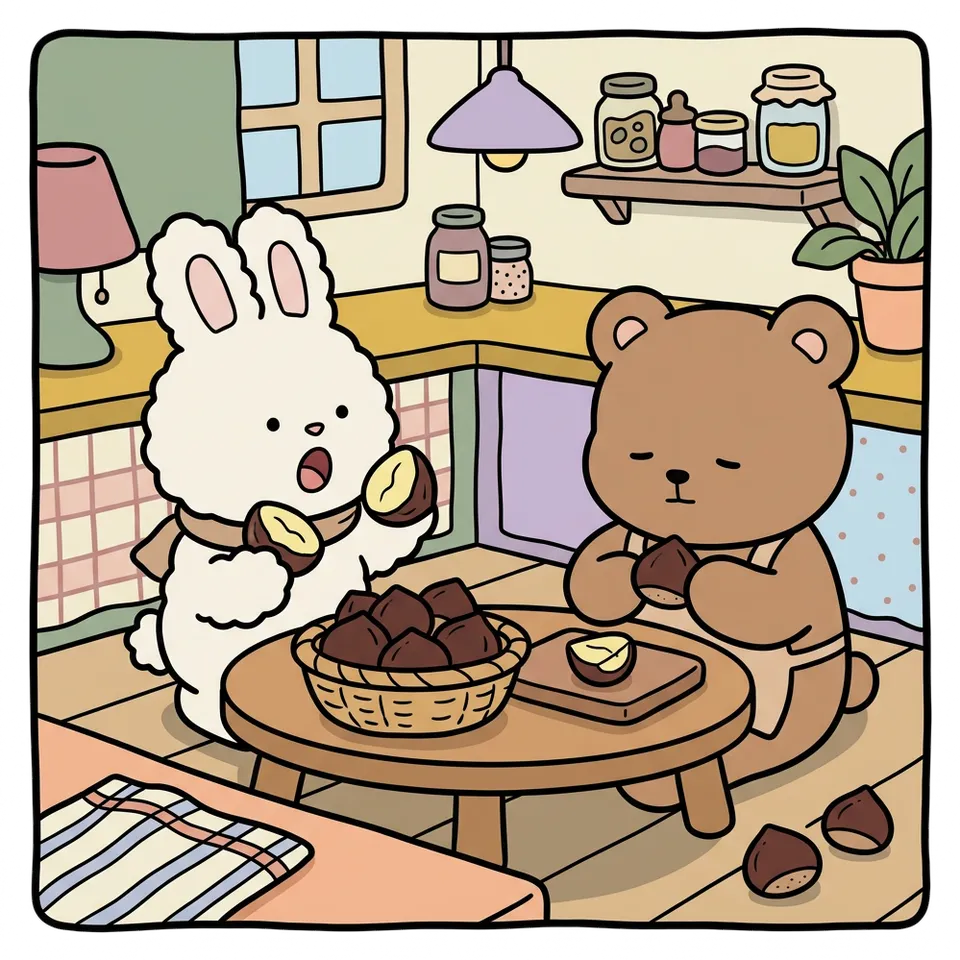
A child who has only seen the peeled white nut touches whole, shiny dark chestnuts one by one, then peeks inside when a grown-up cuts one in half.
Why it's good
To a child, a whole chestnut is a different thing from the chestnuts they always eat. It's dark, hard and heavy, and it feels different wherever you hold it. You only find out the yellow stuff is inside by cutting it open.
How to play
When I set out a basket full of whole chestnuts, the child asks, “Is it a chestnut?” It isn't the white meat they always see, so they wonder if it really is one. Touching with their fingertips they say “It's rough here”, “It's heavy”, and gripping with the whole palm, “It's hard”, “It's slippery” — a different word every time they hold it.
When I ask, “What's inside a chestnut?”, they fiddle with the shell and ask, “If you peel the shell, is there something yummy?” Right after that comes “I want to eat a chestnut”.
That's when I cut one in half with a knife to show them. “It's yellow!” They notice the color first. Holding one half in each hand, they touch the outside and inside by turns and say “I want to try it”. They seem amazed that the rough outside and the smooth inside are one thing.
Good to know
- This play only works with chestnuts still in their shells. The peeled chestnuts sold in stores look exactly like what the child already knows, so there's nothing new; you need whole chestnuts with the outer shell on.
- Cutting is the adult's job. Chestnuts are hard and can't be split by hand.
What you'll need
Whole chestnuts · Knife
Soft Chestnut, Hard Chestnut
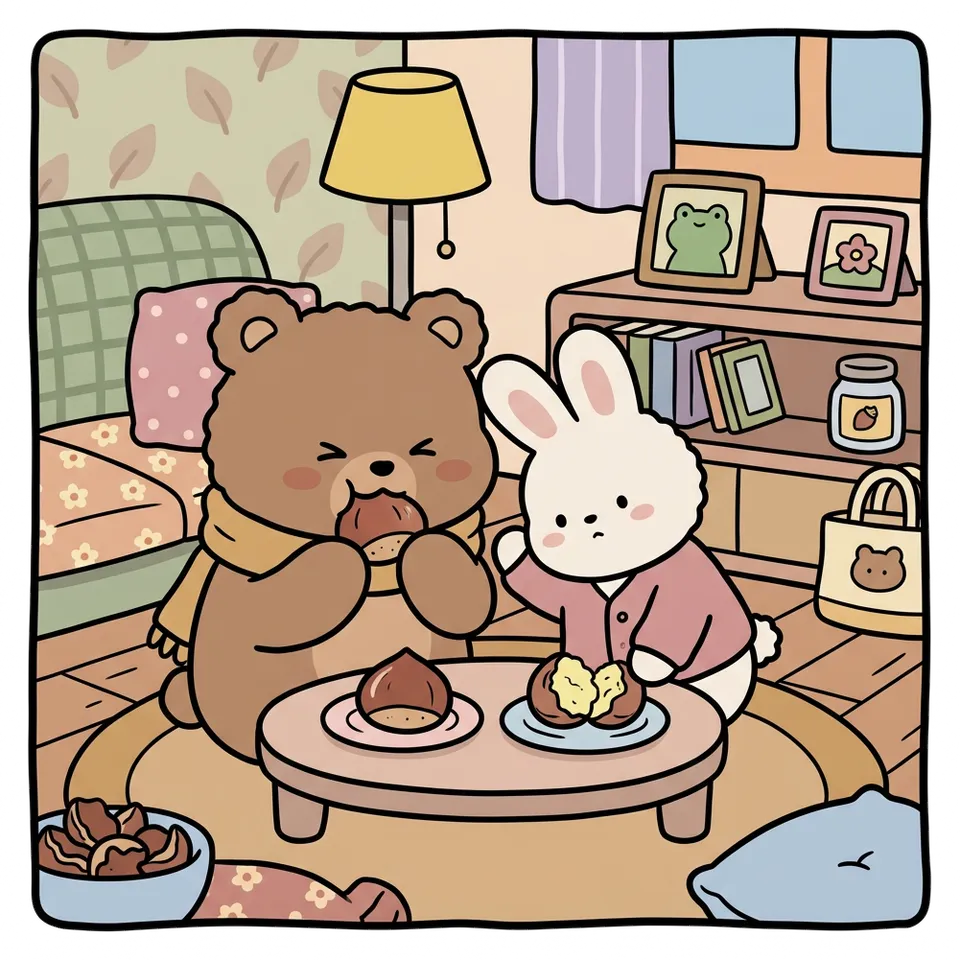
Set a raw chestnut and a boiled chestnut side by side, then press them, taste them, and even listen to the crunch.
Why it's good
They're the same chestnut, but boiling turns it into something else. Press with a hand and one doesn't budge while the other sinks right in. It's obvious to adults, but this is where a child first meets the idea that boiling makes things soft.
How to play
Put a raw chestnut and a boiled chestnut side by side and let the child press each one, and they quickly sort them: “This one's soft!”, “This one's hard!”
They taste them too. After a bite of the boiled one they say “Yummy!”, “Sweet!”, but a child biting the raw one says “It's hard” and scrunches their face first.
A raw chestnut even makes a crunchy sound when you chew it. Children find that funny and hold their ears up to each other mid-chew. While one crunches, the other listens, and then they swap.
Good to know
- Put the raw and boiled chestnuts out together. Give just one and the child thinks it's simply that chestnut; only side by side do hard and soft separate.
- Ears have to be right up close. The crunch is hard to hear from a distance, so it helps to let them put their ears close to each other.
What you'll need
Raw chestnuts · Boiled chestnuts
Finding Chestnuts Under the Leaves
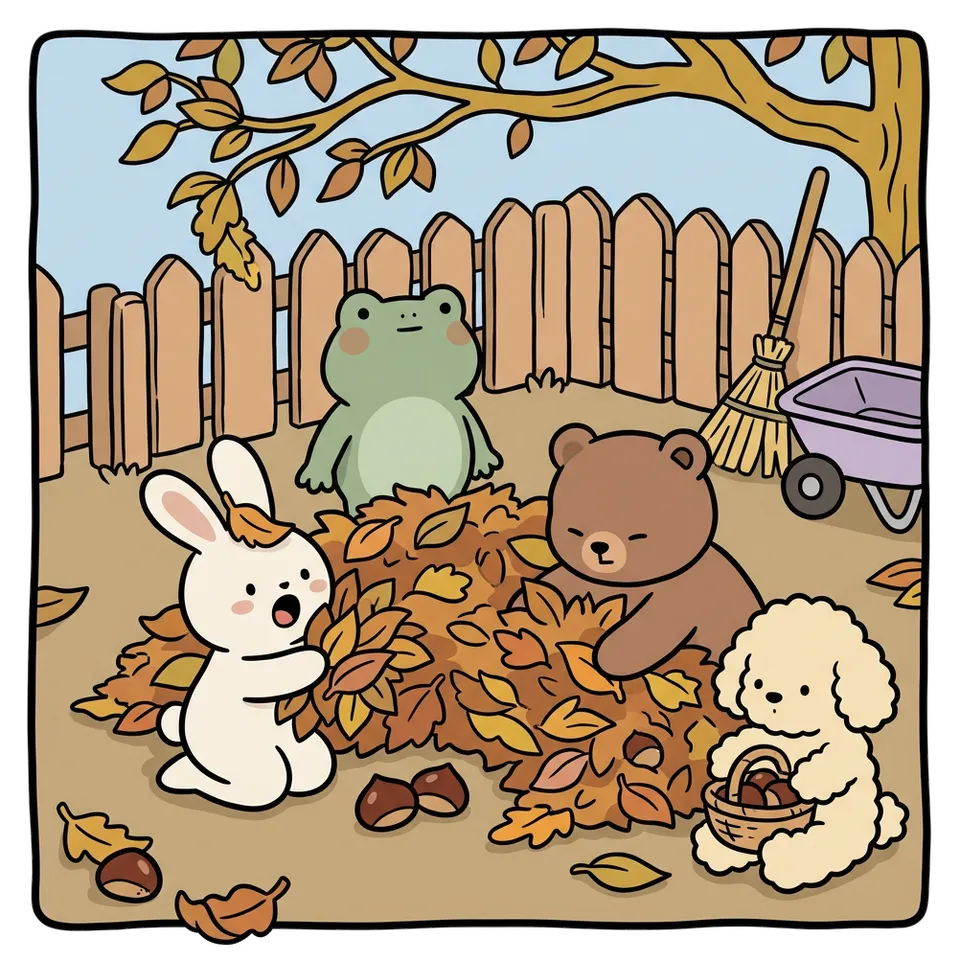
Hide chestnuts in a pile of leaves and push the leaves aside to find the chestnuts hiding in there.
Why it's good
Children look for where chestnuts come from with their whole bodies. A child knows chestnuts only as something in a bowl, but by searching for them they find out that chestnuts really fall from the tree and hide under the leaves.
How to play
I expected an "I don't know," but when I asked “Where can you see chestnuts?” the child told me right away. “On the tree~ They hide under the leaves.”
I quietly scattered chestnuts in a heap of leaves and stepped away; when I came back, the child was lifting leaves and shouting “Here it is!”, “Found it!” Finding one wasn't the end: “Another one is hiding”, “There are two here”, and they kept flipping leaves for a long time.
Good to know
- Scatter them where there are lots of leaves so they feel hidden. On bare ground they're just chestnuts sitting there; pick a spot covered in leaves and lifting them up becomes fun.
What you'll need
Chestnuts · Leaves
Get Your Roasted Chestnuts
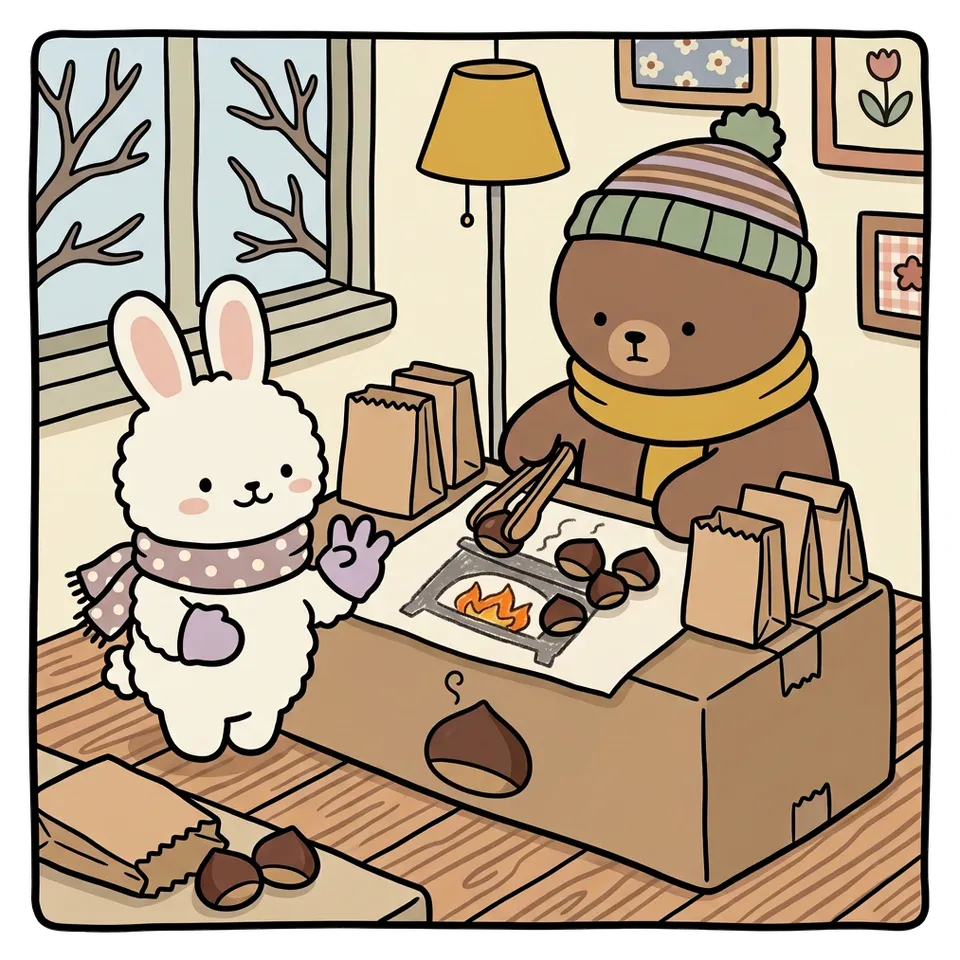
Put chestnuts on a grill, flip them with tongs as they roast, and put the roasted chestnuts in bags to sell to customers in this vendor play.
Why it's good
Children get to be the roasted-chestnut seller they only glimpse in passing on winter streets. Being told by an adult that it's hot is different from turning the chestnuts with tongs and asking yourself whether they're hot. How much for how many is the seller's call too, so the price comes out right there.
How to play
Put chestnuts on a picture of a brazier and hand over the tongs, and the child pretends to flip and roast them, checking for themselves, “Is it hot? Is it hot if I touch it?” After moving the roasted chestnuts into a bag, they sit me down as the customer. “Roasted chestnuts for sale”, they called, so I asked how much, and they said “3 roasted chestnuts is two thousand won”. When I said “3 roasted chestnuts, please”, they handed over the bag and even pretended to share and eat them with me.
We've also roasted real chestnuts in an air fryer. When the smell started, the child sniffed and said “It smells yummy. What's that smell?” When I peeled the roasted chestnuts, they looked at the golden inside, smelled it first, and only then took a bite.
Good to know
- Score chestnuts before roasting so they don't pop. Cut a cross in the shell to make a hole for the steam to escape. Cutting is the adult's job.
- Roasted chestnuts have to be hot. Even just a picture of a brazier or fire is read by the child as heat, and they begin to flip the chestnuts. Even a child knows it only becomes a roasting game if there's fire.
- A bag makes it feel like buying and selling. Put them in a bowl and it ends as just making things, but hand over one small bag and the selling begins.
What you'll need
Picture of a brazier (or of a fire) · Chestnuts (toy or real) · Tongs · Small bags
Into the Squirrel's Mouth
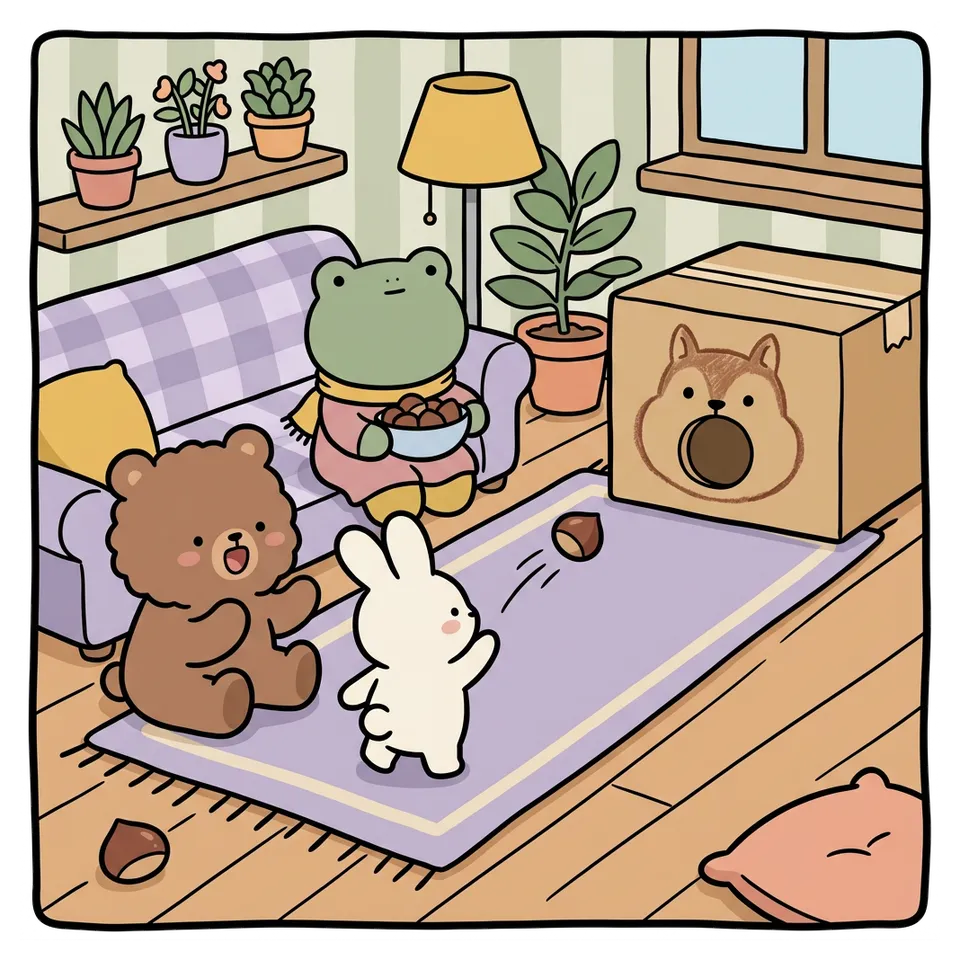
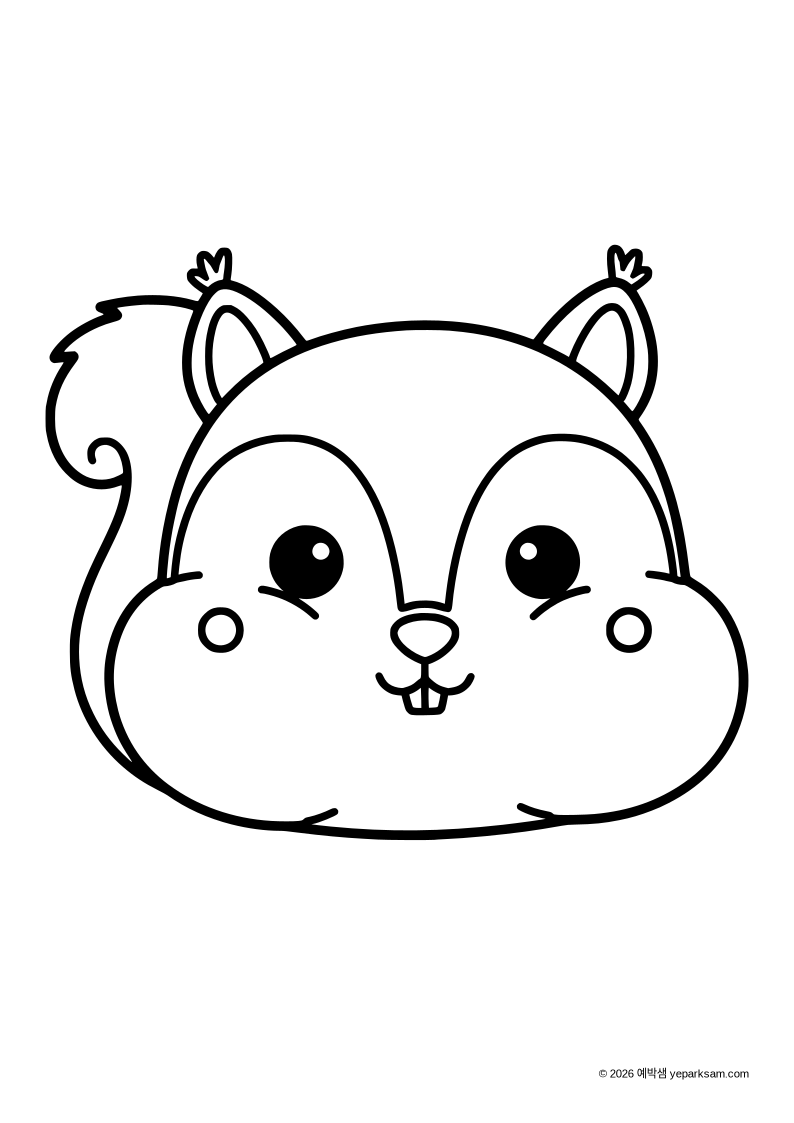
Throw chestnuts one at a time at a big squirrel picture with its mouth cut out and try to land them right in its mouth. It's a target-throwing game.
Why it's good
Aiming and throwing slowly becomes natural to the hand, and it works even better because it's a chestnut. Acorns are small and light, so they keep missing when thrown, but a chestnut is bigger and heavier, easy to hold in a small hand and not likely to miss. As small successes pile up, the child wants to keep throwing again for the feel of it.
How to play
When I asked “What food do squirrels like?” the child answered “Acorns~”. I told them squirrels like chestnuts too and handed over one. At first I put it in the squirrel's mouth by hand, even making “Yum yum yum” sounds, and then once the child threw from a distance and scored a perfect shot. When I said “Wow, amazing!” they only wanted to throw after that.
Good to know
- Stick a squirrel face on a delivery box and cut out the mouth. If drawing is hard, print a squirrel picture, stick it on, and just cut out the mouth. Cut it big enough for a thrown chestnut to slip right in, so scoring feels good.
- When several children throw, line them up. There was a time when everyone threw together and someone got hit by a chestnut thrown by the person next to them. With siblings or friends, it's safer to have them throw one at a time, in turns.
What you'll need
Squirrel picture with a mouth cut out · Chestnuts