Play Ideas with Caterpillars
If the lettuce leaves on the balcony are full of holes, the culprit is already clear. When I turn a leaf over and find a green caterpillar, my body shrinks back on its own, but the child wants to poke it with a finger. Half the children want to touch it and half are scared, and either way is fine. A caterpillar is a rare find: with one container you can watch it for weeks, or in a single day you can turn it into play with your body, with paper, or with a few drops of water.
This page was translated by Yeparksam, a preschool teacher in Korea. Some words may sound a little unusual — thank you for your understanding.
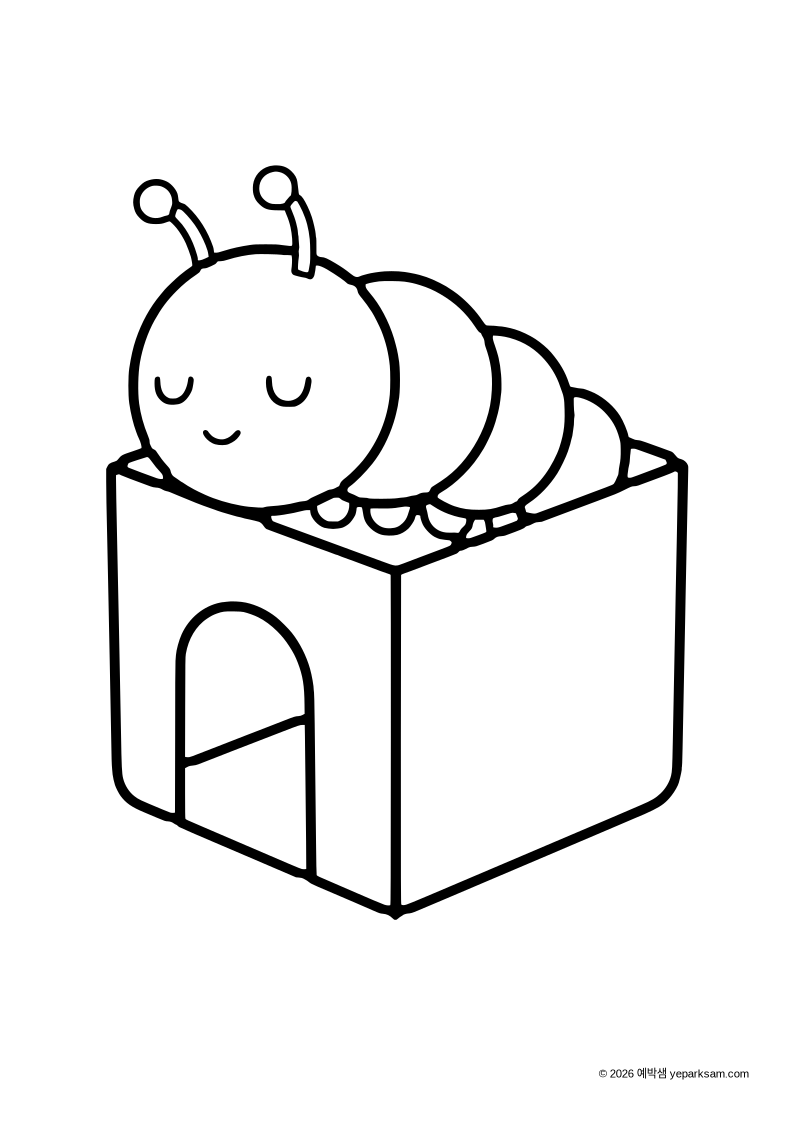
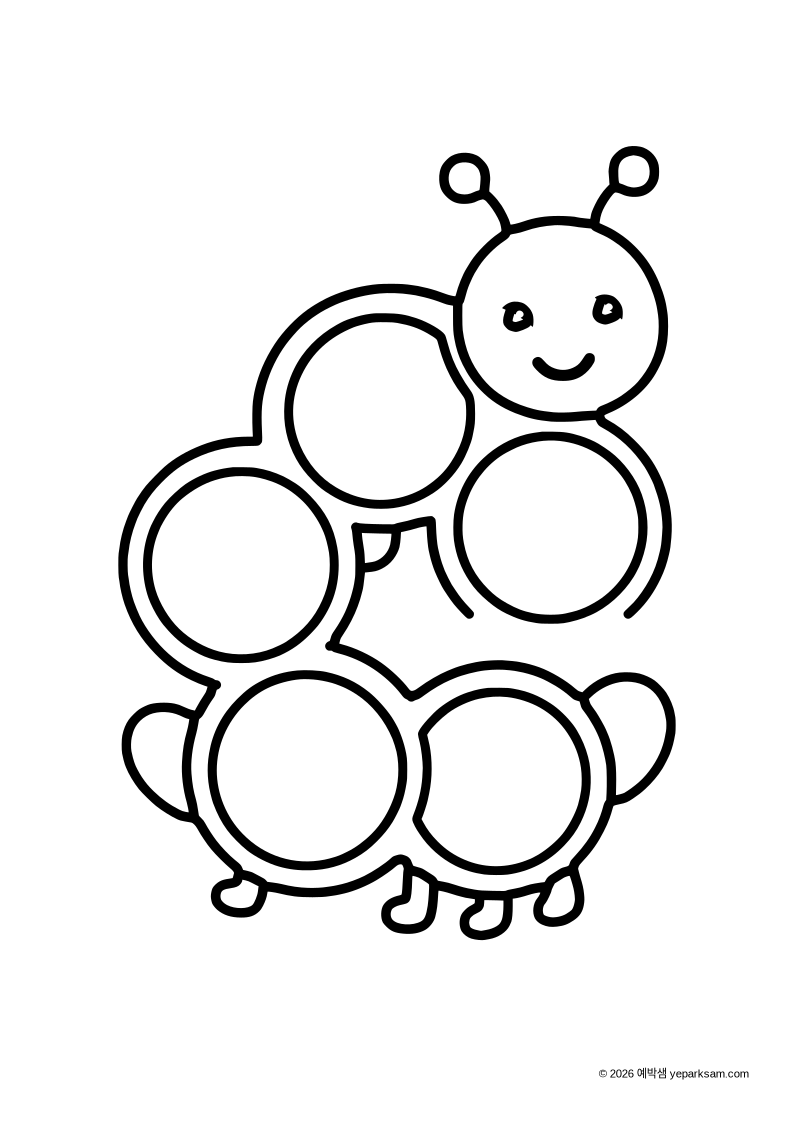
Printables to use
See more ›
Crawling Through a Caterpillar Tunnel
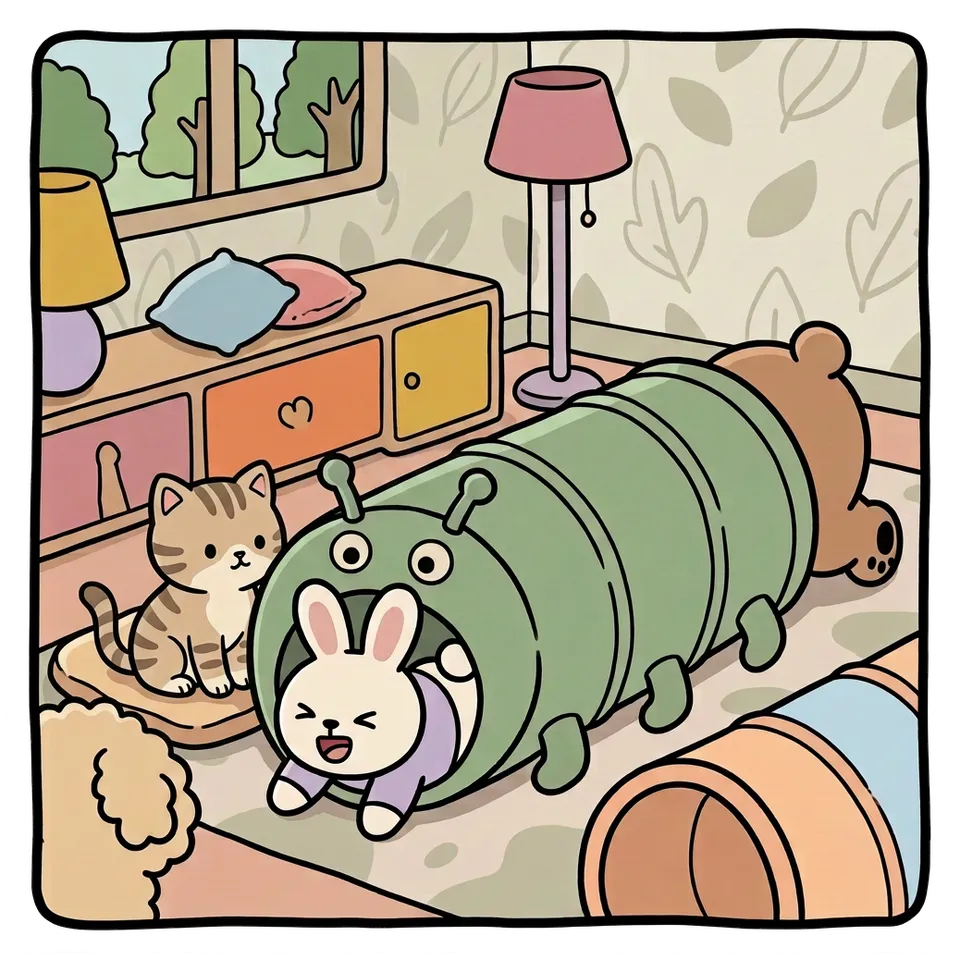
Crawl into a tunnel toy and scrunch up and stretch out as you pass through. Moving through the narrow passage is exactly how a caterpillar moves.
Why it's good
To get through a narrow passage, the body curls up and stretches out again and again on its own, and that motion itself is practice in moving the whole body in a big way. The longer the tunnel gets, the more naturally children learn to wait their turn too.
How to play
I take out the tunnel toy and ask, “What could this be?” With legs attached and eyes on it, the child is the first to answer “Caterpillar”, and only after hearing that did I look again and think, yes, it really is.
You don't need to tell them to go in and crawl. When they enter a narrow passage, the body curls up and stretches out over and over. If a sibling or a visiting friend is there, when the child in front stops, the one behind stops too, peeks out with just a face, and it turns into peekaboo. If you connect one more tunnel, the caterpillar gets longer, and reactions that didn't show up when it was short appear here. Getting all the way through takes time, so while the child behind is stopped inside, the child who came out first waves from the other end.
Good to know
- Agree beforehand that the next child goes in only after one child is all the way out. Bumping into each other inside can hurt, so it is good to make this promise before the play starts.
- You need two or more tunnels to connect them into a long one. With one short tunnel it is over quickly.
What you'll need
Tunnel toy
Making a Caterpillar from Clay
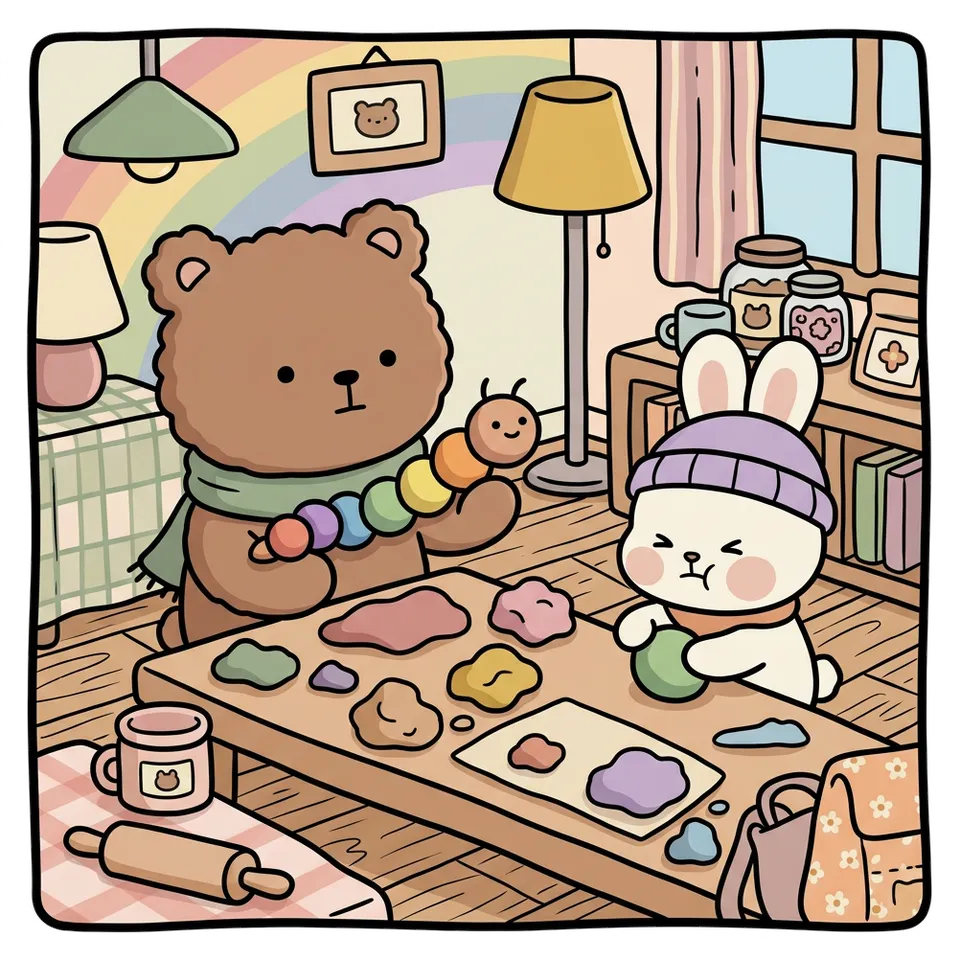
Roll clay into balls between your palms, then join them side by side to make a long line. The more you add, the longer the caterpillar's body grows.
Why it's good
The more they roll separate colors and join them, the more each caterpillar comes out different. They can't make two the same, so when they finish, each child shows off their own first.
How to play
Put the clay between the palms and roll it round, then join the balls side by side, and it becomes a caterpillar. When they roll each color separately and join them, they brag, “My caterpillar is a rainbow caterpillar.”
The child watching from beside can't stay still. “Are you making a caterpillar again? I want to make one too!” they say and start copying, and who makes the longest one becomes the competition of the day.
When they finish, a story follows. Some children stretch the clay out long again and say, “Now it's going to be a chrysalis and then a butterfly!” It doesn't really turn into a butterfly, but a child who has watched a caterpillar for a few days copies that order exactly.
Good to know
- Clay colors don't mix well with each other. When making a rainbow caterpillar, it works better to divide the colors, roll them separately, and then join them.
What you'll need
Clay (several colors)
Threading Fruit onto a Caterpillar
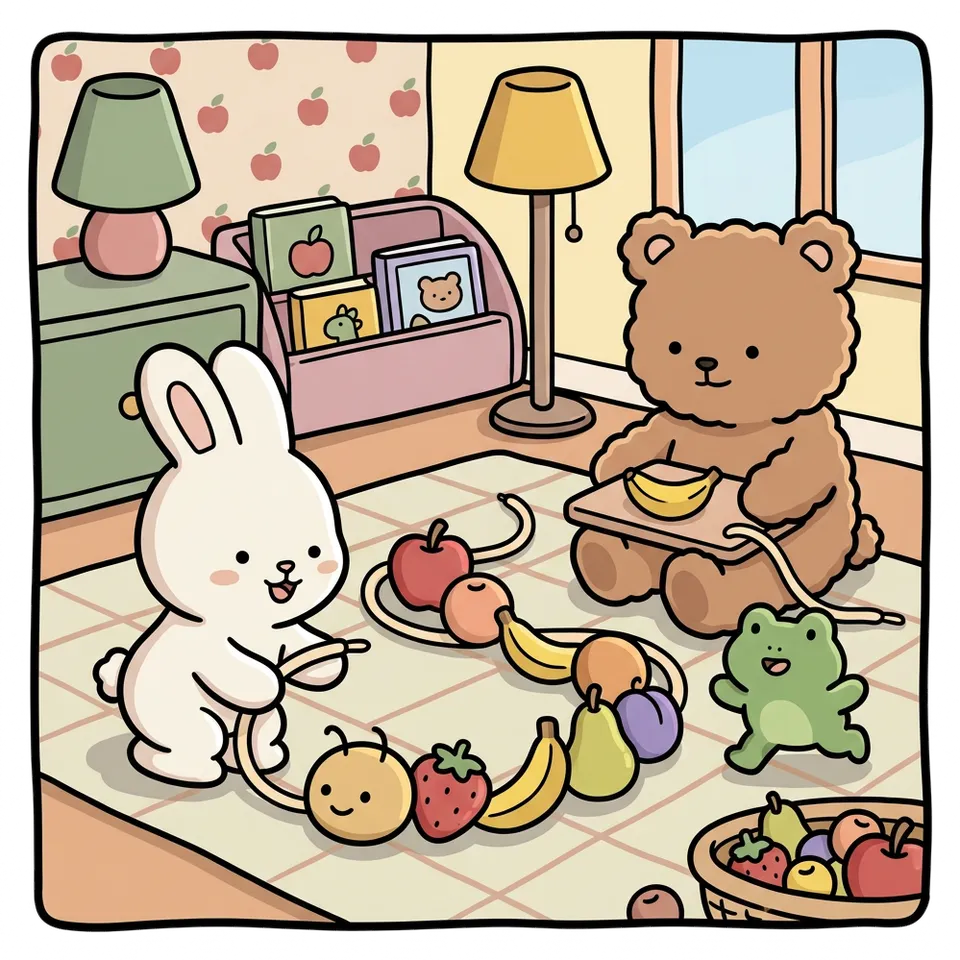
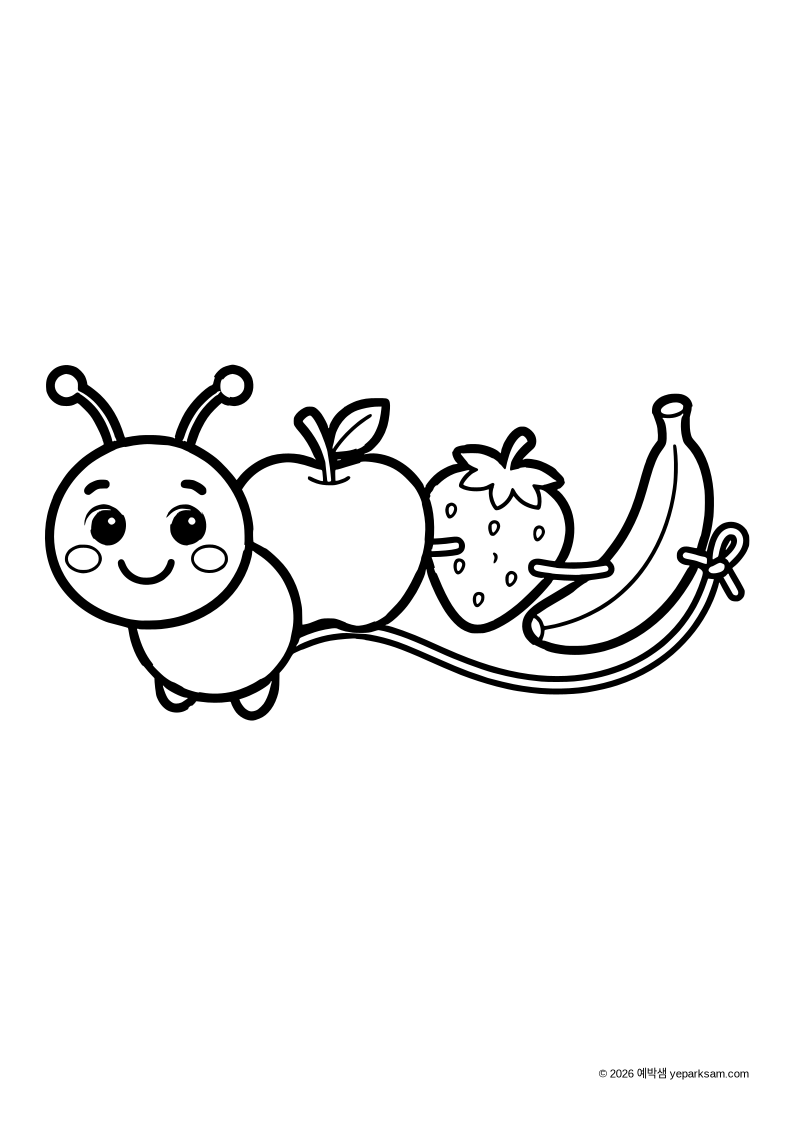
Thread apple, strawberry, and banana shapes one at a time onto a needle with a caterpillar face. When they're all strung, it's a long caterpillar all by itself.
Why it's good
Lining the end of the string up with the hole doesn't go the way they want at this age. That is why, when a child gets one threaded, it shows right there.
How to play
Thread the apple, strawberry, and banana shapes one by one onto the needle with the caterpillar face. If you first tell the story of a hungry caterpillar who eats and grows, the child understands why they are threading.
At first it doesn't go well. The hands won't move as they want, starting with lining the end of the string up with the hole, and the child gets frustrated and says “I can't”. After missing several times, when they get one on, they jump up and hold it out, saying “Look at this.”
When it is all threaded, that is not the end. They drag it along the floor saying “It's crawling,” spin it around, or try wearing it around the neck. The time after finishing lasts longer than the time spent threading.
A few days later, when an apple comes to the dinner table, that day's play comes back to mind. Some children eat it eagerly, saying “It's the apple the caterpillar ate.”
Good to know
- A child who finds the string really hard does not have to thread it. Just lining the fruit up in a row on the floor makes a caterpillar too.
- It gets much easier if you hold the board or paper for them. At this age the hand movement of lining up the end of the string with the hole is still clumsy.
- If you don't have a threading toy, thick string with big beads or buttons works too. As long as there is a hole, anything becomes a caterpillar.
What you'll need
Caterpillar threading toy · Board or paper
Building a House with an Egg Carton
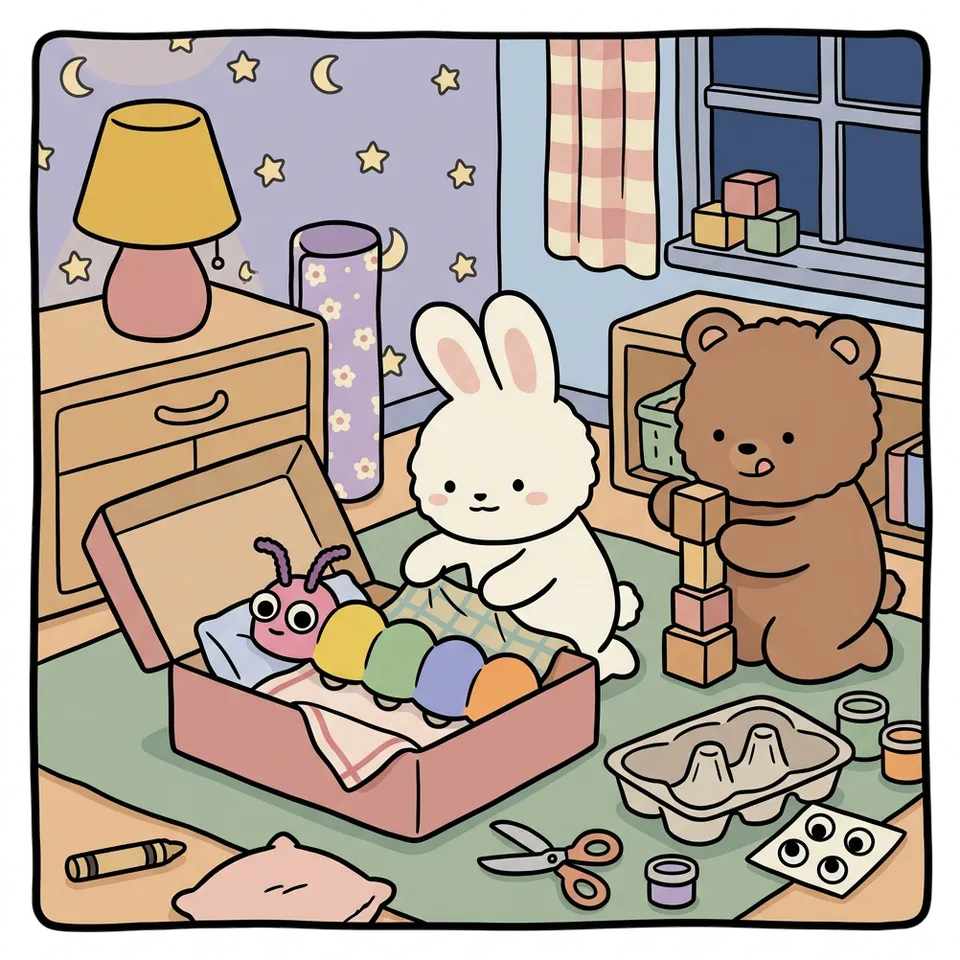
Cut an egg carton lengthwise, color each section, and stick on googly eyes, and you've made a caterpillar. Once it's done, the play carries on into building the caterpillar a house.
Why it's good
This is a play where children give a role and a story to the caterpillar they made. It doesn't end with making; they keep adding story to what they made, so the play moves naturally from making with fingertips to imaginative play.
How to play
After coloring and sticking on the googly-eye stickers, you have one caterpillar, but it doesn't end there.
The child cuts out a small box to make it a house, says “This is the caterpillar's house. Caterpillar, it's time to sleep now,” and puts it to bed.
Some days it gets bigger. The child brings blocks and starts building a house, saying “The caterpillar needs a place to sleep,” and a sibling or visiting friend brings their own caterpillar and joins in, saying “Our caterpillars can live together.” They make a long path for the caterpillars to walk and explain “They go in here and sleep,” or stack the blocks high and say “This is the caterpillar's tower.”
Good to know
- You can keep playing with the caterpillar they made for several days. If an eye sticker falls off, just stick it back on.
What you'll need
Egg carton · Colored pencils · Googly-eye stickers · Small box · Blocks
Making a Butterfly from Coin Tissue
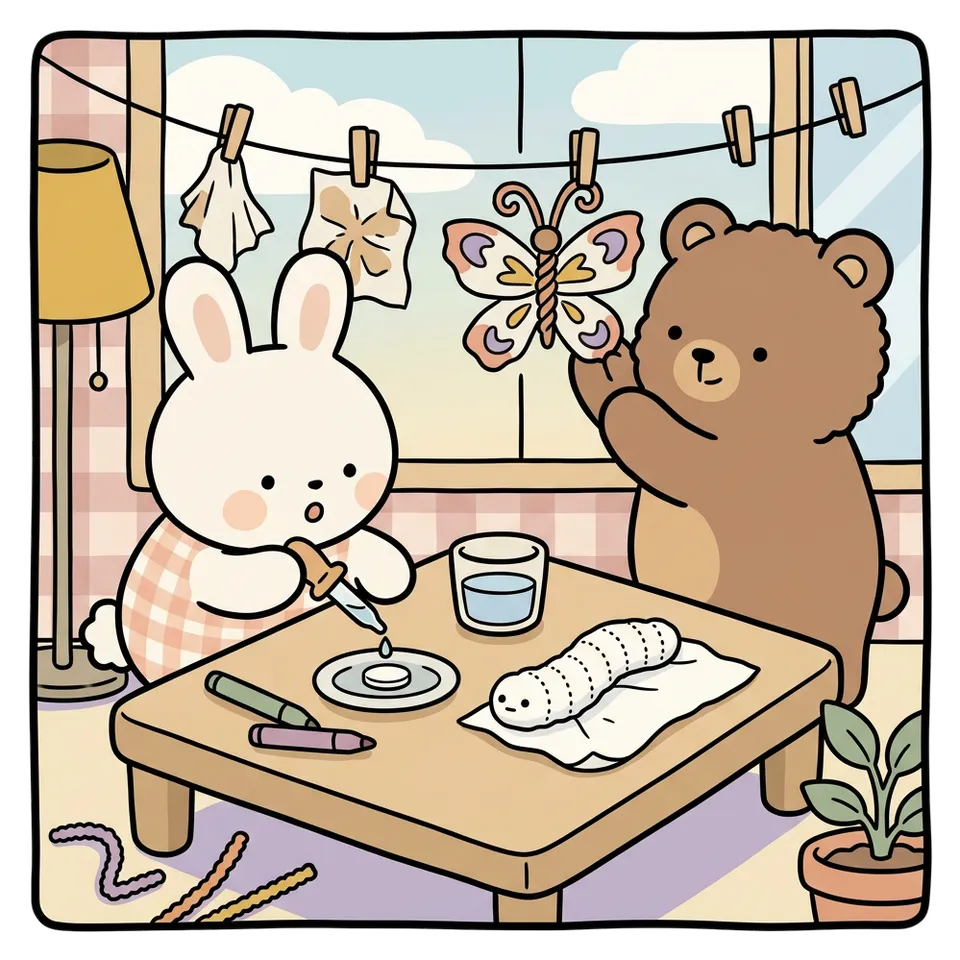
Drip a few drops of water on a hard coin tissue and it softens and swells as the caterpillar grows. When it's fully grown, dry it and fold it into a butterfly.
Why it's good
This is a play where children see for themselves how something hard grows in their hand with just a few drops of water. They have made the process of a caterpillar becoming a butterfly with their own hands, so even when they look at a real caterpillar, they recognize that order.
How to play
Put one small, hard coin tissue in the child's hand. Have them make dots or stripes on it with a marker, then drop a few drops of water on it with a dropper. The moment the water touches it, the coin tissue swells soft and gets longer. Seeing something hard grow in their hand, the child is amazed and asks to do it again and again. “The caterpillar ate its yummy food and grew so big!” is what you hear here.
Give it a name and it becomes theirs. Some children call it by its color, and some by the sound it makes. When you put them side by side next to a flowerpot, they compare and find their own.
When they have called its name to their heart's content and start to lose interest, spread it out and hang it on the window with a clip to dry. It dries completely in a day. The soft, grown one gets thin and flat as it dries, and when you open it up again it looks like butterfly wings.
They draw patterns with a marker, fold a pipe cleaner into a body and antennae and stick them on, and add googly-eye stickers, and it becomes a butterfly. Each child decorates differently, saying “My butterfly has long antennae,” and when it is finished they say, “It looks just like a butterfly. My caterpillar became a butterfly.”
Good to know
- For a child whose dropper control is still clumsy, switch to a spoon. Pouring the water a spoonful at a time makes it grow just the same.
What you'll need
Coin tissue · Marker · Dropper · Water · Pipe cleaner · Googly-eye stickers
Becoming a Butterfly with a Cloth
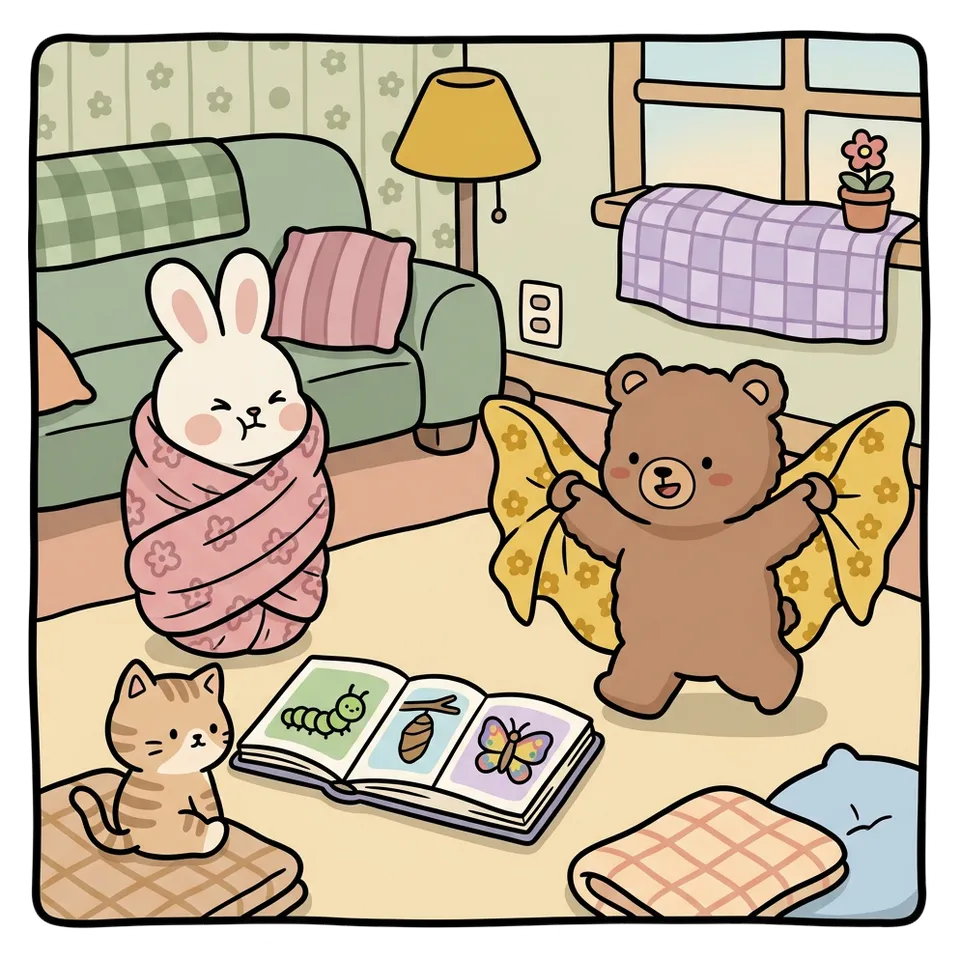
Wrap a cloth tightly around your body to become a chrysalis, then fling it off, spread your arms, and fly around as a butterfly in this movement play.
Why it's good
This is a play where children go through the change from caterpillar to butterfly with their own bodies. Feeling in the body the contrast between holding still and suddenly opening wide, they also naturally start wondering what really happens inside a chrysalis.
How to play
After watching a video of a caterpillar becoming a butterfly together, the child always wants to try it with their body. They wrap the cloth tightly around themselves and stand still, saying “I'm a chrysalis,” then say “Now I'm going to be a butterfly!”, fling the cloth off, spread both arms, and flutter around.
How long they can hold the chrysalis pose becomes the play. Sometimes the giggles burst out because it tickles, and the butterfly pops out right there.
Good to know
- If the child asks “Why doesn't the chrysalis move?” answer honestly. It is changing into a butterfly body inside right now, so staying still is actually the true answer.
What you'll need
Cloth or a large scarf
Caterpillar Straw Race
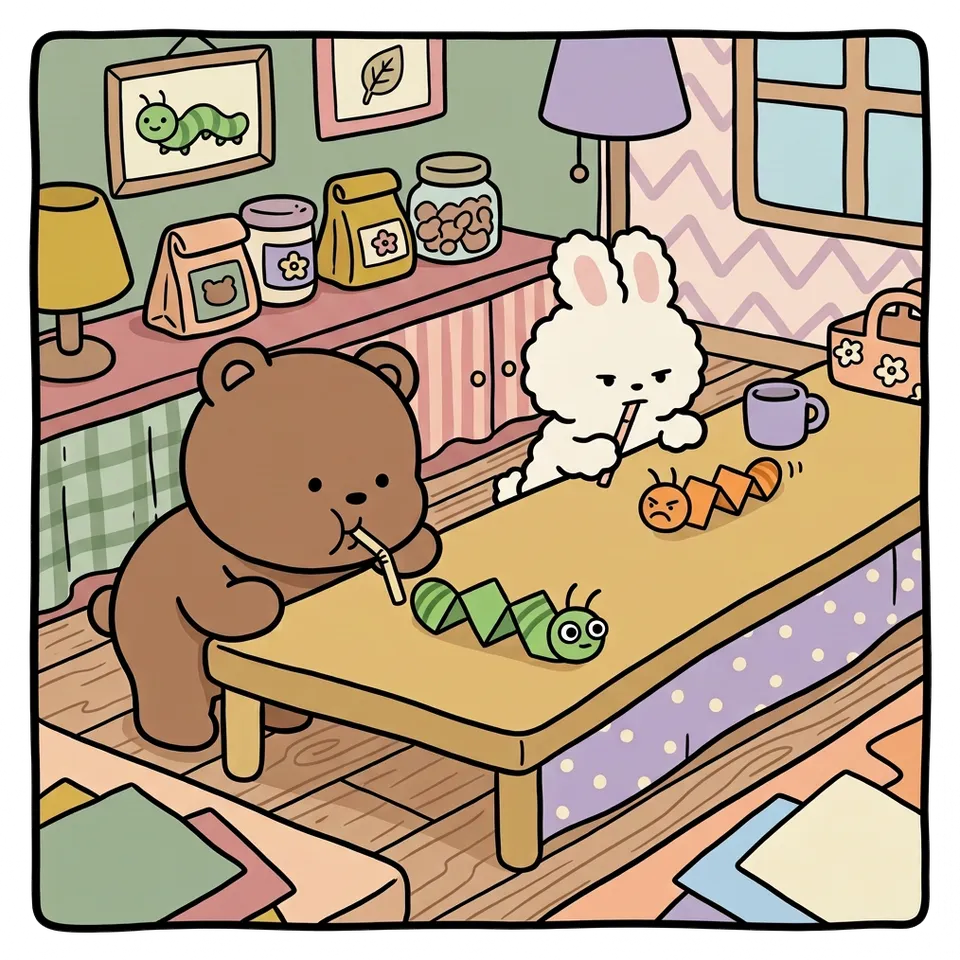
Fold paper into a caterpillar with body segments, then blow through a straw to make it race across the table.
Why it's good
They feel that a gentle breath moves it a little and a hard breath makes it shoot off suddenly, and so learn to control the strength of their own breath. When it doesn't go the way they want, they change the angle and find a way to fix it by themselves.
How to play
When you fold colored paper in a zigzag, it becomes a caterpillar with body segments. They stick on eyes and draw stripes to mark which one is theirs. Now all that is left is blowing through the straw.
After blowing once, they test it themselves, wondering “How far will it go if I blow just a little?” and “How far will it go if I blow hard?”
If a sibling or a visiting friend is there, they put the caterpillars side by side on the table and both blow. To make their own caterpillar go farther, they hold their breath and let it out all at once, or hold the straw at a slant to make it go sideways. When the direction is off, the caterpillar veers to the side, and in the next round they change the angle and blow again.
Good to know
- If a child's breath is still weak, the caterpillar won't go far. It is fine to give it a little push with the hand. That is also finding their own way.
What you'll need
Colored paper · Googly-eye stickers · Straw
Raising a Caterpillar and Letting It Go
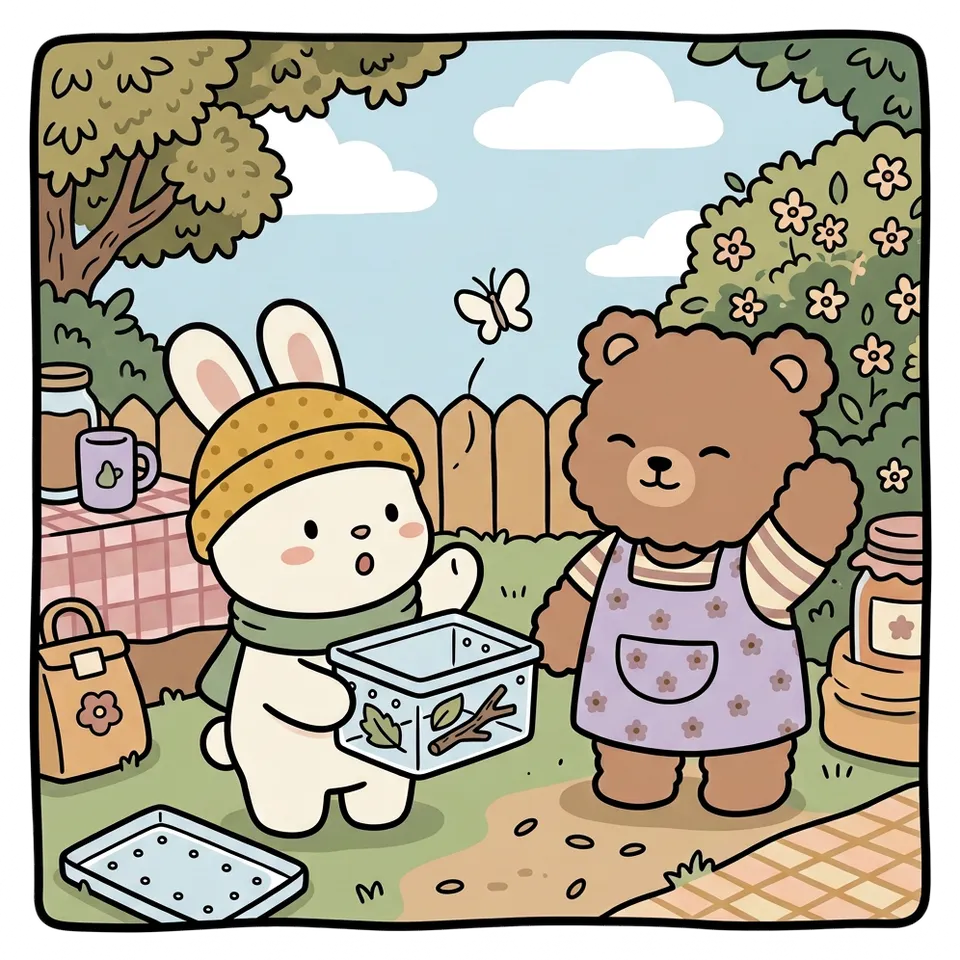
Put a caterpillar you found in the garden or on a walk into a clear container to watch for a few days, then let it go again once it becomes a butterfly.
Why it's good
This is a play where children watch with their own eyes, over several days and with just one container, how a caterpillar goes through a chrysalis and becomes a butterfly. The child notices even small changes first, and it becomes an experience of taking responsibility for a living thing for a few days and then letting it go.
How to play
When you find a caterpillar in the garden or on a walk, put it in a clear container along with a few leaves. The one who looks in every day is actually more diligent, the child, not me. Even while I forget about it for a few days, the child doesn't miss the small changes, saying “There's less food today” and “It's moving slower.”
Around ten days later, it suddenly stops moving. No need to worry. It is just getting ready to become a chrysalis. If they ask, “It's not moving, is it sick?”, you can tell them it is not sleeping and not dead, it is changing its body right now.
A few more days later, a butterfly comes out inside. One day the child looks into the container and is startled, saying “The bug is gone! There's a butterfly!” That moment is the high point of this play. When you tell them the caterpillar did not disappear but became a butterfly, the child accepts it right there.
Once it is a butterfly, the container is too small. The child is the first to worry, saying “I think this container is too small” and “There's no nectar to eat.” That is when you go outside together and let it fly away.
Good to know
- The container lid needs several small holes. Without air holes it won't work.
- Put in a few of the very leaves where you found the caterpillar. If you know where you found it, you know what it eats.
- If a child is scared to hold it with their hands, move it with a twig or chopsticks.
- Brightly colored or fuzzy caterpillars are safer not to touch. Some kinds have stinging hairs. Smooth green caterpillars are usually fine, but wash hands after touching.
What you'll need
Clear container · Leaves · Twig or chopsticks