Play Ideas with Soap Bubbles
When you buy bubbles, it usually ends with an adult blowing them again and again. The child chases, they vanish the moment a hand touches them, and once the container is knocked over, that's it for the day. But bubbles also come out when you wave instead of blow, and both the wand and the bubble solution can be made with things at home. I only found that out after some years.
This page was translated by Yeparksam, a preschool teacher in Korea. Some words may sound a little unusual — thank you for your understanding.
Printables to use
See more ›
Making Bubbles by Waving Gently
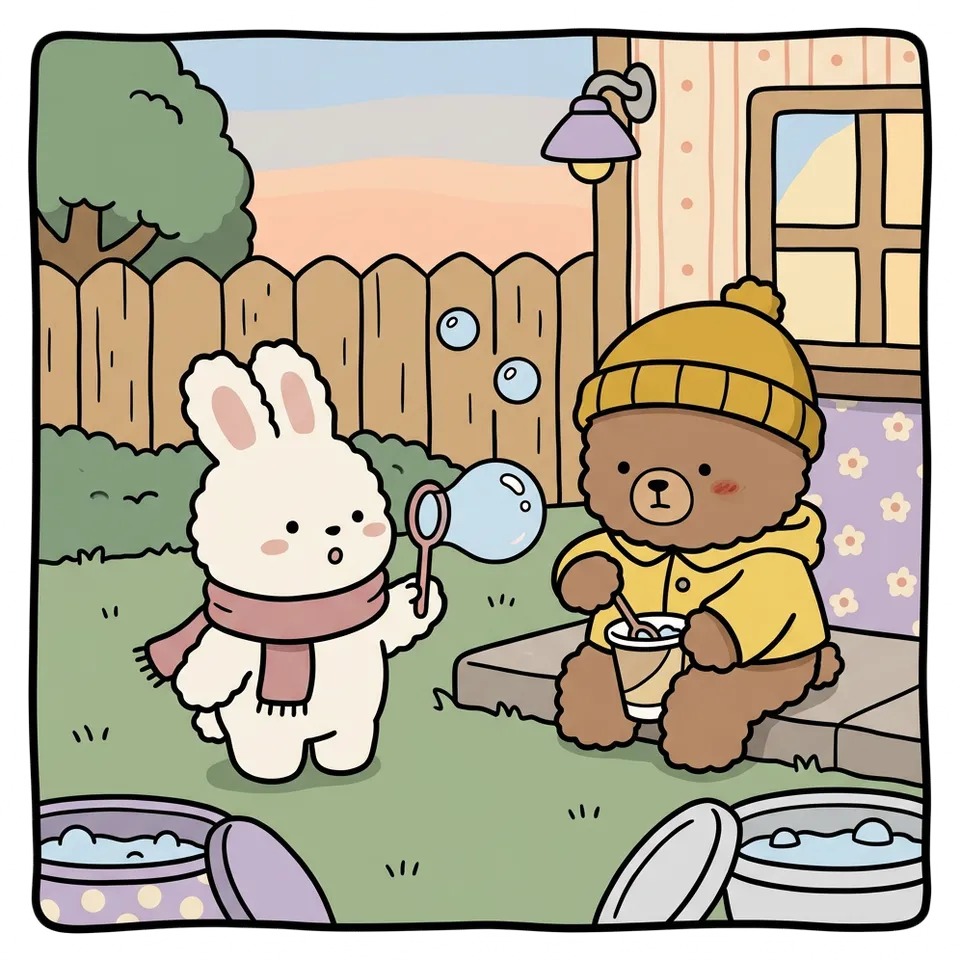
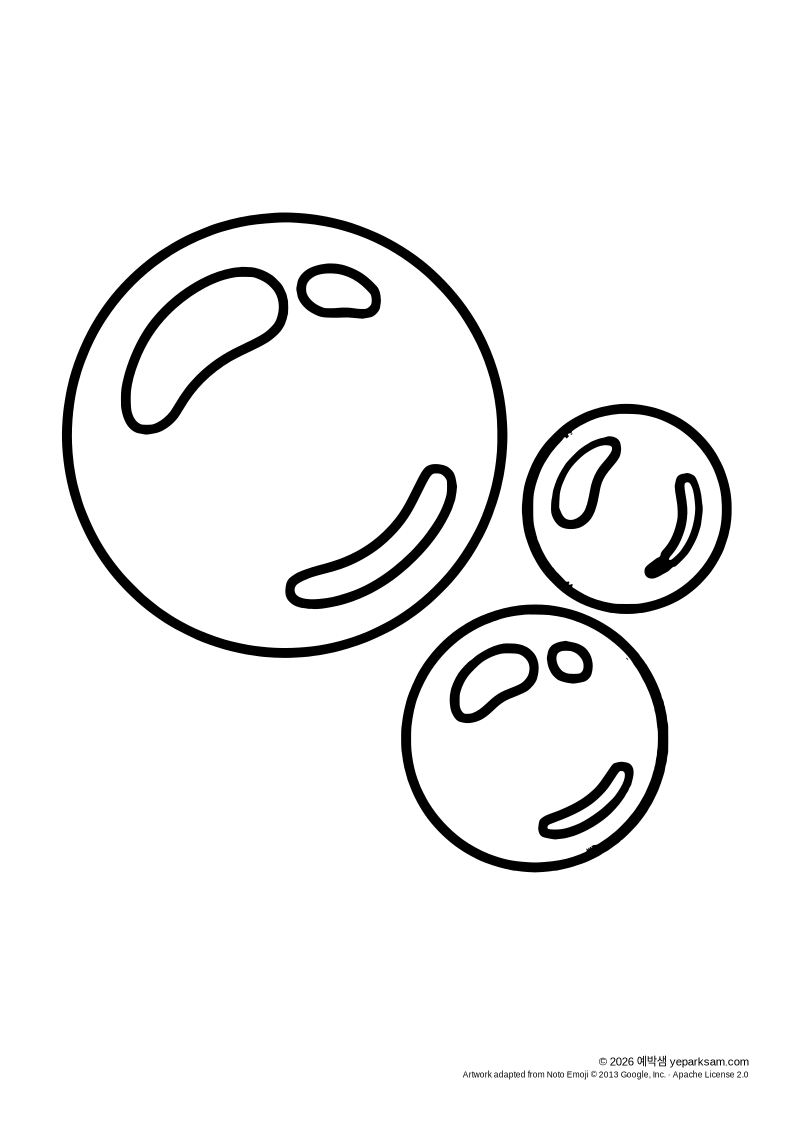
Gently wave a bubble wand through the air instead of blowing, and bubbles appear.
Why it's good
Even if they can't blow with their mouth, the child learns that waving the wand makes bubbles. They work out with their own arm that waving hard makes none and waving gently does.
How to play
Give a young child a wand and they first put it to their mouth and blow, whoo. But they can't yet match the strength of the blowing, so bubbles hardly come. They swish the wand this way and that, then say “Why won't this work?”
So I handed over the wand and suggested waving instead of blowing, and the moment they got it they swung with all their might. Not one bubble came. When I slowly waved mine once beside them, they copied and waved gently, and only then did one huge bubble slip out. The child ran after that bubble, wand in hand.
After a few waves, no more bubbles come. The soap on the wand has all dripped off. Then the child comes to the container I'm holding, dunks the wand in, pulls it out, and goes off to wave again.
Good to know
- In the bright midday sun, bubbles pop quickly. The water dries fast. In the morning, around sunset, or the day after rain, they last longer.
- With a younger sibling or friend, they fight over the container. Pour the bubble solution into paper cups and give each one a cup.
What you'll need
Bubble wand · Bubble solution container (paper cups to split it into)
Chasing, Catching, and Popping
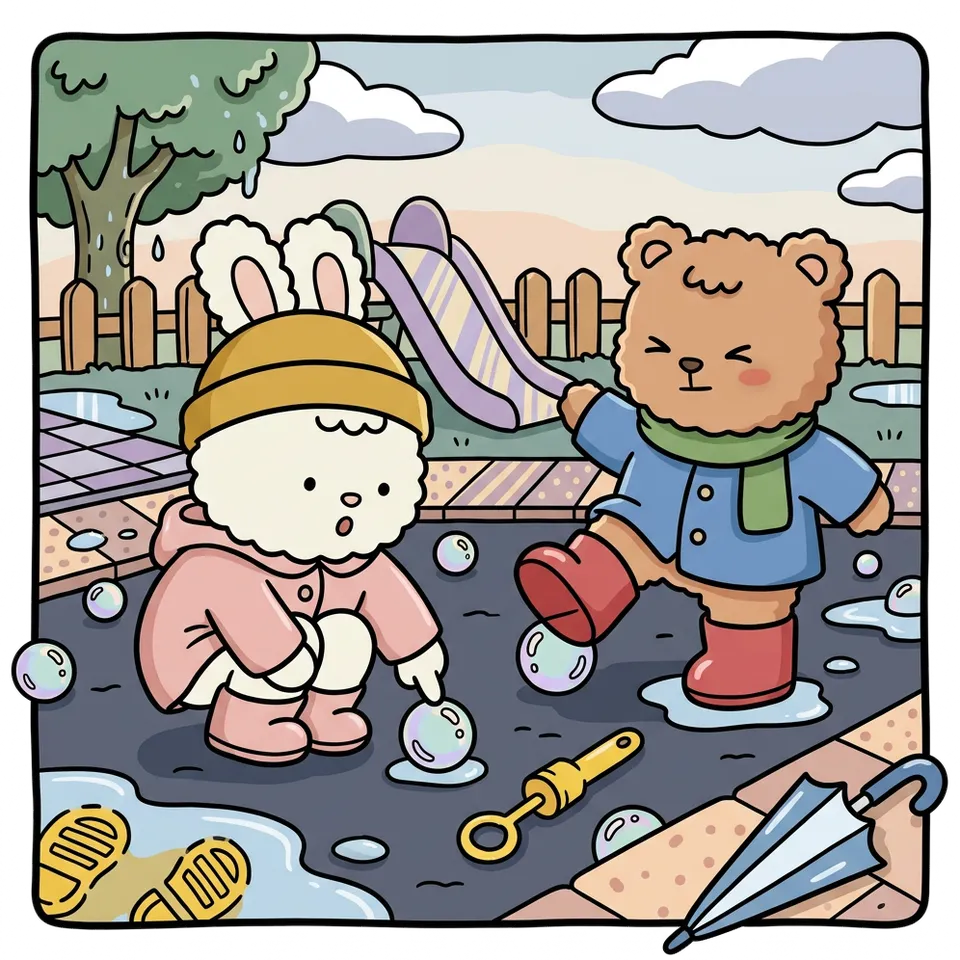
Chase the floating bubbles and catch them, and press the ones that land on the floor with your finger to pop them.
Why it's good
They chase, for the first time, something that vanishes the moment a hand reaches it. They also see that a bubble that pops the instant it's touched in the air will sit for a while on a wet floor.
How to play
The child chases as soon as I blow. It pops when touched. They chase and catch again, and it pops again. Still they don't stop. For one floating above their height, they even rise on tiptoe and stretch their arms. Failing to catch it in the end, they pulled my hand over and asked me to catch it. But it popped in my hand just the same. I felt a little sorry about that.
On a day one popped on the palm, the child held the hand close in front of the face and looked at it. They knit their brows slightly and looked around. A slightly older child said “I touched it with my finger and the really big bubble disappeared.”
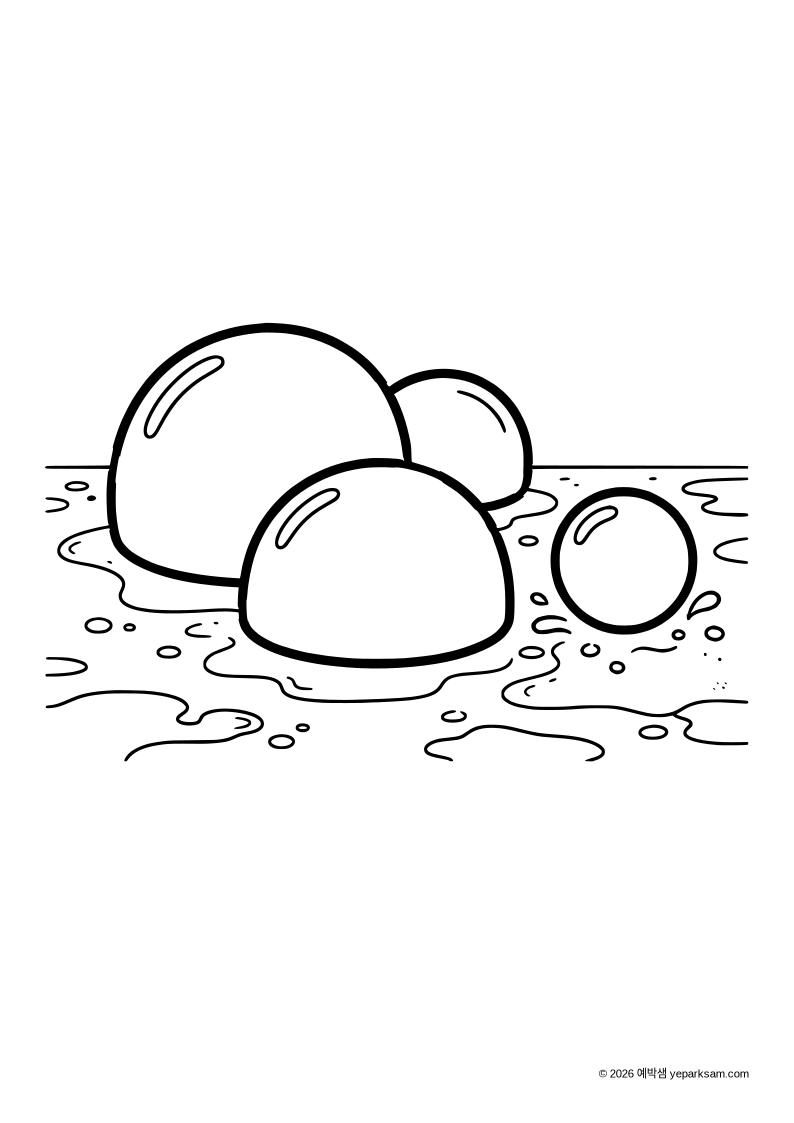
The day the rain stopped was different. Bubbles that landed on the wet floor didn't pop and just stayed. The child crouched in front of one, pressed it with a finger to pop it, and stepped on the one beside it. They even tried to catch one sitting on a shoe with their hand.
Once I blew in the shade on a windy day, and the bubbles flew far away the moment they came out. When I turned my back to the wind and blew again, the bubbles drifted toward the child this time, and from then on they played a long while chasing, catching, and popping.
Good to know
- After rain, or on a floor you've sprinkled with water, bubbles don't pop for a while even after landing. A bubble is a thin film of water and pops quickly when it touches something dry.
- The floor where bubbles fall gets slippery. It's a chasing game, so it's easy to fall.
- It works in winter too. When they come in, wash their hands first. Fingers with soap on them easily go to the mouth.
What you'll need
Bubble wand (or container)
Making Shapes with Pipe Cleaners
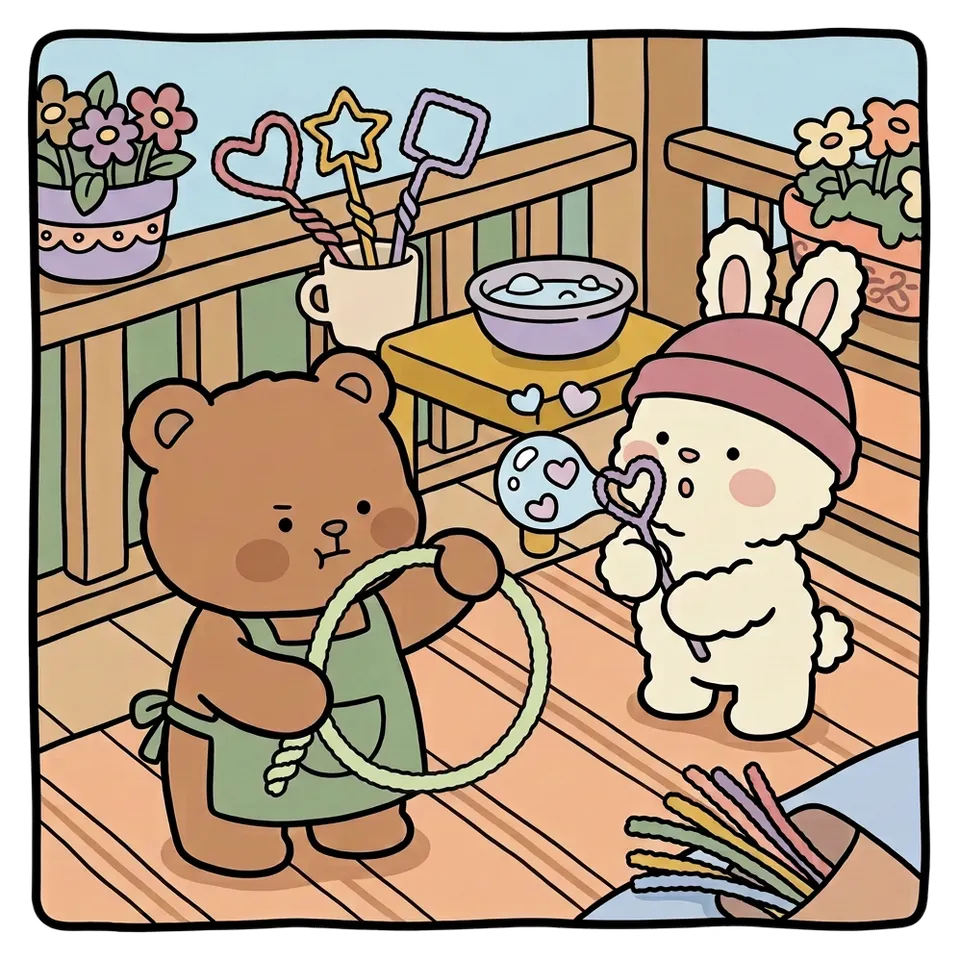
Bend a pipe cleaner into a loop to make your very own bubble wand.
Why it's good
Whether you make a heart or a star, the bubbles come out round. Trying wands of different shapes, the child figures out on their own that the bubble shape stays the same and the bubble size changes with the size of the loop.
How to play
Bend a pipe cleaner into a circle and twist the ends, and the loop closes and the leftover part is the handle. Stick the handle into a straw and it's easy to hold. The bubble solution sticks well to the fuzz of the pipe cleaner, so bubbles come out well too.
The child made a heart and a square too. I also thought a heart wand would give heart bubbles. But when I blew, they were all round. A bubble squeezes into the shape that wraps the air inside with the least film, so it comes out round whatever the frame.
Shape can't change but size can. Alternating with the older sister's wand, when her bubbles came out bigger, the child took their own loop and opened it wider. This time the bubbles got bigger too.
Good to know
- There's wire inside a pipe cleaner, so the cut end is sharp. Curl the leftover end inward after twisting.
What you'll need
Pipe cleaner · Straw (optional) · Bubble solution
Making Your Own Bubble Solution
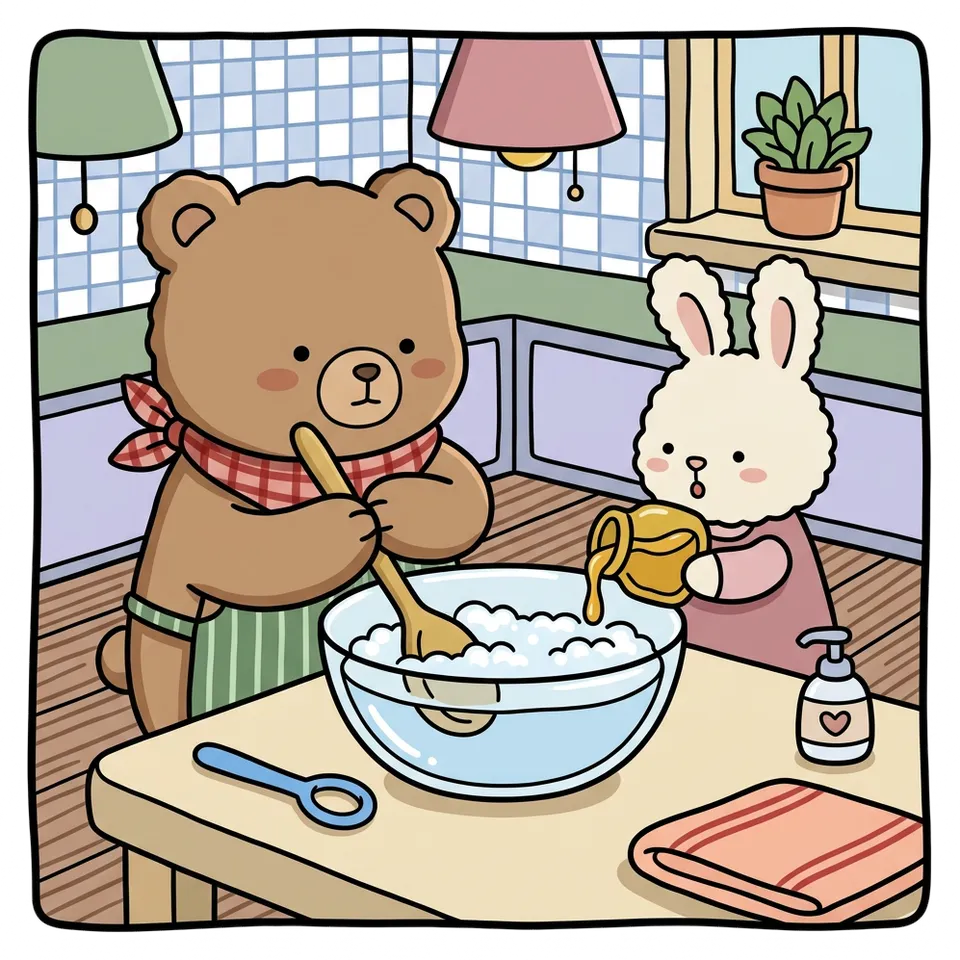
Mix dish soap and mulyeot (starch syrup) into water to make your own bubble solution.
Why it's good
Bubble solution that only ever came from a bottle, they now mix themselves from things in the kitchen. Blowing, they also find out that good suds don't mean good bubbles.
How to play
At first I dissolved hand soap in water. It makes lots of fluffy suds, but when blown, hardly any bubbles come.
Add a little mulyeot (starch syrup) and it changes. Bubbles pop when the water dries, and water with mulyeot dries slowly. Oligosaccharide syrup works too. I added mulyeot to dish soap and blew, and when the bubbles came, the child was fascinated for a long time.
For a young child, stirring is the play. We stirred the soapy water together, but they kept trying to put it in their mouth, so I quickly blew bubbles to show them. Then they watched the bubbles.
A slightly older child tries to find out how much to add. They blow with a little soap, add more and blow again, and blow side by side with store-bought bubble solution.
Good to know
- Don't give straws to young children. They can't yet tell blowing from sucking, and the solution goes into the mouth. At that age, split it up so an adult blows and the child chases the bubbles.
- On days bubbles won't come at all, mix paint into that water and play with the suds. The child dipped a block they were holding into the blue suds and stamped it like a stamp, and while washing their hands afterward said “I have to do the dishes.”
What you'll need
Water · Dish soap · Mulyeot (starch syrup) or oligosaccharide syrup · Paint (optional)