Play Ideas with Boxes
When a delivery box has been opened, you fold it up and put it out. But if you leave it on the floor before folding, the child climbs in and sits. It's the moment something that holds things becomes something you ride, and laid down it becomes a car, stood up it becomes an elevator.
This page was translated by Yeparksam, a preschool teacher in Korea. Some words may sound a little unusual — thank you for your understanding.
Printables to use
See more ›
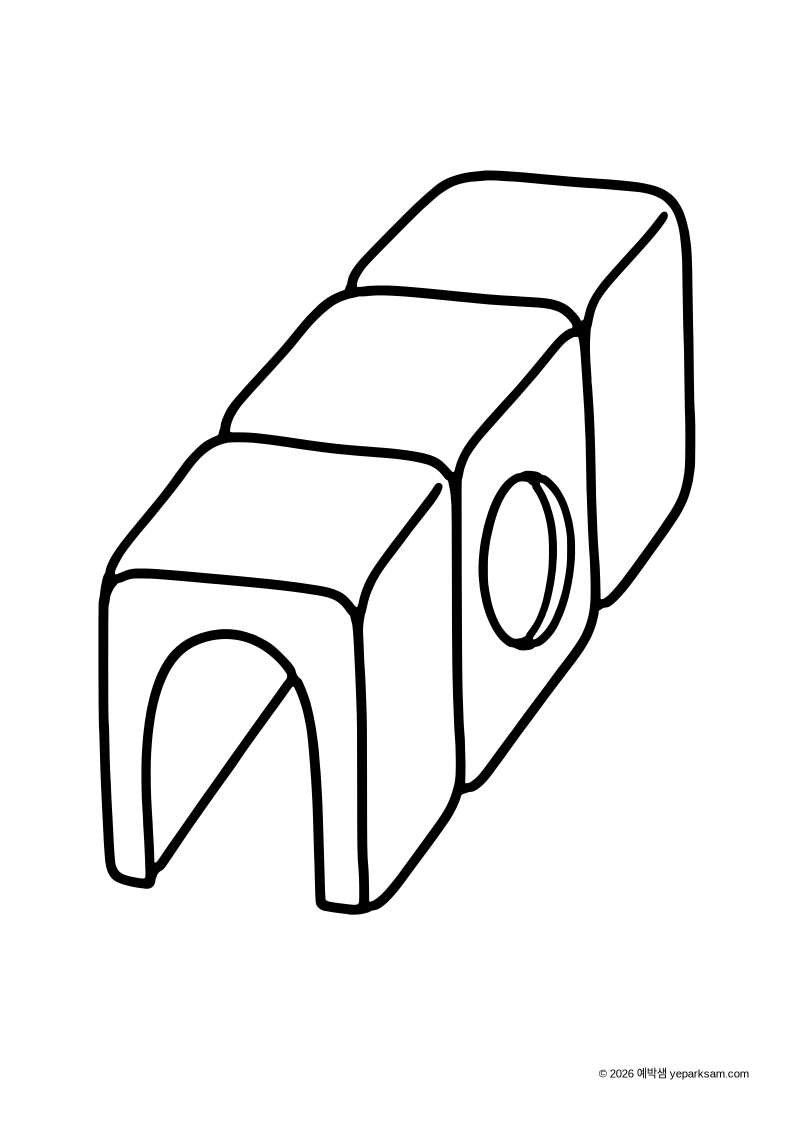
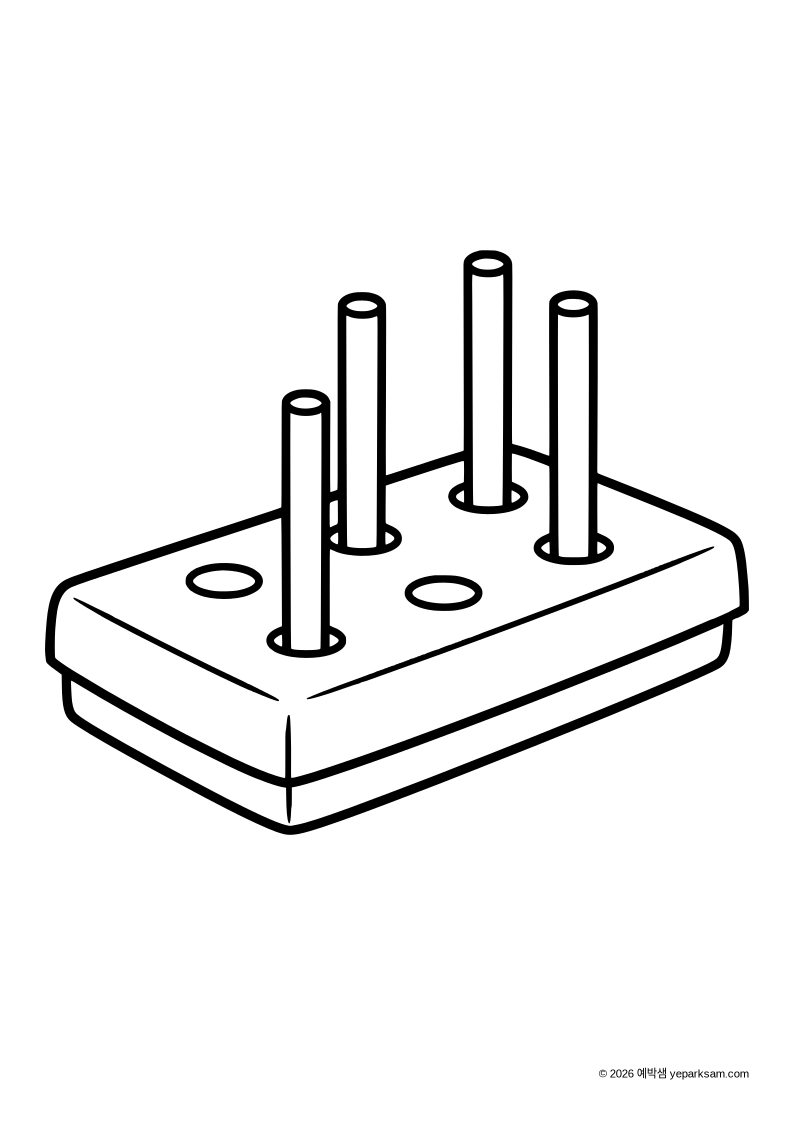
Guessing by Sound
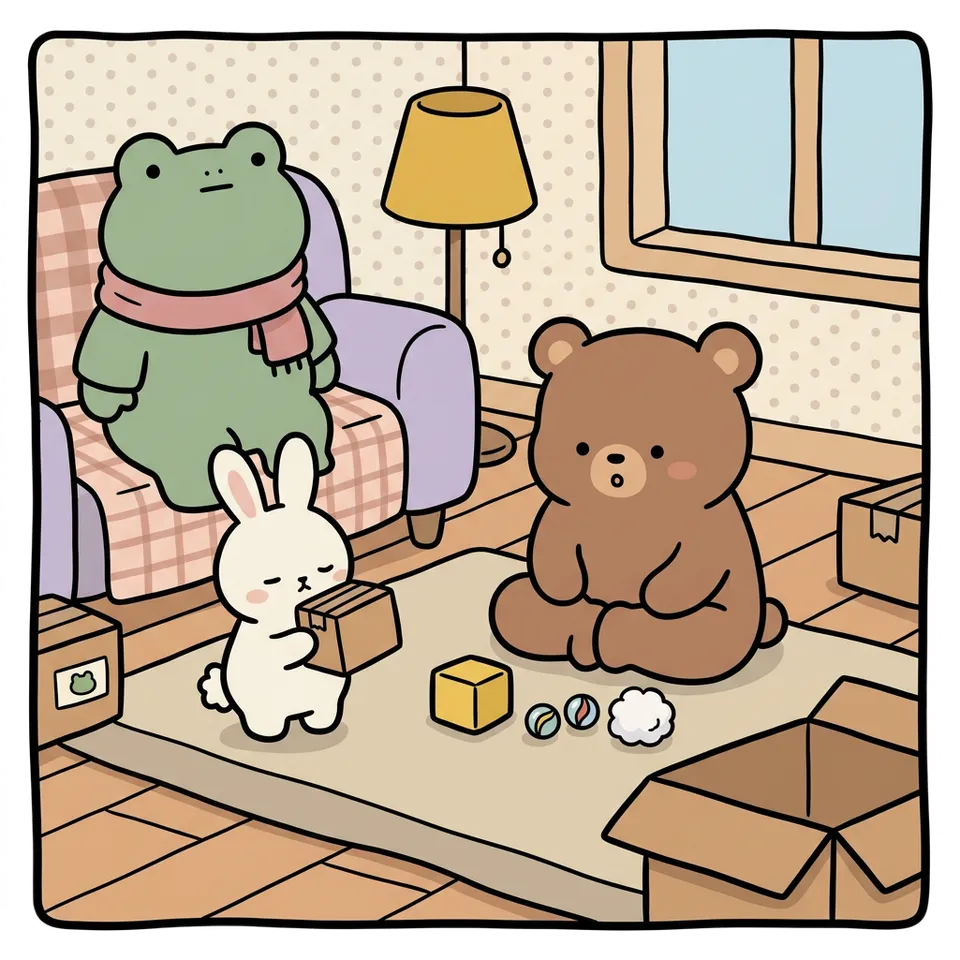
Put one object inside a box, shake it, and guess what's in there just from the sound.
Why it's good
It's play where you guess what you can't see from sound alone. They connect the sound they hear to an object, and when there's no sound, they notice why by themselves and shake again to check.
How to play
When a delivery comes, the child shakes it first. They ask, “What's in here?” and if you don't tell them right away and let them shake it, that's when the play begins. After everything is unpacked, put one object in a small box and tape it shut. Since you can't see inside, they guess by sound alone.
The sound differs depending on what goes in. A block sounds dull, and a marble rolls around. If you put in cotton or tissue, there's no sound at all, and they only know that by trying it once. When there's no sound, the child shakes the box harder, then says “No sound,” and asks you to open it. When they shook a big box, the sound changed again, and one child listening to things bumping around inside said, “Rain sounds!”
Cut a hole big enough for a hand on one side, and you move on to the next play. Without looking, they pull things out by hand and say what they pulled out first: “It's a yellow block~”
Good to know
- Don't tell them right away what's inside. Let the child shake it first and guess, and only then does the play begin.
- Try putting in something that makes little sound too. If you put in cotton or tissue and shake it, the child puts an ear to the box and tilts their head to listen.
What you'll need
A small box · Tape · Several objects that make different sounds (blocks, marbles, etc.)
Riding a Box Car
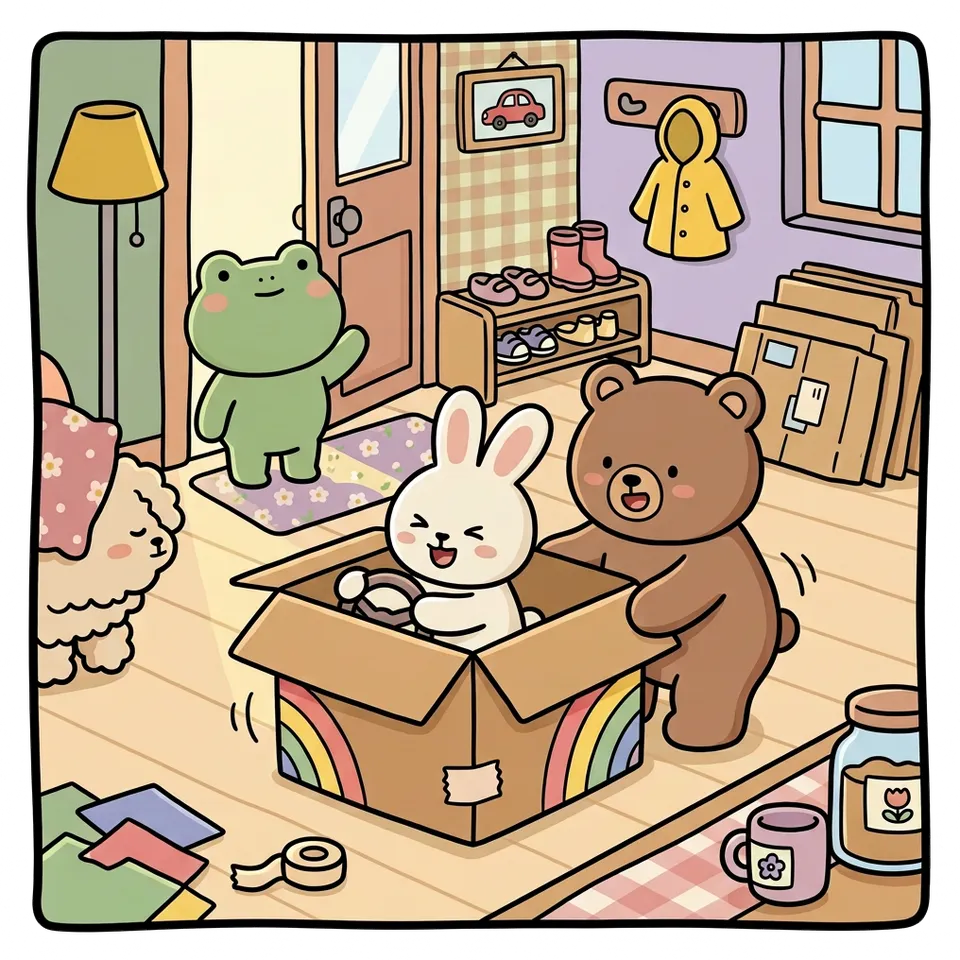
Push or shake a box big enough for a child to sit in to give them a ride. They ride it like a car and make engine sounds.
Why it's good
It's play for balancing with the body. When you shake the box, the child tenses their body to keep from falling over inside, and the feeling of tensing up becomes fun like a ride. Stick on colored paper and give it a name, and the box becomes their own.
Books to read together


How to play
Put a box big enough for a child to sit in on the floor and push it. A steering wheel isn't needed. As soon as they sit, they bring both hands forward and go “Vroom vroom” and “Beep beep.”
They like being shaken more than being pushed. Hold both sides of the box and say “We're leaving~” while shaking it left and right, and they laugh with “Eeeee!” Inside the shaking box they tense their body to keep their balance, and for the child that's the same as riding an amusement ride. They sometimes say “Hi~~” to people outside, too.
When one child rides, a sibling or friend right away says “Me too!” or “I want to ride!” The one pushing has fun too, so take turns.
I let them cut and stick colored paper, and they even give it a name: “It's a colorful rainbow car,” “It's a car with a fountain.”
Good to know
- Decorating makes it their own. If you let them stick on colored paper or stickers, they name the car before they've even finished sticking.
What you'll need
A box big enough for a child to sit in · Colored paper, stickers
Going Through a Tunnel
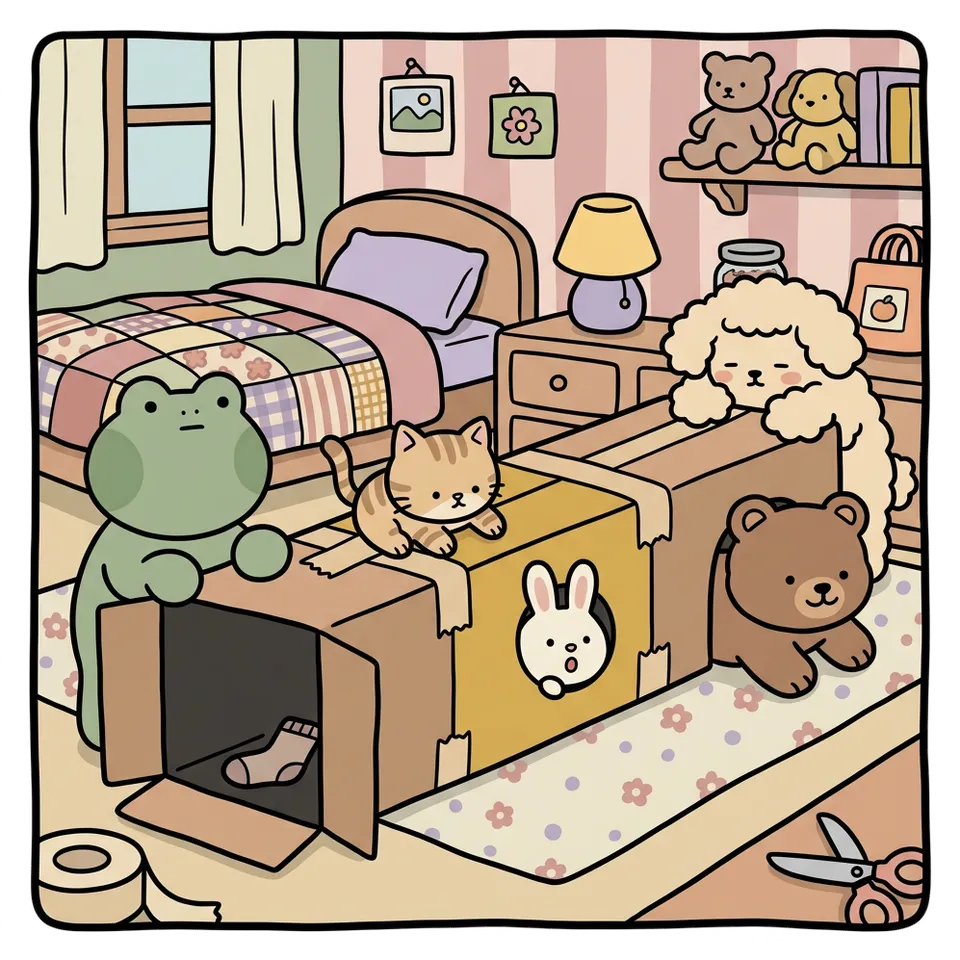
Tape several boxes together to make a tunnel and crawl through it.
Why it's good
It's a body play of lowering yourself and passing through a narrow space. Each child goes through in a different way, adjusting their body on their own. Words comparing length and width come out by themselves too — they learn long and narrow by feeling them with their body.
How to play
Open up both ends of two or three big boxes and tape them in a line, and it becomes a tunnel. One alone works too, and when joining them, wrap plenty of tape.
Each child crawls in differently. Some go in on their stomach, and some crouch down and put one foot in at a time sideways. A sideways child said, “I went like a crab.” Some say they'll go in backward, but they can't see and fall, so I tell them that part ahead of time.
Poke one fist-sized hole in the side. Stopping on the way past to poke out a head and say “Peekaboo!” or “Ta-da!” becomes play.
Words comparing length come out by themselves. “This one is long!” and “This one is narrow~” When they get through and come out, they say “I did it!” and “I'll go in again!” and go in again and again.
With several children, fights break out at the entrance about who goes in first. Rather than setting the order, if you ask “Who should go first?” they decide on their own.
Good to know
- A child who is uncomfortable in the narrow space doesn't have to go in. Peeking in through the hole from outside is part of this play too.
- Tape together the boxes you used as cars side by side and you have a tunnel. You don't need to buy new ones.
What you'll need
Two or three big boxes · Tape
Riding the Elevator
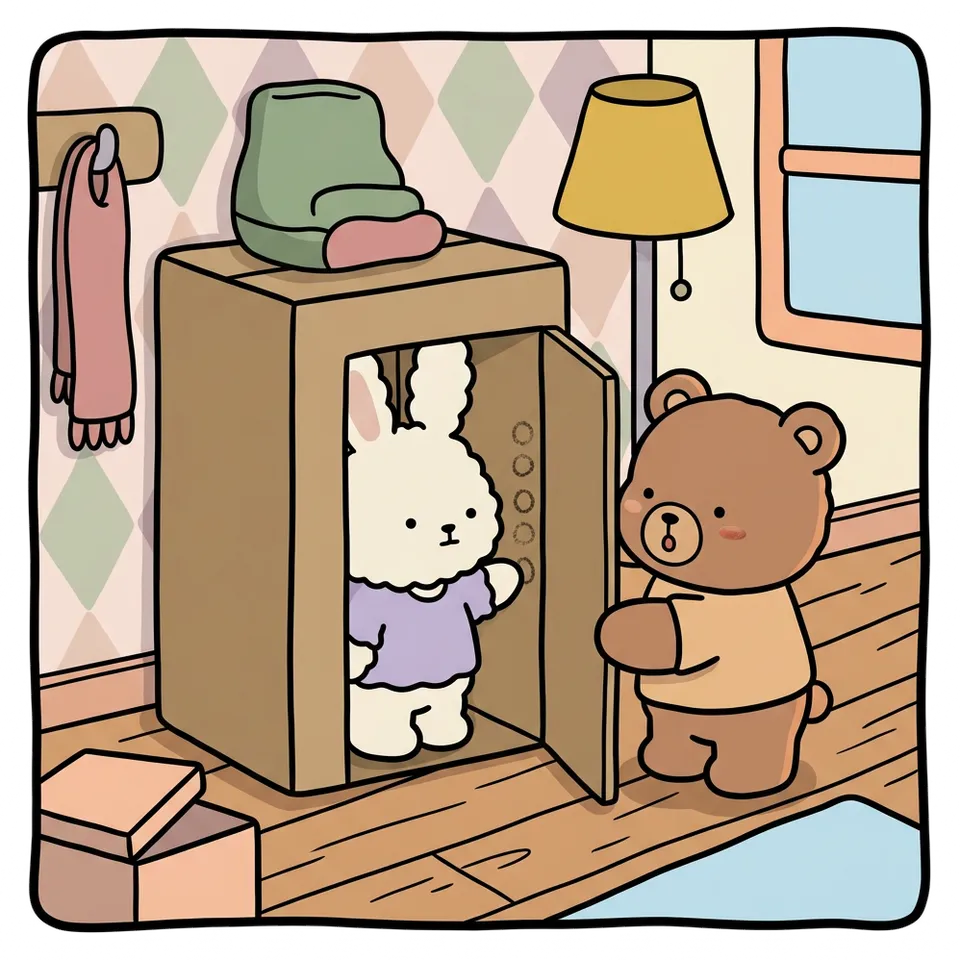
Stand a box on its end and climb inside to ride it like an elevator. Call out the floor numbers and pretend to open and close the doors.
Why it's good
It's play of seeing the same box as a different play just by changing its direction. Laid down it's a car to ride, stood up it's an elevator you go inside and stand in — the child notices that difference by themselves and finds a new use. In answer to the question of how to go up and down a tall building, they sometimes make an answer with a small box.
How to play
I had stood a box upright to tidy up, and the child went inside and said, “Let's ride the elevator.” Then they ask, “What floor are you going to?” When I answer, they say “I'm going to the 8th floor” or “I'm going to the 4th floor” and pretend to open and close the door. All you have to do is stand up the box they were playing with laid down.
A small box works too. A child who was sticking several boxes together into a tall building asked, “It's too high here, how does the butterfly go up?” A friend building with them said, “Then there's an elevator,” brought a roll cake box, opened and closed it, and said, “Ride in this and go up.”
Good to know
- When car play fades, stand the box up. Even the same box, once stood up, looks to the child like a new toy.
- If the question of how to climb up high comes up, put a small box beside them. They open and close it and use it as an elevator.
What you'll need
A box stood upright · A small box
Pulling a Sled
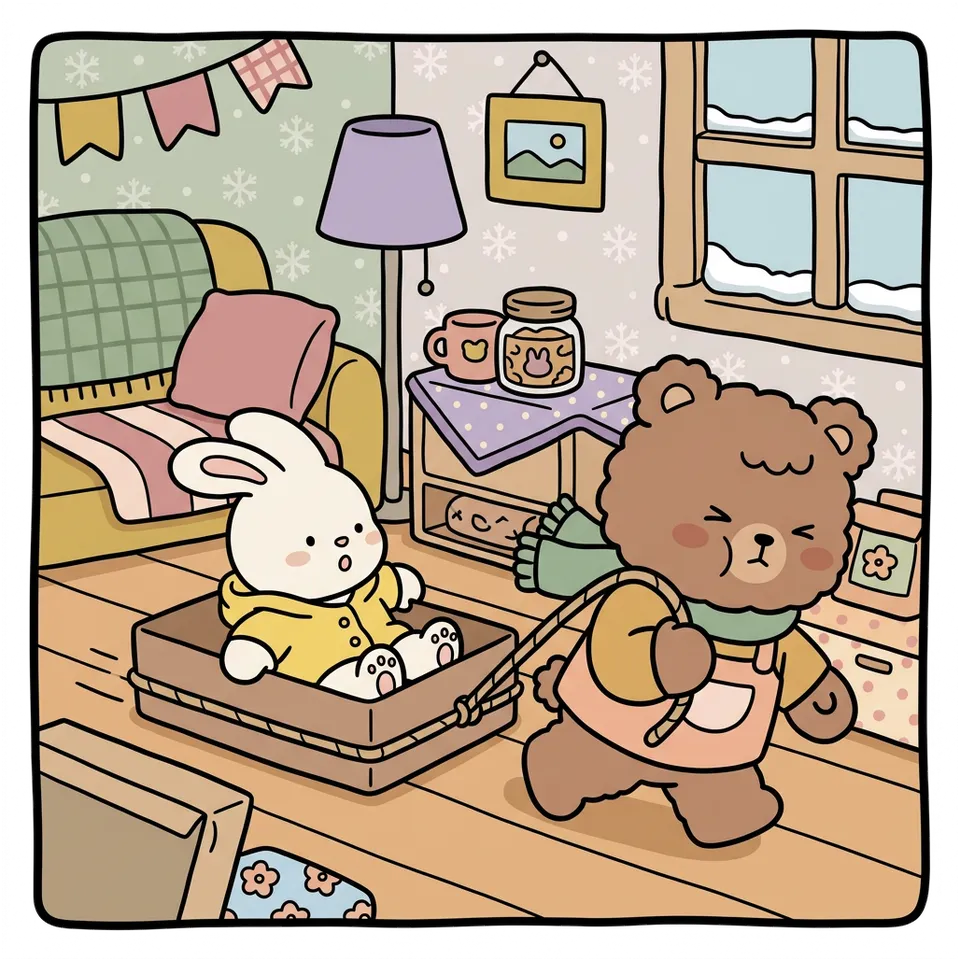
Sit the child on a flat, wide box and pull them along. It glides along the wooden floor.
Why it's good
They use pulling strength and strength together. Once they learn with their body that it's too much to do alone, they look for ways for two to match their strength. Order and rules too, without the adult setting them, the children set by themselves.
How to play
Sit a child on a flat, wide box and pull. A string is good to attach, and if there isn't one, you can hold the front with your hand and pull. It slides well on a wooden floor.
The child riding gets into position quickly. They tell each other, “You have to stretch both legs out.”
They want to be the one pulling. But when they pull a friend, “It's hard” and “It's too heavy” come out right away. Then if you add one more child, the two pull all the way with “Heave-ho~ heave-ho!”
With several siblings or friends, words like “Let's decide the order and pull,” and “Only one person carries the sled and rides” come first. You just follow along. When it snows, it works the same outside. One child who was pulling the box sled around said, “If I do it like this, it feels like coming down on real snow.”
Good to know
- Even adults get tired from pulling for long. If mom and dad pull together or take turns, they can play for a long time.
What you'll need
A flat, wide box · String
Riding a Slide on a Box
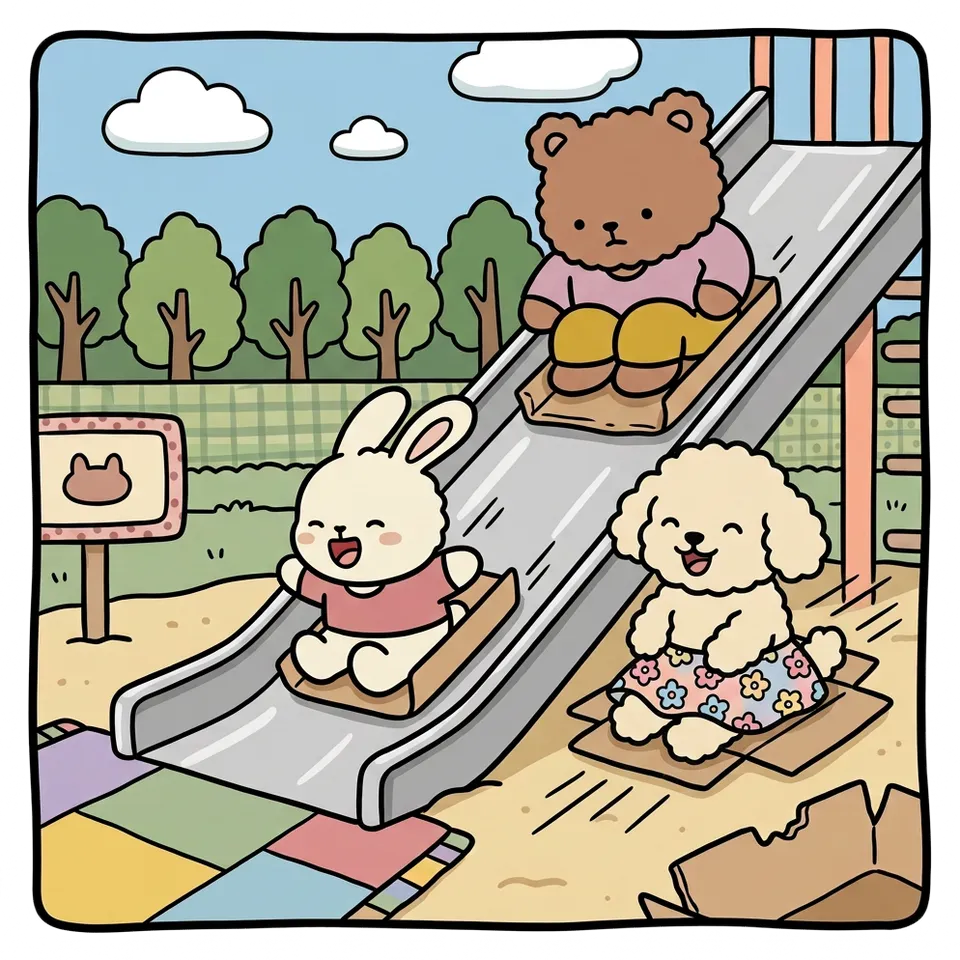
Flatten a box out on the slide, sit on it, and slide down. You go much faster than without the box.
Why it's good
It's play where they look for the cause themselves of why the same conditions give different results. The child thinks about the reason and guesses it's because of body weight, and even after being told it isn't, they don't take the answer right away; they change their clothes or posture and look again.
How to play
If you flatten a box on the slide and sit on it coming down, you slide much faster. After going down many times, the child notices something odd. On the same slide, a friend slides all the way down while they stop partway. They ask, “Why don't I go down fast?” and then give their own answer: “Is it because my friend is heavy?” When I told them they weigh about the same, they sighed, “Oh, but why am I the only one going slow, ugh.”
The friend who went down fast that day was wearing a skirt. The cloth is smoother than pants, that's why. If you give the answer here, the play ends. If you let them sit next to the friend and go down once more, the child looks at the clothes first. Some children change how they sit or lay down one more box.
Good to know
- Boxes tear quickly, so have several ready. If you lay a mat or blanket at the bottom of the slide, they can ride without worry.
- A crushed box is fine too — just flatten it out and lay it down. It doesn't have to be new. Take one more look before throwing it away.
What you'll need
Several boxes · A mat or blanket
Poking Straws into Holes
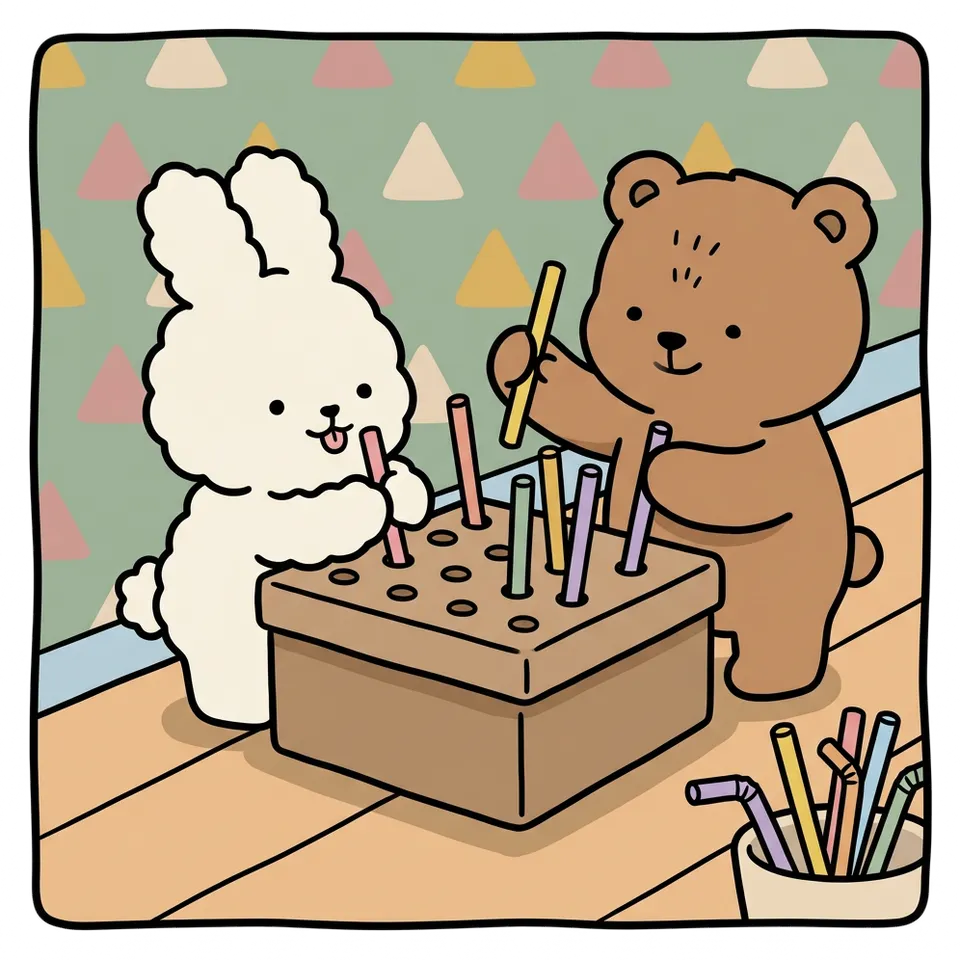
Poke straws into the holes cut in a box lid so they stand up.
Why it's good
They use hand skills, turning the wrist to line up the direction. Without being held, within a few tries they find the angle and where to hold by themselves.
How to play
Make several holes in a box lid and put down a handful of straws. Corrugated cardboard is thick, so you have to poke and twist with the tip of scissors to get through. The adult makes them ahead of time. Make the holes small so the straws aren't loose.
The moment they see the holes, they ask, “There's a hole!” and “Do I put it in here?” It doesn't go in on the first try. The tip of the straw keeps missing past the hole and they say “It won't go…”, but then they turn their wrist to line up the direction. When it slips in, they say “I did it!” and laugh big.
Sometimes the straw catches on the inside of the box. One child said, “It's too long, it won't go,” then changed where they held the straw to the end and put it in again.
Picking colors is play too. They choose one at a time and put it in: “Yellow is pretty!” and “I'll take pink!” After putting them all in, they touch them with their hand and say, “They're standing up tight.”
Good to know
- At first make a few holes a bit bigger. If they get hooked on the fun of it slipping in, they'll keep turning their wrist all the way even with small holes.
- If the straw is short, it falls inside. Use a long straw or pick a lower box.
What you'll need
A box with a lid · Several straws · Scissors
Making a Box House
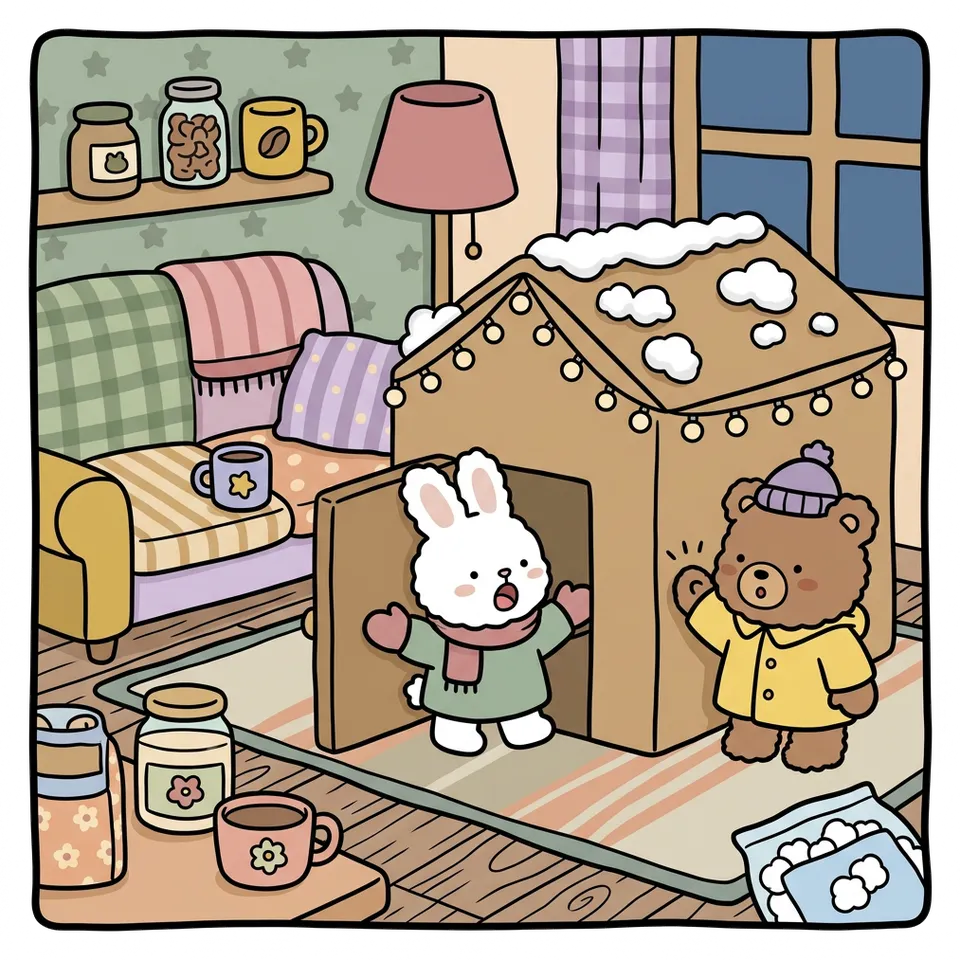
Cut a door in a box as tall as the child and let them play inside. They open and close the door, go in and out, and decorate the inside.
Why it's good
It's play of having a space of your own and going between inside and outside. They like being in there even when it gets dark, and they repeat opening and closing the door again and again. When a friend comes, making room is something they do themselves too.
How to play
Cut one door in a box as tall as the child, and after that the child gives the orders. “Please stick on a handle!” and “It's good to hold here to go in!” they said, so I cut and stuck on a small box, and they just opened and closed it for a long time. The day a refrigerator or appliance box arrives is your chance.
When the door closes, it gets dark inside. They say “It's dark~” but don't come out. When someone outside asks, “Knock knock~ is anyone there?” they fling the door open and say their name: “It's Bori's house~” Then they close it again and hide. They repeat this again and again.
When a friend comes, they make room. They scoot over to let them sit, and the two face each other and laugh.
When I wrapped small string lights around it, they said, “It's like Santa's house!” and sticking on cotton they said, “It's snowing hard~” One child even put their hands and feet against the wall and traced them.
Good to know
- Decorating takes the most time. If you leave plenty to decorate with, like string lights and cotton, it lasts a long time.
- Cut the door ahead of time with scissors or a cutter. A cutter is quicker for a big box. If you cut it while the child isn't around, you can leave the decorating to the child from the start.
What you'll need
A box as tall as the child (a refrigerator or appliance box) · String lights, cotton
Making a Train and Riding It
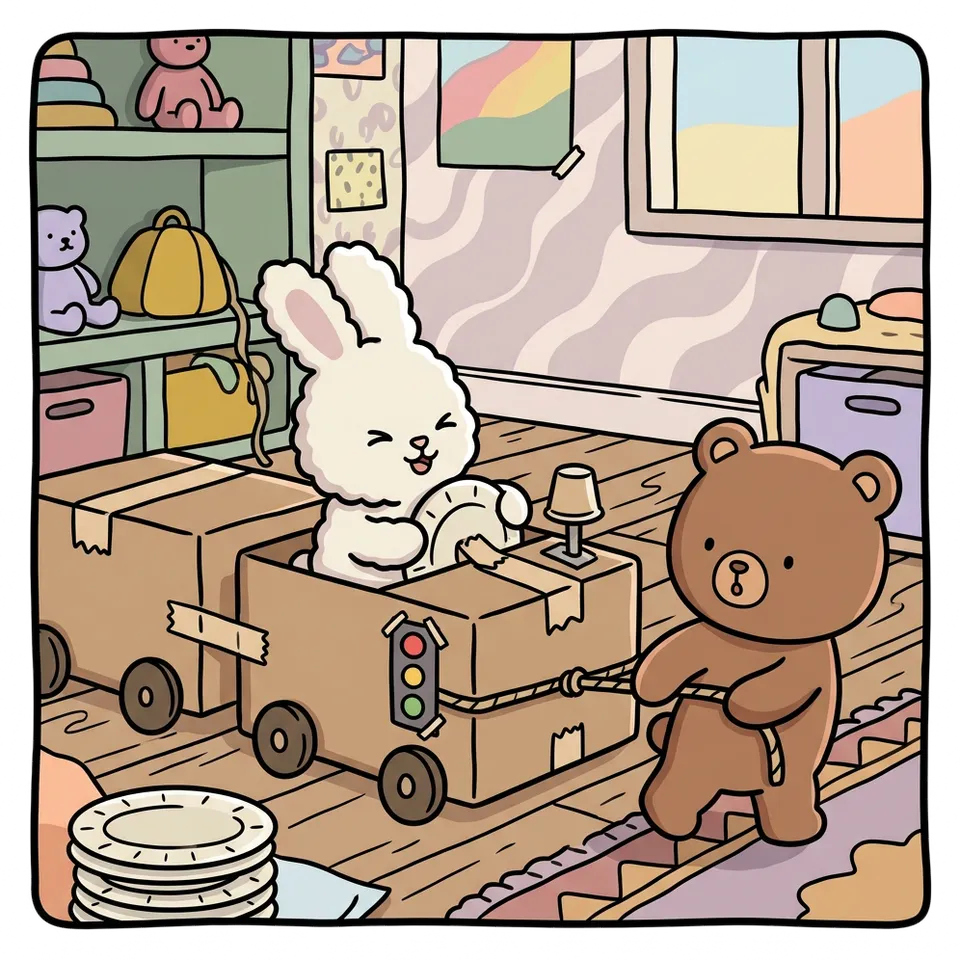
Tape several boxes together into a train with the child riding inside. They fill in the steering wheel, gears, and even the traffic lights themselves to finish it.
Why it's good
It's play of making by finding out what you need on your own. When glue doesn't stick, they switch to tape, and the child is the first to say what's needed, like a steering wheel, gear, or traffic light. When they stick a family photo on the finished train, they sometimes tell what they went through as a story.
Books to read together

How to play
Tape three or four boxes in a line and you have a train. Leave the top open so the child can sit.
They get stuck once at the sticking. A child sticking with glue said, “It doesn't stick well with glue,” and a friend told them, “Stick it with tape!”
Filling the inside is half of the making. They stick on paper plates for a steering wheel, lay paper cups on their side for a gear, and even stand up a traffic light with a straw and an ice cream stick. What's needed, the child says first.
When it's done, they each want to ride. “I want to ride!” they say, go in and sit, and you pull them. “It's fun” comes right out. Soon they start pulling a friend themselves. If you stick a family photo on the side of the train, their own story comes out: “We rode the train and went on a trip.”
Good to know
- Leave what to fill the inside with to the child. Just keep things like paper plates and paper cups nearby, and the child picks what to make with them and sticks it on.
What you'll need
Three or four boxes · Paper plates, paper cups, straws, ice cream sticks · A family photo