Play Ideas with Plastic Bottles
A plastic bottle is something you can fill, pour out, shake, and stand up. Because you can see inside, you can see what you put in moving, and when you poke holes, the water comes out differently. Before throwing them away, just wash two or three.
This page was translated by Yeparksam, a preschool teacher in Korea. Some words may sound a little unusual — thank you for your understanding.
Printables to use
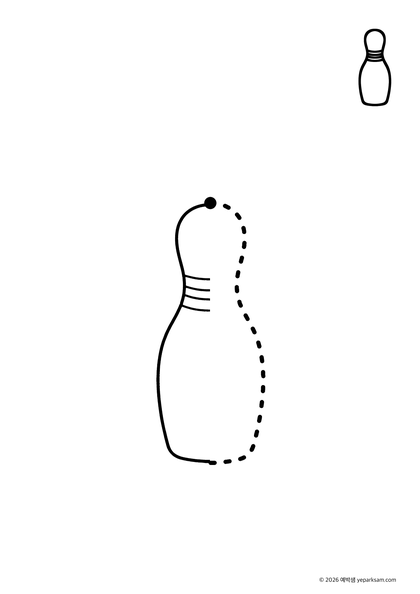
See more ›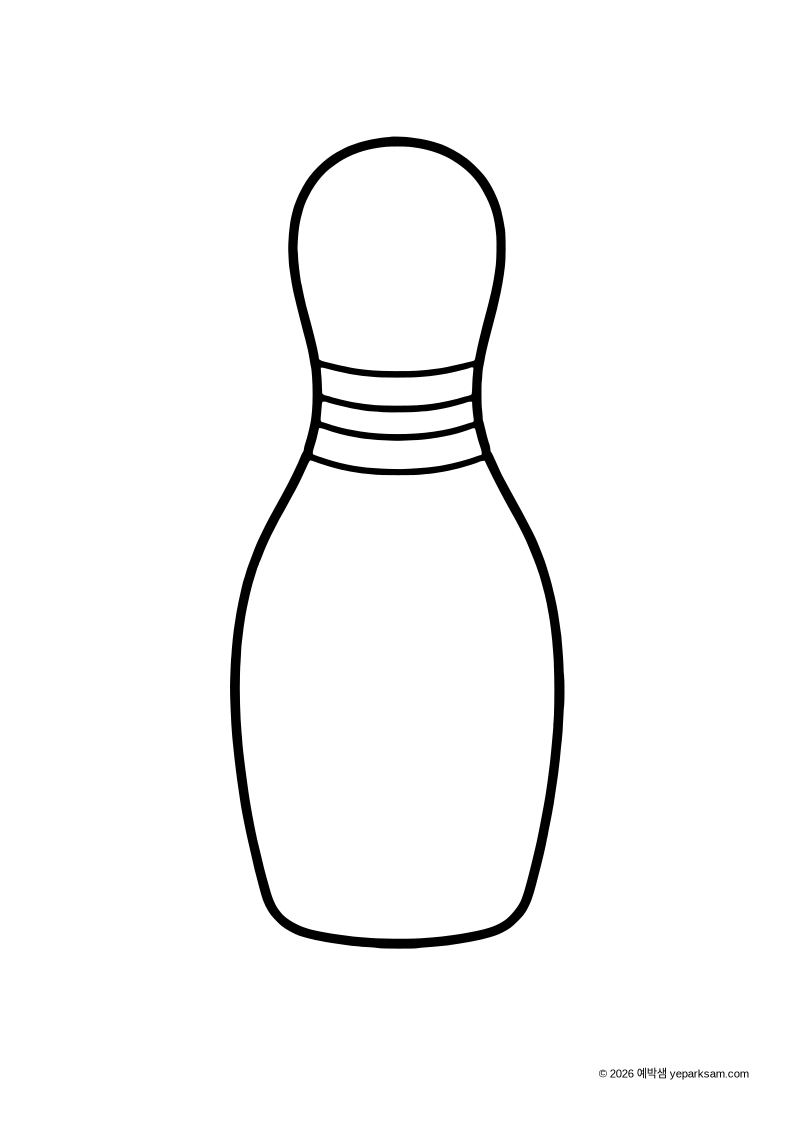
Putting Things in the Opening and Pouring Them Out
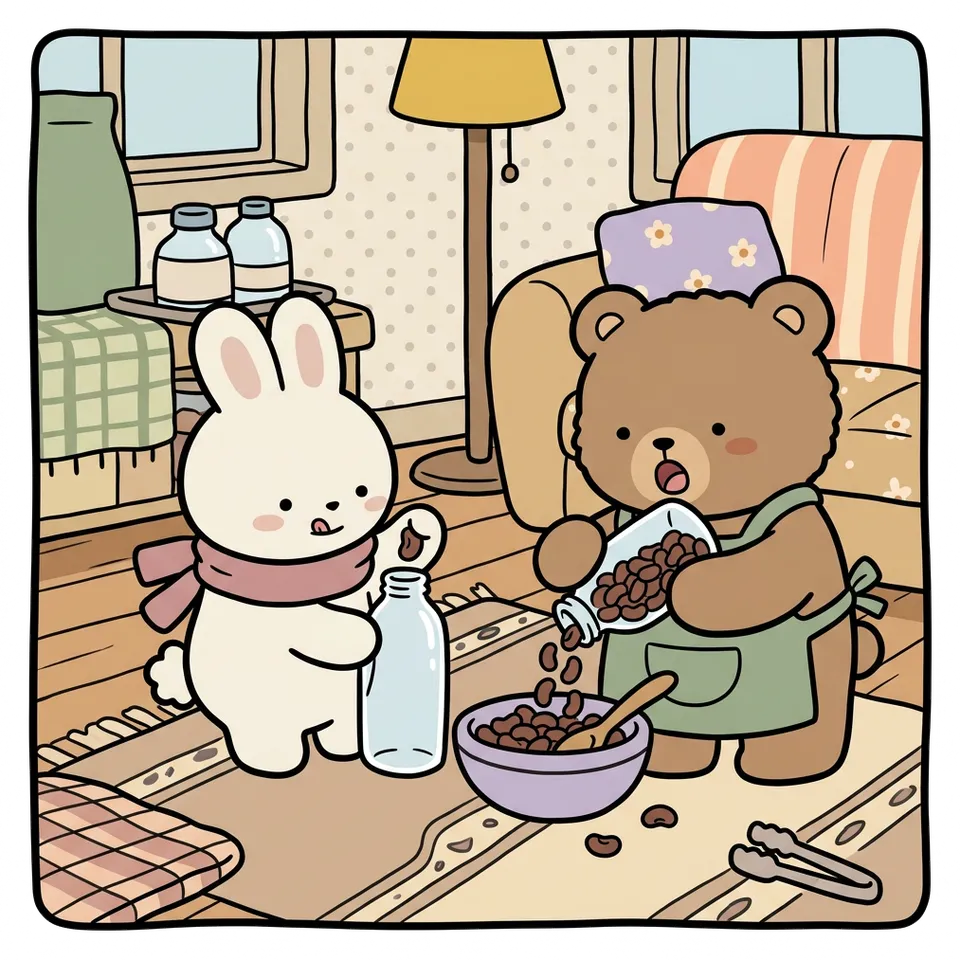
Drop beans or rice into a bottle's opening one at a time, then tip it over to pour them out when it's full.
Why it's good
Picking up beans or rice with the fingertips and putting them into a narrow opening builds finger control. When they do not go in, the child changes the method on their own, and the child also works out on their own that when it is full, the next step is to pour it out.
How to play
When I put out a bowl of beans or rice, the child starts putting them into the bottle opening one at a time. If they do not go in well, the child brings tongs or a spoon. Each time one goes in, they say “It went right in!” and “Let's put in lots!” wanting to add more.
When it is full, pouring out is the next step. They tilt the bottle, “Whoosh~”, pour it out, say “It all came out!”, and start filling again from the beginning.
Good to know
- It has to be a clear bottle so you can see what piles up inside. That way the fun of putting things in lasts longer.
What you'll need
Clear plastic bottle · Beans or rice · Tongs or spoon
Poking Holes to Make Rain
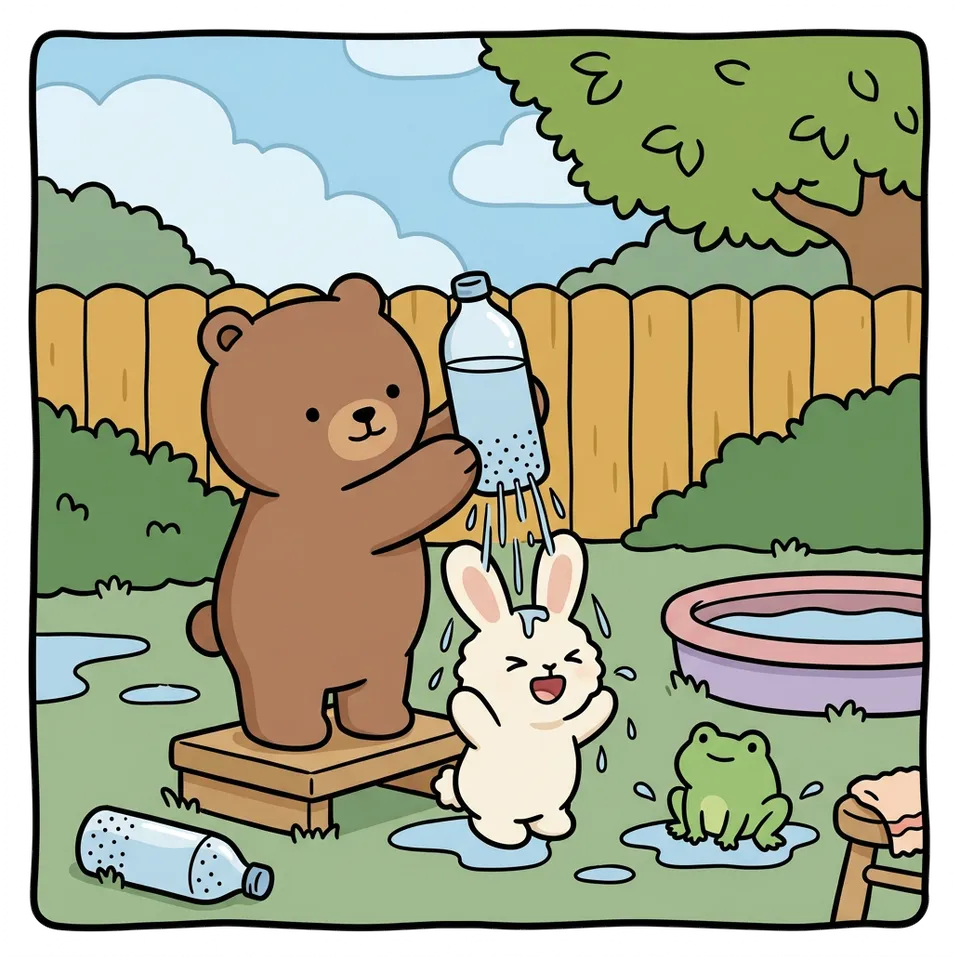
Poke several small holes low on a bottle and fill it with water, and the water streams out in many directions. Stand underneath and play in the falling water.
Why it's good
In this play, the child notices on their own that water falls at different speeds depending on how much there is. By catching it with their hands and shaking it to splash, they learn with their body how water moves, and by opening and closing the cap, they also check on their own how to make a stream and stop it.
How to play
When I hold a water-filled bottle up high, the child goes under it. Catching the falling water in their hands, they say “It's raining.” and “It's coming again.” When they shake it, the water splashes everywhere, and they enjoy that too, saying “Wow, it's flying away.”
When the bottle is filled to the top, the water falls much faster than when it is half full, and when they try both in turn, the child notices first. “It's so fast,” they said, so I told them it is because there is a lot of water inside. When the child asks why it is not coming out, I let them open the cap. They find it so fun to close and open it and watch the stream stop and pour again that they do just that several times.
Good to know
- An adult makes the holes with an awl. The plastic is slippery so scissor tips can hurt your hand, and the punched spots are sharp, so touch them once before handing it over.
- Keep the cap open so the water keeps coming out. Air has to go in where the water leaves, and if it is closed, it does not come out well.
- Clothes will get completely wet. Do it in the bathroom or outside, and take out a change of clothes beforehand.
What you'll need
Plastic bottle (with holes) · Awl · Water · Change of clothes
Putting Things In and Shaking to Hear the Sound
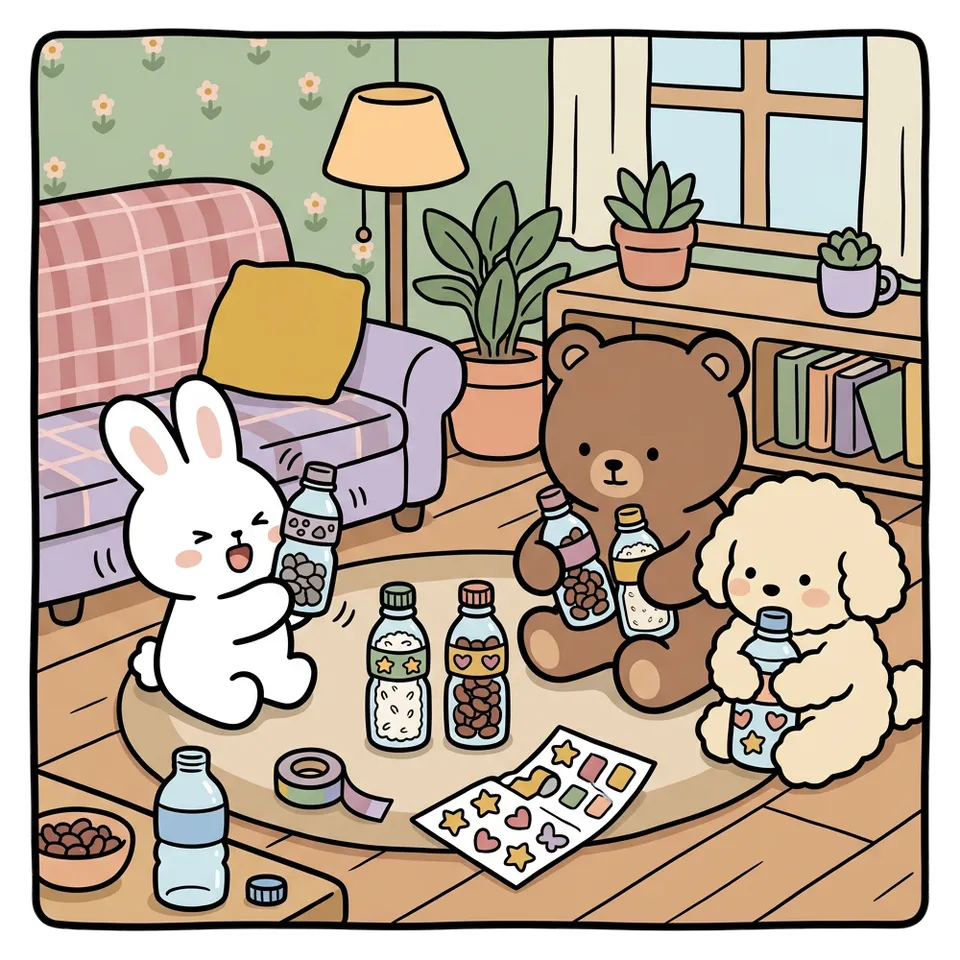
Put a little rice, beans, or small stones in a bottle, close the lid, and shake it to listen to the sound.
Why it's good
The fun of this play is putting the sound they hear into their own words right away. They also learn by comparing directly that the sound differs depending on what is put in.
Books to read together


How to play
Just put in a little rice, beans, or small stones and close the cap tightly. Since it is a clear bottle, you can see everything inside when shaking.
The moment they shake it, they put the sound into words. A child shaking a bottle with stones said “Jingle jingle!” and “It sounds like rain!” A child shaking a bottle with Playcorn was excited, “Shake shake!” and “It makes a sound!”
They name the bottle. After decorating it with colored tape and stickers, they call it “This is my instrument!” and “This is a princess maraca!”
Good to know
- Each thing you put in makes a different sound, so making two or three lasts longer. If you put rice, beans, millet, and barley in each, the child shakes them in turn and picks which one is louder.
- Wrap the cap once with tape. If it comes open while shaking, everything spills, and a small item can go into a child's mouth.
What you'll need
Clear plastic bottles (two or three) · Rice, beans, millet, barley, etc. · Colored tape · Stickers
Standing Them Up and Knocking Them Down
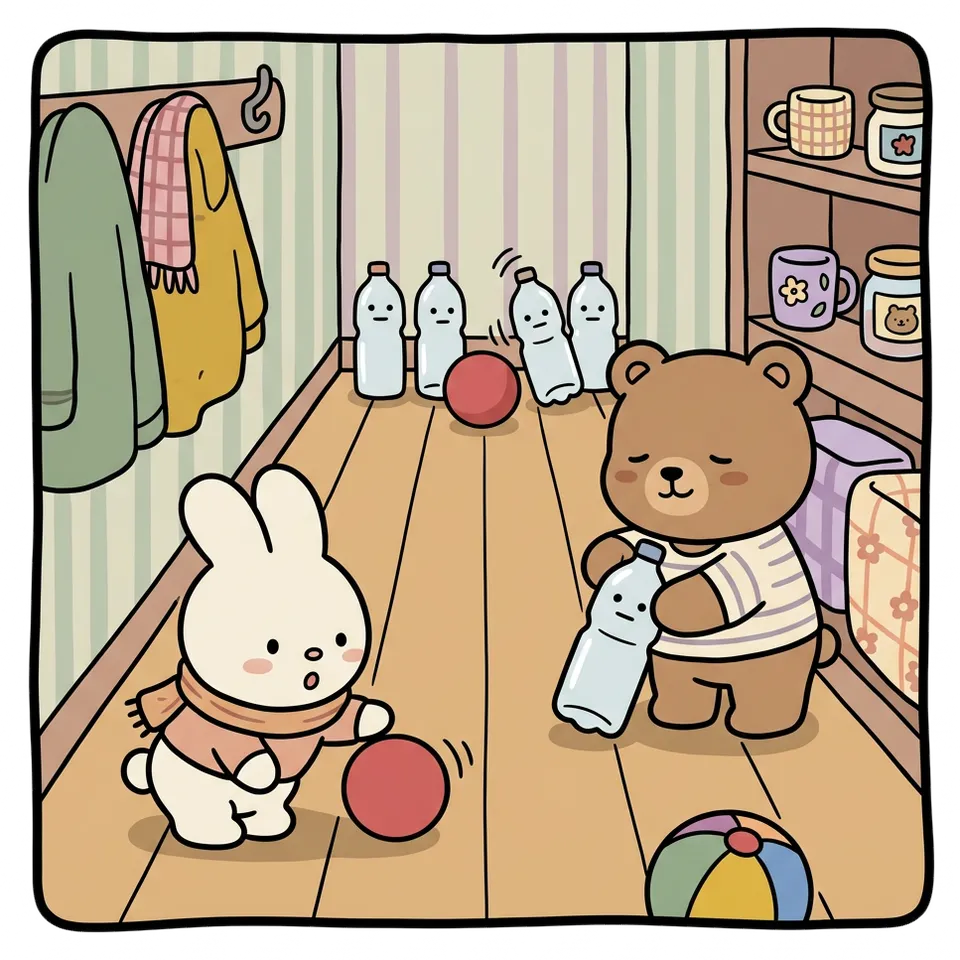
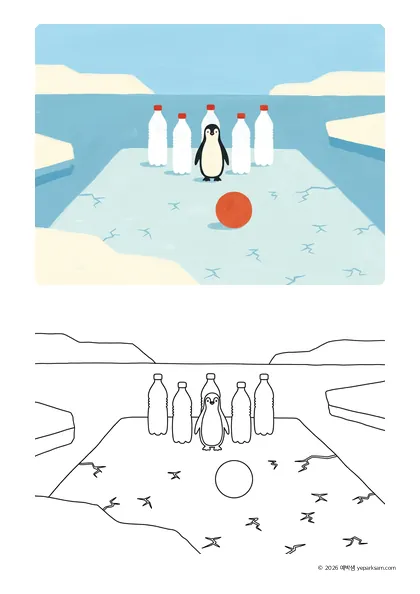
Stand up several empty bottles and roll a ball to knock them down, like bowling.
Why it's good
This play uses the whole body by rolling a ball to knock bottles down, and the children count the fallen bottles one by one. As they match signals before rolling, rules to keep together come up naturally. If they decorate the bottles and give them names, it also leads into a crafting play.
How to play
When I put out a few empty bottles, standing them up becomes the child's job. They line them up saying “This is a bowling alley!” They roll a ball to knock them down. Before rolling, they even agree on a signal: “Ready, go!” and “One, two, three!”
They count how many fell. They are disappointed, “Only nine fell this time!”, and set them up again, and they even set up the ones for siblings or friends playing together, saying “I'll help you!” and “This one is crooked!”
Decorating makes them their own. They wrap colored paper around them, draw eyes and mouths, and name them: “This is a cute pin, its name is Ppoya!” and “Sparkly king pin! The strongest!”
From knocking down, they move on to stacking. When they start lifting bottles up, they stack together saying “I want to play tower too!” and “It went up this high!”
Good to know
- If they fall too easily, put a little water in the bottles to make them heavier.
- When about ten bottles have gathered, the child lines them up on their own. Wash and save them, and take them out for bowling then.
What you'll need
Empty plastic bottles (about ten) · Ball · Colored paper, something to draw eyes and mouths
Arranging Flowers and Watering
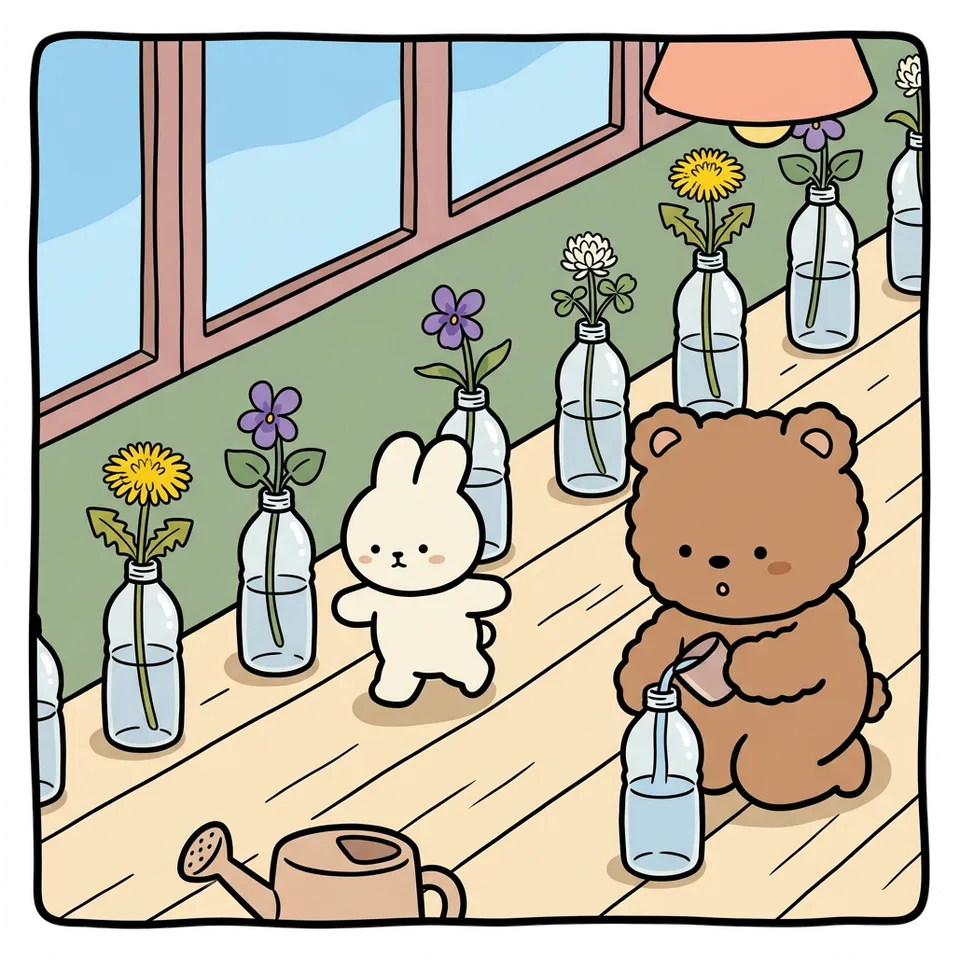
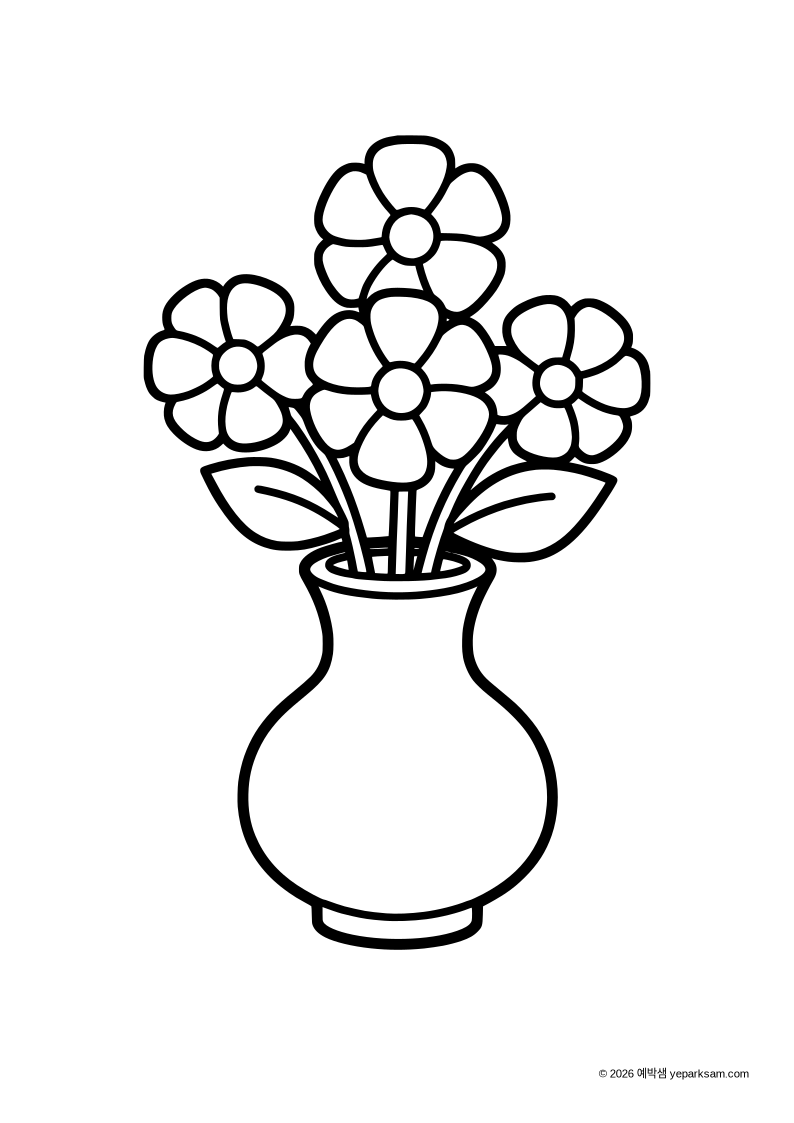
Put flowers you picked on a walk into an empty bottle and give them water.
Why it's good
They copy the caring act of watering flowers just as it is. They also use their sense of balance by walking carefully on tiptoe, and a sharing heart comes out when they hand the flower they arranged to someone.
How to play
When I put flowers picked up on a walk into empty bottles, the child wants to do the watering first. Pouring carefully, they say “Flower, drink water~”
They put one flower in each bottle and line up several. Then the play moves on to walking among them saying “Carefully!” They walk on tiptoe so as not to knock them over, and that is the fun.
They also put flowers in and hand them to a sibling or a visiting friend. They gave one to the friend beside them saying “A present~”
Good to know
- Only if you line up several bottles does the play move on to walking among them. With just one bottle, it ends with watering.
What you'll need
Empty plastic bottles (several) · Flowers · Water
Scooping Sand and Spilling It
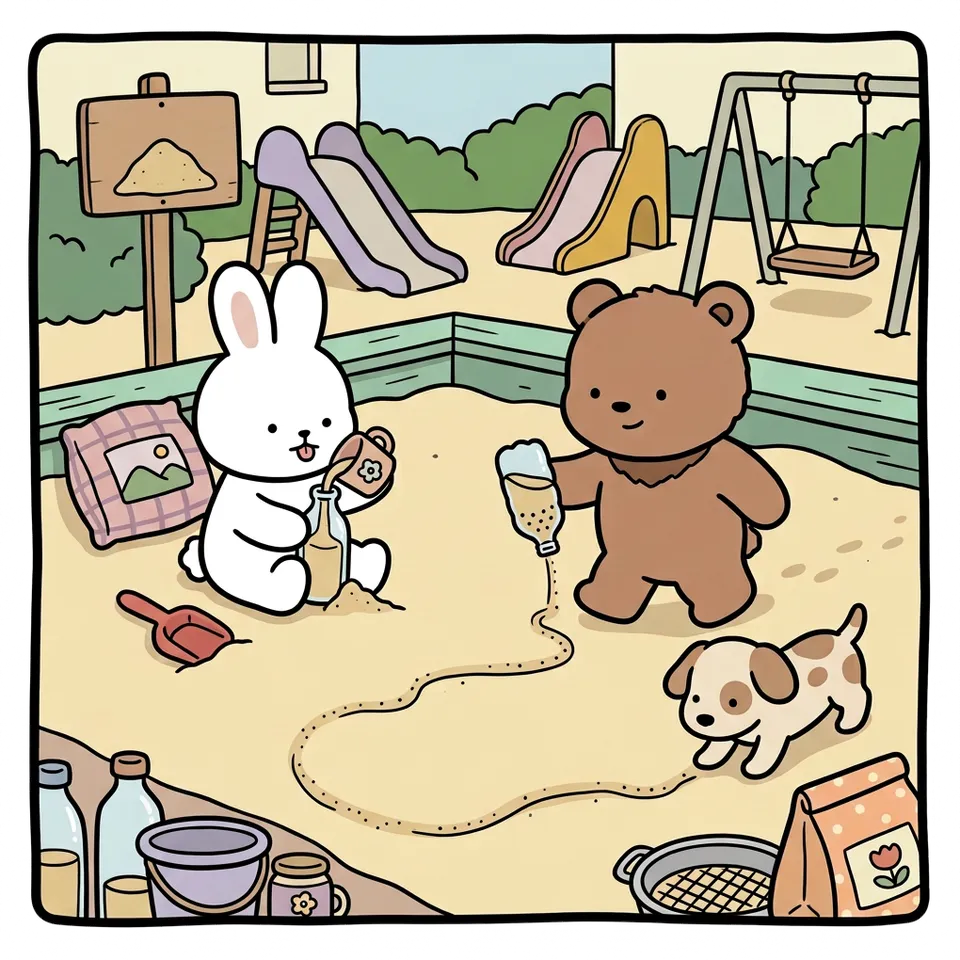
Fill a bottle with holes and a bottle without holes with sand and pour them out.
Why it's good
Because the opening is narrow, they keep spilling, and then they find on their own how to move it with a shovel or cup. Comparing the bottle with holes and the one without, and following the trail of sand that leaks out, is also fun.
How to play
I give both a bottle with holes and one without. In the sandbox, scooping and pouring works just as it is. Even the filling takes time. The opening is narrow so they spill, and then they find a way to move it with a shovel or cup.
When they fill the bottle with holes, sand leaks out as they walk. Following that trail becomes the play. The child separated the two bottles, saying “This one has a hole so sand comes out.”
Good to know
- Wet sand does not come out well. Dry sand pours out smoothly.
What you'll need
Plastic bottles (one with holes and one without) · Sand · Shovel or cup
Making and Selling Juice
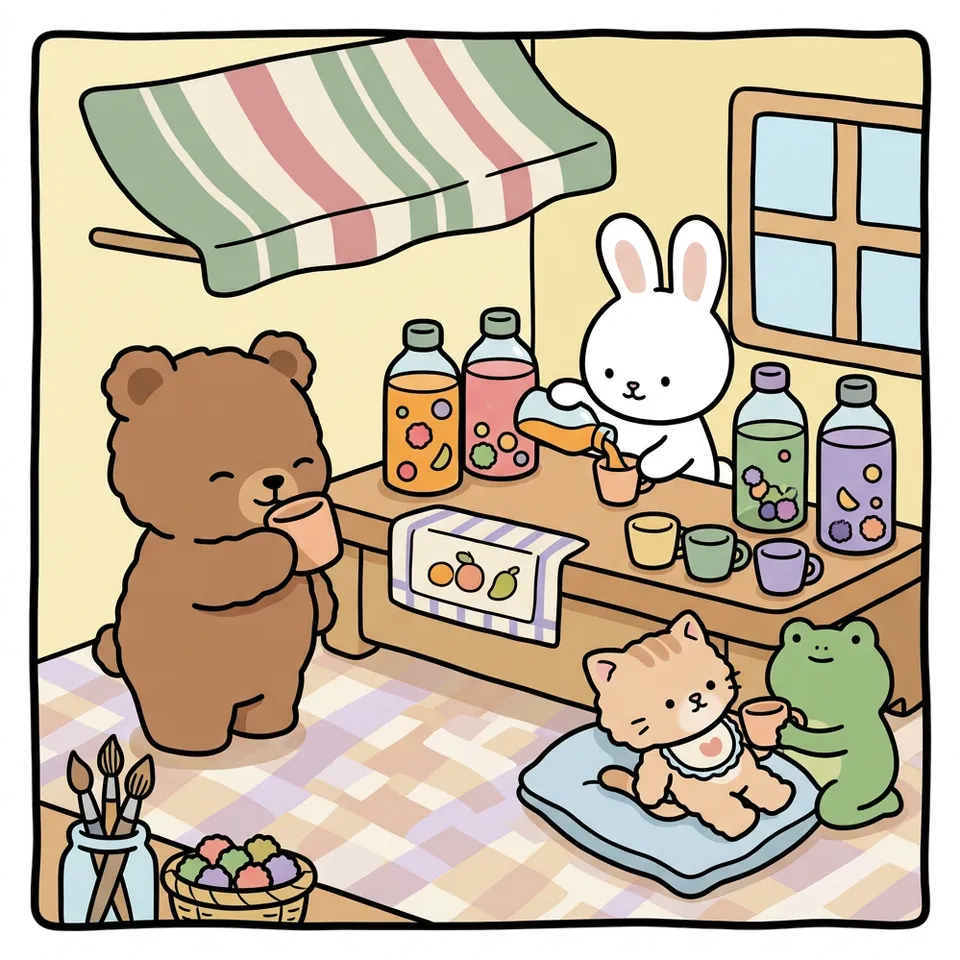
Fill bottles with colored water and play shop, selling it as juice.
Why it's good
They get completely absorbed in the role of selling and buying paint-tinted water like a real drink. They even add flavors on their own, and when it reaches feeding the dolls, it widens into caring behavior too.
How to play
When I put water in a bottle and stir in one drop of paint, the child starts selling it first. If you add pom-poms or beads, it looks like it has fruit in it. When I put play cups beside it, they pour and hand one over, saying “Orange juice, please.” Some come carrying a bottle and say “Here, I made cola!”
Some children try to really drink it. A child asked “What is this?”, and when I said it was a drink, they asked right away, “Can I drink it?” I told them right then that it was paint-tinted water and they could not drink it. After that, they only pretend to drink and add a flavor: “This is orange flavor.”
It goes as far as feeding the dolls. They call the bottle milk, lay a doll down and feed it, and for a sick doll, they call it medicine and feed that.
Good to know
- You have to tell them right then that it is paint-tinted water and cannot be drunk.
What you'll need
Plastic bottle · Paint · Pom-poms or beads · Play cups · Doll