Play Ideas with Balloons
A bag of balloons costs under 1,000 won, and one blown up keeps a child busy for a long while. But before tying it off, try letting go of it once. After they see it zoom away with a pffft sound, they keep asking you to blow up more.
This page was translated by Yeparksam, a preschool teacher in Korea. Some words may sound a little unusual — thank you for your understanding.
Printables to use
See more ›
Keep It Up Without Dropping It
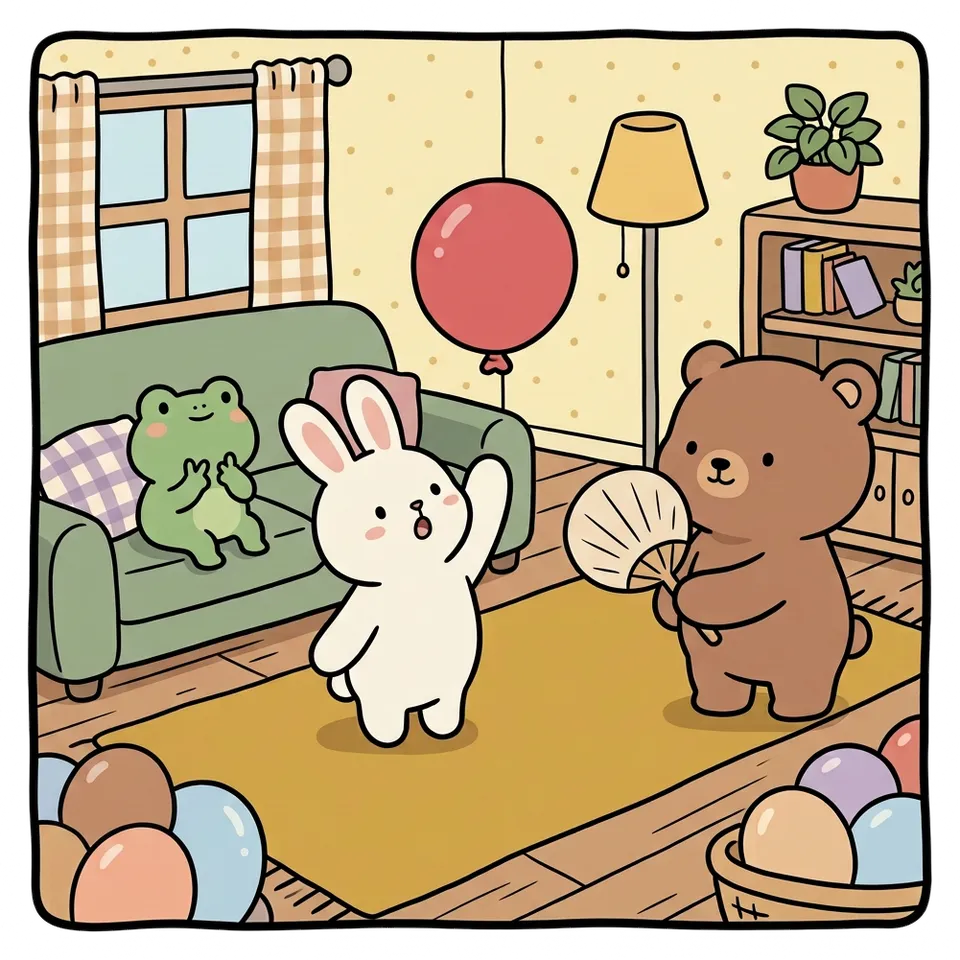
Blow up one balloon and toss it up, and the child bats it back into the air with their hands.
Why it's good
It comes down slowly, so even children who can't catch a ball yet can reach it. If you count how many hits they get, they'll keep going on their own for a good while. Even when they miss, they laugh and run to pick it up. Even the missing becomes part of the play.
How to play
I asked how many they thought they could do, and the child said “Ten?” and then counted “One, two, three” while hitting. They missed at eight, said “Again!” and started right over.
Once their hands get used to it, try it with feet. Some children even catch it with their heads.
They love it even when they miss. Every time it drops they laugh and run to pick it up.
If you hand them something flat like a fly swatter or a fan, it changes again. Hitting gets harder, so they swing and miss a few times, but when they finally connect, they're much happier. If swinging the paddle isn't working, they can always go back to bare hands.
With two children, you can pass it back and forth. They stand facing each other and hit it across, calling “Catch!” and “Here it comes!” If you count together how many times they keep it from dropping, it lasts much longer.
Good to know
- If a child is scared of it popping, blow it up a little less so it's soft. It pops less and floats slowly, so it's easier to hit. They're startled by the sound, so there's nothing wrong with them.
- Pick up popped pieces right away, as soon as you see them. Children put them in their mouths easily, and the pieces are hard to spot.
What you'll need
Balloons · Fly swatter or fan
Roll It and Catch It
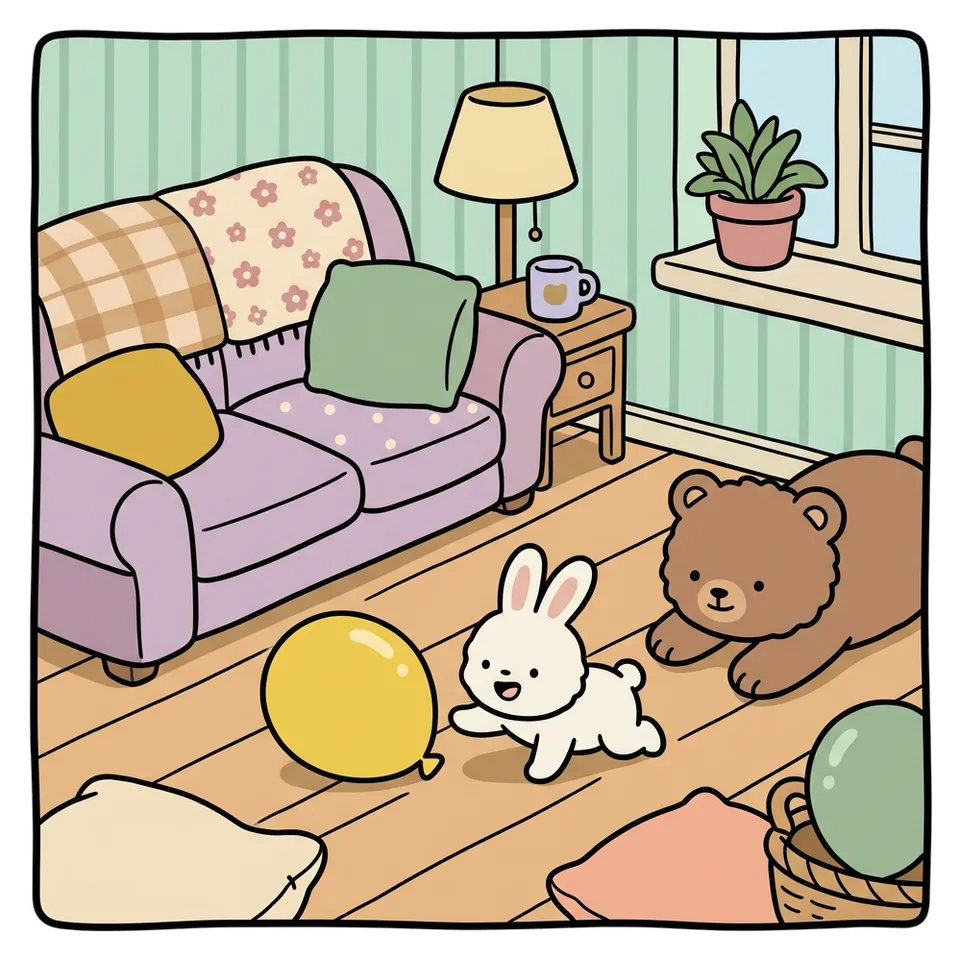
Roll a balloon across the floor and the child chases it down. It doesn't roll away smoothly like a ball. It wobbles along and stops.
Why it's good
This is especially good for children who can't walk yet. A ball rolls away too fast, but a balloon rolls just slowly enough to be within reach, so children get the pride of chasing it and catching it by their own effort.
How to play
When they try to grab it, it slips away as if running off. The moment a hand touches it, it gets pushed to the other side. Seeing that, some children say “The balloon is running away”, and others, finding the rolling shape funny, say “It's like a car.” They crawl to catch it, and if they miss, they crawl after it again.
If you play outside on a windy day, it rolls around on its own and the child keeps chasing it.
What you'll need
Balloons
Let Go and Let It Fly
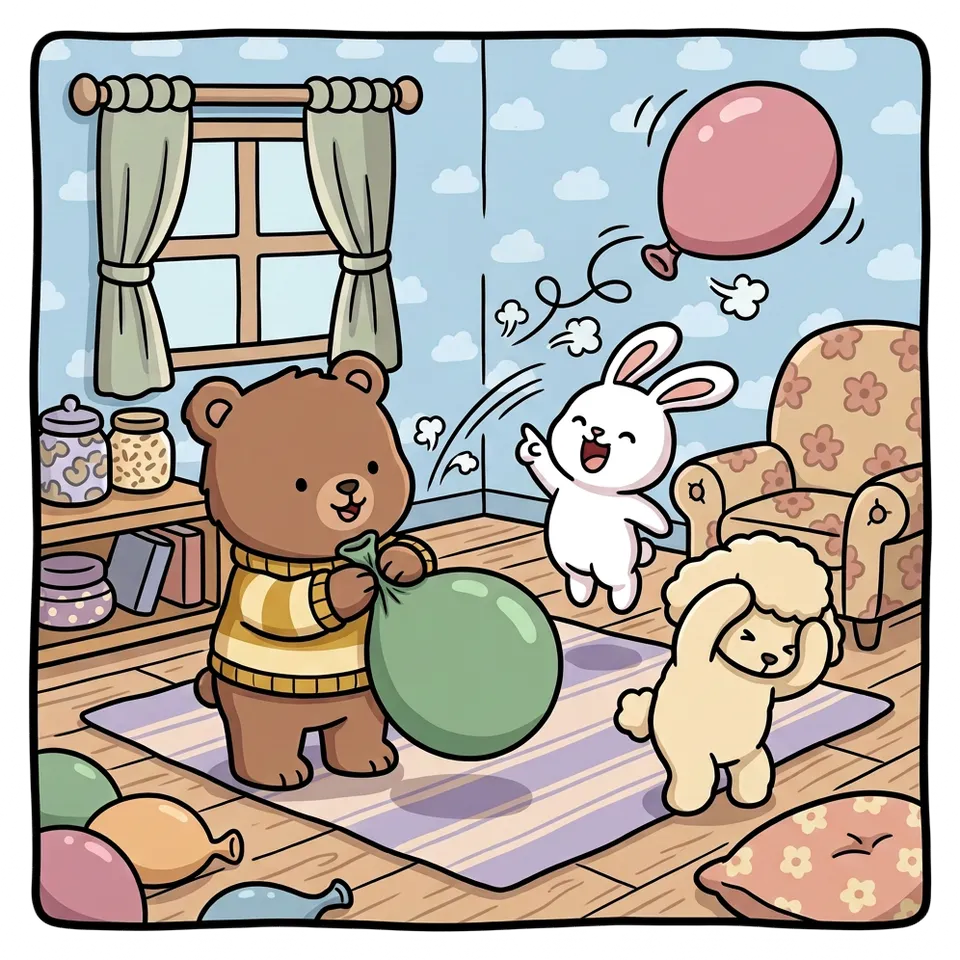
Hold the opening of an untied balloon, then let go, and it zooms off in every direction with a whooshing sound.
Why it's good
Not knowing where it will fly is the fun. Everyone turns their head to chase it, and the squeal from the opening just before you let go adds even more anticipation.
How to play
The first time, the child screams. If you hold the opening loosely, it makes a squeal before you let go, and the child enjoys it even more when they hear that. One child bragged, “My balloon rocket plays the flute,” and when they heard the sound as it flew, they laughed and said “My rocket farts.”
The child goes to find the balloon that flew away. If it goes under the sofa or behind the curtain, you look for it together. You can also blow up several and set them on a cloth, then each hold two corners and lift it together, and the balloons float up all at once.
Good to know
- Putting in a little air and launching many times is better than blowing up one big one. A big one flies hard and bumps into things, and the child's turn doesn't come around quickly either.
- Blowing up is the adult's job. If a child blows, they run out of strength and it doesn't get big, and sometimes they even suck the balloon into their mouth. The pop startles them, so don't blow up a balloon close to a child's face.
What you'll need
Balloons · Cloth
Rub It on Your Head
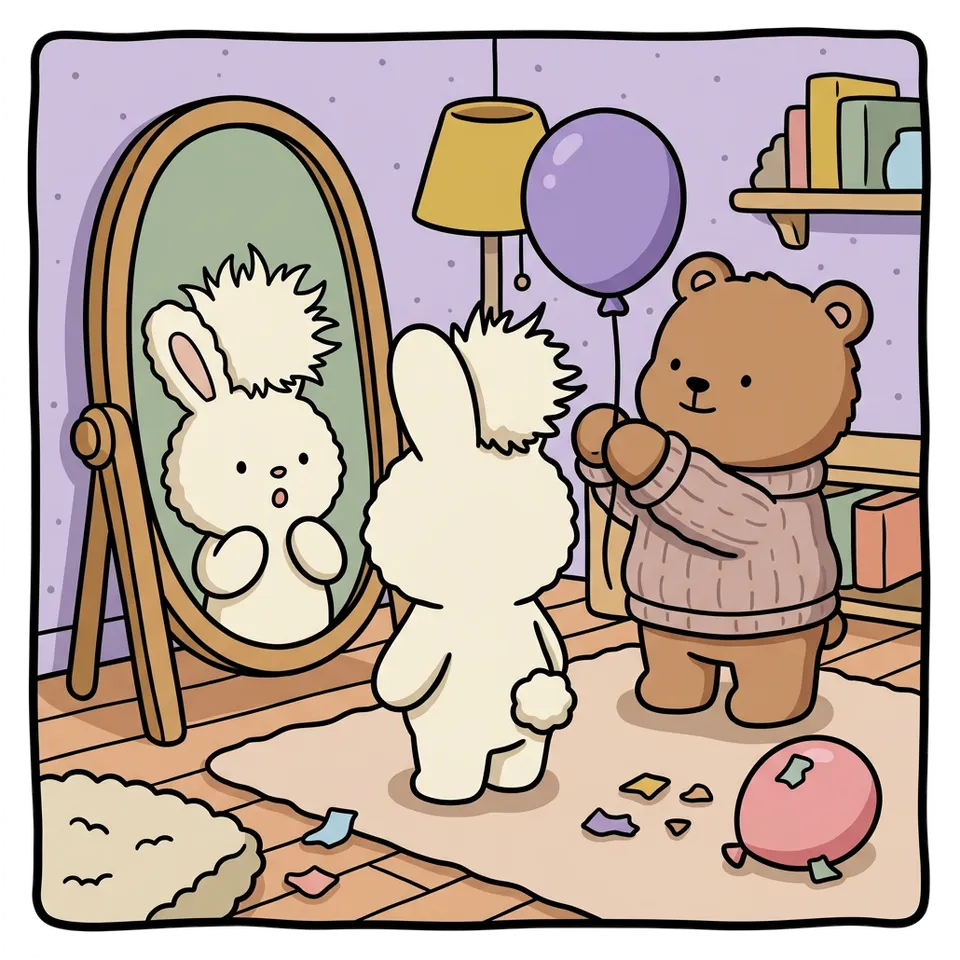
Rub a balloon on the child's head about ten times, then slowly pull it away, and their hair floats up after it. This is static electricity play.
Why it's good
They see static electricity, which you can't normally see, directly through their hair rising. If you tell them the name, they sometimes use it right away.
How to play
Once you show them a mirror, they take over and do it themselves. One child bragged, “This is static electricity, you know. My hair stuck to the balloon so much, right?” When the child next to them misheard and said “A stethoscope?” they said clearly, “No, sta-tic e-lec-tri-ci-ty.”
Children notice the wall first. When the balloon they were batting around sticks to the wall and won't fall, that's when the rub-and-stick play begins. It sticks to doors and the refrigerator too. They watch until it falls, then rub again.
If you set out tiny pieces of cut-up colored paper, the play goes one step further. When you bring the rubbed balloon over the paper pieces, they cling to it. A child watching them stick said “It's like hair,” so I drew a face on the balloon, and the paper pieces became its hair just like that. They choose the colors and stick them on, so the hair color is the child's choice too.
Good to know
- The finer a child's hair, the better it sticks.
- It doesn't work well on rainy days. When the air is damp, static doesn't build up. If it won't work, you can also try rubbing it on a sleeve.
- Rubbing on wool works best. A wool sweater or knit does it, but clothes washed with fabric softener work poorly. The softener is something that gets rid of static, so that's why.
What you'll need
Balloons · Colored paper
Draw a Face and Go for a Walk
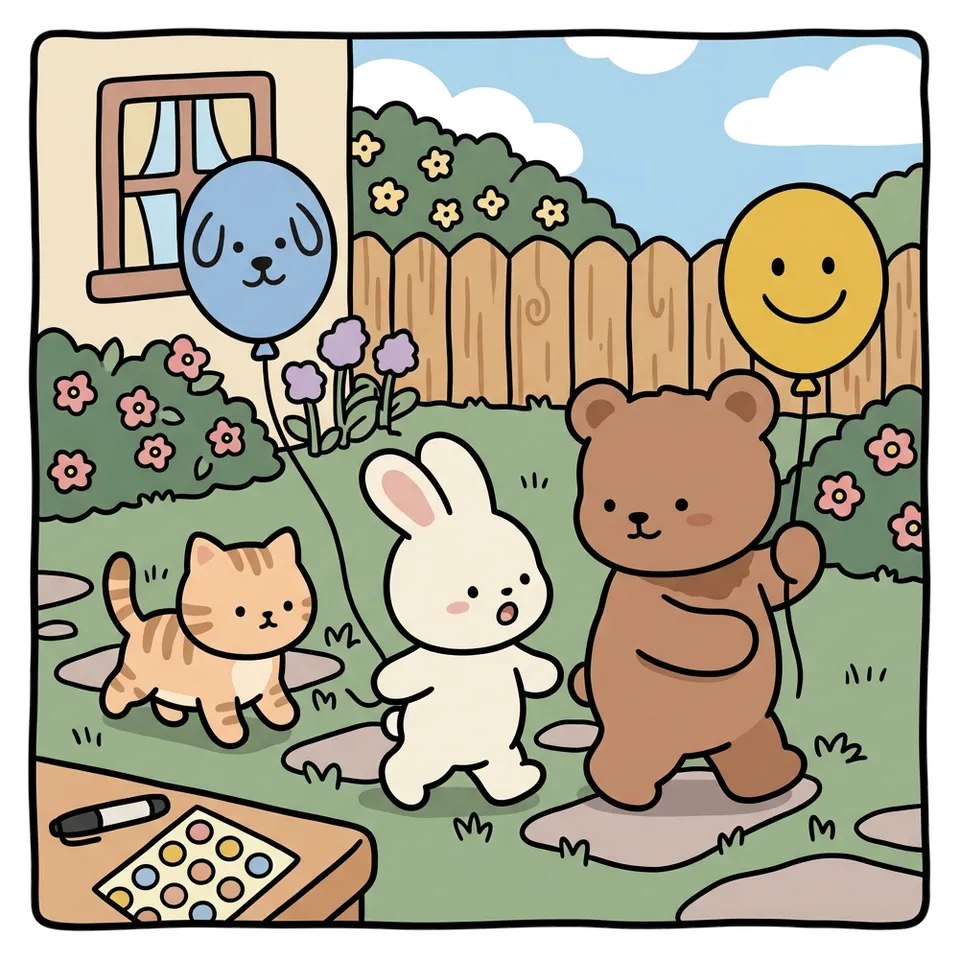
Draw two eyes and a mouth on a balloon with a marker, and the child carries it around, hugging it as their very own.
Why it's good
Just two eyes drawn with a marker, and from then on that balloon belongs to the child. If you draw an animal and attach a string, they take it for walks and even make up stories on their own.
Books to read together


How to play
While you're drawing, they watch beside you, and when it's done, they take it. One child drew a face on their own balloon and said “This is me.” Another stuck on stickers and said “It's a sparkly balloon.”
If you draw an animal, the walk begins. Once you attach a string, they drag it around and talk to it: “Woof woof~ let's go for a walk.”, “Kitty, follow me.” If you ask where they're walking to, the story goes one step further.
Good to know
- A blown-up balloon slowly shrinks if you leave it. In a warm place it deflates faster, so if a child is sad to see it shriveled, blow up a new one then and draw the face again.
What you'll need
Balloons · Markers · Stickers · String
Tie It On as a Tail
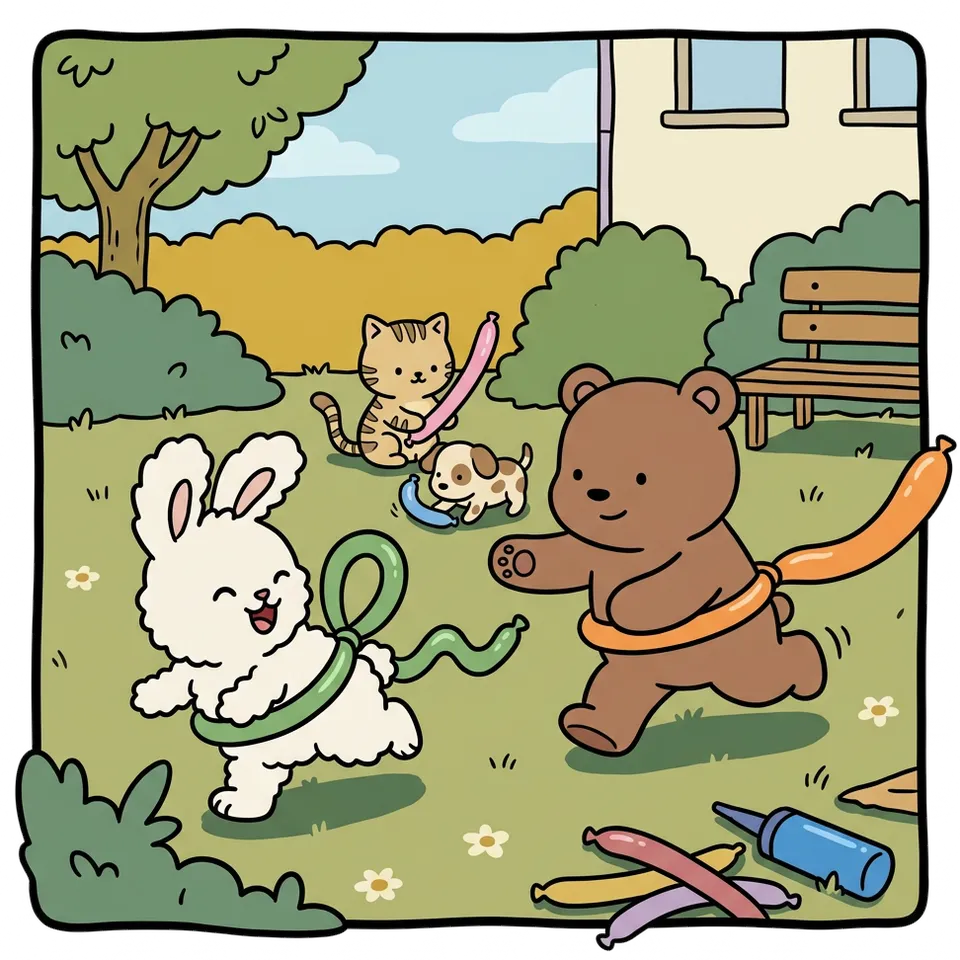
Tie a long stick balloon into a ring and tuck it into the child's waistband, and it becomes a tail. You can also tie a string onto a regular balloon.
Why it's good
Once they have a tail, the way they run changes. They run while looking back, and they change direction on purpose to see the tail swing.
How to play
The moment I tucked it in, the child said “Heh,” laughed, and ran around just like that. When one gets a tail, everyone wants one. They line up saying “I want one too, like Bori!” Sometimes it turns into a game of chasing each other's tails.
Good to know
- If you blow up a stick balloon a little less so it's soft, it's easy to tuck in at the waist and it pops less. It's thin, so if it's blown up tight it pops when stepped on.
What you'll need
Stick balloons · String
Hang It from the Ceiling
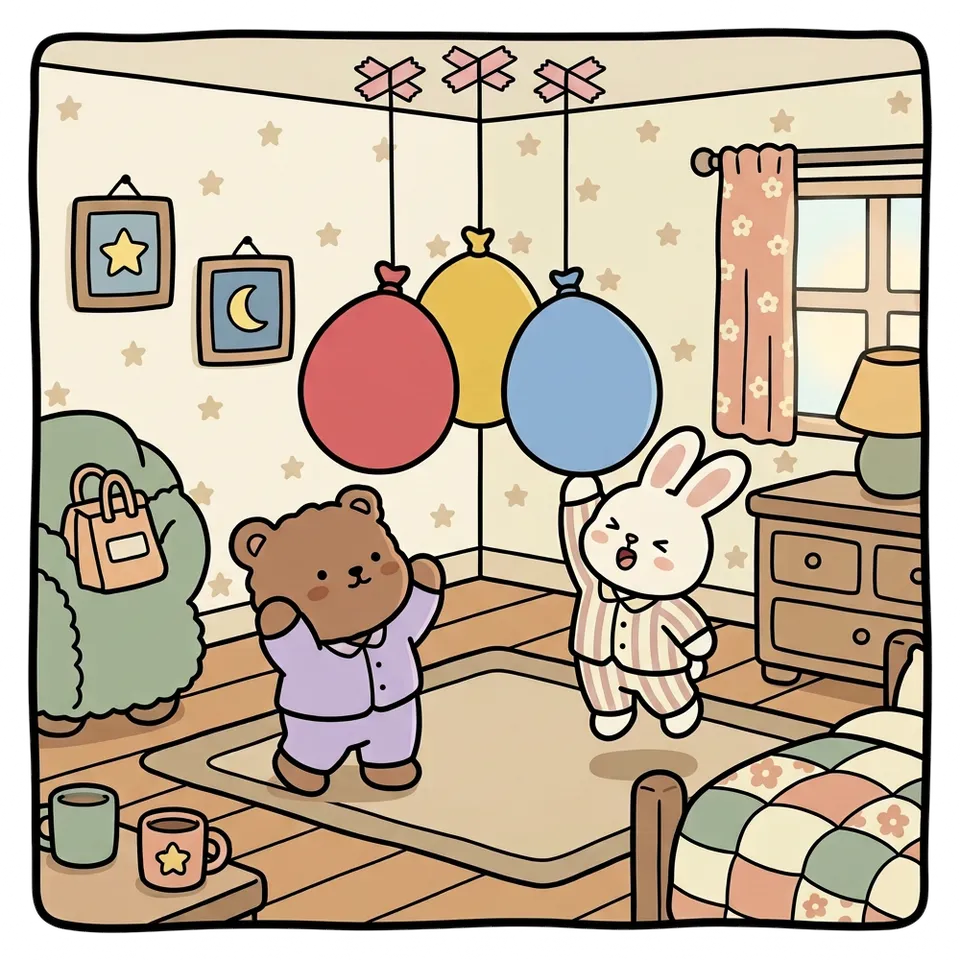
Tie on a long string and hang the balloon from the ceiling or a door frame, and the child reaches up to hit it.
Why it's good
A height that's almost but not quite within reach is the whole point of this play. If you hang it where they can just barely touch it by stretching, children keep trying and jumping to touch it.
How to play
When they wake up in the morning and see the hanging balloon, they ask first, “Why is it in the sky?” Then they jump to touch it. They jump and hit it, watch it swing, and when it stops, they hit it again.
If you draw a dinosaur or a character on it, a story gets attached. They crowd around saying “It's a dinosaur!”, “Let's go catch it together!”
Good to know
- The right height is one the child can just barely reach by stretching. Too low and they lose interest quickly, too high and they give up. If they lose interest, raise or lower it a little and start again.
What you'll need
Balloons · String
Add Water and Feel the Weight
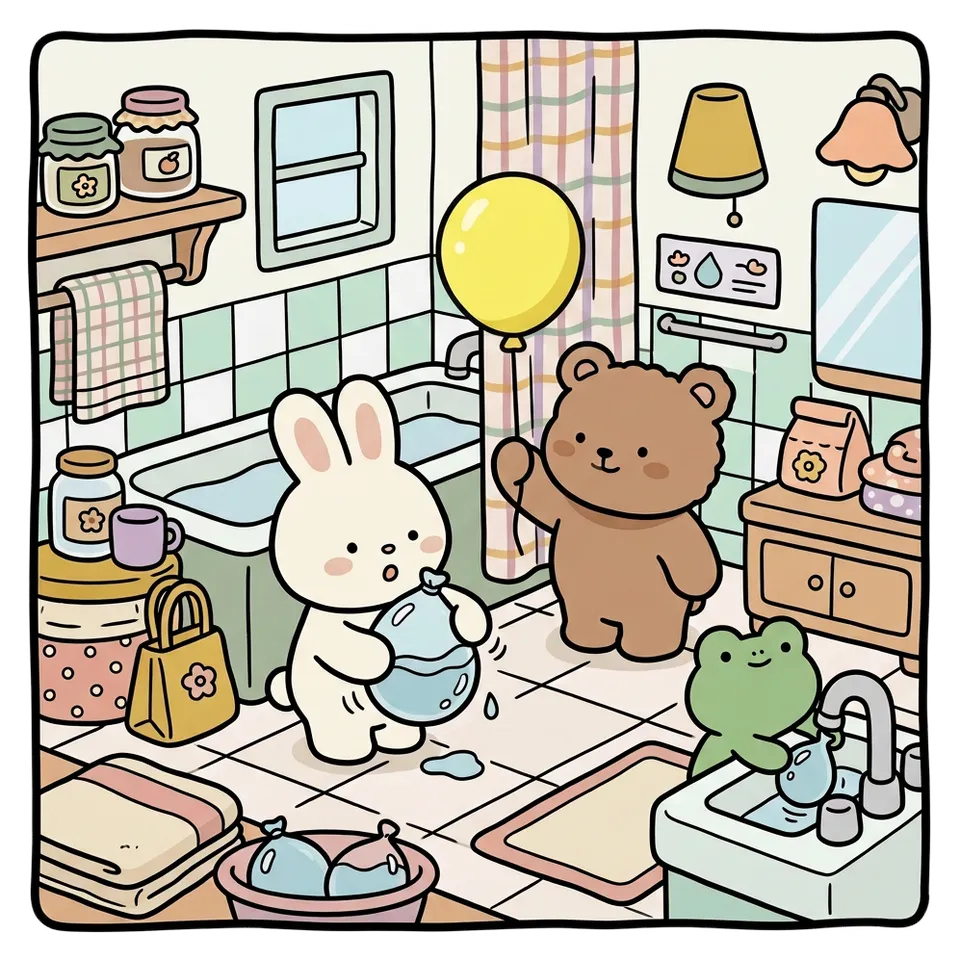
Get two balloons, put air in one and a little water in the other, and feel how different the weight and the touch are.
Why it's good
Even though they're the same balloon, children find out for themselves by lifting and pressing that what's inside changes the weight and the feel. They notice it on their own and put it into words just like that.
How to play
When you set the two side by side and let them lift them, the child says it right away. “The water balloon is heavy.”, “The air balloon is light.” The one with water settles snugly into the hand and changes shape when you press it. A child who was pressing it said “There's something inside,” so I told them it's air.
The difference is bigger when you throw them. The air balloon floats up slowly, but the water balloon drops with a thud.
After I filled one and played something else, then took it out again, it had gotten smaller. A child who saw that came up with their own answer: “It's summer, so it's hot, that's why.”
Good to know
- Put in only about a quarter of the balloon's size in water. If you fit the opening onto a faucet, it goes in easily.
- Don't make water balloons ahead of time. Fill them right before playing. The rubber is thin, so water slowly seeps out through the knot and the surface, and a filled balloon shrinks in the meantime.
- If you made them ahead, keep them somewhere shady and cool. If left out in the sun for long, they can burst by themselves.
- It's best to play with water balloons in the bathroom or outside. When they burst, water spills everywhere.
What you'll need
Balloons
Catch Air in a Bag
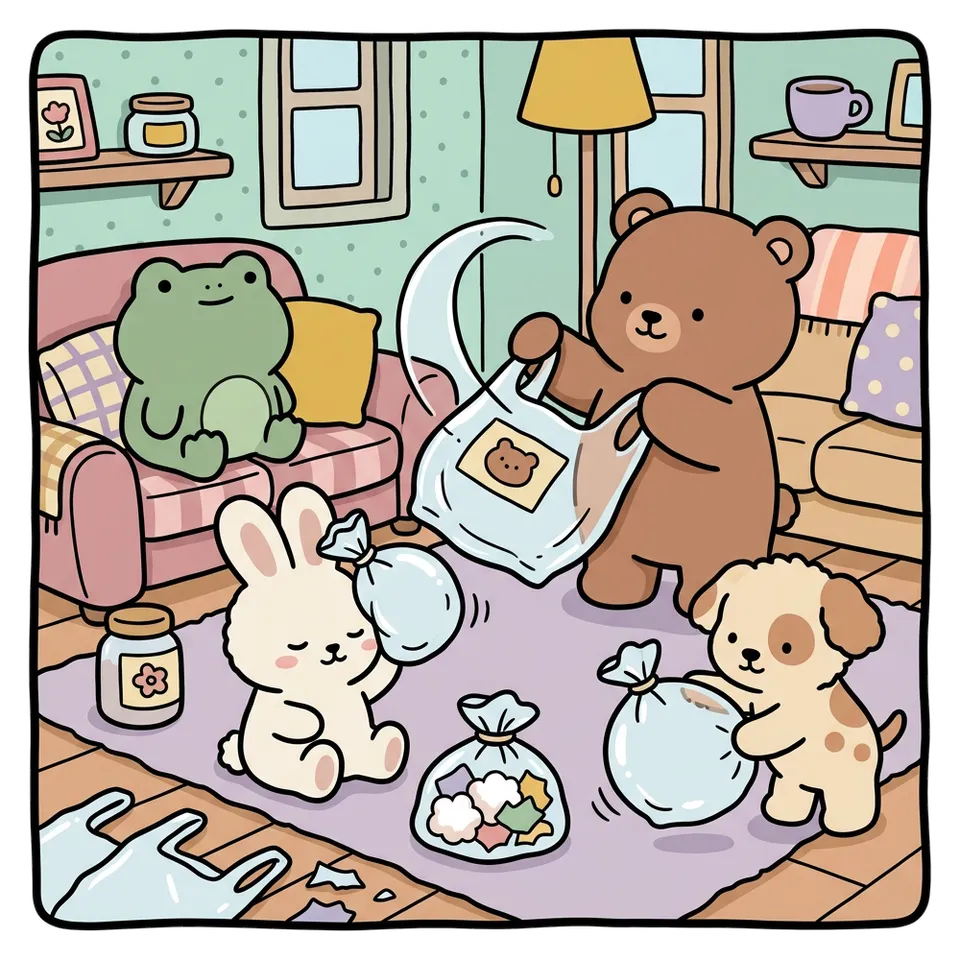
Open up a plastic bag, catch some air in it, and tie the opening, and it turns into a balloon. You can use this when you have no balloons.
Why it's good
Opening the bag and catching air yourself is the play. Children also figure out on their own, after a few tries, that if you open the bag wide and swing it, the air goes in by itself.
How to play
If you show them how it's made, the child copies you. They hold up the bag and blow “Whoo~”, but the opening is wide and it doesn't fill. Once I opened it wide and swung it once, from then on they catch air that way.
A bag balloon sounds different from the start. When I asked a child who was holding it to their ear what sound it made, they tilted their head, so I told them it makes a rustling sound. From then on they kept it at their ear.
You can also put in cotton or finely cut paper and tie it. When you bat it, the sound and weight change again.
Good to know
- Watch from beside them so it doesn't get put over a face. A bag balloon rarely pops and costs nothing, but this is the thing you need to look out for.
What you'll need
Plastic bag · Cotton or paper