Play Ideas with Ants
Blocks can be knocked down and potatoes can be eaten, but ants can be neither. And you can't keep them. So children look at an ant and let it go, set out food for it, and turn toward building it a house.
This page was translated by Yeparksam, a preschool teacher in Korea. Some words may sound a little unusual — thank you for your understanding.
Printables to use
See more ›
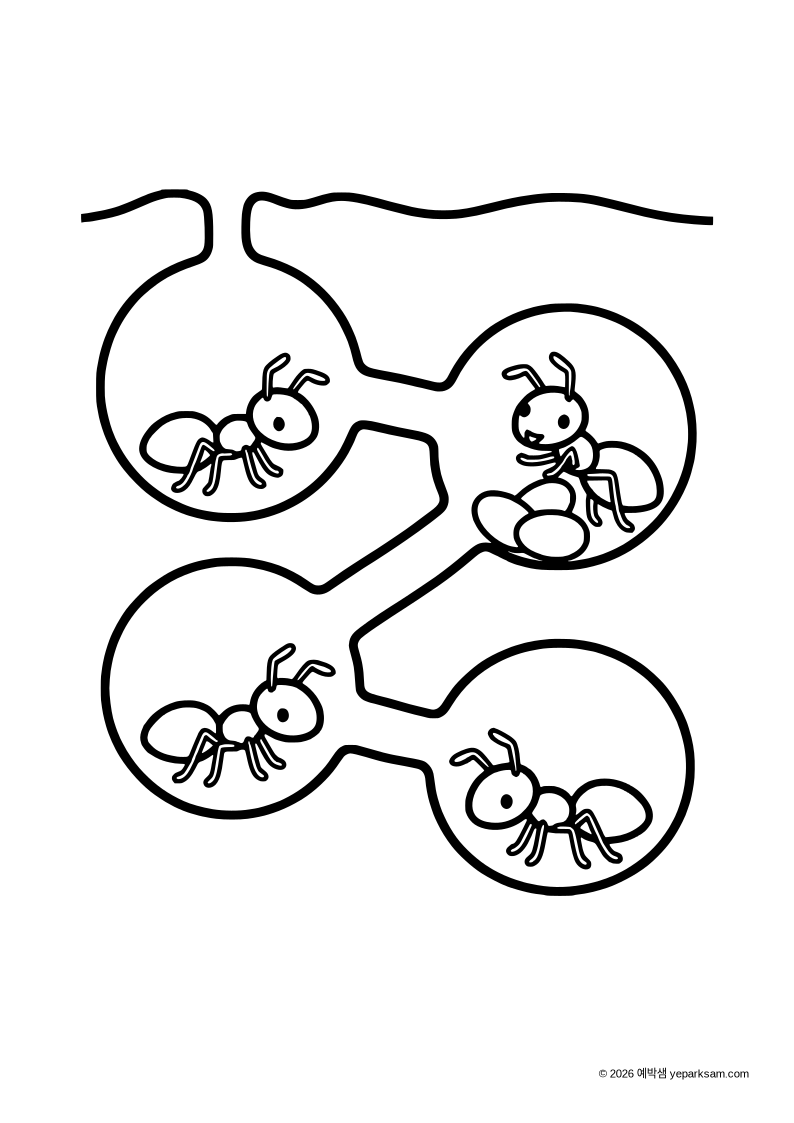
Finding and Following
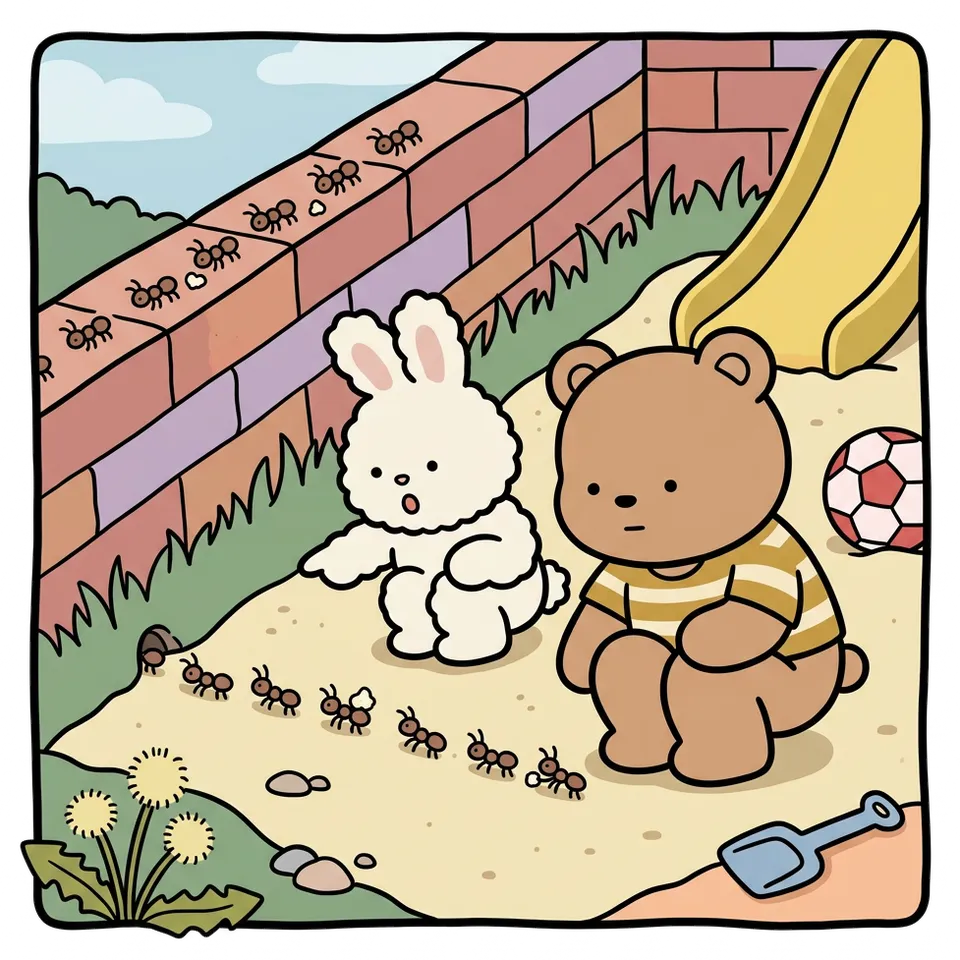
When you spot an ant on a walk, crouch down and follow it to see where it goes in.
Why it's good
For an adult, an anthill underground is just something you know, but a child only understands it after chasing an ant that disappears into the grass or a hole. The child calls it, in their own words, “house in the ground.”
How to play
The child spotted an ant climbing the playground wall first. They pointed with a finger, “Ant, ant,” so we looked at it together. When the ant went down the wall, the child followed and said “It fell.” I said “It didn't fall, it came down to the ground,” and the child said “House in the ground.” When the ant disappeared into the grass, this time they said “Home, home.”
The older brother, who had been kicking a ball, left the ball to follow when he saw ants going in a line. “There are so many,” and “They look like they're lined up,” he said, then added his own guess: “They must be carrying food.” The younger one also crouched beside them and followed the ant line for a long time.
When an ant slipped into a hole, they said “It's gone” with disappointment. There are days when you can't find even one. On those days we say let's come out and look again next time, and go inside.
Good to know
- Ants are hard to see on cold days. On warm days from spring to fall, look at the ground by the playground wall or around the slide and you'll see them going in lines.
Putting in a Container and Letting Go
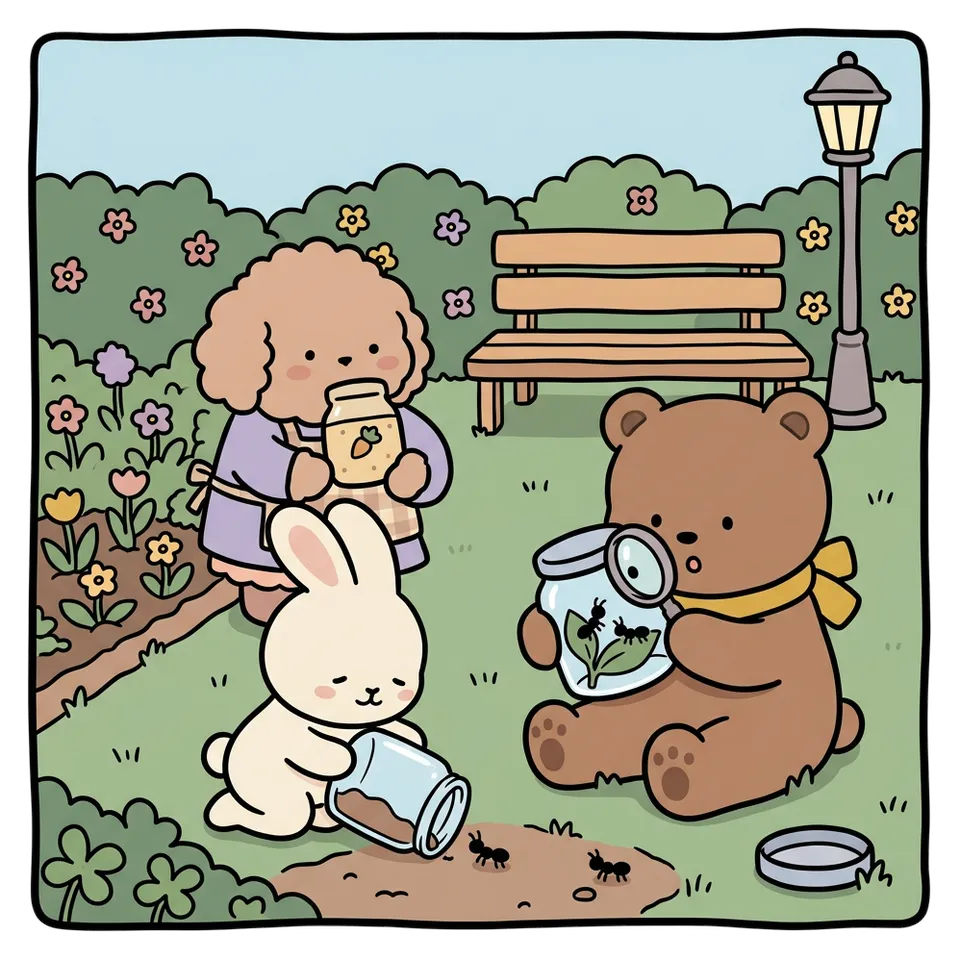
Put an ant in a container, look at it up close, then let it go when you're done.
Why it's good
With a toy, you can squeeze as hard as you like, but an ant is different. Children learn by letting the ant go that it hurts the ant to be squeezed in the hand, and that after looking you have to send it back.
How to play
A child who found an ant said “Catch an ant for me.” I said “Then should we put it in a container to look at, and let it go so it can go home?” and handed over a container. They nodded and caught the ant with their own hand and put it in. After looking for a long while, when it was time, they let it go, saying to the ant “Bye, go see your mama.”
From then on, they went out each carrying a container. “Ant, we're here, where are you?” they called, searching, and when they caught one they said “I caught it, look at this.” When the younger one said “Catch one for me too,” they said “Give me your container” and caught one for them. Looking into the container they reported “The ant stopped and now it's moving again.” They wanted to look at it at home too and carried it back in the container, saying “The ant is moving, we mustn't open the lid.” When the younger one asked why, they said “What if the ant gets out? We have to open the lid outside.”
There are days when they grab one with their bare hand. When I said “If you hold an ant in your hand it can hurt. Let's just look with our eyes,” they put it right down on the ground and sat in front of it looking for a long time. Once, when the younger one tried to step on an ant, the older brother stopped them, saying “They're living things too.”
Good to know
- Hand them a clear container with a lid before going out. If there's nowhere to put what they find, that's the end of it.
- Ants die if left in the container for long. Let the ants you collected go the same day.
- If you have a loupe, hold it up to the container. It makes things look big and close, and they look for much longer.
What you'll need
Clear container with a lid · Loupe (optional)
Setting Out Food and Waiting
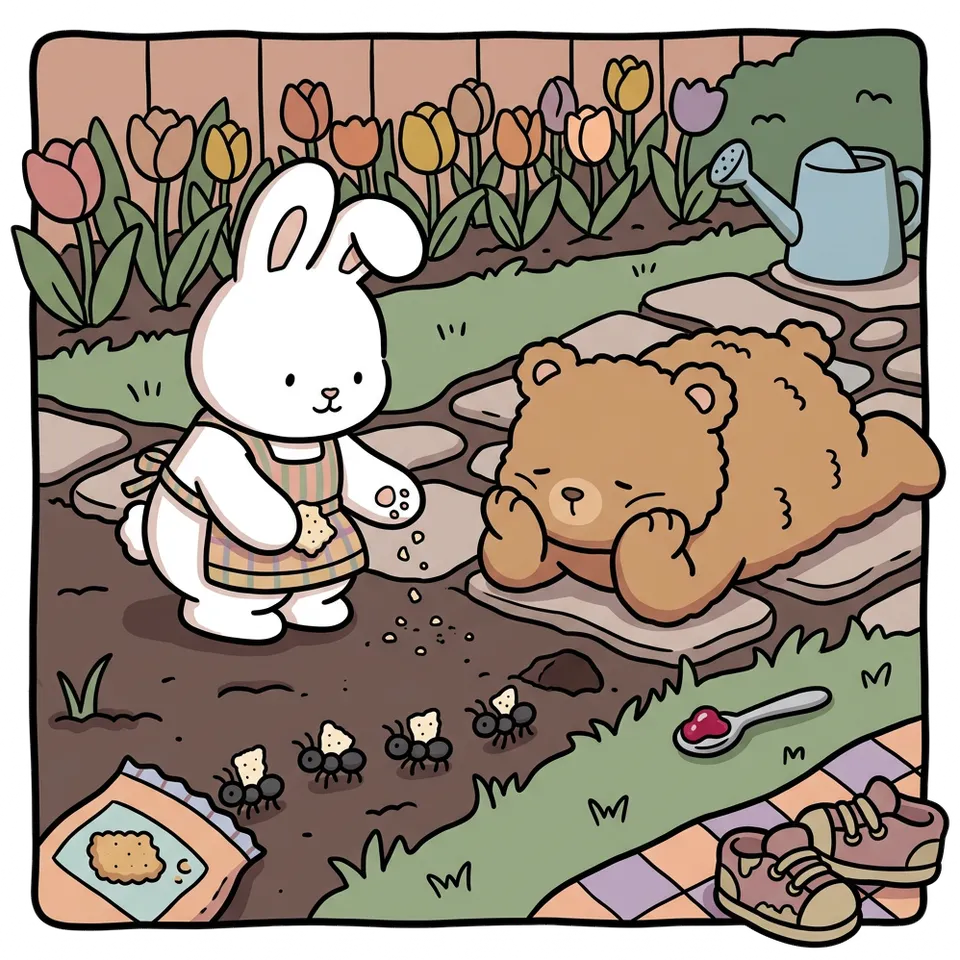
Leave cracker crumbs where ants walk and watch to see whether they come and carry them off.
Why it's good
Children can't keep an ant, but now there's something they can give it. Watching an ant carry off the crumbs they set out, they learn that they can give and take with an ant without touching it.
How to play
The day after we'd looked at ants, the child remembered what they had said the day before: “We could feed them gimbap.” We didn't have any gimbap (Korean seaweed rice rolls), so I asked what we should give instead, and they said “Snacks.” I cut a cracker into tiny pieces and put the crumbs next to the ants, and the child said “Eat up~!” Then we waited. After a long while, an ant began carrying off a crumb. The child said “Oh, it's carrying another one!”
There are also days the ants don't eat. On a day when the child asked first, “When are we going to give the ants jelly?” I put a little jelly on a spoon and set it in the bushes, but the ants wouldn't eat it. The child said “The ants don't eat jelly.” When I asked “Why wouldn't they eat it?” they said “Maybe it doesn't taste good?” and “Maybe they're full?” and “Maybe they have to go home.”
Good to know
- Break the cracker into tiny pieces. Only crumbs are small enough that you can see the ant carry them off.
What you'll need
Crackers
Building an Anthill
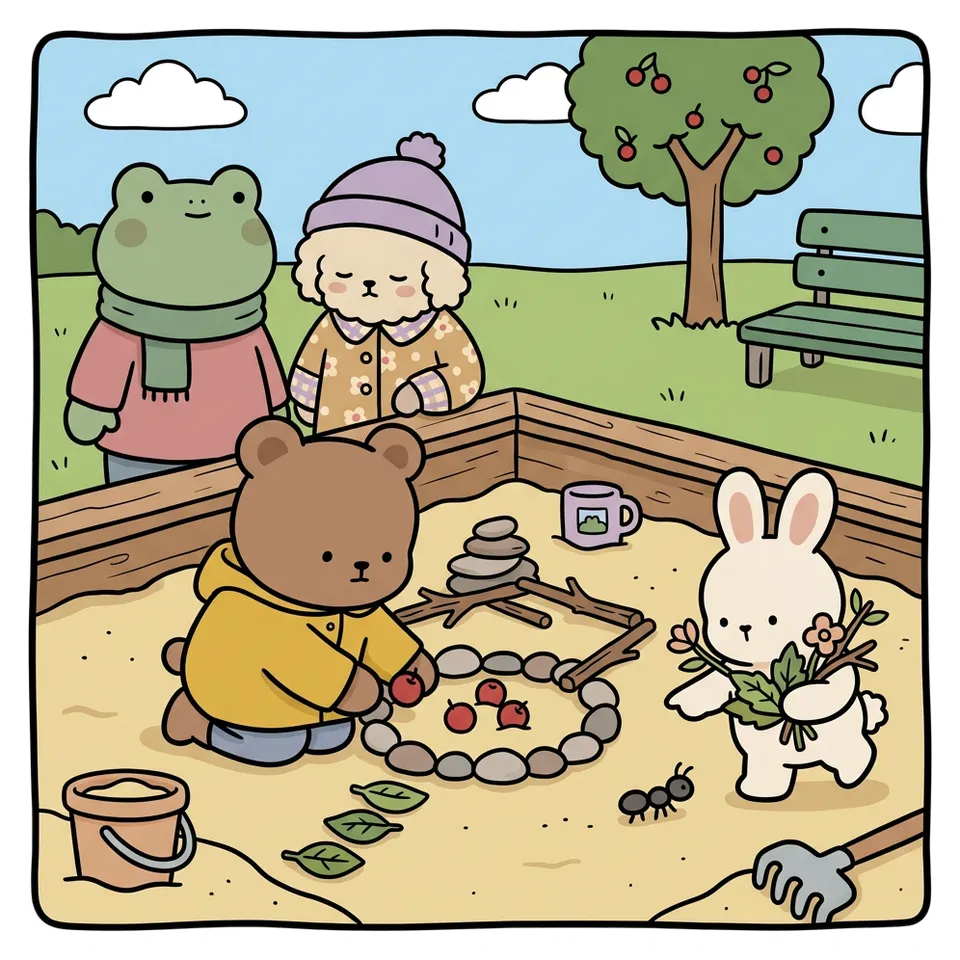
Dig into the dirt or sand at the playground and divide it into rooms with twigs, leaves, and stones to build a home for the ants.
Why it's good
Even if no ant moves in, the child thinks of the ants who would live there as they divide rooms and set out beds.
How to play
Looking at a sand hole in the playground, the child said “Should we make this the ant house?” While digging, they said “Let's make this the bathroom,” and while piling up dirt, “This is the living room!” When a friend who came to play said “Will ants come play if we do it like this?” the child said “No, we have to decorate it prettier for ants to come play!” and went off to pick up sticks, leaves, flowers, and stones.
They laid sticks in a square and said “This is the baby ant room!” laid leaves in a line and said “This is the stairs. Where the ants go up!” and stacked stones into a tower and said “This is the ant bed! It must be soft!” After finishing, when no ants came, they said “No ants are coming to play?” and then “Oh! There's an ant! It came to play!” and welcomed it.
On a day they dug into the dirt and ringed it with stones to build a house, they said “Ants like sweet things, right?” and picked red berries from a tree and put them in the house.
Good to know
- When they go to pick berries, keep an eye on their hands. They're easily scratched by thorns and branches, and they sometimes put the picked berries in their mouths.
What you'll need
Natural objects such as sticks, leaves, flowers, and stones