Play Ideas with Acorns
Acorns are hard, round, and fit right in a hand. For a child, those three things are enough. They roll them, shake them, hide them, put hats on them and take them off, and play for a long time.
This page was translated by Yeparksam, a preschool teacher in Korea. Some words may sound a little unusual — thank you for your understanding.
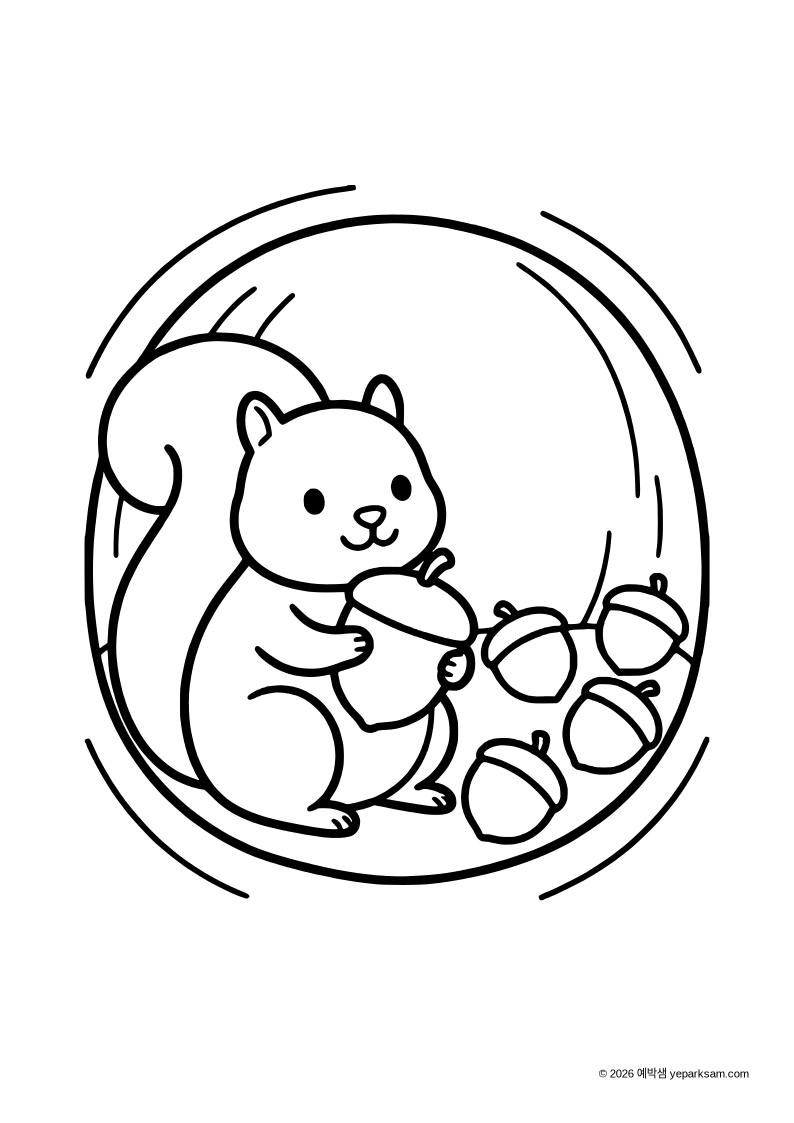
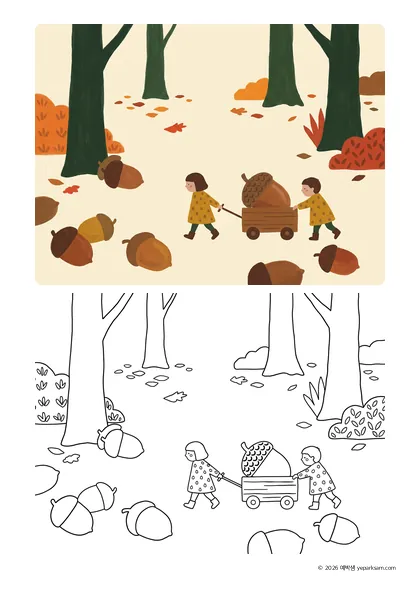
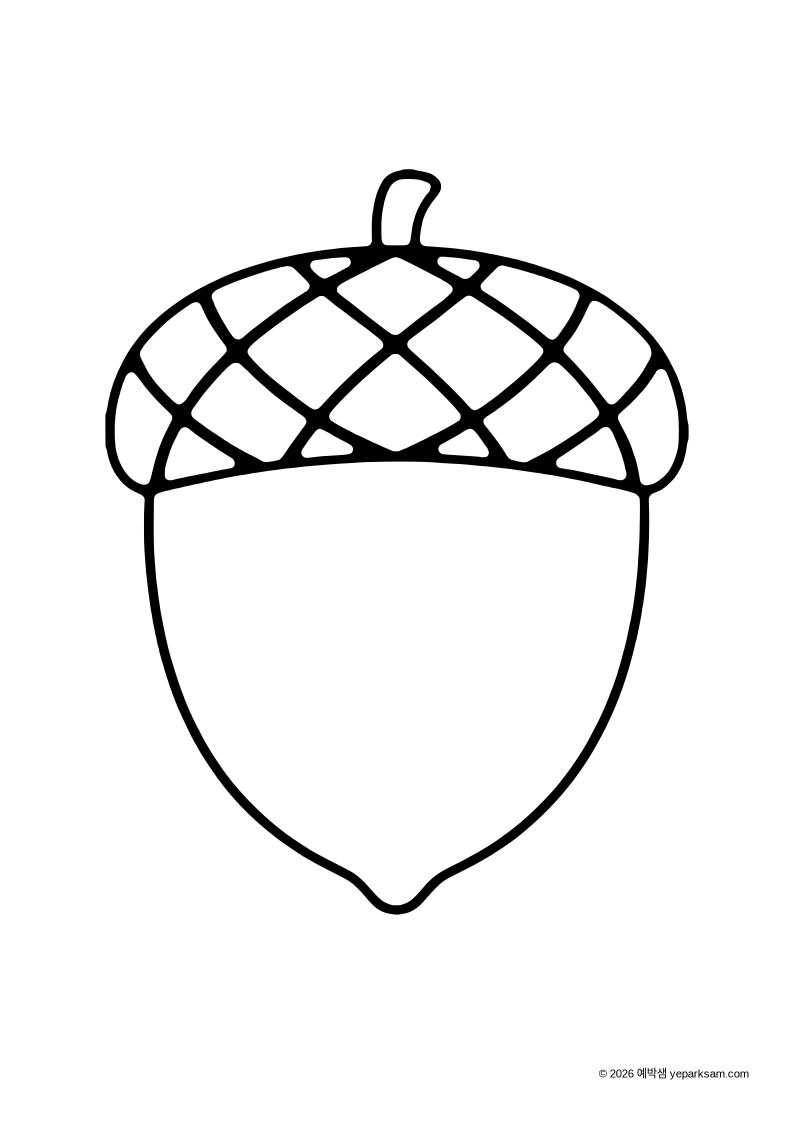
Printables to use
See more ›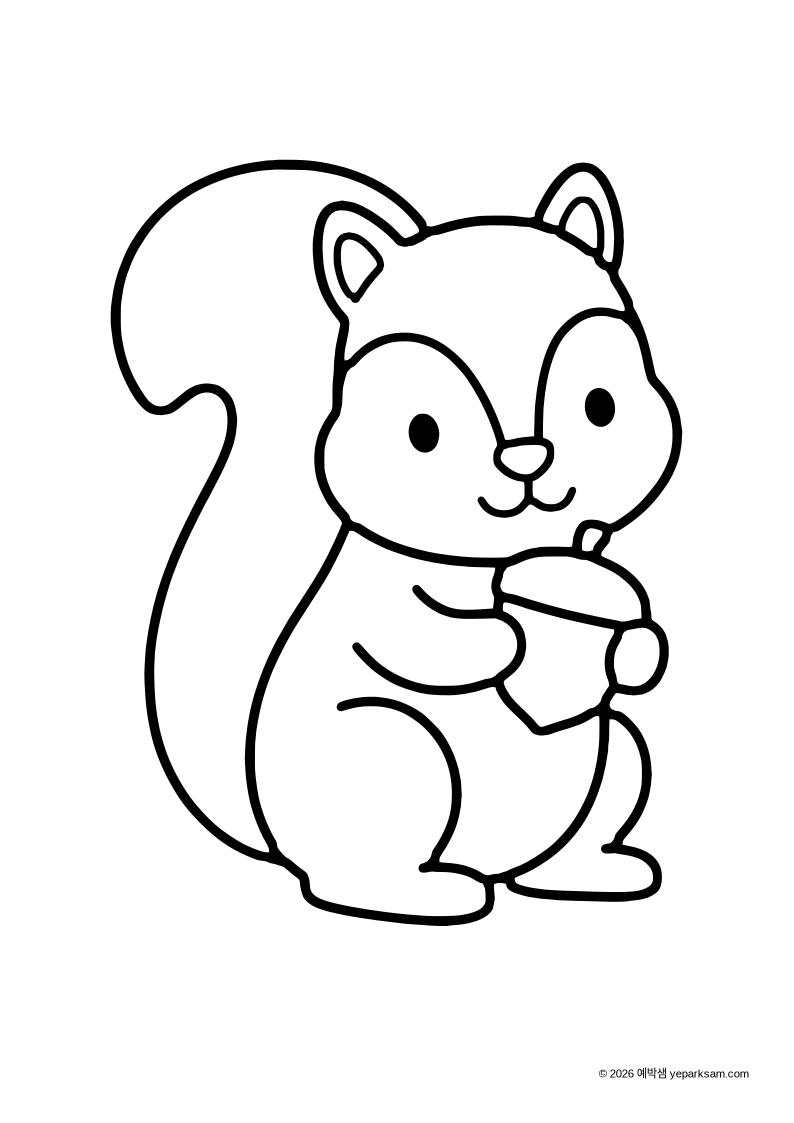
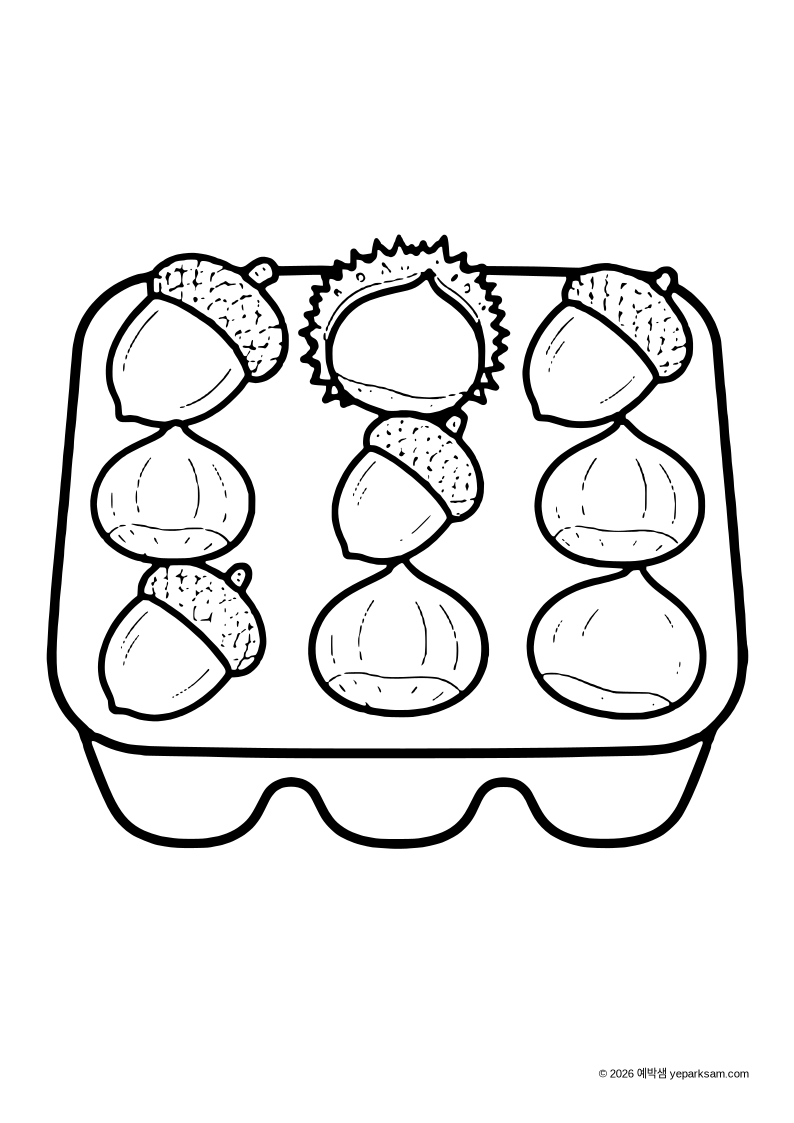
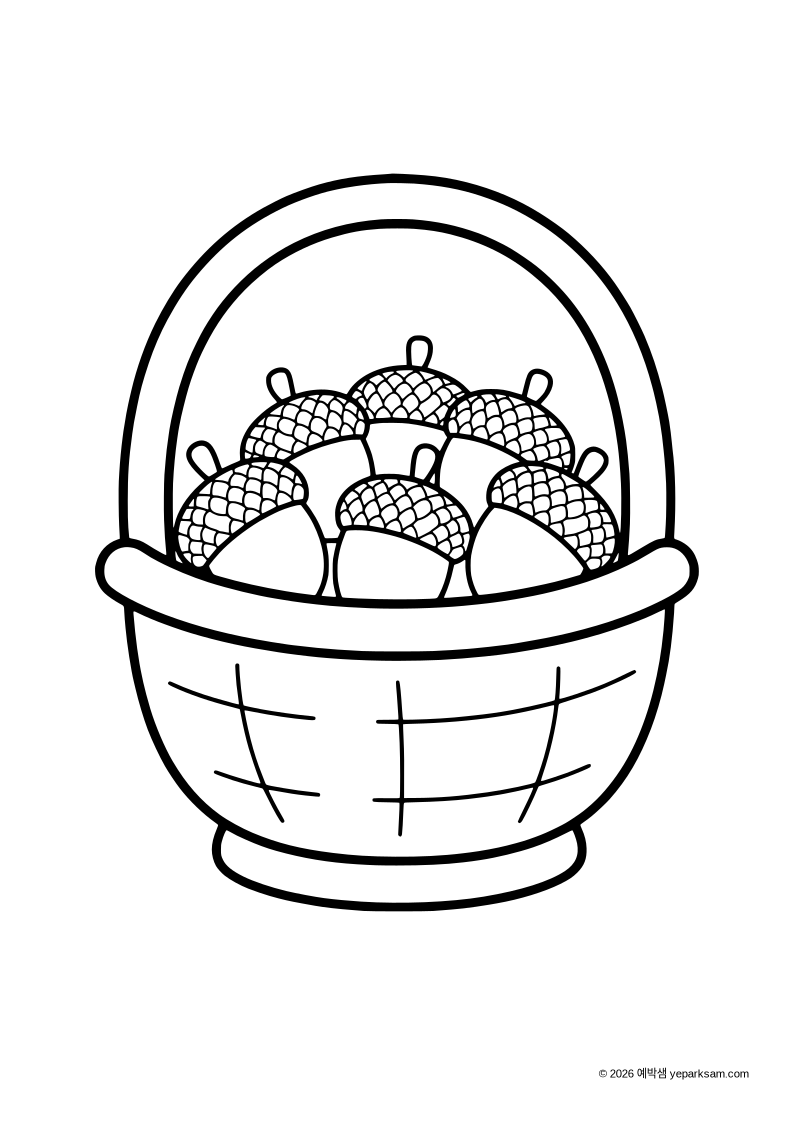
Picking Up into a Basket
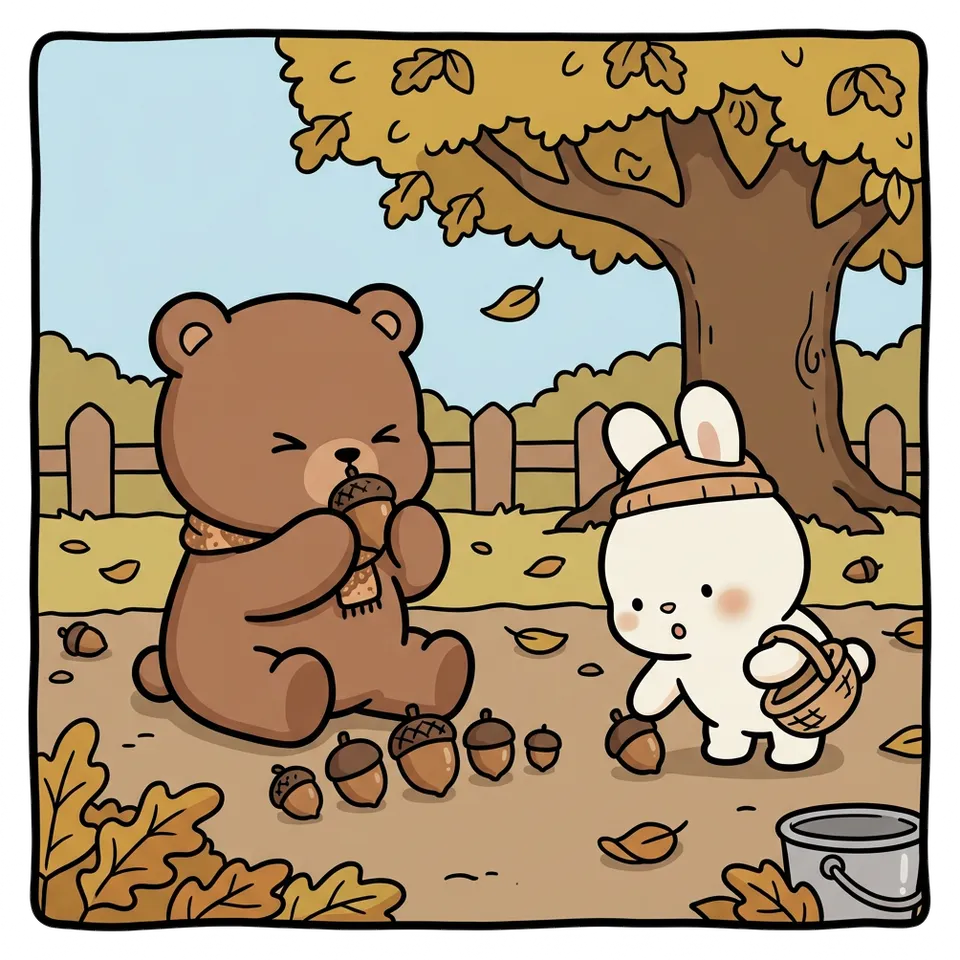
All you do is pick up the acorns that have fallen.
Why it's good
A play of feeling the touch with your hands and putting it right into words. Rough, hard, each becomes a word right away. Comparing sizes is also the first step of this play.
How to play
Hand over a basket or a tub and from then on they bend down and go around picking. They touch what's in their hands first and words come out first. “It's scratchy”, “It's hard”, “It smells!” My child looked quietly at the outside of an acorn and said “The acorn looks like it got a perm.”
Once they start noticing sizes, they sort for a long time. Saying “This one is small”, “This one is long and thin”, they collect only the big ones or line up the ones of the same size.
Good to know
- A handful picked up at a neighborhood park or playground is enough. Don't pick them in the mountains or national parks. Acorns are winter food for squirrels and chipmunks, and gathering is prohibited by law in national parks. If you tell them the reason, children soon understand. “If we take them, the animals will be hungry”, “Plant them in the ground.”
What you'll need
One basket or tub
Matching with Hats
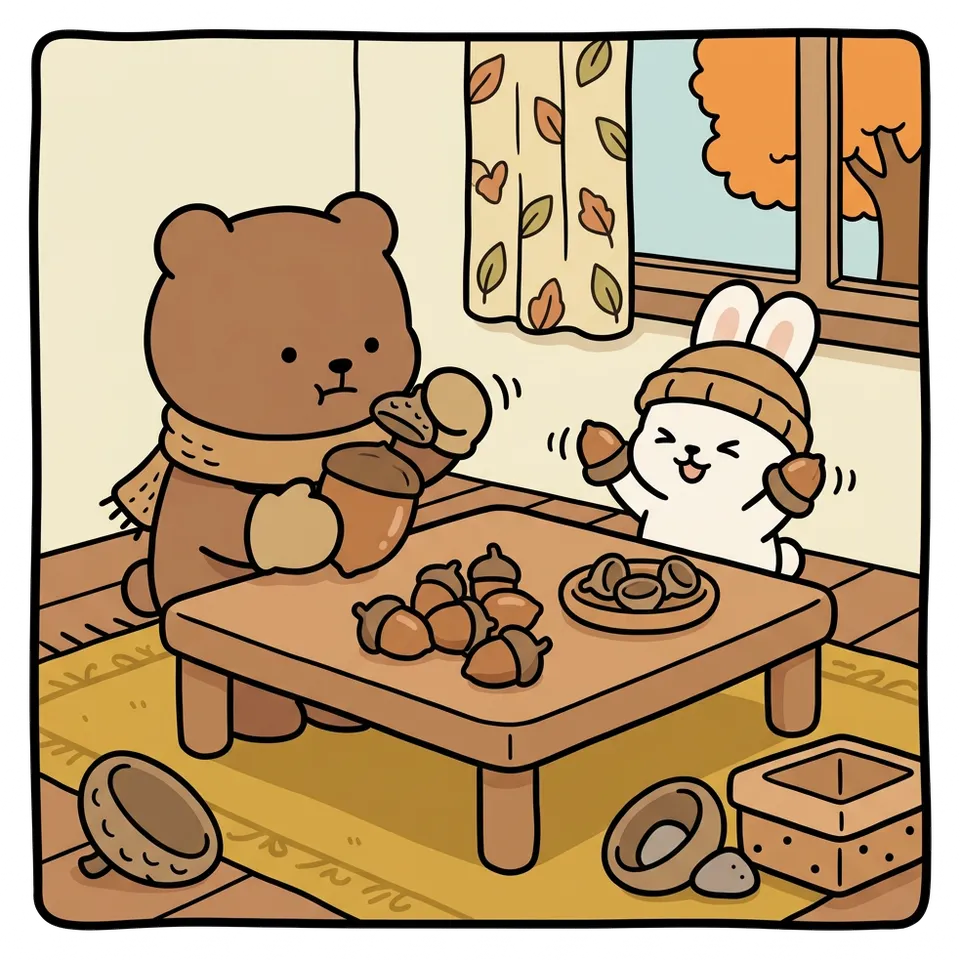
Pop the caps off the acorns, then put them back on again.
Why it's good
A play where children experience a small hat not fitting a big acorn and a small acorn slipping out of a big hat, and work out for themselves that the size has to match to make a pair.
How to play
Acorn caps come off easily. Once the child notices that, they repeat taking them off and putting them on. Looking at a cap, my child said “It's wearing a hat.”
If you mix several together, they try them one by one to find the one that fits. After matching them all, they gather the hats separately and flip them over to use as bowls, or slip them onto their fingertips and play with them that way.
Good to know
- Have a small tub for the hats so they don't get lost. Hats that come off are small and roll all over and disappear quickly.
What you'll need
Several acorns (with caps attached) · A small tub for the hats
Rolling Down a Slope
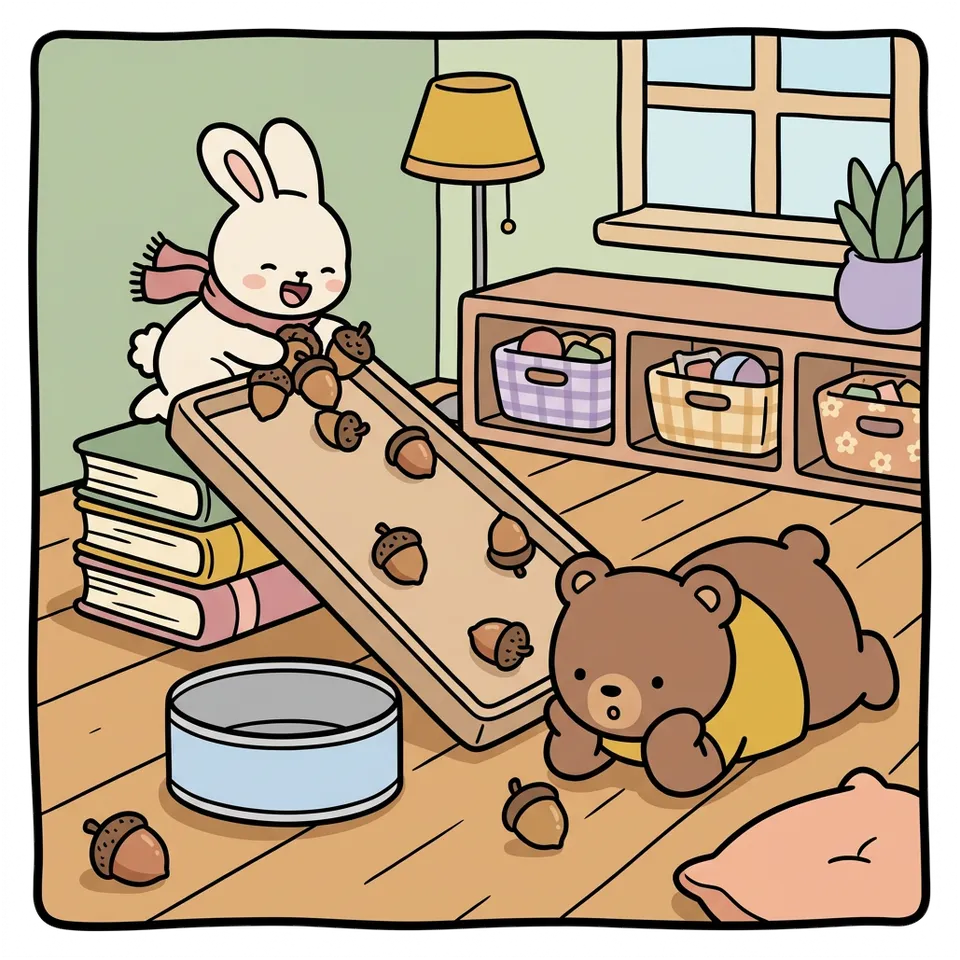
Prop a book or tray at a slant to make a ramp, then roll acorns down it.
Why it's good
A play where children watch acorns roll in ways they didn't expect and end up comparing which goes farther. Picking this way and that to choose the ones that roll well, they find out with their bodies that movement differs depending on shape.
How to play
Prop a book or tray at an angle and roll them down from the top. If there's a slide, that's the best place. They keep rolling because it's fun to watch them wobble along and stop.
Place a tub on the floor and there's a goal. It turns into a game of rolling them into the tub, and since they don't go in easily, children move the slope little by little. When you roll many at once, they bump and scatter in every direction, and children love that most.
Good to know
- Acorns aren't round, so they don't roll straight. If you mix long ones with plump round ones, the child compares first which goes farther.
What you'll need
A book or tray to prop up at an angle (or a slide) · A tub to put on the floor
Shaking in a Container
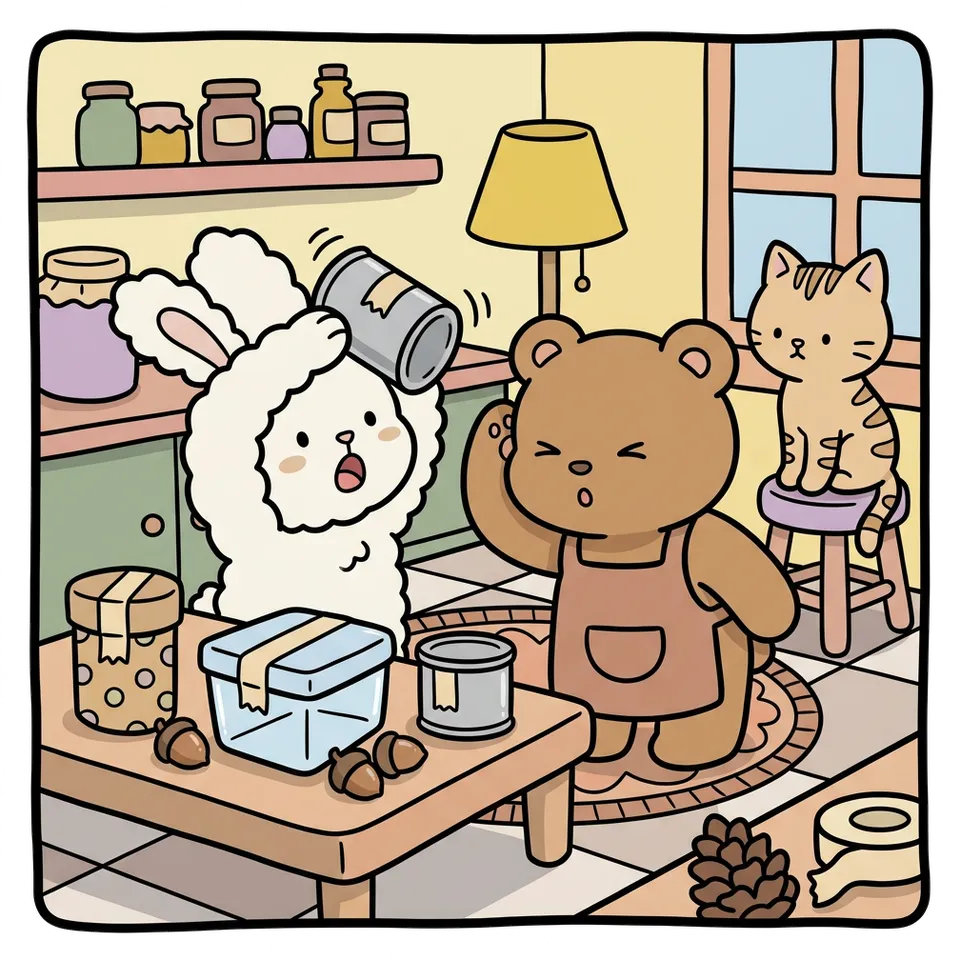
Drop a few acorns into an empty container, close the lid, and shake it to hear the sound.
Why it's good
A play where children compare for themselves how the sound changes with the number of acorns and the kind of container. By shaking it themselves, they sort the sound of one acorn versus a full container into loud and quiet. If you shake without showing, it turns into guessing what it is from sound alone, which becomes an experience of judging only by what the ears heard.
How to play
Put a few acorns in an empty container, close the lid, and shake, and it makes a sound. A milk carton or a side-dish container will do. With just one it goes clack-clack, and when it's full it rattles. If you make two or three different ones and have them shake them in turn, they sort them out, “This is a loud sound!”, “This is quiet.”
Change the container and the sound changes again. Plastic and tin are different, and a big container echoes. If you shake it without showing, it becomes a guessing game. If you secretly put in pinecones or leaves instead of acorns, they guess what it is, saying “It goes tok-tok!” Leaves make almost no sound, so they stay puzzled for a long time.
Good to know
- Tape the lid shut. If it opens while shaking, everything spills everywhere, and young children put them in their mouths.
What you'll need
Container with a lid (milk carton, side-dish container, etc.) · Several acorns · Pinecones or leaves (for guessing) · Tape
Drawing Faces
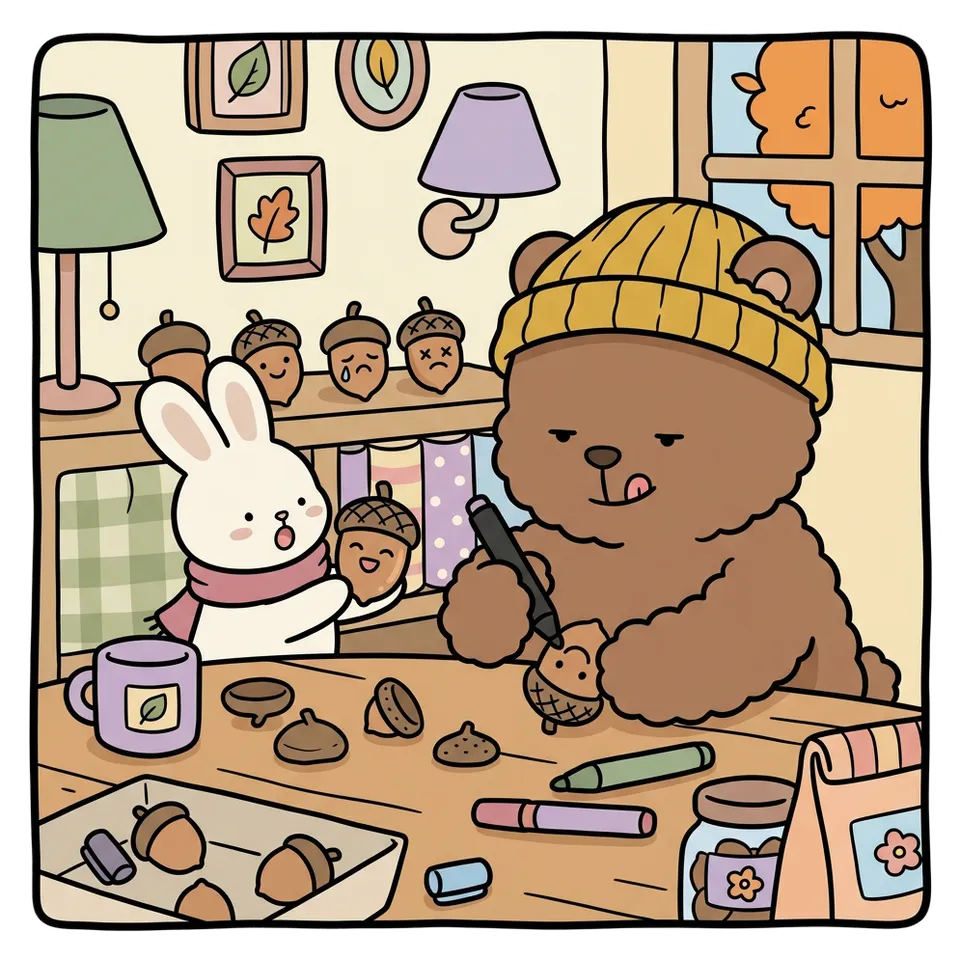
Draw faces on acorns with a marker or permanent pen.
Why it's good
A play where drawing several expressions turns each into a different character, giving something to tell stories about. Once they've given them names, they start sorting out and keeping track of their own versus others', which means their heart has attached to what they drew.
How to play
Draw faces on acorns with a marker or permanent pen. The surface is smooth, so it draws well. Making several expressions gets the play going. Draw a smiling one, a crying one, and an angry one separately and have them tell stories. If you put an acorn cap on, it becomes hair.
While drawing, they give them names. After separating their own, mom's, and the younger sibling's, they carry them around so they won't lose them.
Good to know
- An oil-based pen is better. Paint doesn't stick — the surface is shiny, so it just runs off.
What you'll need
Several acorns (ones with caps are nice) · Oil-based pen (marker or permanent pen)
Hiding Like a Squirrel
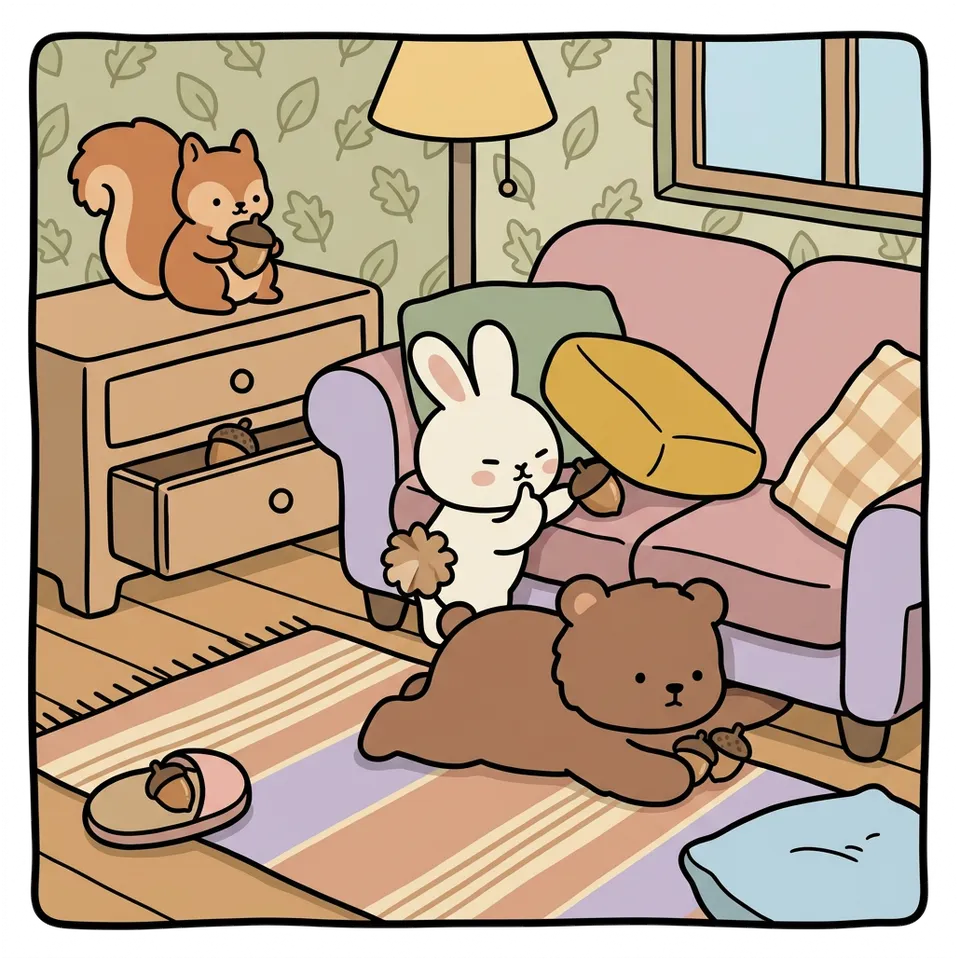
Hide acorns around the room and go find them.
Why it's good
A play where, if you tell the story of a squirrel getting ready for winter, the child becomes that role on their own. The value of this play is that one acorn hunt turns into a story of getting through the winter.
How to play
First tell the story of a squirrel getting ready for winter. After hearing it, even the way they talk changes. They decide for themselves, “I'm a squirrel!”, and from then on hiding is not play but work. They're quite serious since they're collecting food for winter.
They want to be the one hiding. They tuck acorns under a cushion, in a drawer, in a shoe, and then tell the adult to find them. Sometimes they forget where they hid them themselves, and if you tell them that's just what squirrels do, they love it. Sometimes the story even goes as far as sprouts growing in that spot in spring.
Good to know
- Decide on a place to put what's found. Otherwise they scatter all over the house and turn up under the sofa months later.
What you'll need
Several acorns · A tub for what's found
Trying Acorn Jelly
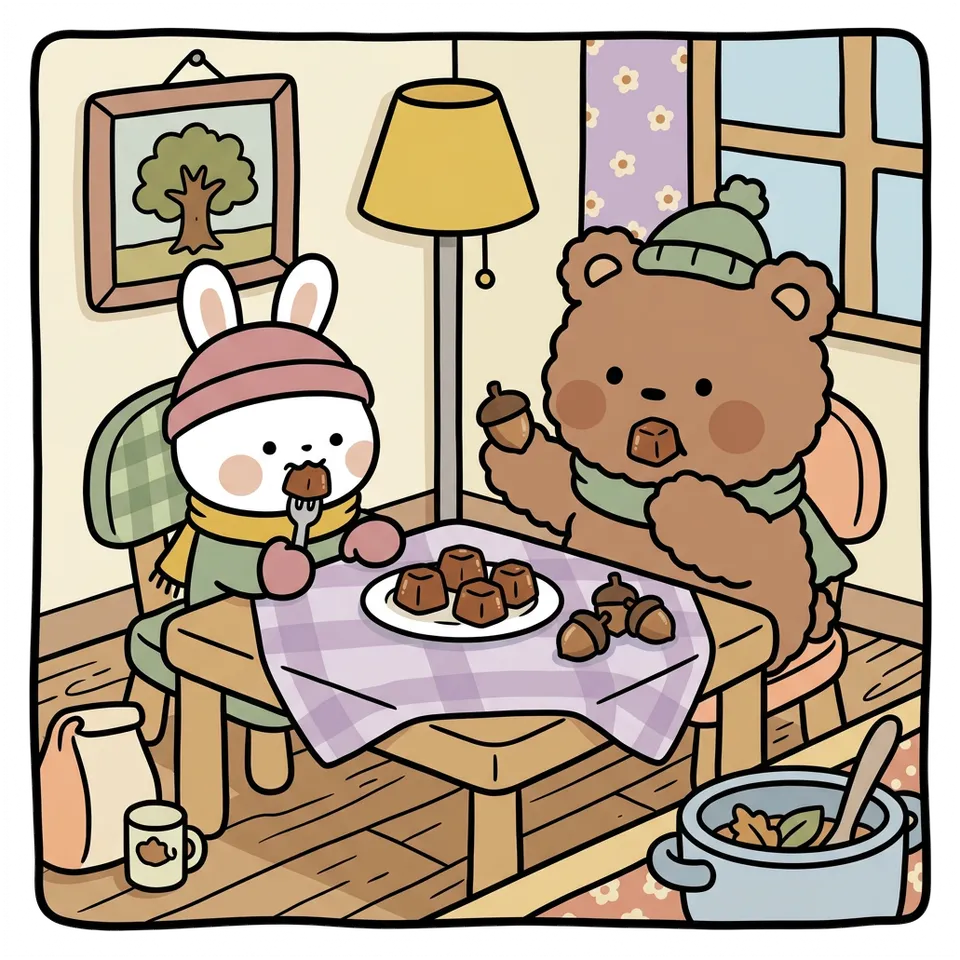
Buy a block of acorn jelly (dotori-muk) and set it down beside the acorns the children gathered.
Why it's good
A play where children don't believe at first that hard acorns and soft jelly are the same thing, and then accept it by touching and tasting. It's good for building the experience of trying to make friends with a food they're meeting for the first time.
How to play
Buy a block of acorn jelly and set it next to the acorns you picked up. All you have to do is tell them this is made from that, but at first they don't believe it. Something hard and small and something soft and brown can't possibly be the same thing. They ask “What is this?”, and when you put it on a plate, they say “The color is weird.” When you tell them it's made by grinding, only then do they pick up an acorn again.
Reactions to tasting split in two. A child trying it for the first time usually backs away, “Why does it taste strange?”, “It's yucky.”, but if you cut it small and an adult takes a bite first, they follow and sometimes say “It's tasty.” If you call it jelly, they eat it. When one child said to a friend who wouldn't eat it, “Try it. It's like jelly,” the friend heard that, tried it, and said “It really is like jelly. It's soft.” That one line is far stronger than an adult saying it's good for you.
Good to know
- You can't make acorn jelly from acorns you picked up. Removing the bitterness and letting it settle takes days. Instead, hand out play kitchen things or clay and they'll copy it on their own. “Making acorn jelly~” they say, mixing in fallen leaves and setting out a table.
What you'll need
A block of acorn jelly · Acorns you picked up · Plates · Play kitchen set or clay (for role play)